The Dolomites are one of the most confusing destinations I’ve ever planned our trip for, and decoding the topic of getting there felt like solving a Rubik’s Cube while sitting on a merry-go-round.
It’s just so much to think about – from the best starting points for a Dolomites road trip, to deals on flights, to bus and train routes, to different bases for exploring the region… It seemed like our decision to rent a car in the Dolomites might’ve alleviated the brunt of the difficulty, but toll roads, parking issues, limited traffic areas, and other problems suddenly came into the rearview mirror!
Luckily, I have taken it upon myself to create the guide to the best way to get to the Dolomites – I will explain all the potential pitfalls, give you a framework for planning your own trip, and sprinkle a ton of useful info about the region in the process.
Article contents
- Closest airports for visiting the Dolomites:
- Do you really need a car in the Dolomites?
- How to rent a car here?
- Driving in the Dolomites: What first-timers should know
- Where to base yourself in the Dolomites?
- Getting to the Dolomites by public transport
- Things to know before you go to the Dolomites
● Venice
● Verona
● Bolzano
Closest airports for visiting the Dolomites
 |
 |
The Dolomites do not have a single town, a key mountain group, a lone large valley or national park to base all your outings around; the Dolomites are a complex grid of mountain peaks, massifs, ridges, plateaus, passes, and other natural settings. You have to have at least a semblance of a plan before you arrive here; you cannot “do” the Dolomites on a whim, with no prior research involved.
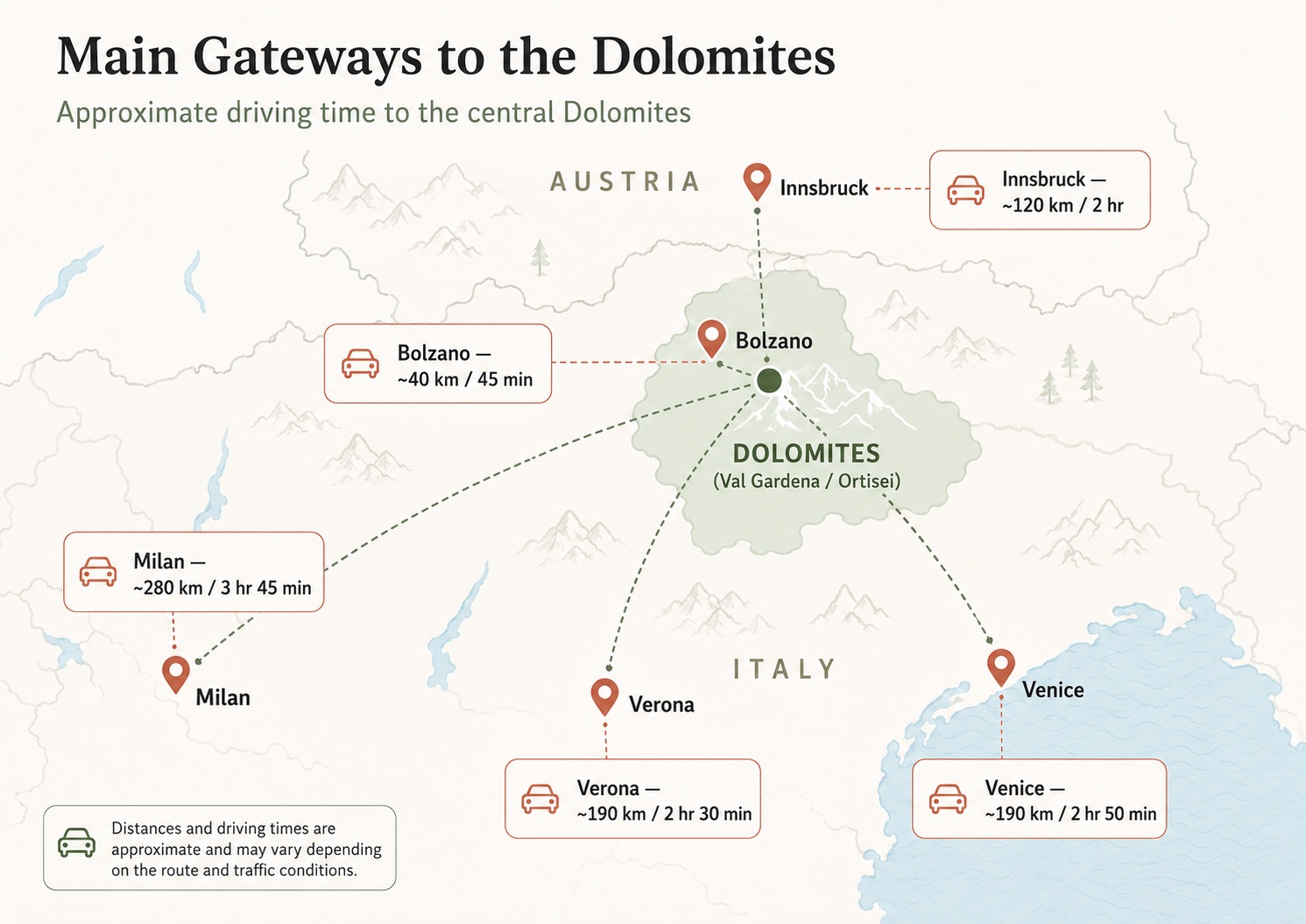
Best starting points for a Dolomites road trip – and for getting around by public transport as well – are major airports in the Northern Italy. However, choosing one will make you face a certain chicken-or-egg situation:
Do you first pick the airport based on flight deals and car rental prices or do you begin by settling on which part of the Dolomites you want to explore most?
Before I dive into the details, I want to help you with this decision right away! Here are the starting point / focus area combos that work best in the Dolomites:
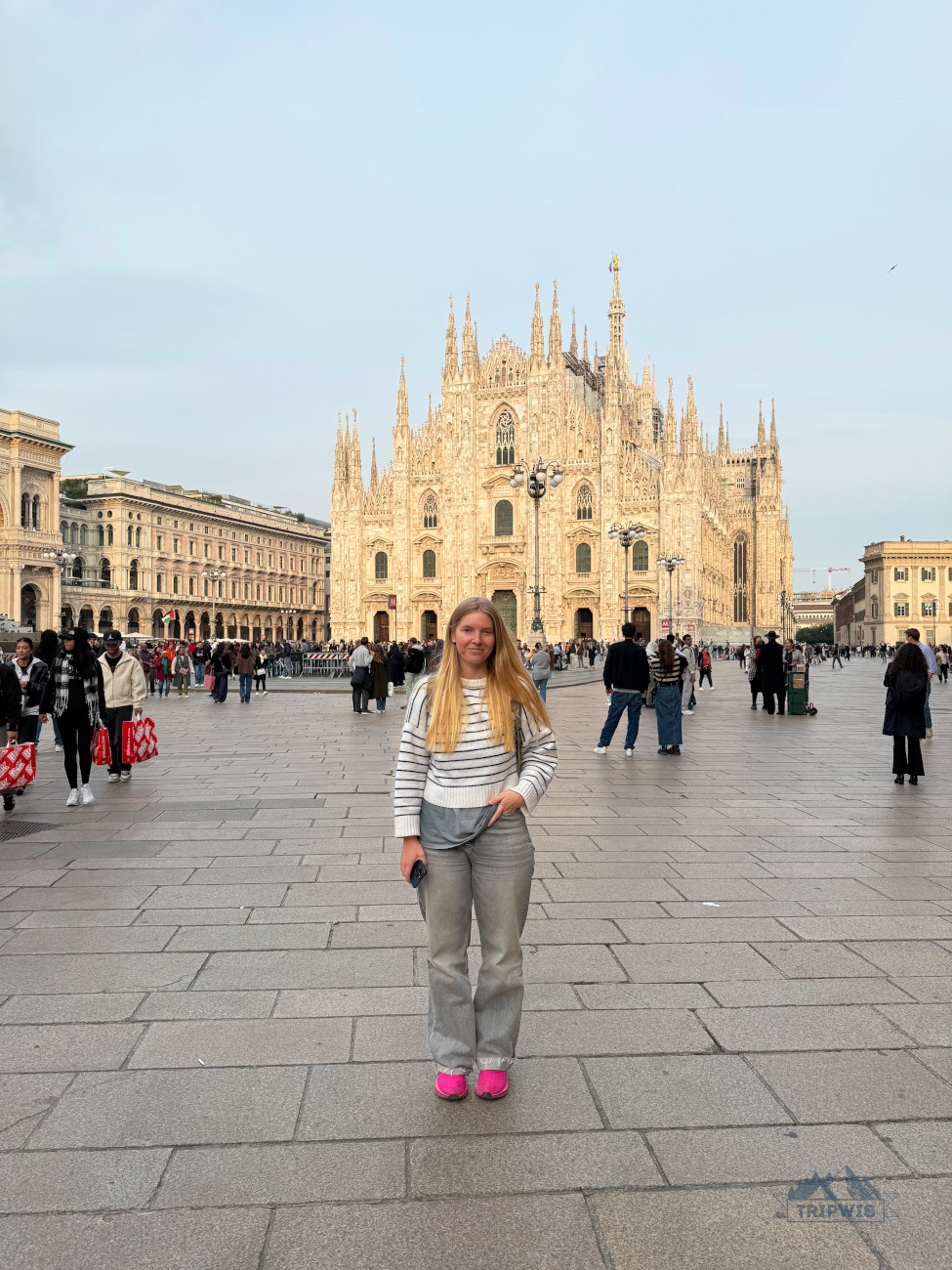
- If you land in Milan, your focus area is Western Dolomites – namely Ortisei and major hikes of Alpe di Siusi and Seceda. The drive is the longest out of all the options, but the car rental* and flight selection is generous.
*we used Discovercars
- If you land in Venice, then drive straight to explore Eastern Dolomites (Cortina d’Ampezzo, Tre Cime di Lavaredo, Lago di Braies). You can score good deals on flights and car rentals here as well.
- Innsbruck-bound? You will be exploring Val Gardena (Ortisei, Alpe di Siusi, Seceda), and Val di Funes (Adolf Munkel, Santa Magdalena) in no time. Just mind the added expenses of crossing the border from Austria to Italy!
- Flying into Verona will give you a no-brainer getaway into the Dolomites’ central valleys, mainly Val Gardena (Ortisei, Alpe di Siusi, Seceda).
❗️Though Bolzano is set smack-dab inside the Dolomites and has an airport, it’s served by just one South Tyrolean airline and is not worth the high price tag and your efforts.
So, what do you choose – Milan vs Venice vs Innsbruck to start the Dolomites escapades? Your road trip starting point depends on whether you prioritize flight availability, car hire selection, budget, or minimizing time spent in transit. I’m about to give you a detailed breakdown of all the necessary information so that you can finally settle on what airport you should fly into to go to the Dolomites.
Milan – our experience
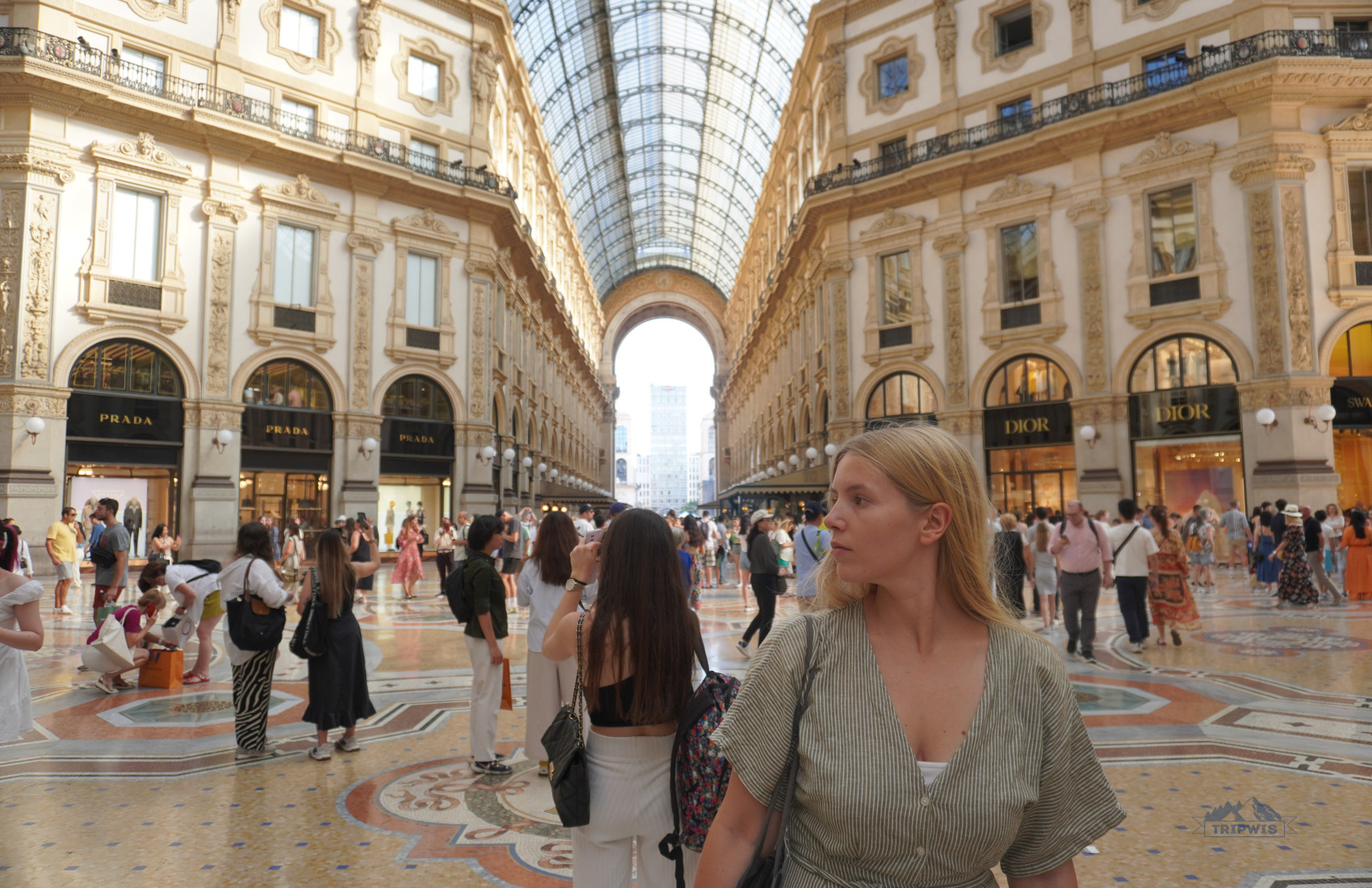
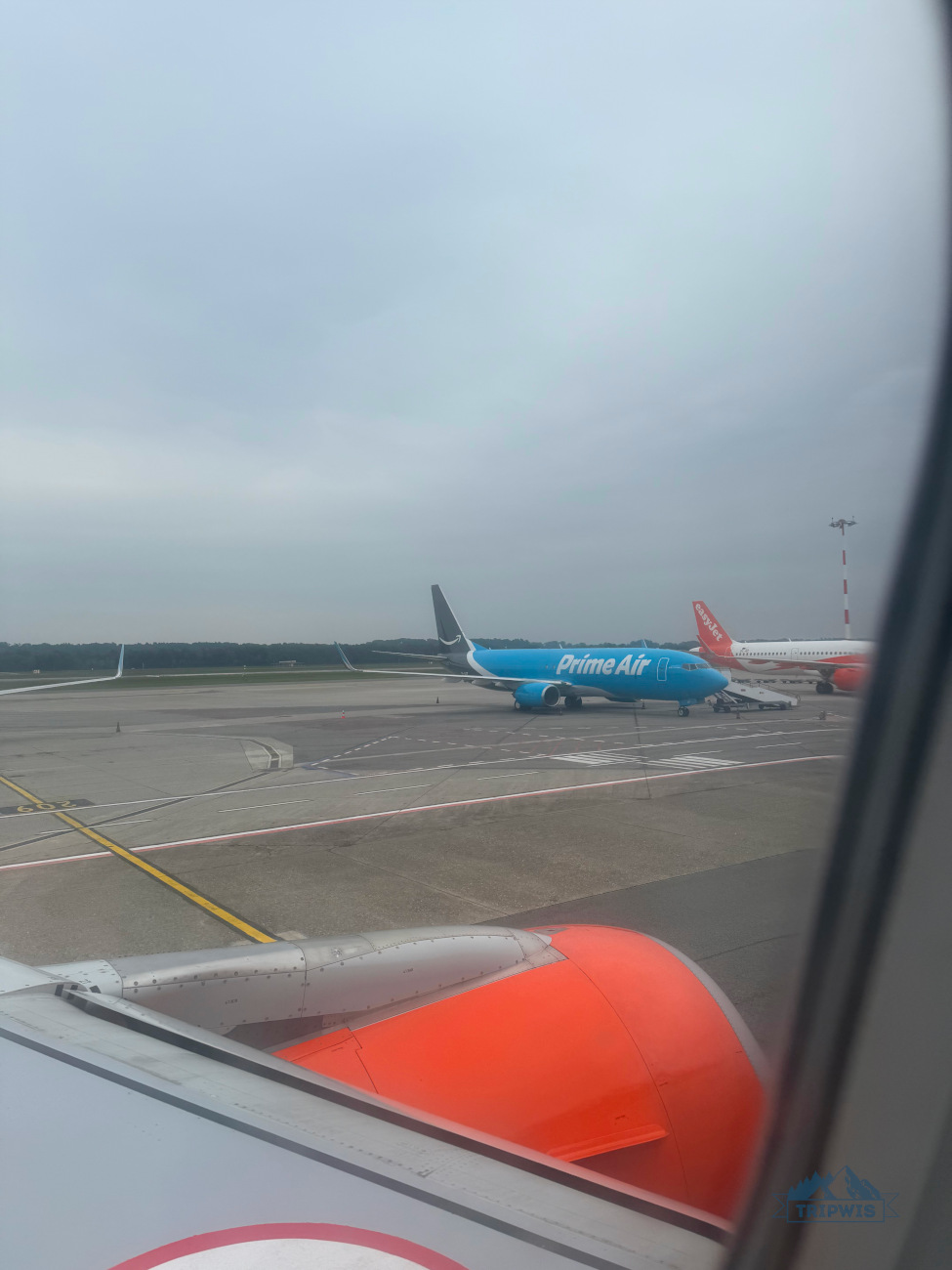
When I was searching for the ways to get to the Dolomites from Milan, I kept seeing the same advice – “that’s not the best place to start a road trip”. The main concern was significant distance between the two destinations and the fact that you’re setting off straight from the plane.
But a few hours on the highway didn’t put us off (unlike the overpriced flights to other cities!). It’s also an option worth considering if you want to combine your Dolomites adventures with stopping at other prominent locations in Northern Italy like Lake Garda or the Adamello Brenta Natural Park.
Here are the details on how to get to the Dolomites from Milan:
- Distance: 300–350 kilometers / 186–218 miles
- Time on the road: 3–4 hours
- Tolls: We spent €19 one way (if you want to avoid toll roads, then it’ll take around 6 hours)
- Stops: Lake Garda (perfectly picturesque halfway break)
- Best endpoint: Trento or Bolzano with the best access into Western Dolomites (or you can make your way to Ortisei without stopping)
- Pros: Milan’s airports serve a wide range of flights, so you can always find prices and flight times that work best for you. Plus, there’s a huge fleet of cars for rent! We were lucky to stumble upon a crazy low price for a rental car in the Dolomites (Thank God for shoulder season costs!) – we paid mere €80 for six days
- Cons: Longest travel time to the Dolomites, potential for traffic near Milan
Personal experience: Since we landed in the afternoon, we decided to drive from Milan to Trento and spend the night there at 3* Hotel Everest Trento (from €90 per night) before diving into the natural world of the Dolomites. In hindsight, we could’ve made it all the way to Ortisei, but we figured it was best to rest our eyes a bit (it was a big travel day) before trying to drive on all those mountain roads.
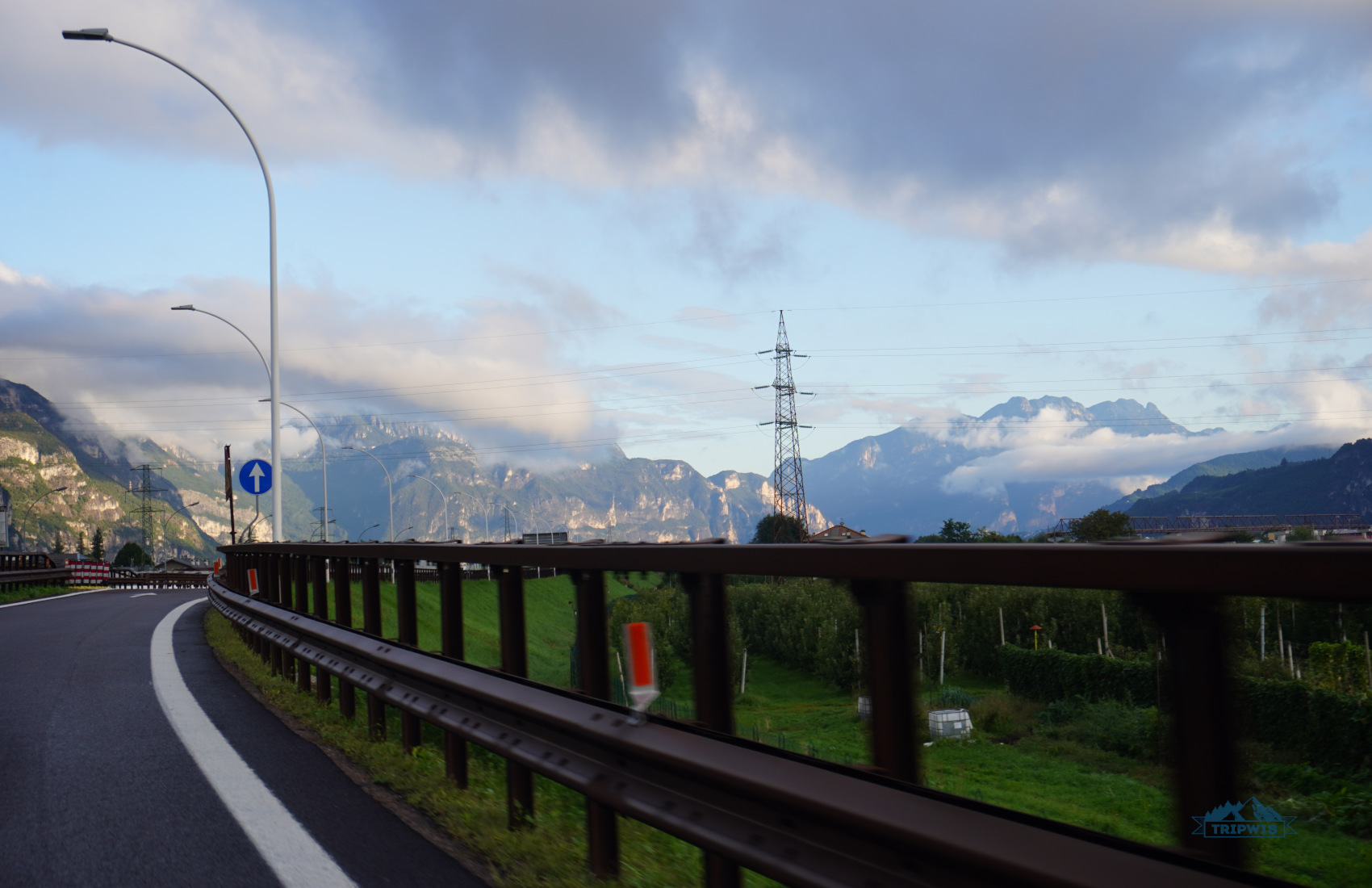
The drive from Milan wasn’t tiring at all – it was a fast highway that, as we got closer to the Lake Garda, turned into a scenic road between the mountains.
✔️We chose to bear with the tolls in order to finish the drive in 3.5 hours and not 6 hours
✔️Toll roads had a speed limit of 130 km/h (80 mph)
✔️A quick stop for sustenance at McDonald’s opened our eyes to the price range we were driving into: A combo of double cheeseburger, large fries, and water ended up costing us €13.4!
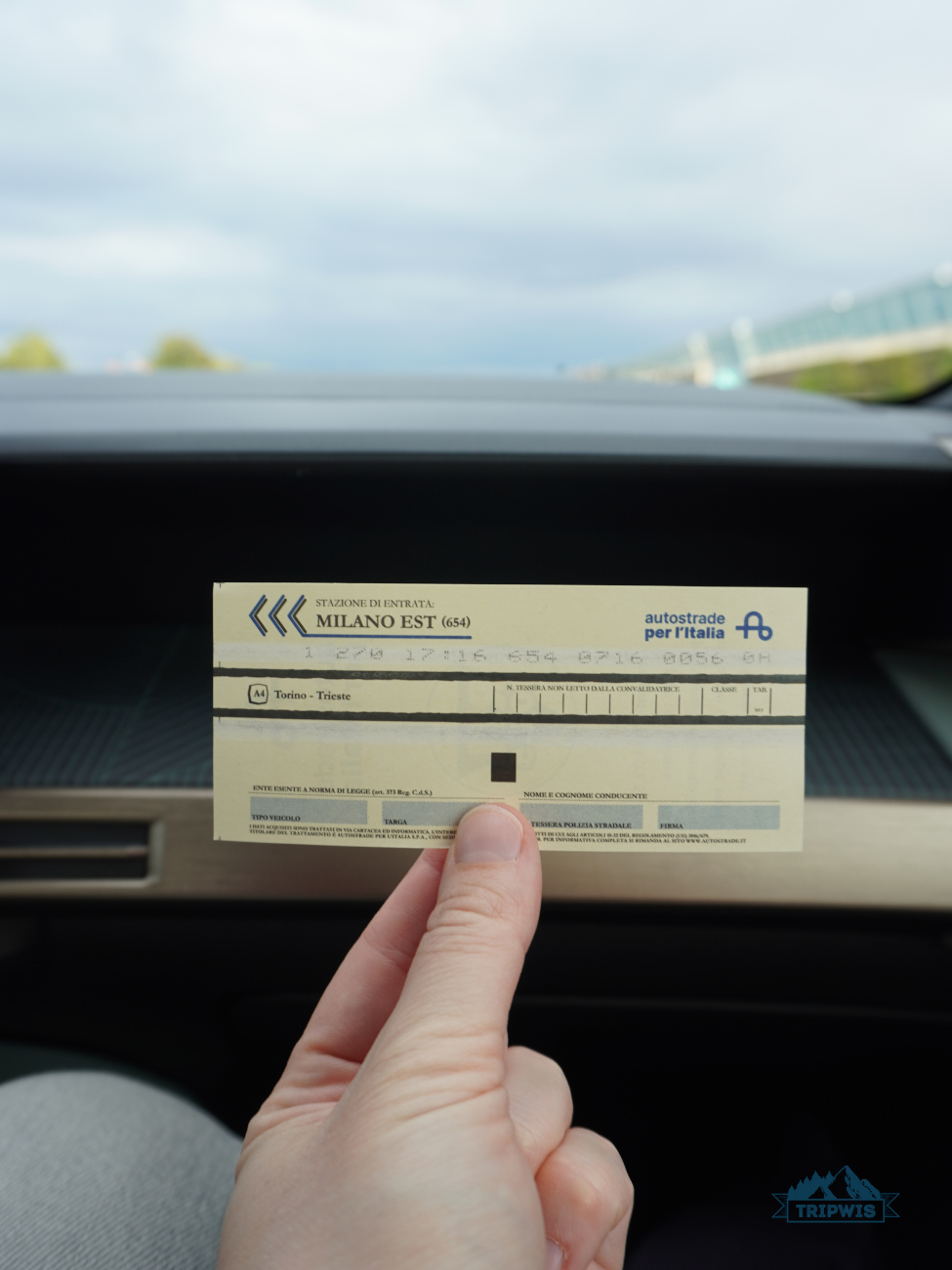
✔️We have used three toll roads, for which we paid with bank card at the booth
✔️Pay attention here: If your rental doesn’t have a transponder (and it most likely won’t), always head for the lane with the sign showing card or cash payment
Venice
 |
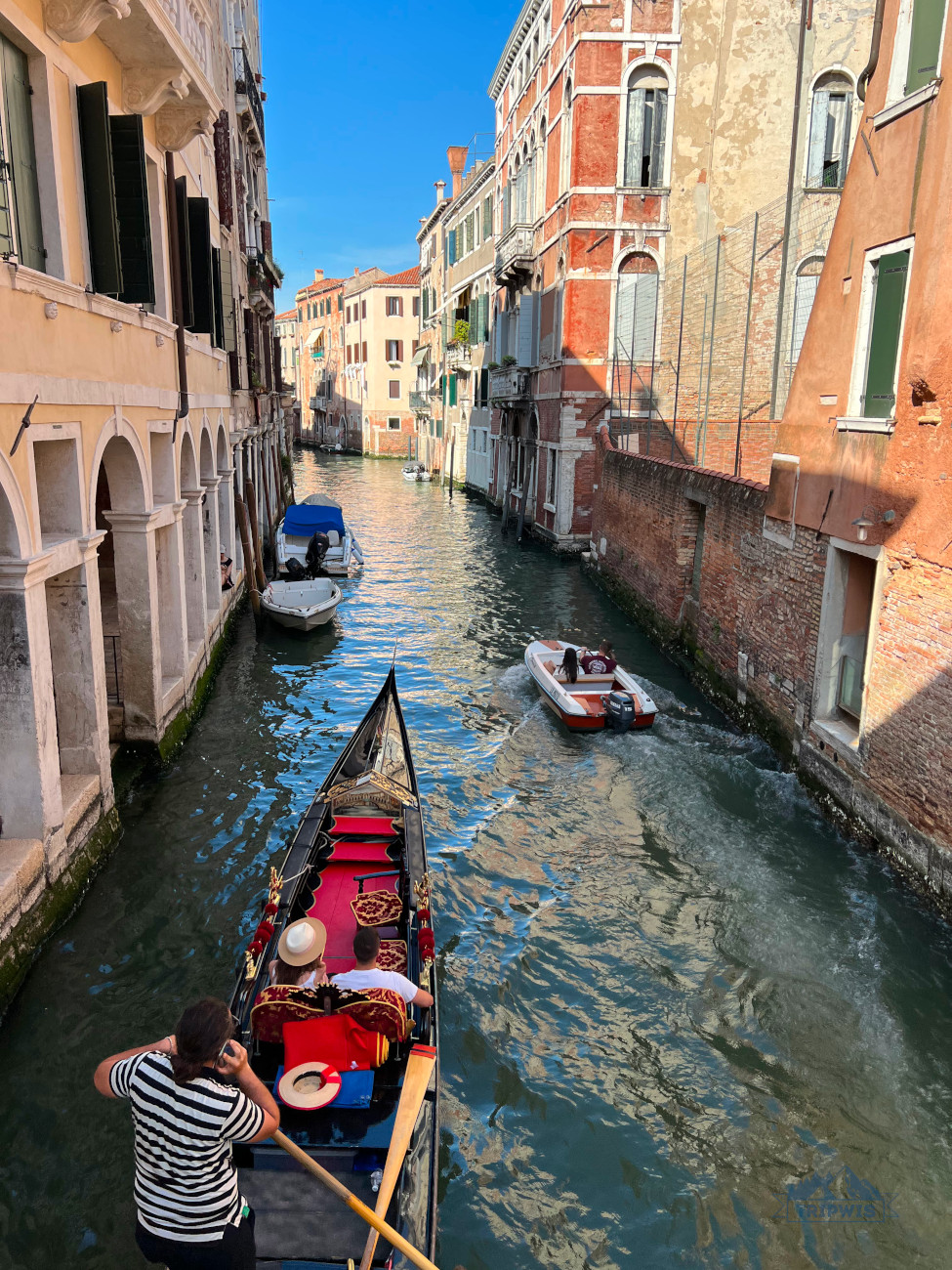 |
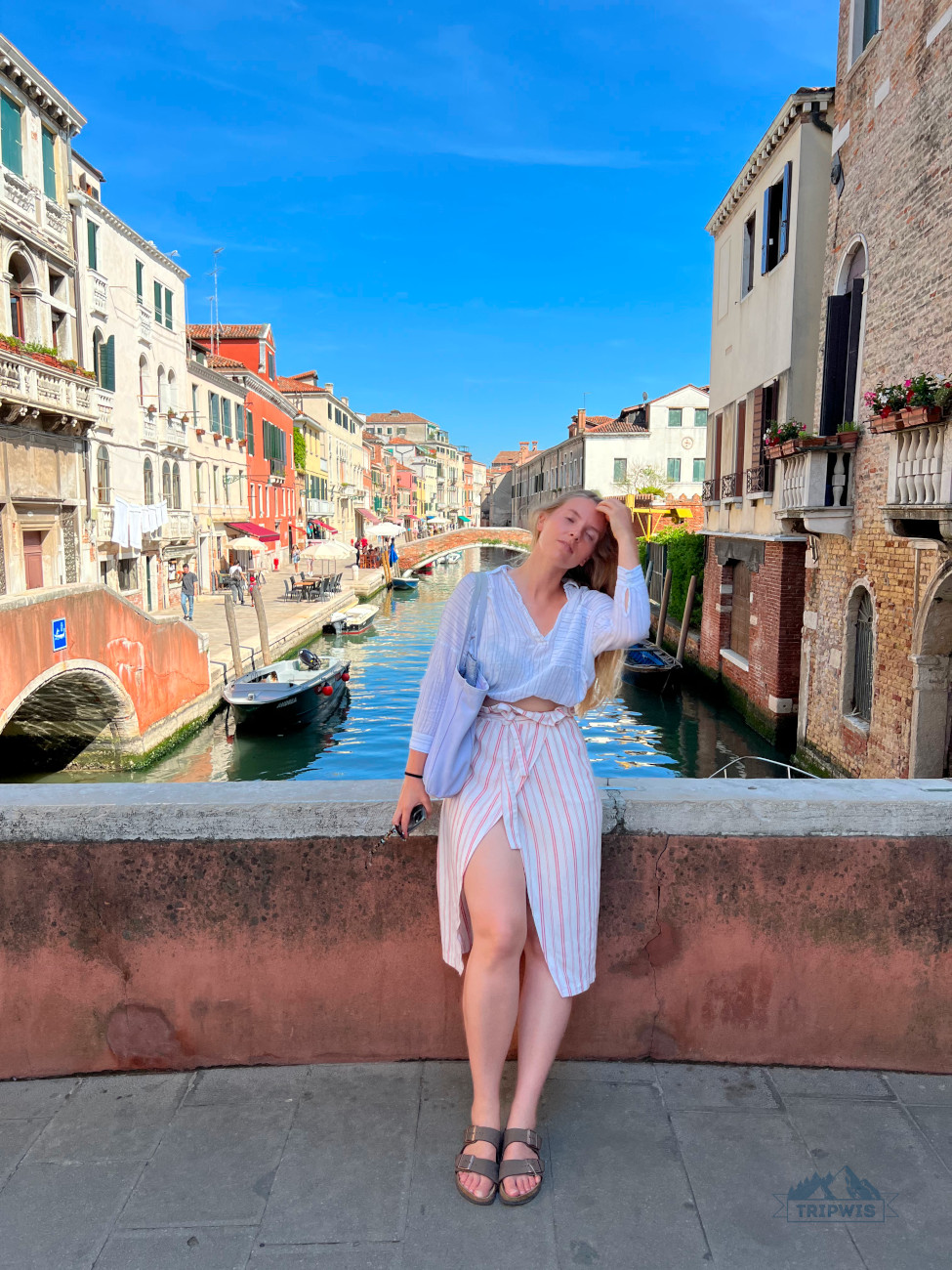
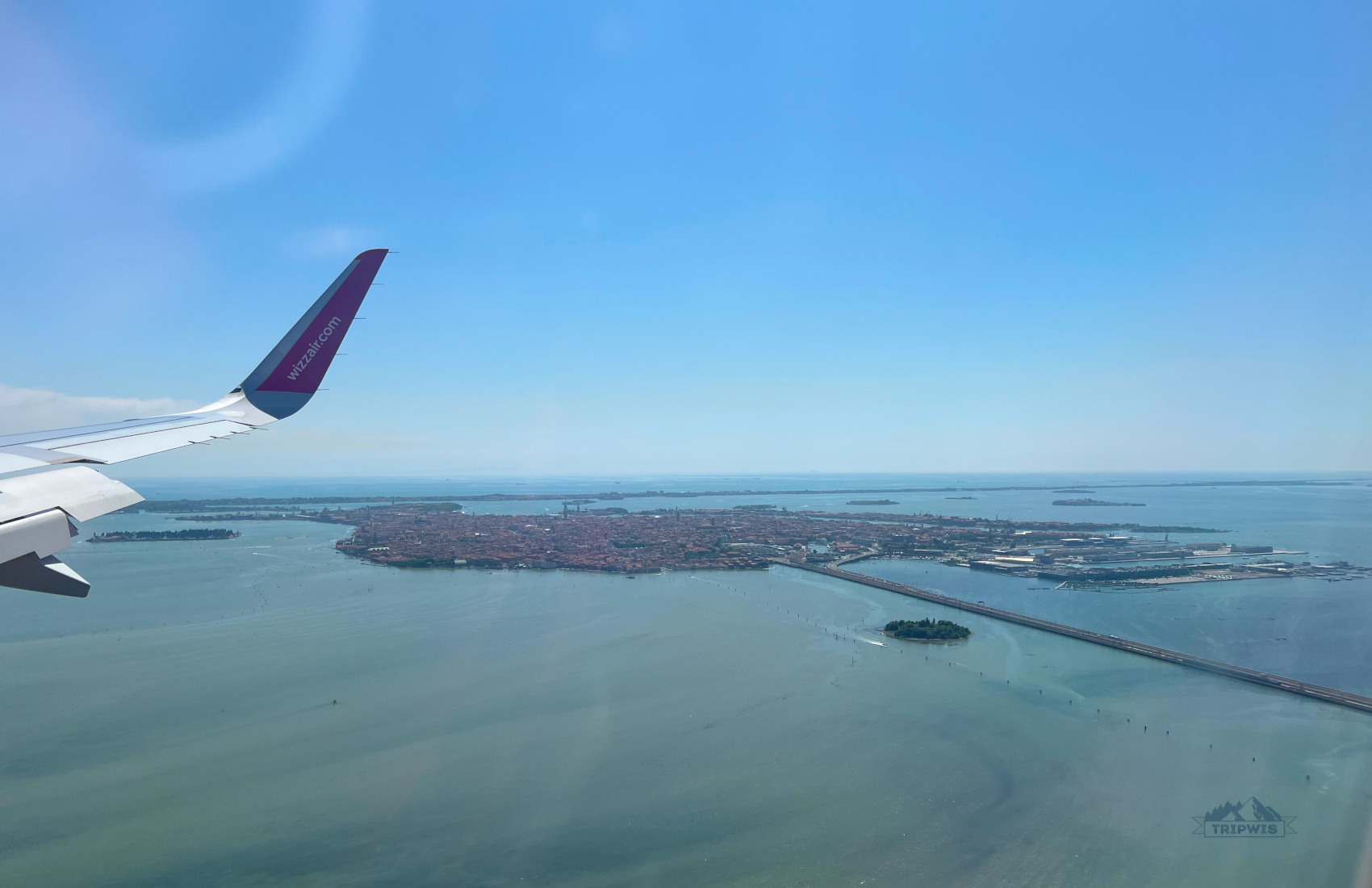
The Floating City is highly regarded for having the best airport for the Eastern Dolomites adventures – its location means easy access to Cortina d’Ampezzo. And while the east to west progression is not something we did (we started off in Ortisei), it is a very popular direction for a Dolomites road trip.
How to get to the Dolomites from Venice? Here are the stats:
- Distance: 150 kilometers / 93 miles
- Time on the road: 2–2.5 hours
- Toll road: €9 one way
- Stops: Venice!
- Focus area: Eastern Dolomites (Cortina d’Ampezzo, Lake Sorapis, Tre Cime di Lavaredo, Lago di Braies)
- Pros: Frequent international flights, easy access to Cortina d’Ampezzo, decent car rental options
- Cons: Confusing logistics if you want to explore Venice first (maybe delay renting a car until after you’ve visited Venice’s historical center?)
Side note: Hotels set in Cortina are understandably pretty expensive. Driving a bit away, to a quaint town of San Vito di Cadore seems to be the perfect solution – we stayed there at 3* Best Western Hotel Nevada for €100 a night.
Innsbruck
Flying into Innsbruck in Austria (yes) and driving across the border into Italy is actually one of the best ways to get to the Dolomites if you don’t have much time to spare. It is the quickest way to hit the trails or slopes in Northern Dolomites upon landing.
Innsbruck Airport manages two separate huge waves of Dolomites visitors – skiing fanatics in winter and hiking afficionados in summer. Flying here is great if you want to kill two birds with one stone – in this case, two separate countries! You can explore Austria for a bit and then make your way into South Tyrol, which still holds on to its Austrian culture remnants.
How to get to the Dolomites from Venice? Here are the stats:
- Distance: Just over 110 kilometers / 68 miles to Ortisei
- Time on the road: 1.5–2 hours
- Toll road: €40 one way
- Stops: Not so much a stop, more like epic scenery in transit – driving on the Brenner Pass is a beautiful experience
- Focus area: Northern Dolomites, Val Gardena (Ortisei, Alpe di Siusi, Seceda), and Val di Funes (Adolf Munkel)
- Pros: Ability to explore Austria first, a very short and stunning drive to the Dolomites
- Cons: An essential Austrian vignette for €9.4, Italian tolls, and Brenner Pass crossing for €12.5 one-way can amount to around €40
Verona
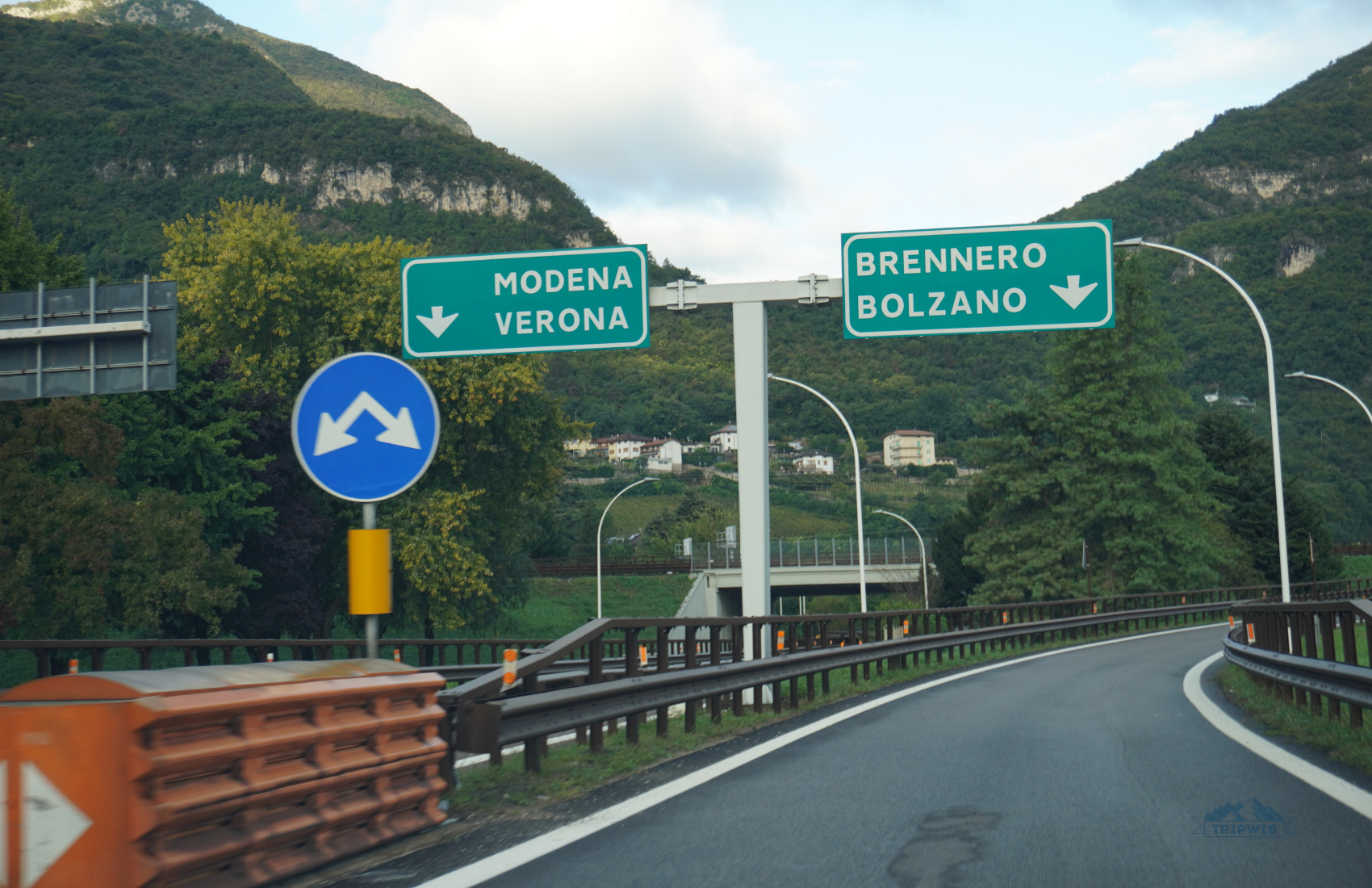
If you haven’t found a good enough deal on a flight to Milan, you can take comfort in the fact that you’re guaranteed to dig up an economical choice to Verona. Verona is usually the first search result when you’re looking for a budget-friendly answer to the question of how to get to the Dolomites by car.
Not only are the flights reasonably priced, but cheap car hires are also abound here. Though selections for both flights and rentals are smaller than those in Milan.
- Distance: 185 kilometers / 115 miles to Ortisei
- Time on the road: Just over 2 hours
- Toll road: €11 one way
- Stops: Lake Garda is a potential detour
- Focus area: Central valleys, mainly Val Gardena (Ortisei, Alpe di Siusi, Seceda)
- Pros: Amazing car hire rates and budget-friendly flights, easy and scenic drive, less touristy starting point
- Cons: Smaller selection of flights and car rentals
Bolzano
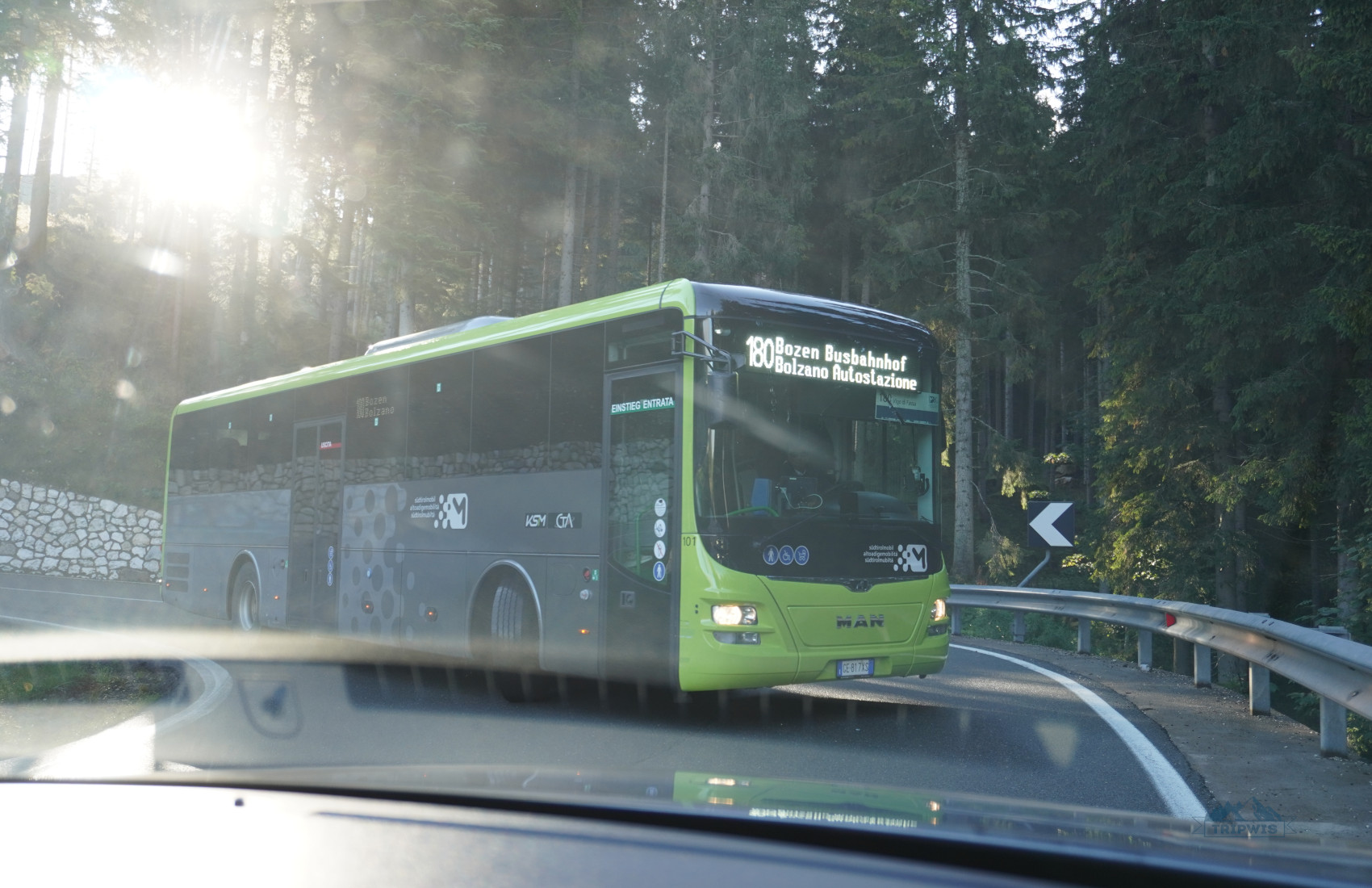
At first glance, it seems weird that Bolzano and its airport is not the first in line for the title of the best airport for Dolomites exploration. However, once you look into it, you understand that it should be in the running for the worst starting point! Even though Bolzano is set in the heart of the region, this convenience comes at a price – literally.
Bolzano is a poor choice for first-time Dolomites visitors because it offers very limited and highly expensive flights (it is mainly serviced by SkyAlps). Same rings true for car rental prices in Bolzano – small selection, sky-high costs.
If you have money to burn, however, then you can drop big bucks for the opportunity to start your Dolomites road trip as soon as you land, not wasting a second of your precious time.
- Distance: 40 kilometers / 25 miles to Ortisei
- Time on the road: 45 minutes to major trailheads in the area
- Focus area: Bolzano serves as a getaway into both Western (closest) and Eastern Dolomites
- Pros: Don’t have to waste time in transit – you are already in the mountains!
- Cons: Limited flights, crazy prices for plane tickets and car rentals
We arrived in Bolzano on the final day of our trip around the Dolomites and spent the night there before driving back to Milan. We stayed at 3* Hotel Raffl (from €140 a night) set very close to the airport.
Do you need a car in the Dolomites?
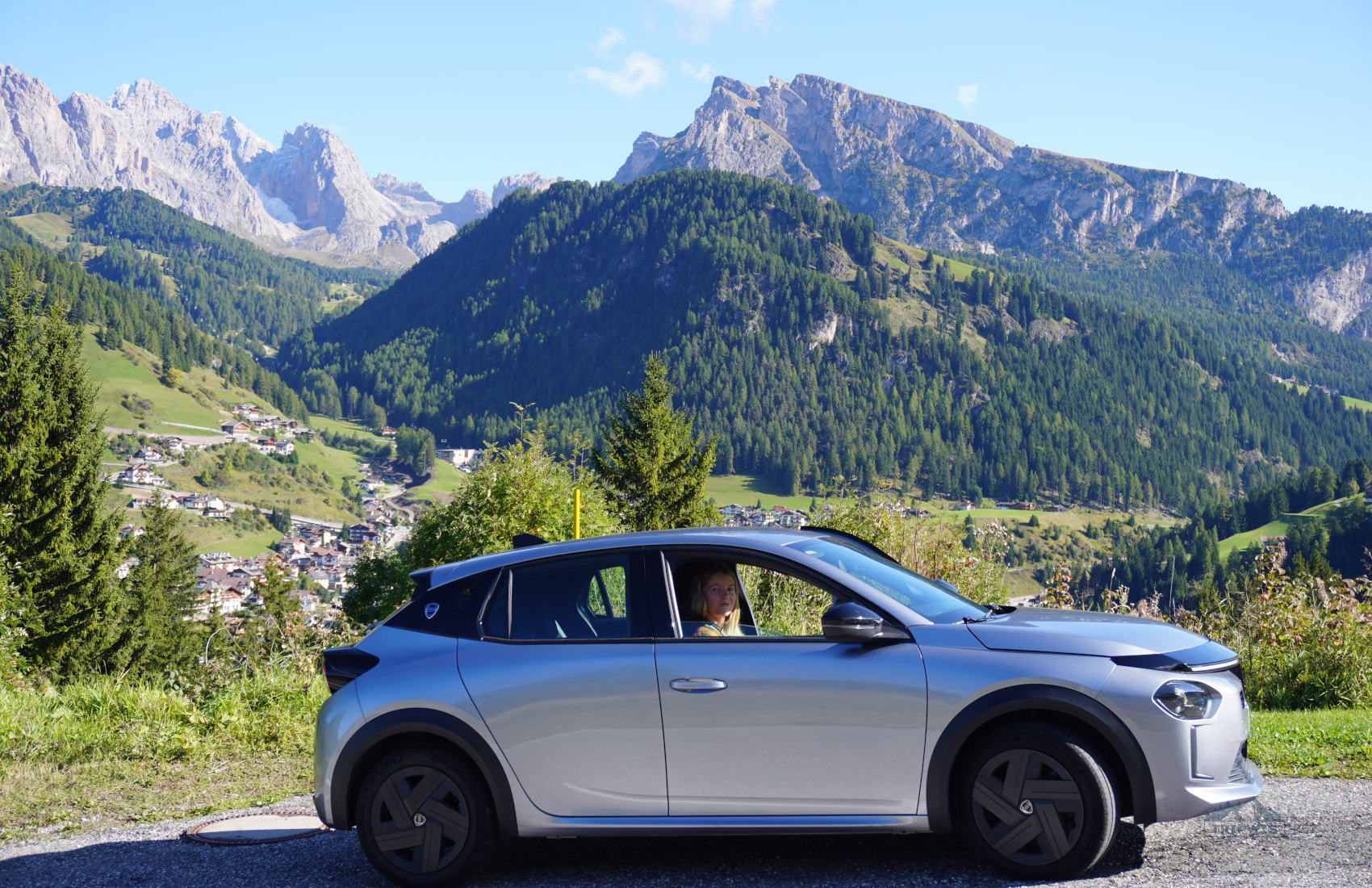
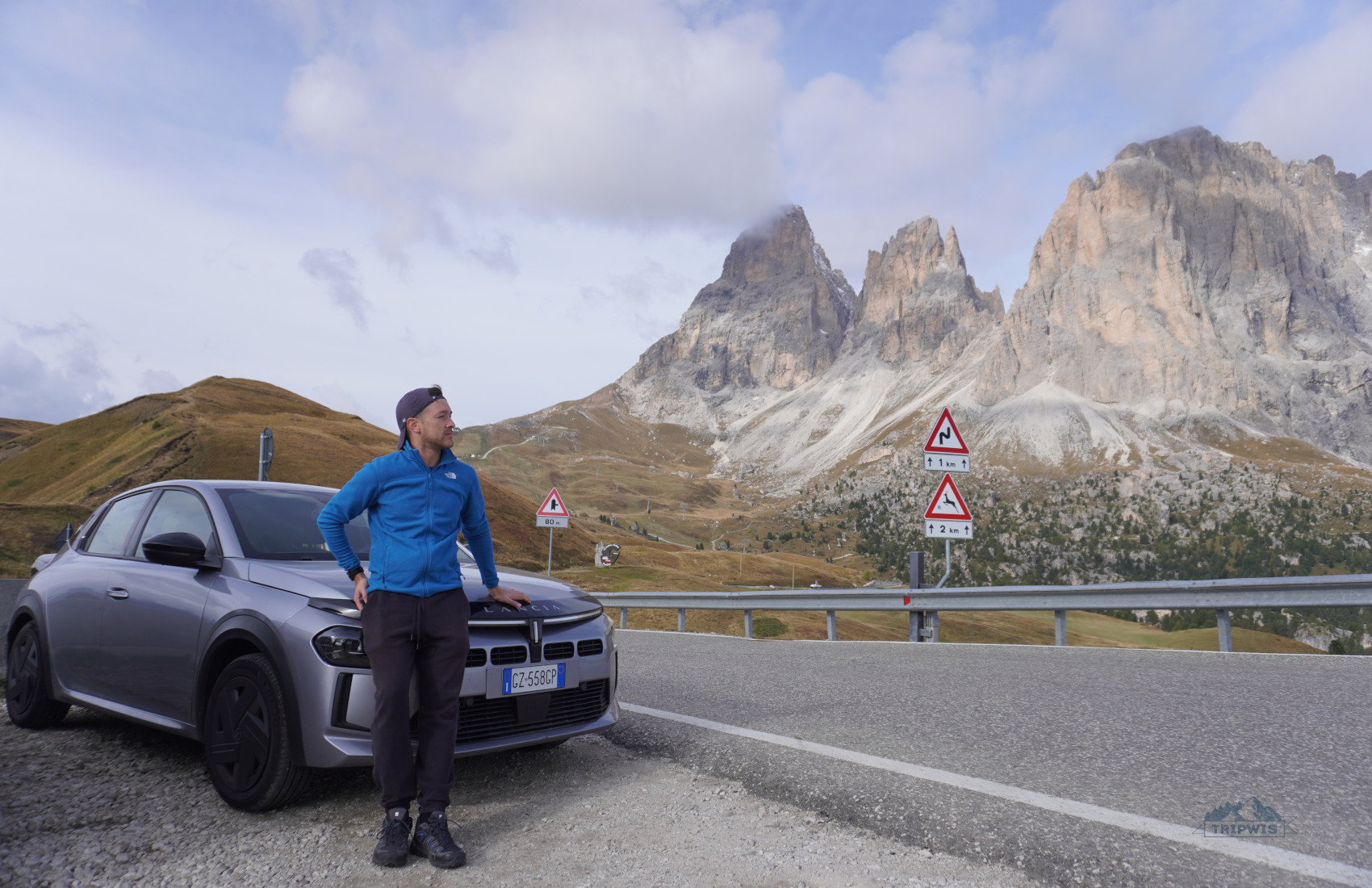
Our compact and pretty Lancia we booked on Discovercars
Before you decide on a plan of how to get to the Dolomites (by car, train, bus, etc.), you might want to figure out the best way to get around the region – the choices might be interconnected! Personally, it is my firm belief that you can’t comfortably adventure in the Dolomites without a car. However, it is not Gospel truth – you can use public transport to get to or around the Dolomites. It will just take you twice as long, require you to have a more detailed movement plan.
We used our rental car for the entirety of the trip – I have organized our itinerary in such a way that it followed a loop, hitting all the major stops: Most beautiful hiking trails, mountain passes, picturesque lake stops, as well as postcard-worthy churches and quaint towns.
You should rent a car in the Dolomites if:
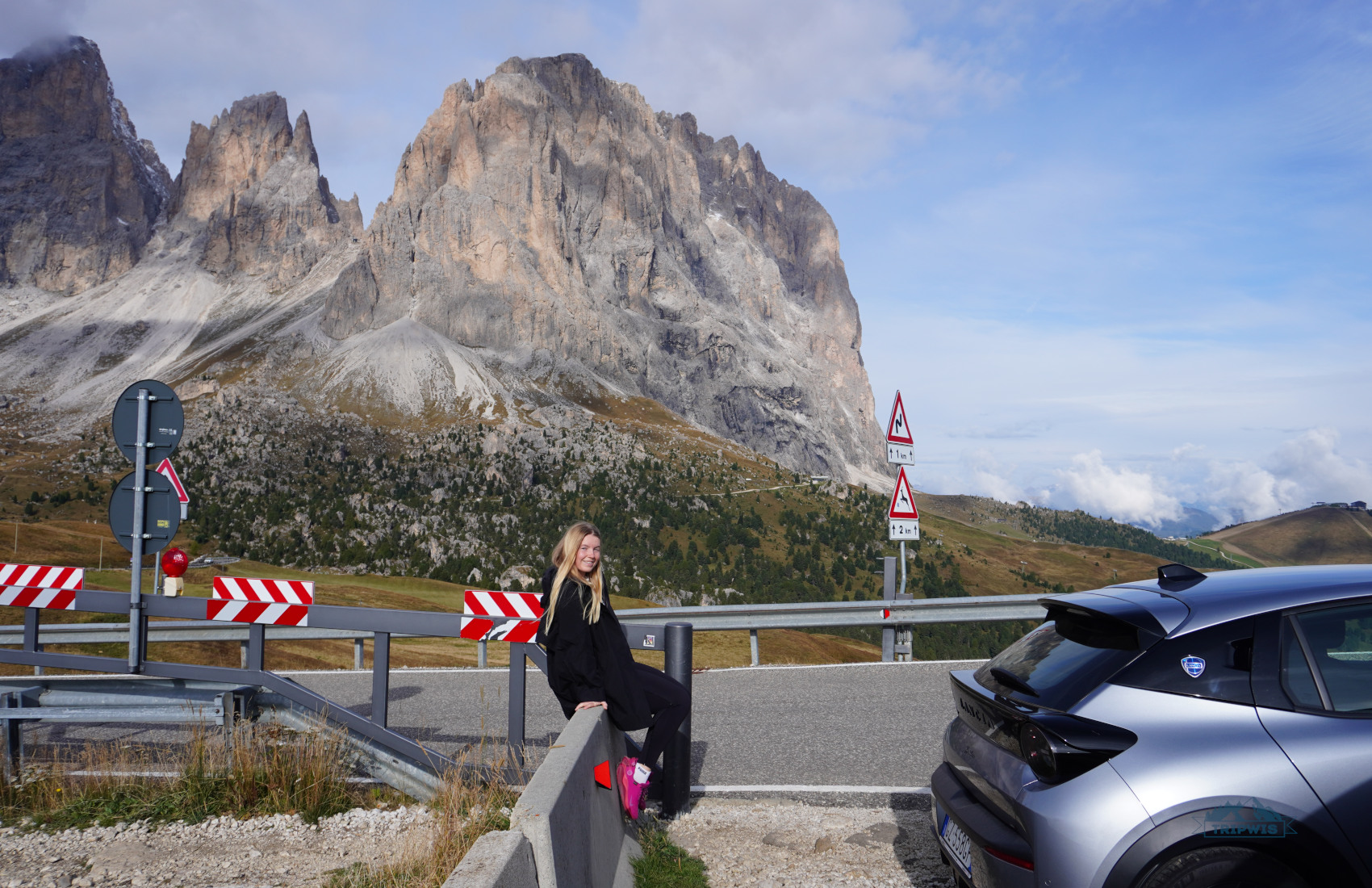
- You want to explore the sites that are scattered around the region. As you will soon learn, it makes more sense to have a couple of bases in the Dolomites, since the most iconic places are spread around different valleys. Moving from one place to another is easier with a car; plus, you can choose a more budget-friendly accommodation option in a smaller settlement.
- You do not like to be bound to a schedule that’s not yours. Starting your hike at the crack of dawn to watch the sun come out from behind the jagged mountain peaks, deliberately slowing down and ordering another Hugo Spritz at a rifugio overlooking a sprawling valley, going on a detour before or after your “main hike” of the day – all of these situations cannot realistically happen if you’re relying solely on public transportation operating times.
- You want to see more off-the-beaten-path locations. While it’s true that the most popular destinations of the region (Tre Cime di Lavaredo, Alpe di Siusi) are very well-connected, you cannot say the same about some small but visually invigorating trail you’ve found out about by word of mouth.
- Your trip falls on the shoulder season. Much like cable cars, all the summer buses stop running around mid-October, making your movements around the Dolomites harder. In general, seasonal closures are a thing to look out for here, so feel free to consult with my guide on the best time to visit the Dolomites to have your trip go without a hitch.
- You tend to overpack. In the end, hauling multiple bags from train to bus, to another bus, to a taxi (it all depends on where you’re going) is not a fun activity, to say the least!
You should not rent a car in the Dolomites if:
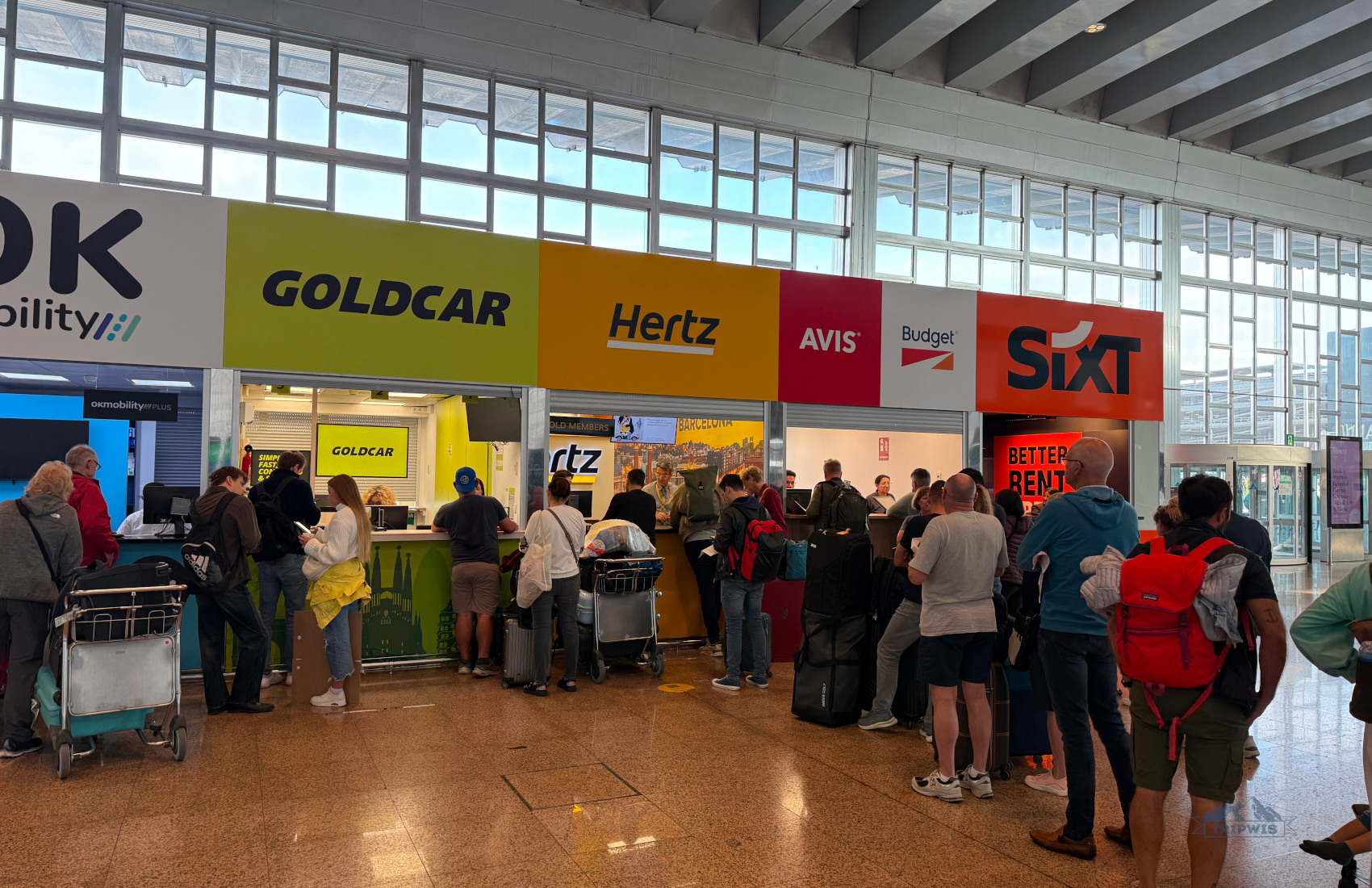
- You’re planning to stick to one home base in the Dolomites. If you choose Ortisei as your mountain headquarters, you can get by without a car. The town is very pedestrian-friendly, and it’s a major transportation hub. Multiple cable cars start from here, and even if you want to explore a destination that’s not in the valley, many bus routes will take you there.
- You are skeptical about your abilities of driving in the Dolomites. Though I go into more detail on this topic further down, it goes without saying that some mountain roads here are not for the faint-hearted. Narrow lanes, sharp hairpin turns – though manageable if you’re an experienced driver, these things will likely send chills down a newbie motorist’s spine.
How to rent a car in the Dolomites?
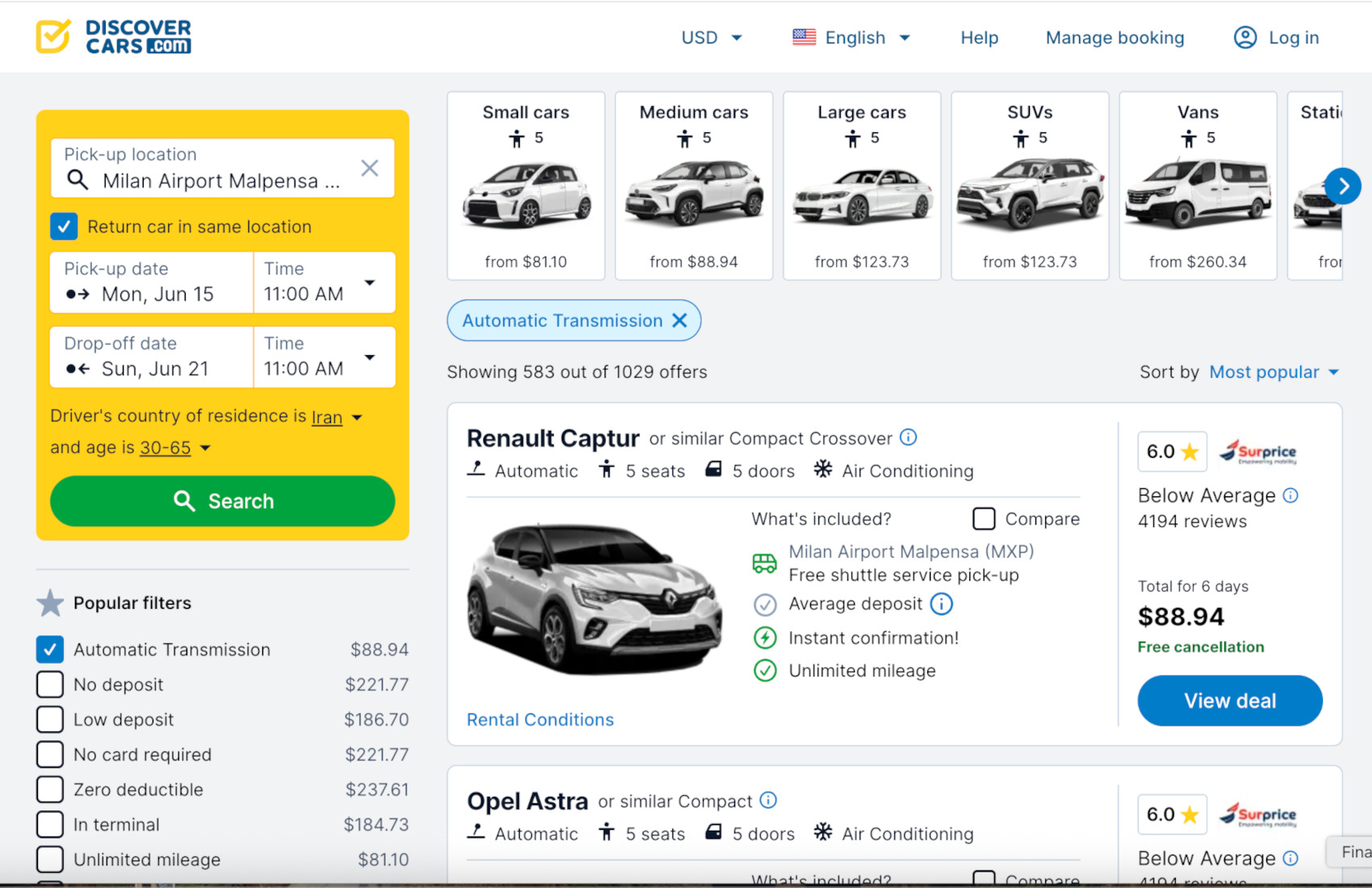
If you’re leaning towards exploring the Dolomites by car, you should have an overall idea of how to go about renting it here. It’s no rocket science, really, but it’s better to understand the process:
Choose a reputable rental service
I have long sung praises to Localrent (their service is by far the greatest I’ve ever encountered), but they are relatively new to Italy and their fleet of cars here is still small, with prices slightly above average.
Because of this, I looked into two other rental services:
…and landed on a new Lancia Ypsilon that was a practical steal (€80 for 6 days, talk about off-season in the Dolomites!) from a supplier that was well-reviewed via Discovercars.
Book your car early
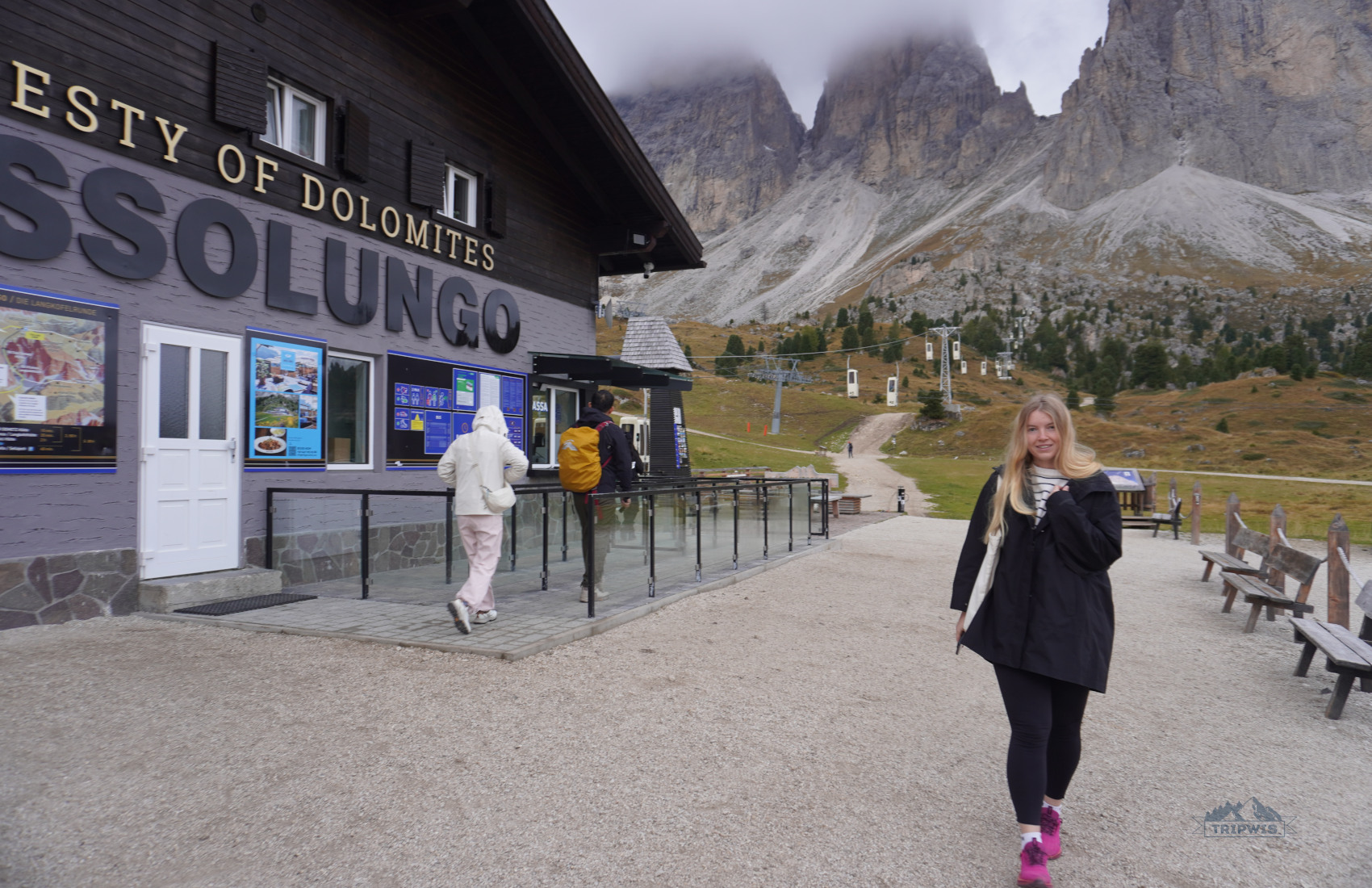
For summer period, you should start making moves 2–3 months ahead – and no, it’s not too early! It’s better to be safe than sorry: As soon as you’ve settled on your trip dates, make that car rental confirmation. Wait longer and you will end up without a car or with an outrageously priced vehicle that is not something you wanted.
If you’re traveling in shoulder season (late September-October), you can get away with renting a car a week or two in advance – the demand is way lower as are the prices.
Pay close attention to insurance, deductibles, and deposits
These are the “small print” points that will either make or break your car rental experience in the Dolomites.
Insurance. All car rentals in Italy already include Theft Protection, Third-Party Liability, and CDW (Collision Damage Waiver). Though these are already counted in the total car price, such a basic insurance combo means a huge deductible. Full Coverage always lowers the amount of the deductible – though in Europe, it never drives the total down to zero (in other places, full coverage option means no deductible).
Deductible (also known as excess). This is what you have to scour the rental agreement for – it’s a total that you will personally cover if there’s an accident or if the car is damaged (anything beyond that will be taken care of by insurance). From our experience, rental companies, particularly in Italy and the rest of Europe, like to max out the amount – between €800 and €2,000 on average.
Deposit. A temporary security hold on your credit card at the start of the rental period that ensures the funds are available to cover potential damages, fines, and other expenses. Basically, it’s a guarantee that you will not stifle the establishment. The deposit amount is usually equal to (or slightly lower than) that of a deductible. When we rent a car abroad, we usually like to leave our deposit in cash (you get it back upon car drop-off, as opposed to having to wait for the amount to be unfrozen on your card for days or even weeks later), but again, it is a very rare thing in Europe!
Our experience: Our totals in Milan looked like this – €800 deposit with a €1,400 deductible. If we were to get full coverage insurance (€35 per day), the deposit amount would’ve been lowered to €100 with zero deductible.
Bring the required documents
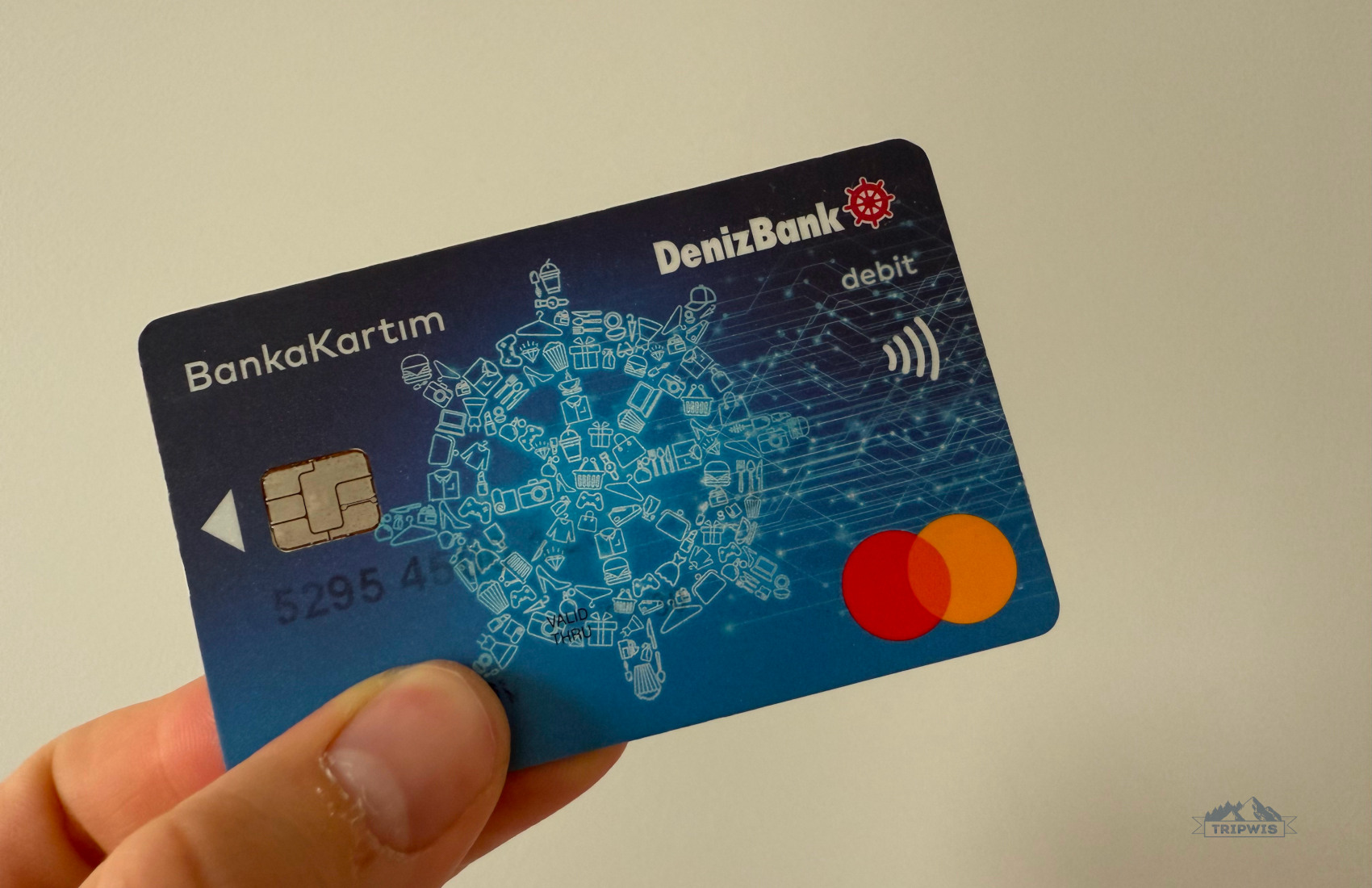
You need to have the following papers to be able to rent and drive a car in Italy:
- a valid driver’s license (held for at least a year)
- an IDP (International Driving Permit) if your license is from outside of the EU
- a credit card in the driver’s name for the deposit
You don’t have to bring a printed out rental confirmation, but if you’re a type A traveler, you know it wouldn’t hurt to have the document on hand (in case your phone dies or if you have a patchy signal).
Inspect the car upon pick-up
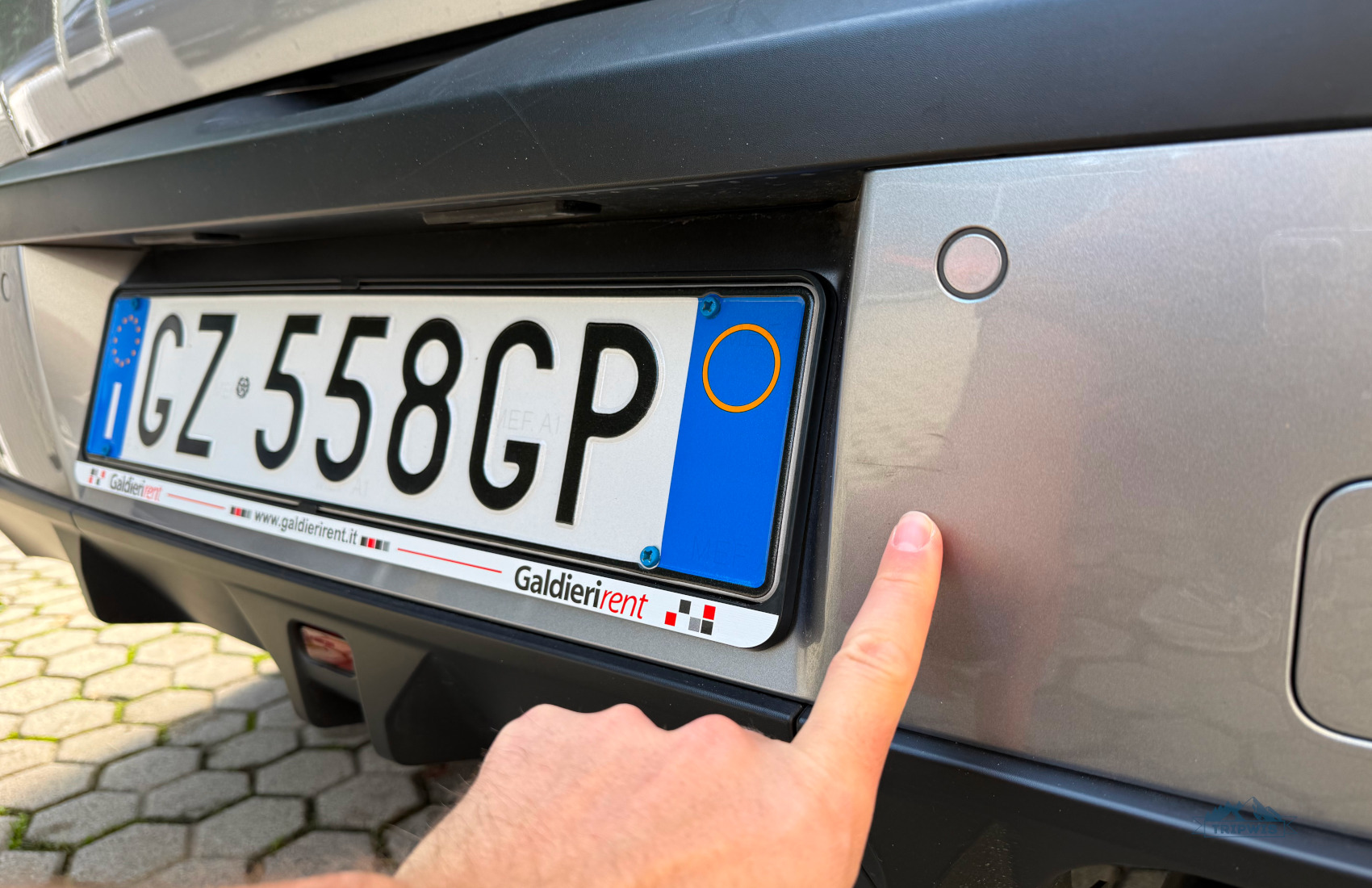
Before you drive away in search of your Dolomites adventures, take a few minutes to document the outside and the inside of your car in great detail – both by photos and videos. This is particularly useful if you did not purchase Full Coverage insurance.
Our experience: It’s better to be safe than sorry – I even went so far as bringing a desk worker to smell the car with us, since the air inside was heavy with cigarette odor (left by the previous temporary owners).
Driving in the Dolomites: What first-timers should know
Driving in the Dolomites for the first time might feel scary – the winding narrow roads that lead far up into the mountains before snaking down into the valley, sharp turn after sharp turn might not be synonymous with a serene experience. At least, the locals in this part of Italy don’t tailgate you like it’s a fun sport (like they do in Sardinia).
However, I am here to tell you that it is perfectly safe to drive in the Dolomites – millions of visitors do it every year! You just have to pay closer attention to the road and make sure you know all the tips and tricks.
Here they are:
- Mountain roads and switchbacks
 |
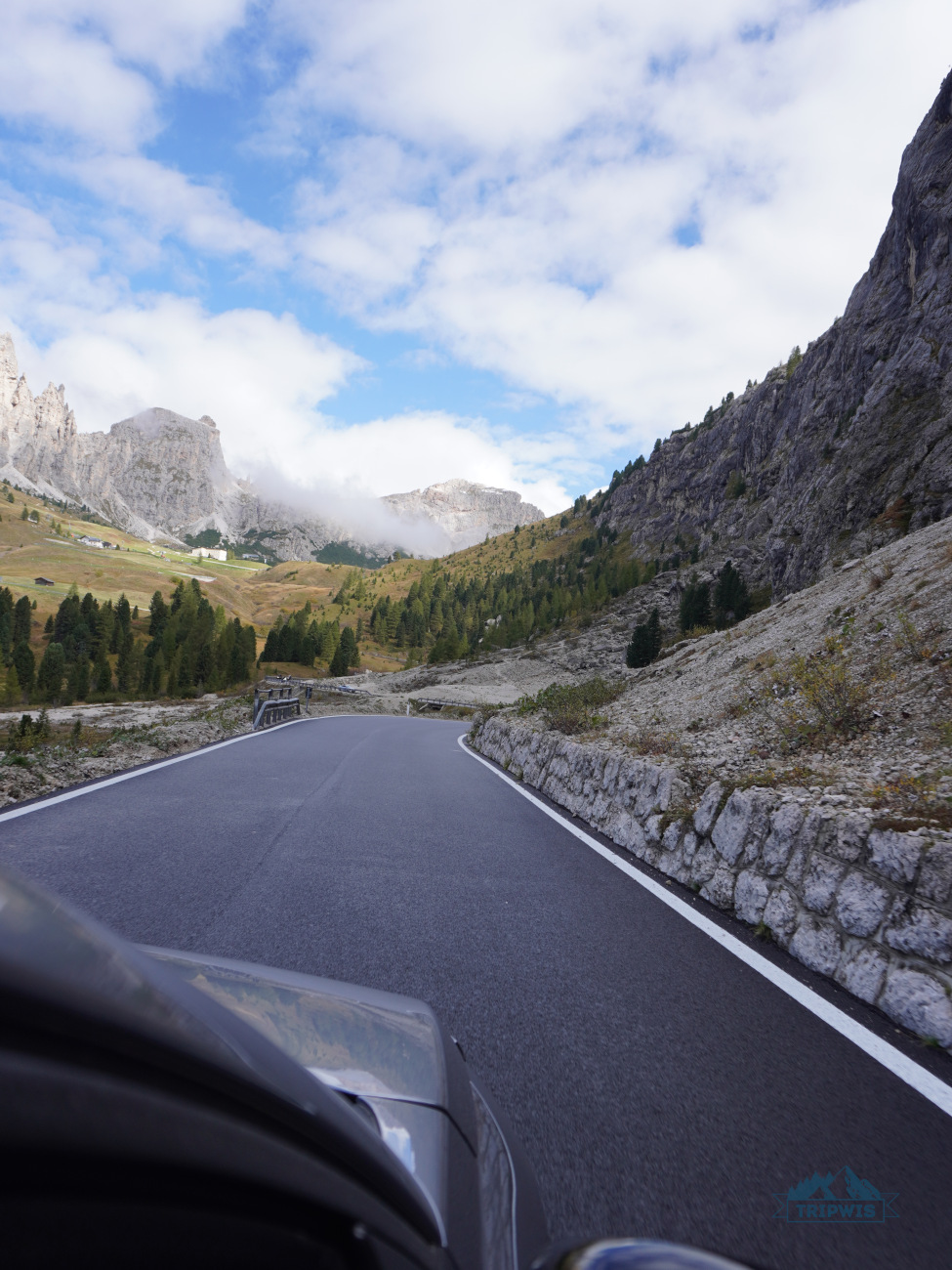 |
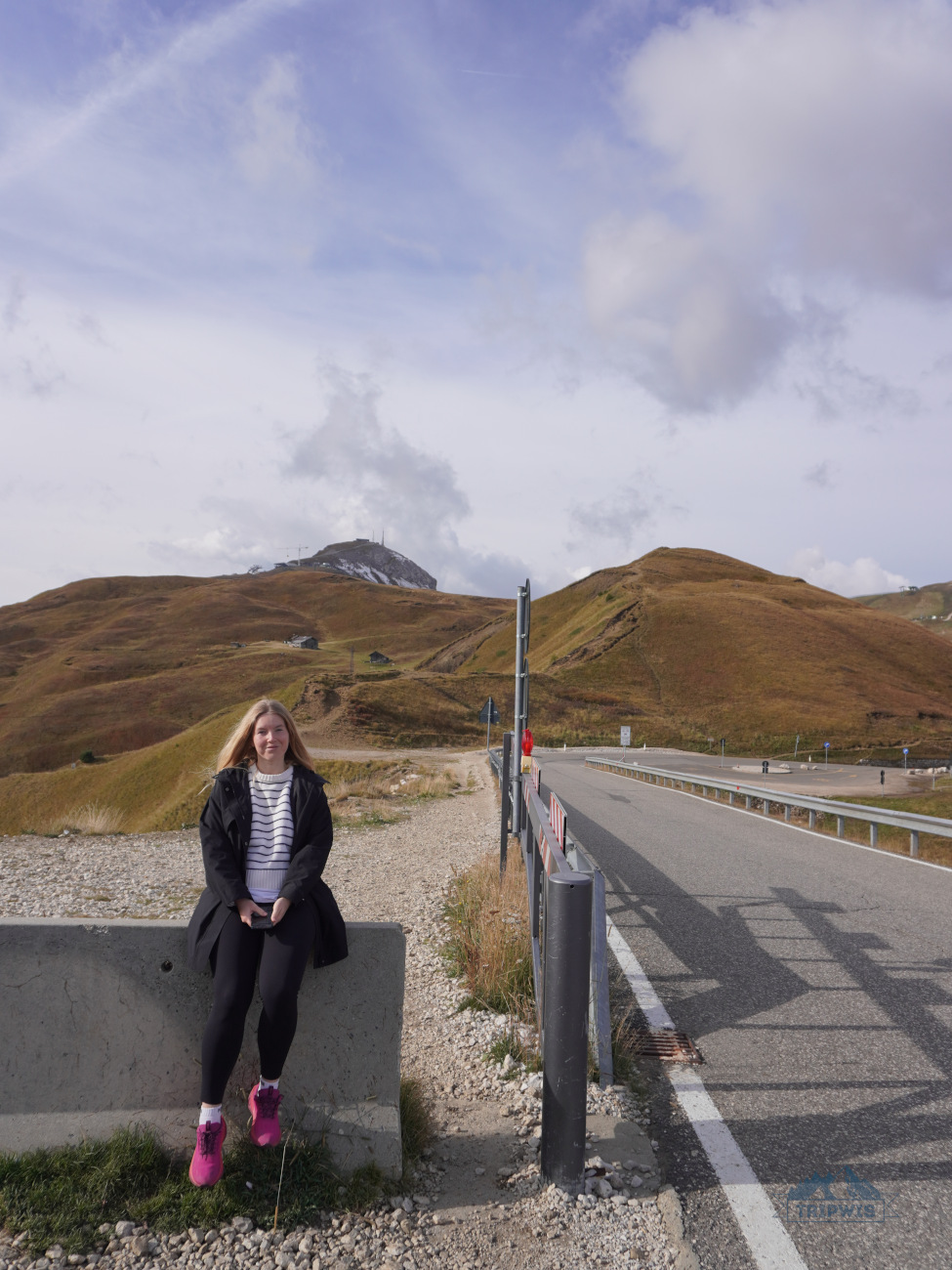
You cannot possibly expect this vast mountain region not to have switchbacks! Yes, your palms will get sweaty as you near another serpentine curve, but it’s nothing to feel too stressed about. The roads in the Dolomites are in excellent condition, with the surface of the road smooth like butter on most stretches.
Note that the speed limits here are in km/h and they depend on the road surface: 50 km/h (30 mph) in towns, 90 km/h (55 mph) on country roads, and 130 km/h (80 mph) on motorways.
- Offline maps
Since you’re driving in the mountains, you might as well expect the signal to be patchy and not work properly all the time. If you want to plan for such occasions beforehand, download an offline map. If you’re not a big fan of Google Maps for navigation, you can always try using something else – Organic Maps are great for both driving and hiking. For the trails, you can also use AllTrails.
Side note: Even in the Dolomites’ towns, it gets tiring having to rely on Wi-Fi signal. I recommend you get an eSIM via Airalo to always be connected.
- Parking
 |
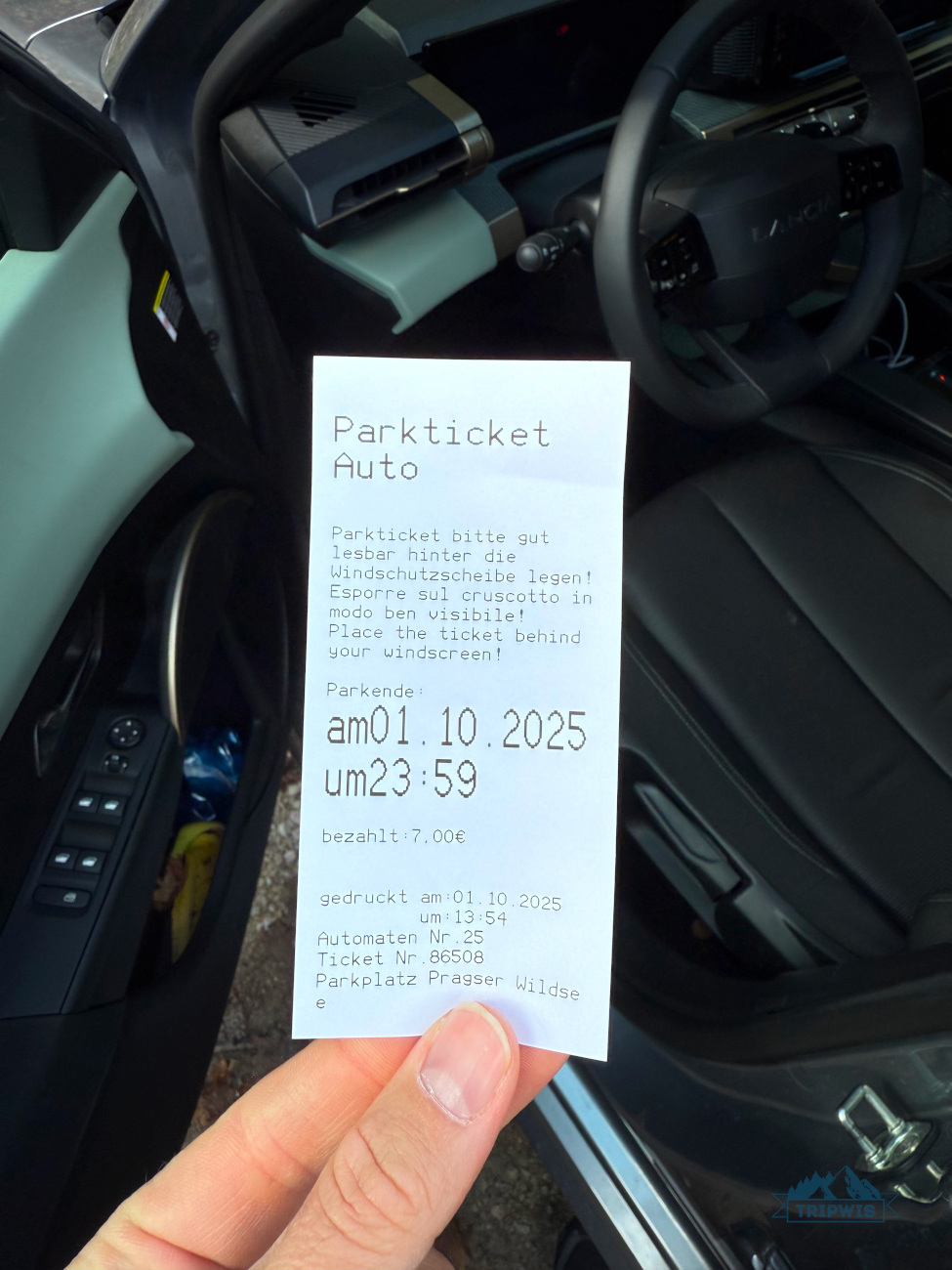 |
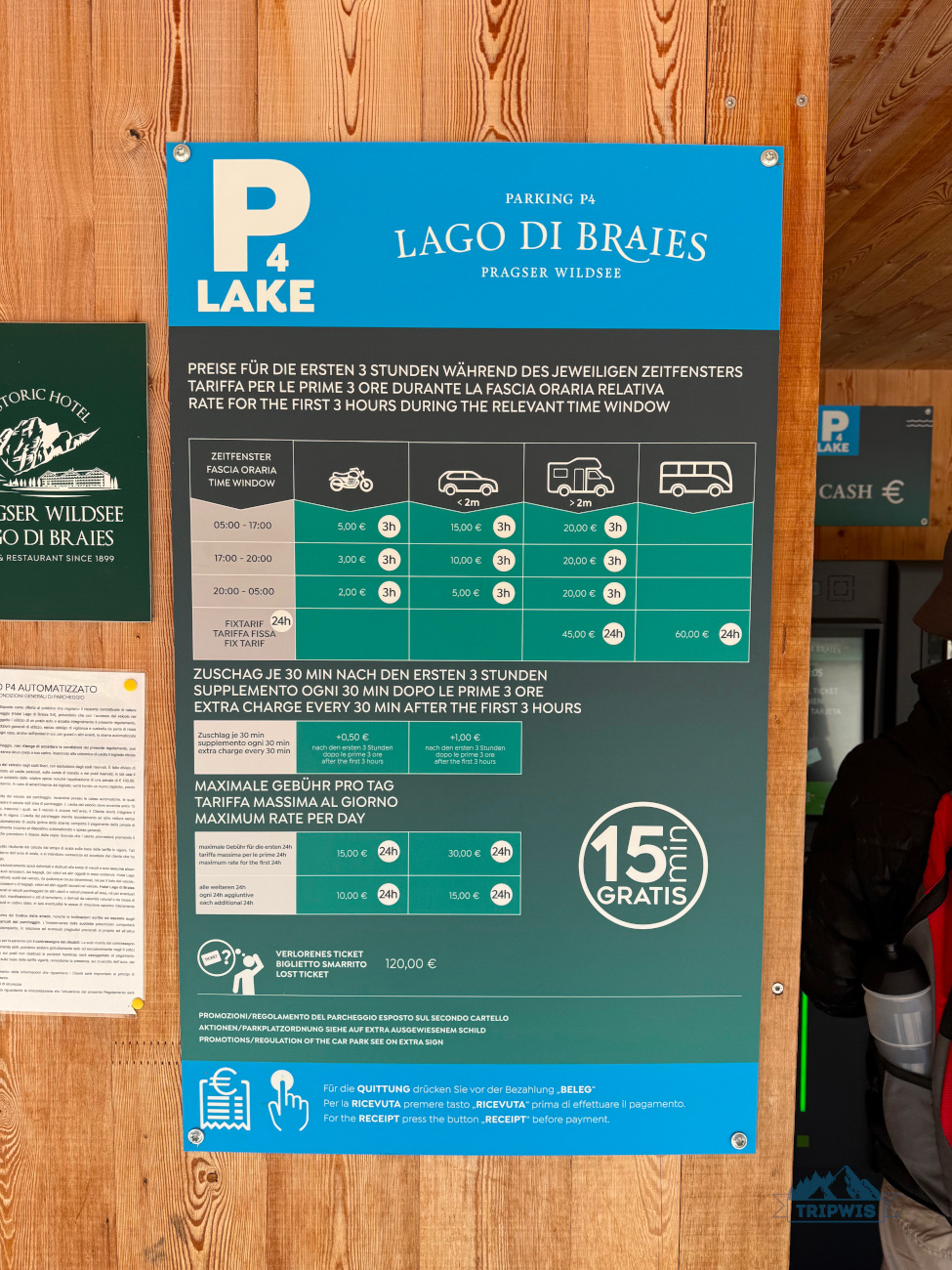
Parking in the Dolomites is a sore subject for many – each parking lot has its own operating schedule, rules, prices, etc. It sometimes feels like there are a million hoops you have to jump through just to leave your car some place and finally start your adventure.
In my detailed breakdowns of each hiking route (links below), I have made it a point to give you all the necessary information regarding parking near the trails!
Just to give you a general idea of the price scope, here are the latest stats:
- For Alpe di Siusi, the choices are either a parking lot under the cable car station in Ortisei (€6 per hour in high season / €0.5 per hour from mid-September) or spaces in Compatsch (€30 per day for the closest lot).
- For Seceda, it all hinges on which cable car you’re planning to take: Col Raiser, our pick, has a lot with prices of €2 per hour, Ortisei–Seceda cable car is a steeper expense (€5 per hour).
- For Lake Sorapis, you will not have to spend a dime – both shoulder-side parking and a larger lot in the distance are completely free (a rare thing in the Dolomites!).
- Tre Cime di Lavaredo balances out the free Lake Sorapis experience by having the most outrageous prices I’ve seen in the Dolomites: €40 per car for 12 hours!!! Plus, you have to book your spot way in advance, otherwise they won’t let you through the toll gates.
- Prior booking is also necessary to access the parking area for Lago di Braies during peak season. There are three parking lots near the lake, and the closer it gets to the shore, the more expensive it is (the priciest one is €30 for 24 hours).
- Adolf Munkel offers a more reasonable price tag: €10 per car.
Note that all the parking lots near the trailheads (apart from those that require prior reservation) fill up extremely fast in the mornings. In order for you to snag a spot, make sure to be there around 8 a.m. or even earlier in high summer season.
For more parking-related tips – including free places to stop, which is basically unheard of in the Dolomites! – check out my latest YouTube video:
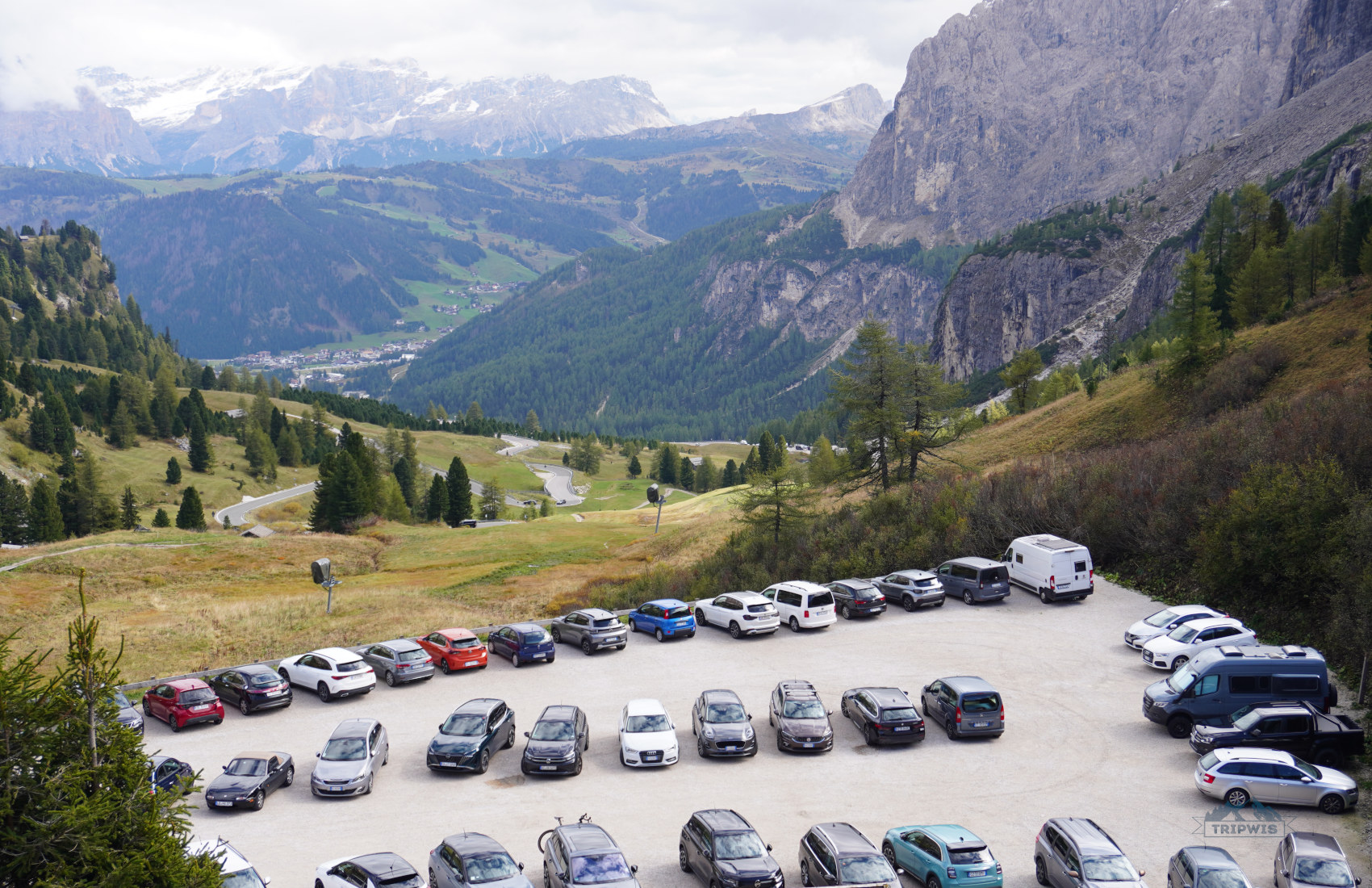
If you’re not much of an early bird, or if you have a hike in mind that best works later in the afternoon (Adolf Munkel, for instance), then arrive at the parking space after 3 or 4 p.m. – the morning crowds have waned by now.
When navigating towns in the Dolomites, be aware of ZTL areas (Zona Traffico Limitato, or zones restricted for traffic) – they restrict driving and parking, and are usually condensed around historic town centers (in cities like Ortisei, Cortina d’Ampezzo, and Bolzano). Look out for the large white circle sign with a red border if you don’t want to pay a huge fine.
In order to avoid the added headache of looking for parking in cities in the Dolomites, try and find a hotel that has you covered in this regard (the list of ours is just a tad below) – it will save you from worrying about at least this one feature of having a rental car.
- Early starts
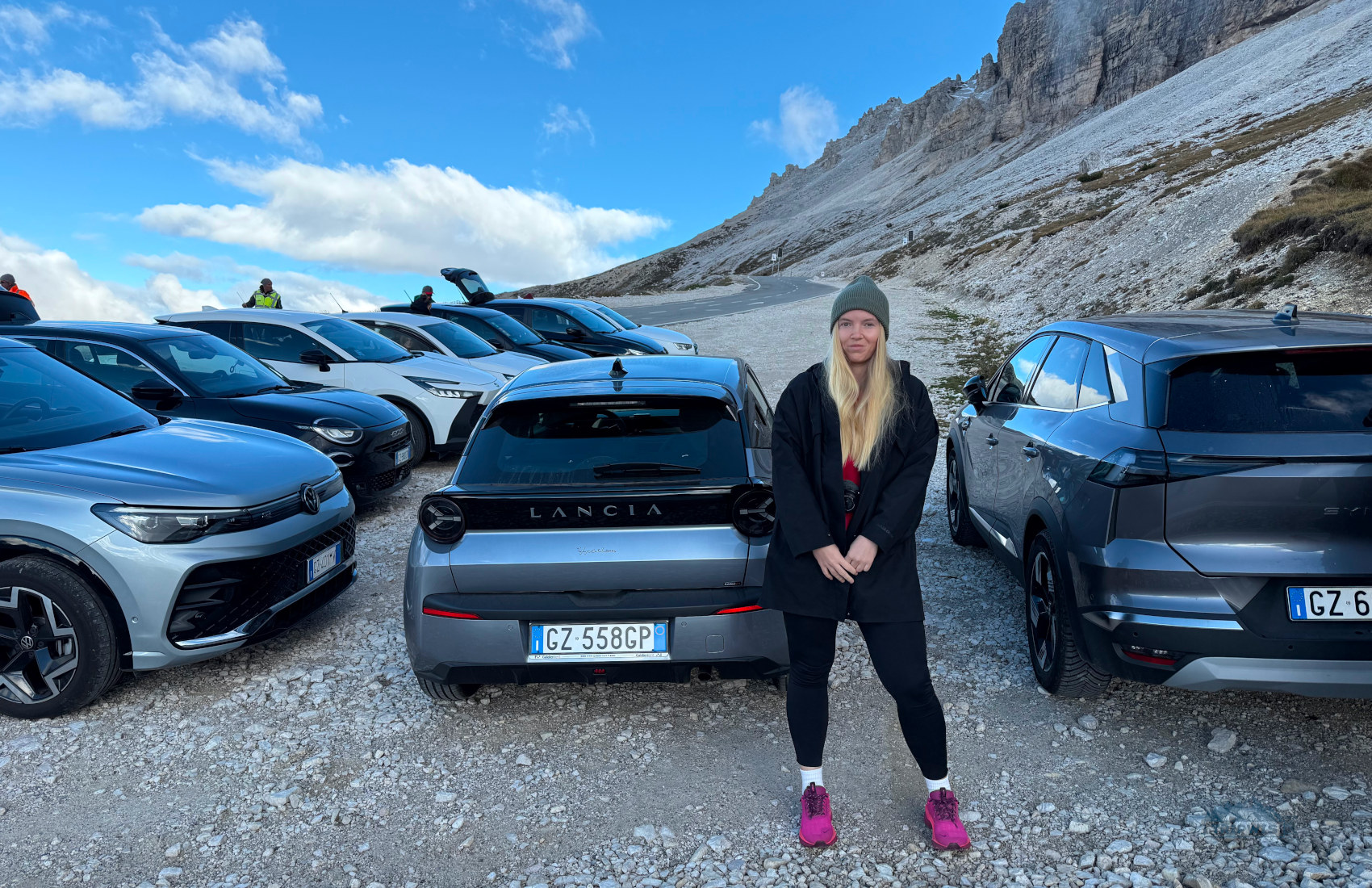
It is true that the early bird gets the worm in the Dolomites – starting your day at the crack of dawn means ample parking spots, lack of crowds on the trails, and nature that still feels “wild”, where you can hear birdsong and even catch glimpses of the local fauna going about its business. The light is also magical in the early mornings.
It is in your best interest to skip breakfast (looking for a cafe that’s open this early is a futile attempt) – pack up some coffee drip bags, hot water, and a few snacks and have a picnic right on the trail!
- Toll roads
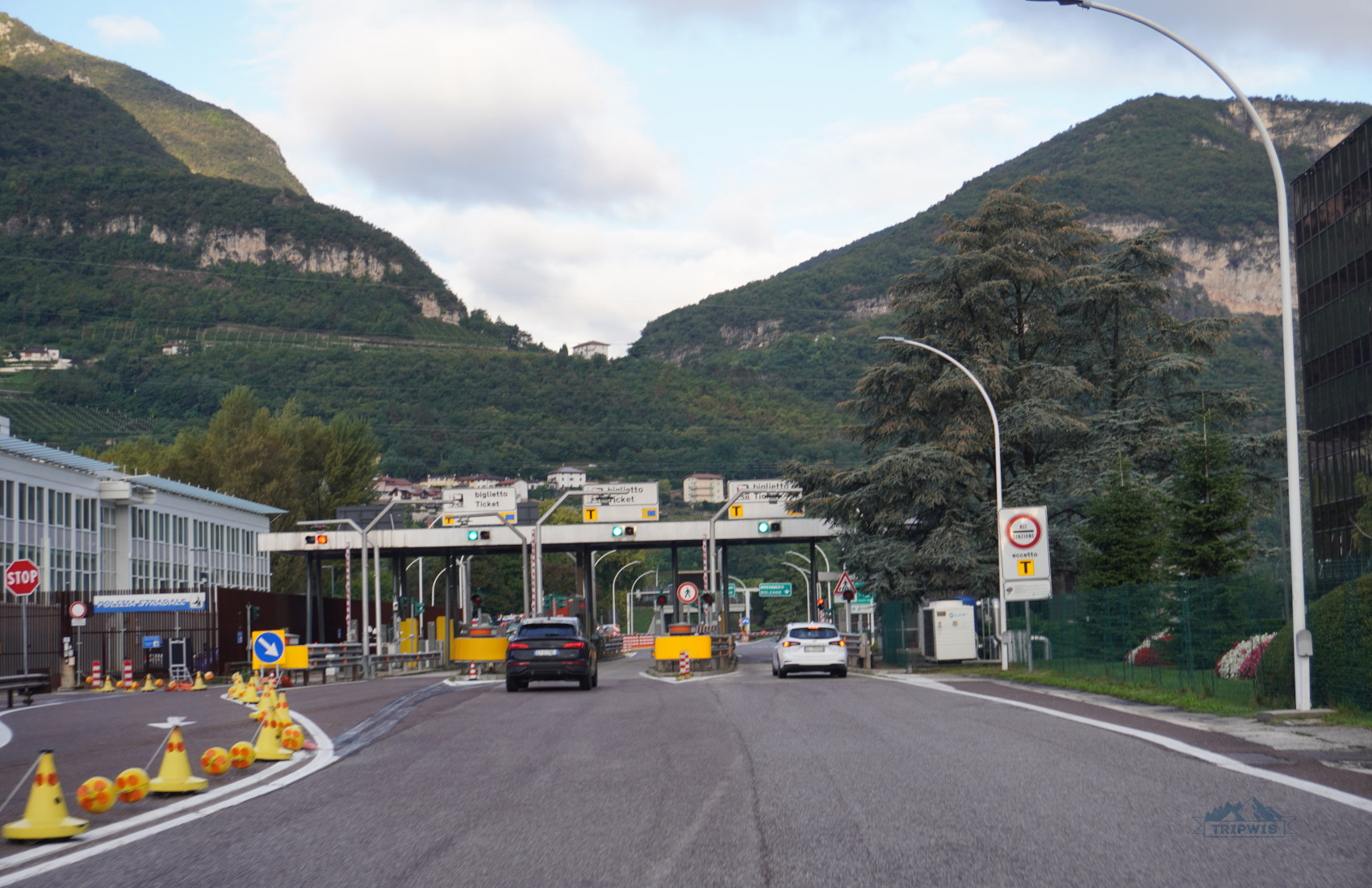
When I was initially searching for guides on how to drive to the Dolomites, the question of toll roads came up quite a lot. They are not that big of a deal in the region itself – apart from the toll road to Tre Cime di Lavaredo, we didn’t encounter any other paid stretches.
However, when you’re considering a few best starting points to set off on your adventure, the toll roads in Italy for a Dolomites trip begin to play a more prominent role in your itinerary planning.
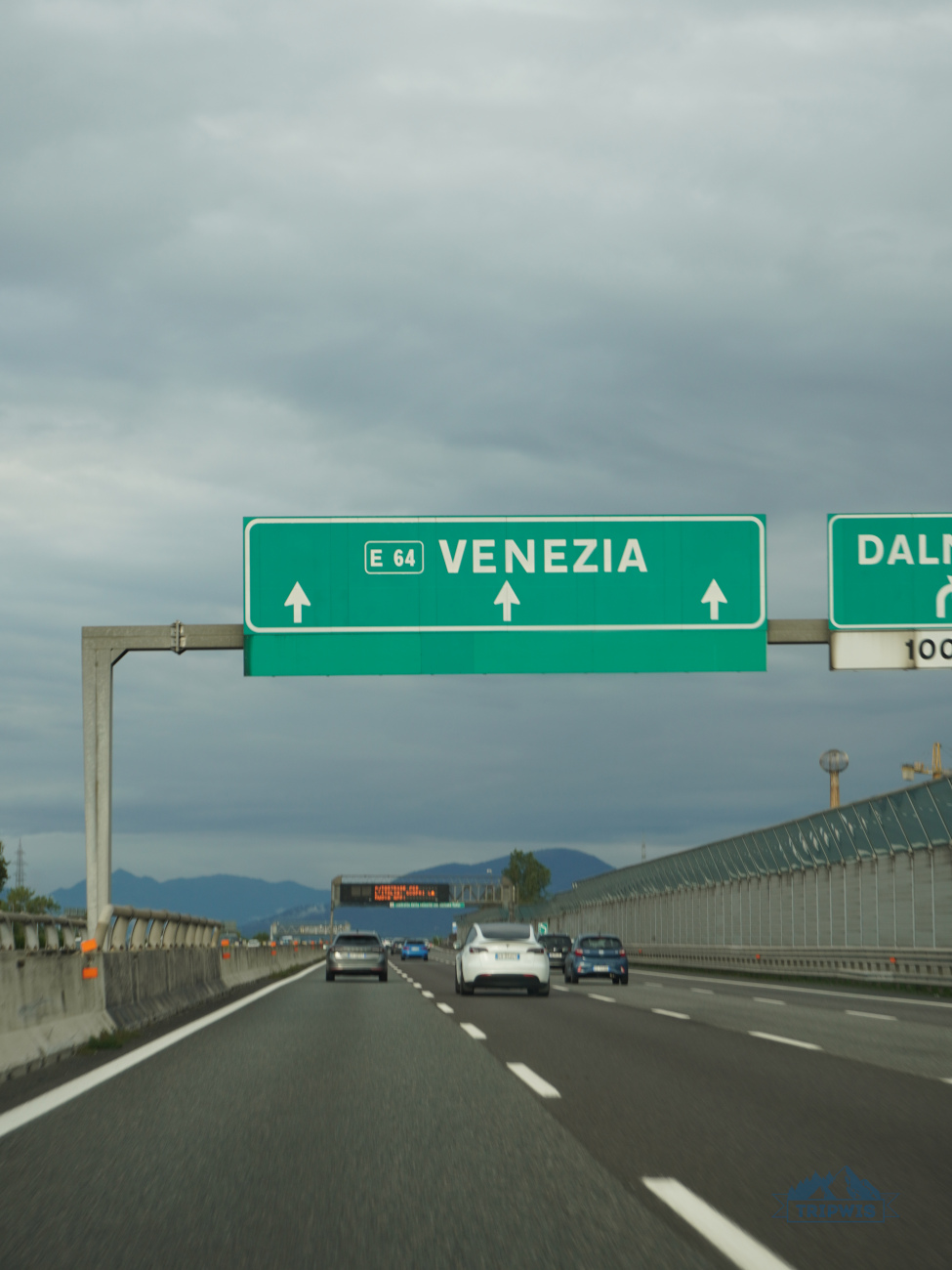
Some major highways (Autostrade) in Italy charge tolls – if you’re coming from Venice, Verona, Milan, or from the Austrian side, expect to drop some money! There are auto-pay machines on most of the toll roads. Expect to spend around €20 if you’re traveling between major cities in Italy by car.
 |
 |
Side note: Whatever GPS system you’re using, it probably has the “avoid tolls” option. You can look into it; however, most of the times, it adds a few hours to your journey – but time is money, my friends! It is better to finish the journey faster and finally begin exploring the region for real than driving around trying to avoid toll roads.
Our experience: As we started off in our mighty rental from Milan, we drove on three toll roads in the direction of the Dolomites. The expenses amounted to €19. There was a free alternative, but that route would’ve taken six hours instead of three, so we decided to pay up!
Note that though most toll booths in Italy accept credit cards, it is better to have some cash on hand, just in case. Cash is king in the Dolomites. And I’m not talking just about Dolomites toll roads access – rifugios (trail mountain huts), parking meters, gas stations are sometimes cash-only; yes, even in the year 2026! Always keep at least €20 in your glove compartment – it’s not hard, and your future self will thank you for it.
Where to base yourself in the Dolomites?
 |
 |
If you’re inching even closer to choosing the “by car” option when deciding on how to get to the Dolomites, you may benefit from this luxury of freedom of movement by having multiple bases for your exploration. It just makes sense – though the Dolomites are not crazy large, if you want to get to the trailhead by sunrise, you have to stay relatively close to it.
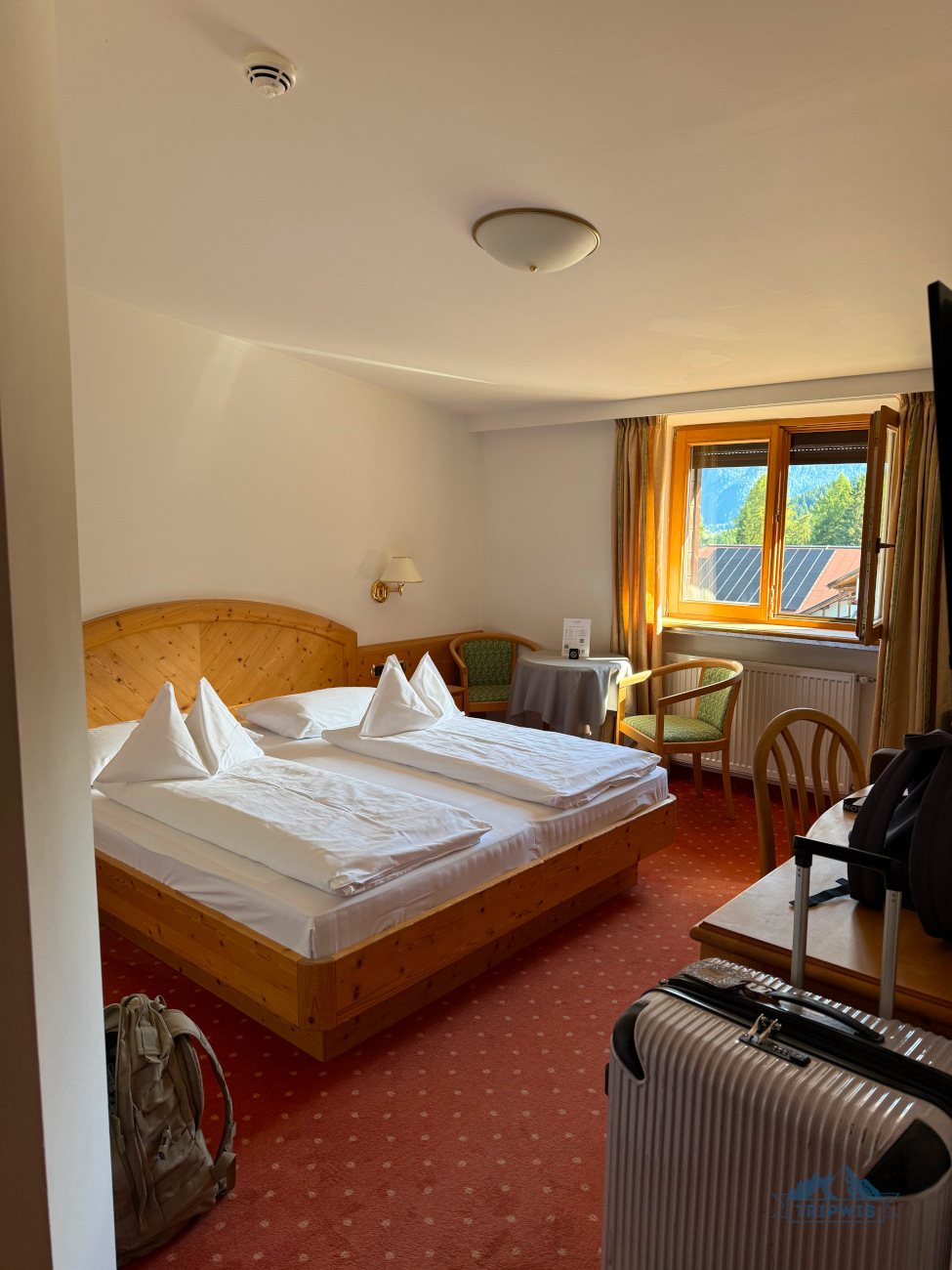
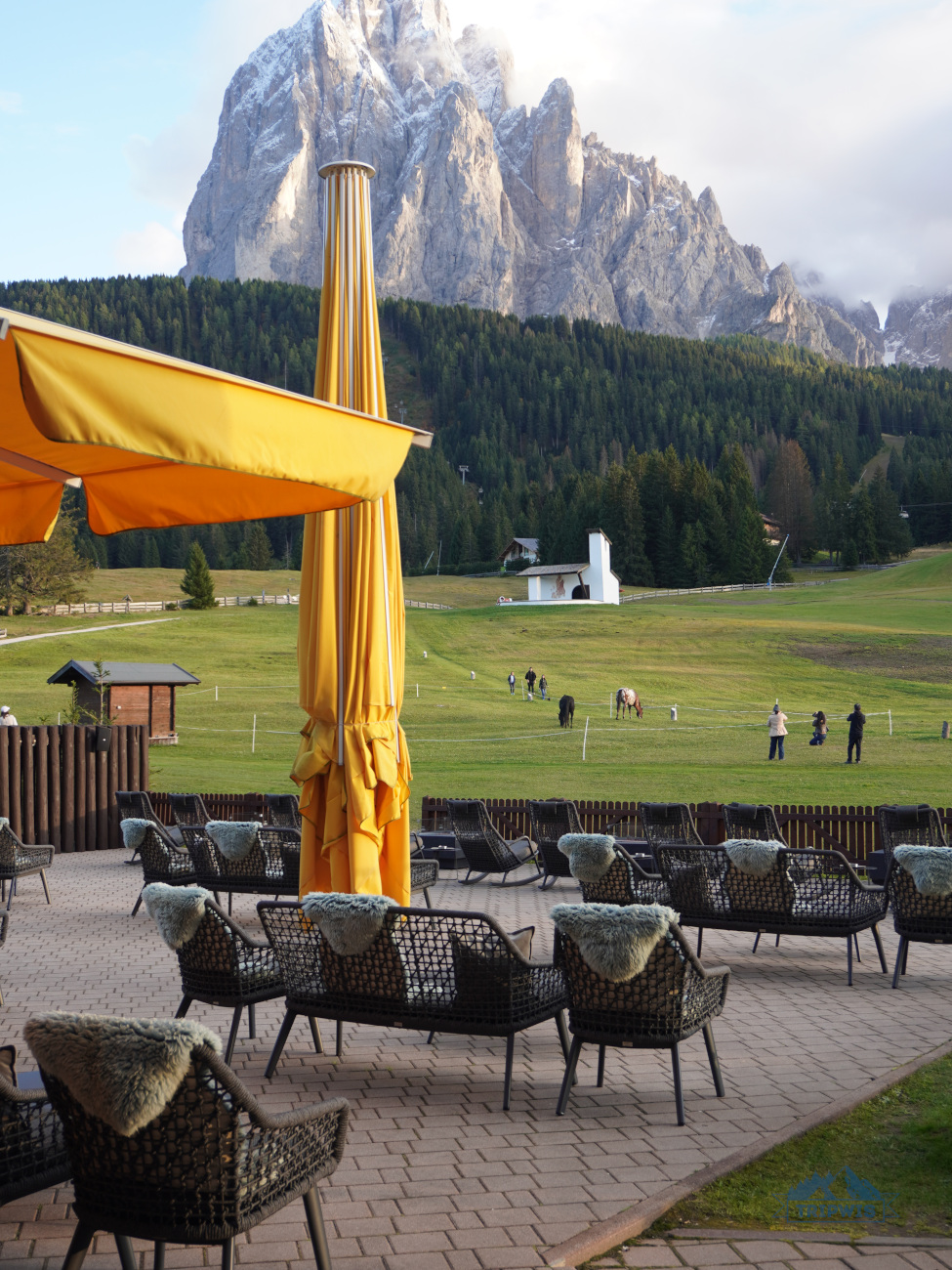
But the day hikes in the Dolomites are spread out all around the region. Here is our example – we had three bases here during our last trip:
- For our Val Gardena shenanigans (Alpe di Siusi, Seceda, Sassolungo), we stayed at 4* Monte Pana Dolomites Hotel (from €200 a night on half board) – it’s a hotel in Santa Cristina, not too far from Ortisei. Staying in a smaller town allowed us to enjoy the peace and quiet after packed hiking days, while saving some money in the process
- For Lake Sorapis and Tre Cime di Lavaredo, we dropped our bags at 3* Best Western Hotel Nevada (from €100 a night) – again, a great hotel in a more serene setting in San Vito di Cadore, at least when comparing the ambiance to that of the major hub of the valley – Cortina d’Ampezzo
- For Val di Funes (Adolf Munkel), we ventured even further from “civilization” and spent the night at Lazfon’s darling hotel, 3* Gasthaus Zum Weissen Kreuz (from €120 a night)
You do not have to stick to our itinerary to a T: Most travelers that have five or more days to spare decide on just two bases – in Ortisei and Cortina d’Ampezzo (or in smaller villages that surround these tourist centers). Your personal plan will hinge upon which starting point you have chosen for your Dolomites adventure – depending on where you’re coming from, some areas will make more sense to base yourself in.
No matter what you decide on, you may rest easy knowing that the region has no shortage of great hotels to choose from – the question of where to stay in the Dolomites generates thousands of pages of options!
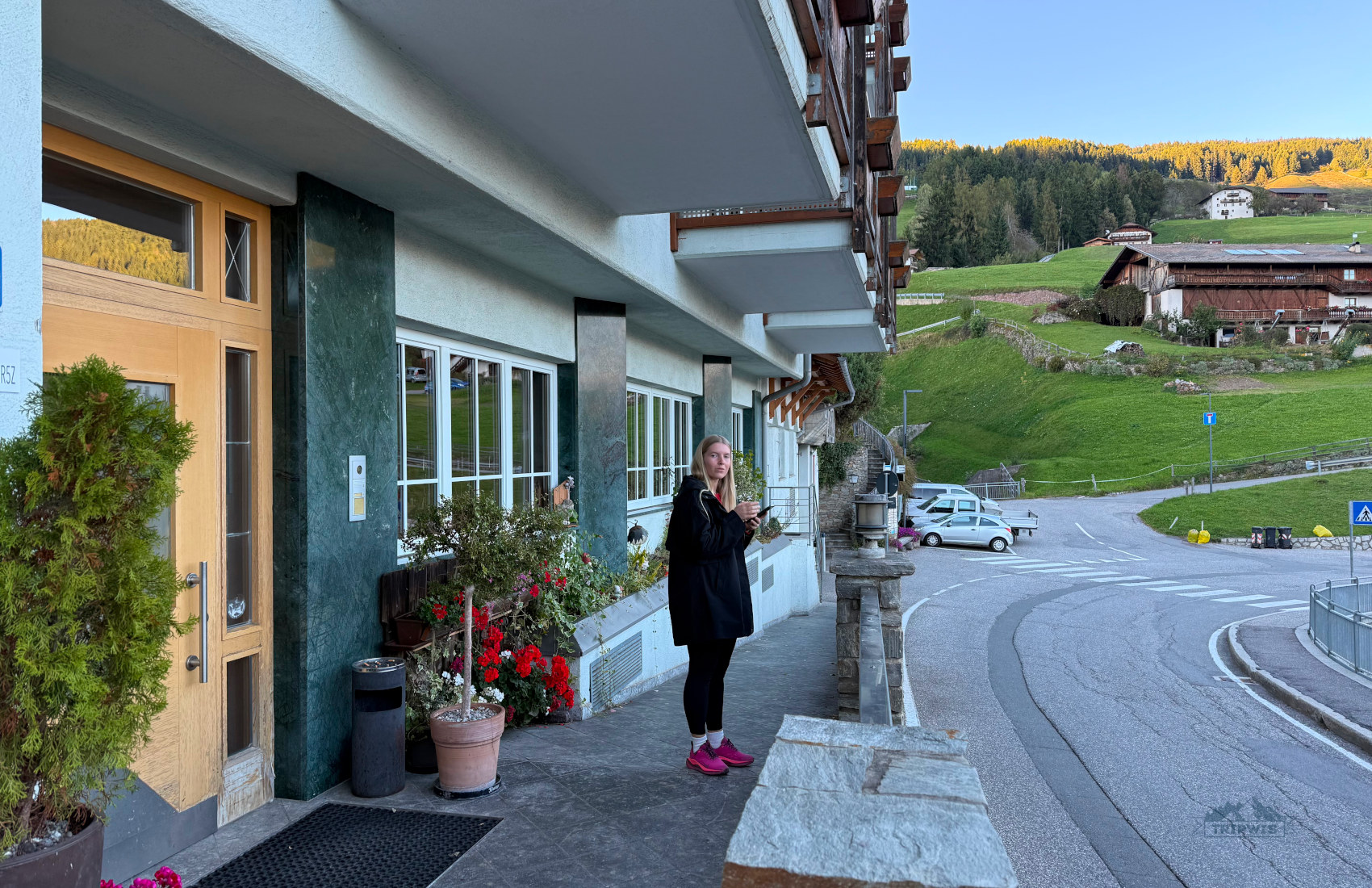
Here are a few more that I can recommend:
- 4* HOTEL de LËN (from €400 a night) – a small boutique hotel set in the heart of Cortina d’Ampezzo. The design and overall “mission” of de LËN is that of eco-consciousness, with luxury to back it up (all wood furnishings and rooftop pool create an aura of wellness and opulence). The relaxation techniques used here are that of the future – most guides list the hotel as a “sleep retreat”, which is just what we need in our busy sleep-deprived lives. Parking spaces at the hotel are very limited though, and cost a pretty penny – expect to pay €50 / day for valet parking and €25 / day for self-parking.
- B&B Casa al Sole (from €325 a night) – an intimate Bed and Breakfast that is highly regarded for its outstanding breakfast service and winning location in Ortisei, close to the city center and major cable cars and lifts. The minimalist and modern design in combination with a no-TV concept in the rooms (you can go for a full digital detox here) encourages complete relaxation. There is free parking on-site; reservation is not needed.
- 4* Hotel Touring Dolomites (from €230 a night) – located in Santa Cristina (close to Ortisei), this family-run hotel is a perfect getaway into Val Gardena. A newly-built wellness center and a rooftop infinity pool are reasons enough to book a room here! There is free private parking available on-site.
- 5* Granbaita Dolomites (from €450 a night) – a luxury hotel in Selva di Val Gardena that is renowned for its fully-stocked spa, high-end gourmet dining, and a personalized experience that can only be achieved by a family-run establishment. On-site free parking is available here.
- 3* Alpstay – Smart Hotel Saslong (from €215 a night) — an ultra-modern smart hotel in Santa Cristina. It is known for the high-tech experience: Self check-in, self-serving bar, smart cleaning (whatever that is) – the list of functional and exciting amenities goes on and on! It also includes free parking.
Getting to the Dolomites by public transport
 |
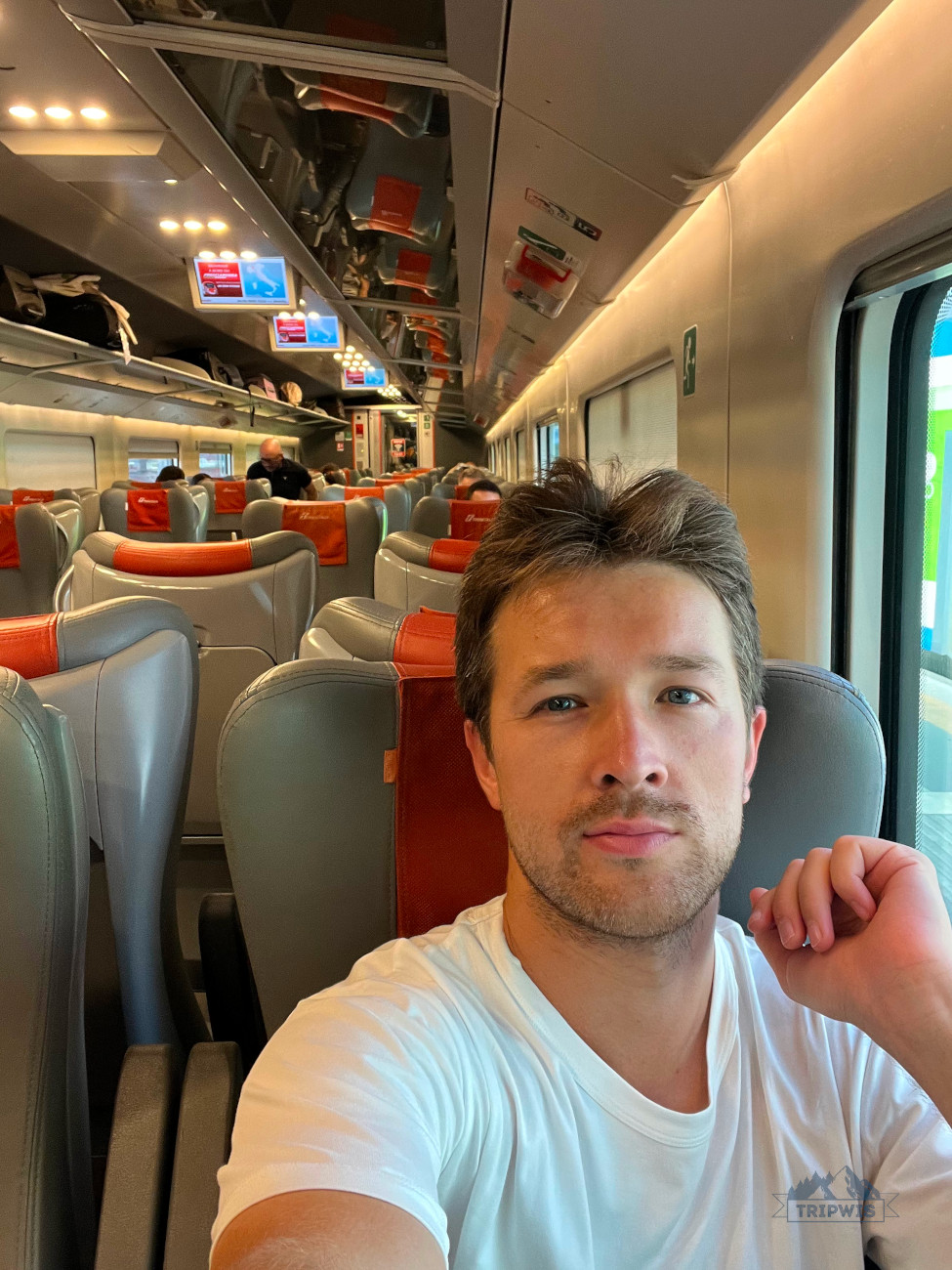 |
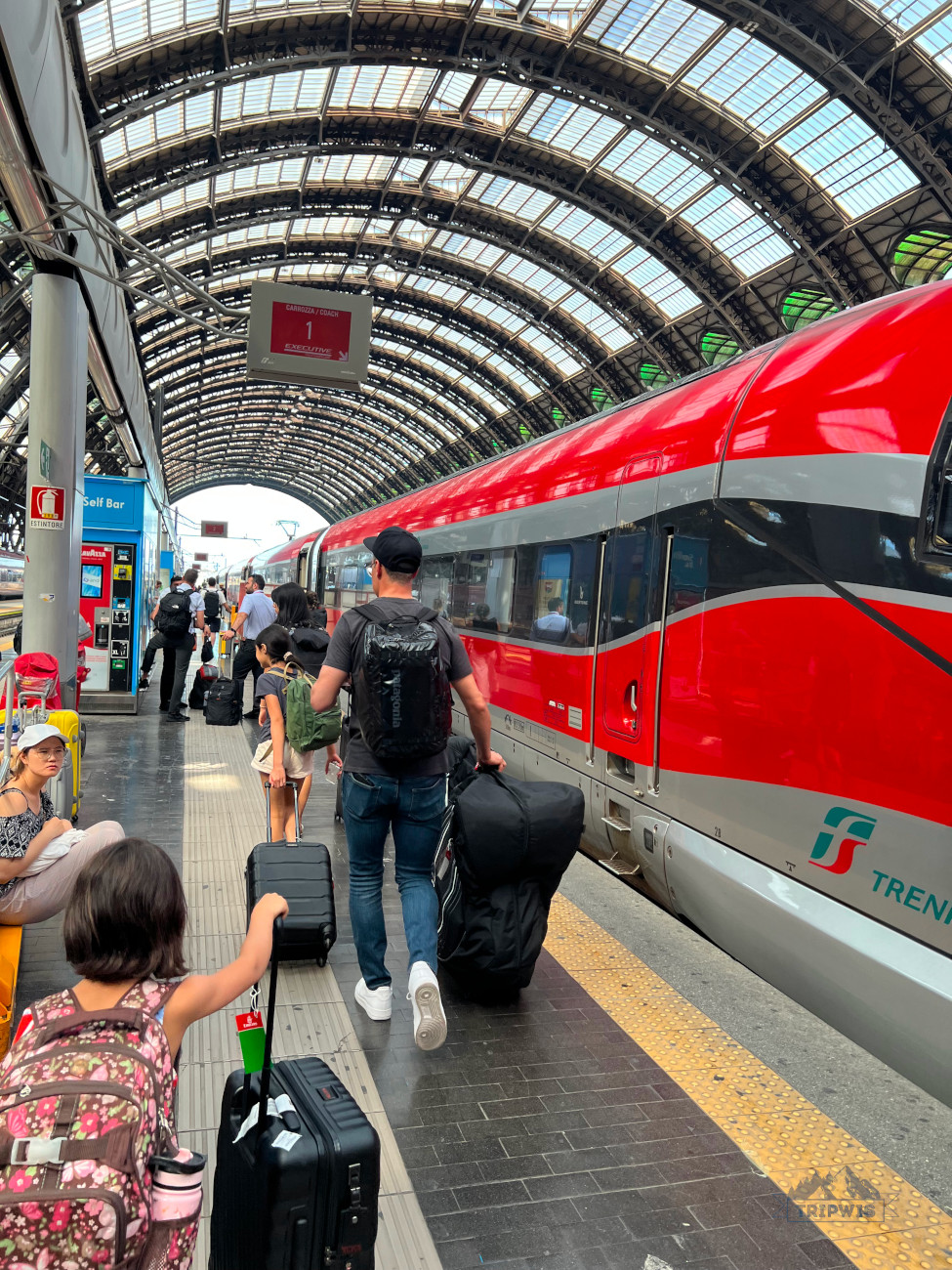
Is it easy to reach the Dolomites by train or bus? Though there are multiple straightforward routes of how to get to Cortina, Ortisei or Bolzano, I believe that they still require more time commitment and physical (and mental) effort than simply renting a car and driving there.
However, every situation is different – maybe you’re traveling solo and can’t justify the price of a rental car for one, or you simply don’t mind longer travel times and fellow public transport passengers. All of these reasons are valid!
If you decide to base yourself in some major hub in the Dolomites (Bolzano or Cortina d’Ampezzo), then you’re in luck. Here are the possible ways of how you can get to the Dolomites by public transport:
Milan to Bolzano
Personally, I wouldn’t consider embarking on a journey from Milan to the Dolomites by train or bus as it requires multiple transfers and takes forever. Driving a rental between the two is one thing, but bearing the inconveniences that go hand-in-hand with public transport over such a prolonged time frame (5 to 6 hours total, if not more) is not something I like to do on vacation.
If you’re still thinking about setting off on this journey, know that there are two options that are available:
Train: Make your way to Milano Centrale station, then, board a train to Bolzano – you will transfer in Verona (4 hours on average with a transfer). Total travel time is just under 5 hours. You can purchase your train tickets via Trenitalia.
Bus: From Milano Centrale, FlixBus has two rides a day to Bolzano – one that goes straight to Bolzano and lasts 4 hours 30 minutes and one that has a transfer and takes just under 6 hours between the two destinations.
Verona to Bolzano
A shorter (and more palatable) version of the travel day that I’ve described above, getting from Verona to Bolzano is a walk in the park even for the most uninitiated public transport users.
Train: From Verona Porta Nuova train station, take the train to Bolzano. The train ride will last anywhere between 1.5 to 2.5 hours.
Bus: Again, from Verona Porta Nuova train station there are multiple daily FlixBus buses that connect Verona to Bolzano. The travel times range between 2 and 2.5 hours.
Venice to Cortina d’Ampezzo
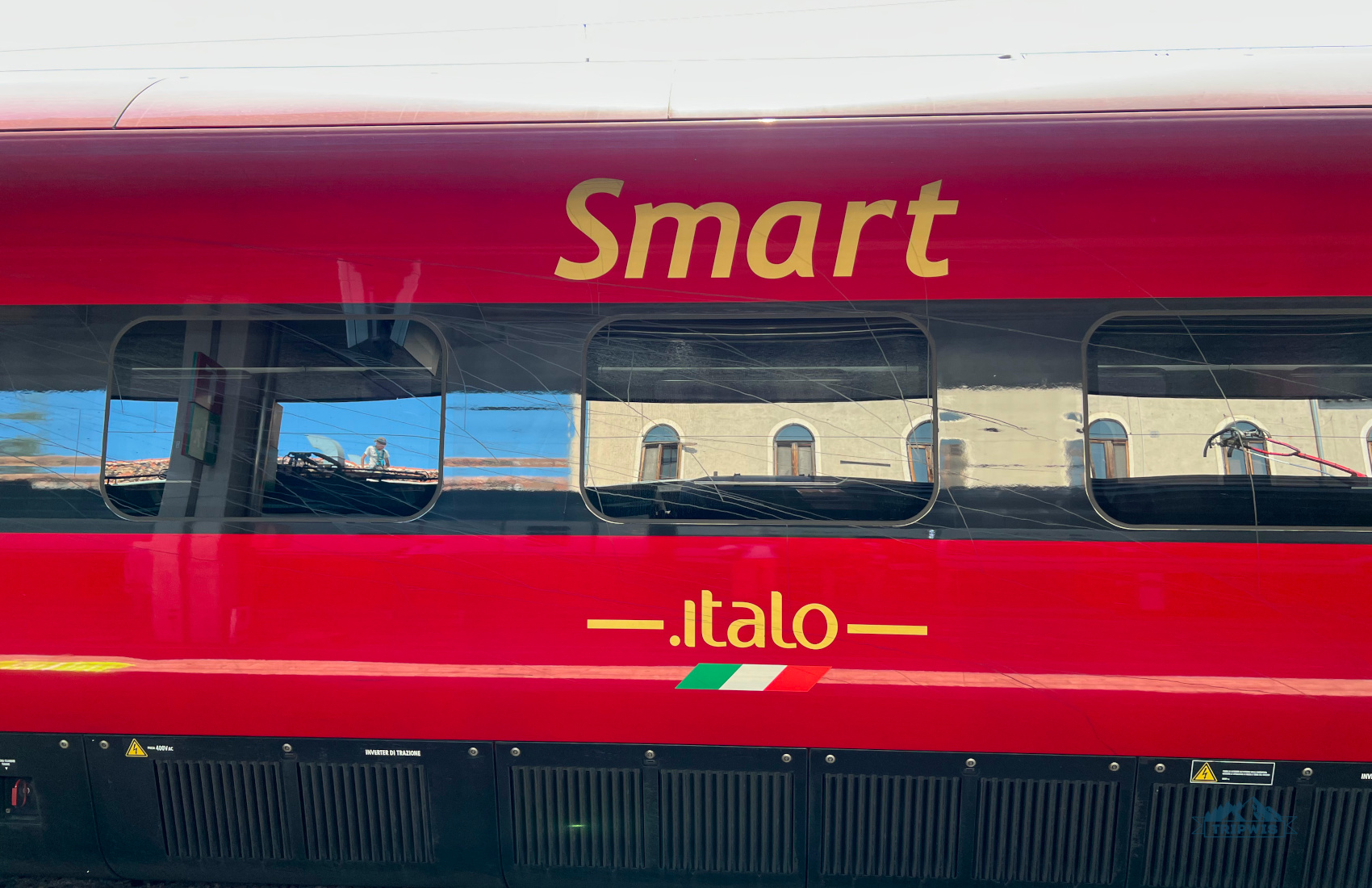
Now, this is a more or less realistic answer to the question of how to get to the Dolomites by public transport. However, only one option is easily doable – can you guess which one?
Bus: There are multiple bus companies that service the line between Venice and Cortina d’Ampezzo: FlixBus, Cortina Express, and ATVO being the most popular ones. The ride will take anywhere between 2.5 and 3.5 hours. You can get on the bus at both Venice city or come straight from the airport.
Train: From Venezia Mestre train station, get on a train to Belluno (2 hours and 30 minutes), or go further up, to Calalzo di Cadore (3 hours). After you get off the train, you will still have to take the bus to complete the final leg of your journey – a Dolomiti bus from Calalzo di Cadore to Cortina d’Ampezzo adds another hour to your adventure.
What are the Dolomites, exactly?
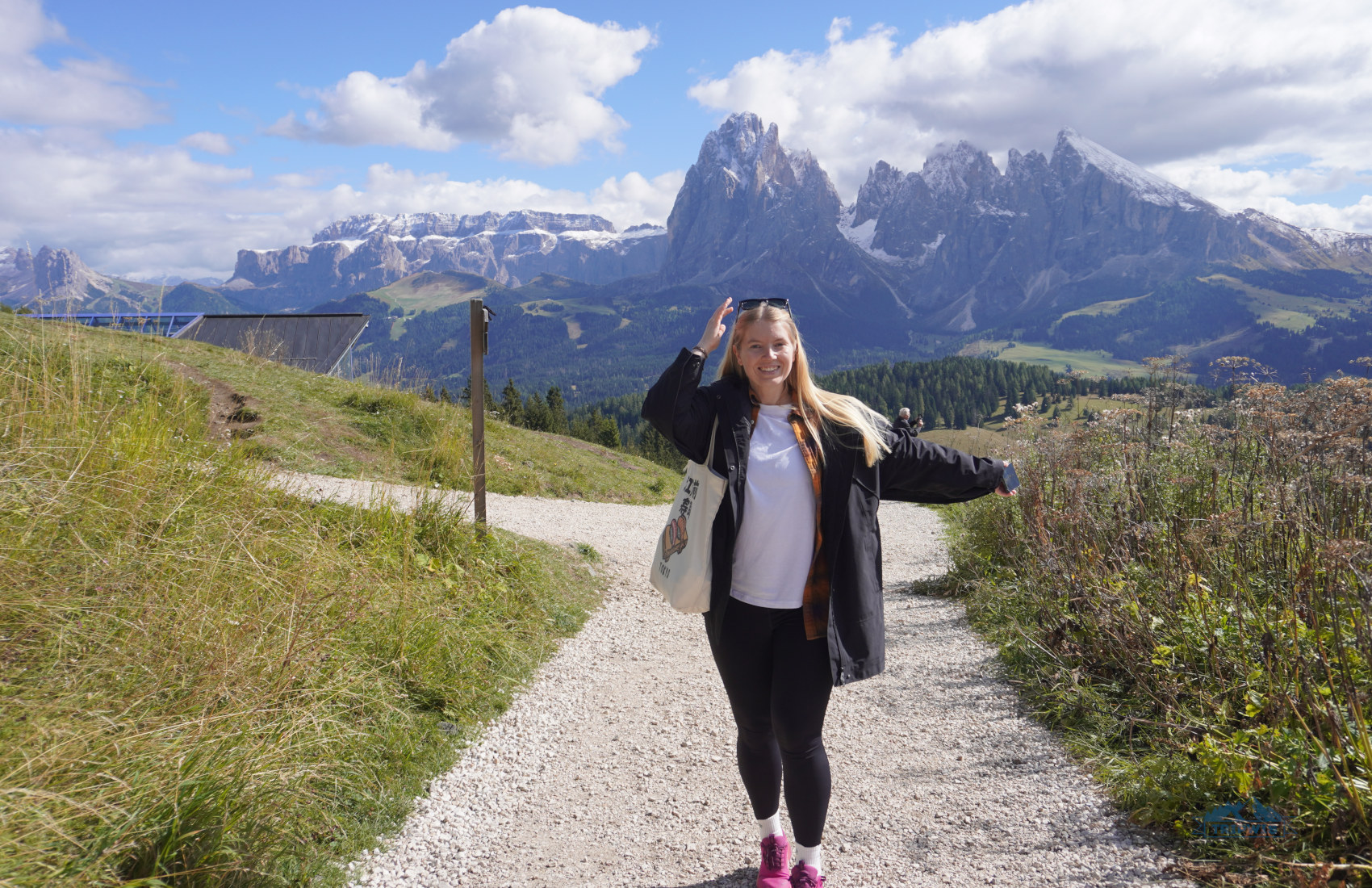
The Dolomites are a dramatic mountain range. If it’s your first time in these mountains, you should focus on just two locations – South Tyrol and Belluno – they offer the most popular destinations (towns, valleys, peaks, lakes, trails, etc.) in a tightly assembled manner.
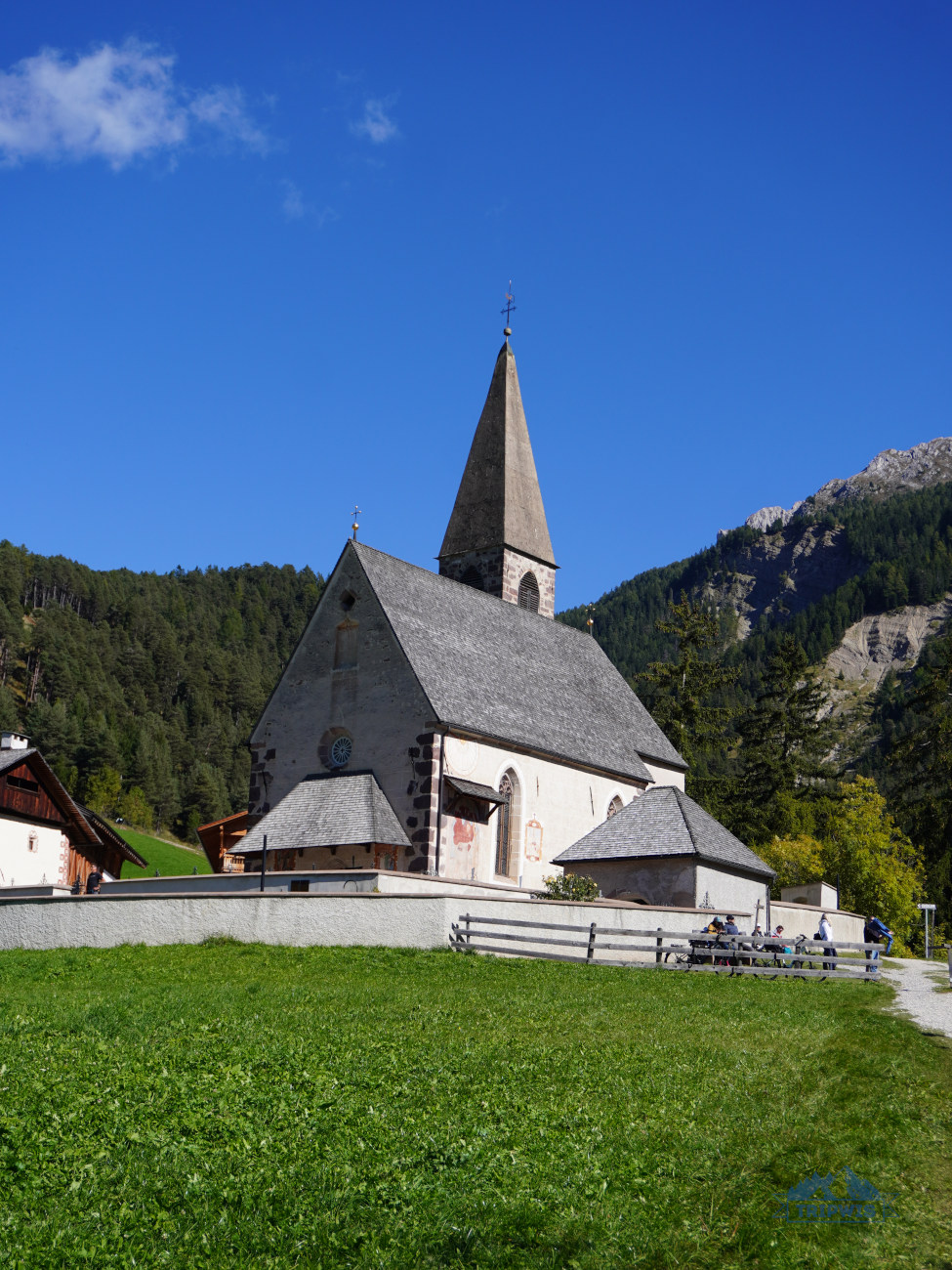
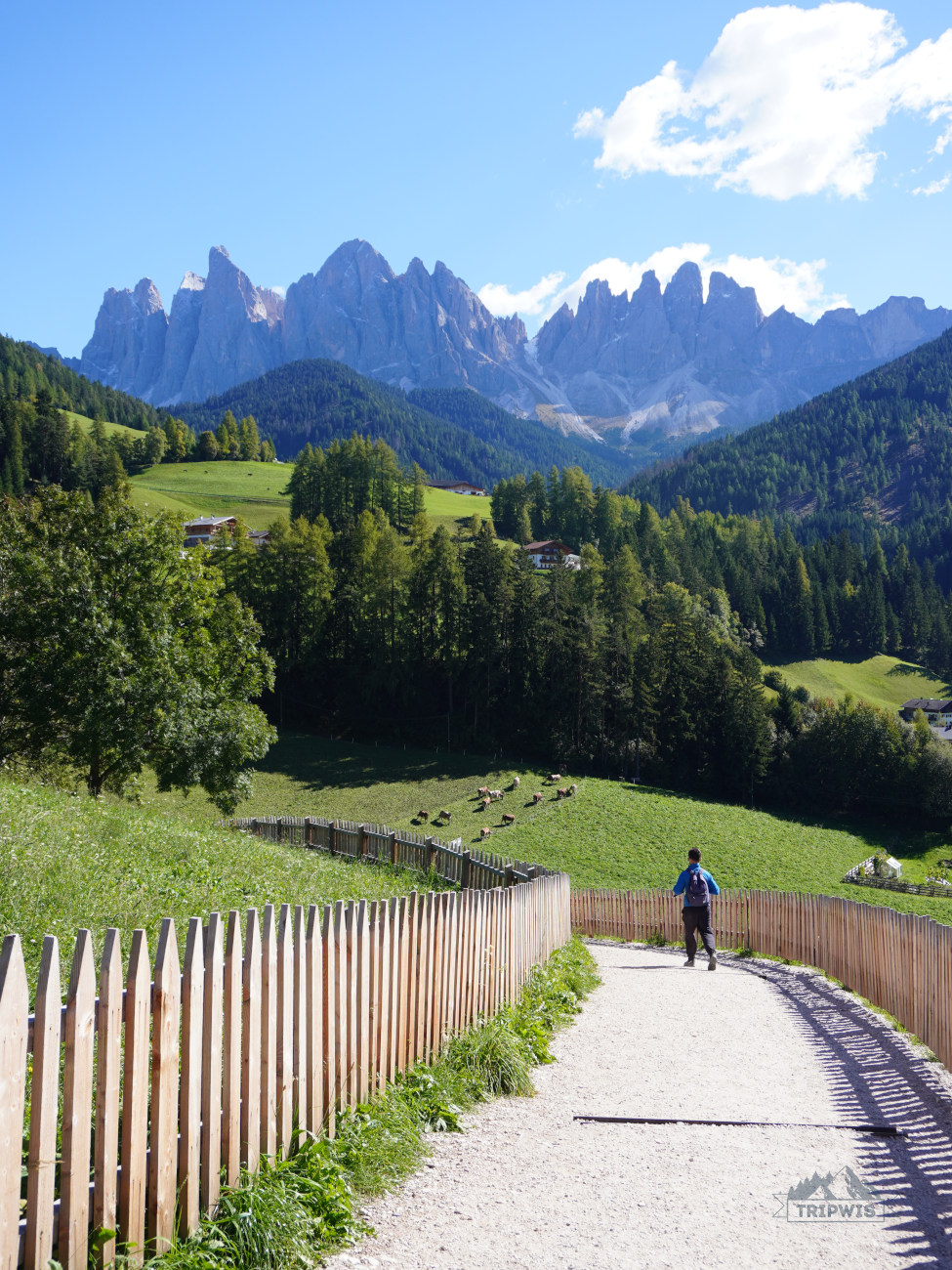
Each region of the Dolomites comes with its own set of history, culture, and traditions; but if you step back and look at all of them from afar, you notice a theme running through – the exceptional natural beauty that is as unyielding as the white dolomite stone and the blend of cultures that is constantly fluctuating, welcoming all influences it gets. Just think of South Tyrol – what was once part of the Austro-Hungarian Empire is now a slice of Italy (it was annexed following WWI)! Wherever you go in the Dolomites, you will be met with a mish-mash of German and Italian cultures, with a strong Ladin presence still looming above it all (Ladin people were amongst the first to settle in the region).
 |
 |
You have probably caught on by now that the Dolomites are not a clear-cut destination: These designated UNESCO World Heritage landscapes will make you work hard to plan your trip here for. Because of the intricacies regarding the region, detailed guides are your saviors when planning your Dolomites itinerary and figuring out the best way to get here.
Things to know before you go to the Dolomites
 |
 |
Besides trying to answer the question of what is the best way to get to the Dolomites (hopefully, I was successful in this effort), I have been dropping little pearls of wisdom throughout the text that can make your trip here as exciting and problem-free as ever.
In all honesty, this topic deserves an entire separate guide, but let’s focus on at least a few things you need to know before traveling to the Dolomites:
- Have a couple of bases in the Dolomites if you have a rental car and the duration of your trip is longer than three days. The best locations to center your adventures around are Ortisei and Cortina d’Ampezzo, or smaller settlements that are located close to these hubs.
- When you’re planning a trip to the Dolomites, your motto should be “The earlier – the better”. If you’re coming here in summer months, book your hotel room, car rental, and rifugio stay at least 2 months in advance. The motto also works for constructing your itinerary for the day.
- Speaking of booking stuff, remember that some of the Dolomites’ top sites, like Tre Cime di Lavaredo or Lado di Braies, require prior reservation to access them.
- The best time to visit the Dolomites is a highly subjective topic. Personally, I believe that late September and early October is the period that offers the most optimal weather conditions for hiking and manageable tourist flow.
- If you’re relying on public transport to get around the Dolomites, make sure that bus lines and cable cars operate during your trip dates. Shoulder season is the most dangerous period to plan your trip for – infrastructure closures are highly dependent on the weather, and you cannot predict what it will come up with in this mountain region.
- Yes, the weather is highly unpredictable in the Dolomites. However, the higher you get, the faster the forecast changes. I would advise you check the weather prediction in the morning of your outing and not the day before.
- Do not get confused when you see one place in the Dolomites having two (or even three) monikers – German, Italian, and Ladin are the languages used in the region. Talk about rich history!
- When you’re trying to figure out your outfits, your main point should be layers. Layers are very important for hiking in the Dolomites, no matter the season – try to have a moisture-wicking base layer (or a change of shirt), a waterproof layer, and a warm layer. Proper footwear is also highly important: Hiking boots are best, but good sneakers with traction and ankle support will do as well (in summer months).
- If you’re visiting the Dolomites in peak tourist season, you will see how greatly overtourism impacts the region. There are ample efforts by the local government to control the wave of visitors to the area, but they are not strict enough to make much difference. Try to follow the leave no trace rule and respect the natural settings you’re exploring – the change starts from personal responsibility.
And there you have it! I hope that this installation as part of my best guide to visiting the Dolomites for the first time in 2026 has majorly helped you plan your mountain region escape. If you have any further questions, feel free to leave them in the comment section down below.