
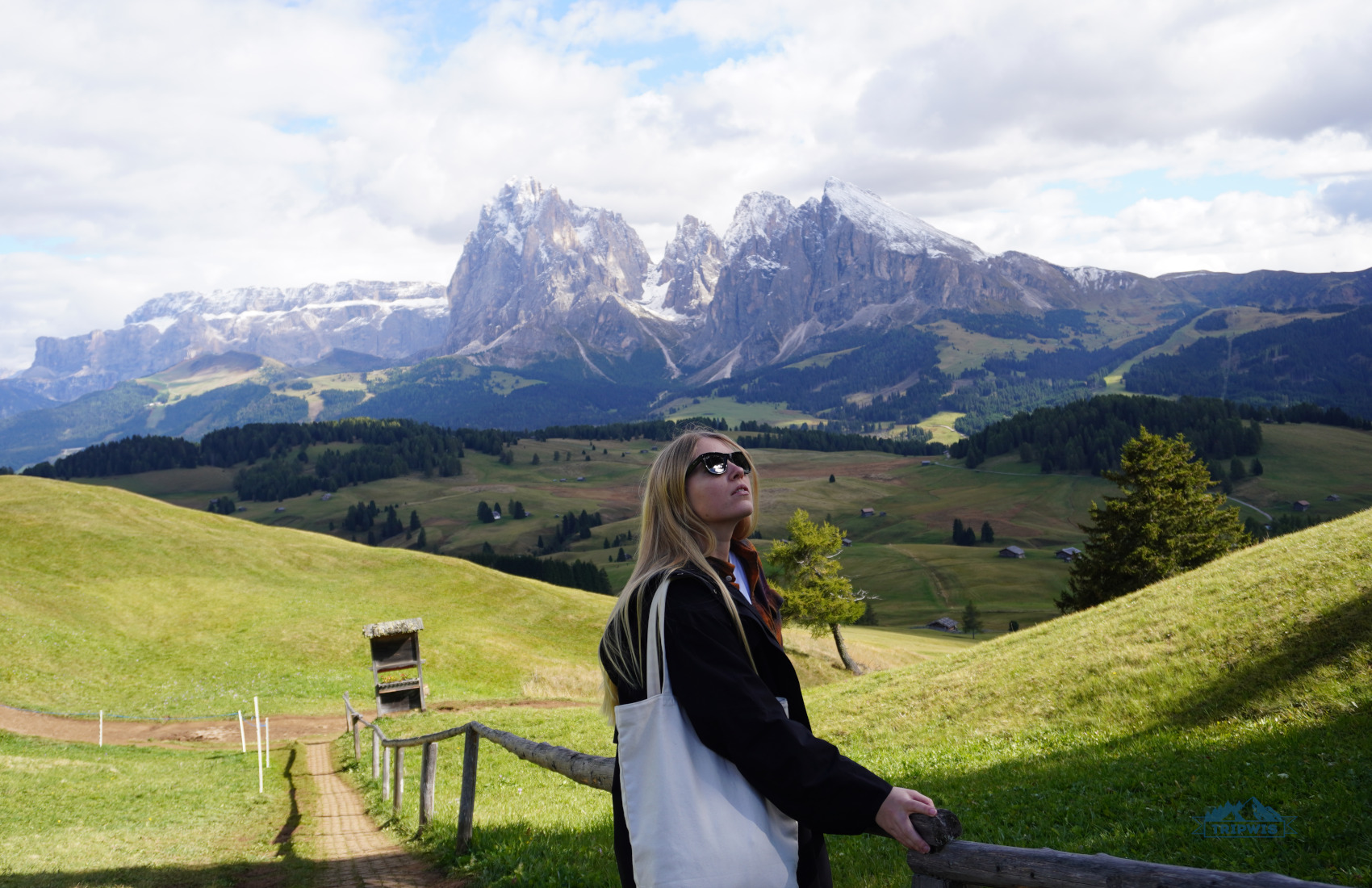
When I sat down to plan our road trip through the mountains of Italy, I felt overwhelmed by all the lists of the best day hikes in the Dolomites. We really wanted to get out into the mountains, but there were just too many options, and some of the photos seemed to suggest that hiking here meant helmets, cables, and dangling off sheer rock faces – which, with my level of fitness and experience, basically counts as madness!
So I gave it some serious thought, adjusted the options to match our level (no extreme stuff, no via ferrata gear, and no all-day marathons), and on this trip, we ended up doing six hikes that were completely different in mood and difficulty – from an easy walk across Alpe di Siusi to the much tougher trail to Lake Sorapis.
Think of this post as a short and beautiful guide to the popular Dolomites hikes. It should help you quickly figure out whether a particular trail is right for you or perfectly skippable. And if it is for you, then you’ll find a detailed guide to each hike, which I’ve already written.
Article contents
- First of all: How to get around the Dolomites?
- Our pick of the best hikes:
- Where to stay for easy access to all these hikes?
● Alpe di Siusi – perfect as a first introduction to the Dolomites
● Tre Cime di Lavaredo – incredibly popular, but…
● Seceda – an iconic mountain you can actually hike to
● Adolf Munkel – with the reward of dreamlike rifugio and panoramas
● Lake Sorapis – an otherworldly lake that will completely drain you
● Cinqe Torri – the hike we skipped but many say it’s a must
How to get around the Dolomites?
 |
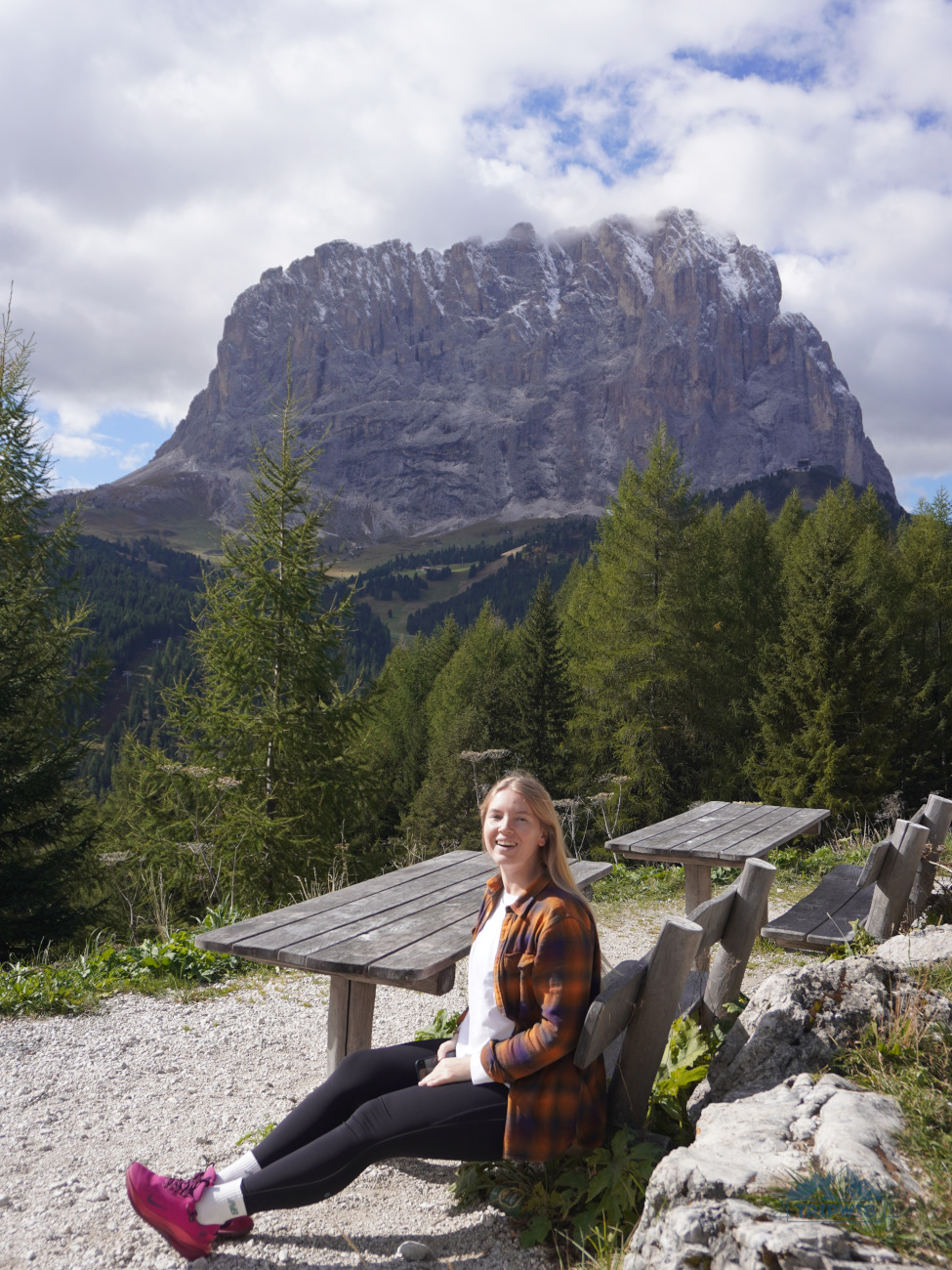 |
Public transport in the Dolomites is an option too, but having your own car or renting one is better
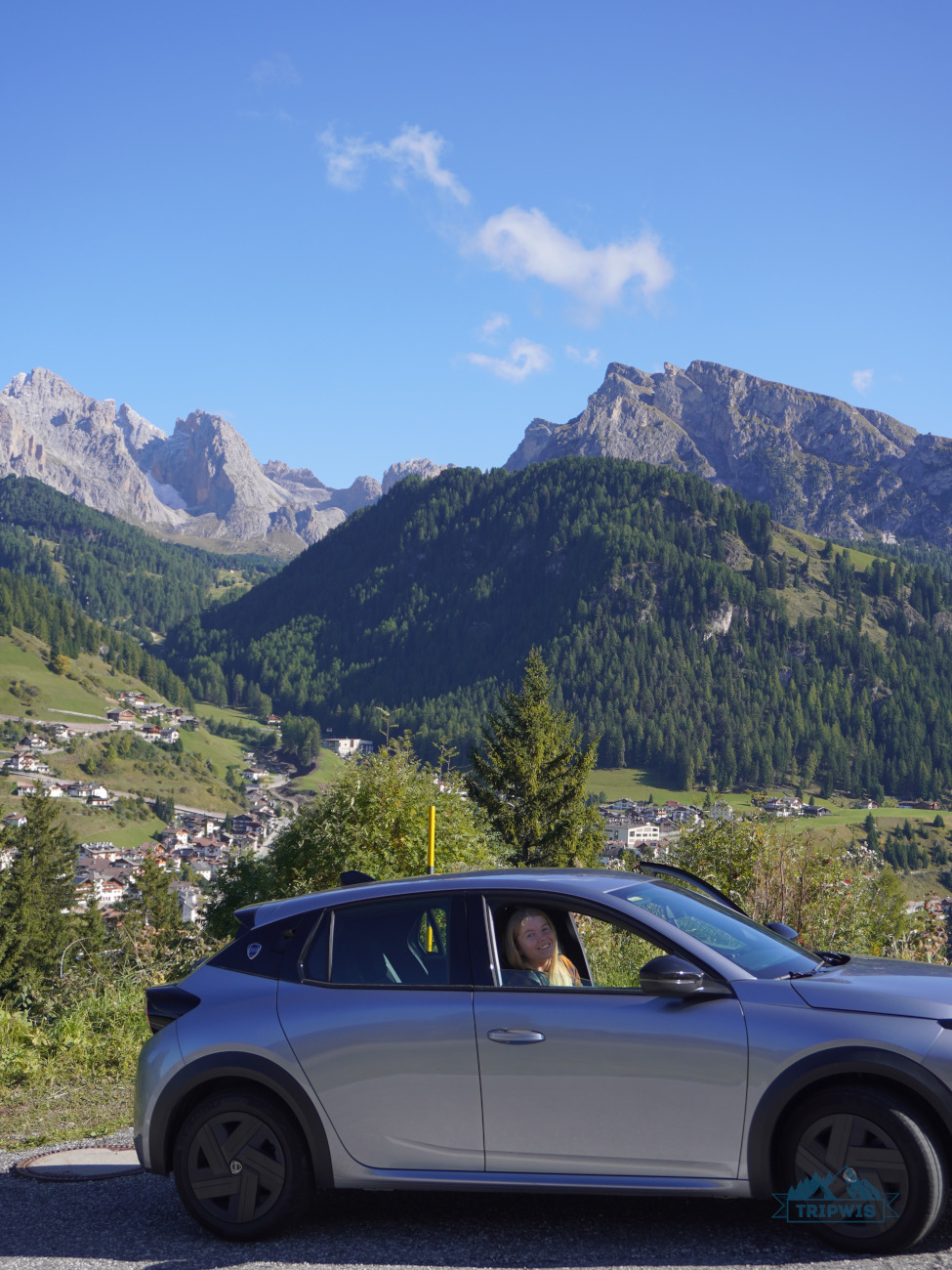
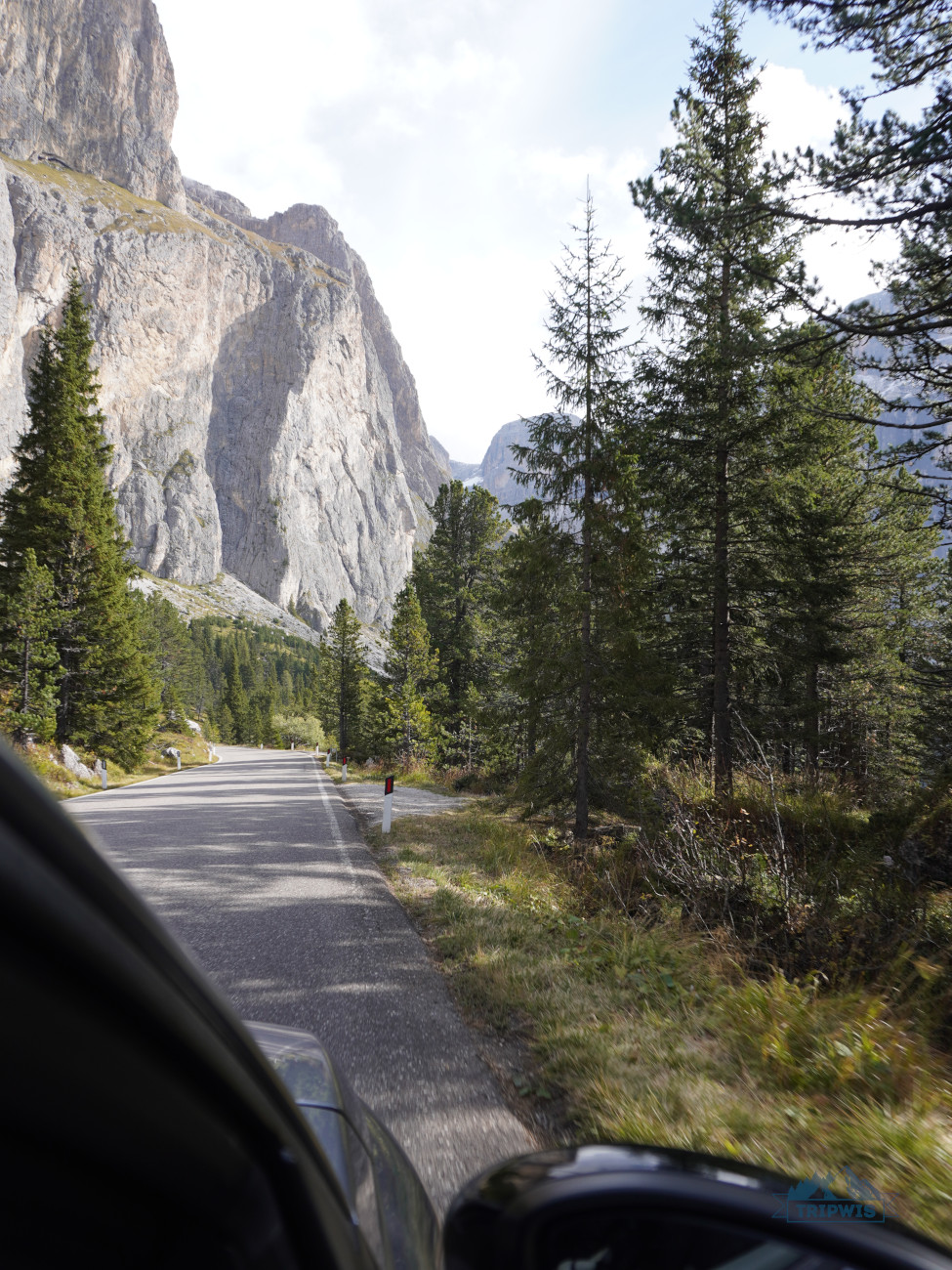
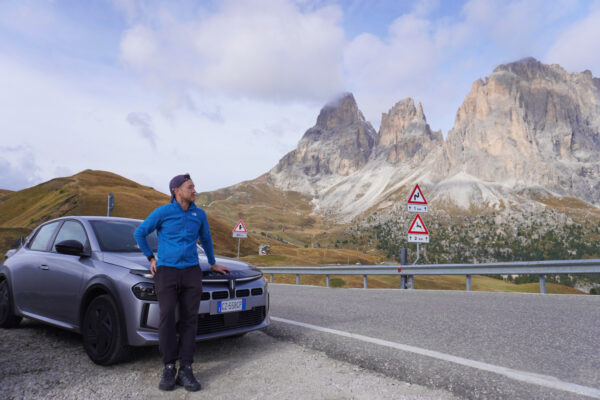
Our Dolomites trip was built entirely around having a car. We started in Milan, picked up this Lancia Ypsilon at the airport, and drove into the Dolomites the same day (four hours on the road). Since we were traveling in the shoulder season, the rental was a steal – €80 for six days (deal from Discovercars) – and the drive itself cost us €19 spent on toll roads.
Renting a car gave us the freedom to move easily between South Tyrol and the Cortina d’Ampezzo side. That flexibility mattered a lot because the hikes were spread out, and some of them worked best either very early in the morning or later in the afternoon, when parking situation got better. It also meant we could stay where it made the most sense for the route or where accommodation was simply cheaper, instead of being tied to one transport hub.
✔️ The roads in the Dolomites are excellent, both in terms of scenery and overall condition
✔️ The road surface is impeccable, and all the pull-offs for stopping to admire the views are neatly organized, so you do not get random traffic jams in the middle of nowhere
✔️ The distances are generally short
For less experienced drivers, I would only point out two real difficulties: Some roads can be quite narrow, and of course there are the mountain switchbacks. I would even say that the main challenge in the Dolomites, if you are traveling by car, is parking. It is expensive, fills up almost as soon as the sun is up, and parking attendants are not exactly shy about handing out fines.
If you do decide to rent a car, check these two websites:
If you don’t have a driver’s license, buses are a viable option too. Although sometimes a bus ticket can cost about the same as parking. For each hike, I will note whether it can be reached by public transport, and you can find the exact routes and logistics in my articles linked throughout the post.
Our pick of the best day hikes in the Dolomites
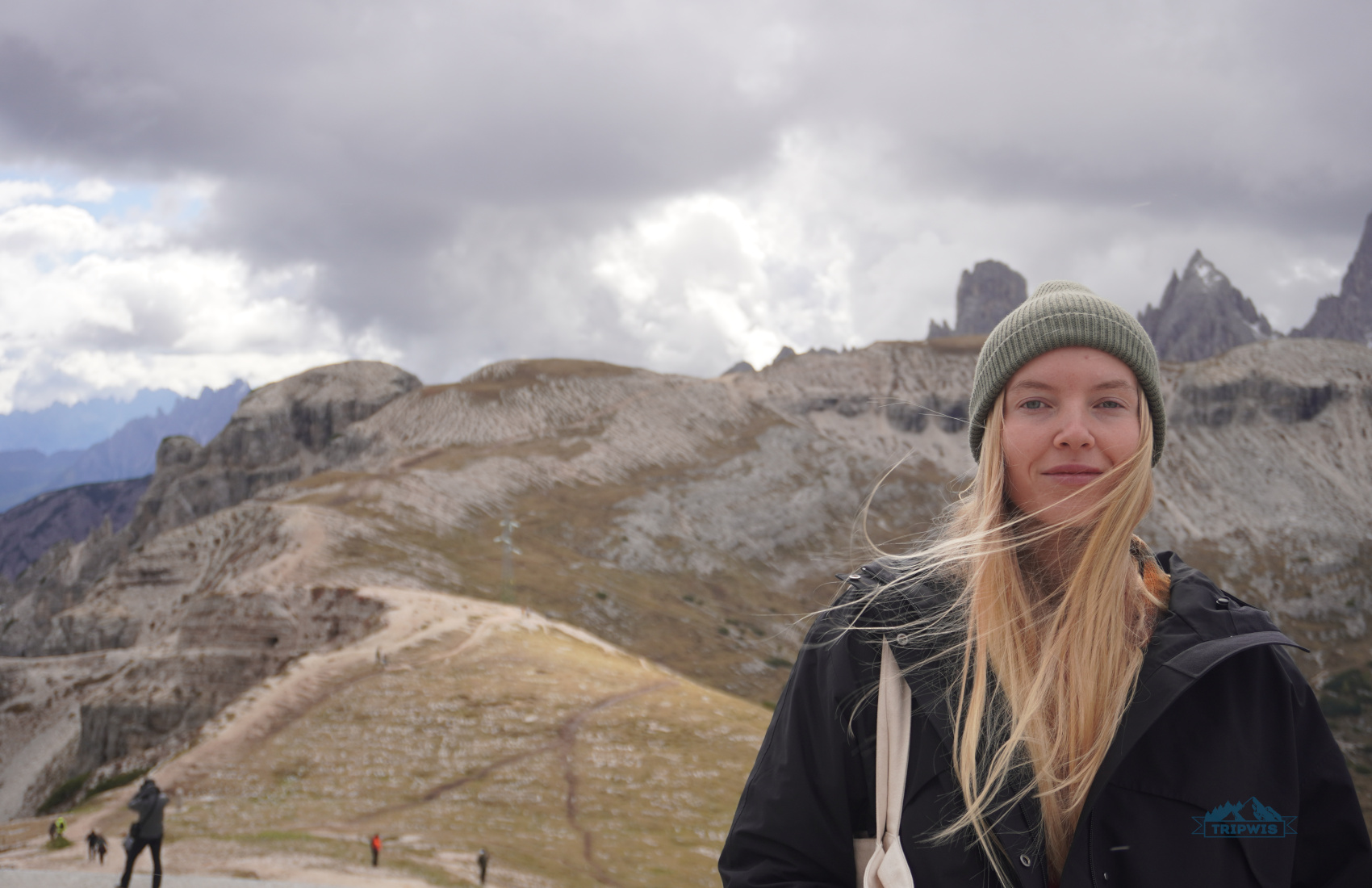
Of course, Tre Cime has to be on this list, but it was the least impressive hike for me
Before I get into the best hikes we did in the Dolomites, here are a few practical things worth knowing first:
- From my amateur point of view, I would divide the Dolomites into a western part (Ortisei, Seceda, Sassolungo, and the Odle mountains) and an eastern part (the Three Peaks, Lake Braies, and Lake Sorapis). If you are starting from Venice, begin with the east. If you are coming from Milan, start with the west. What other cities can you get to the Dolomites from?
- In the Dolomites, you start every hike at a fairly high elevation, around 2,000 meters – and then climb even higher, sometimes to around 2,400 meters, like on the Tre Cime trail. Do not underestimate that and take good care of yourself and your recovery. I, for one, ended up with lips so dry and cracked that it nearly made me cry!
- Some Dolomites hiking trails are still under snow in late May, or already back under snow by late October! What’s the best time to visit the Dolomites?
- July and August are the easiest months for stable conditions and fully operating cable cars, but they are also the busiest. We visited in early October and loved the mood, though the mornings were cold and a few rifugios (mountain huts) were already shutting down for the season.
- Learn the parking rules for every hike. They might be brutal (for example, requiring the prior booking or closing as early as 9 a.m. (yes!)). Parking shapes the whole hiking day. This was true again and again on our trip, from Alpe di Siusi to Adolf Munkel. It matters even more when you are trying to connect several best day hikes in the Dolomites into one itinerary.
- For almost every hike, either go early or go later. In our experience, the best time is right when the cable cars start running, or after about 2 p.m. when parking turnover improves and some of the morning crowds are already on their way out.
- Bring cash for the hikes – though the mountain huts on the trail do accept cards (in theory), spotty reception can make card payments unreliable.
Okay, I think that is everything I wanted to say – now it is time to move on to the incredible trails I would put into a first-time Dolomites hiking guide without hesitation.
Alpe di Siusi hike (the Panorama Trail)
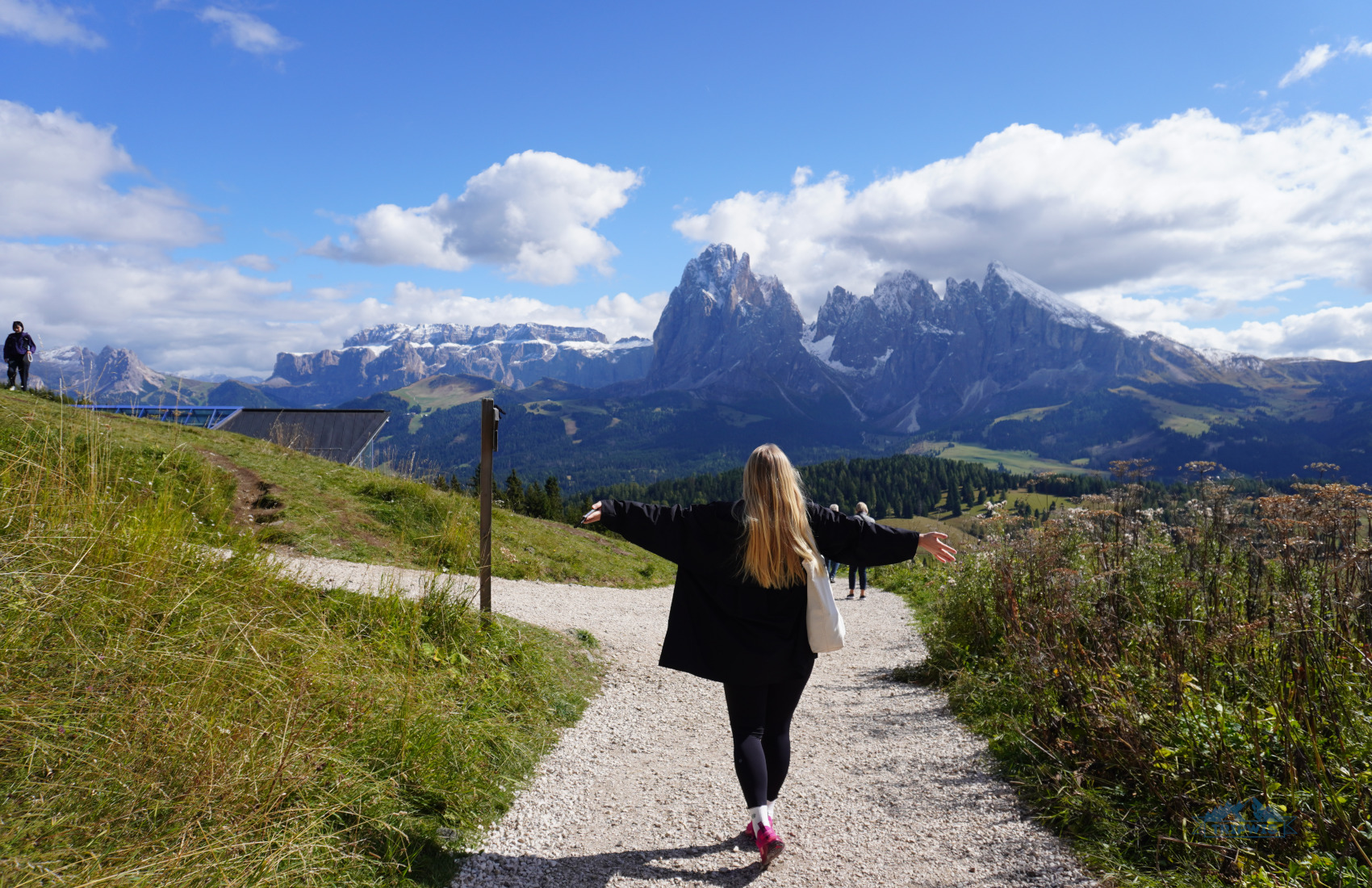
📍4.5 km loop | around 2 hours | 110 m elevation gain | easy
Alpe di Siusi is a huge alpine plateau. Covering the area of more than 56 sq km, it’s located at 2,000 meters above sea level. The plateau is weaved with 450 kilometers of hiking trails but we chose the Panorama Trail to explore it. You won’t find the route on Alltrails as it’s an easy loop walk from the cable car, down into the valley, and back up again.
I keep telling everyone that this is the perfect hike for a first introduction to the Dolomites. It has all the best bits in one:
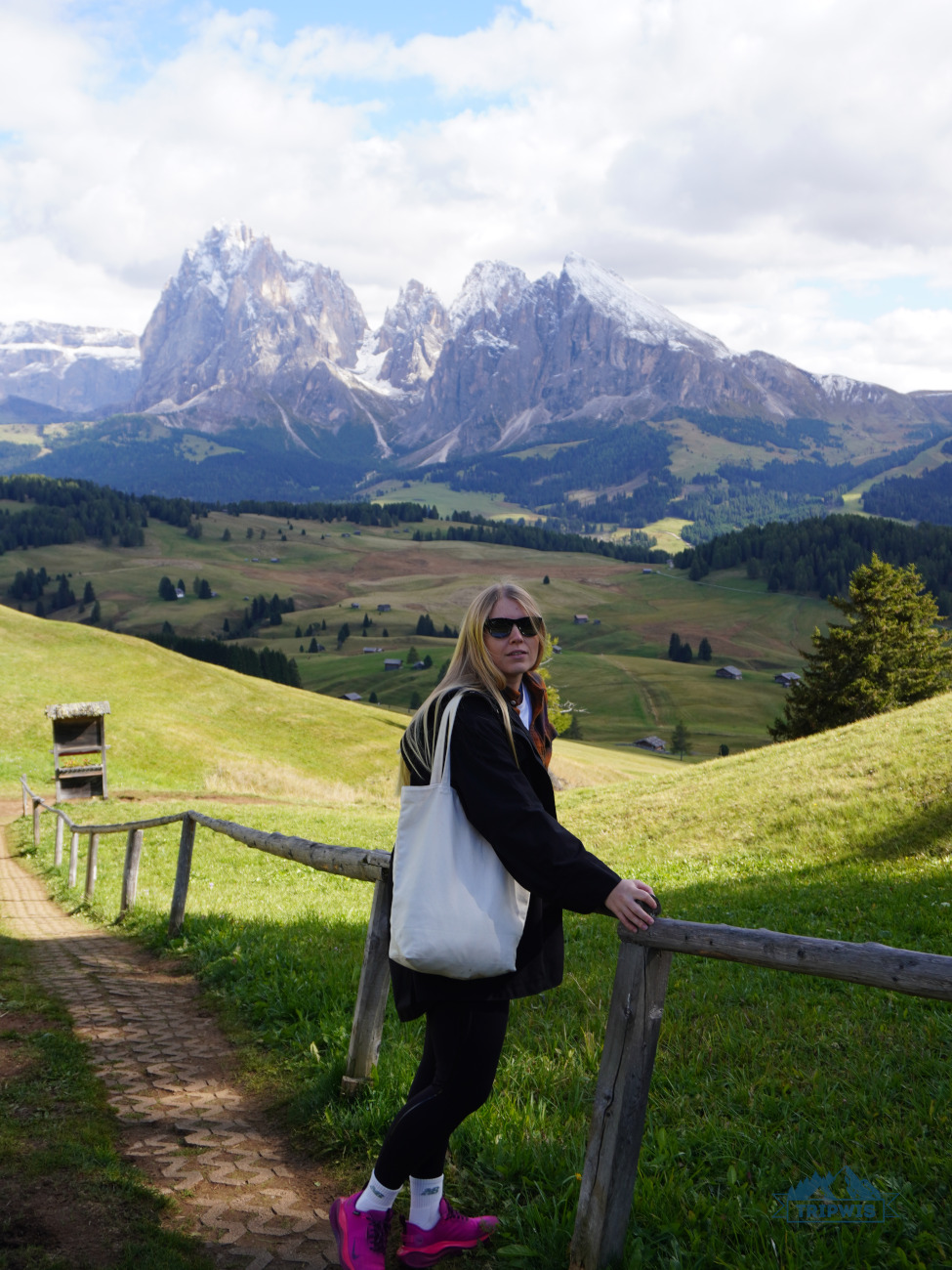
- You get to admire one of the most beautiful mountain groups in the Dolomites — the jagged Sassolungo, as if sketched against the sky with a graphite pencil
- The walk itself is not physically demanding (it’s one of the easy hikes in the Dolomites even for seniors or anyone traveling with family), winds through vast green pastures, and is an absolute joy from start to finish
- There are several rifugios along the way serving South Tyrolean food, which is also an essential part of the trip
- And it all begins with a cable car ride with sweeping views over the town of Ortisei
You start from Ortisei by taking the Mont Sëuc cable car, which is the most convenient option. Since most travelers exploring South Tyrol rent a car, keep in mind that parking here can be annoying. We came around noon, failed to park on the first try, and only managed to find a spot an hour later, so I would either come early or after 3 p.m. if you can.
 |
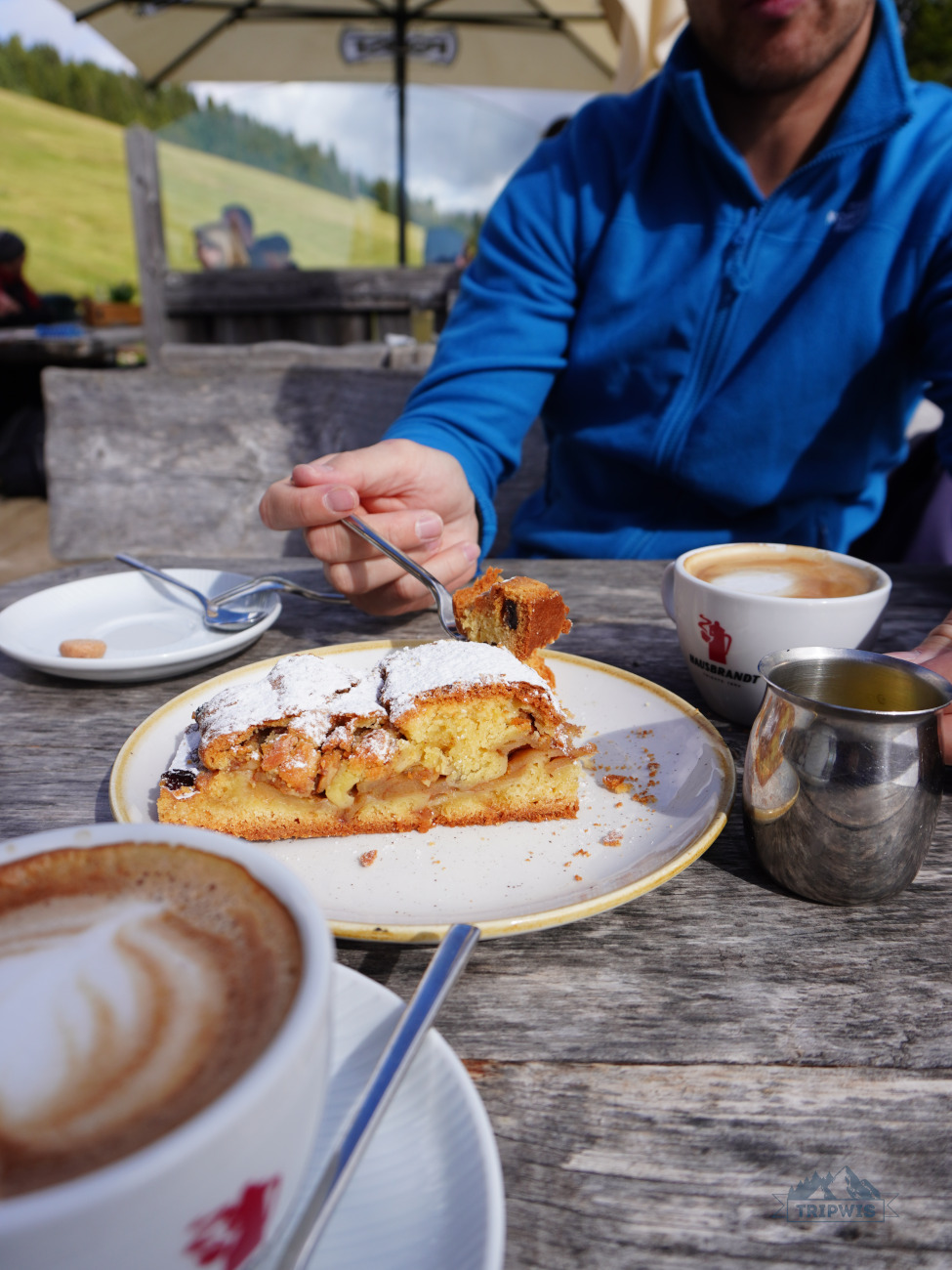 |
A must on every hike is stopping for lunch at a rifugio. Luckily, you’ll find one on almost every trail in the Dolomites
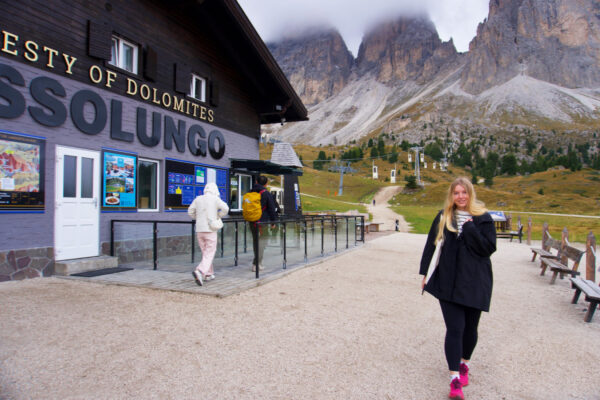
Right after you get off the cable car, the grand Sassolungo is already there, dominating the horizon. And once you start along the Panorama Trail, the whole walk becomes a mix of viewpoints in the Dolomites, the UNESCO-inscribed scenery of gray granite peaks, lush expansive meadows, and quaint wooden mountain huts. Freshly baked strudel is an ideal hiking fare, and the air fills your lungs with centuries-old wisdom of this untouched plateau – it does not get any better than that! The last stretch – from the valley back to the cable car station – is the only part that requires effort. Everything else is just a very beautiful, very satisfying walk.
So yes, I would very confidently put the Panorama Trail on the list of the best hikes in Val Gardena and in the Dolomites overall.
Where to stay for this hike: We stayed at Monte Pana Dolomites Hotel in Santa Cristina – a great base for Alpe di Siusi and Seceda (10-minute drive) and less crowded Mont de Sëura (the funicular is right near the hotel).
Essential expenses: €41 per person for a cable car both ways.
Possible expenses: €6 an hour for parking in high season / €0,5 an hour for parking from mid-September
Need a rental car for this hike? Not really. If you stay in Ortisei (and it’s a major town), you can easily get to the cable car by foot or by bus.
Tre Cime di Lavaredo hike
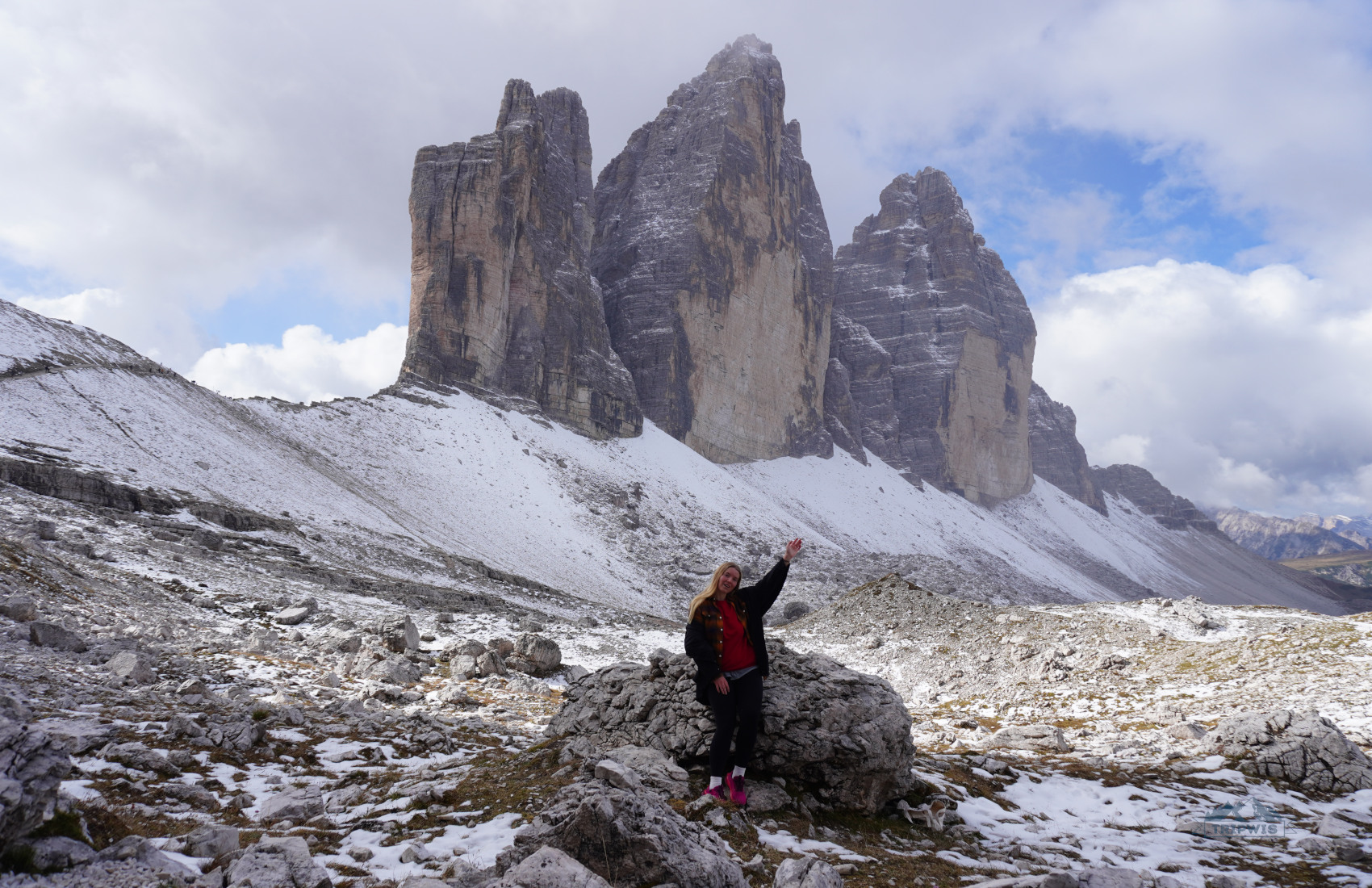
📍11.4 km loop | 4–5 hours | 600 m total ascent/descent | easy to moderate
Tre Cime di Lavaredo is probably one of the most recognizable places to visit in the Dolomites, and I get why people are drawn to it. The pictures of the stunning profiles of the trio flood social media every year, ramping up the interest in the region to a new, more unhinged, degree. They look like splintered granite gods!
At the same time, this was also the hike I found the most overrated. Compared to places like Alpe di Siusi or Lake Sorapis, the scenery here is much more austere – all gray and brown, without a glimpse of lush green. And given that in average you pay for the day exploring Tre Cime about €80 for two (parking+food), it’s hard not to have high expectations. But some places are just simply too legendary to ignore.
The loop starts at Rifugio Auronzo, and getting there is half the battle:
- The toll road access and parking at the lot near the rifugio is paid – in 2026, it’s €40 per car
- Prior booking is mandatory to access the toll road – reserve your spot at least 2–3 days in advance (a week in high season)
 |
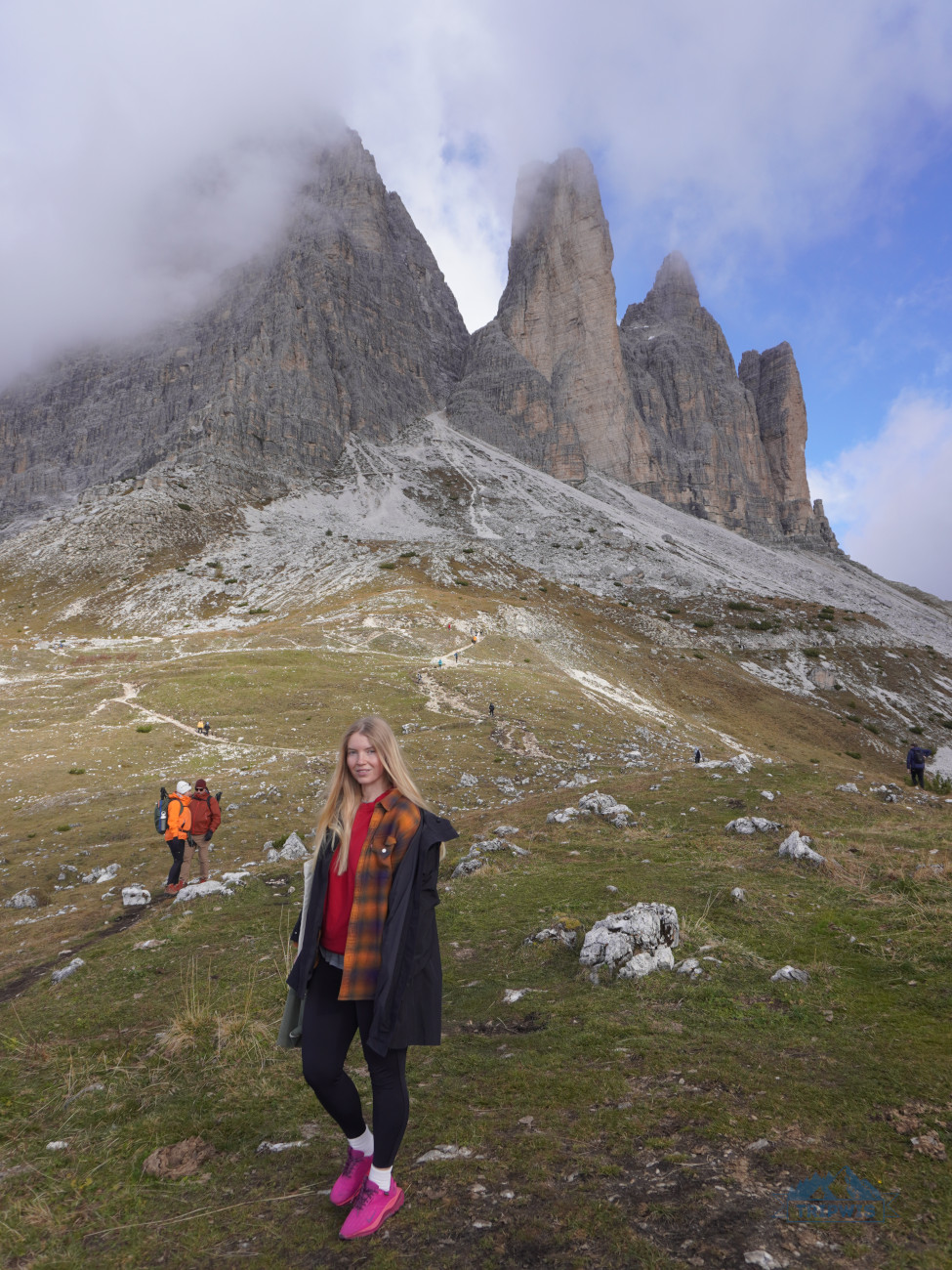 |
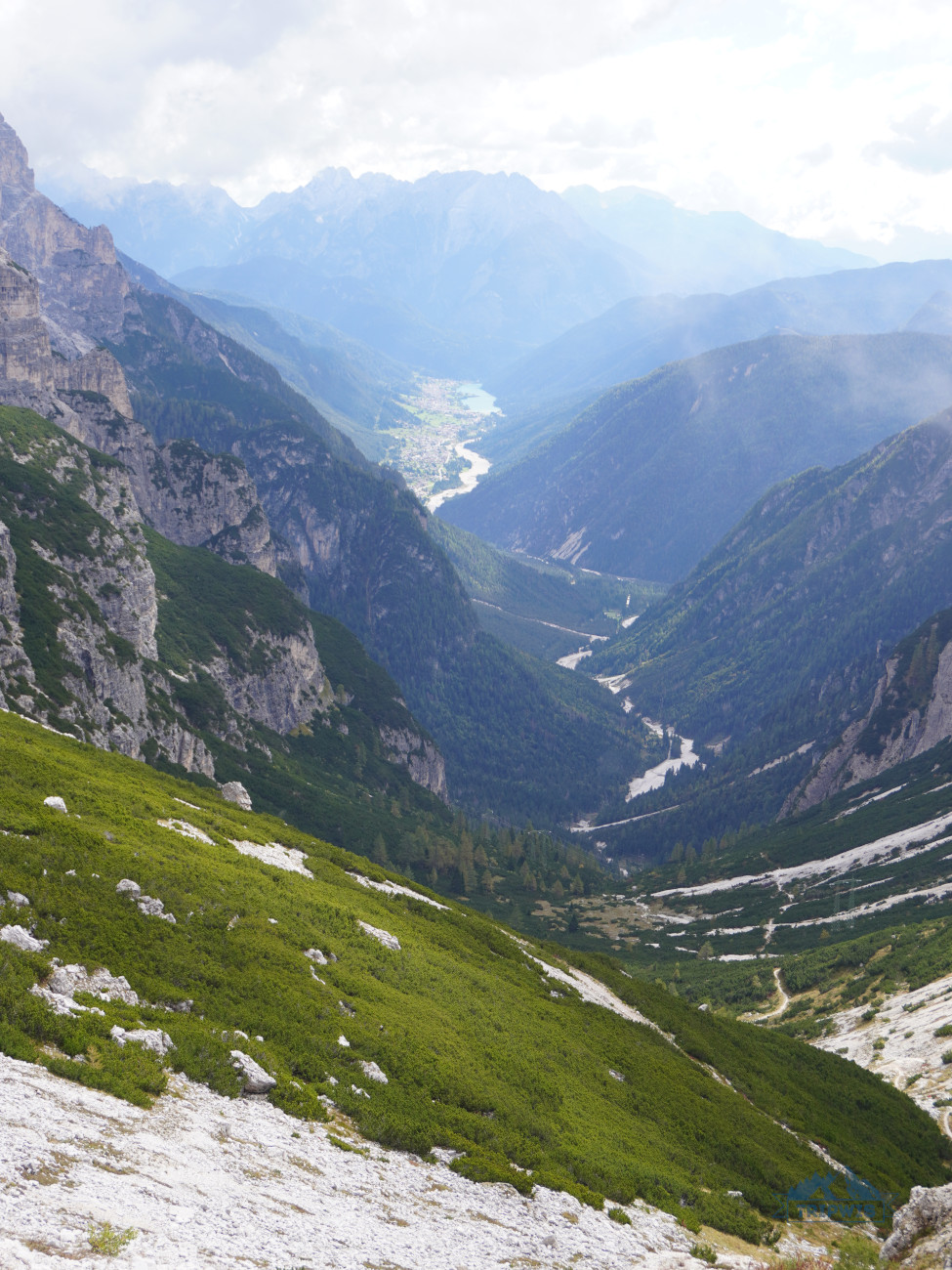
The whole hike is basically a long walk around the mountains. The iconic peaks can already be seen less than halfway into the hike – at Forcella di Lavaredo viewpoint – and that’s why some people use this opportunity to ditch the trail half-way here and turn back. Honestly, we did the same: It was extremely cold and even snowing in early October.
To break up the repetitive scenery, there are three rifugios along the route – these are great points to pause, sit back (maybe grab a drink or some lunch), and enjoy the views of Tre Cime di Lavaredo. The hike itself is not especially hard. The “moderate” part is all due to the length – an 11-kilometer trail is no walk in the park! Other than that, the path is wide and even most of the time, with just a few narrow sections and a couple of climbs that will get your heart rate up a bit.
I will get into other details about the Tre Cime di Lavaredo loop hike down below:
But I have to admit that despite lacking the bright colors that are usually synonymous with a beautiful scene in nature, the Three Peaks still provide spellbinding views – no matter the angle you’re admiring them from.
Where to stay for this hike: We stayed at Best Western Hotel Nevada near Cortina d’Ampezzo – it worked well for Tre Cime; the 50-minute drive to the trailhead was manageable.
Essential expenses: €40 for parking OR €10–€22 for a bus trip both ways.
Possible expenses: €1 as a restroom fee.
Need a rental car for this hike? I’d strongly recommend booking one in advance (on Discovercars or Economybookings). You can do Tre Cime by bus, but in high season you might have to skip two or three buses because they’re too packed to get on!
Seceda hike (from Col Raiser)
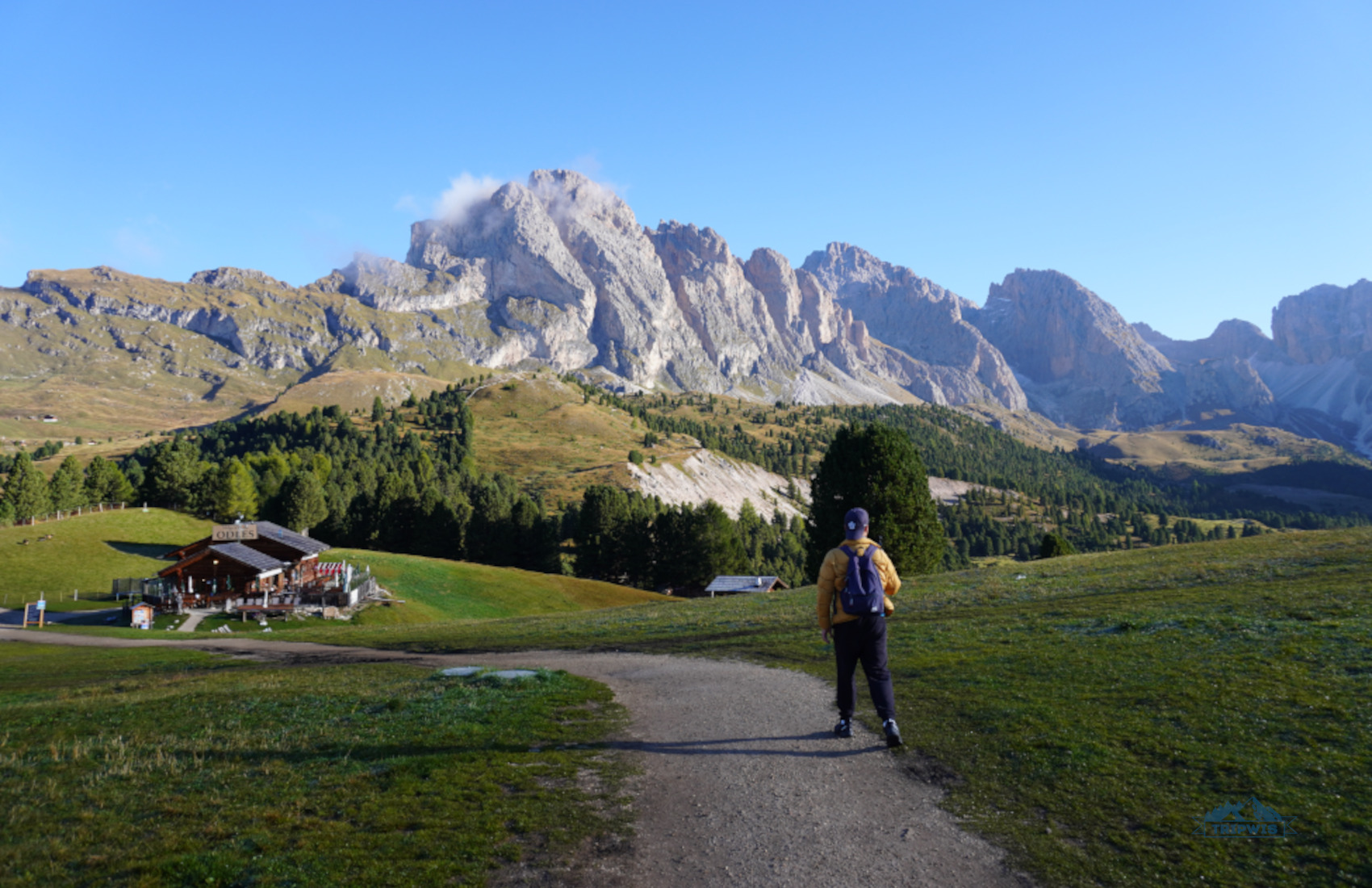
📍10 km loop | around 4.5 hours | 550 m elevation gain | moderate
Alpe di Seceda (or Mount Seceda), sitting right above the quaint towns and villages of Ortisei, Selva, and Santa Cristina, is a very popular mountain getaway among South Tyrol visitors. And we were actually ready to skip Seceda altogether! I was not too excited by the idea of spending €148 (!!) for the two of us just to get dropped off at the most photographed ridgeline.
The day before, I found out about the Col Raiser cable car+hike option – and that changed everything. Instead of a crowded touristy visit, Seceda turned into one of my favorite day hikes in the Dolomites. The feeling that you are really approaching the mountain instead of just being delivered to it is priceless.
What you need to do to get the most of the hike to Seceda:
- Use the Col Raiser cable car in Santa Christina instead of the infamous Seceda cable car in Ortisei (€34 roundtrip against €74!)
- Arrive at the cable car’s upper station and set off on an impossibly scenic 10 km hike
 |
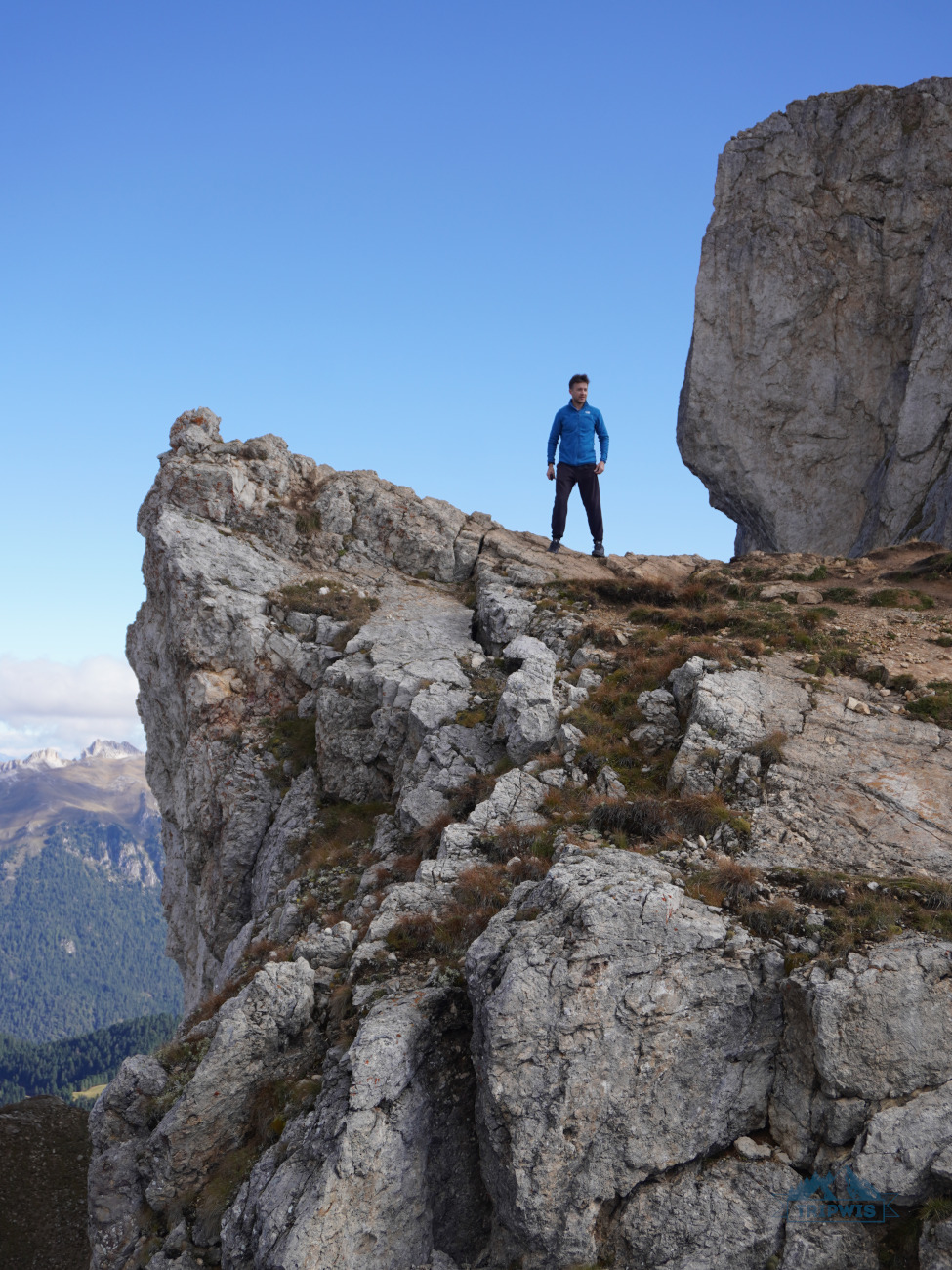 |
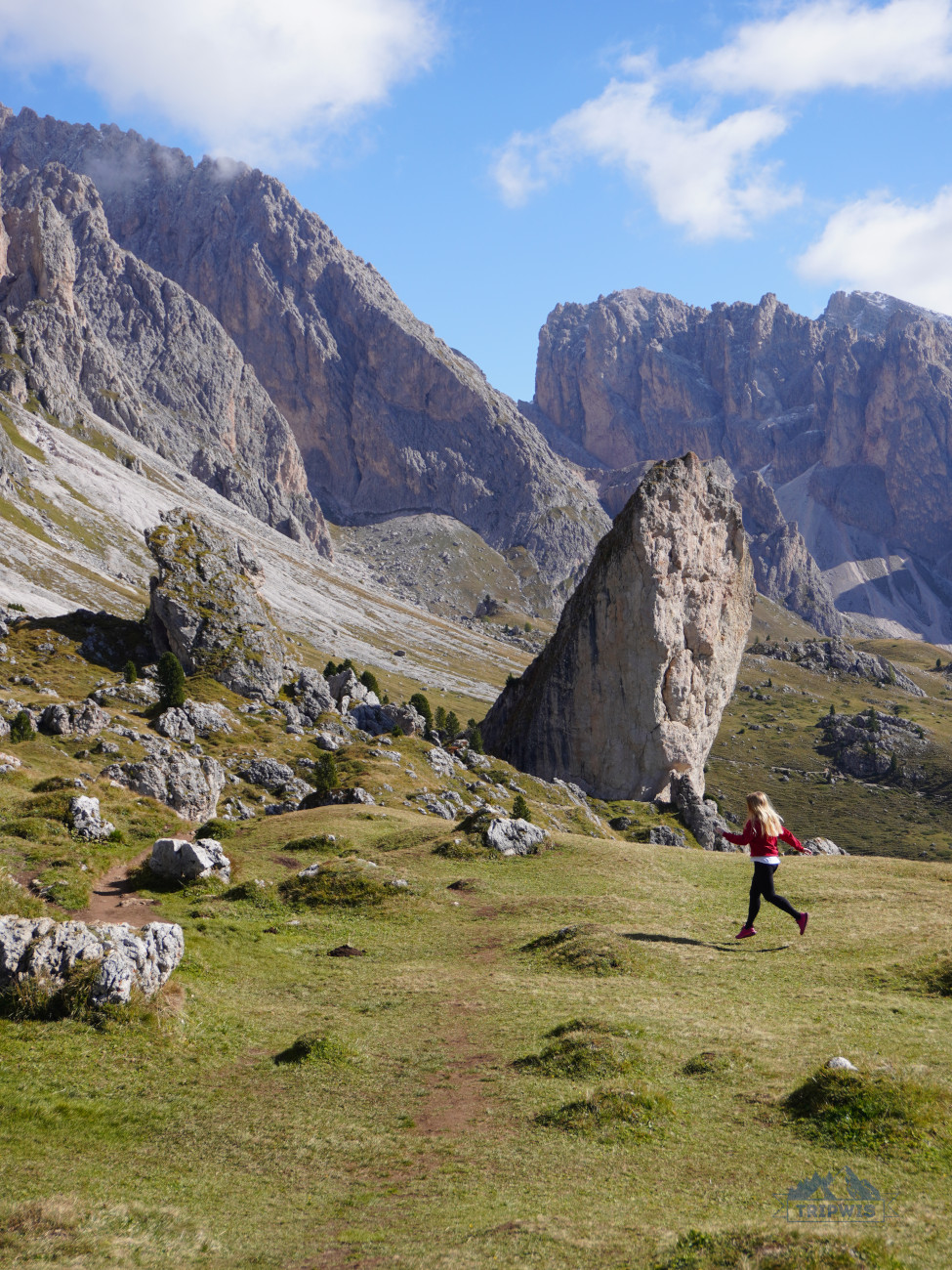
You just don’t get views like this on Seceda unless you hike for them!
The views hit you immediately – Sassolungo and Sella behind you, and the gray wall of the Odle Mountains along with the ridgeline in front. You pass rifugios, climb gradually through meadow and rockier stretches, and get closer and closer to the main event – the ever-present line to snap a picture of the famous peaks at the very top of Seceda. We did the loop clockwise, and I would recommend doing the same: Get the harder uphill sections out of the way early, then enjoy the ridgeline and the descent afterward.
My guide to visiting Seceda >>
For me, Seceda is easily one of the best hikes in the Dolomites. It is always packed with travelers, however, the videos and photos of long lines for the cable car you might’ve seen online are taken at the Ortisei-Furnes-Seceda cableway, and not near Col Raiser (the option I’m advising you follow).
Where to stay for this hike: We stayed at Monte Pana Dolomites Hotel in Santa Cristina for exploring both Seceda and the aforementioned Alpe di Siusi. We still did a short drive to Col Raiser, though, as the hotel is perched on a hill (but the views from the terrace make up for this drawback!).
Essential expenses: €34 per person for a cable car both ways.
Possible expenses: €2 an hour for parking (€10 for up to 12 hours).
Need a rental car for this hike? Not necessarily. If you base yourself in Santa Cristina, you can get to Seceda without a car.
Adolf Munkel trail
 |
 |
📍9.5 km loop | 3–3.5 hours | 464 m elevation gain | easy to moderate
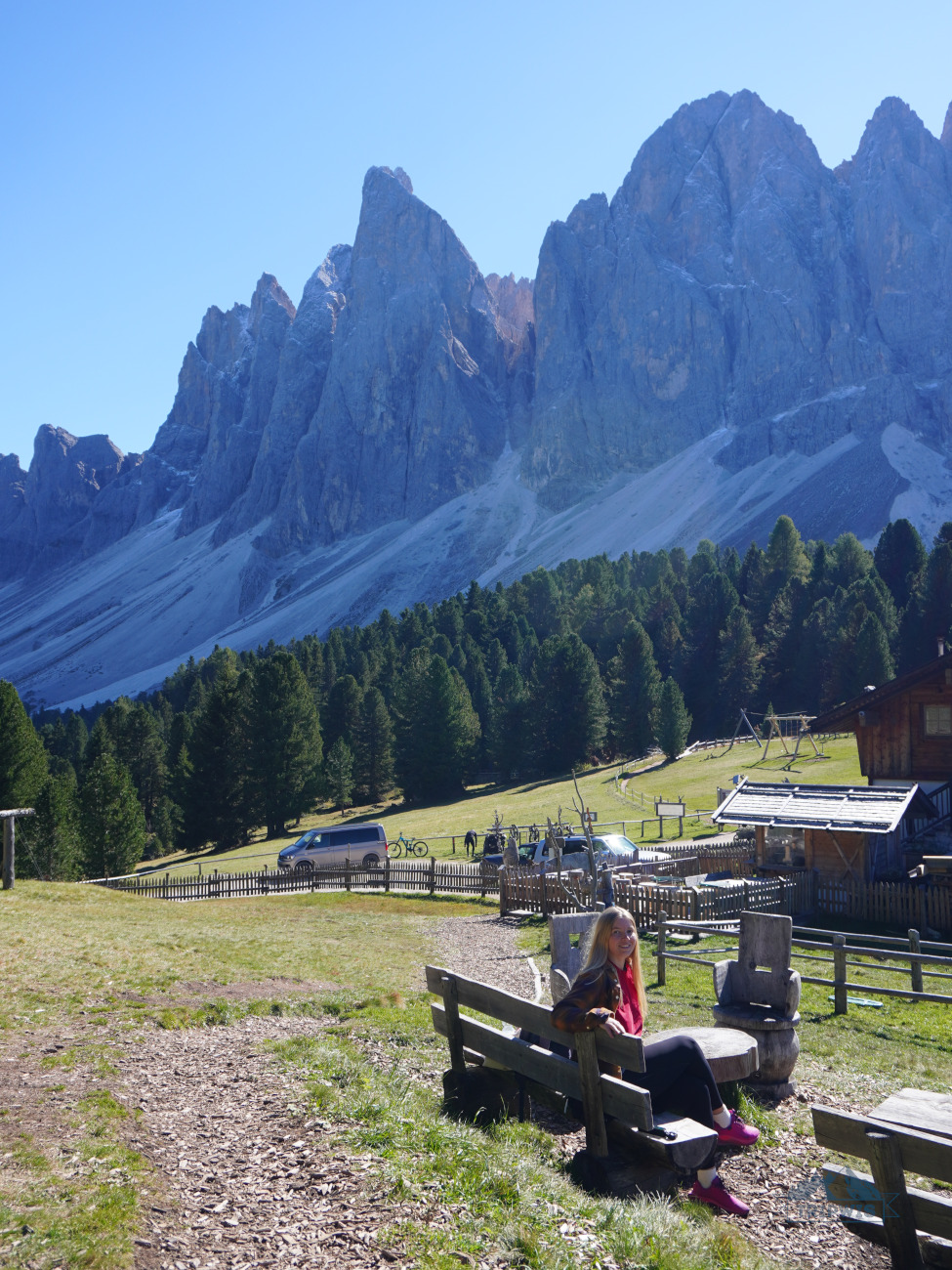
Adolf Munkel hike is different – instead of open skies above you, the treetops close in overhead. More than half of the trail winds through a thick spruce and larch forest. The sun doesn’t beat down on you, birds are chirping all around, and it feels like a walk in the park. The walk is long, though, and at times you do need to watch your step so you don’t trip over tree roots.
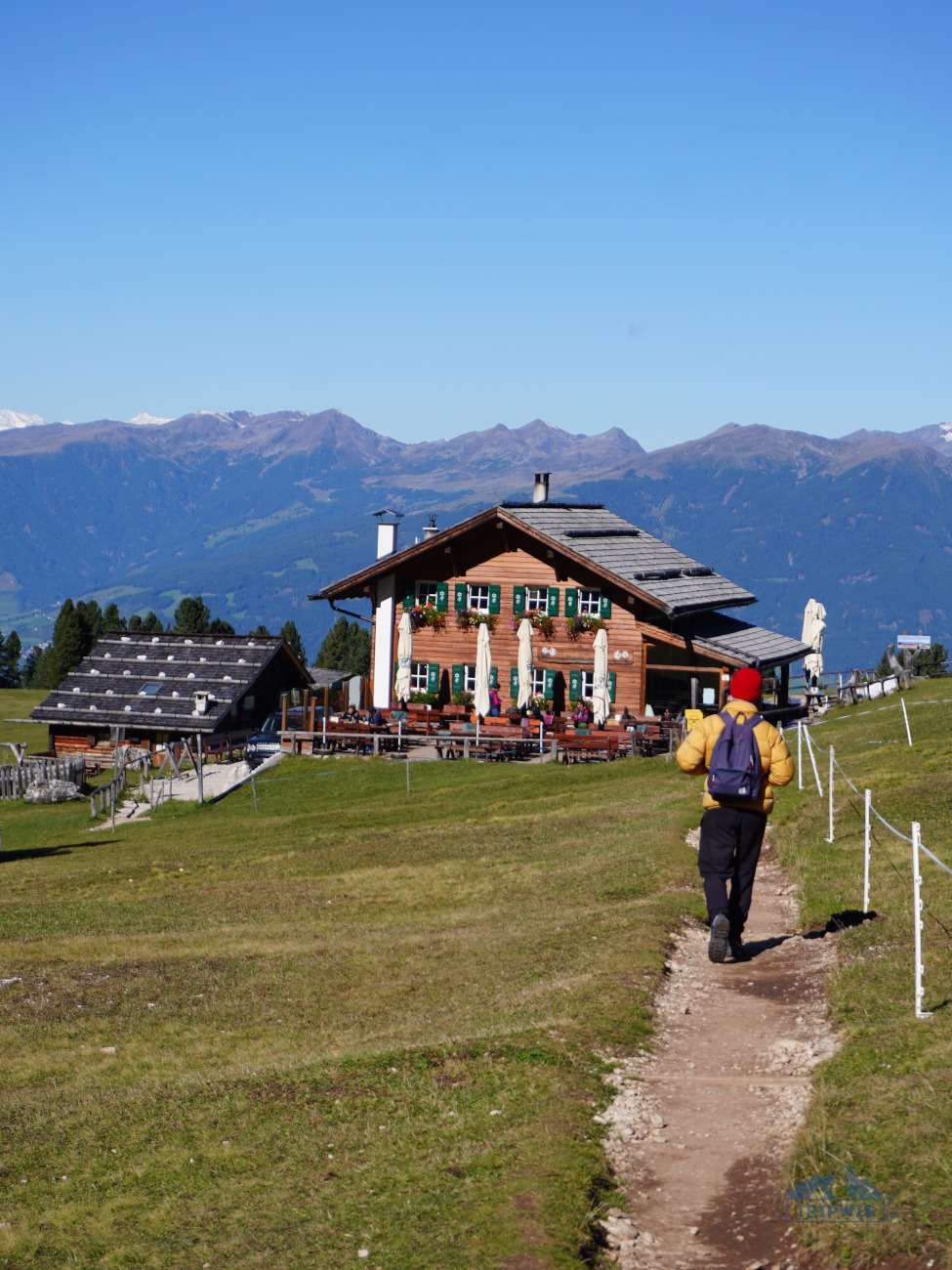
Once you leave the forest behind, you’re rewarded with an emerald green and wildflower-speckled meadow, with picturesque mountain huts strewn about and backed by the Odle peaks rising up dramatically. We did the trail clockwise, which I think makes the most sense if you are doing the full loop.
But here’s the trick:
- If you go counterclockwise, you’ll reach the Instagram-famous Geisler Alm rifugio in just 3.5 km instead of 6 km. So why do the full loop clockwise? Well, purely for the love of hiking!
My guide to Adolf Munkel trail >>
Cinema delle Odle, the iconic viewpoint on the meadow, is one of the Adolf Munkel’s highlights. It’s the kind of place where you sit on a wooden bench, drink coffee or tea, stare at the peaks, and forget about all the noise and chaos of the real world waiting for you once you step out of this Dolomites fairytale. Have I sold you on Adolf Munkel already? I sure hope so!
Where to stay for this hike: We stayed at Gasthaus Zum Weissen Kreuz in Latzfons (it’s a village on top of a mountain, and I was so curious to see what life there is actually like!); it takes a 40-minute drive to get to the trail from there.
Essential expenses: €10 for parking OR €17 for a bus both ways.
Possible expenses: None.
Need a rental car for this hike? I’d strongly recommend one as the nearest villages – Santa Magdalena and San Pietro – are 6 km away from the trailhead. Just so you know, this hike is considered one of the best Dolomites hikes near Bolzano, but getting there by bus requires a transfer in Brixen.
Hike to Lake Sorapis
📍12.7 km out and back | 4–5 hours | 600 m total ascent/descent | moderate to hard
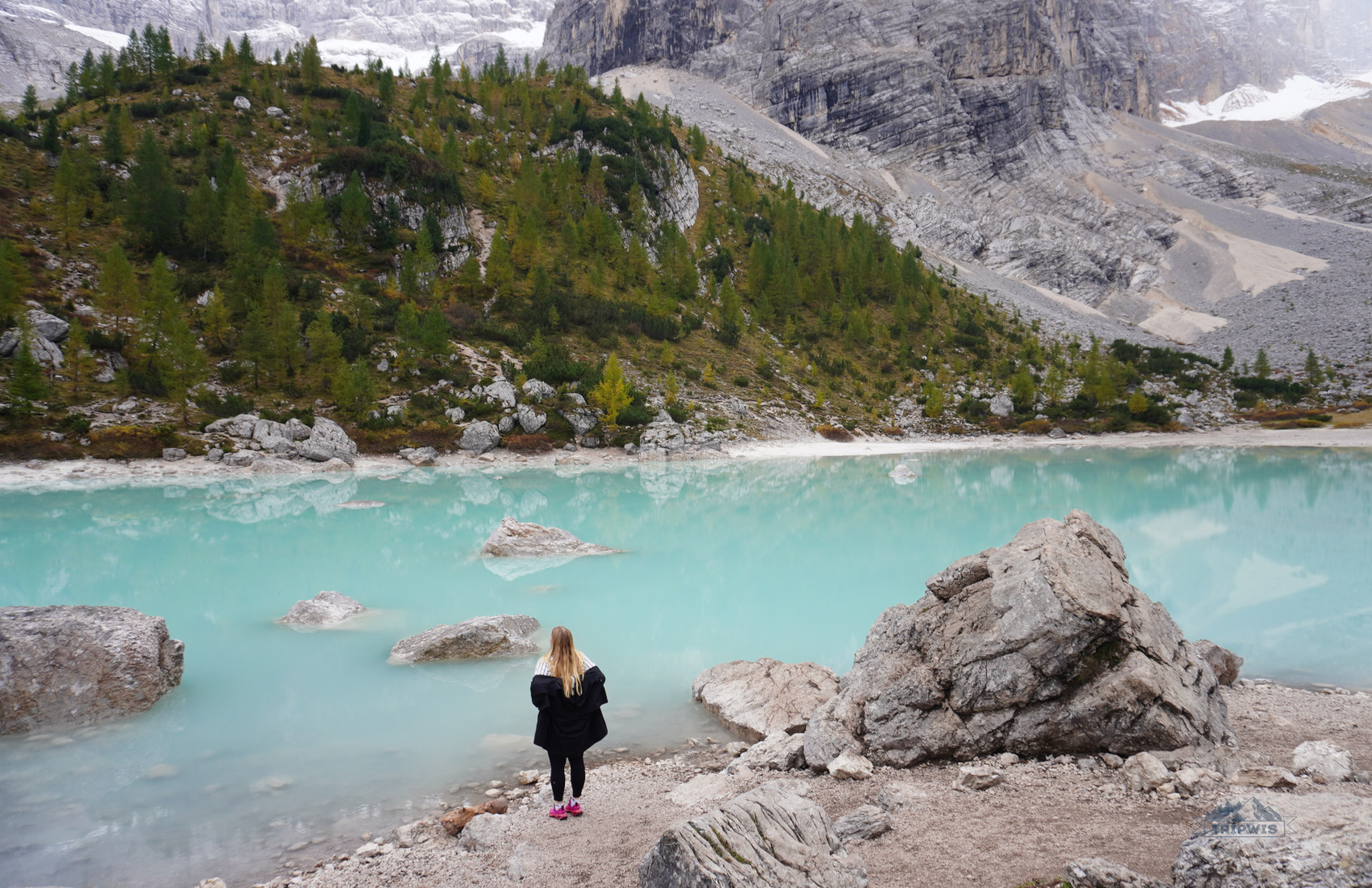
Finally, a free hike in the Dolomites – no cable car ticket, no parking fee. And the main star of the route, an otherworldly lake surrounded by dark imposing mountains, makes you want to save this spot on the map and come see it for yourself. Social media videos only add to the temptation. During high season months it’s a trail that starts to resemble rush-hour traffic, only with legs and hiking poles.
But! There’s one huge catch that few people talk about: This hike is HARD. We finished it on sheer willpower.
Lake Sorapis was the hike we underestimated the most in the Dolomites. Online, it often gets framed as a walk to a pretty lake, but that’s not this experience at all:
- Loose, unstable rocks that you need to step across to cross the stream
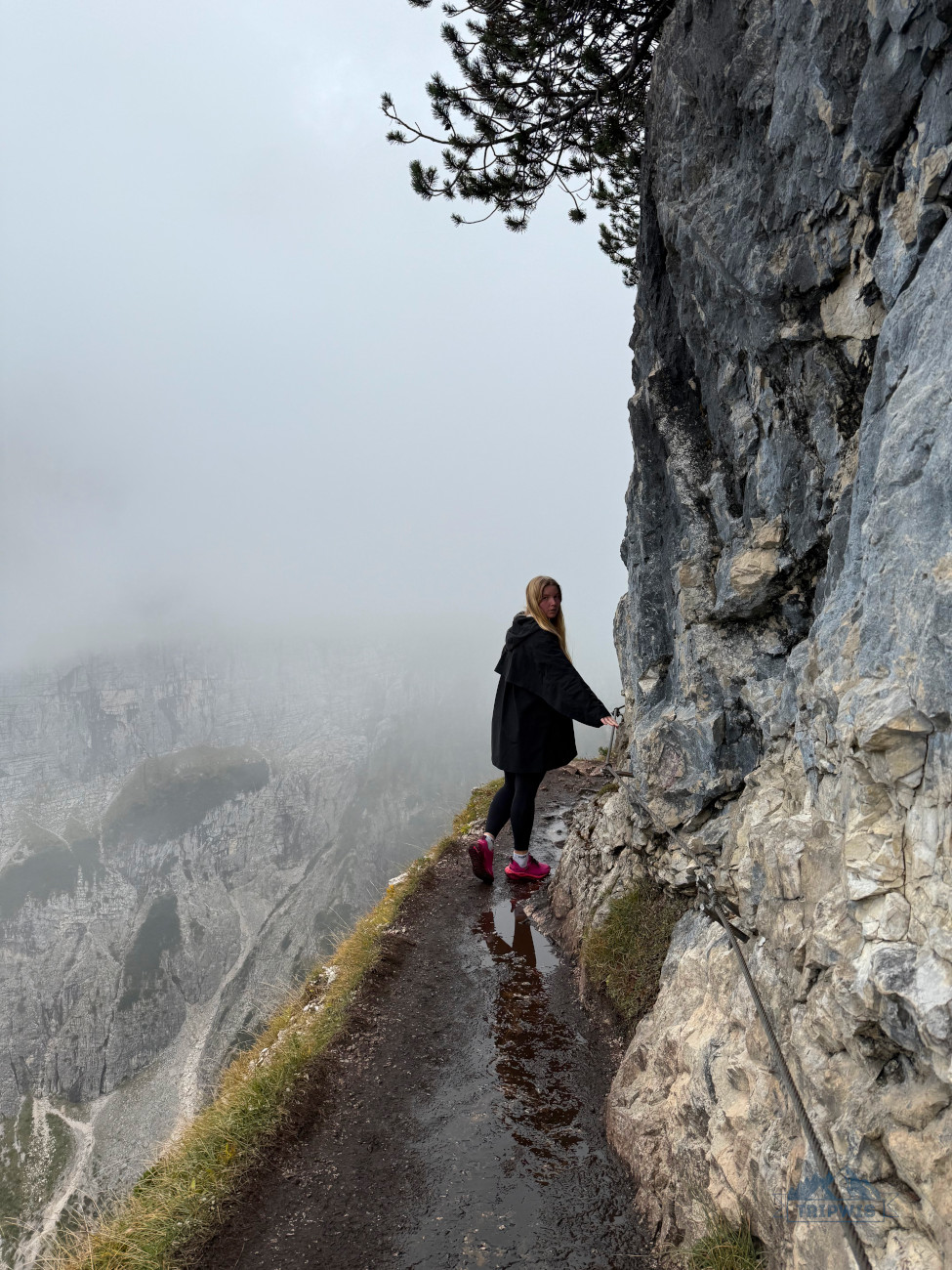
- A narrow path with a real drop-off on one side and a mountain wall on the other
- Some sections are so high that you either have to jump down or crouch to lower yourself carefully
- Long stretches where you really have to stay focused instead of switching off and walking on autopilot
- And to top it all off, there’s a section where you have to walk along a mountain ledge with no protection whatsoever from the drop
 |
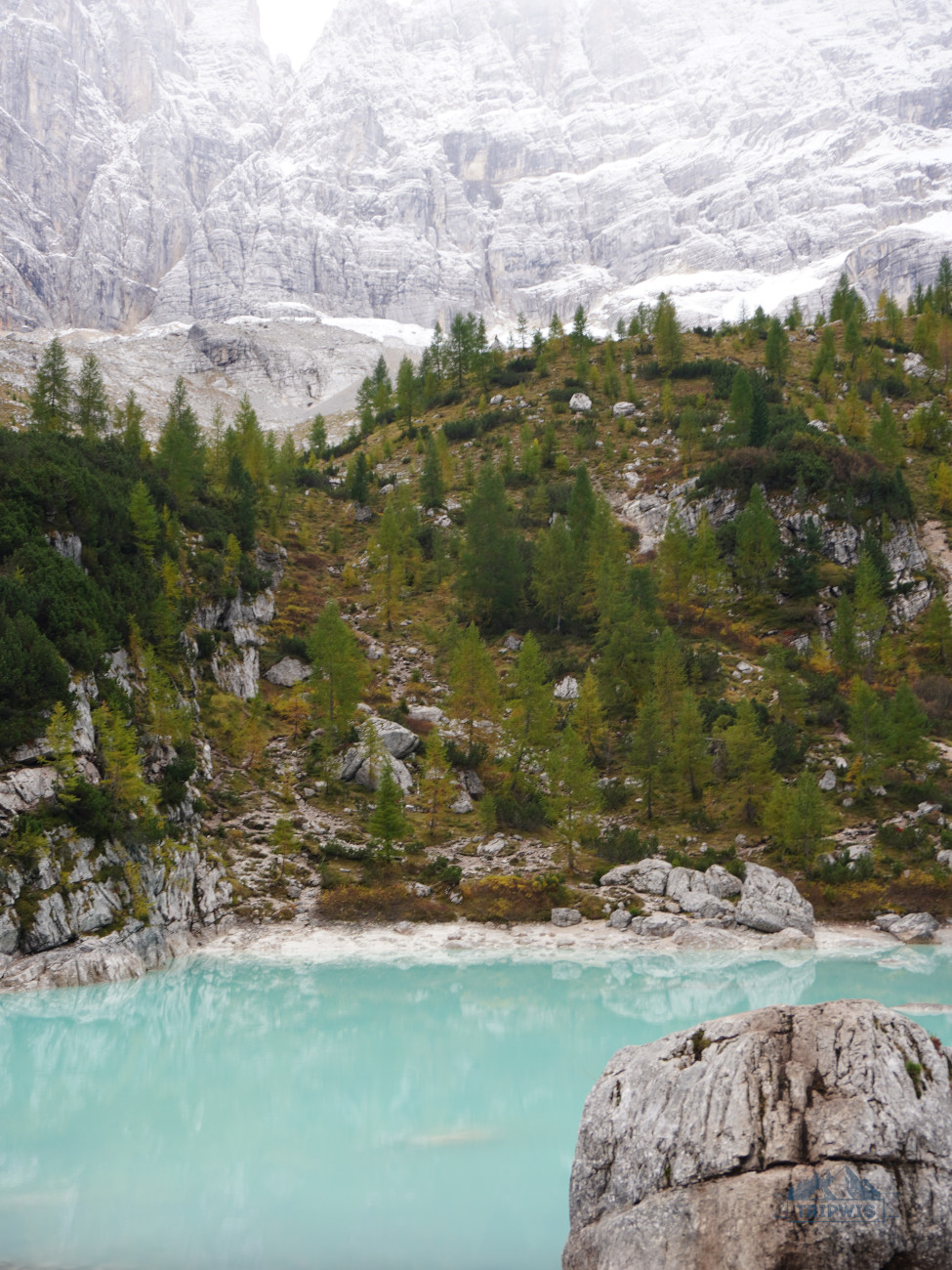 |
What also makes Sorapis so memorable is that there is no shortcut to the reward. No cable car, no easy cheat code – just a demanding trail and a lake that still looks unreal even when you are standing right in front of it. By the time we got there, I understood why so many people obsess over this place. The color of the water, the sheer rock walls around it, the whole setting – it all is so different from the softer and greener hikes in South Tyrol.
My guide to hiking Lake Sorapis >>
It is highly likely that you will be finishing the hike to Lake Sorapis pretty exhausted. Can I boldly claim that it belongs among the best hikes in the Dolomites? Probably not, because of its difficulty. Can I call it one of the most epic Dolomites treks? Oh boy, can I ever!
Where to stay for this hike: We stayed at Best Western Hotel Nevada near Cortina d’Ampezzo – a really good pick for Lake Sorapis with about a 25-minute drive to the trailhead (and a much more reasonable price point than Cortina). If you want to drop your bags a little closer to the area, you can follow the saying literally, by picking B&B Hotel Passo Tre Croci Cortina for your stay. The oft-mentioned hotel is nestled right beside the trailhead to Lake Sorapis (within a 15-minute drive from Cortina).
Essential expenses: None.
Possible expenses: None.
Need a rental car for this hike? Yes, absolutely. You can browse rental car options in Italy on Discovercars.com.
Cinque Torri hike
📍6.9 km from Bai de Dones | 3 hours | 412 m elevation gain | moderate
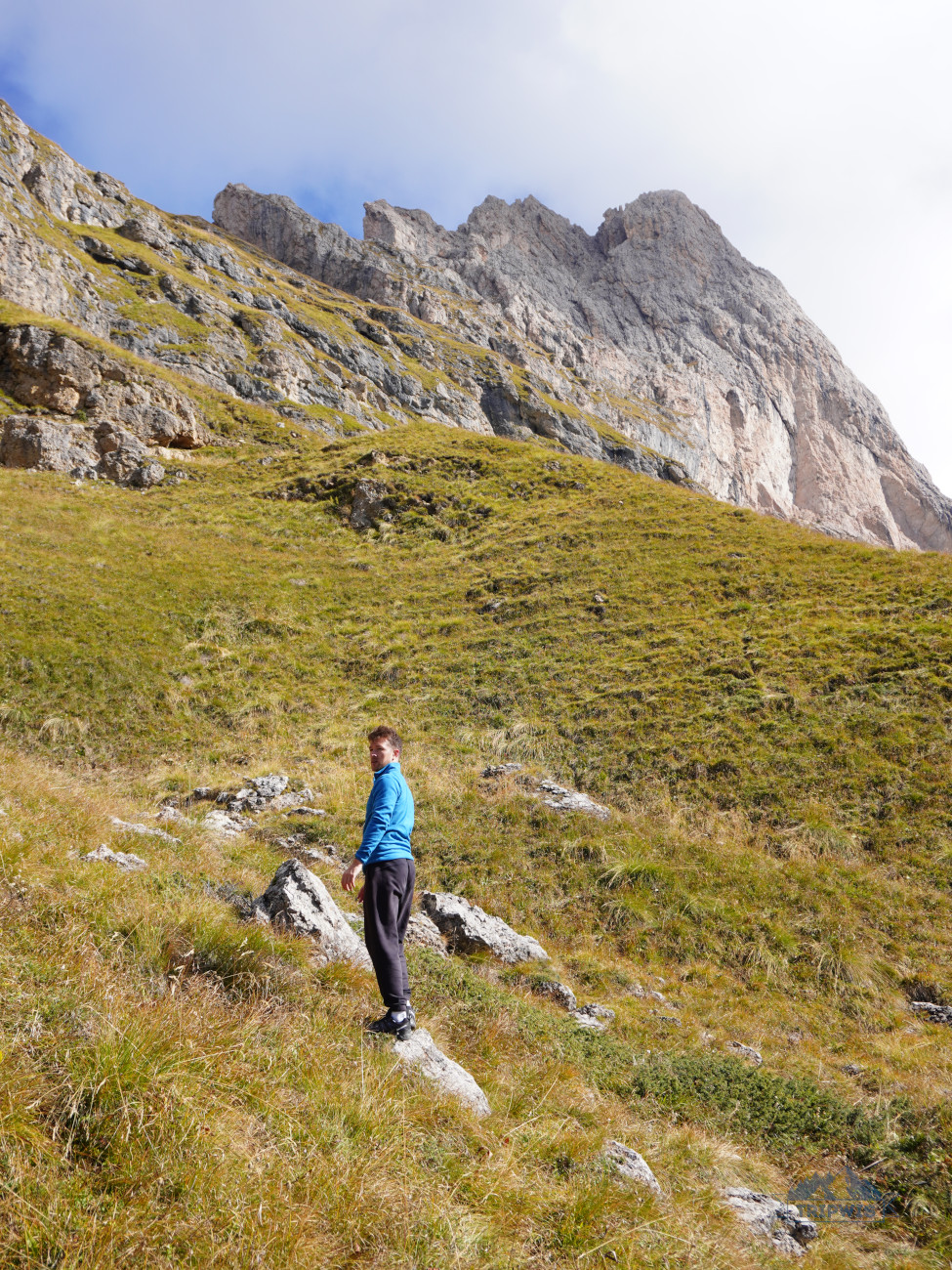
We didn’t do Cinque Torri ourselves, so I can’t give a first-hand take here. But if I were adding one more hike to my list, this would be a sixth pick. Especially because it shows you something the other trails don’t: A WWI open-air museum and a much easier, more flexible experience overall.
- The most accessible hike route is the short loop from Rifugio Scoiattoli, which many people reach by cable car. If you want a proper hike, you can start lower down at Bai de Dones and walk up from there.
Cinque Torri is the mix of scenery and history. The official route leads you from rifugio around the towers and through restored WWI trenches, with constant mountain views the whole way. It’s short and easy. I’d frame it as the most beginner-friendly bonus hike on the list. It looks ideal for people who don’t want to commit to another long and tiring trail day, especially if you are putting together one of those best Dolomites hikes summer itineraries with a combination of harder and easier outings.
 |
 |
Where to stay for this hike: Since we didn’t actually do Cinque Torri, I can’t give you a real recommendation. But if I’d added it to our itinerary, I most likely would have used the hotels of Cortina d’Ampezzo, since they’re the closest.
Essential expenses: None.
Possible expenses: None, parking is free.
Need a rental car for this hike? Yes.
Where to stay in the Dolomites?
For this itinerary, I would not stay in just one place the whole time. The Dolomites are too spread out for that, and changing accommodation made our hiking days much easier. Figuring out where to stay in the Dolomites matters almost as much as choosing the hikes themselves. Instead of wasting hours on long pre-dawn drives, we moved with the route – and I’m convinced that was the right decision. Plus, with your own four wheels, you can choose to stay anywhere you like in the region.
Here is the exact route we did:
🔹3* Hotel Everest (Trento; from €100 a night) – our overnight stop after the drive from Milan. It did exactly what it needed to do: Break up the journey before we moved deeper into the mountains.
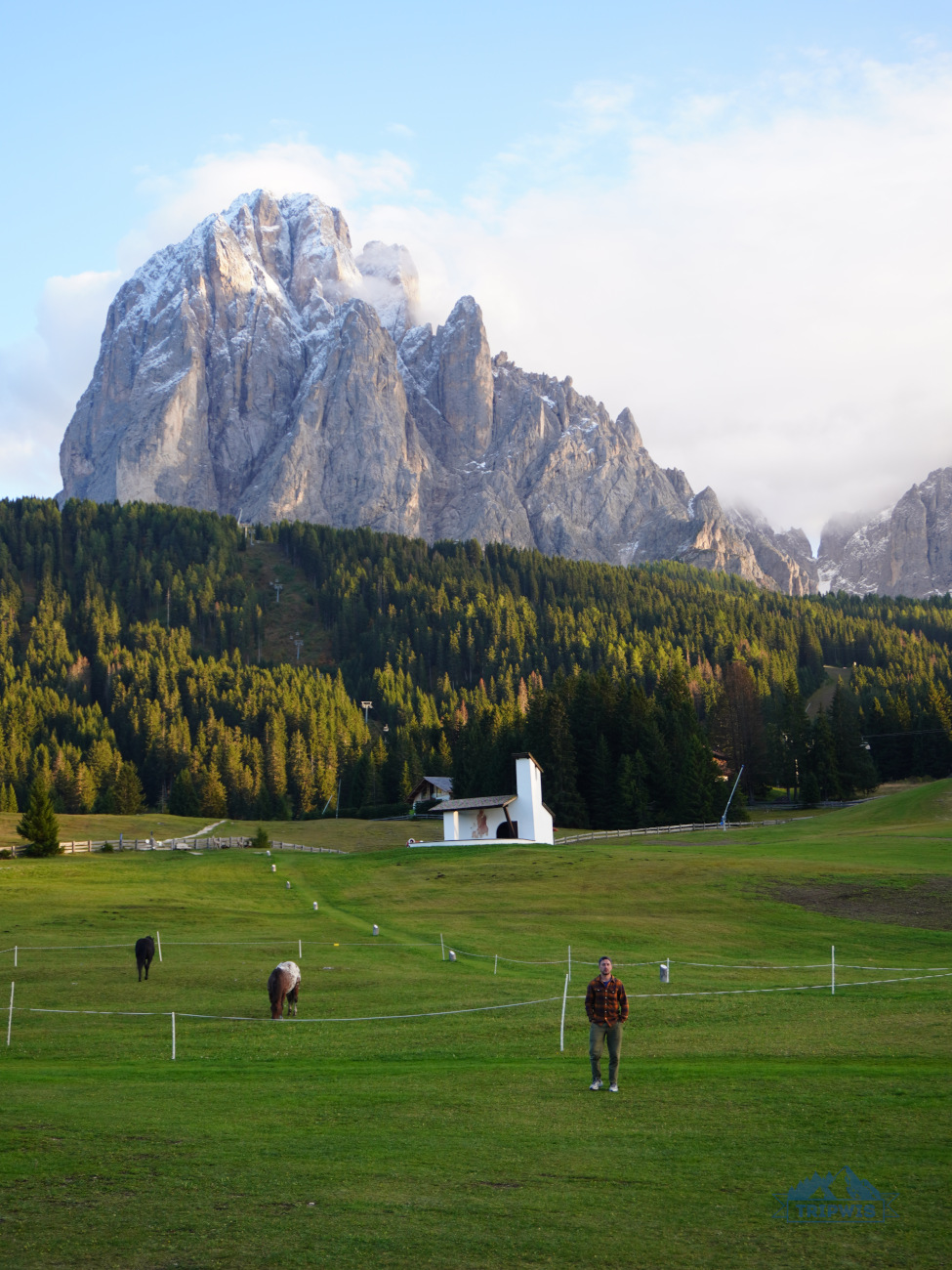
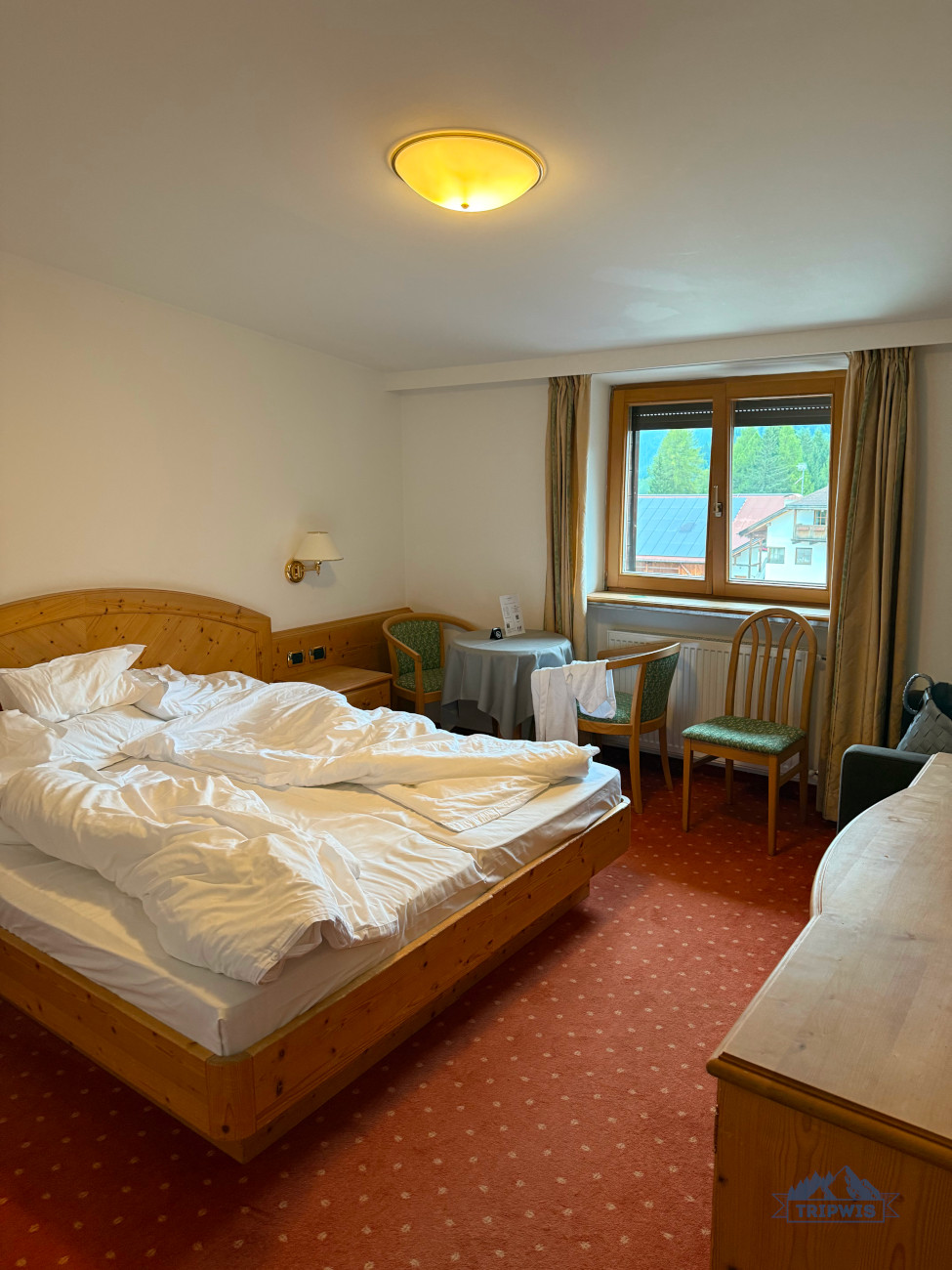
🔹4* Monte Pana Dolomites Hotel (Santa Christina / Ortisei; from €200 a night) – our top pick of the whole trip and the hotel I would recommend first. This was our base for Alpe di Siusi and Seceda. Half-board option was a huge plus, especially because early breakfasts are hard to find in the Dolomites before a hike. On top of that, the terrace views of Sassolungo were incredible! There is free parking on site, and the location is convenient – around 10 minutes to Col Raiser and roughly 15 minutes to Ortisei by car.
 |
 |
🔹3* Best Western Hotel Nevada (San Vito di Cadore / Cortina d’Ampezzo; from €100 a night) – this hotel gave us easier access to both Lake Sorapis and Tre Cime di Lavaredo without paying exorbitant prices for Cortina’s hotels.
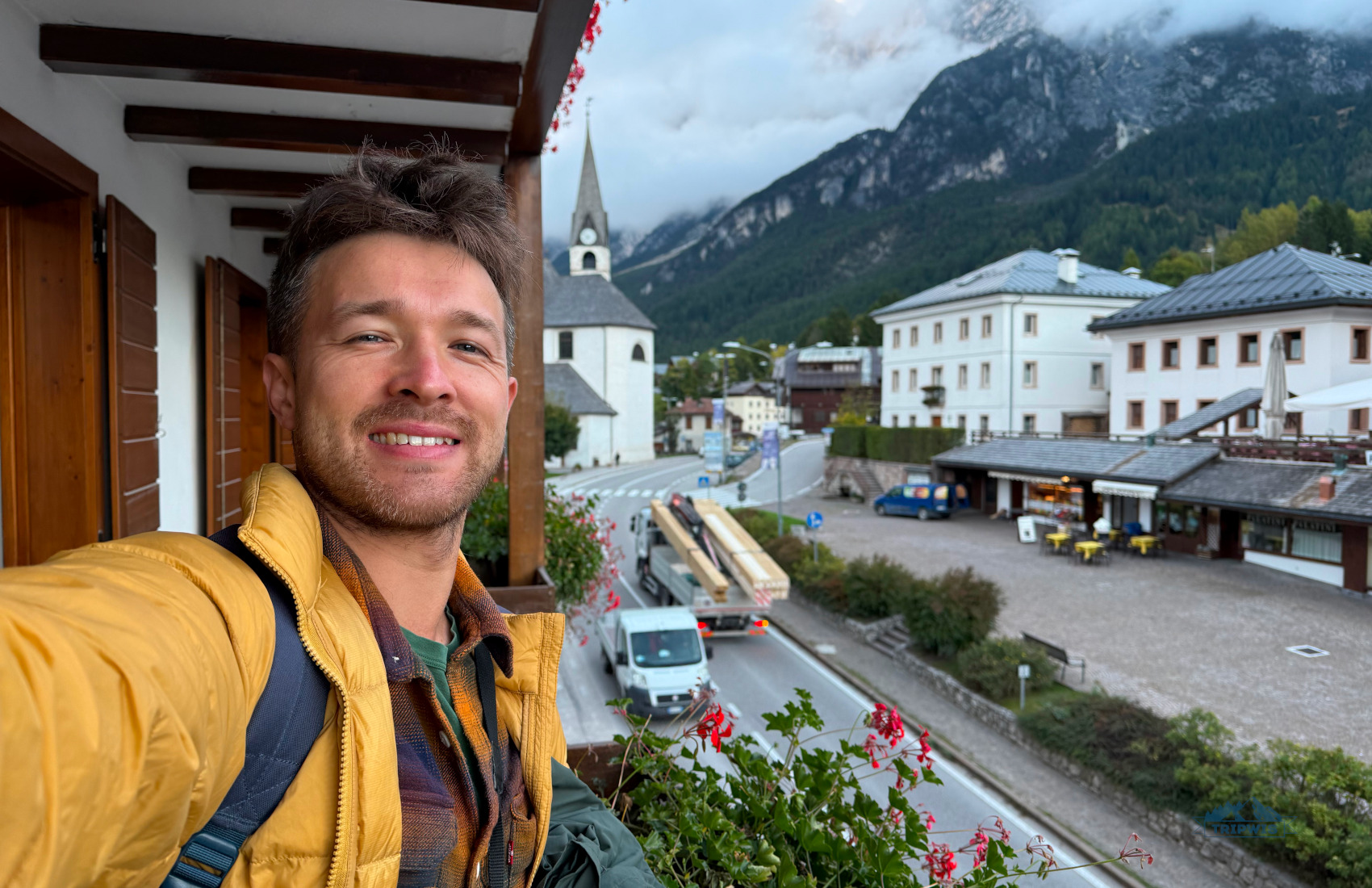
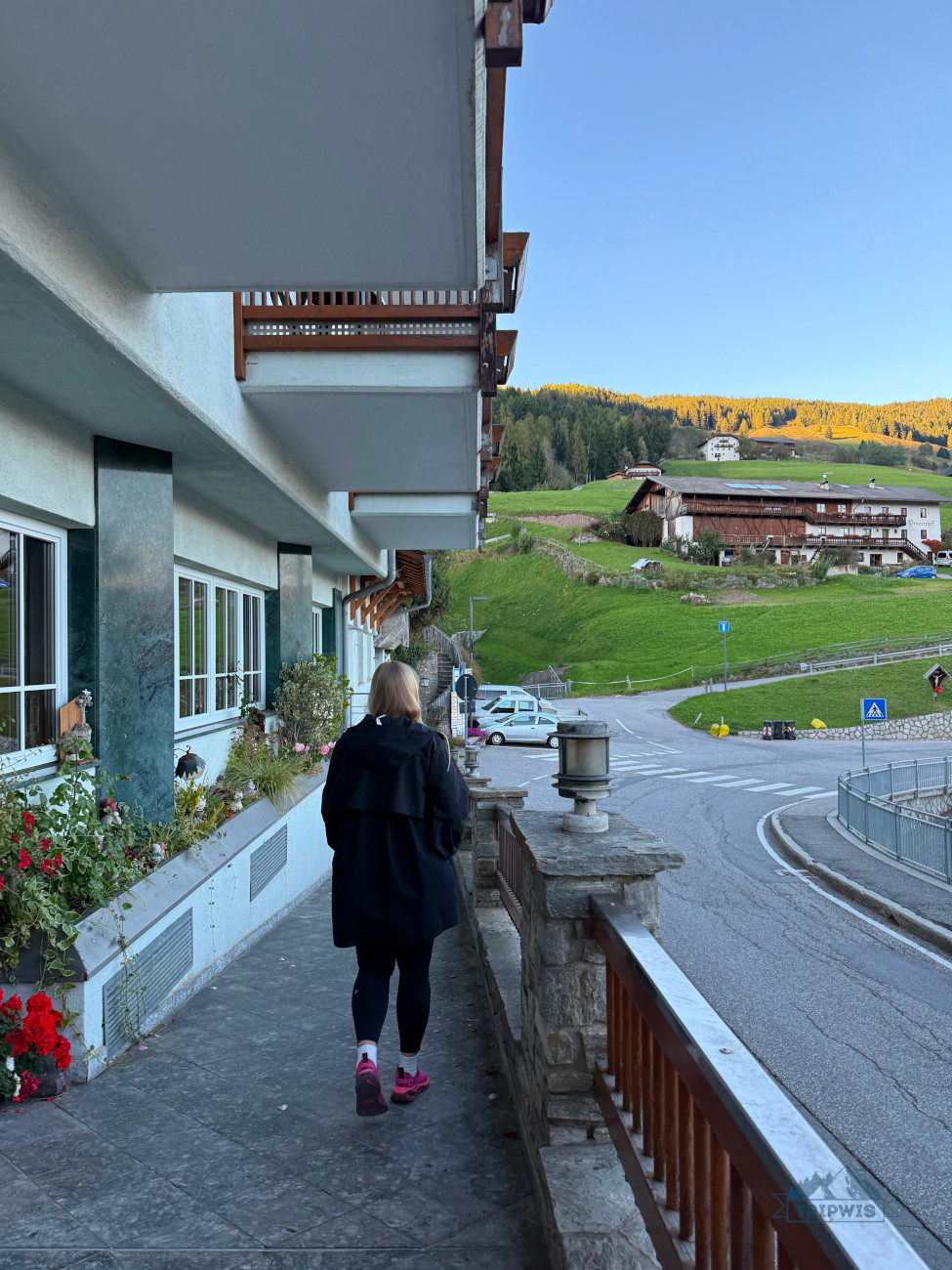
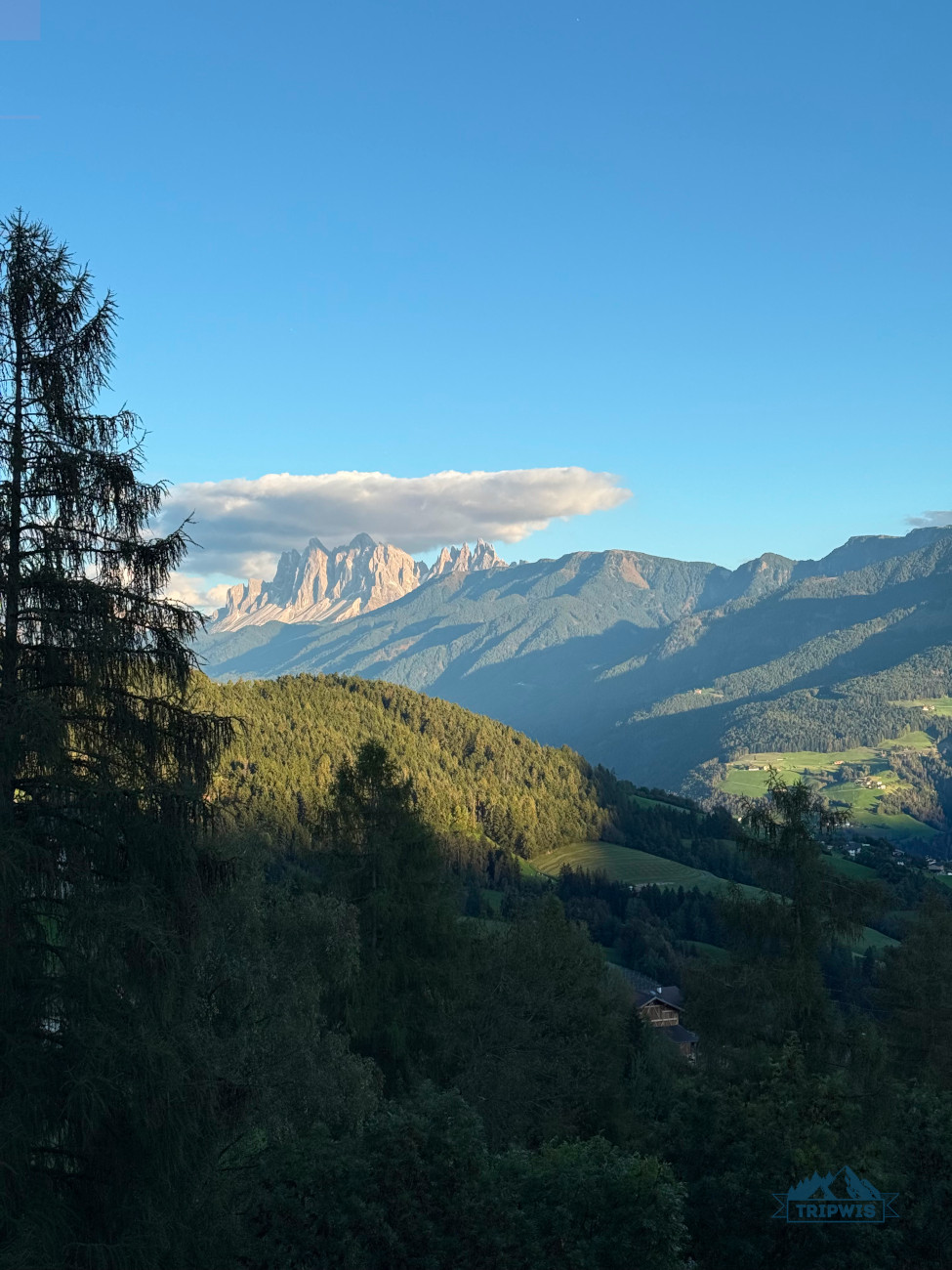
🔹3* Gasthaus Zum Weissen Kreuz (Latzfons; from €120 a night) – our stop after Tre Cime and before Adolf Munkel. From there, it took us about 40 minutes to get to the Adolf Munkel trailhead.
 |
 |
🔹3* Hotel Raffl (Bolzano; from €140 a night) – the cheapest hotel we found in Bolzano. We spent the rest of the day here recovering after Adolf Munkel hike and then set off back to Milan the following morning.
If you want a couple of extra hotel ideas in the same areas, these are the ones I would keep on the shortlist:
- 5* Grand Hotel Savoia (Cortina d’Ampezzo; from €450 a night) – a true Radisson grande dame that set up camp in the center of Cortina. Established in 1912, this chic paragon of high-end living saw the likes of Sophia Lauren, Winston Churchill, and others staying at the wood-clad suites. The traditional oomph of the hotel’s architecture finds its way inside, into a giant ballroom and the opulent rooms. A heated indoor pool and a fully decked-out spa (with a Turkish hammam, no less) will be the remedial setting for your late afternoon lounging bouts.
- 4* Hotel Hell (Ortisei; from €260 per night) – despite the name, it is a very chic (dare I say Heaven-like?) hotel that is equipped with an outdoor hot tub and state-of-the-art spa facilities. A 15-minute leisurely walk will take you to Seceda cable car.
- 5* Hotel Fanes (Selva; from €335 a night) – a super stylish hotel that feels like home away from home. A wood-and-glass color scheme adds a flair of serenity and relaxation to your stay. It is set within a 15-minute walk of Daunei-Seceda hike trailhead.
- 4* Hotel Touring Dolomites (Santa Cristina; from €335 a night) – a heated rooftop pool overlooking the beautiful Dolomite mountains – the kind of social-media dream you actually get to experience in real life. It’s a great alternative if Monte Pana Hotel is unavailable.

we are visiting dolomites in 1.5 months and plan the exactly 5 hikes you described here . So happy to find all the useful information here. Great thanks and wow, it is so beautiful !
It’s immensely beautiful! Have a great trip!
I’m surprised that Lago di Braies is not on your list 🙂