When you start planning your adventures in Georgia make sure to put Georgian Military Highway at the top of your list! This stretch of the road with countless stops is considered to be the most popular day trip from Tbilisi you can take. It allows you to enjoy Georgia’s mountain views, visit ancient fortresses and little villages, catch (if you’re lucky) a glimpse of Mount Kazbek – the local 5,054-meter giant – and still make it back to Tbilisi by evening.
I’ve traveled this route several times – in both winter and summer, on a guided tour and in a rental car, as a day trip and with an overnight stay in the village of Stepantsminda.
Already planning to visit Kazbegi as soon as possible? Then read on – in this Georgian Military Highway travel guide I’ll highlight things to keep in mind if you decide to take on this famed road, list the best places to see here, and share my own Kazbegi road trip itinerary.
Article contents
- Things you need to know before driving this road
- How to get to Kazbegi from Tbilisi?
- What it’s really like driving the Georgian Military Highway?
- My list of most beautigul stops along the road
- Where to stay in Kazbegi?
- Where to eat along the road?
Things you need to know before driving the Georgian Military Highway
What is the Georgian Military Highway: This formerly important military road (now used mostly as a major trade and travel route) is one of the most scenic drives in all of Georgia! And also the most famous one. The highway winds along roaring mountain rivers, surrounded by the Caucasus mountains and lush alpine meadows. Historians say the road existed long before modern times, serving travelers and traders for centuries.
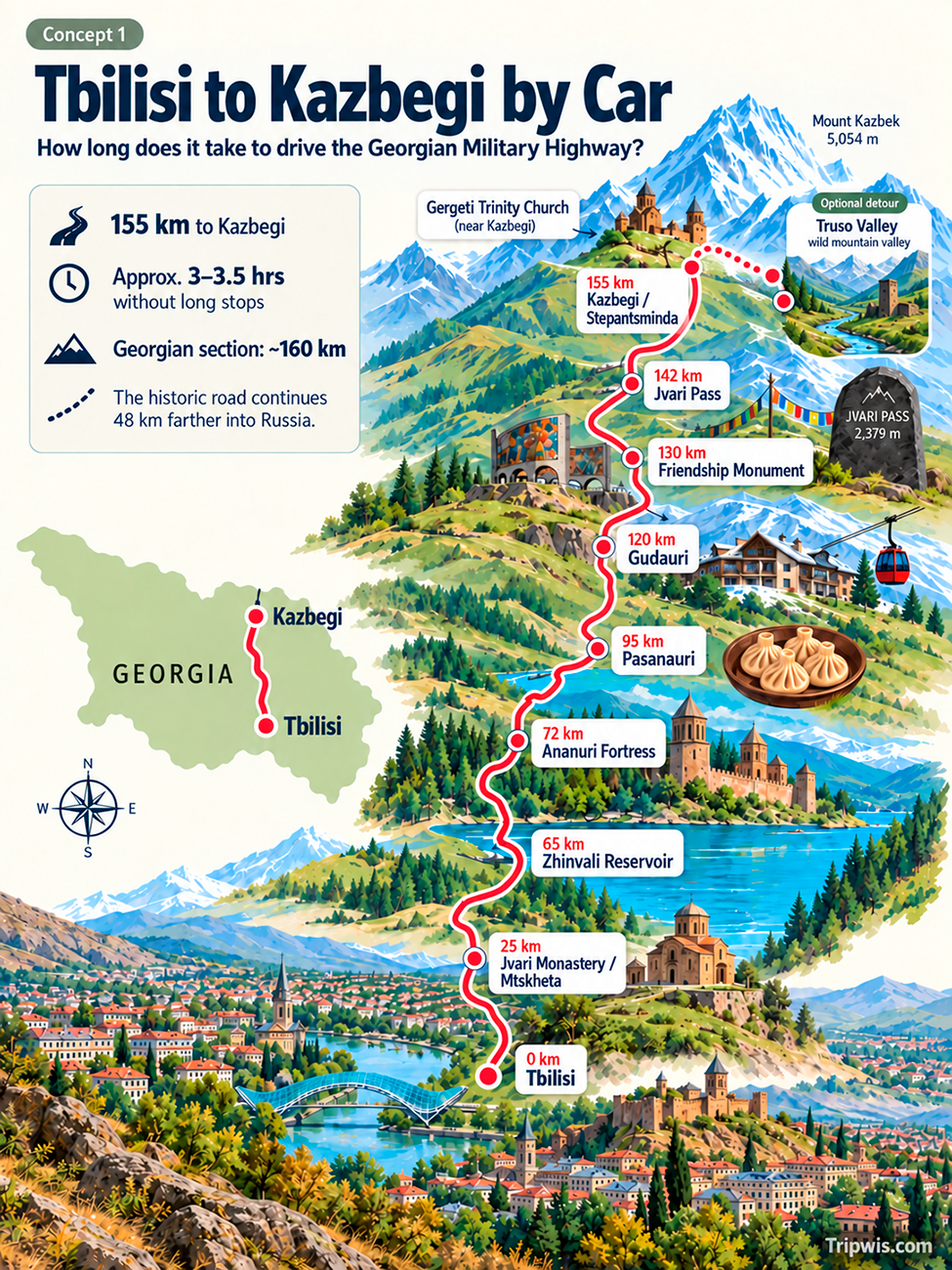
What is the highway’s route: It runs from Tbilisi through Mtskheta (the ancient capital), climbs past Pasanauri (the birthplace of khinkali) and the ski resort of Gudauri, crosses the narrow and winding Jvari Pass, and finally reaches Stepantsminda (also known as Kazbegi). What mesmerizes me every time is the way the road begins with gentle green hills, which gradually rise and grow into dramatic rugged mountains!
What is the best time to drive on it: Late spring through early fall is ideal. The mountains are greener making the views even more striking, and the weather is better and more predictable for making frequent stops and even hiking during detours. Plus, driving is way, way safer than in winter.
How long does it take to drive from Tbilisi to Kazbegi: If you consider Kazbegi the final stop, then it’s 155 km. The Georgian section of the highway is about 160 km long (the rest 48 km continues into Russia).
 |
 |
Don’t expect to rush through all the stops in a couple of hours – the scenery is way too gorgeous for that, and the traffic is slow. A one-way journey from Tbilisi to Kazbegi takes about four to five hours with a few short coffee or photo breaks. If you’re the kind of traveler who stops to snap every viewpoint (and even if you aren’t, Georgia will challenge that), the trip can easily stretch to five hours.
If you’re a mountain lover wondering how many days are enough for Kazbegi, plan to stay at least overnight. With good weather, there are plenty of hiking trails waiting for you – more on that below.
Is the Georgian Military Highway safe: Make sure you understand that it’s a two-lane mountain road, so steep climbs and sharp switchbacks should be expected. The route is always packed with huge trucks and minibuses racing past each other on blind turns. That said, driving the Georgian Military Highway is generally safe. You just need a bit of confidence behind the wheel.
❗️ Still, if you’re a novice driver, I’d recommend starting your mountain-driving experience somewhere more relaxed.
Do you need a 4×4 to drive to Kazbegi: From mid-April through October, any car will do for the Tbilisi–Stepantsminda route. From November to March, it’s safer to go with a 4×4 – the mountain sections can get snowy and icy.
How to get to Kazbegi from Tbilisi?
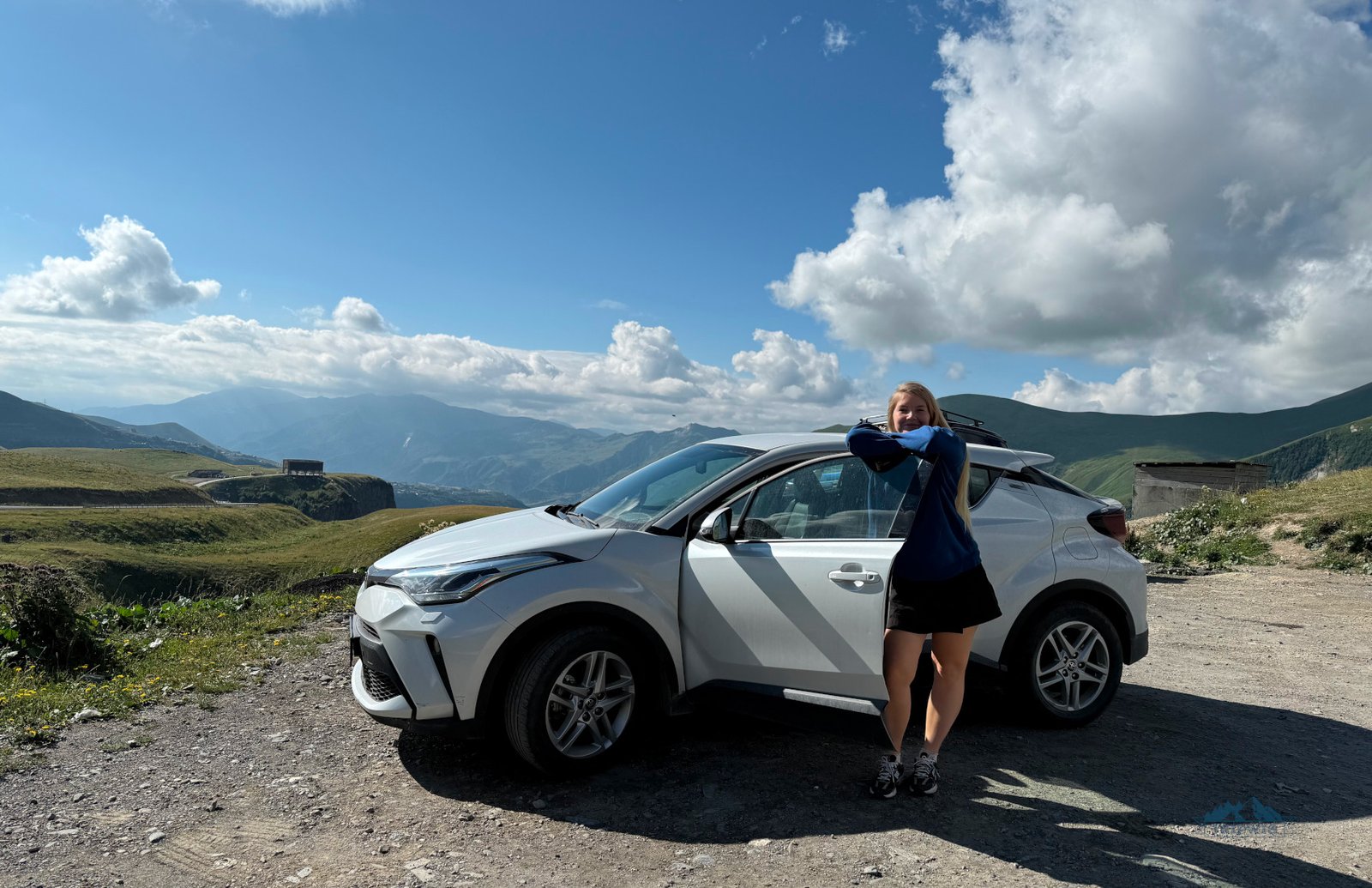
The best way to explore the Georgian Military Highway is either by your personal rental car or a private car with a driver – both of these options allow for plenty of stops you might want to take along the way. The road itself is the attraction here: The viewpoints, the mountain turns, the fortresses perched over turquoise lakes – missing all this bounty because you’re cooped up in a small van with dirty windows is a true loss for any Georgia visitor.
Now, let’s get into the details of each potential mode of transportation for the Georgian Military Highway:
Rental car
We drove the Military Highway by rental car this time, and it made the trip so much better. We started at 7 a.m. to get ahead of the main tourist traffic, drove at our own pace, and stopped wherever we wanted. We even managed to visit the Chronicles of Georgia monument and hike to Juta Lake – the kind of detours they don’t do on a regular group tour – before spending the night in Kazbegi. It turned out to be a fantastic experience.
Here’s what I’d recommend: Leave Tbilisi early, see about 80% of the spots along the way, check into a nice hotel in Stepantsminda or nearby in the evening, relax, then explore the rest the next morning before heading back to the capital.
- For road trips around Georgia, I always book my car through Localrent. In this country, it just works better than anything else I’ve tried. And, crazy as it sounds, I’ve rented cars through them almost twenty times by now (in different countries).
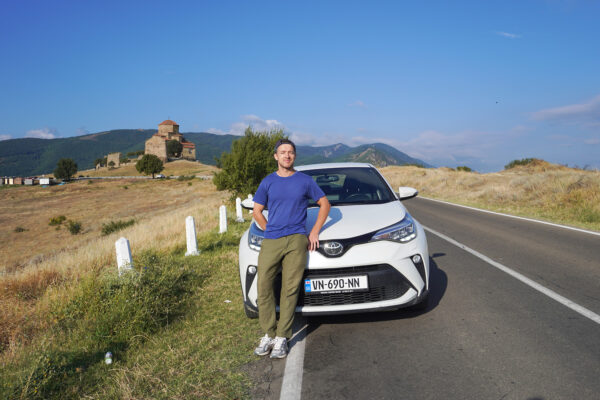
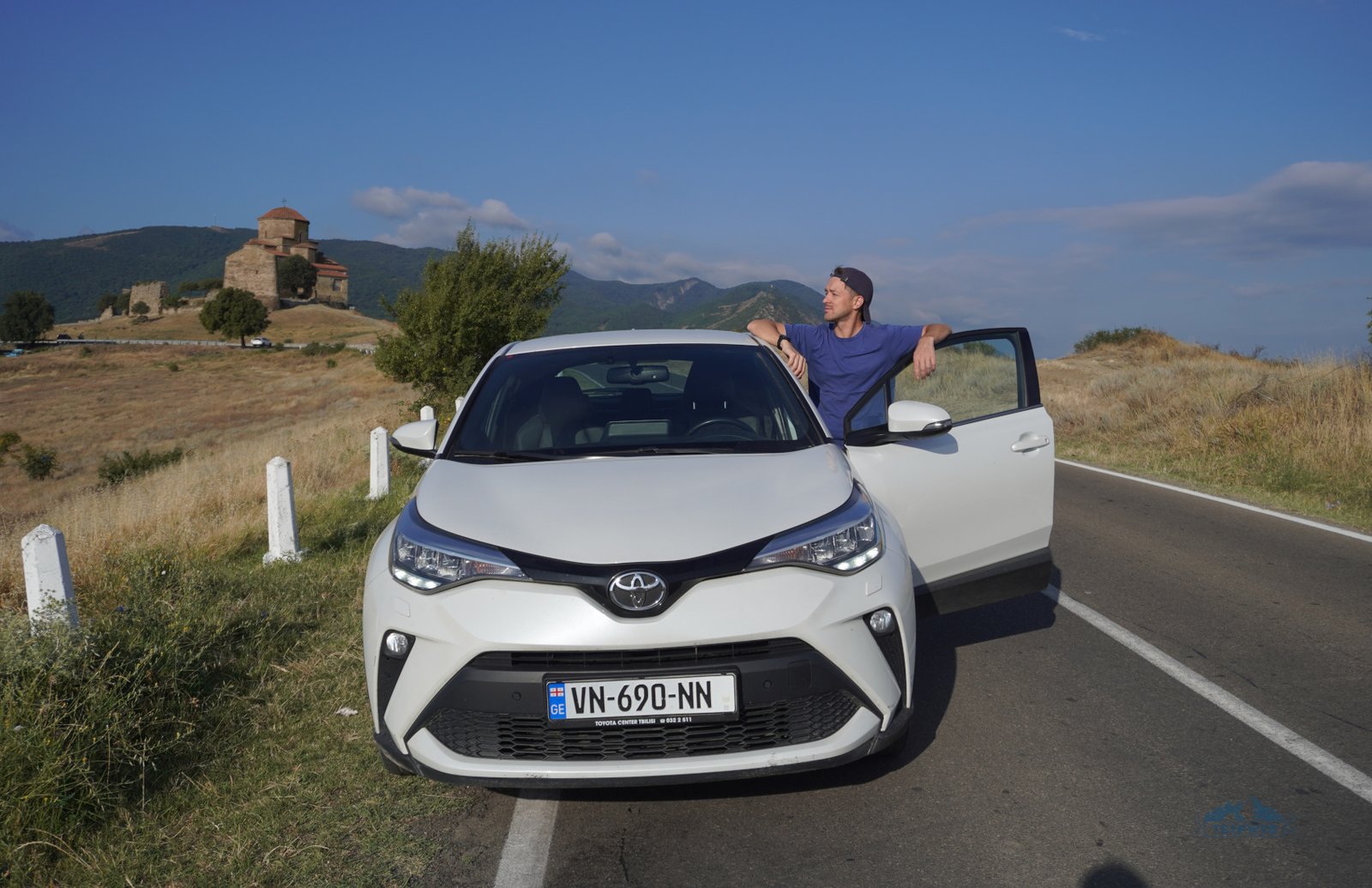
Renting a car in Tbilisi was quick and simple, and we ended up with a compact 2023 Toyota C-HR – the same car we drove along the Georgian Military Highway and all the way to Batumi. Localrent connects you directly with local agencies (hence the name), and rental prices are lower than those from the big-name companies.
We paid $400 for 9-day car rental with full coverage and no deposit – just over $40 a day – and spent 70 GEL / $27 on fuel for the round trip along the Georgian Military Highway.
I’ll get into the main driving tips for this road and the best stops to make a little further down. And if you want a more detailed guide to renting a car in Georgia, check out my dedicated article on the topic.
Private car with a driver
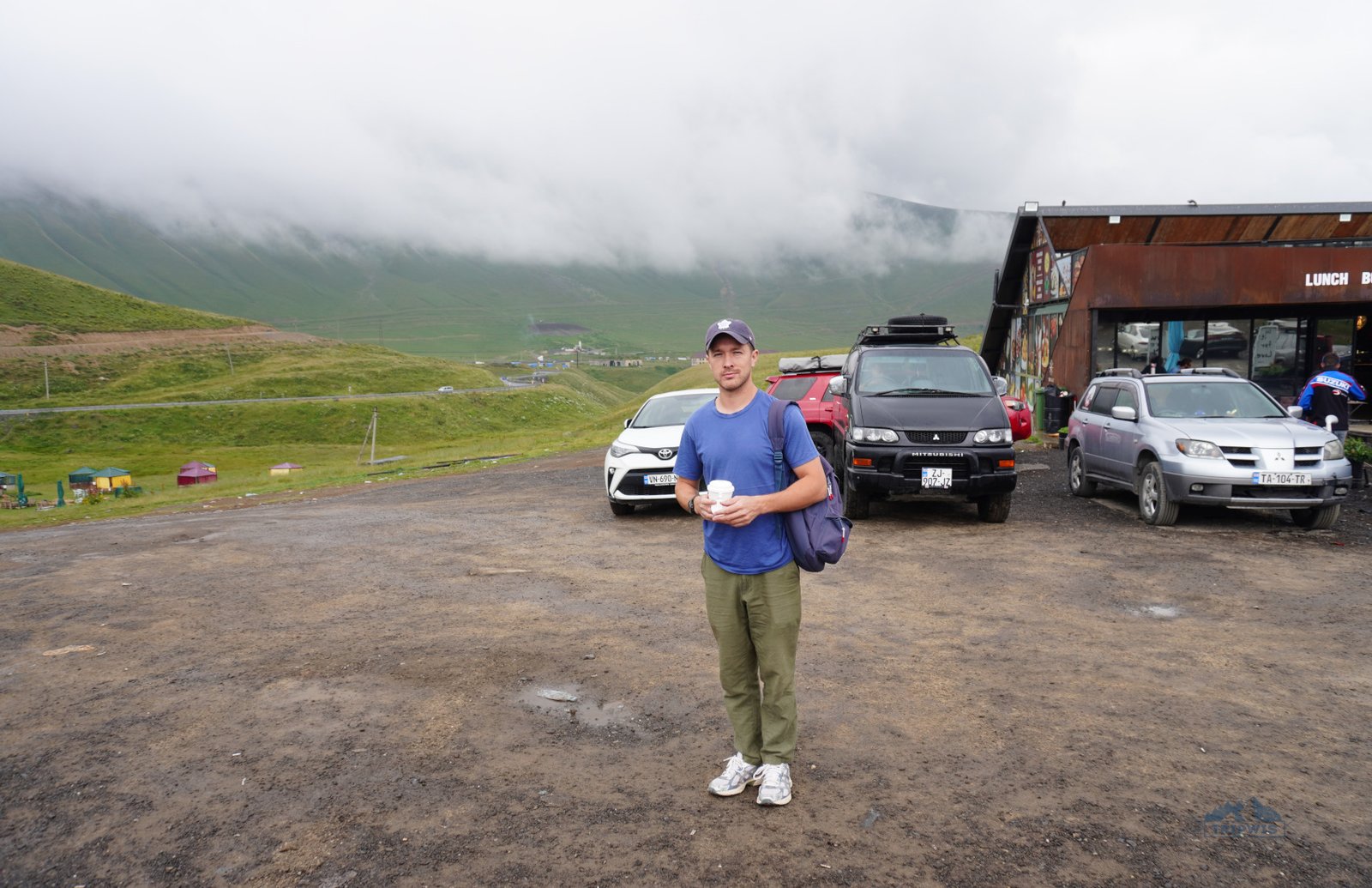
If you don’t want to suffer through a minibus ride or listen to a full-day group tour but also aren’t ready to brave the Georgian hairpin turns yourself – Gotrip.ge is your best friend.
It’s an extremely popular transfer service in Georgia, and we used it too – though not for the Georgian Military Highway, but for Kakheti, where hiring a driver makes perfect sense if you want to enjoy wine tastings without worrying about driving.
The rate you see on the site – from $90 for a trip from Tbilisi to Stepantsminda and back – includes fuel, unlimited stops for photos (you don’t need to specify them when booking but you do need to decide on them by the day of the trip – that part is up to you), and your driver waiting for you all day. The main thing to remember is that this isn’t a guided tour, and the drivers aren’t tour guides. They might share a bit of information along the way simply because they enjoy chatting, but that’s about it.
In winter, using Gotrip for the Georgian Military Highway is the best option. The car is properly prepared for sudden snowy conditions, and the driver knows the road down to the smallest detail.
Minibus (marshrutka)
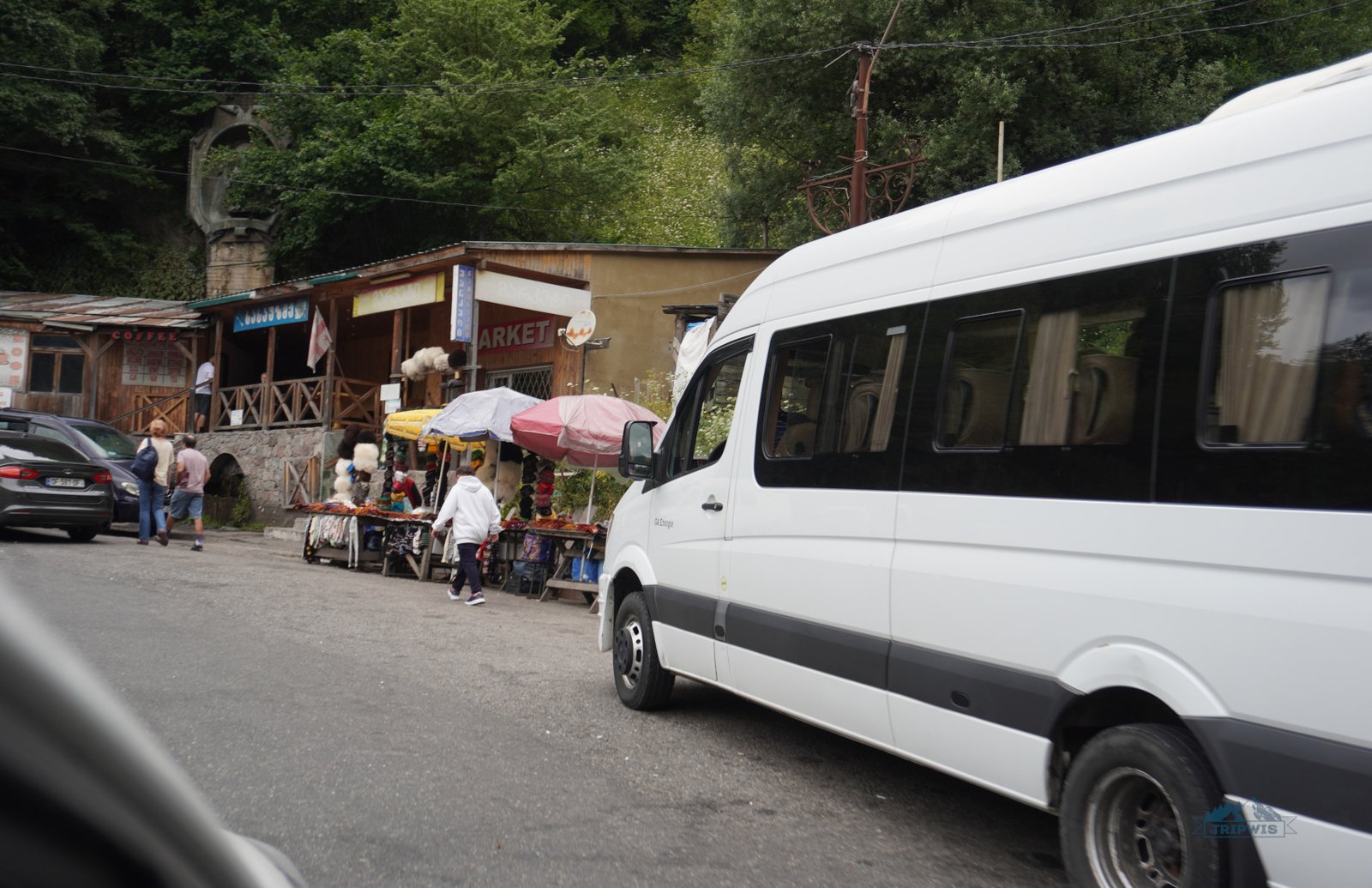
You can go the length of the Georgian Military Highway by marshrutka (this is what they call minibuses here in Georgia) – it’s the cheapest and the most adventurous option. But be prepared to rattle around for 4 hours through mountain switchbacks, watching from your window as everyone with their own car pulls over to snap photos of the stunning mountain ridges and breathe in the fresh mountain air while you just sit there, stuck.
Of course, sometimes this option comes in handy (particularly price-wise). Here’re the things you should know if you choose marshrutka as your mode of transportation on the Georgian Military Highway:
- Minibuses to Kazbegi depart from the Didube station in Tbilisi every hour from 8:00 a.m. to 7 p.m. (I’d recommend getting there about half an hour before departure). The ride costs 20 GEL / $8 one way + 5 GEL / $2 for luggage, cash only.
- On the way back, minibuses leave Stepantsminda (Kazbegi) also every hour. But do not plan to catch the very last minibus to Tbilisi – they often leave earlier when the marshrutka’s full (which is a typical thing in summer), so you will be at risk of getting stranded in Stepantsminda.
Even though they’re very easy on the wallet, minibuses are the least comfortable and the slowest way to go about traversing the Georgian Military Highway, so skip them if you can.
Day tours along the Georgian Military Highway
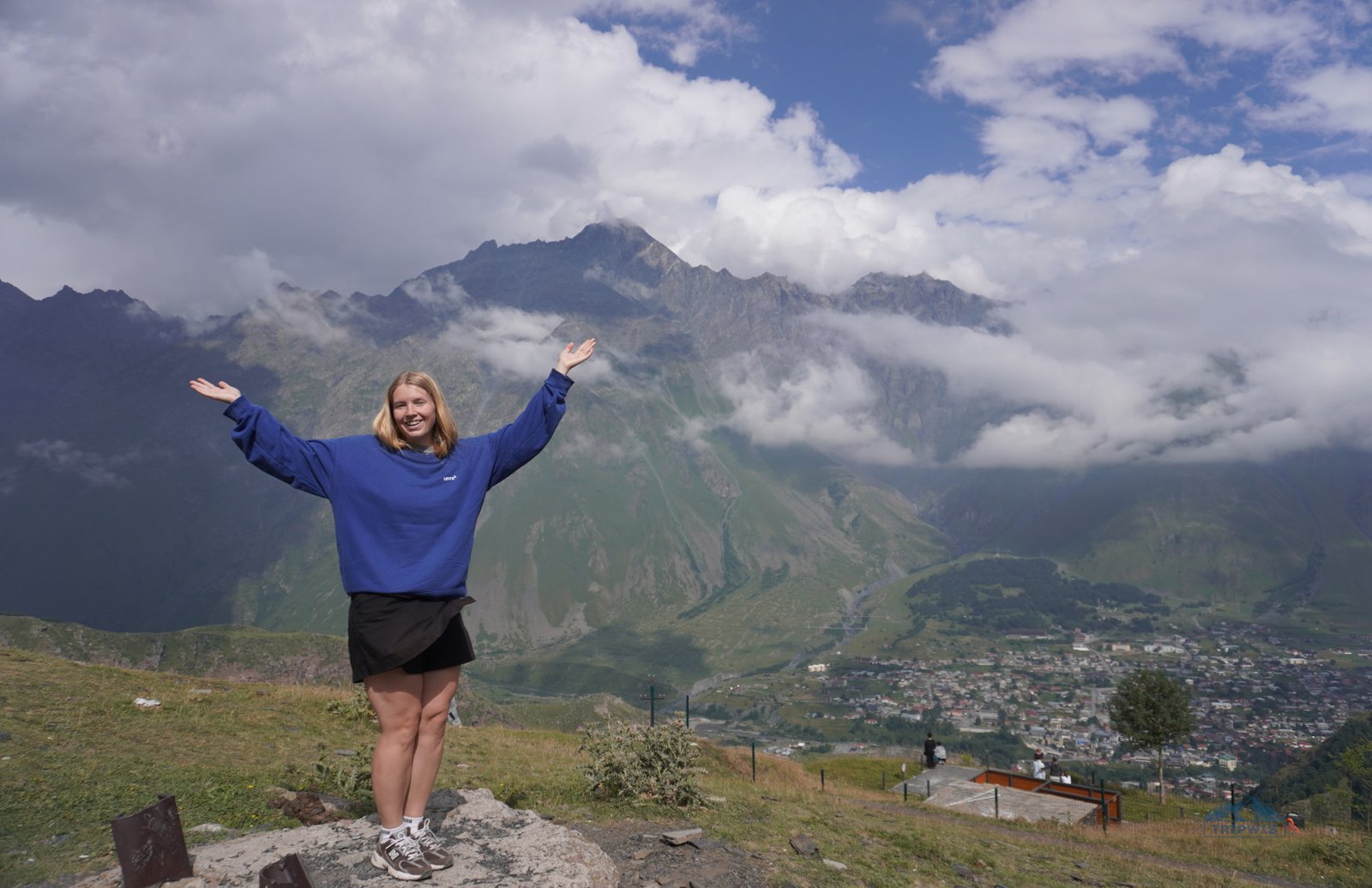
If all the options above aren’t your thing, you can always take an organized day trip with plenty of stops along the Georgian Military Highway – group or private.
That’s what I did for the very first time in Georgia when I didn’t have the driving license – opened GetYourGuide and booked the cheapest tour with a solid number of reviews.
Group day trips to Kazbegi via the Military Highway cost around $30 per person. They last 10 hours and start right from central Tbilisi. Private tours start from $65 per person (more or less, depending on group size).
Here are a few tours with great reviews:
- The most well-loved day trip from Tbilisi to Kazbegi ($30 per person; more than 5,600 reviews!) – you’ll stop at several landmarks along the way: Zhinvali Reservoir, Ananuri Fortress, Gudauri Viewpoint where you can go paragliding. The tour is fun and super affordable, but meals, the 4WD transfer from Kazbegi to the church, and hotel pickup aren’t included (you’ll need to meet the group at the center of Old Tbilisi).
- Private tour to Kazbegi (from $109 to $195 per person depending on the size of the group) offers pretty much the same route, but enjoying the views with your own company is always better. Plus, you get the flexibility to stop or even hike in Truso Valley – a picturesque, uncrowded valley that most group tours skip.
- Two-day tour to Kazbegi ($80 or $110 per person) sounds like a good idea if you don’t want to rush. The overnight stay is in Kazbegi in summer or in Gudauri in winter, as the road to can Kazbegi sometimes closes due to snow. But accommodation isn’t included in the price (you’ll find my hotel recs below). On day two, you can either enjoy Kazbegi at your own pace or choose a hiking add-on – a guided walk to Gveleti Waterfall or a combo of the waterfall hike plus a sunset horseback ride.
What it’s really like to drive the Georgian Military Highway? Our experience
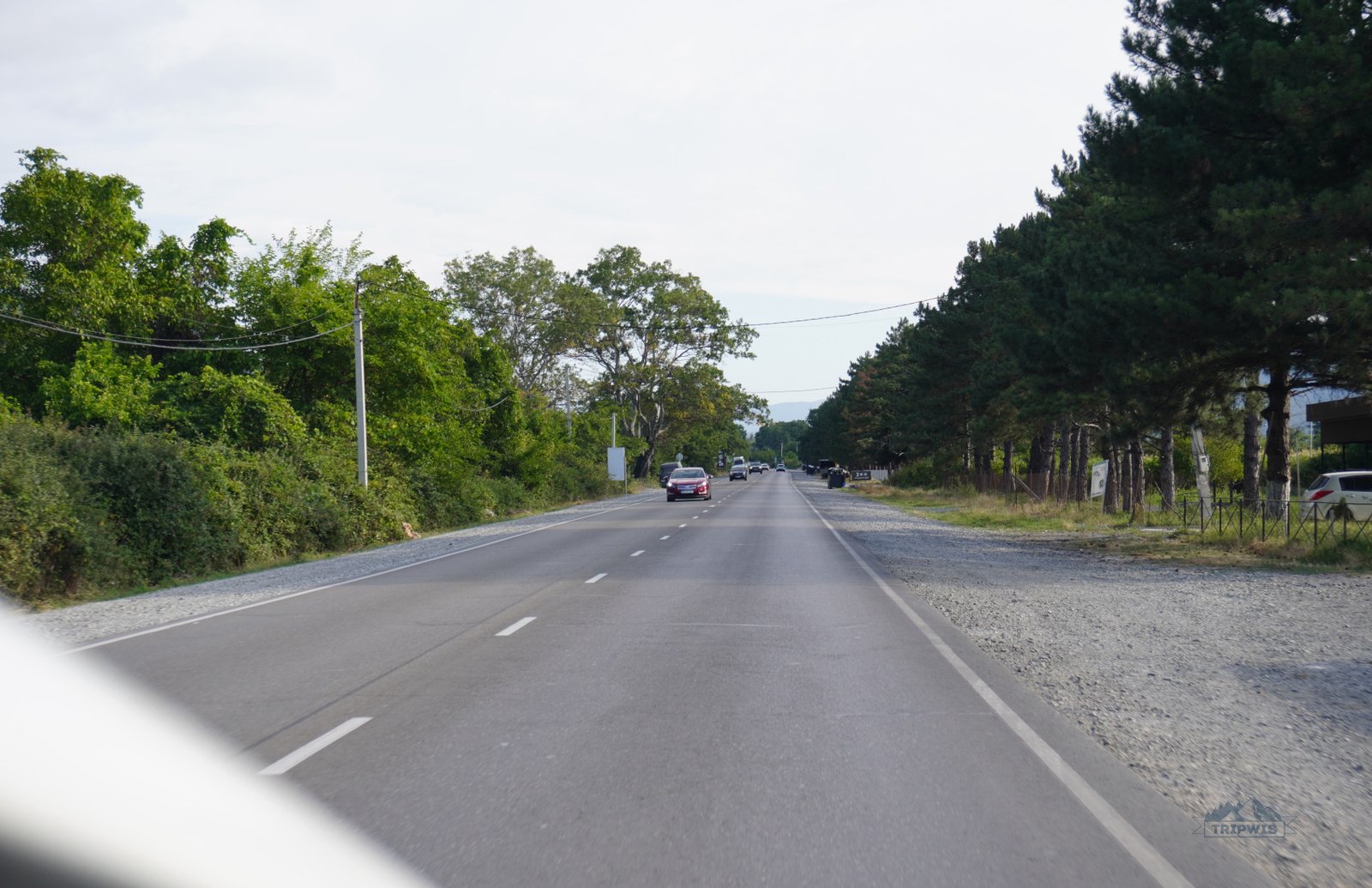
As we were driving, I kept making notes about the main things to watch out for on this route. I’ve now organized them into a more structured guide – exactly the kind of practical advice I wish I’d had before driving the Georgian Military Highway myself.
The Georgian Military Highway is a very scenic road, but it’s not the kind of road where you can just switch off and cruise:
✔️First, it’s a quite narrow two-way road with no divider
✔️Second, the road is never completely empty, partly because it leads to the land border with Russia. You’ll almost always share it with trucks, marshrutkas, tour buses, and cars.
✔️Third, it’s paved throughout, but some sections have large potholes, so you need to stay focused.
Speed: For the first half of the route, the speed limit is around 80 km/h. For the second half, and where the road narrows or passes through villages, the limit drops to 50 km/h. In Georgia, it’s allowed go up to 15 km/h over the speed limit, but on this road, you won’t get much chance to do that anyway.
Infrastructure: There’s almost always something along the way – the occasional small shop, roadside cafe, tyre repair place, or guesthouse. After the Jvari Pass viewpoint, roadside infrastructure becomes much more limited, so from that point on you mostly have to rely on larger settlements like Gudauri or keep going all the way to Stepantsminda.
❗️The only catch is that if you leave very early, most places won’t open until around 10 a.m., so it’s better to have coffee, snacks, and fuel sorted in advance.
Fuel: The further you drive along the road, the fewer petrol stations there are. Make sure you set off with a full tank. Once you’re up in the mountains, the only places to refuel are Gudauri and Stepantsminda. They may not accept cards there, by the way, so have some cash on you. Near Tbilisi, you can still find fuel for around 3.8 GEL per litre / $1.5, but by the time you get to Gudauri, it’s closer to 4.3 GEL / $1.7.
Mobile signal: Coverage is good and we had signal all along the road. It only dropped out once we headed off on hike into the mountains (or valleys), like Truso or Juta. This time I used an eSIM from Yesim. They had the best prices for fixed-data plans, and I got 5 GB for $11.5.
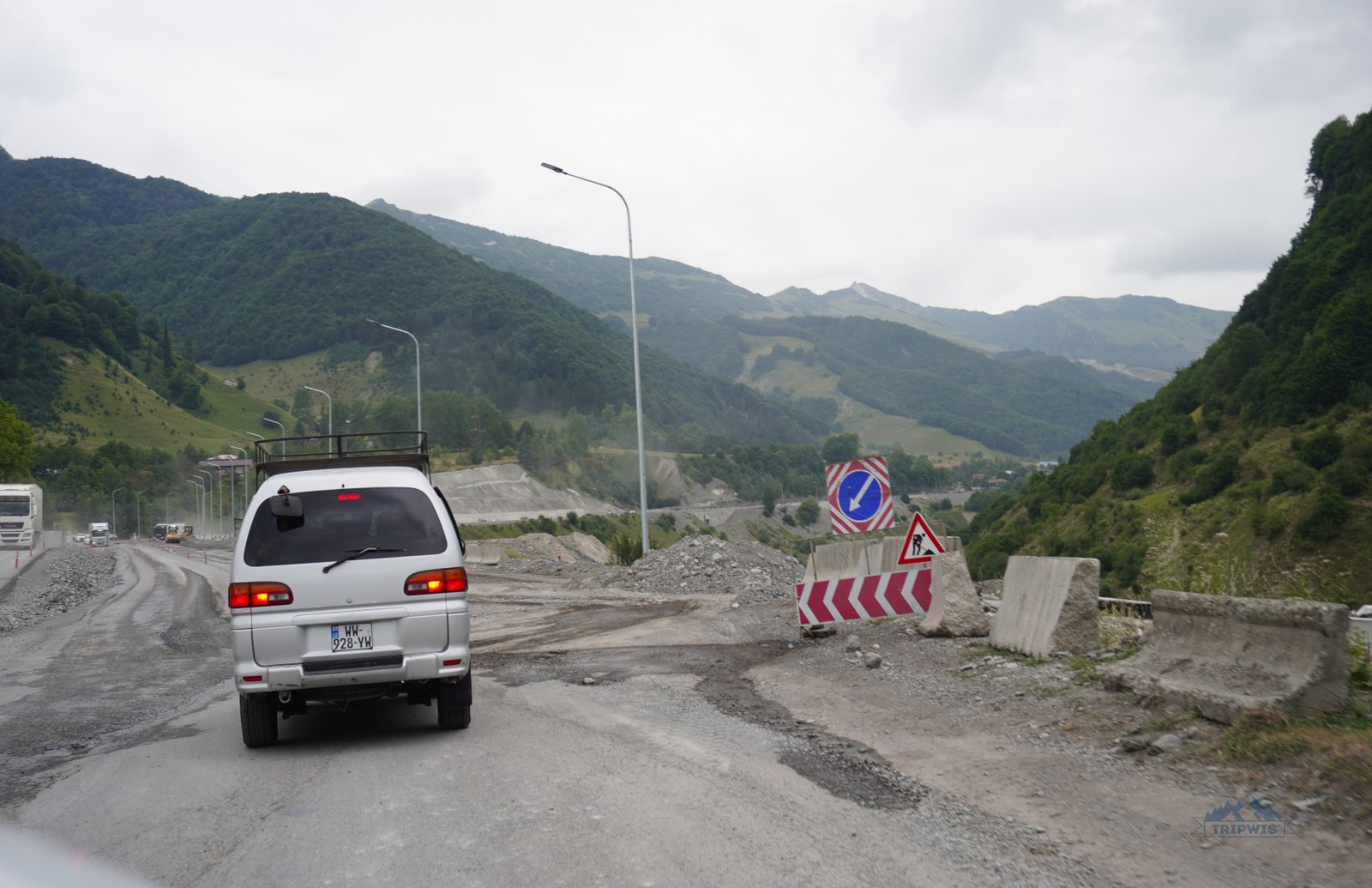
The most challenging parts: In places, we drove in a slow convoy behind trucks, especially on the steeper serpentine sections. The roughest parts, in our experience, were around Gudauri ski resort, just after the Gudauri View Point, on the Jvari Pass, and near the Kobi cable car.
❗️By 2028, this whole section will get a lot easier – a new 9-kilometre tunnel is expected to open, bypassing all these sections. You’ll turn off before reaching Gudauri and come out near Kobi instead. A win for safety, a big lose for panoramic views!
The most miserable part: From Travertine Mineral Spring spring onward, there’s a rough stretch of road with some serious potholes. Luckily, it’s short.
What I didn’t expect: The seemingly endless lines of trucks parked along the roadside! And because the shoulder is so narrow, they often stick out into your lane. The explanation is simple – they are waiting for the border crossing (which is often either closed temporarily or severely congested), and these are one of the few places where the road is wide enough for them to pull over without getting in the way.
Our list of notable stops you should take
Here’s the exact route we took. We left Tbilisi at 7 a.m. and got to the first point of interest by 8 a.m. If we hadn’t set out on the Juta hike (you don’t have to do it), we would arrive in Stepantsminda – the end point – at approximately 1 p.m.
Besides this article, I also made a video about the Georgian Military Highway, with detailed timestamps throughout. You can also see the road conditions and what the whole route actually looks like, so feel free to check it out:
Now let’s take a closer look at each stop, and a few other sights worth seeing along the way.
Side note: Right after leaving Tbilisi, you can stop either at the Chronicles of Georgia or the Sabaduri Forest. We skipped Sabaduri because it’s just a forest. I didn’t find anything particularly crazy (in a good way) in the reviews, and bloggers seem to include the forest as a stop just to make their lists longer?
- Chronicles of Georgia – 10 km from Tbilisi
Parking is free
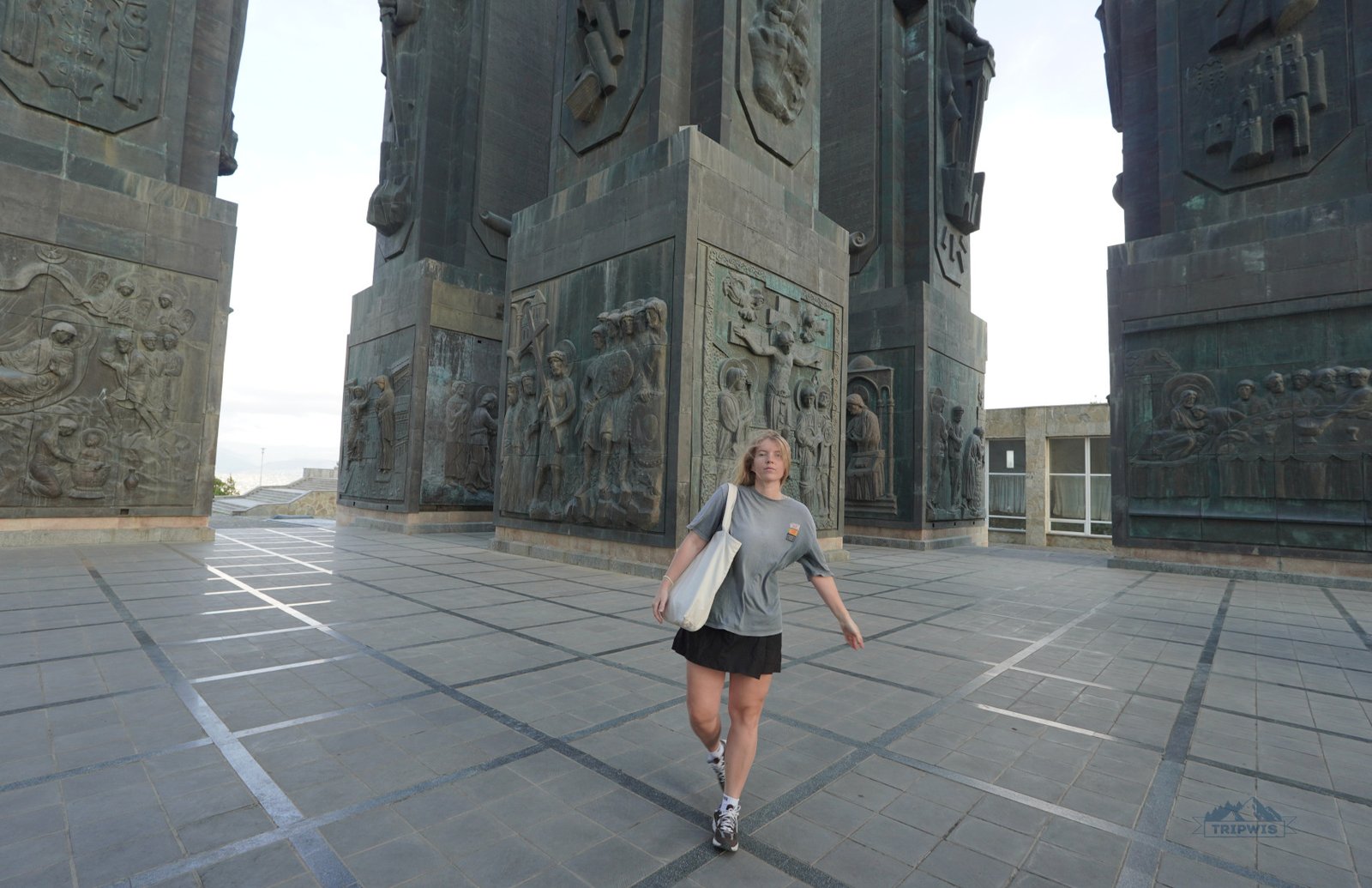
This thing, often called the Georgian Stonehenge, is a monumental work by the famous Georgian sculptor Zurab Tsereteli.
The monument celebrates Georgia’s history and the role of Christianity in the country. Sixteen MASSIVE black pillars tower over the hillside depicting historical scenes, religious imagery, and excerpts from Georgian literature. The views from up there are good – you can see the Tbilisi Sea (actually, reservoir) and the outskirts of the capital.
We went there early in the morning, so there weren’t any tourists yet. Thirty minutes is plenty for a quick stroll and some photos of the monument.
- Jvari Monastery – 20 km from Chronicles of Georgia
Parking is free
 |
 |
Side note: The drive to Jvari is a bit of a detour, but the road is excellent. Just keep an eye out for stray dogs and wandering cows if you’re heading there early.
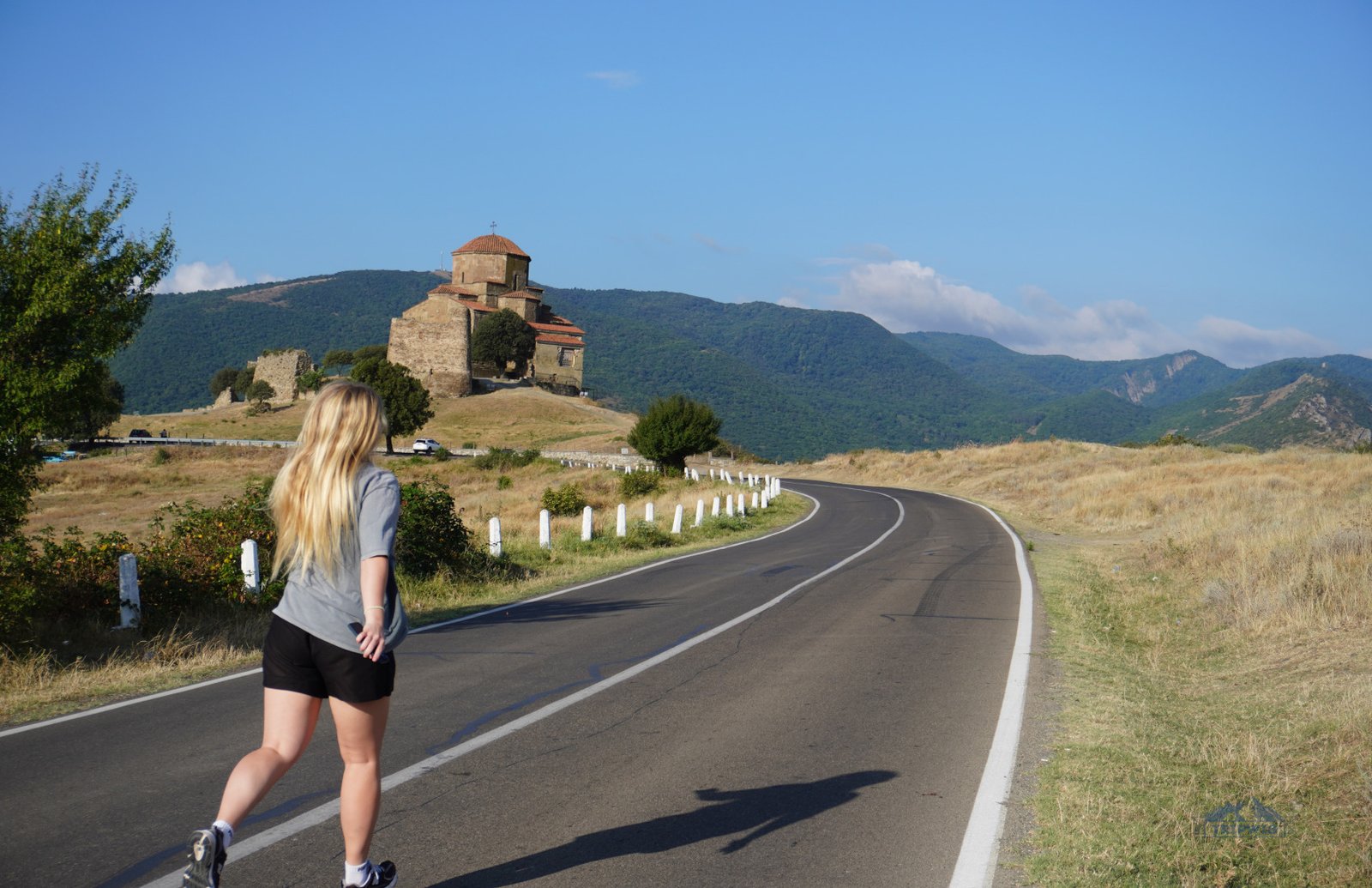
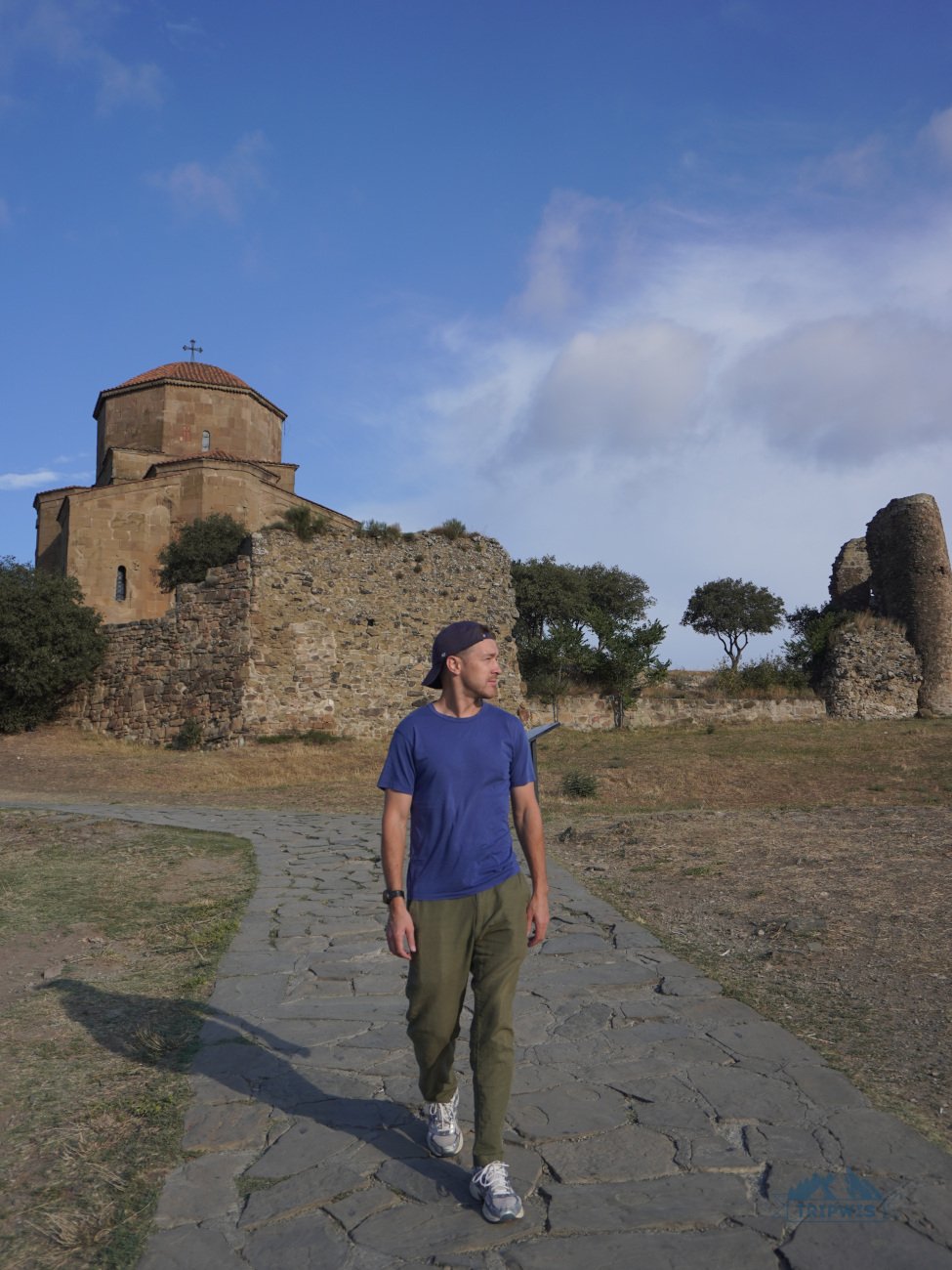
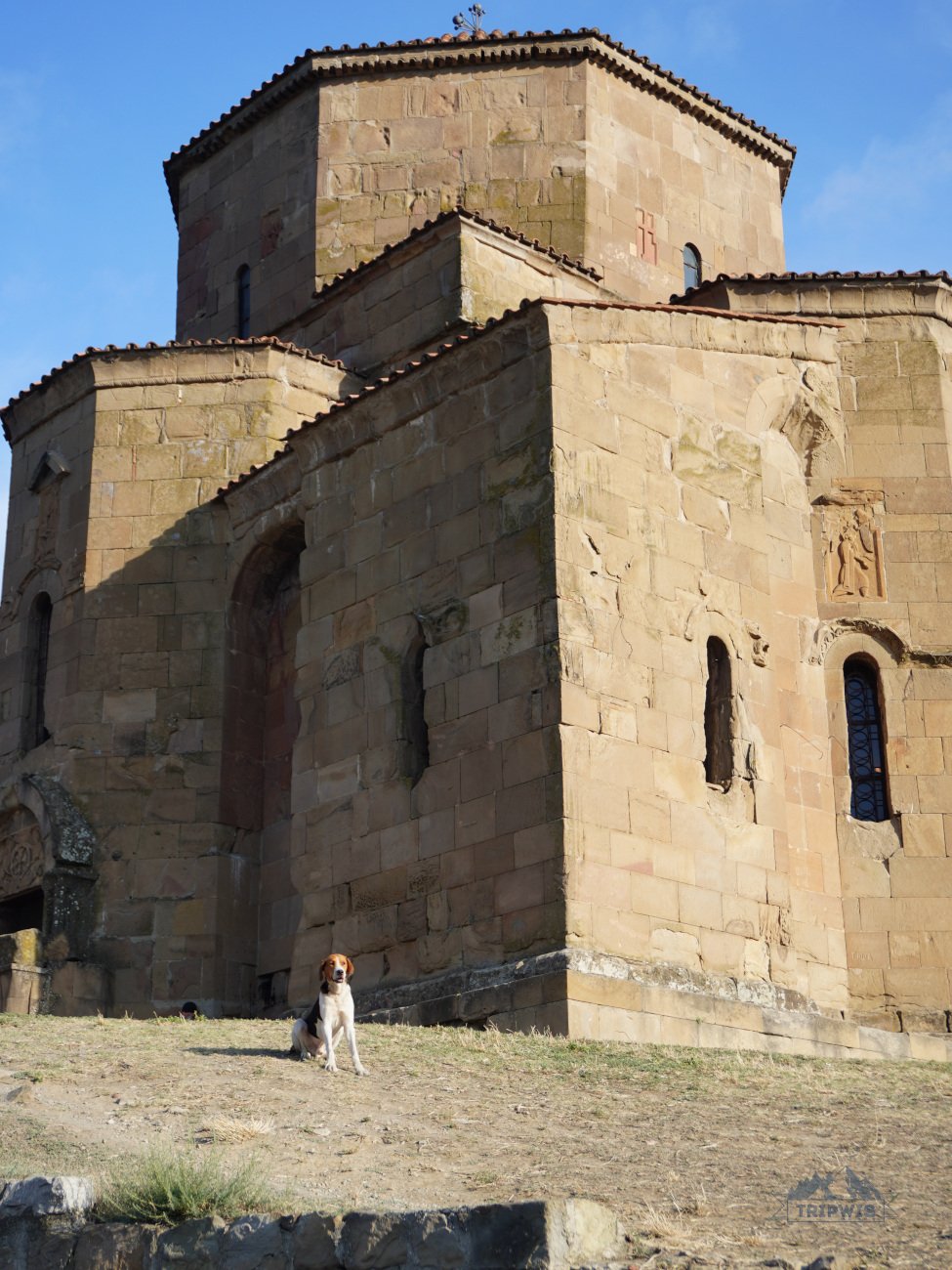
Jvari means “cross” in Georgian. This 7th-century monastery sits on a hill and is one of the most famous sights in the country. Every single “What to see from Tbilisi to Kazbegi” list starts with it.
The monastery is fascinating. First of all, it looks very different from the typical image of an Orthodox church. Secondly, you can almost read the weight of centuries of history on its walls. And thirdly, why it’s so important, legend has it that Saint Nino – Georgia’s most important saint – placed a cross on this exact spot to mark Georgia’s adoption of Christianity.
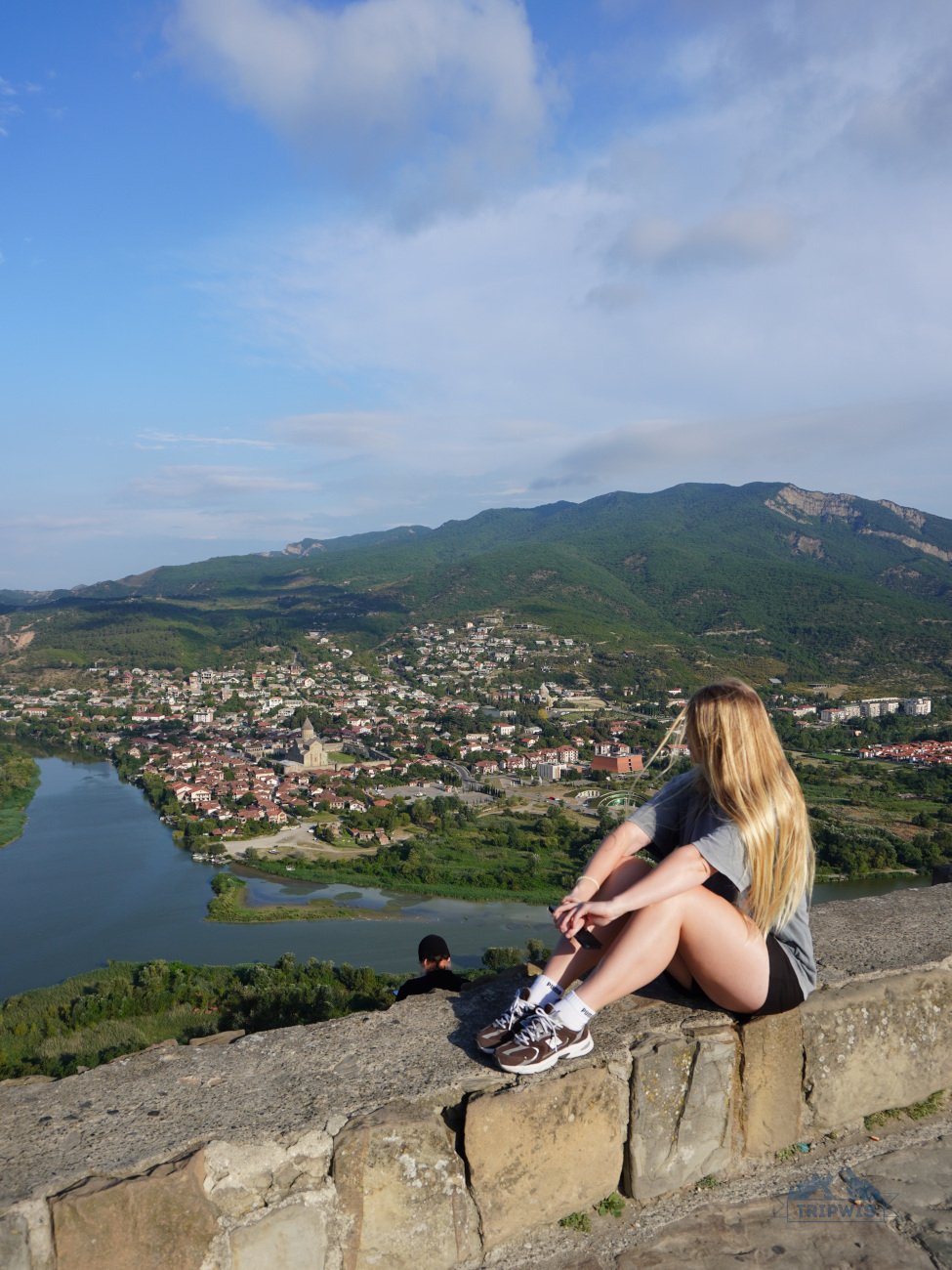
Jvari overlooks the ancient capital, Mtskheta, and the spot where the two mountain rivers – Aragvi and Kura – merge together. But the impressions can easily be ruined if you come between 9 a.m. and 4 p.m (we were here at 8 a.m.). This place gets incredibly crowded with both tourists and pilgrims, and it starts to feel more like a tourist attraction than a sacred site. You really have to be good at blocking out the crowds to appreciate the place properly.
- Zhinvali Reservoir – 43 km from Jvari
Parking is free
Side note: There are plenty of spots to grab a bite along the way to Zhinvali – including Dunkin’ Donuts and KFC – but most of the eateries don’t open until 10 a.m.
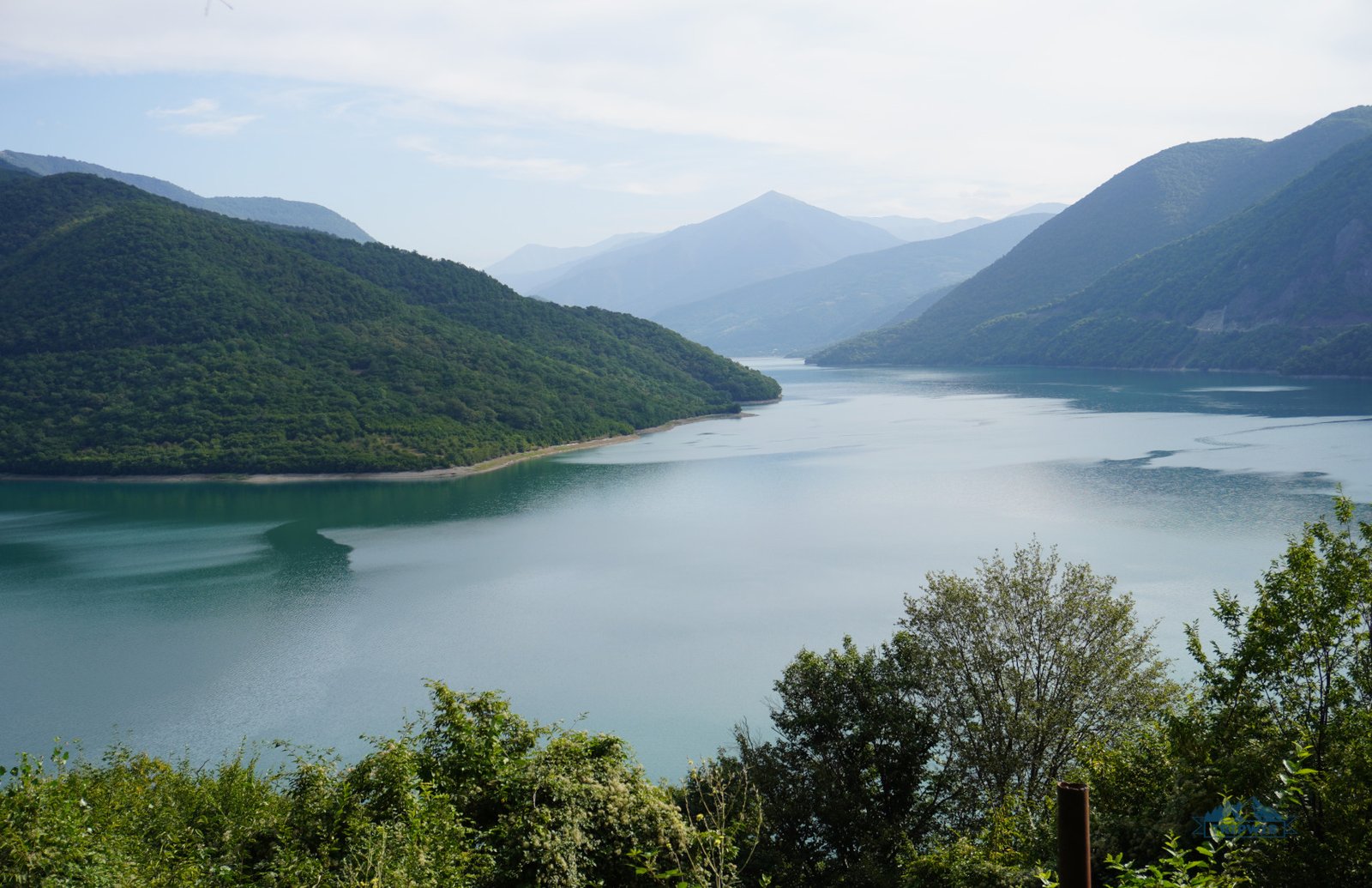
Zhinvali Reservoir – the bright turquoise lake between the hills – is actually the main source of drinking water for Tbilisi and some other cities. There are plenty of viewpoints along the way where you can park and take pictures. The only downside is that most of them are occupied by people selling souvenirs and running “photo zones” with fake flower arches, giant hearts, etc. We stopped here and squeezed in between get a shot of the lake.
- Ananuri Fortress – 7 km from Zhinvali
Parking is paid: 5 GEL / $2
 |
 |
Side note: Between the reservoir and the fortress, we found the only place that was open at 9 a.m. – a Coffeeto coffee shop, where you can grab a decent latte and some basic pastries.
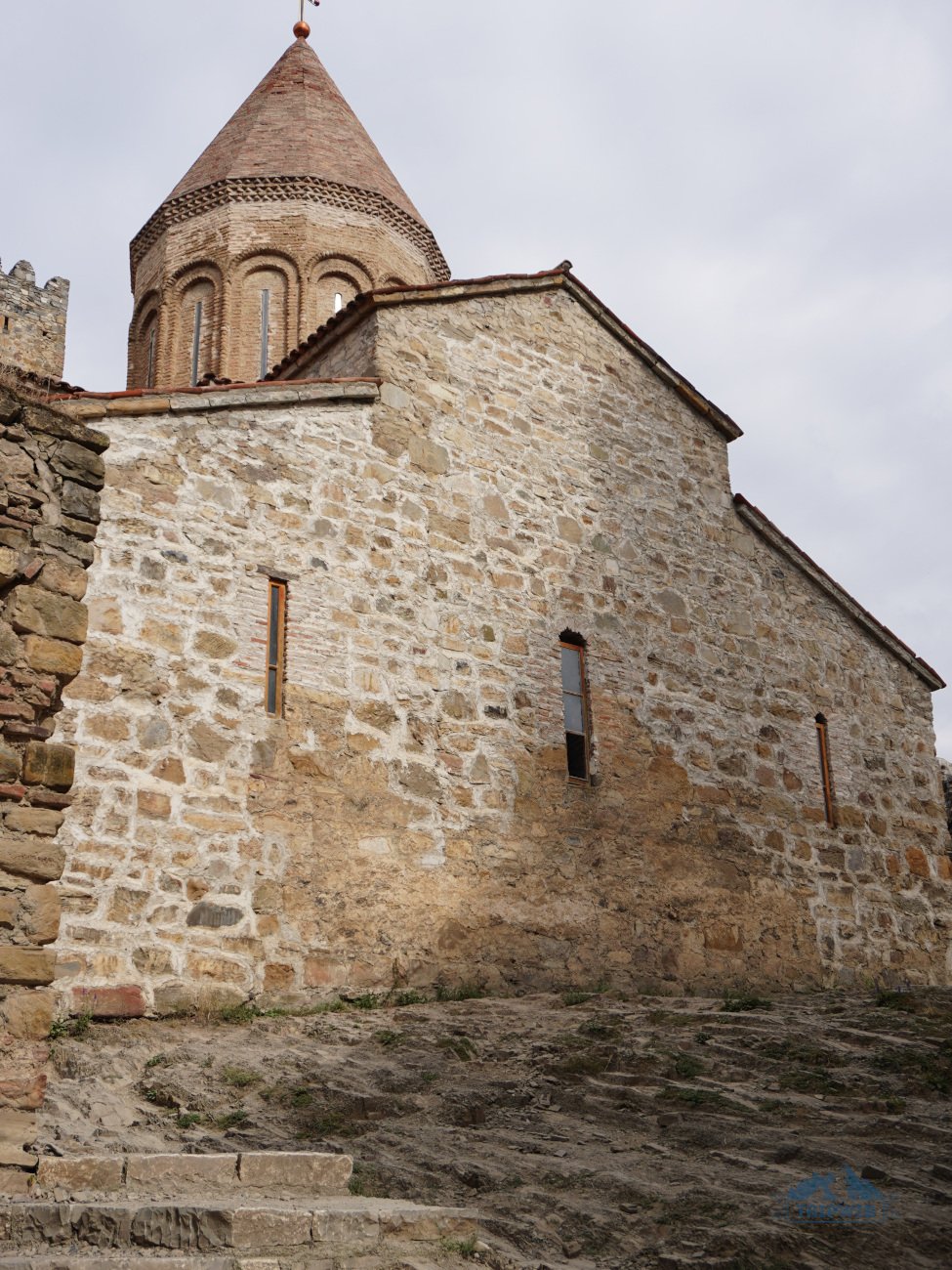
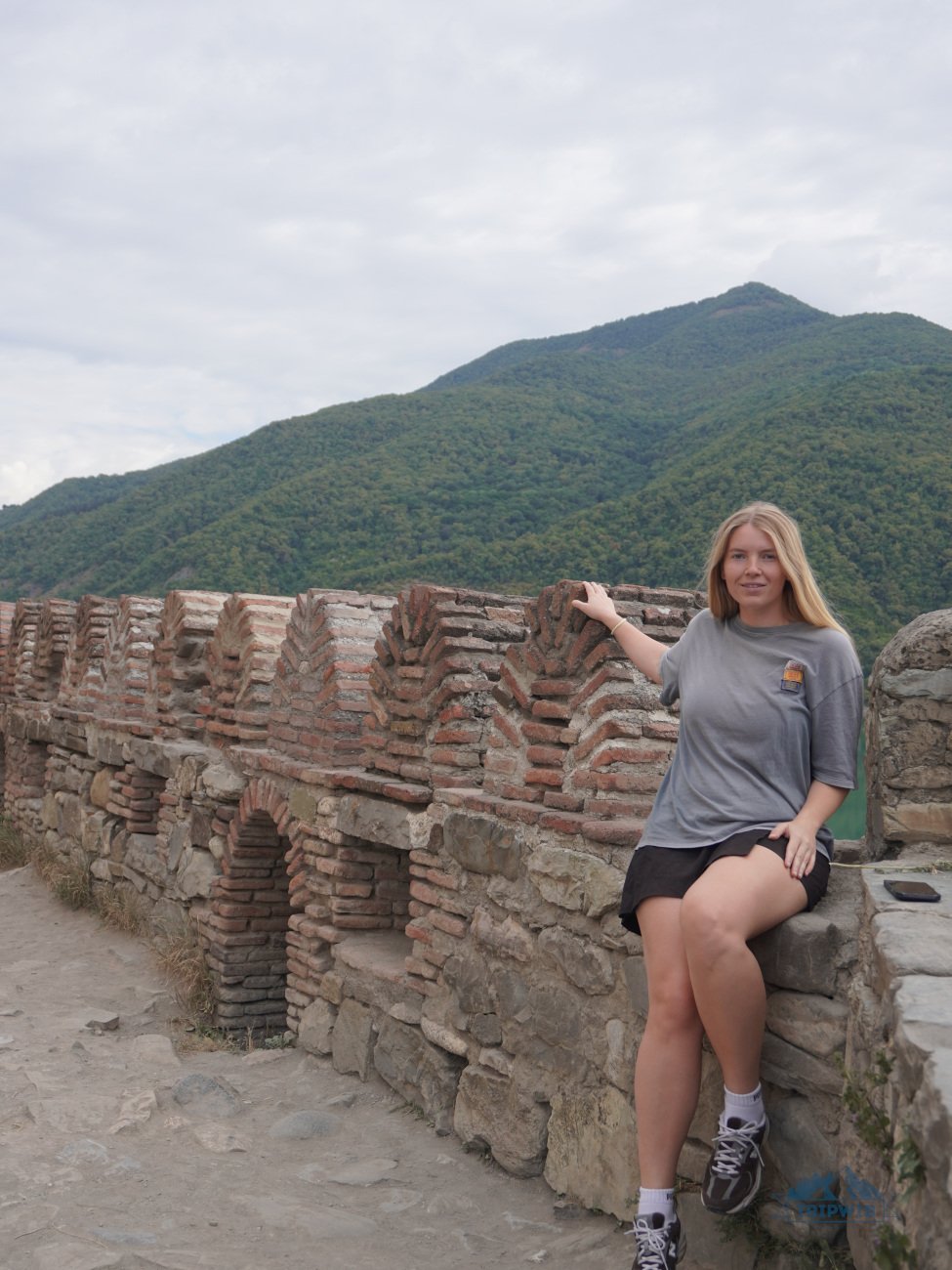
On the banks of the reservoir stands the Ananuri Fortress. A mysterious medieval stronghold, it dates back to the 16th century. The grounds of the place are always crowded. If you love photography, go early – or get really good at Photoshop to erase all the tourists from the pictures later. With the mountains and turquoise water on either side of the complex, Ananuri is incredibly charming and absolutely worth stopping by.
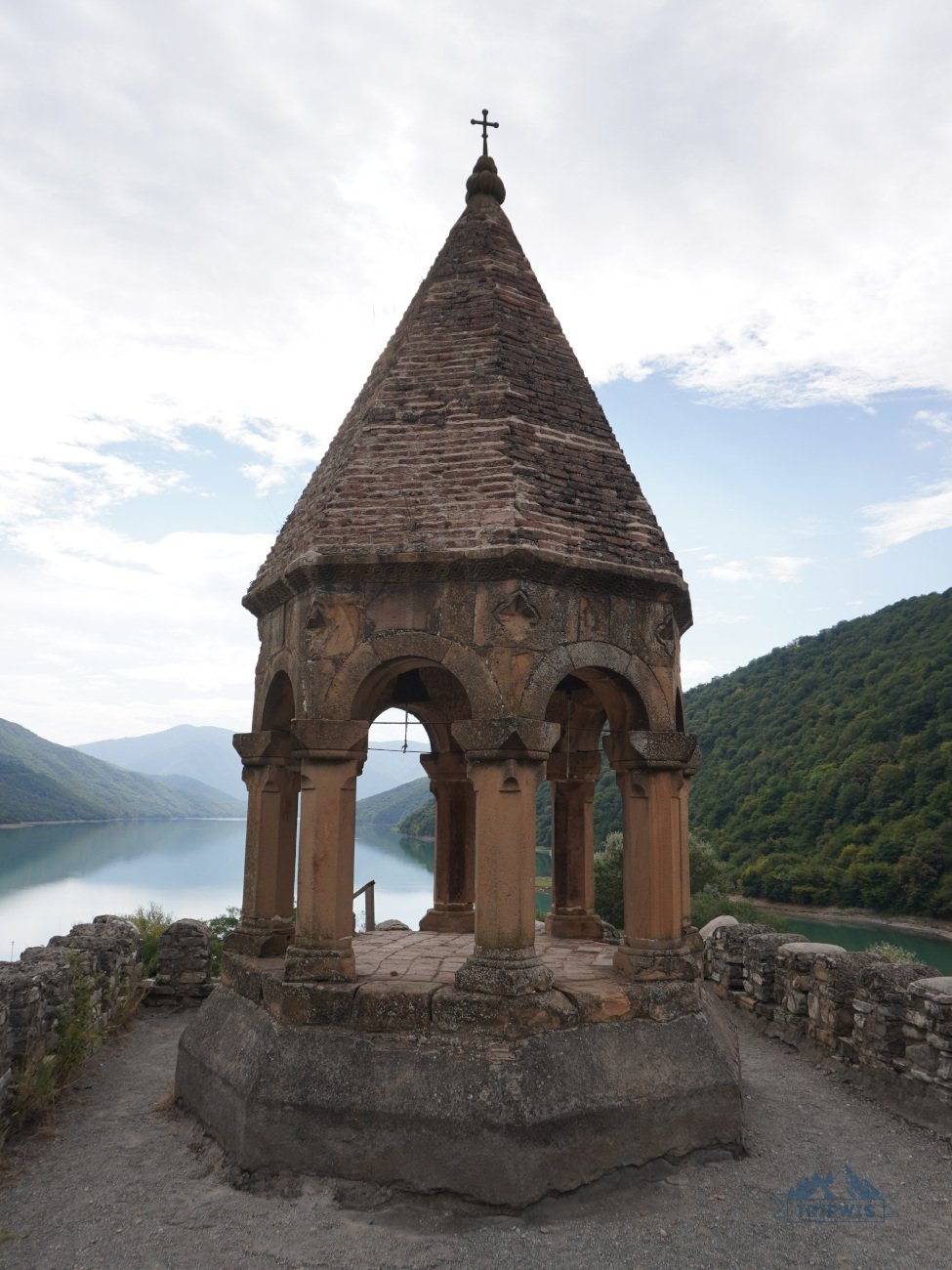 |
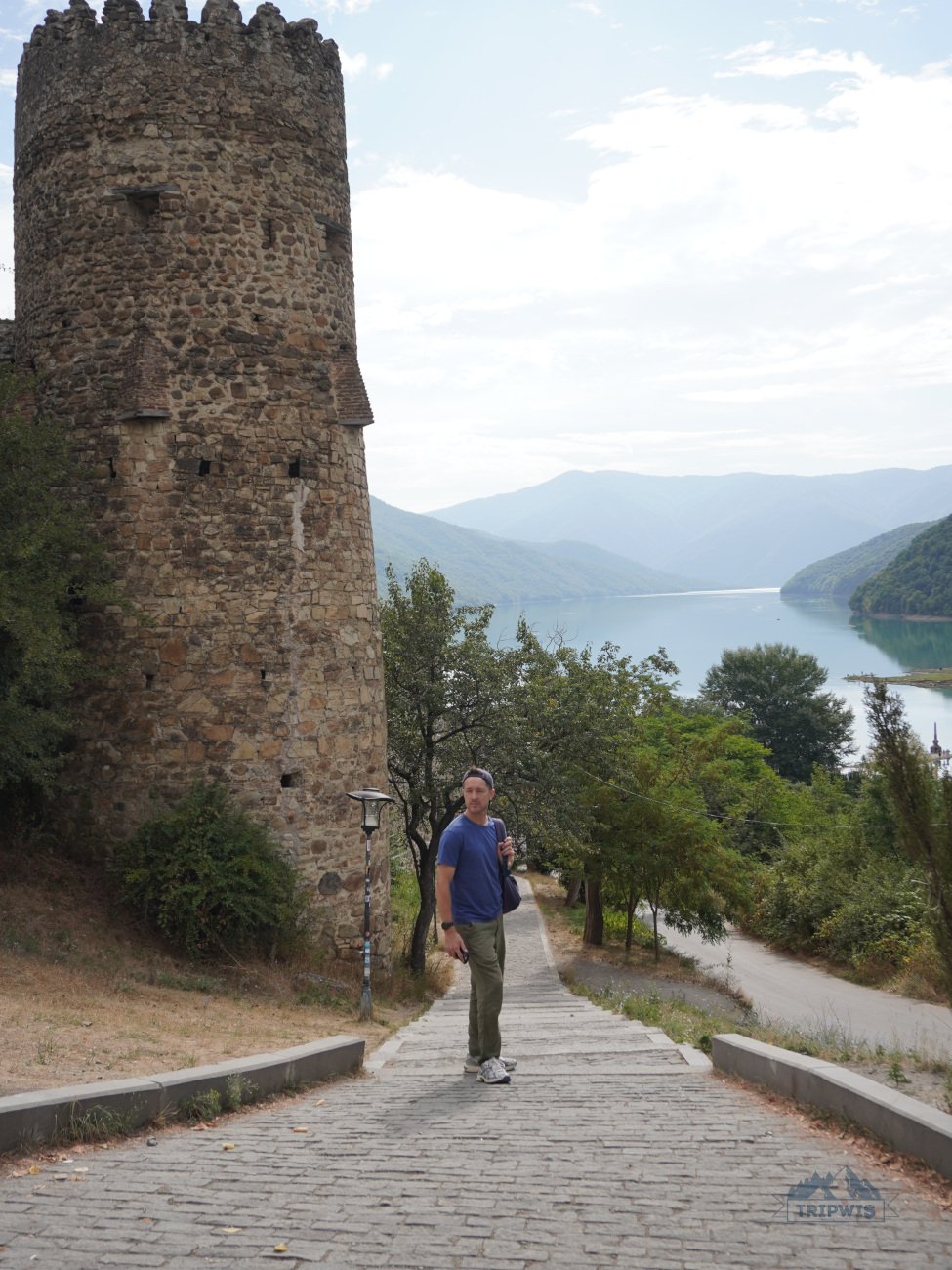 |
Walking around and enjoying the panoramas aren’t the only activities you can take part in at Ananuri. You can also dress up in a traditional Georgian costume, buy hand-knit wool socks or papakhas (traditional fuzzy hats) here. Retail therapy, Georgian-style!
- Pasanauri Village – 23 km from Ananuri
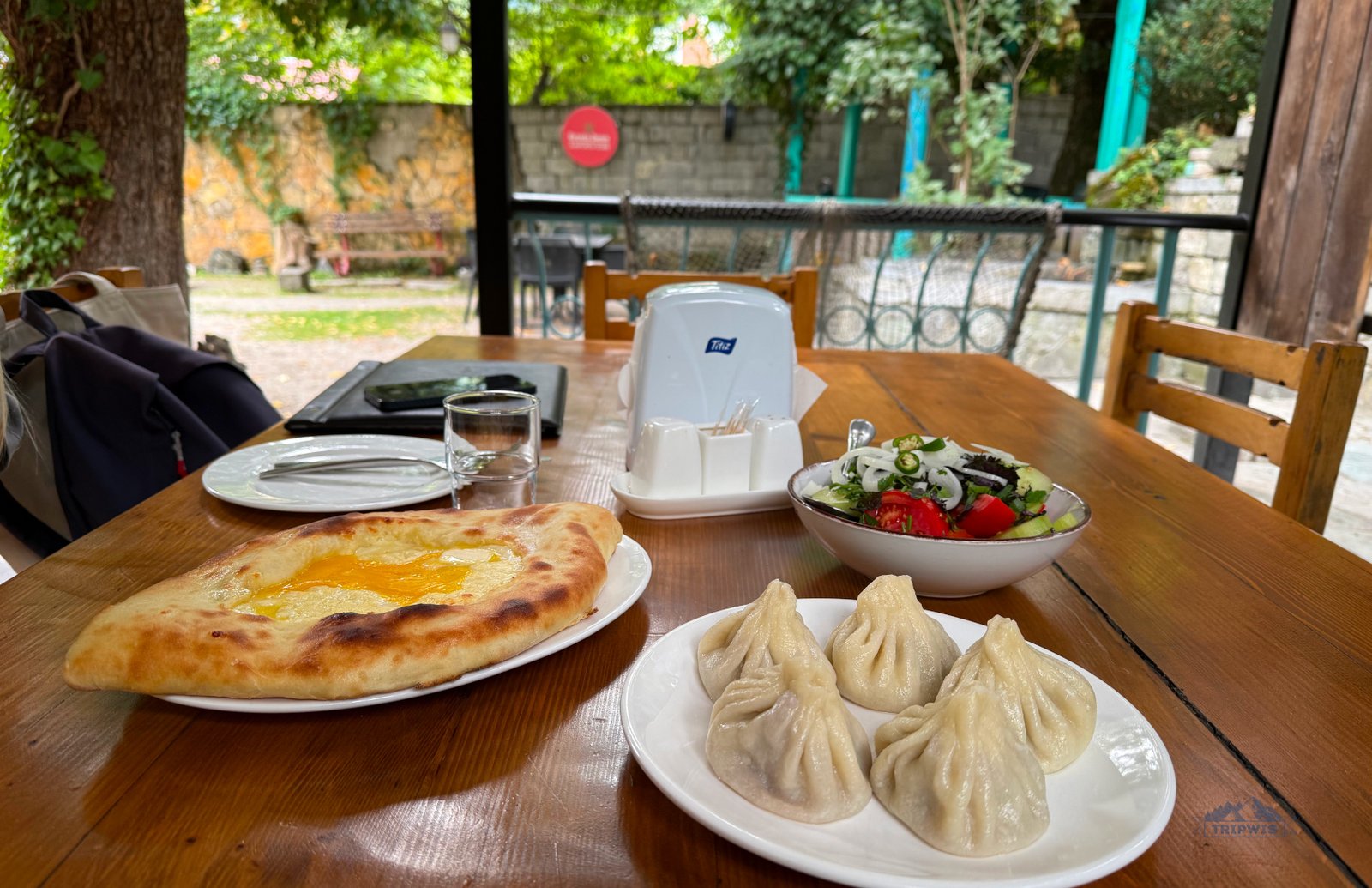
Side note: There’s also a viewpoint over the confluence of two rivers here (“Aragvi River of Two Colors viewpoint”), but it’s not that impressive and can be skipped.
We finally stopped for food in Pasanauri, and what a great choice it was! It’s a pretty developed little village, with a SPAR supermarket, a pharmacy, and several local eateries. Pasanauri is considered the birthplace of khinkali (Georgian dumplings) and because the Georgian Military Highway passes right through the village, it’s become a must-visit stop for travelers.
This is arguably the best place to stop between Tbilisi and Kazbegi for a quick meal before continuing your journey. There are a few restaurants lined up along the main road – pick whichever catches your eye, prices are all about the same (our choice was Pasanauri 1892). One thing to know: Khinkali here aren’t like the ones you’ll find in Tbilisi. These are the original kind – handmade khinkali, not factory-made ones, with thicker dough.
From here, the mountains start pressing closer, their rocky green slopes and jagged peaks right above you.
- A great viewpoint – 26 km from Pasanauri
Parking is free
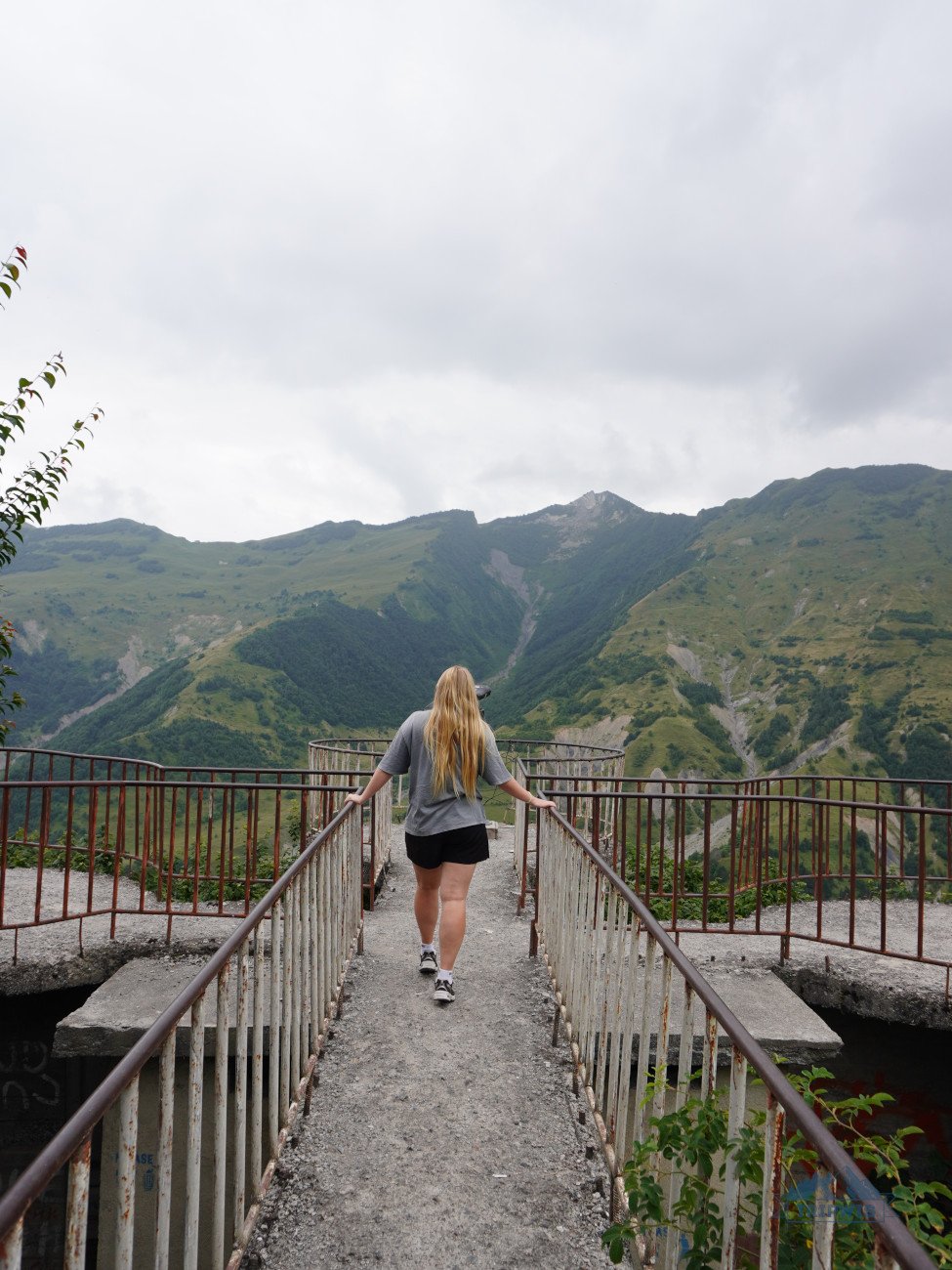 |
 |
Side note: Before you reach the viewpoint, you’ll have to tackle the first proper mountain pass.
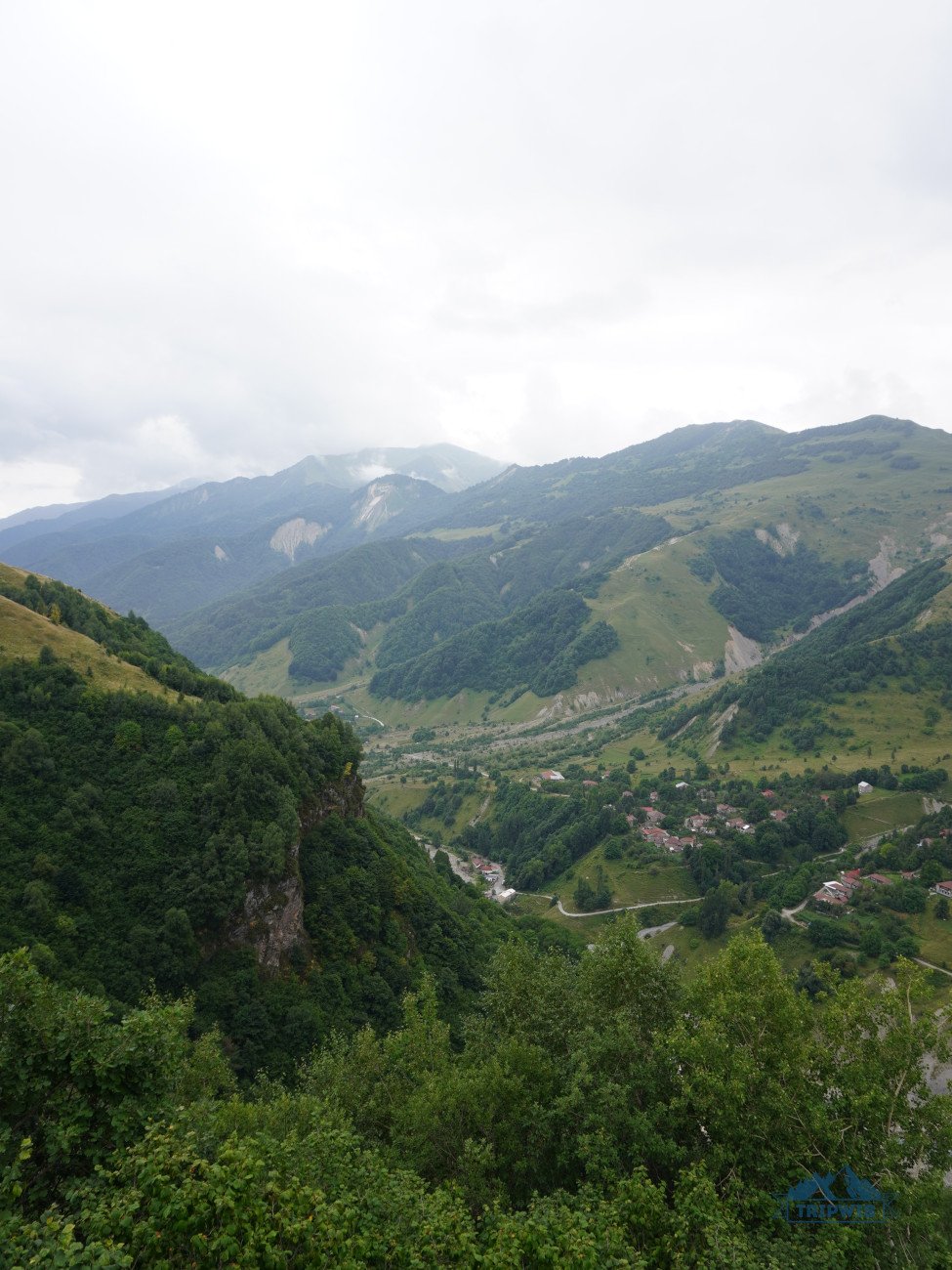
Not everyone knows about this place as it’s easy to miss, tucked right behind a sharp bend in the road. The spot, made to resemble the shape of a cross, offers great views of the valley below.
- Gudauri View Point – 11 km from the previous viewpoint
Parking is paid: 3 GEL / $1
 |
 |
Is Gudauri the most famous stop along the Military Highway? You could certainly make a case for it – its viewpoint seems to end up in just about every tourist’s photo gallery.
To be fair, Gudauri itself is really only interesting in winter. It is a ski resort sitting at 2,200 meters above sea level, filled with lodges and apartments.
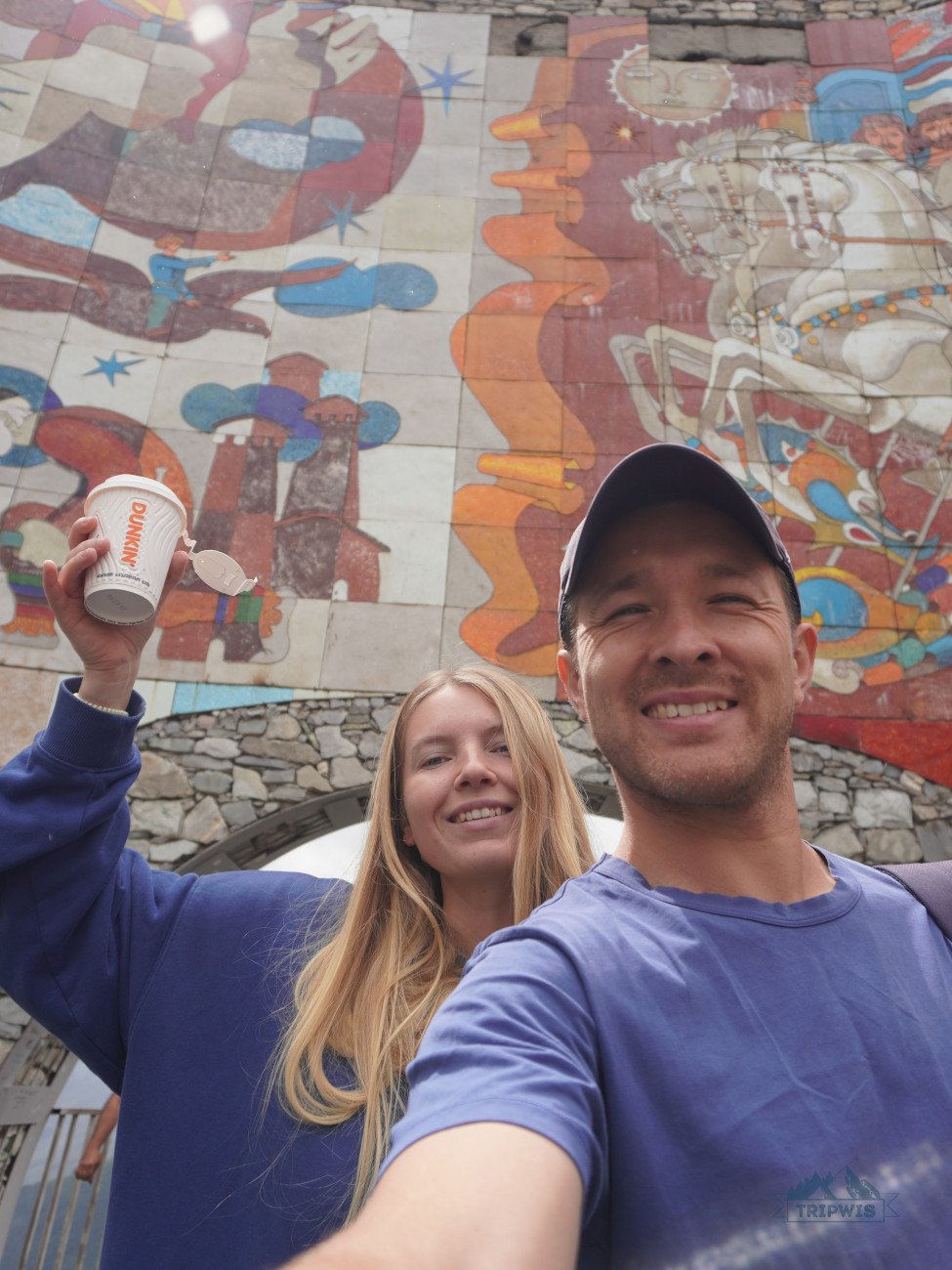
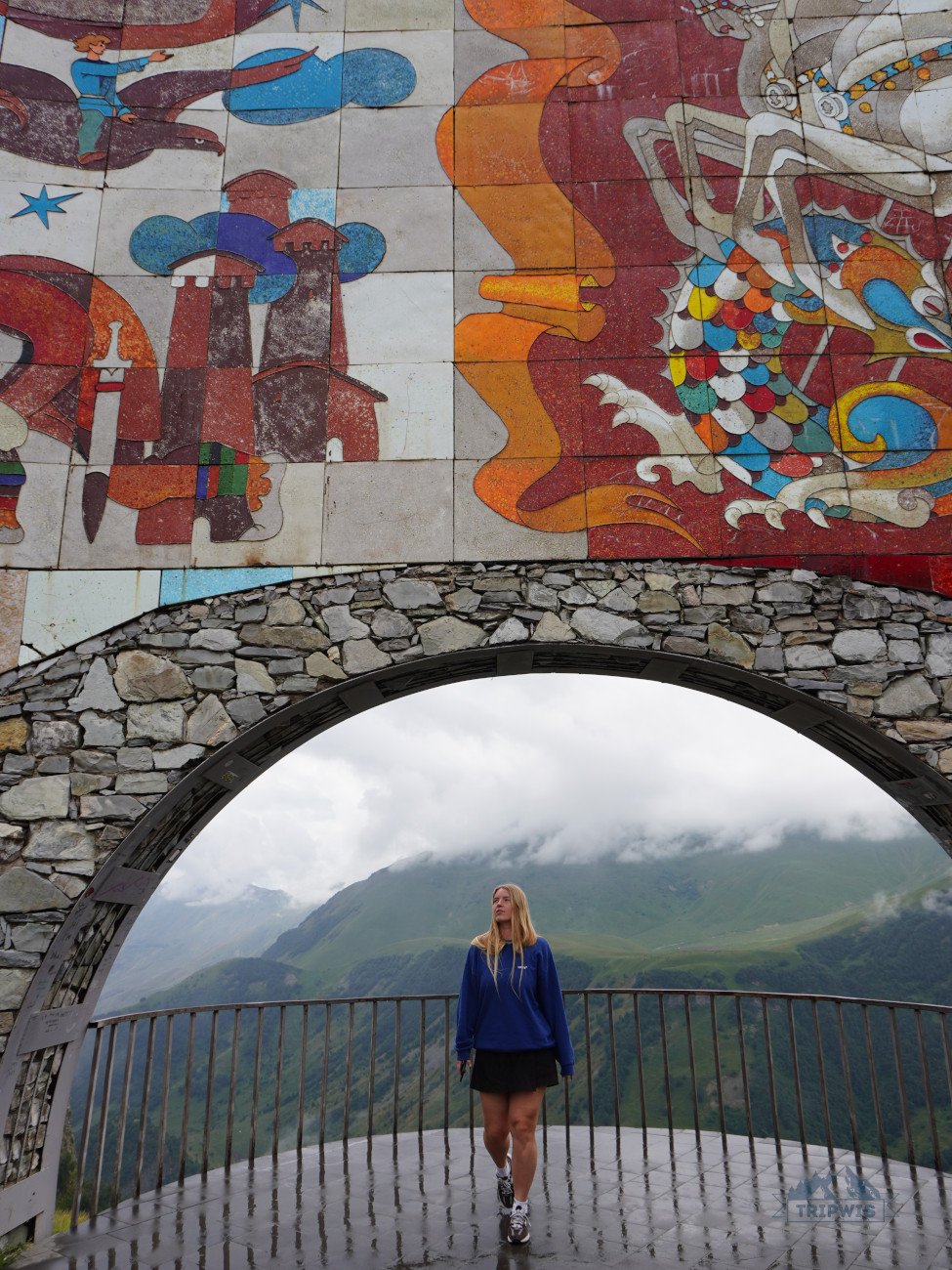
Warmer months are all about the main attraction here – Gudauri View Point, or Russia–Georgia Friendship Monument, a huge semi-circular mosaic wall with arches that open up onto views over the Aragvi Gorge.
- Travertine Mineral Springs – 6 km from Gudauri
Parking is free
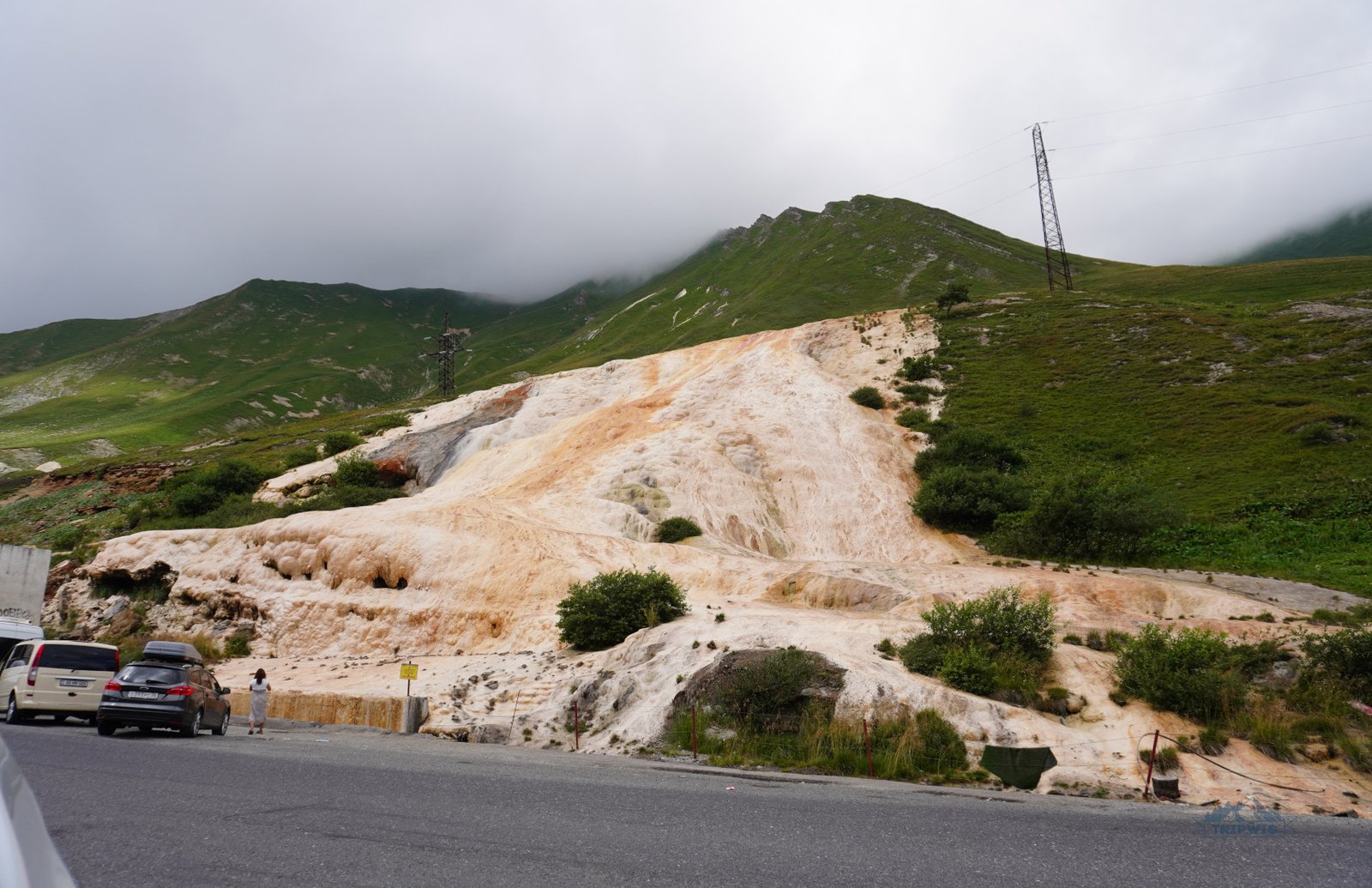
Just below the highest point of the road – the Jvari Pass – are the Travertine Mineral Springs. You can stop here, fill up a bottle, and try the mineral water. Locals say it’s healing.
You won’t miss it – there are always plenty of cars parked in front of the attraction, and the colorful streaks on the mountain slope can be seen from afar.
- Gigantic Sculptures – optional, 20 km from the springs
Parking is free
 |
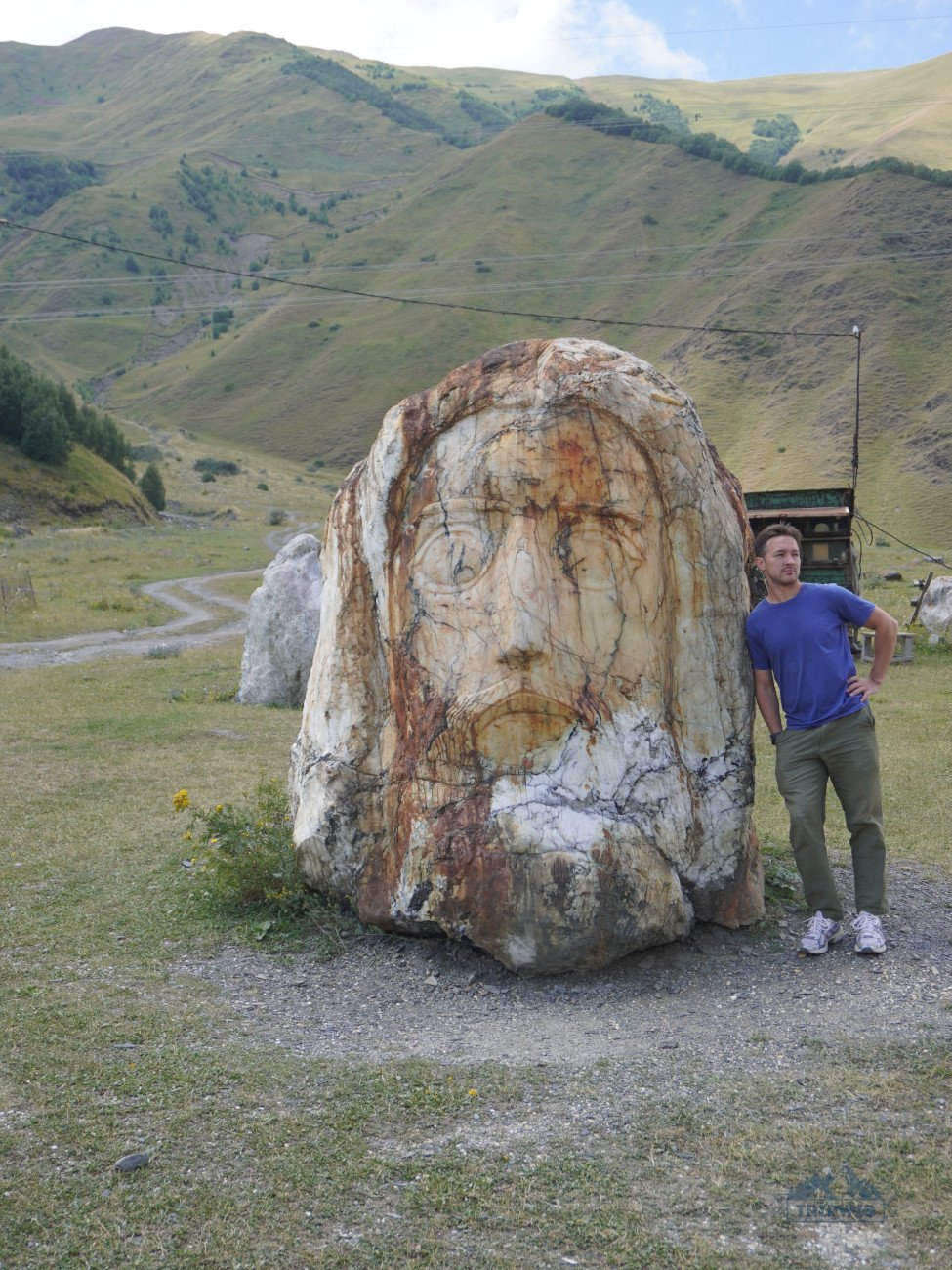 |
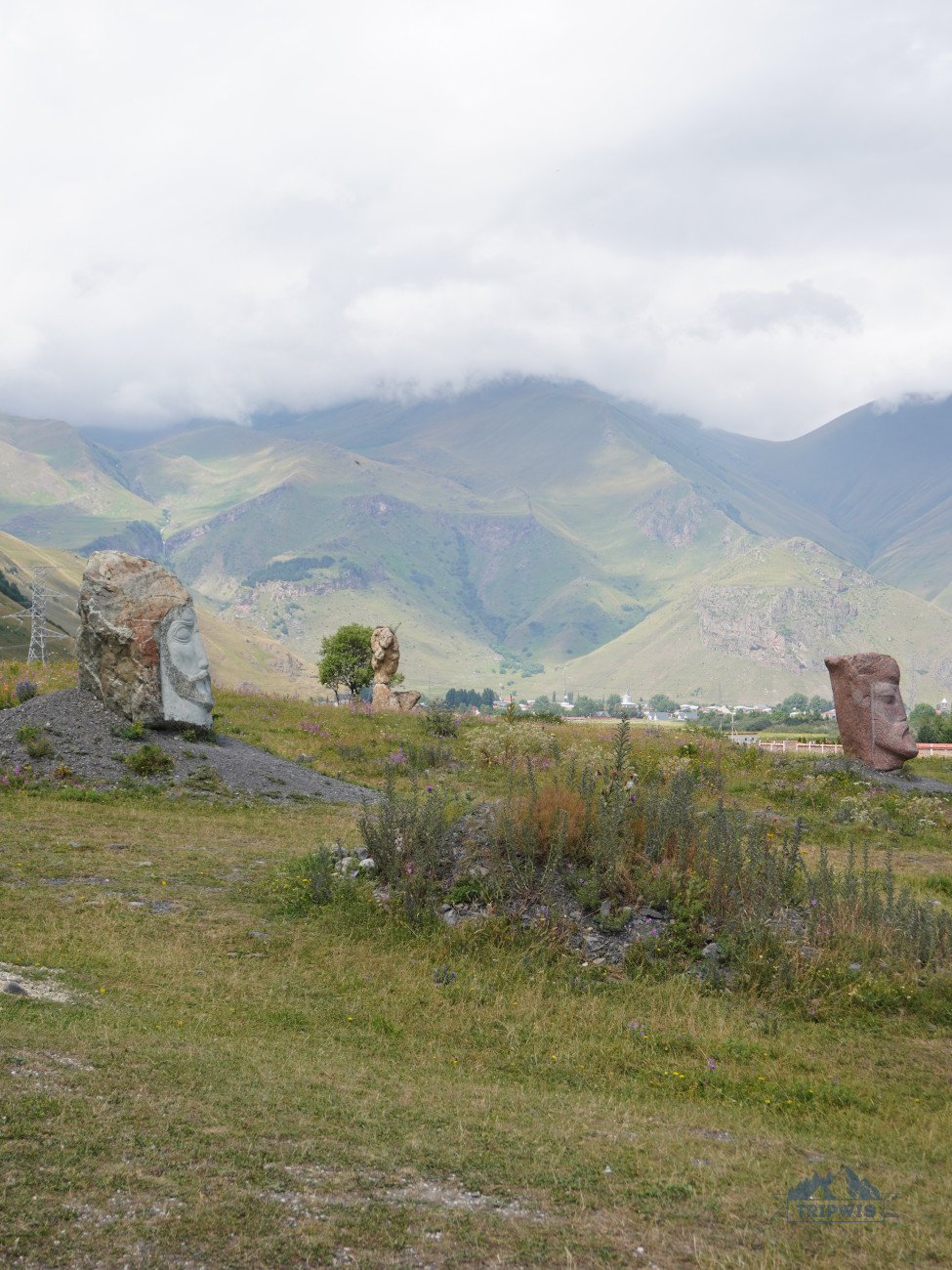
Side note: This stop – and the ones that follow – aren’t technically considered part of the Georgian Military Highway sights, even though the turn-off is only 4 km from Stepantsminda. Still, I highly recommend adding them to your itinerary. To do that comfortably, you’ll need to stay overnight somewhere nearby.
Gigantic Sculptures are the main attraction of Sno village. Basically, it’s a collection of massive boulders carved with human faces. These faces belong to famous Georgians and were created by local sculptor Merab Piranishvili in 1984.
- Juta Valley hike – optional, 30 km from Gigantic Sculptures
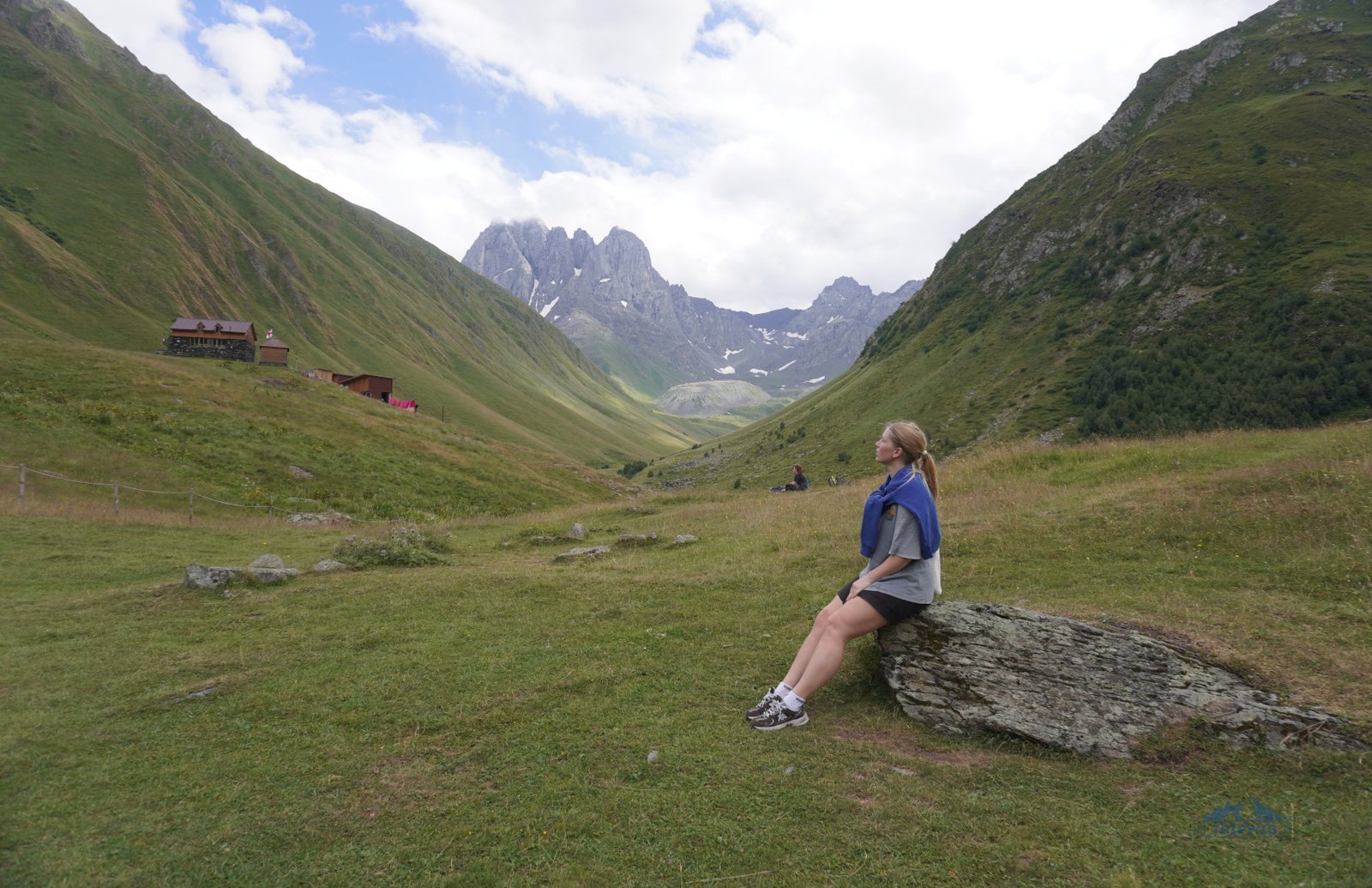
Juta is one of the highest mountain settlements in Georgia, and its scenery is one of best in the entire country. You can certainly come here just to chill, but I’d recommend doing the hike from Juta to the base of Mount Chaukhi. It was actually this hike that inspired me to plan a trip to the Italian Dolomites!
Main things to know:
✔️ The hike itself isn’t difficult. The only section that really makes you work is the first kilometer, where you gain 200 meters in elevation. From there, it’s fairly straightforward – around 4 km and roughly 1.5 hours each way.
✔️ It’s perfectly doable after visiting all the main sights along the Georgian Military Highway.
✔️ Make sure to keep a close eye on the weather forecast.
✔️ About 3 km before Juta and the trailhead, the road is blocked by a checkpoint. It’s clearly a local arrangement: a guy in a high-visibility vest tells you the road is under repair, asks you to park by the roadside for 10 GEL / $4, and says you can only continue on foot or take a taxi for 40 GEL / $16. There isn’t much you can do about it. And to be fair, the road beyond the checkpoint really does look pretty intimidating. Landslides are a genuine risk here.
- Stepantsminda and Gergeti Trinity Church – 28 km from the springs
Parking is free
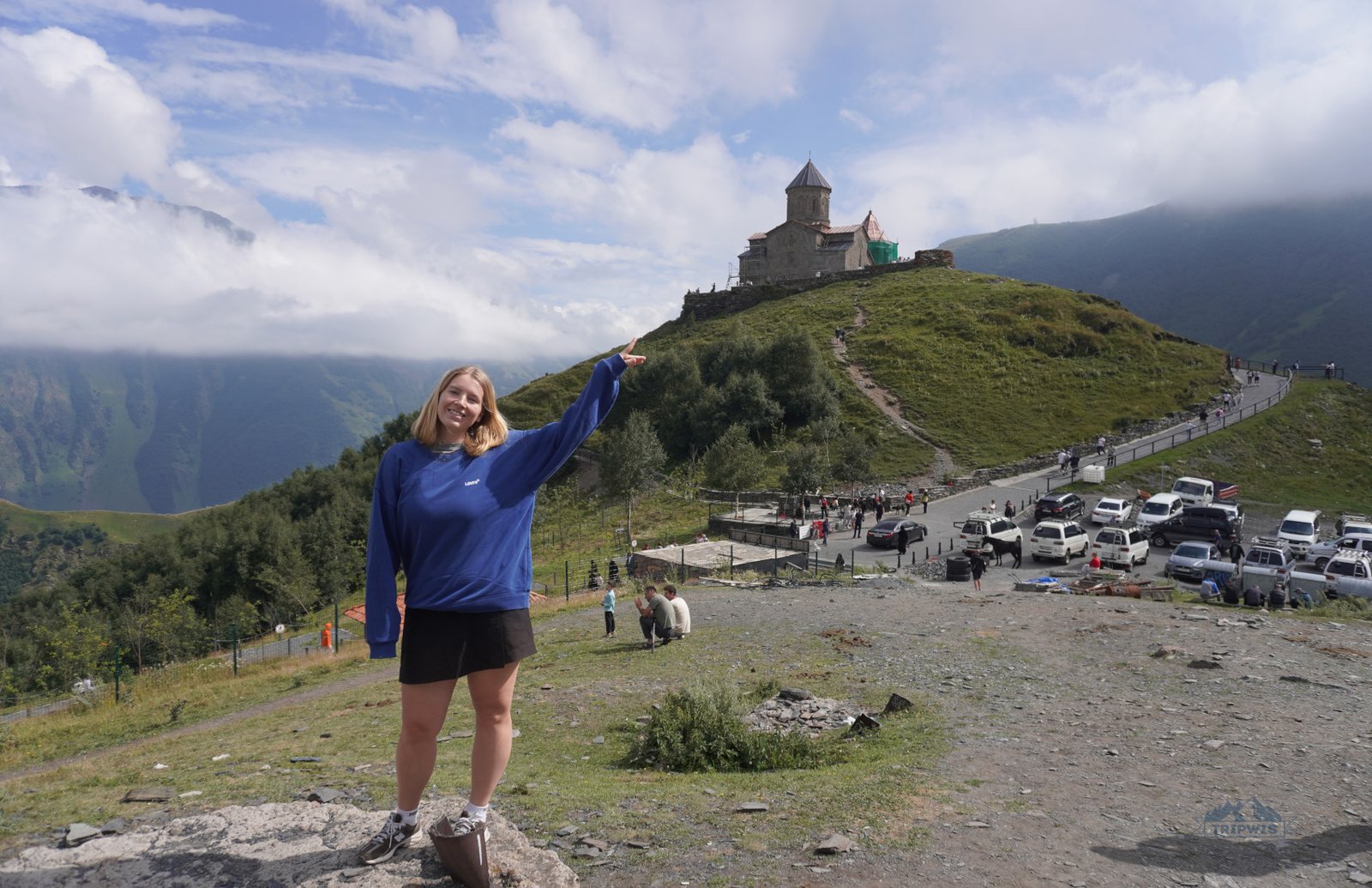
Another absolute must-see is Stepantsminda (Kazbegi) where we stayed for the night. Stepantsminda is a newer official name of the small town, but many people still refer to it as Kazbegi.
Its iconic Gergeti Trinity Church is the most well-known destination in the area and probably is the best hike in Kazbegi. Most people travel from Tbilisi for this postcard view – the ancient church perched high on a hill with Kazbek Mountain towering behind it.
You can visit the Gergeti Trinity Church by car (the winding road is paved and suitable for any regular car; open from spring to fall) or on foot (5.5 km out and back and 440 meters of elevation gain). There’s also an option to hire a driver with a 4×4 for 20 GEL / $8 to take you up the rugged and steep stretch of the road.
The church itself is an active 14th-century monastery. From its courtyard, you can see the village of Stepantsminda below, the surrounding mountains, and the snow-capped peak of Kazbek itself (if the weather is nice).
❗️ Make sure you look in the right direction: A lot of people mistake the neighboring ridge of Kuro Mountain for the Mount Kazbek itself and end up posting photos from Gergeti with the wrong mountain in the background!
Stepantsminda is where we wrapped up our little trip, but there are so many more amazing spots to see along the Georgian Military Highway! Here are some of the best stops between Tbilisi and Kazbegi we’re yet to visit:
- The Gergeti Glacier Hike
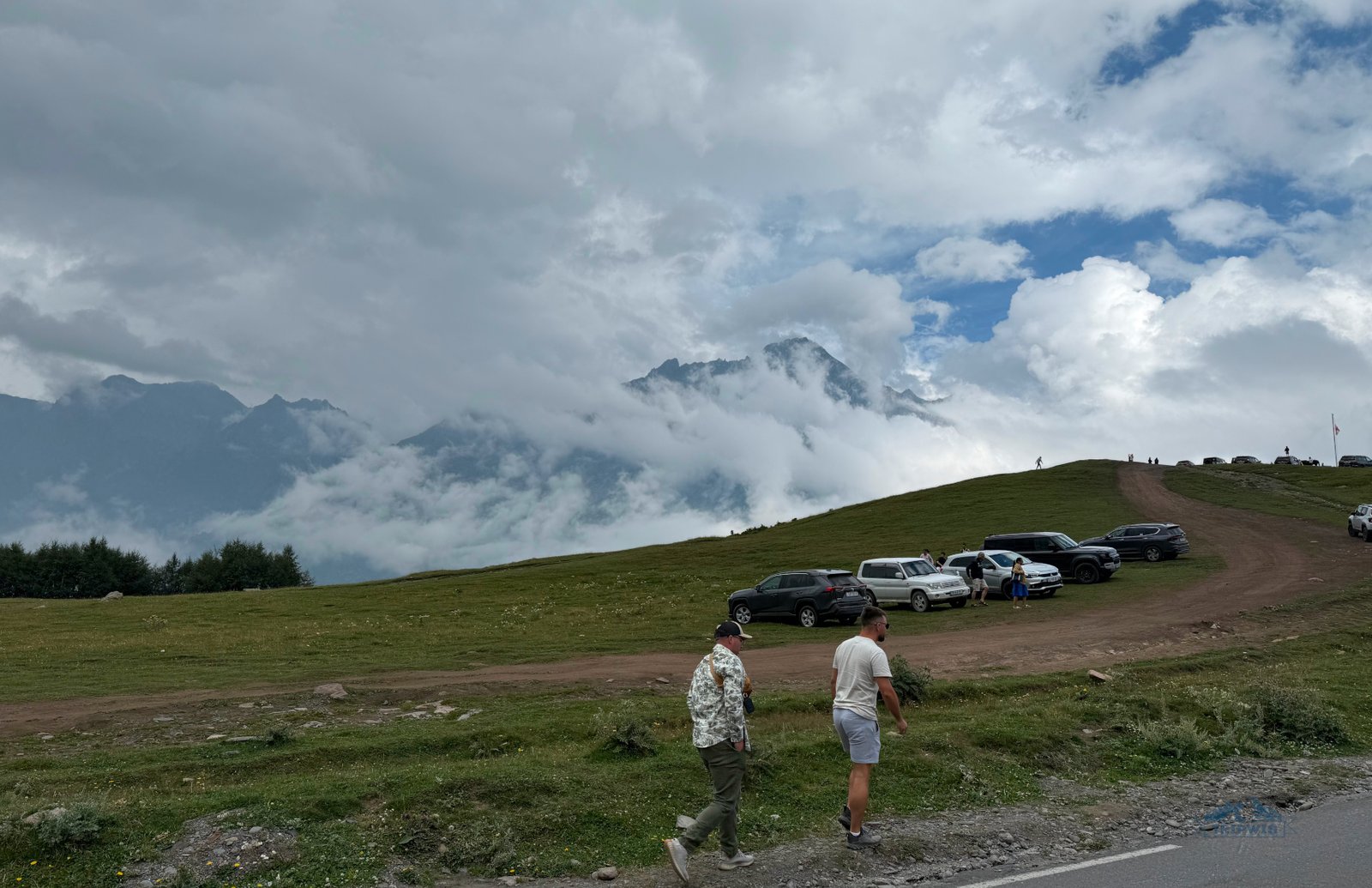
From Gergeti Church, you’ll notice hikers heading further up the trail – this is the Gergeti Glacier Hike, one of the most challenging full-day treks in the region. The trail ends at the foot of the Gergeti Glacier on Mount Kazbek. Beyond that point, only experienced climbers with proper gear should continue.
Some hikers start from the church, others right from the village. From Stepantsminda, it’s about 10 hours round trip, and you’ll need a decent level of fitness. Starting from the church saves you a couple of hours.
The trail is well-trodden, but it’s steep. In a single day, you’ll climb about 1,600 meters up, which is no joke. The glacier is usually accessible from early June through October, but going there in winter time is extremely risky.
- Truso Valley
Another gem, though less crowded, is the Truso Valley, also known as the Valley of Narzans, located about 25 km from Kazbegi. It’s not the most popular trail, but it’s beautiful – you’ll see dozens of mineral springs and strange, colorful travertine formations (natural limestones created by mineral-rich water) here.
Truso is a relatively easy 9-km out and back hike, mostly along a dirt road with almost no elevation gain. Most people come just for a day trip, but some pitch tents and stay overnight.
- Gveleti Waterfalls
Gveleti Waterfalls are just a few kilometers from Kazbegi – easy to reach if you have a car. This is the closest point to the Russian border on my list. The road is unpaved, so a high-clearance vehicle is helpful. You can just park and walk the remaining 3 km. The trail is clearly marked and used, so you won’t get lost.
The first waterfall is big and powerful, and it takes about a 30-minute walk. The second one sits higher up and takes about another hour of climbing to get to, but it’s worth the effort if you’ve still got some energy left.
Where to stay in Kazbegi?
 |
 |
Do you really need to stay overnight when driving the Georgian Military Highway? Not at all. The first time we did it – on a day tour – we left early in the morning and got back around 7 or 8 p.m. You can do the same by car.
But here’s the thing: Once you reach Stepantsminda, you start wanting to stay in this scenery a little longer (perhaps under the spell of Mount Kazbek!). To watch at least one sunset and wake up to at least one sunrise in this beautiful corner of the mountains. The village is well-developed, surrounded by stunning mountain views, and packed with sights just minutes away.
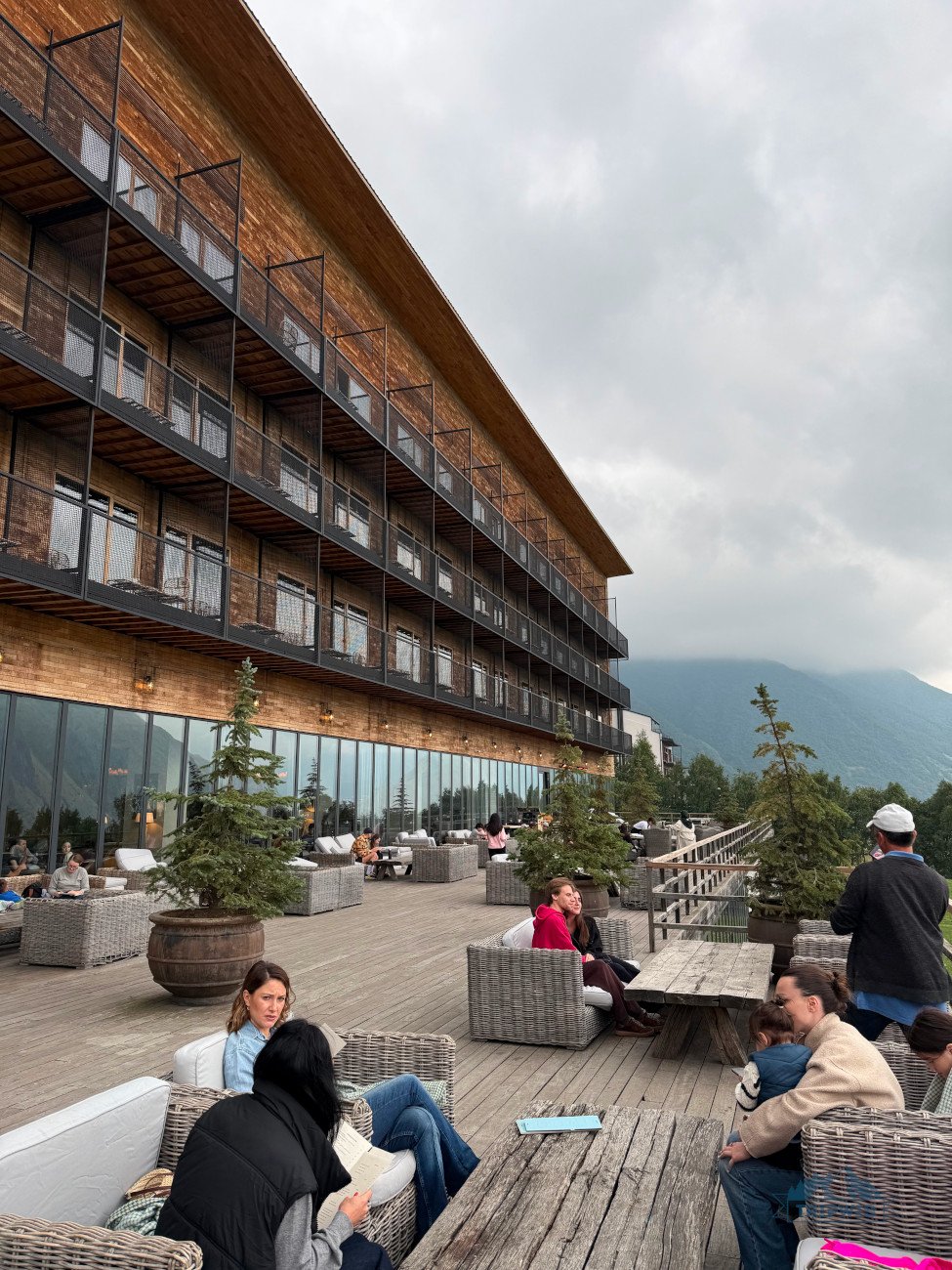
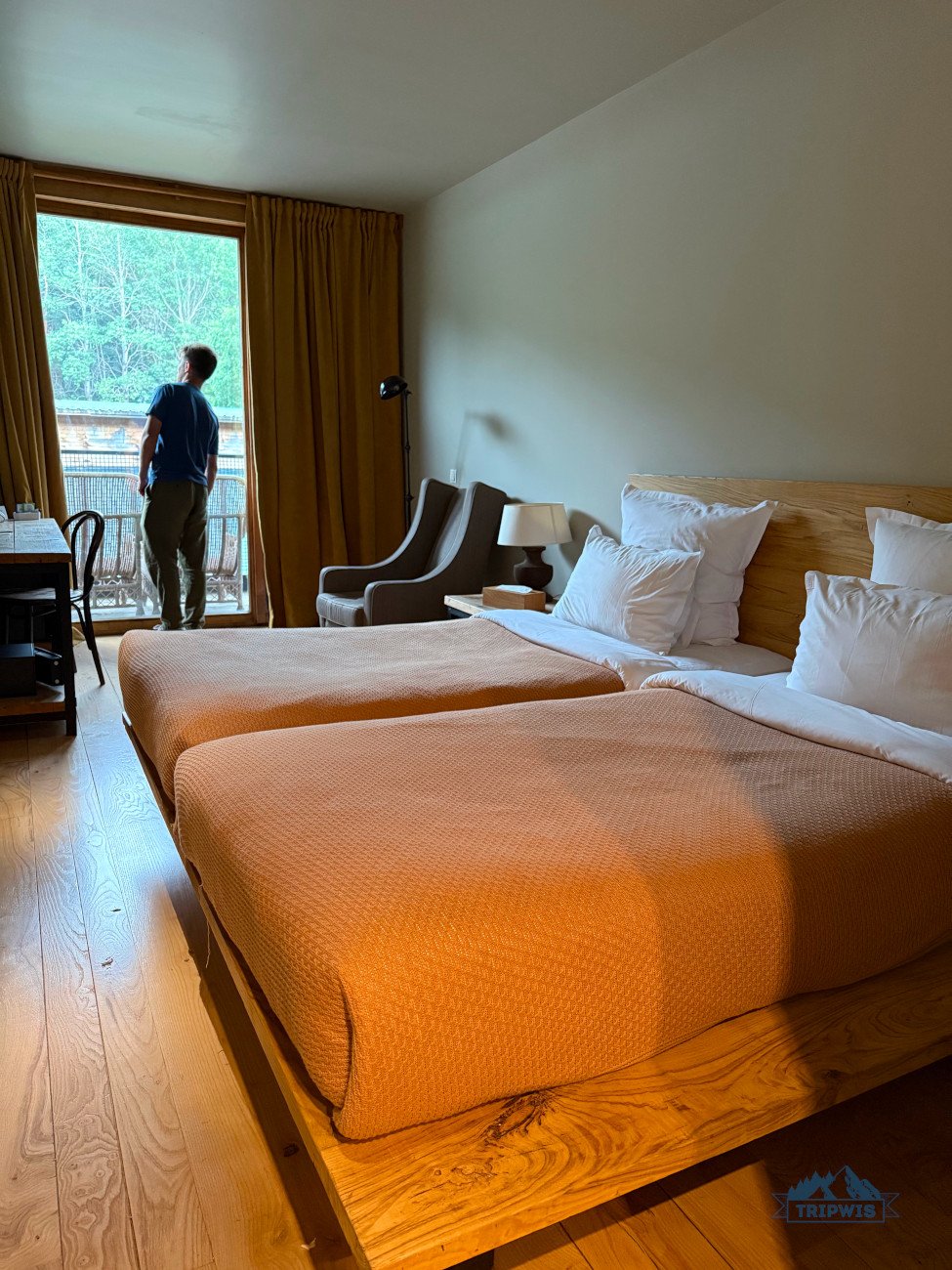
- During our last trip, we stayed at: 5* Rooms Kazbegi (from $220 a night) – an iconic hotel from the local Rooms hotel chain known for its incredibly gorgeous properties. Despite the room’s understated, slightly Scandinavian design, the spa – with a free sauna and a pool overlooking Mount Kazbek – along with the lobby and terrace, is simply out of this world. It was really hard for me to justify spending that much on a hotel, but I have nothing but good memories of the stay. And they also served one of the best breakfasts I’ve ever had anywhere!
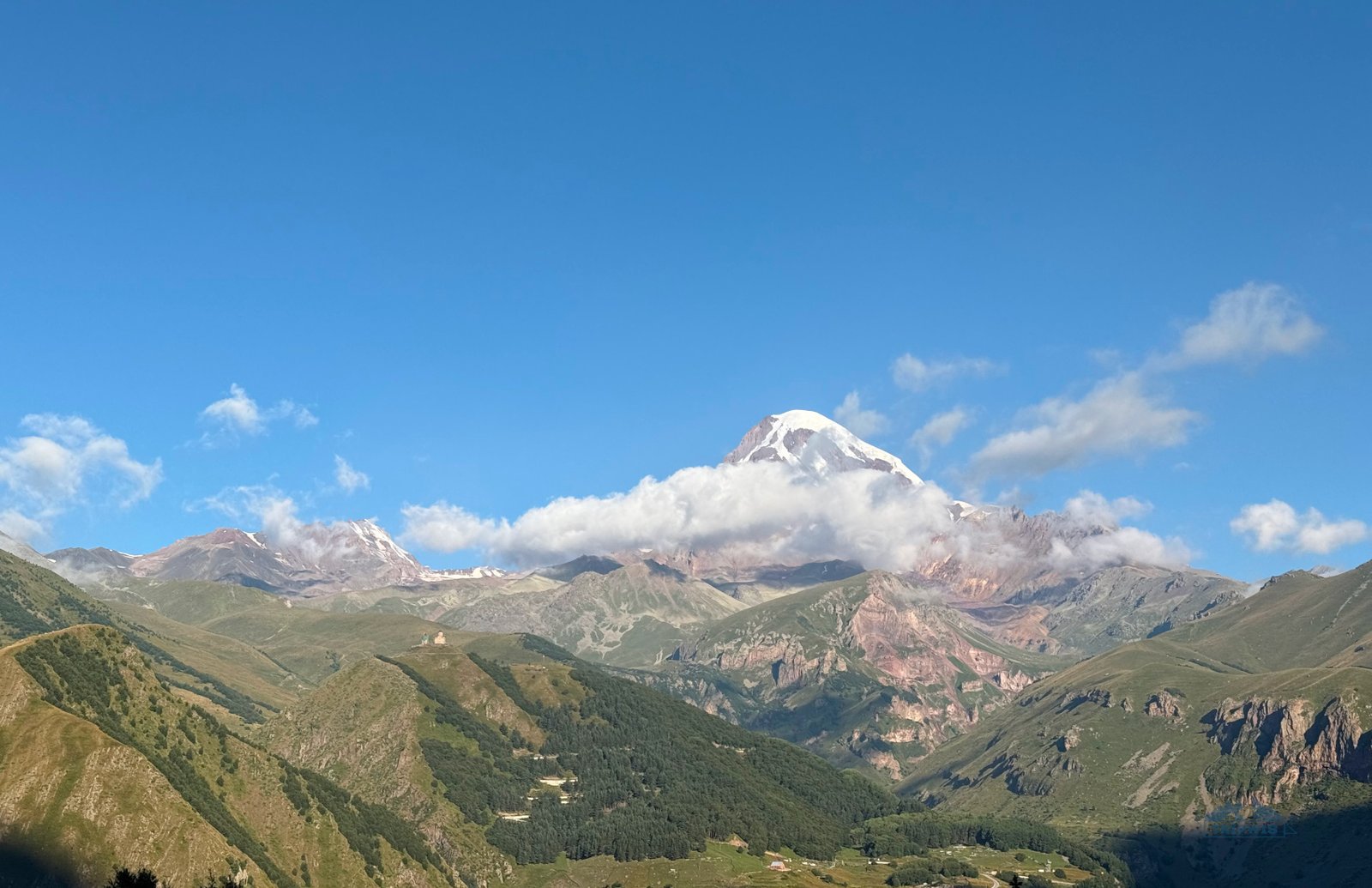
- If you’re looking for something more budget-friendly, but no less charming, check out Cottages DILA (from just $110 a night). These are several new, spotless A-frame guesthouses with a view of Kazbek. Everything feels fresh and clean, the rooms are cozy, and the location couldn’t be better.
- Another great option of a stay in Stepantsminda is Chemodann Kazbegi (from $77 a night) – expect panoramic windows and a peaceful location away from the village center. You’re surrounded by mountains and greenery, and the only downside is that it’s a bit far from any shops, so plan your snacks and other small (but necessary) travel purchases ahead.
If you want something truly special… stay at the Fifth Season Hotel (from $130 a night) in Juta village, overlooking the Georgian Dolomites! The location is stunning -usually you’d need a tent and a backpack to enjoy views like these, but here you get a cozy cabin with panoramic glass walls, heating, hot water, a shower, and even a restaurant on-site. We didn’t stay here overnight, but passed by during a hike to Chaukhi, and it looked absolutely dreamy.
Where to eat along the road?
 |
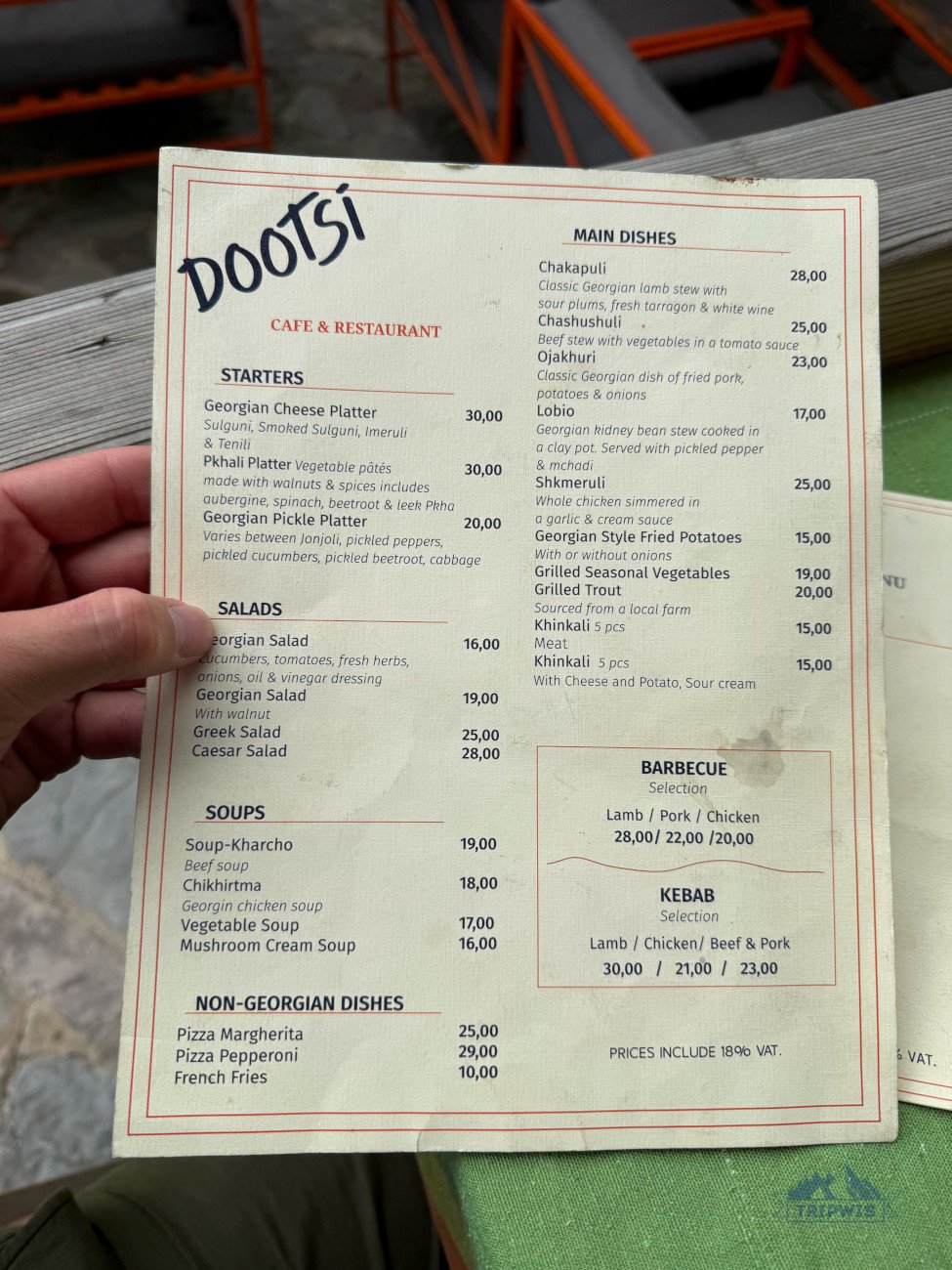 |
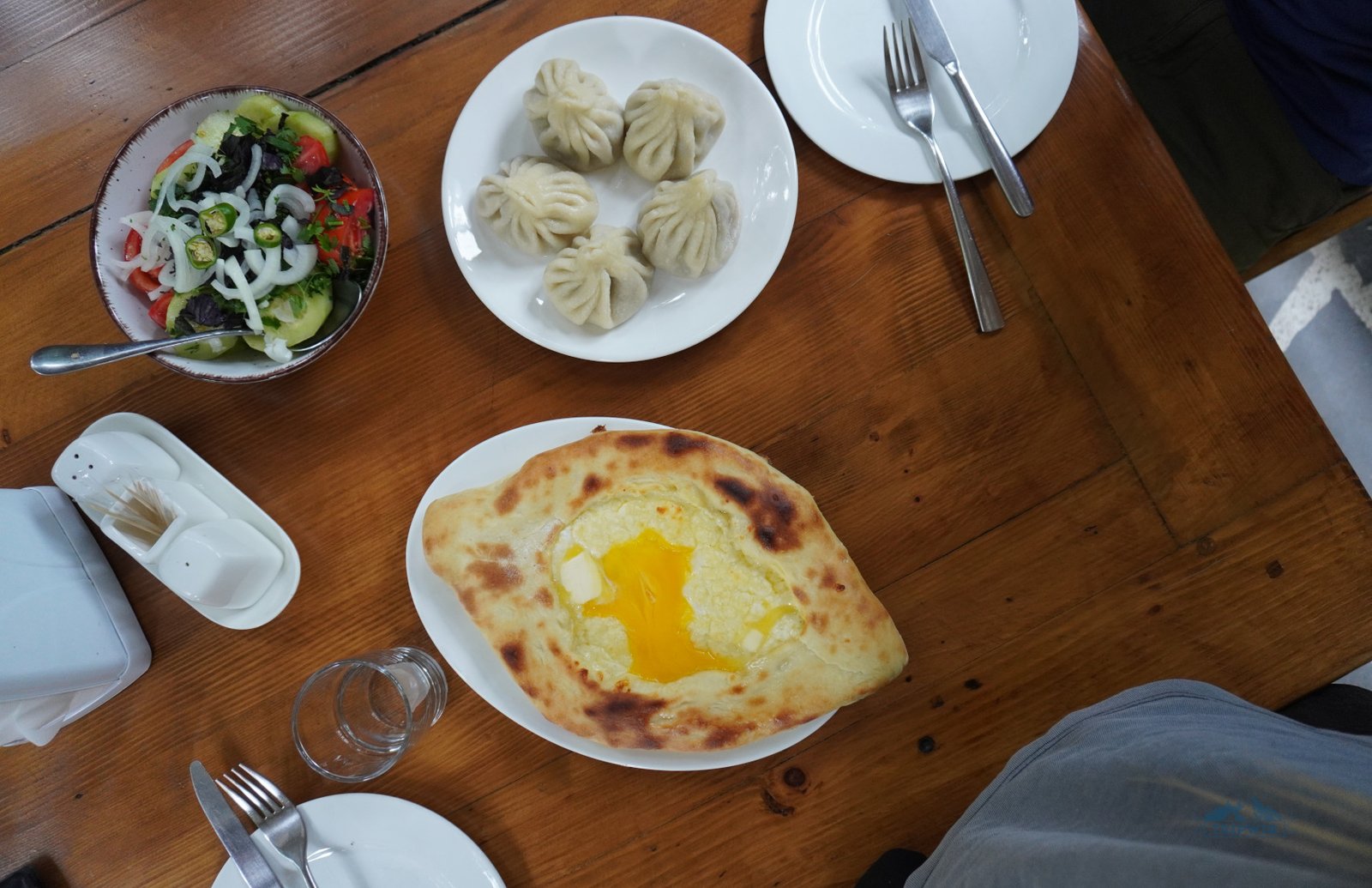
If you’re driving the Georgian Military Highway, Pasanauri is *the* place to stop – after all, it is the village where khinkali dish was first invented. We had lunch at Pasanauri 1892.
When choosing where to eat in Kazbegi, don’t miss Maisi Restaurant. It’s one of the best in town. Everything we tried here was amazing, and we left so full and happy. It’s a popular spot, so consider reserving a table ahead of time, especially on weekends. They serve Georgian cuisine, of course, but it’s also a great spot for brunch.
If you’re passing through Gudauri, stop at Drunk Cherry Restaurant – according to many, it’s the best place to eat in Gudauri. The view alone is worth it, but the food and service are equally impressive. Warm atmosphere, cozy interior, and a huge terrace overlooking the mountains. They even have a kids’ outdoor play area, hammocks, and swings.
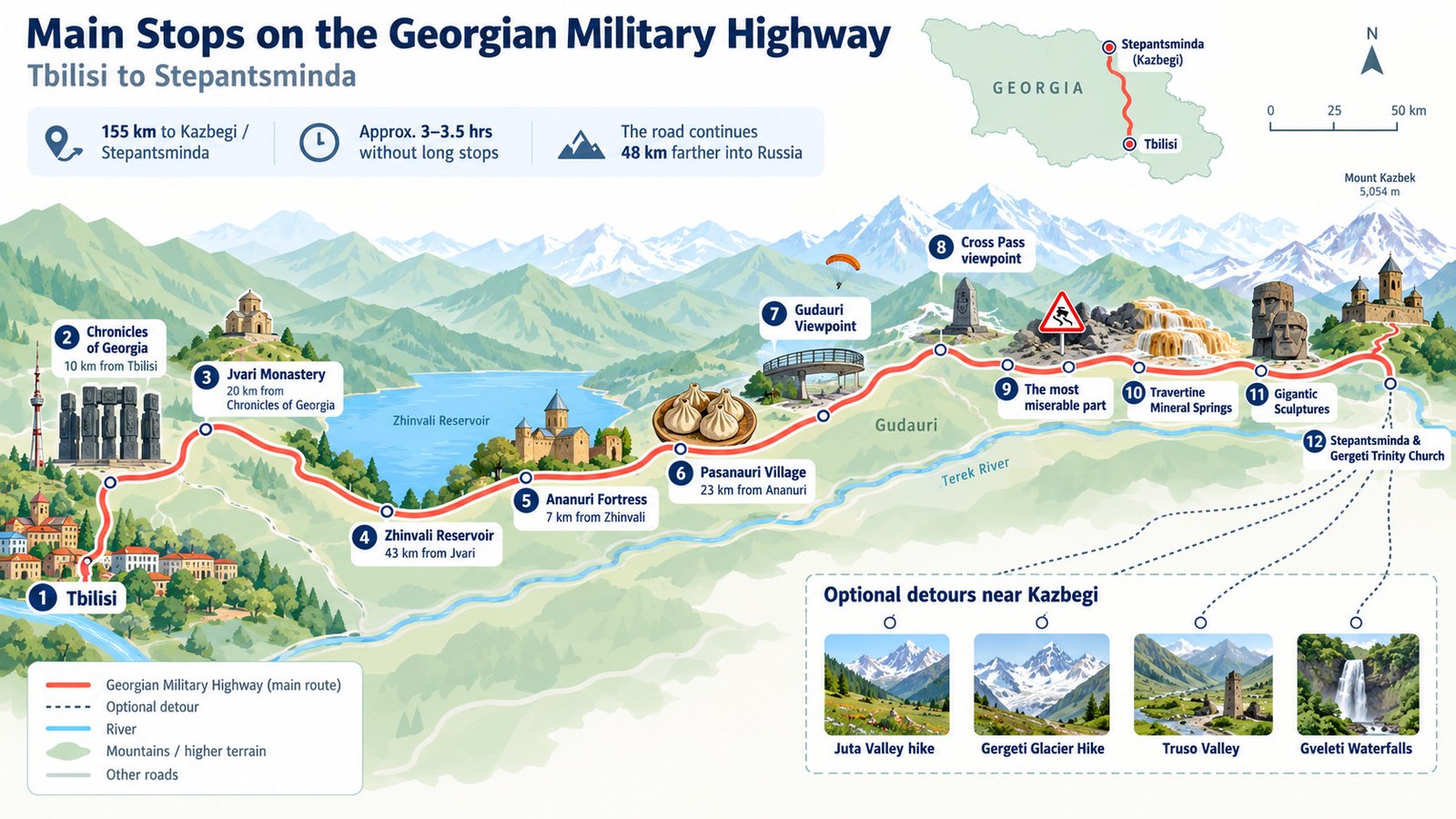
Georgian Military Highway map
All the must-see stops that I’ve covered in this Georgian Military Highway travel guide are marked on the map to help you create your own perfect Kazbegi road trip. Just hop in the car and go – you’ll find all the pins on this interactive map.