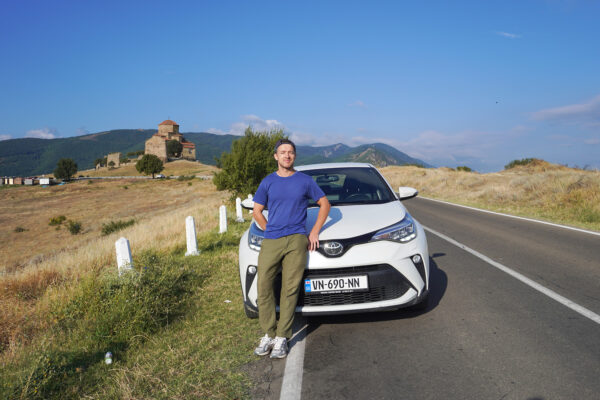
In this article, I’ll cover everything you need to know about travel insurance to Georgia in 2026 (the country, not the state).
The Georgian government introduced a new mandatory entry requirement this year, and there are a few important details everyone needs to get right. After all, Georgia’s outdoor adventuring and mountain road driving have always been able to encourage the need to feel protected – and insured – but a new rule made a voluntary desire into a mandate.
And if you’re planning a trip around Georgia, click on “Destinations” and choose “Georgia” – I’ve recently returned from a big trip around the country, so now I’m adding fresh and up-to-date guides and articles.
Article contents
- Is travel insurance mandatory?
- What your policy must include
- Where to buy travel insurance for Georgia?
- What to check before buying a policy
- Common mistakes
- Car rental insurance in Georgia
- Our car rental experience
- FAQ about travel insurance
Is travel insurance mandatory for Georgia in 2026?
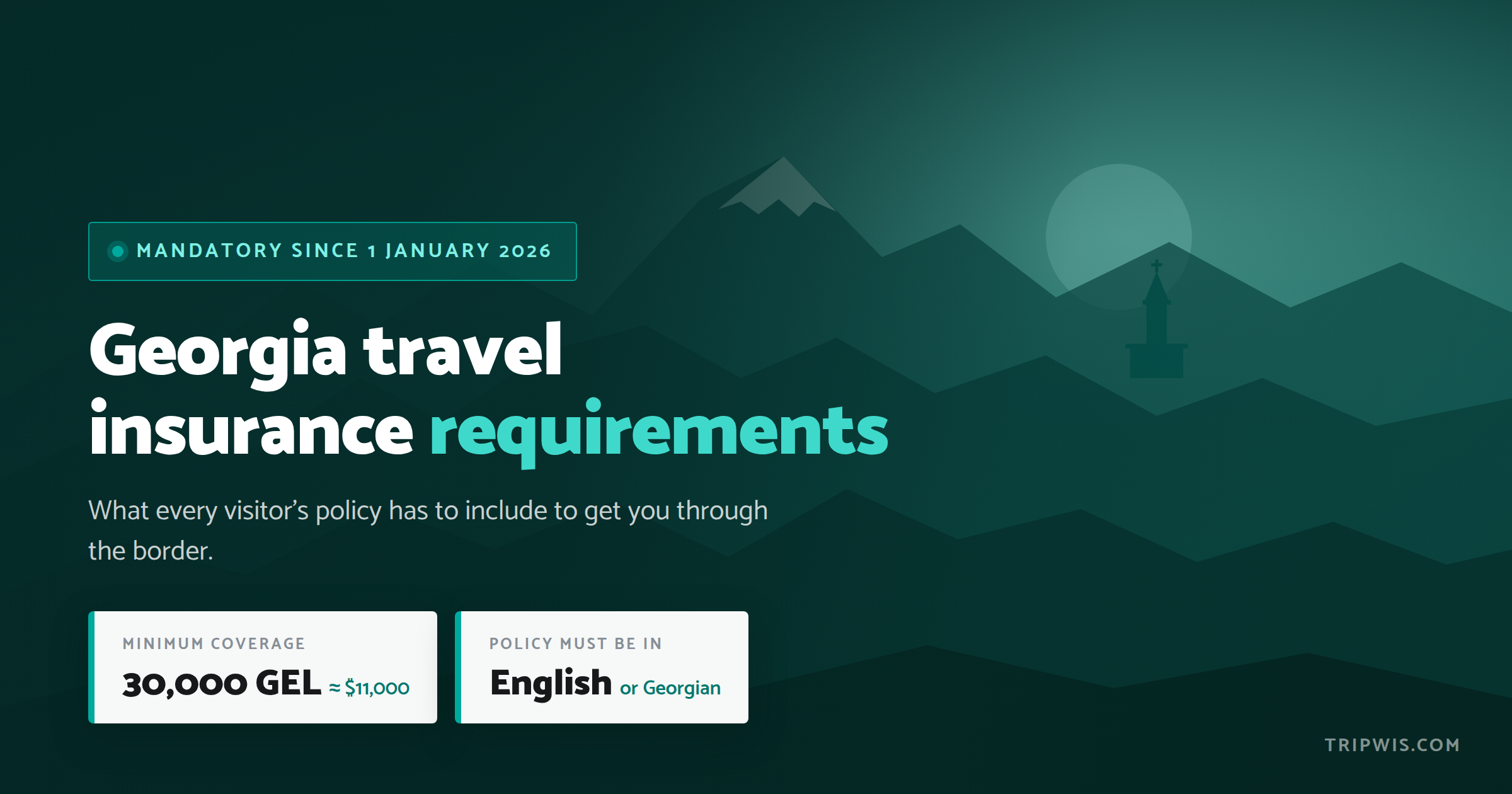
Yes. As per the statement on the official website of Ministry of Foreign Affairs of Georgia, starting from January 1st, 2026, all tourists entering Georgia are required to have valid health and accident insurance coverage.
Both visa status and nationality do not play a big role in whether or not you are exempt from the new Georgia entry requirements for travel insurance – the health and accident insurance is Mandatory (yes, with a capital M!). In 2026, visa-free entry to Georgia does not remove the insurance requirement. You can buy it easily on VisitorsCoverage.
- Do Europeans need travel insurance for Georgia? Yes, they do. European Health Insurance Card (EHIC) does not work here
- Do you need to buy travel insurance for Georgia if you’re coming from the UK? Same answer – Global Health Insurance Card (GHIC) does not exempt UK residents from needing to show a separate Georgia travel insurance when asked to
- Do US citizens need travel insurance for Georgia? Yes, just like the rest of foreign tourists, travel insurance for Georgia is mandatory for all American residents
Travel insurance for Georgia is not expensive; however, the feeling of not having to stress about accidents and medical attention you might need during your vacation is simply priceless.

Why is it a good idea to have health and accident insurance in Georgia? Apart from it being a legal entry requirement now, there are a couple more reasons for you to spend extra cash on it. While being quite a safe destination (Georgia is often found on the lists of places recommended for solo female travelers), the activities you’re planning on taking part in require you having an added layer of protection:
- If you’re hiking in remote areas, then should something happen, you might need emergency evacuation – a pricey event sans insurance coverage
- Georgia’s roads (especially mountain stretches) are not that easy to drive on. Add to that a very aggressive manner of driving that the locals are so famous for, and you’ve got yourself a concoction synonymous with frequent accidents
The two primary places you can be asked to show proof of insurance are airline check-in and border control.
❗️ If you don’t have insurance, you might be refused entry to the country, be denied boarding the plane, or face a fine of 300 GEL (a tad over $110).
What else is there to think about? Though the requirements for travel insurance in Georgia are not lengthy, it is very important to follow them to a T. Here’s my breakdown of the list; make sure to read it in full before moving on to potential insurance options.
Georgia travel insurance requirements: What your policy must include
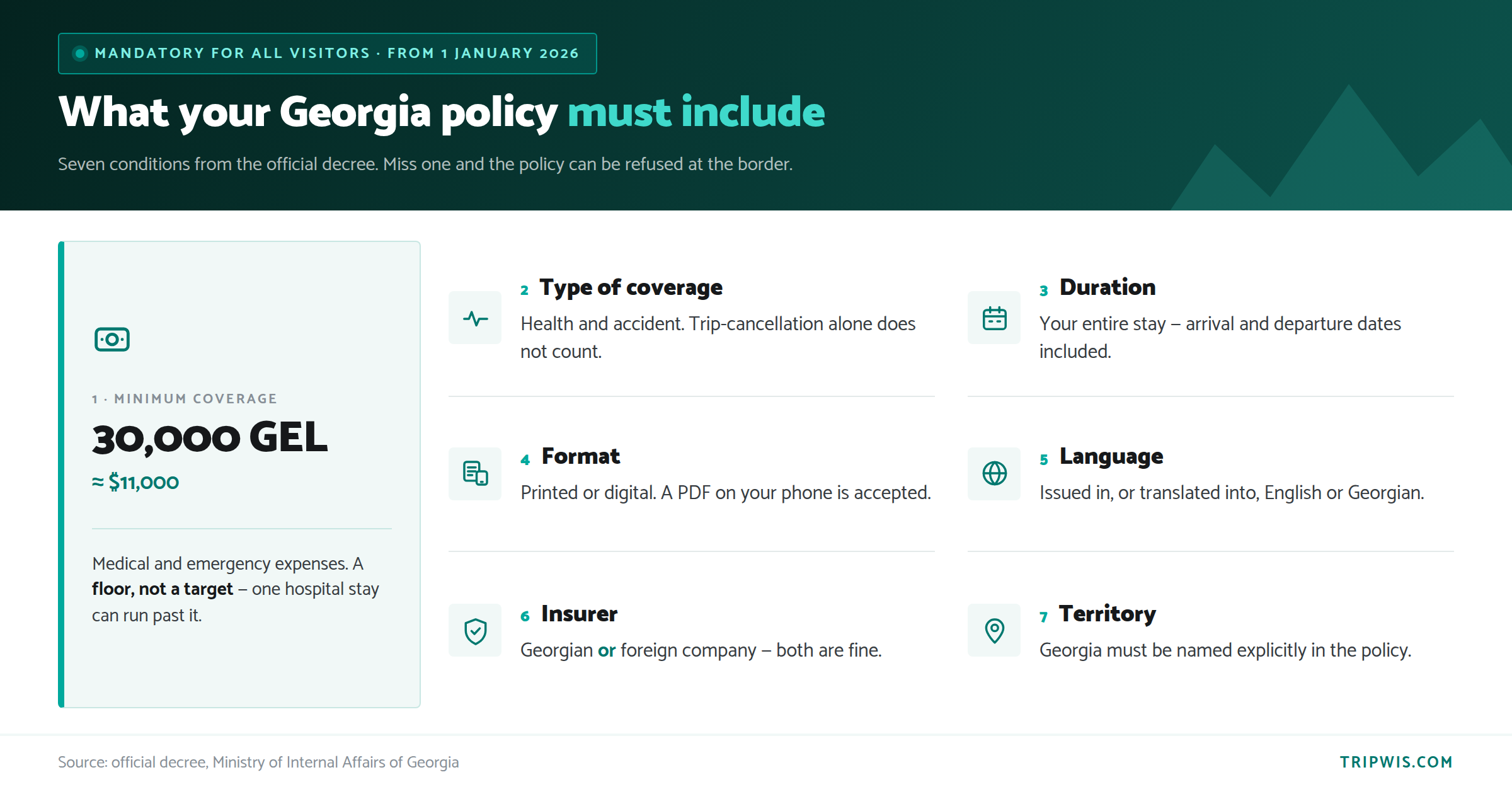
The prerequisites for your Georgia travel insurance are clearly laid out on the ministry’s official website as follows:
- Minimum coverage: Medical and emergency expenses of at least 30,000 GEL (approx. $11,000)
- Type of coverage: Health and accident insurance
- Duration: Complete temporal coverage. The policy must be maintained for the entire duration of your stay – this includes both arrival and departure dates
- Format: Accepted in both physical and digital formats
- Language: The document must be issued in (or translated into) either English or Georgian
- The decree clearly states that the insurance policy can be issued by either Georgian or foreign company. International coverage providers from your home country will do just fine as long as the policy is compliant with the rest of the requirements
- Territory: Georgia must be explicitly included in the wording of the covered territory. Clear language is key: A vague “Europe” or “Worldwide”* coverage will not work so long as it does not clearly state the nation of Georgia as the geographical bound it covers
*Such policies are amazing for longer trips over several countries; just make sure that Georgia is written into the territory that’s covered.
Where to buy travel insurance for Georgia?

Finding an insurance policy for Georgia that accommodates the full roster of mandatory requirements sounds like a complicated undertaking. However, do not fret yet! I have compiled a short least of potential options you can start with – a perfect jumping-off point if you don’t care much for the vast sea of insurance company and aggregator results you will be flooded with after a simple Google search.
Note that it is still the responsibility of the traveler to pay attention to the “fine print”. Though many tourists recommend the following insurers and services due to their global accessibility, affordable premiums, and fast policy issuance, there might be caveats (like claim processing hurdles, capped sublimits, and the like) that can cloud your experience greatly. Read the policies carefully before committing to one insurer!
- Best for Europe residents: VisitorsCoverage
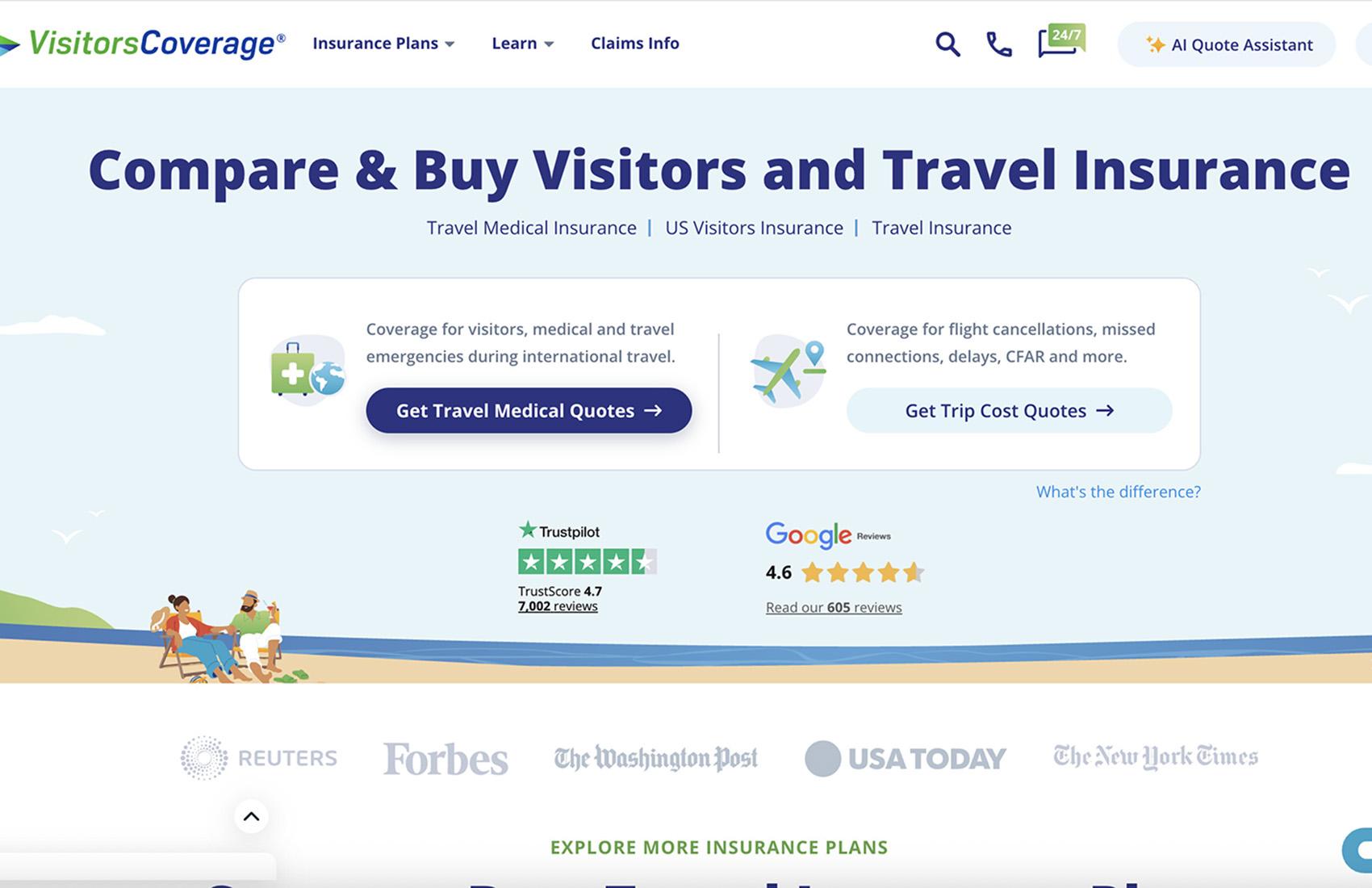
VisitorsCoverage is a travel insurance broker that gets the job done. It is an aggregator that does not sell its own policies, but rather compares and sells plans from top-tier licensed insurance providers. Because of that, all the claims and reimbursements are handled directly by the underwriter of the specific insurance policy you choose. However, most plans purchased through the service come with a 24/7 global assistance hotline to help you navigate your medical emergency.
What I love most about VisitorsCoverage is their intuitive website – not only can you compare and contrast policies, but you also get the plan “Highlights” section where the important details are shown (I was surprised that many budget-friendly Georgia plans included dental coverage, which was clearly stated in the highlights). Besides this easy-to-use feature, a well-stocked Knowledge Center is guaranteed to answer any question you might get in the process of choosing a policy. Major “explain it like I’m five” vibes, in the best way possible!
The aggregator has two coverage types to choose from:
— Comprehensive – a percentage-based option that offers anywhere from 75% to 100% coverage of costs up to the policy maximum. It’s better in case of an incident, but it does ask for higher premium rates
— Limited – a variant that works on a fixed-benefit model. The payout is predefined, regardless of the actual cost of the incident – it is given directly to the insured person regardless of the actual treatment costs. The policyholder is then responsible for covering the excess out of pocket. The limited plans are usually cheaper, but involve a certain degree of gambling – you can either save a few bucks or lose thousands of dollars
- Best for US residents: Insubuy
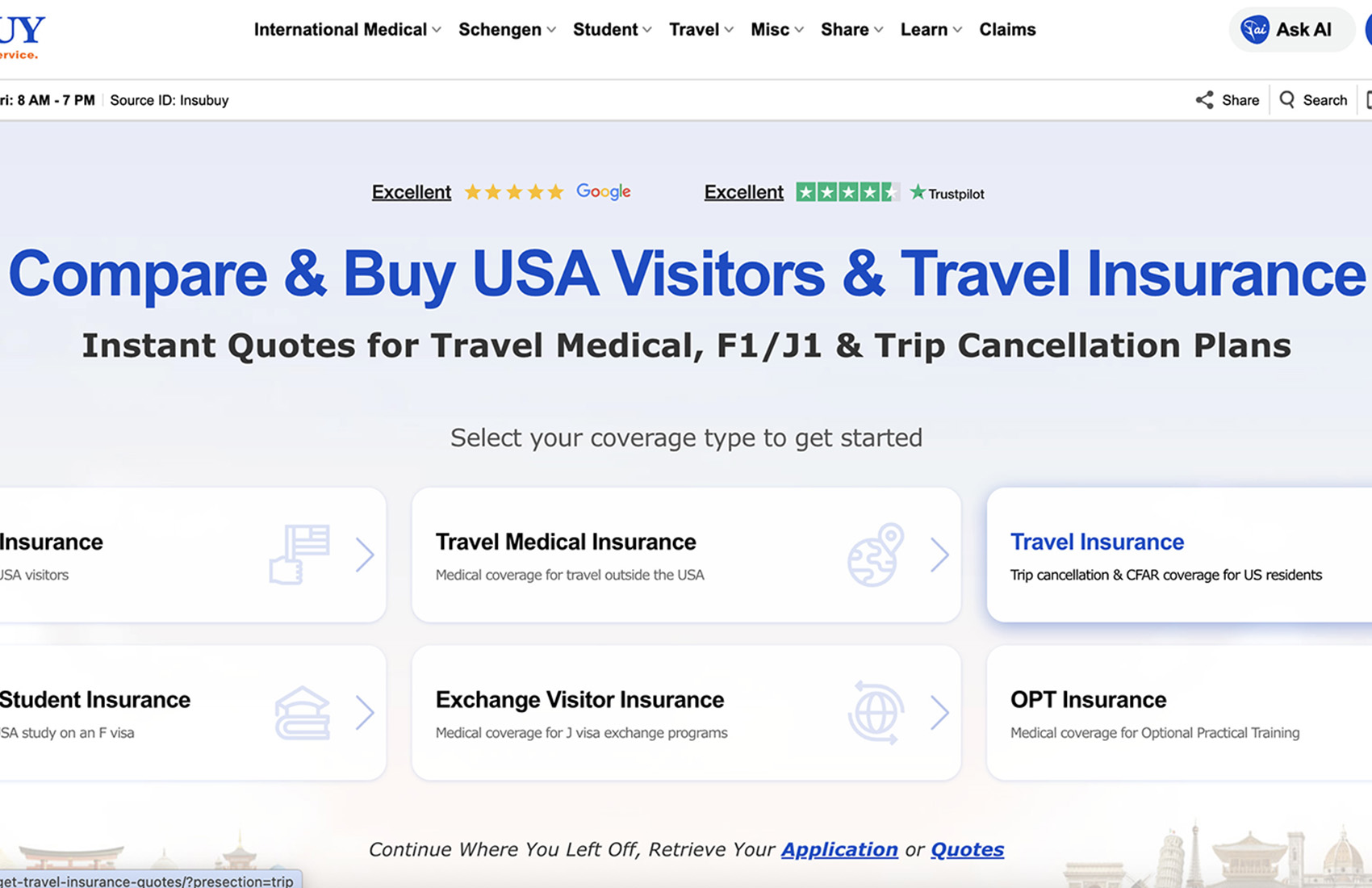
Insubuy is a US-based company that is a stronger fit for American residents traveling abroad. Apart from international travel insurance, Insubuy also provides insurance to visitors to the USA, international student insurance, J1 visa insurance, and more. Despite the wide range of options, their website is very easy to navigate. It has a helpful feature of comparing different policies. You can get instant quotes from multiple companies, compare their offerings, and make a purchase online.
When looking for insurance policies for Georgia, almost 15 potential plans came up. I can attest that the prices offered by Insubuy’s underwriters are reasonable. The total sum is dependent on your age, destination, policy maximum (you can easily pick the smallest possible amount, it is enough for Georgia’s requirement), and deductible.
Almost all plans include evacuation, repatriation, telemedicine, and Covid-19 treatment. There is a lot of policy reading to go through to pick the one that suits you best – thankfully, Insubuy breaks down the terminology in a very digestible manner.
- Best for Asia-Pacific region residents: Klook Protect
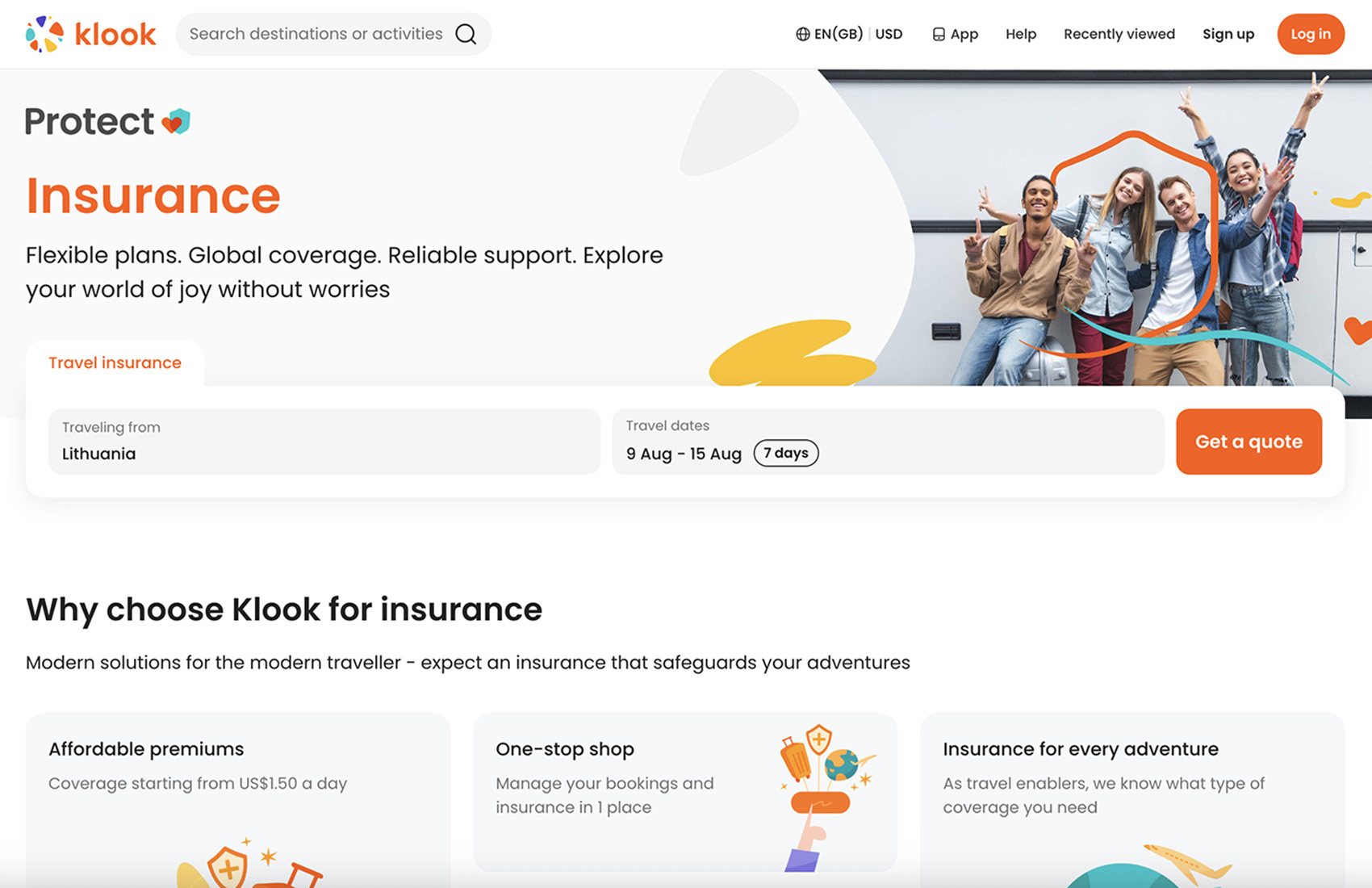
You’ve probably heard of Klook – Asia’s largest booking platform for travel experiences. Despite its market focus being on Asia, the service operates globally.
The obvious question follows: If you use Klook’s services to book an experience, why not choose them for insurance as well? You can manage both in one place!
Klook Protect is another distribution platform and broker, but unlike Insubuy or VisitorsCoverage, it is not US-based; it operates from Hong Kong headquarters. Klook is famous for having a wide range of licensed third-party insurance companies that offer affordable premiums on their policies.
❗️However, there is a huge caveat – the service is only available to residents of specific countries/regions, like Singapore, Hong Kong, South Korea, Malaysia, Thailand, Taiwan, Australia, and the Philippines.
If your local Klook marketplace offers insurance, you are then able to choose a tier. There are three: Lite, Essential, and Deluxe. The list of insured risks is the same across all plans; however, they range in coverage limits (Lite being the lowest, Deluxe being the highest). What is covered by the Klook-bound policies? The usual roster: Hospital cash allowance, emergency local follow-up treatment, assistance in case of pre-existing medical conditions, emergency and accidental dental care, Covid-19, evacuation and repatriation; accidental death, dismemberment and/or disablement; medical consultation, evaluation, and referral; prescription assistance, etc.
What to check before buying a policy

As you navigate the possible policy options from one of the aggregators mentioned above, run them through this checklist:
✔ Coverage is at least 30,000 GEL (a tad over $11,000)
✔ Georgia is clearly stated as the covered territory
✔ The policy covers both emergency medical expenses and includes accident coverage
✔ The policy is maintained throughout the entire length of your trip
✔ Policy certificate is in either English or Georgian
✔ Deductible/excess* is acceptable. Most of these services have toggles in the policy plans, just put the deductible to zero for the best possible coverage (it will drive up the total price of the insurance, but just by a tad)
*Deductible is the amount you pay upfront for medical costs before your policy starts to cover expenses; excess is the portion of the claim you are personally responsible for. The terms are usually used interchangeably – it is an out-of-pocket amount of money you pay before expenses start to get covered by insurance.
✔ You can download a formal certificate, not just a booking confirmation. The document should have all the visible details (your full name, policy start and end dates, coverage limits, insured risks, etc.)
✔ Pay close attention to insurance exclusions – specific conditions or scenarios for which your policy will not provide medical coverage. The list usually includes medical tourism, preventative care, routine pregnancies, psychiatric help, etc.
✔ If applicable, you might want to make sure the adventure and extreme sports are covered by your policy. In Georgia, there’s a plethora of potentially dangerous activities to partake in: Hiking, skiing, horse riding, paragliding, off-road driving, high-altitude trekking, etc. You want to be insured to the bone (literally)!
Common mistakes travelers make with Georgia travel insurance
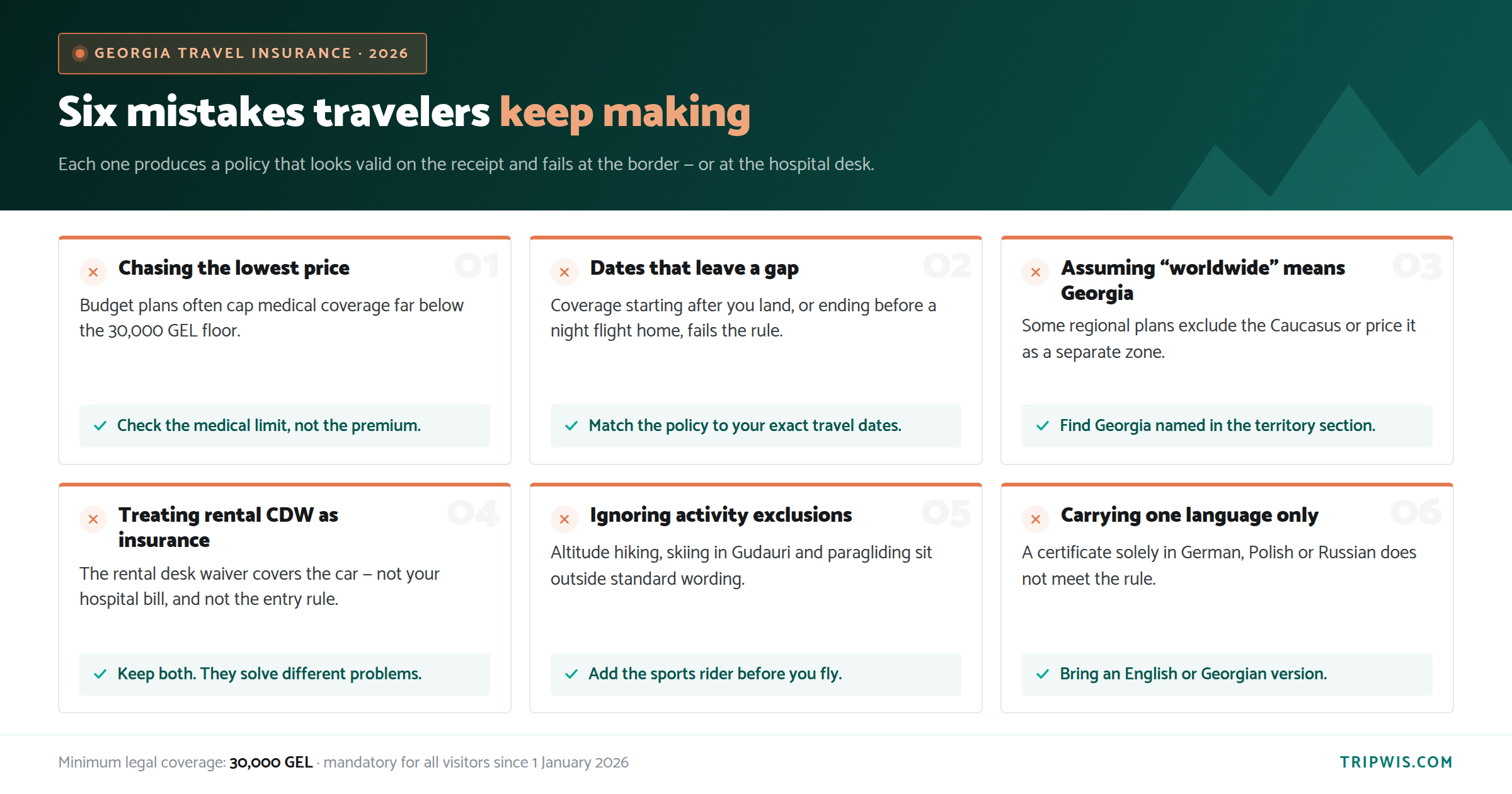
The most common mistake as of 2026 is not getting the mandatory travel insurance to Georgia despite the apparent requirement and tons of info available online. The plans start as low as $1/day 0 it’s a true smidge out of your Georgia trip budget, so being economical is really not an excuse.
Your other justification might follow my previous statement – as I’ve alluded to above, Georgia is a generally safe destination. However, you’re still actively exploring a new country, throwing yourself at novel experiences, and generally finding your body at the mercy of the surroundings. The more frequent occurrences you will be plagued with here are trivial – a sprained ankle from sliding down on a hiking trail, a heat stroke after a sweltering summer day spent outside, a cracked tooth after enjoying too many Kozinaki (crunchy nut bars), or a simple gastrointestinal issue from eating an absurd amount of Khinkali (dumplings) too fast.
What are some other errors a traveler can make when dealing with the health and accident insurance in Georgia? There are quite a few:
- Not checking the territory that’s covered by the insurance and relying solely on the “Europe” wording in the policy. Always make sure that the document clearly states “Georgia” – otherwise, it does not count!
- In the same vein as “not purchasing the insurance”, travelers often make the mistake of relying on their EHIC/GHIC cards. They are not alternatives to travel insurance to Georgia, since the country is outside the EHIC/GHIC system
- Putting everything off till the last minute and thinking you can purchase the insurance after landing. You might be asked to show proof of insurance before entering Georgia, at airline check-in
- Not following one of the paramount travel insurance requirements in Georgia and buying a policy that either starts late or ends early – if it does not cover the ENTIRE duration of your stay, it’s not valid
- Not picking the add-ons when applicable – if you’re planning on going hiking or skiing, then make sure your policy includes active sports coverage
- Bypassing all the licensed insurance companies in lieu of sticking with your credit card insurance — it may work, but only when the policy follows all the requirements. You have to show a certificate that proves you’re insured — some banks do not give you a formal document, as if the limits, covered territory, or timeframe are implied. This will not fly with the border officials/airline representatives!
- Thinking that health and accident insurance in Georgia is the same as car rental insurance and not getting the latter one, even though you were planning to drive on these mountainous vertigo-inducing roads. Let’s focus on car rental insurance in Georgia a little bit more thoroughly, shall we?
How much does a trip to Georgia cost in 2026? >>
Travel insurance and car rental insurance in Georgia
In caveman terms, it seems pretty simple: Health and accident insurance that just recently became mandatory in Georgia covers any medical emergency you might encounter. However, if you plan to rent a car in Georgia, then a second type – car rental insurance – is yet another necessity to keep top of mind.
Before I give you the rundown on Georgia car rental insurance options, let’s start with where one should look for a rental in the first place:
🔹Localrent – my first choice of a website for renting a car wherever the service operates (it has not reached global coverage yet). Localrent partners with local rental companies – hence the name – and streamlines the entire renting process so that it usually goes without a hitch. A myriad of filters (“No deposit”, Full insurance”, “Newer car”, etc.) allow you to pick a vehicle that suits you in every way. There are tons of reasonably priced options that require no deposit at all, which is usually what you want! While browsing Localrent, you’re looking at the pictures of an actual vehicle, and not a car class, which is how car rental aggregators usually operate.
🔹DiscoverCars – my trusted backup version of a car rental service. It is a larger platform, and it works with both international and local rental companies. There are some cars you can rent without a deposit, but the list is shorter than that of Localrent. DiscoverCars’s main allure is their cheap insurance (their own, keep reading to find out more); their main downside is slow customer support – they usually reply within 24 hours.
Here’s a list of insurance options you will find whenever you go and try to rent a car in Georgia.
Standard inclusions:
- Third Party Liability (TPL) – a basic insurance that covers damages done to the “third party” (after first party, which is you; and second party, which is your insurance company). The third party is anyone (plus their property) involved in the incident with you
- Collision Damage Waiver (CDW) – a waiver that covers damages to your car; except for the ones done to the undercarriage, roof, windshield, and tires – you will have to pay out of pocket for these. Most rental companies in Georgia include CDW in their base rental price. However, note that it always comes with a hefty deductible/excess amount
Upgrades:
- Super Collision Damage Waiver (SCDW or SuperCDW) – an extended CDW which covers tires, undercarriage, roof, and windshield damages. Choose this option to avoid big deductibles – though SCDW comes at extra cost, it usually saves you money in case of damage
- Full Coverage – the most expensive insurance option; however, it covers everything. There’s no deposit, no deductible, you don’t pay a dime out of pocket. The company might not even inspect the car that much upon drop-off – why bother, since you are not financially responsible for any dent or scratch
How does one go about purchasing a car rental insurance in Georgia? There are three potential options:
1) Insurance from the booking platform – you can buy it as you reserve the car online. Take DiscoverCars, for example – they sell their own insurance; which is usually cheaper than that of a local rental company. However, there is a catch – you first pay for the damages out of pocket, and only then you get the reimbursement of your funds (up to a certain amount, which is listed in the booking)
2) Insurance from a rental company on the spot – this is the coverage you purchase upon picking up the car. If you’re unsure about choosing a good deal on the spot, then feel free to use the services of Localrent – the car listings on the website include insurance offerings from the actual rental companies. In my opinion, insurance from the rental company is the safest all-around choice
3) Insurance from your bank – it works on a case-by-case basis; check with your bank if such coverage is possible
Our car rental experience in Georgia
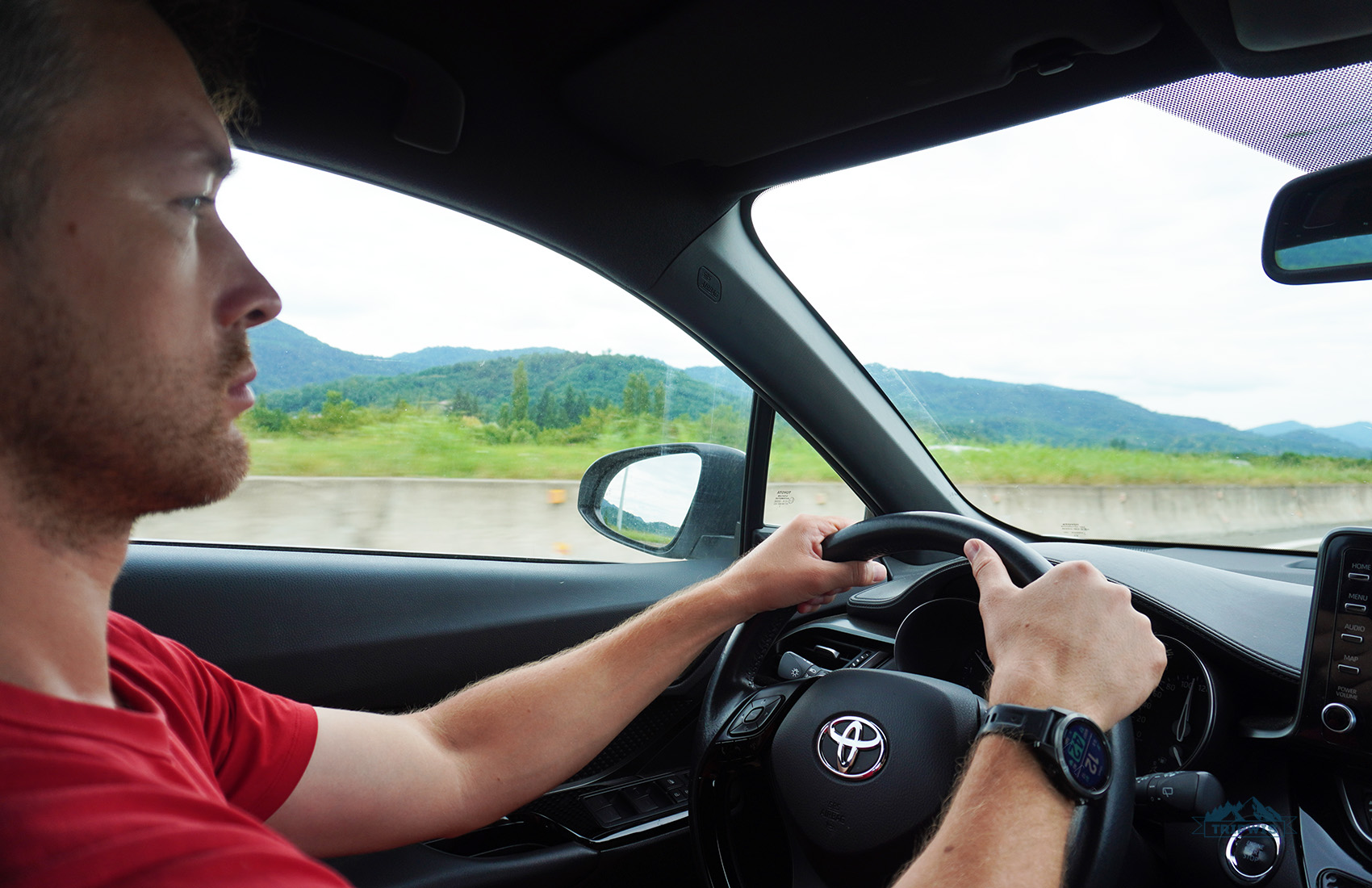
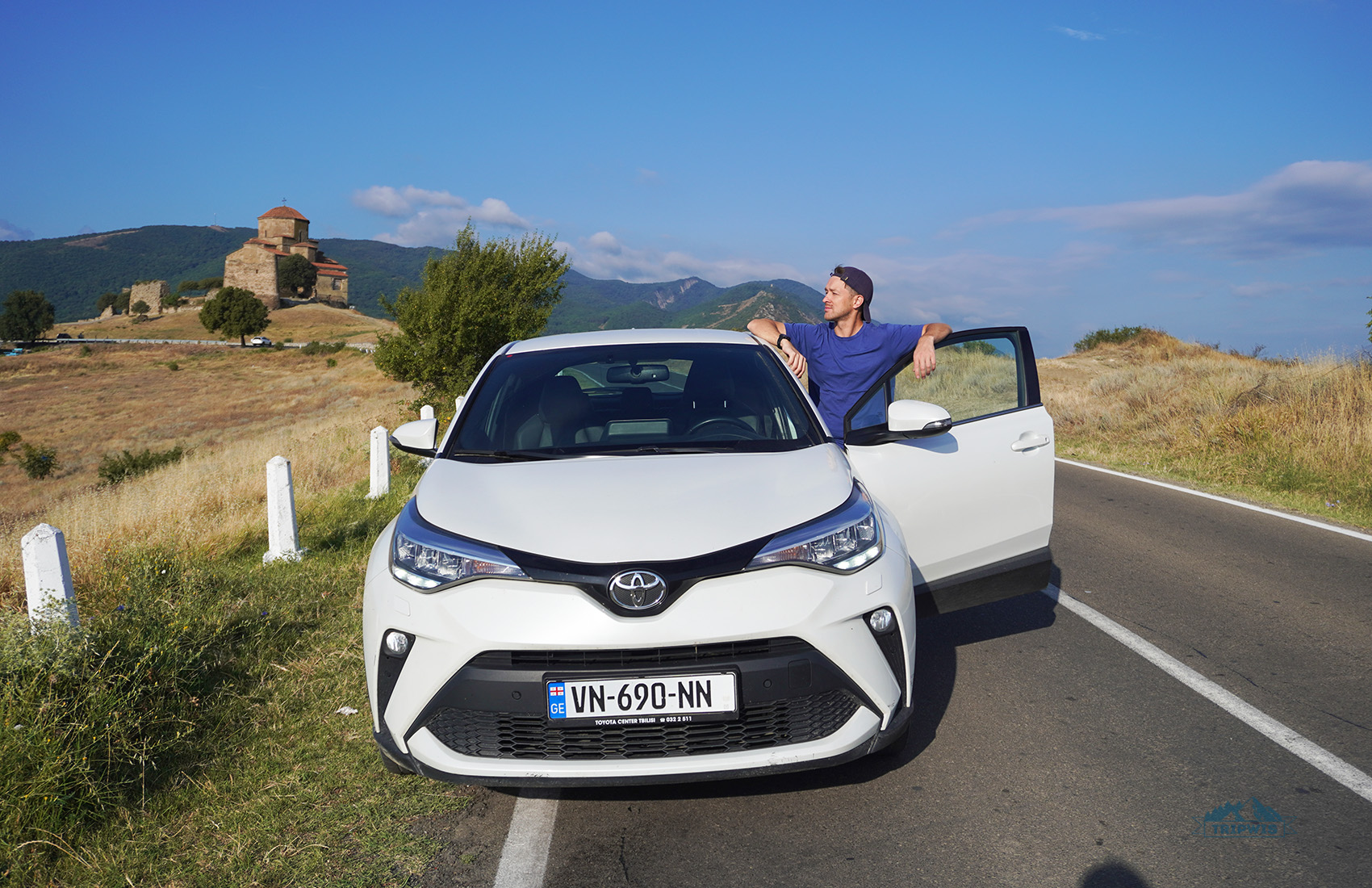
Our last Georgian getaway fell onto the month of August. As usual, I went straight to Localrent’s website – and after some finagling with filters, I have settled on the option that best suited us. It was a compact crossover – a three-year-old Toyota C-HR. I picked the SuperCDW insurance; there was no deposit, no deductible, and no credit card required – just like the doctor ordered!
Speaking of prices, our nine-day driving escapades in peak tourist season in Georgia ended up costing us around $550: $430 for the car itself and $120 for gas. If you want to take a closer look at the car rental process (since you’re already well-versed in the question of insurance), make sure to check out my guide to renting a car in Georgia.
I’m so glad we decided to use a rented car to explore the country – after driving nearly 2,000 kilometers, I felt like we knew the terrain backwards and forwards! Curious about the itinerary we followed to see this multifaceted destination? Here’s what your holiday in Georgia might look like:
- A few days in Tbilisi – an extravagantly haphazard capital of Georgia that successfully straddles a line between history and trends of the future. After you’ve gotten up close and personal with the city’s varied neighborhoods, it’s time to venture outside the capital’s limits – I have a list of 10 best day trips from Tbilisi just for this occasion!
- A time spent in Kakheti is almost always a sweet daze, where your slight inebriation makes for awe-filled drives from one winery to another. Make sure to keep my rundown of the best wineries and vineyards in Georgia handy to plan the most well-rounded “wine road” program.
- After drinking your fair share of gvino (as well as having a day to sober up completely, just fyi), embarking on a journey on the crazy mountain roads that lead to Kazbegi might seem like an impossible scenario. However, it is very important that you do it! Georgian Military Highway is one of the most beautiful stretches of the road in Georgia – dramatic cliffs, towering snow-capped mountain peaks, enchanting monuments, important monasteries. There is no shortage of jaw-dropping sights to keep you company here!
- Taking a detour to the mythical health resort town of Borjomi is a treat that you shouldn’t skimp out on – you can explore its top sites in a day, heal yourself with precious water from Borjomi Central Park’s mineral springs, and be on your merry way.
- Of course, I cannot forget about Batumi – Georgia’s summer capital! Stroll along Batumi Boulevard, enjoying the beautiful sculptures and other attractions, duck into the streets of Old Town, get to know the local flora via a visit to Batumi Botanical Garden – all exciting activities to do before driving outside city limits and finding a cozy corner on one of the coveted local beaches. You must know that the drive to Batumi is a rewarding undertaking – it takes you through most of the country, where you collect top Georgian sites like Pokémons along the way. You can plan this adventure with the help of my guide to getting from Tbilisi to Batumi.
FAQ about travel insurance for Georgia

Georgia has long had a reputation for being one of the most welcoming and accommodating destinations in the world. Here, they believe that “every guest is a gift from God”. As a tourist here, you are shown the most beautiful natural and historic sites, treated to feast after feast (with frequent intermissions for lengthy toasts and wine drinking), and generally enveloped with thoughtful care.
- What is the minimum coverage for Georgia travel insurance? At least 30,000 GEL, which is around $11,000. The minimum standard for policies I’ve usually seen is either $30,000 or $50,000. So, if you purchase the insurance just because it’s mandatory, pick the most basic option with the smallest minimum coverage on VisitorsCoverage – it will be enough for Georgia requirements.
- Can I show insurance on my phone? Yes, as long as the policy shows all the necessary details.
- Does the policy have to be from a Georgian company? No, you can use a foreign insurance provider, as long as the plan meets the other requirements (make sure the certificate is written either in Georgian or in English).
- Is Georgia covered by European travel insurance? While international travel insurance is accepted, your policy must clearly state that it works in Georgia – it’s as simple as that.
- Is credit card travel insurance accepted for Georgia? Yes, credit card travel insurance is accepted, but only if it checks off all the necessary requirements.
- Does EHIC/GHIC work in Georgia? No! Georgia is not an EU country, so it does not have the healthcare agreement with the EU (nor the UK).
- Do I need travel insurance if I am only staying for a few days? Yes, insurance is mandatory regardless of how long you stay in the country.
- Do I need special insurance for hiking in Georgia? Well, not “special” per se; activities like hiking, trekking, skiing, or paragliding require comprehensive coverage (including sports and activities add-ons) instead of standard basic insurance.
- Does health and accident insurance cover car rental damage? No, if you’re renting a car in Georgia, you should purchase two separate policies – one mandatory health and accident insurance and one car rental insurance (you pick the amount of coverage you want to have with this one).
- What insurance should I choose if I rent a car in Georgia? Due to sometimes perilous road conditions, it is advised to purchase either a SuperCDW coverage or go with Full Insurance all the way. Make sure that there is no deductible (or the excess amount is reasonable)! Using Localrent for the process of renting a car in Georgia is the best choice for first-timers – they have the most transparent insurance options, no hidden clauses, and plenty of features that can help you get the car of your dreams to explore the country with.