In my opinion, Krabi is home to some of the most breathtaking scenery in all of Thailand. It has dramatic karst cliffs, pristine bays hidden away on distant islands, mangrove forests, buzzing night markets, intricately adorned temples, — all hunkered down in a pretty compact area by the Andaman Sea. On top of that, the region has solid infrastructure and isn’t overwhelmed by the massive crowds that have completely taken over Pattaya and Phuket.
In this article, I’ll share everything you need to know about this province — where to stay, where to eat, and my top things to do in Krabi.
Article contents
- Less obvious things to know about Krabi
- Best places to visit in Krabi:
- Where to stay in Krabi?
- Where to eat and my favorite coffee spots
- Krabi FAQs
● 4 hiking routes (from an easy-peasy one to the hardest of your life)
● A viewpoint alternative to the hardest hike
Things to know before traveling to Krabi
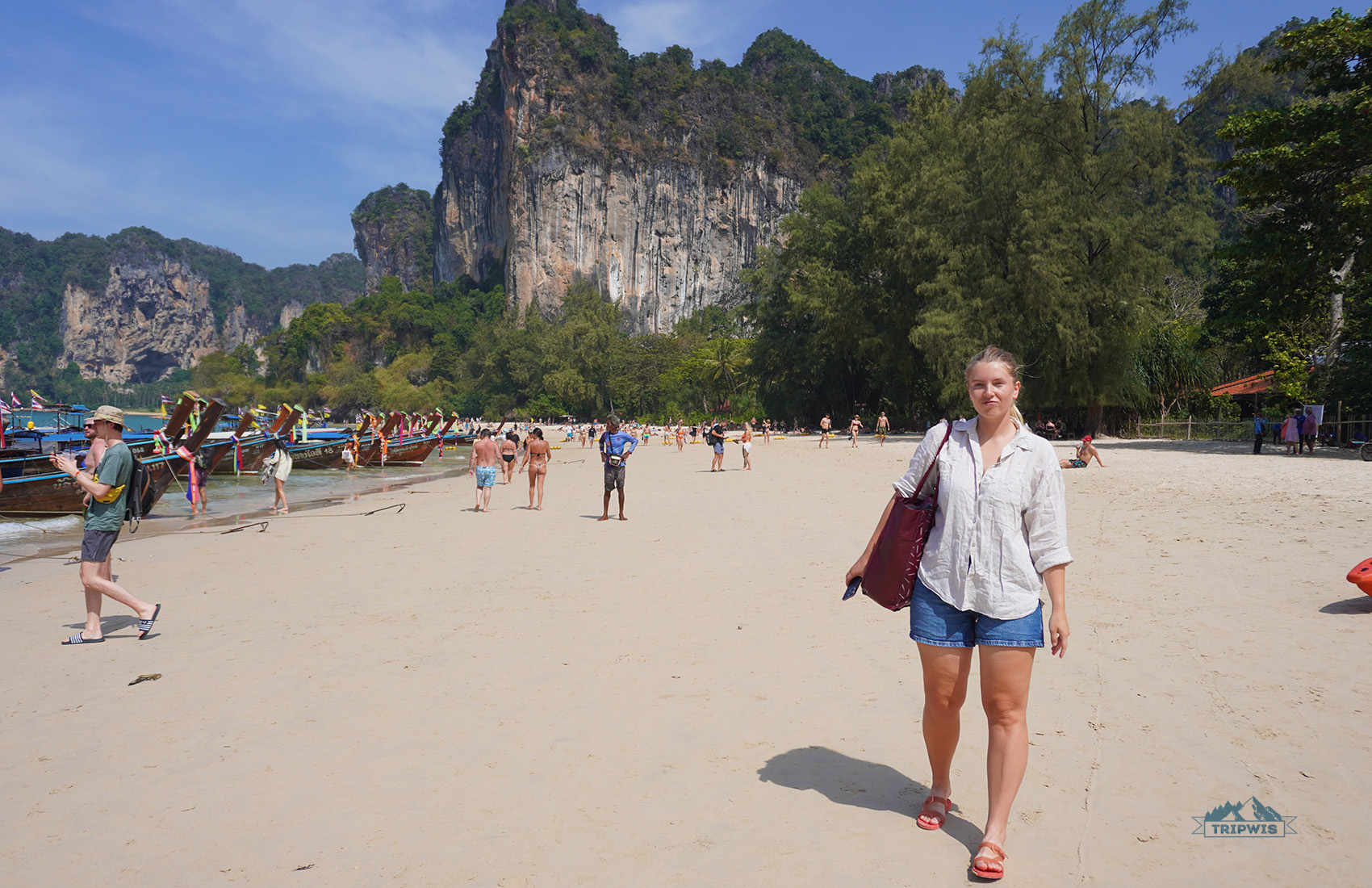
Krabi Province is located along the Andaman Sea in southern Thailand, about 780 kilometers from Bangkok. Krabi is famous for its karst cliffs, and there are A LOT of them. They are everywhere here — on land, towering over hotels, and shooting straight out of the sea.
We’ve been here twice already and will almost definitely come back again. And first of all, I really want to describe the sides of Krabi that don’t fit neatly into practical tips and recommendations — the intangible things that, for me, make Krabi feel like Krabi.
Krabi province is a unique destination that cannot be compared to the bustling Bangkok or temple-ridden Chiang Rai. Overall, Krabi feels calmer and less noisy than other Thailand’s popular resorts, even though there are plenty of tourists.
Road traffic is surprisingly reasonable here — you can actually cross the road without risking your life! This might be because there are far fewer “package tourists” in Krabi, as most visitors are independent travelers and backpackers.
What stayed with me the most in Krabi was the sense of freedom. Freedom from control — outside Krabi Town, there is scarce police presence, and some roads are so deserted you won’t see a single soul driving by. And freedom of movement, too: Each random turn has the potential to lead you to a stunning scene — a peaceful lake, mangrove forest, lush hills, or some other kind of unexpected beauty. Many lovely spots aren’t marked on maps at all, which makes discovering them even more exciting.
Krabi’s diverse religious landscape also adds to the feeling of being welcome here — though Buddhism is the predominant faith in Krabi, there is also a significant Muslim presence. You notice it right away — a large mosque dominates the view, and many cafes and restaurants are marked as “halal”. The cohabitation of the two religions also leads to, let’s say, the more savory parts of Thailand’s adult entertainment taking the backseat in Krabi. There are no shady massage parlors, no openly sexualized offerings. That said, weed is still very much a thing here.
Oddly enough, a resort with incredibly warm water can still be lacking in truly paradise-level beaches. Krabi’s most famous beaches are on the mainland — Ao Nang Beach and Railay Beach. The two are heavily affected by tides and often crowded with boats. You can swim, but if you’re used to the dreamy and relaxing experience of Phuket or Samui beaches, you’ll need to take a boat out to the islands (luckily, they’re close). If a boat ride is not something on your radar, you can relax — there are plenty of things to do in Krabi in Thailand apart from taking to the sea.
Overall, Krabi is one of the most activity-packed regions in the country, with almost no repetition. You could easily spend a full week visiting the nearby islands, hiking treacherous trails, kayaking in the mangroves, taking a look at temples, exploring caves, and even bathing in hot springs.
And if you don’t ride a motorbike or drive a car, you can still reach almost every major attraction via organized tours or transfers. GetYourGuide is a lifesaver here — I haven’t seen this many tour options and reviews anywhere else in Thailand!
Length of your stay: When thinking about how many days to spend in Krabi on our last trip, I chose five. I wanted a place to slow down and recover after a long journey through several countries — this was our rest stop. Even so, our 5-day Krabi itinerary was packed with adventures. Read on to learn my favorites!
Best things to do in Krabi
 |
 |
Krabi is both a province and a city within that province. I’ll focus on landmarks and activities grouped around Krabi’s main hubs of life — Ao Nang and Krabi Town. It might be worth mentioning right out of the gate: There isn’t much to see in either of the two locations.
Almost all of Krabi’s main attractions are of natural origins, set further from the center of human activity — and that’s where things get exciting. To reach them, you’ll either join organized tours or rent your own transport. Neither option is a problem here.
Before booking a tour, I strongly recommend comparing prices at local street tour booths with online platforms — online is often cheaper, and Krabi offers an enormous variety of tours for every taste. You can see the range for yourself and peruse the options via:
Now that you know the ways to make your itinerary come true with ease and finesse, the bigger question remains — what are the best things to do in Krabi in Thailand?
Explore Krabi’s famous mainland beaches
Let’s start with the local beaches — after all, most people come to Krabi to swim and relax by the water — and then move on to other classic spots.
Ao Nang Beach
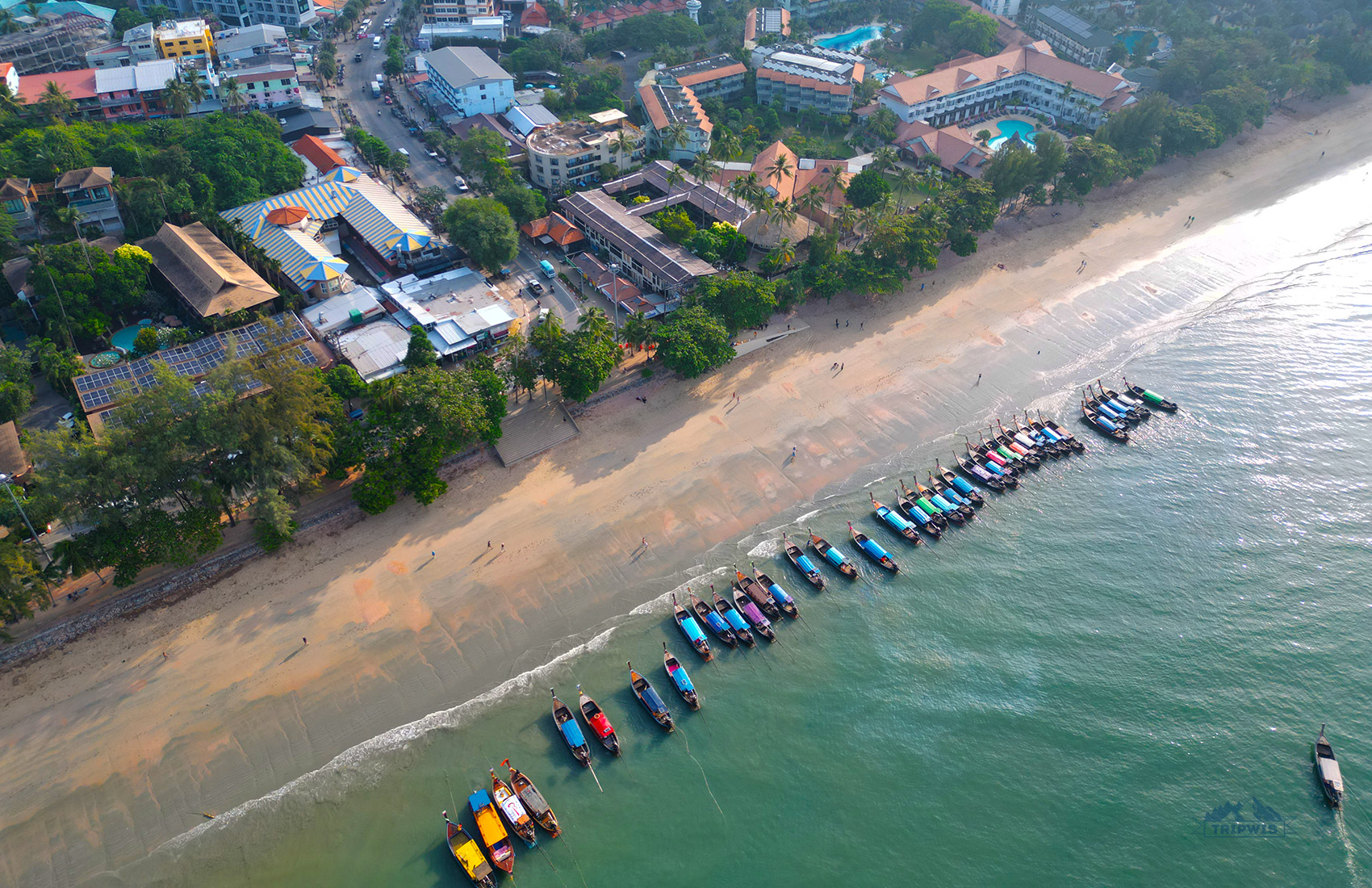
Ao Nang is the most popular, most convenient, and most developed resort area in Krabi. Imagine a lite version of Patong or Karon Beach in Phuket that still sees a lot of action. A well-developed infrastructure that is catered to tourists makes sure Ao Nang stays at the top of the list of places to stay in Krabi.
As a resort town, Ao Nang looks great. There are tons of restaurants, bars, and massage places here. If you’ve gotten used to the expected hallmarks of modern tourism (McDonald’s, Starbucks, convenience shops, ATMs, laundromats, motorbike rentals, and tour agencies), then you’re in luck.
Ao Nang Beach itself is relatively long — around 1.5 km from end to end. Despite being quite popular with holidaymakers, it’s not perfect. At first glance, it feels like the beach is taken over by boats: The constant hum of their motors is a nuisance you have to get used to here. However, there are several swimming areas marked with buoys where boats are not allowed. We swam here a lot, and the water was always clear. The sand at Ao Nang Beach is coarse and pretty packed — for the classic white soft sand, you’ll need to hop on a boat and head to Railay (the next beach on my list).
Side note: Your Ao Nang Beach experience is also highly dependent on the tides. Low tide means having to walk what feels like 100 meters to even reach the water, and more to get it to be knee-level! We didn’t check the tide timings online on our first morning here and were surprised to see the water be that far out from the beach.
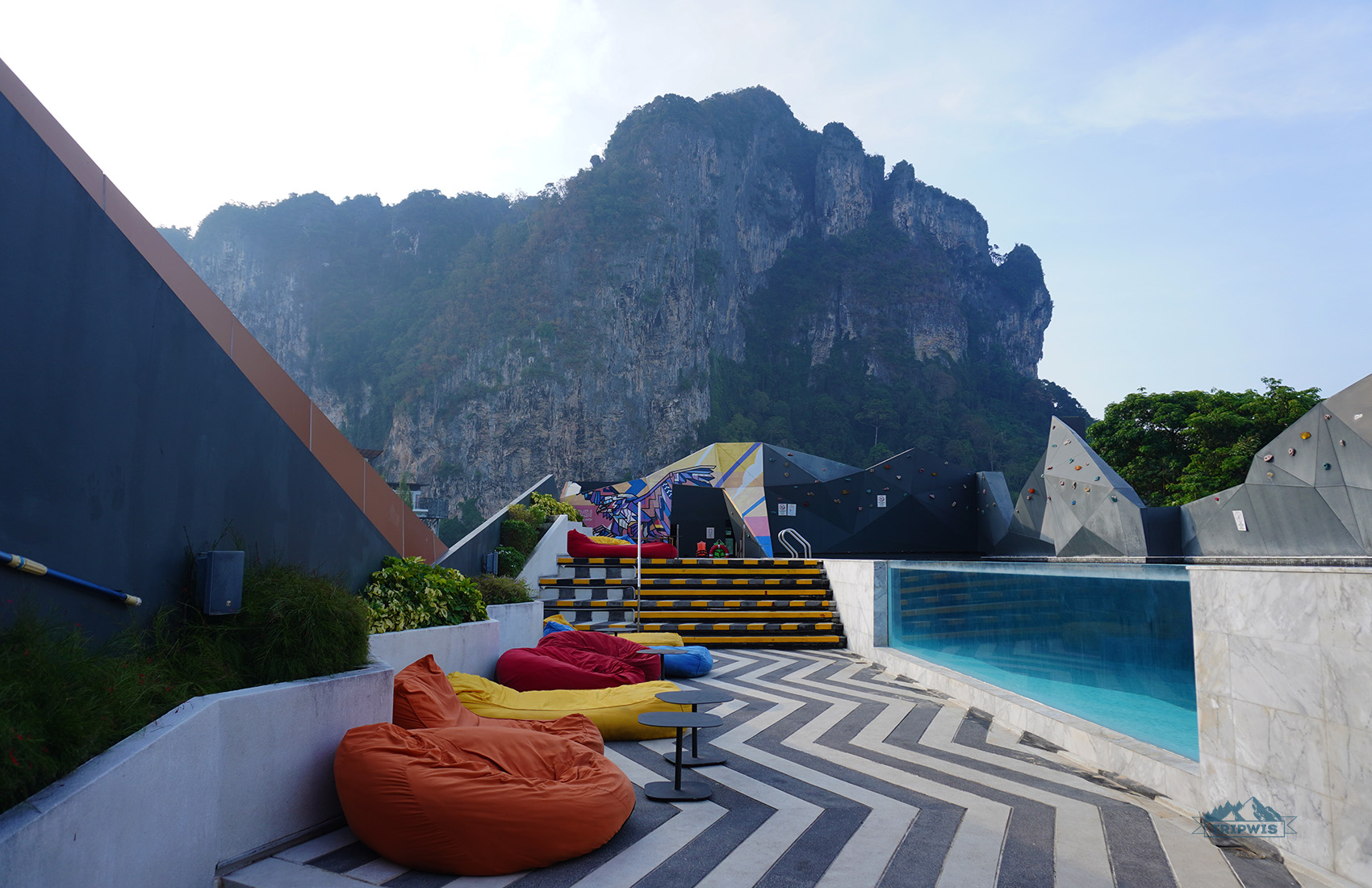
That said, for most travelers, Ao Nang is mostly the base for further explorations rather than the final destination. People stay here to take day trips, especially island-hopping tours. And it’s a great setup! Plenty of accommodation and infrastructure on land (we stayed at 3* COSI Ao Nang Beach, and their rooftop pool with a karst mountain looming in the background was my favorite place to chill), a myriad of tour choices that start at Ao Nang, and an unbeatable proximity to some of Thailand’s best swimming destinations is what you have to look forward to.
However, if the perfect beach experience is paramount for you, then look into other options in the Krabi province:
Railay Beach
 |
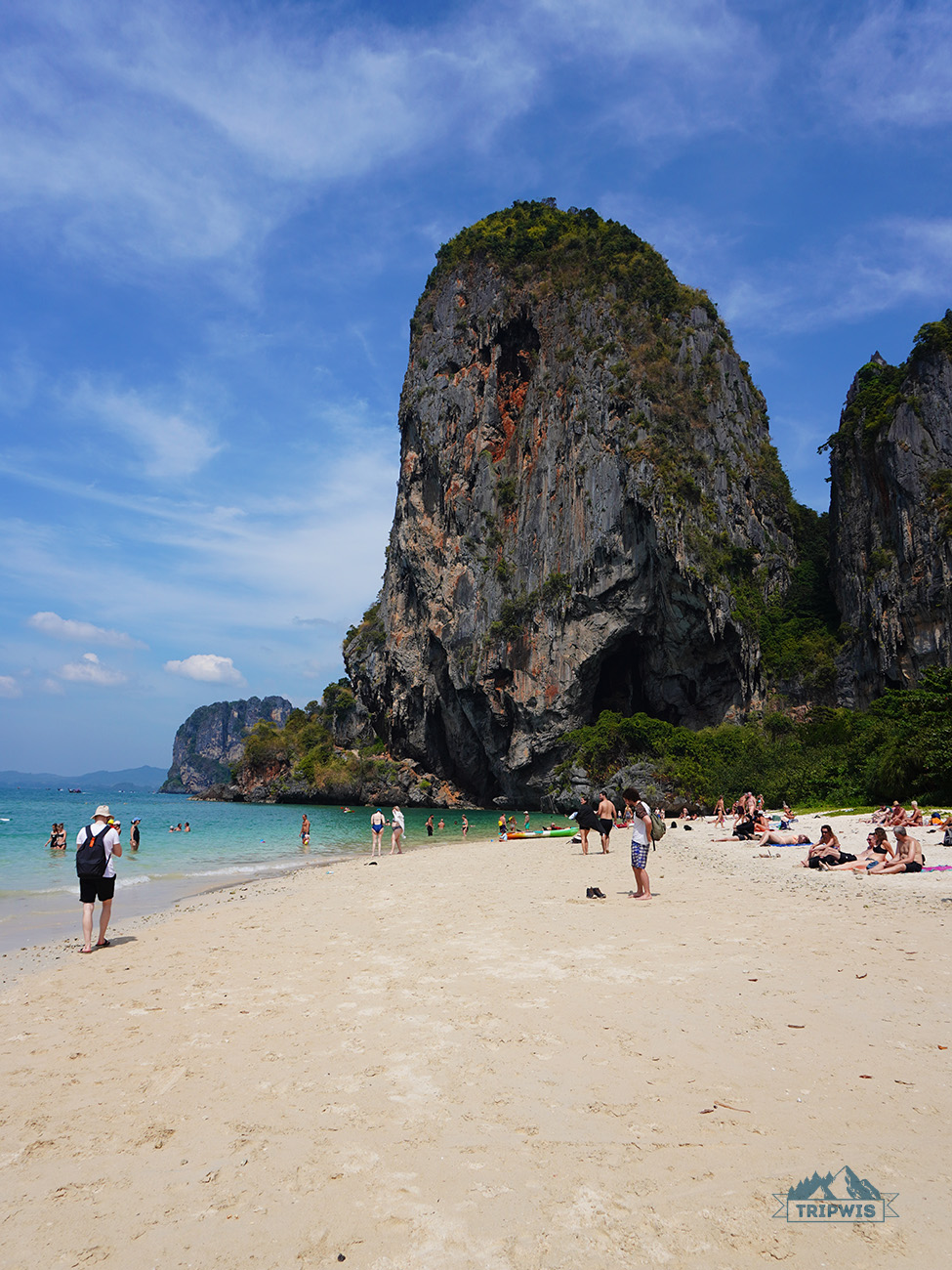 |
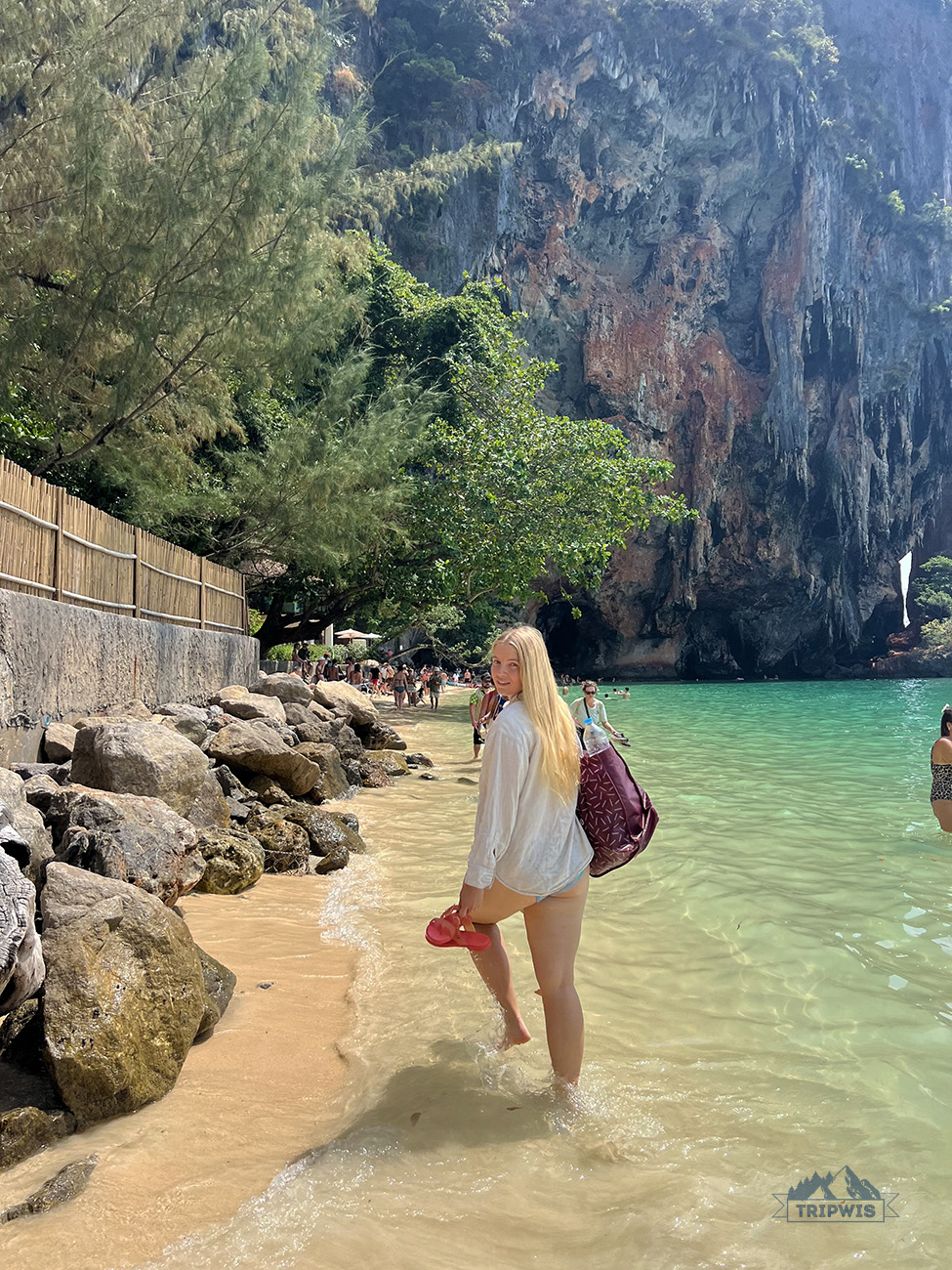
Railay Beach is one of the most scenic resorts in Krabi. Actually, there are several beaches surrounded by towering cliffs — West Railay Beach, East Railay Beach, and Phra Nang Cave Beach — with walking paths connecting them. The most beautiful is by far Phra Nang Beach.
How to get there: You can only get to Railay by boat from the aforementioned Ao Nang Beach as it is completely cut off from the mainland by limestone cliffs. You don’t have to be adamant about a boat ride — in Krabi, this process runs like clockwork. Our boat filled up in less than three minutes, and the ride lasted about 10 minutes total. Boat to Railay costs 200 baht / $6,5 round trip per person, operating from 8 a.m. to 6 p.m.
After a pretty scenic ride, the boats arrive at West Railay Beach. Part of West Railay is packed with long-tail boats, while the other section is designated for swimming and relaxing. Railay Walking Street is set close to where the boats dock, and there are quite a few restaurants on it (due to location, the prices are understandably high). West Railay is usually very crowded — apart from grabbing a bite, do not linger here! Main attractions and activities are set further away.
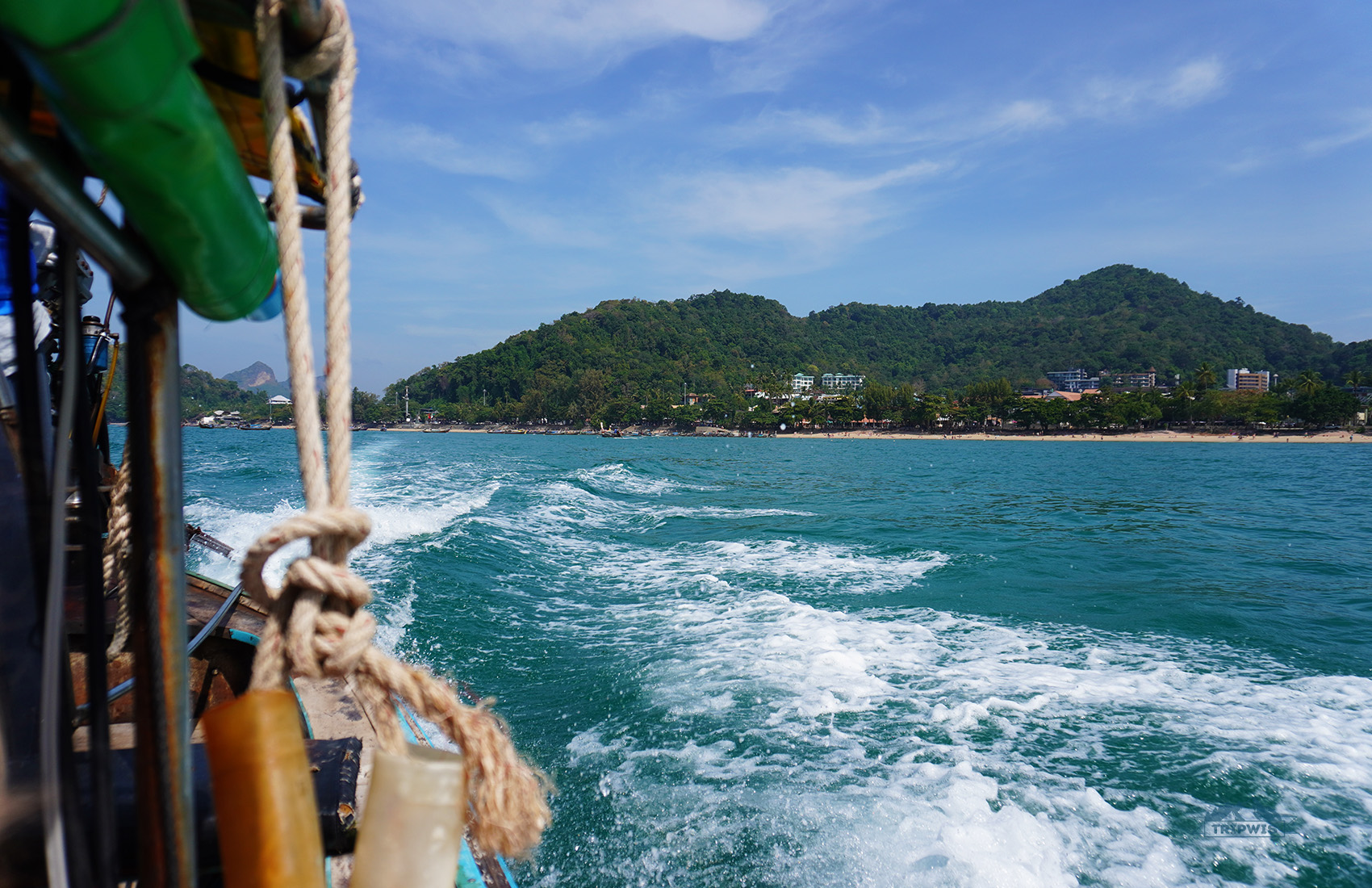
It’s a swift 20-minute walk through East Railay Beach to reach the real concentration of beauty — Phra Nang Beach. What can you do here?
- Duck inside the famous Princess Cave (also known as Phra Nang Cave) with stalactite formations hanging over the water and a small shrine filled with wooden phallic-shaped sculptures (the array of symbols is connected with fertility, so chuckle respectfully)
- Swim in the crystal-clear and intensely blue sea and relax on the powdery white sand — it’s easily the best beach experience in the area, though there are no sunbeds for rent
- Rent a kayak and snorkel equipment (there are quite a few rentals here) and paddle out to the nearby karst rock sticking out of the sea
- Indulge yourself with varied rock climbing routes — it doesn’t matter if you’re a beginner or a pro, Railay is a coveted destination for climbing enthusiasts. So much so that there are even organized rock climbing tours in Railay. It includes a four-hour climbing lesson, featuring routes that are both interesting and challenging
- Test your physical fitness even further by embarking on a short but difficult hike to the Railay Lagoon. The trail is not for the faint-hearted: It is not long, but the steep climbs on the slippery rocks (with rope aids) will definitely highlight your endurance pitfalls. The pay-off is beautiful: An entrancing lagoon (in high tide; low tide means getting a murky puddle in its place) and amazing views of the surrounding mountains
Side note: As we passed by the trail, I saw tourists braving the sketchy route in flip-flops. It looked dangerous, so I decided against joining them, since we didn’t have proper footwear ourselves.
In short, Railay is a place where you can happily spend an entire day, even though it does get crowded as soon as the first boats come in. To get a more authentic Railay experience, without the hordes of other leisure-seekers in the way, stay at one of the local hotels. There aren’t many of them, and the most luxurious (coincidentally, also best-reviewed) option is 5* Rayavadee Resort.
Tubkaek and Klong Muang Beaches
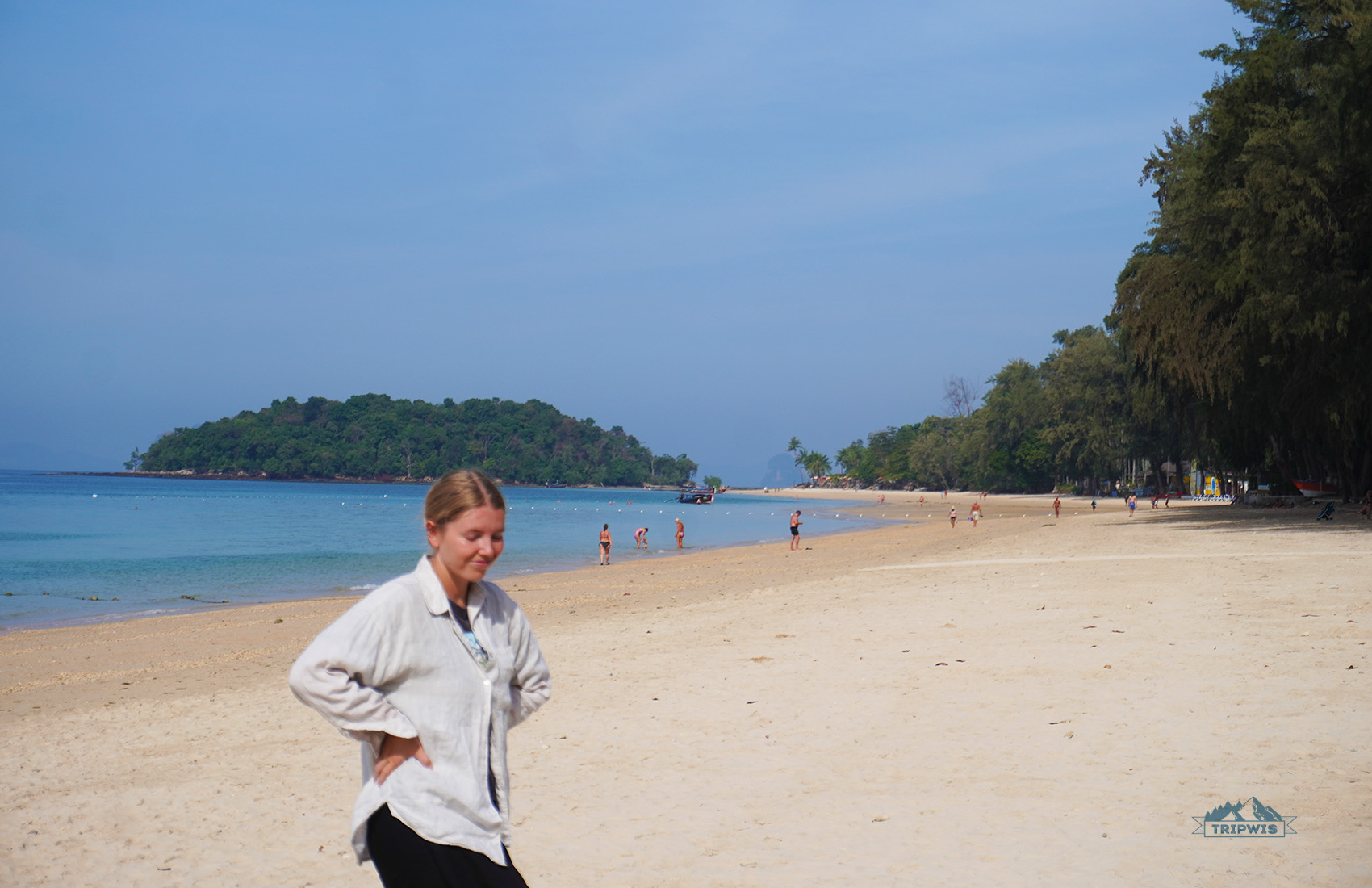
Tubkaek and Klong Muang are two other beaches located on the mainland part of Krabi, just northwest of Ao Nang. A 20-minute drive will get you to Klong Muang first; add another 10 minutes and you’re in Tubkaek. The more secluded location means that these two Krabi beaches could not be more different from Ao Nang — infrastructure- and general vibe-wise.
Tubkaek Beach is lined with upscale resorts, but like all beaches in Thailand, it’s still public and accessible to everyone. From here, one of the most beautiful — but also challenging — hikes in the region begins: Dragon’s Crest (also known as Ngon Nak Nature Trail; I’ll talk more about it later). You can also admire Hong Islands from the beach — yet another Krabi destination worthy of your attention.
Klong Muang Beach, on the other hand, is clean, spacious, and even more low-key, with much simpler hotels. It’s quieter and has far fewer cafes, restaurants, and overall infrastructure — perfect for holidaymakers who find Ao Nang too hectic. Boats to the islands also depart from here, though they’re slightly more expensive. Overall, I found that swimming at Klong Muang is more enjoyable than in Ao Nang. But again, watch for the high/low tide.
Now let’s move on to Krabi’s other attractions — stunning islands, countless temples, and some truly epic hikes!
Take a peek at Krabi Town
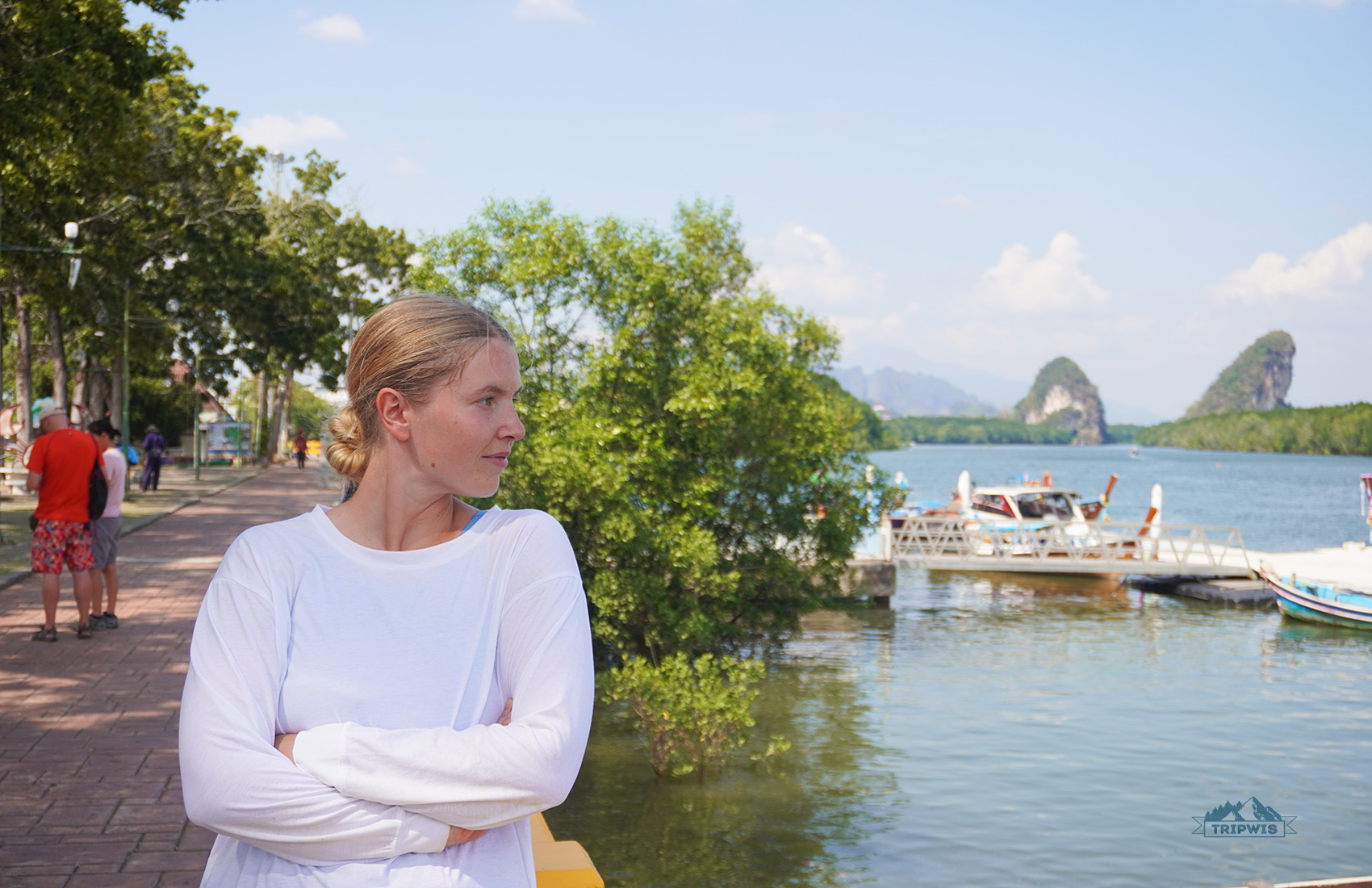
📍 15 km from Ao Nang
Krabi Town is an optional stop on tourist’s itinerary. It’s really only worth it if you’re mildly curious to see the capital of the region. By local standards, it’s a fairly large town, but overall it’s pretty unremarkable.
We focused on two of the town’s most popular attractions:
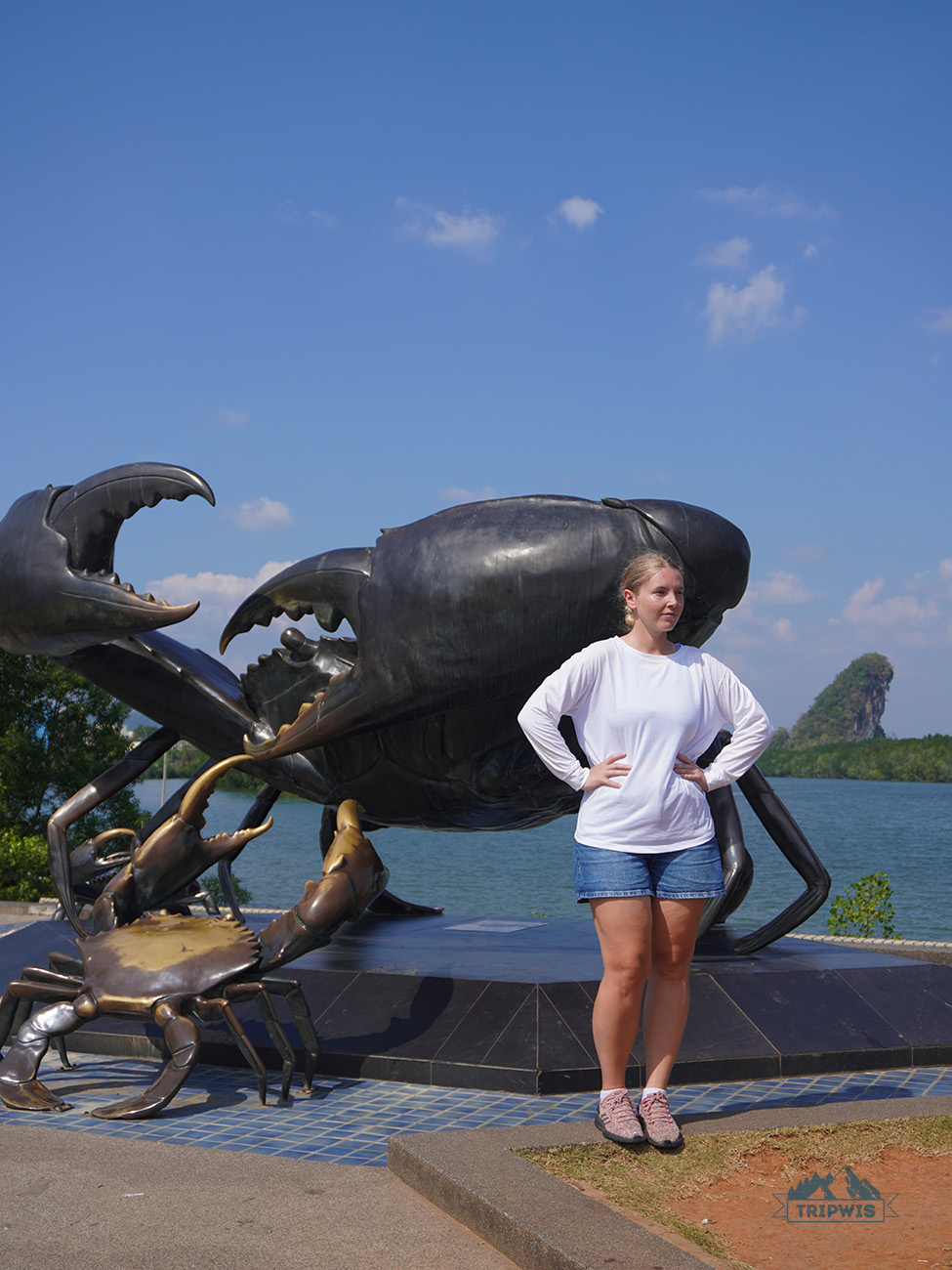
- A walk along the waterfront started off with the Mud Crabs Sculpture — an unofficial symbol of the province and the destination that is amply photographed by tourists. The one giant mama-crab is surrounded by three smaller younglings, all cast in bronze, glistening in the sun. The small info stand near the sculpture indicates its relation to an Aesop fable — remember the one where mama-crab told her son to walk straight and he asked her to show him how and she couldn’t?
Side note: Before making a quick detour for an iced coffee at the hip and stylish Much & Mellow Café nearby, we had quite a major revelation. It turns out, the name “Krabi” has nothing to do with crabs! The local friend told us the legend — two swords (Krabi means sword in Thai) were found here as the province was just in the process of establishment, and that’s how the area got its name and its emblem.
- As we followed the riverbank even further north, we were greeted with the town’s more nature-centric landmark — Krabi Urban Forest Walkway (also known as Mangrove Walkway). This is a short raised walkway above Krabi’s famous mangrove forests. Come at low tide to catch the most of the root visibility. And keep your eyes peeled for fauna sightings (birds, insects, snakes, lizards, and even monkeys). You can access the place at any time — there’s no fence or gate around the site. We went early in the morning, hoping to catch the sunrise on the Watch Tower. It’s roughly the halfway point of the mangrove walkway, and from there you can get a 360-degree view of the surrounding mangrove forest and the twin limestone cliffs.
Add to that the Krabi Night Market (next point of my itinerary), and that’s all the town has in store for you.
Important: If you’re riding a motorbike without a license, be careful when navigating Krabi Town — there are police checkpoints where they actively check driving licenses.
Eat your way through Krabi’s night markets
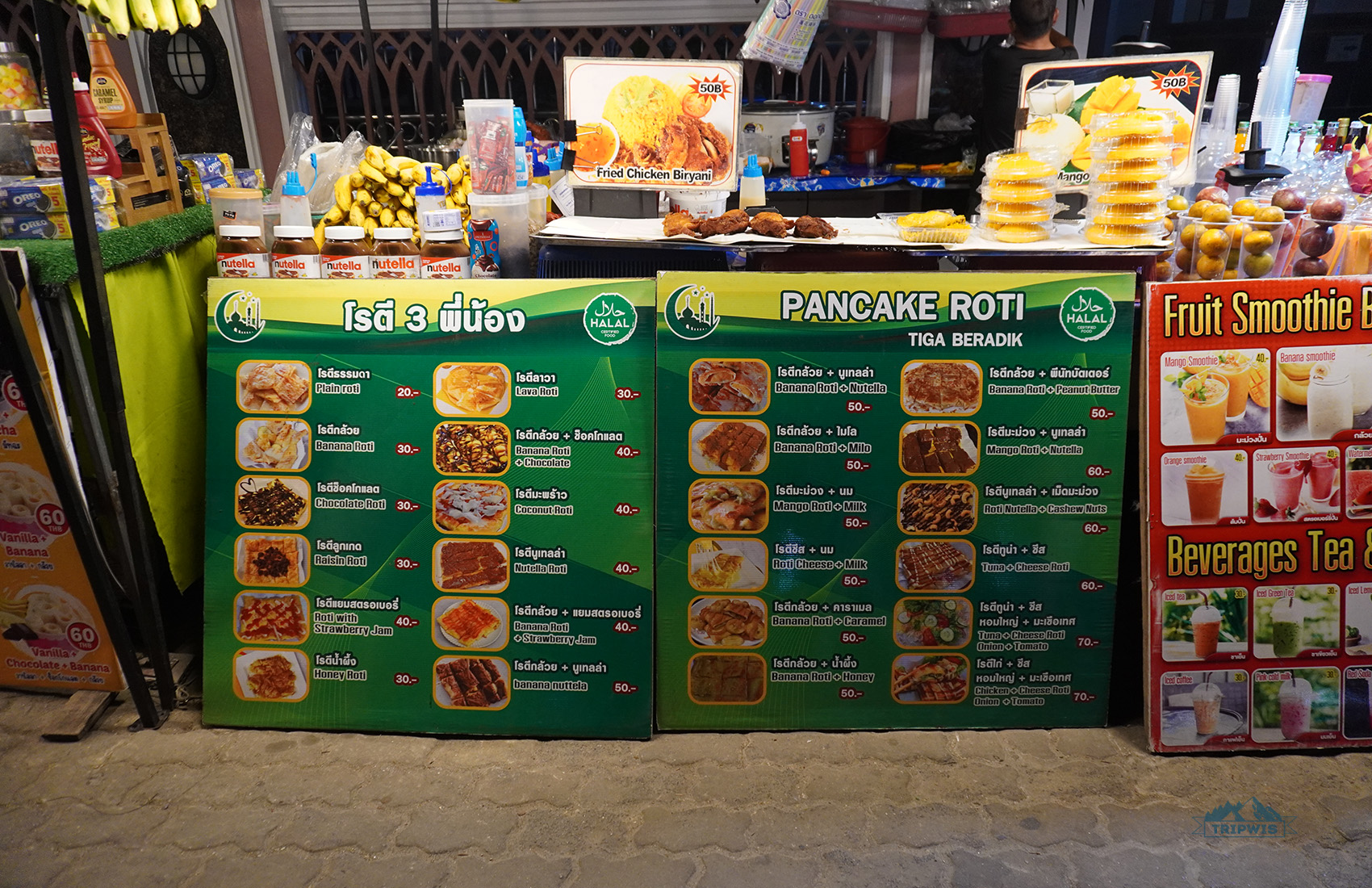
Of course, like everywhere else in Thailand, Krabi province has night markets — the perfect place to soak up local vibes, buy handmade souvenirs, and eat really well on a budget. I’ll talk about two of them:
- Krabi Night Market
Set south of the Mud Crabs Sculpture, in the downtown area of Krabi not too far away from the riverside promenade, Krabi Night Market is the place to be! This market is fairly small, with a limited selection, but it has a cozy, authentic atmosphere. There are a few souvenir stalls, pleasant music, and a colorful setting.
The main focus of the night market in Krabi is, without a doubt, the food — stuff your face with Thai delicacies (grilled meat and seafood skewers, Pad Thai, some Roti for dessert) before perusing the stalls in search for a knick-knack to remember the trip by.
Not everyone speaks English here, and sometimes it’s hard to understand what vendors are saying, but that’s a minor detail.
Like many night markets in Thailand, Krabi Night Market operates from Friday to Sunday, roughly from 5 p.m. until 10–11 p.m.
- Ao Nang Landmark Night Market
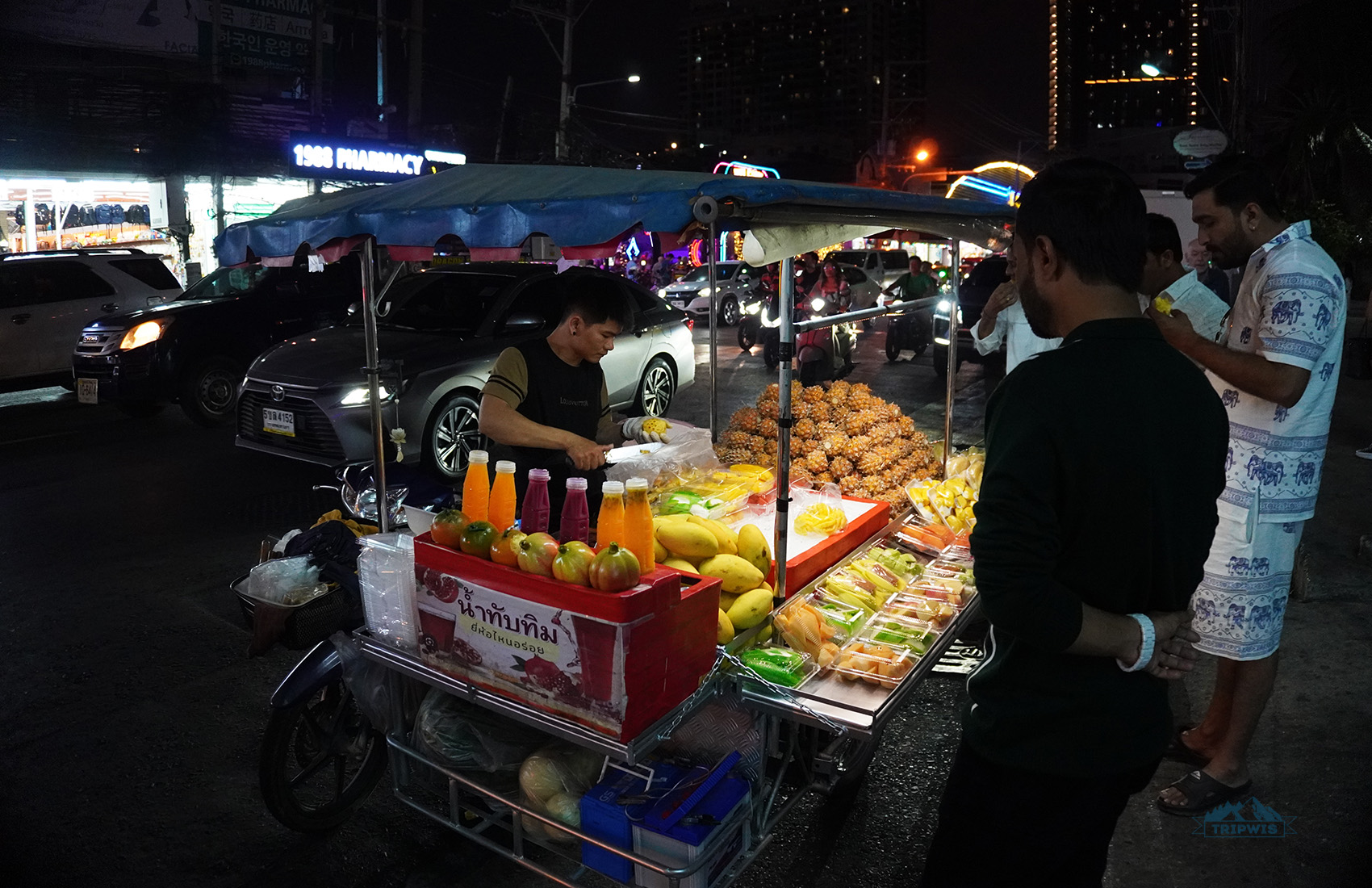
Since Krabi Night Market is a three-day a week affair, you can select Ao Nang Landmark Night Market and lose yourself in the buzzing atmosphere of a Thai market every night of the week.
Personally, I liked the sprawling and neon-lit Ao Nang’s night market much more — the variety of food and souvenirs is much wider here, and the vibe is way more tourist-oriented (over-the-top and in-your-face, but sometimes that’s exactly what you need).
Located within a 20-minute walk from Ao Nang Beach, this night market was one of my favorite places to eat in Ao Nang — I loved the food (all the main Thai specialties, plus fresh fruit juices, Thai iced tea, and cocktails) and many tables to sit at and savor your dinner. The food is prepared quickly and well, and the prices are very reasonable. Souvenir prices at the trinket stands at the Ao Nang market can be a bit higher than elsewhere, so some haggling might be needed.
Ao Nang Landmark Night Market is open every night from 4 p.m. to 11 p.m. If you’re more used to early-bird dinners, wait an hour or two after the market is open — things don’t really kick off until around 6–7 p.m.
Watch the sunrise at Phu Khao Phra Maha Bodhisattva Temple
📍 3 km from Ao Nang
Also known as Mountain Buddha Temple, this small peaceful temple on a mountainside is located in the outskirts of Ao Nang on the road to Krabi Town. It’s often overlooked by tourists — I learned about it from a friend, not from some Krabi travel guide. However, it’s a way more doable ascent rather than the oft-mentioned Tiger Cave Temple, and the pay-off is no less engaging.
The temple features a beautiful staircase with 200 steps or so leading up to a large golden Buddha statue. The best time to visit is sunrise or sunset — we came at sunrise and had the place completely to ourselves. At the top, you’re rewarded with a stunning panoramic view of the surrounding area.
Set off on the iconic tour of Phi Phi Islands
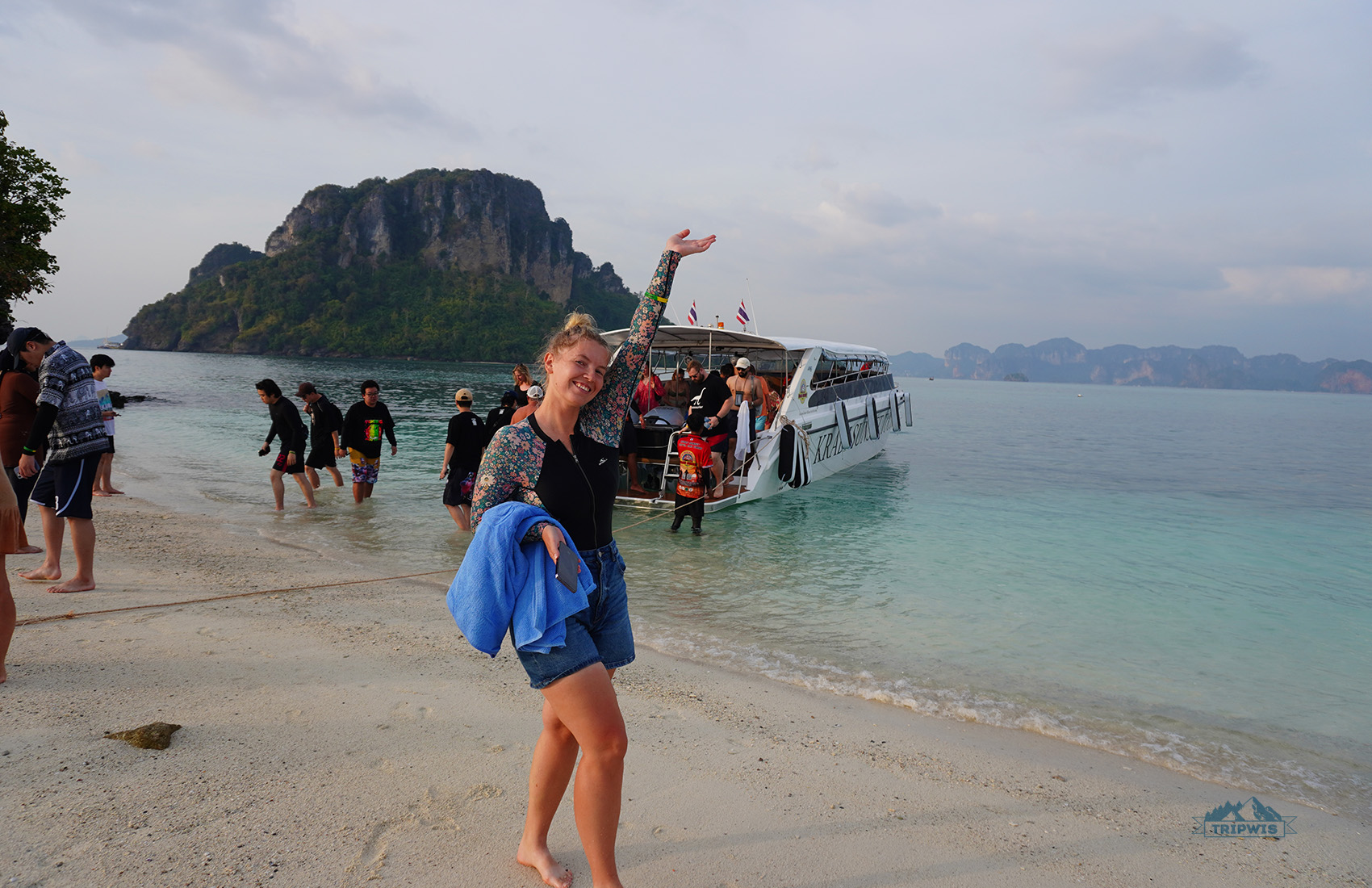
📍 A boat day trip from Ao Nang
Phi Phi Islands are a group of islands near Krabi. The archipelago includes six islands, and they’re so famous for the postcard-perfect beauty that visiting them has become one of the most popular things to do in Krabi in Thailand.
Most people go to Phi Phi Islands to see the legendary bay from The Beach (2000) movie starring Leonardo DiCaprio — but that wasn’t why we decided to book this tour of the islands. We went for the incredible beach experience, photo ops, and some really amazing snorkeling.
What did we see and do while on a day trip to Phi Phi Islands? The two largest islands have plenty of attractions that range from crowd-favorites to lesser-known remote destinations:
First stop: Bamboo Island (Ko Mai Phai)
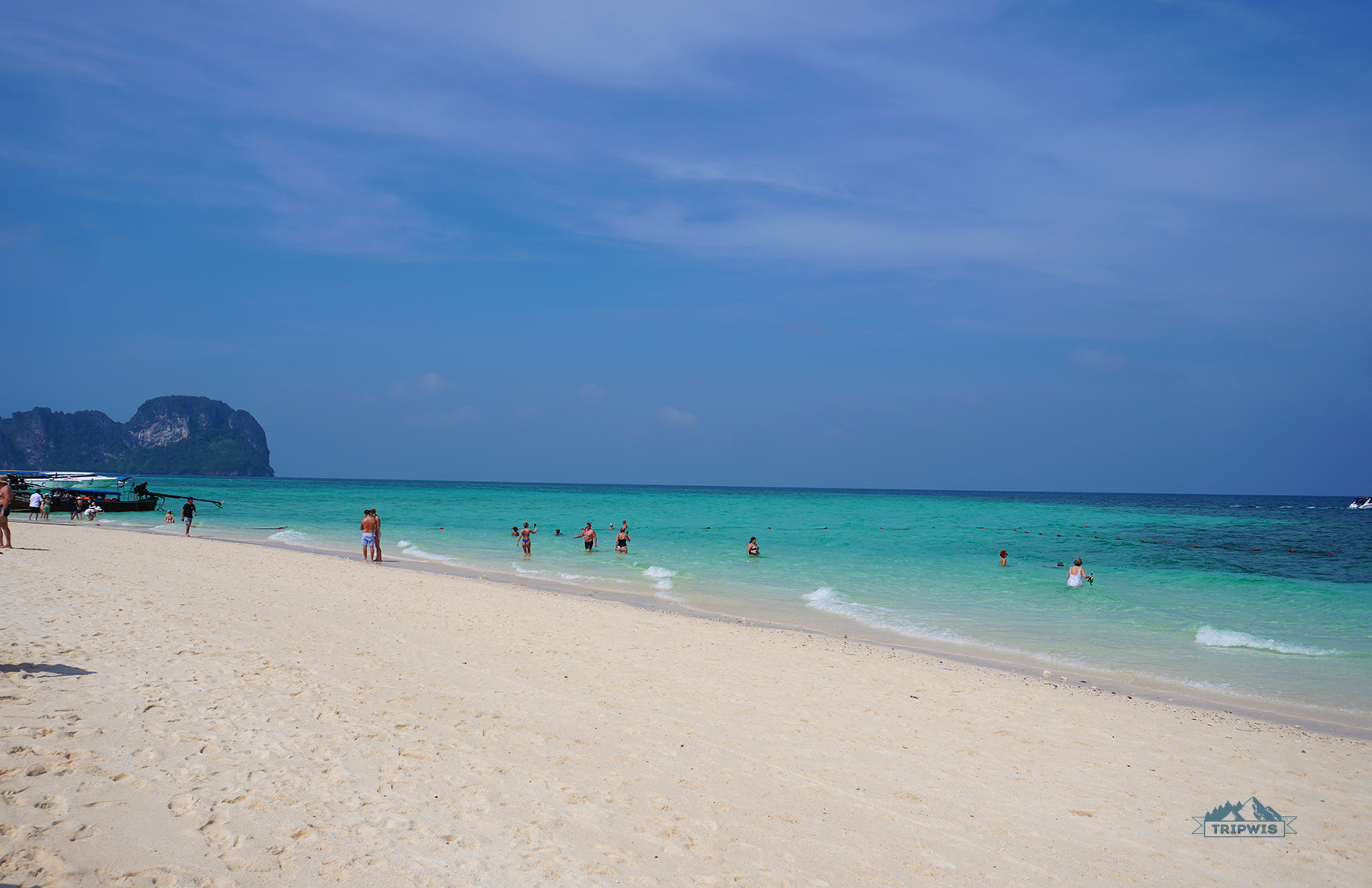
It’s the smaller island of the Phi Phi group with a Maldives-like beach (and we’ve been to the Maldives!). The island’s English name is a funny translating mistake as bamboo doesn’t really grow here: A thick casuarina tree forest covers most of the island, with no bamboo shoots in sight. Bamboo or no bamboo, the island is a truly paradise-like spot: Coarse white coral sand, a turquoise lagoon blending into a deeper, darker azure ocean — a postcard-worthy location!
The stop here includes snorkeling — it was pretty average, but I enjoyed the colorful fish and dead corals. We arrived here early to beat the crowds and that way Bamboo Island became the best part of the Phi Phi Islands tour.
Second stop: Phi Phi Don
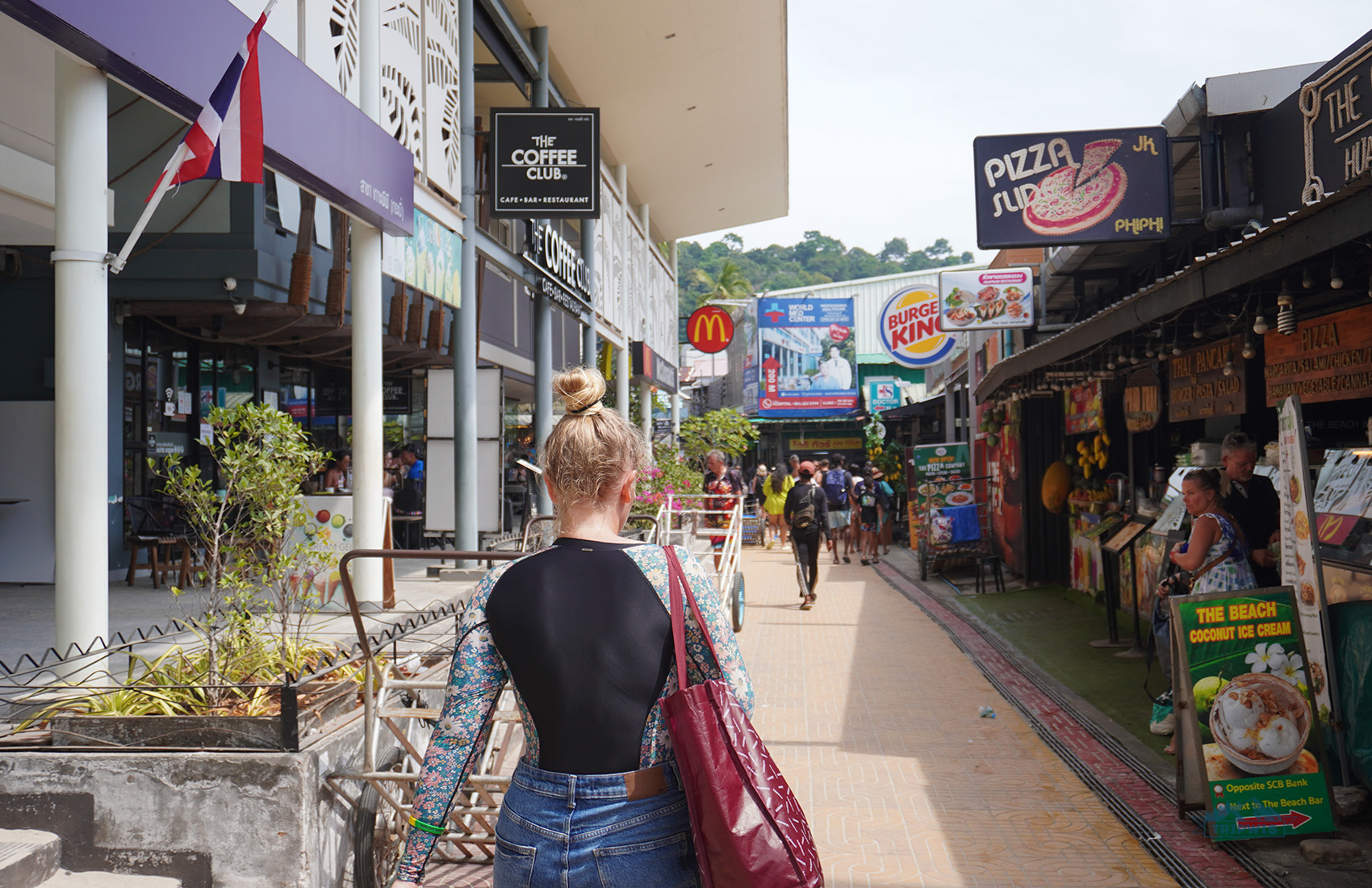
It’s the main, the largest, and the only inhabited island of the archipelago. It is a treasure chest of exciting sites: Take a breather at one of the many beaches of the island, admire the lush jungle and cerulean waters for as far as the eye can see from the viewpoints (there are three of them here, creatively called Viewpoint 1, 2, and 3), snorkel at scenic bays, or party till the early hours at the many establishments of Tonsai Village.
Phi Phi Don doesn’t strive to wear the label of the “untouched paradise” — and here’s how the island looked to me when we stepped off the boat. You’re met with a massive parking area for boats, squeezed tightly together. Come ashore, and several huge canteen-style restaurants feeding tour groups crowd the waterfront. Overall, the island feels very young (and not in the best way) — lots of backpackers and day-trippers create the atmosphere that is synonymous with cheap thrills. Many people recommend staying overnight on Phi Phi Don, but you won’t open your eyes to a serene promised land in the morning, since it’s definitely overcrowded.
Personally, the most positive impression from Phi Phi Don was an excellent oat milk latte from a place called Up Coffee By PKT Diving.
Third stop: Phi Phi Leh
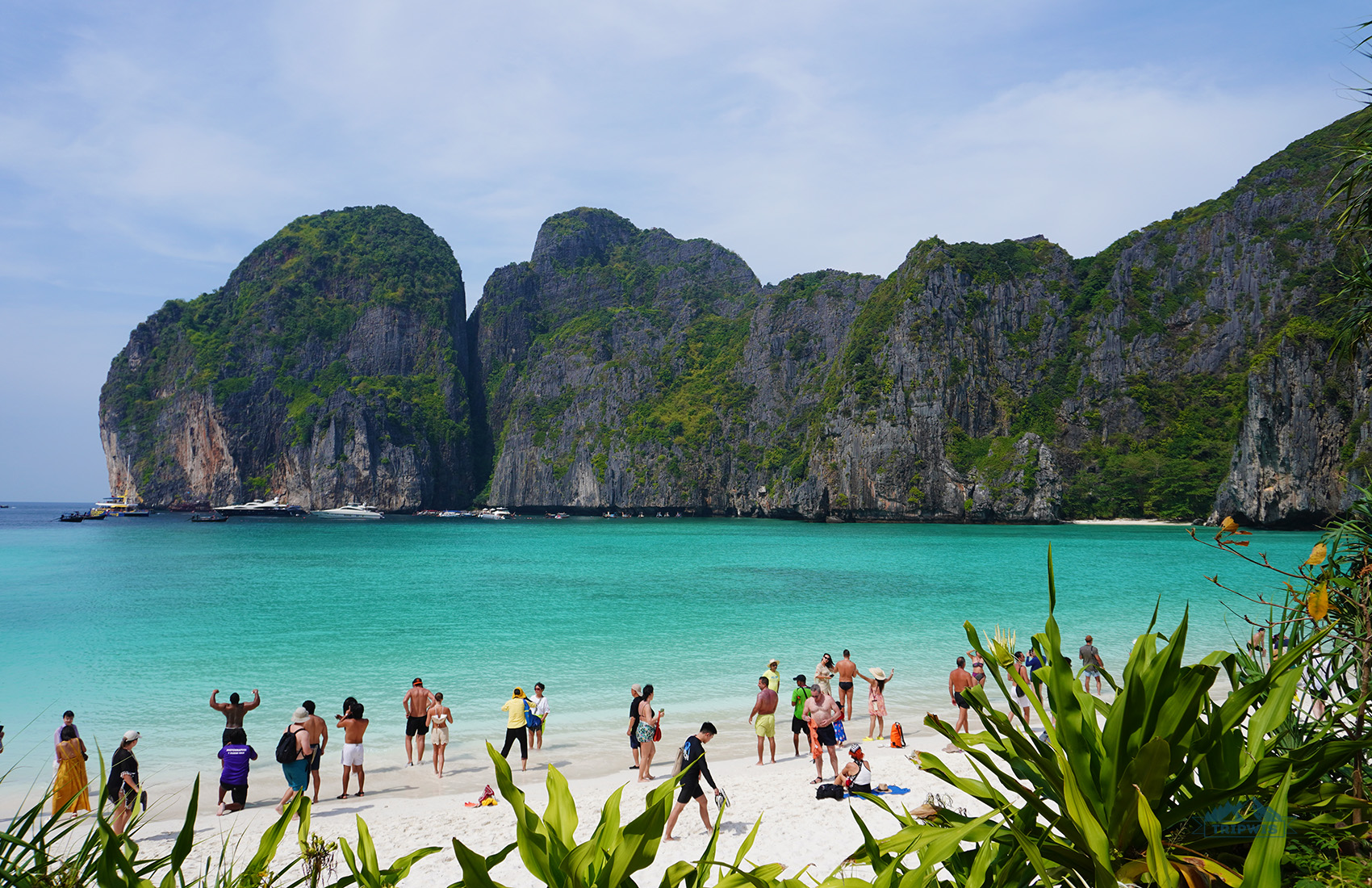
An uninhabited island next to Phi Phi Don, this is where the famous Maya Bay (the peaceful utopian escape that was shot into stardom by Leo’s movie) is located. And you have to pay an extra 400 baht / $13 just to enter!
In reality, the bay is far from serene — it has been suffering from overtourism and all the related problems for a long time, and ample conservation efforts do not seem to be helping much.
Apart from the entry fee (which is usually not included in the tour price), there’s also:
✔️a ban on swimming — you can wade knee-deep into the water, but not further
✔️the boats are prohibited from entering the bay and they dock on the other side of the island; there’s a boardwalk to reach the beach
✔️closures during monsoon season (usually August 1 – September 30) take effect each year
And despite all that, Maya Bay still feels overcrowded. This was the most disappointing part of the tour: There were so, so many people — not a single patch of sand was open. It’s purely a photo spot, yet you’re given a whole hour here. Don’t get me wrong, the place is undeniably beautiful: White, powdery sand that is very soft and clean, plus clear, aquamarine water. The 2018–2022 closure of Maya Bay definitely worked to help nature recuperate a little bit, another such pause might help again!
Apart from the overbearingly popular Maya Bay, Phi Phi Leh has other attractions worth your time: Viking Cave (a charming place where swiftlets nest and the locals collect the same very nests, can only be seen from the boat to protect the fragile ecosystem) and Pi Leh Bay (also known as Pileh Lagoon, this emerald water bay is ensconced by the towering green-covered limestone cliffs, — in my opinion, it’s a more spectacular sight than Maya Bay).
Phi Phi Islands are easily reached from Krabi, so pick a tour that best fits your itinerary:
Visit a few more local islands (Poda, Tup, or Chicken)

📍 25-minute boat ride from Ao Nang
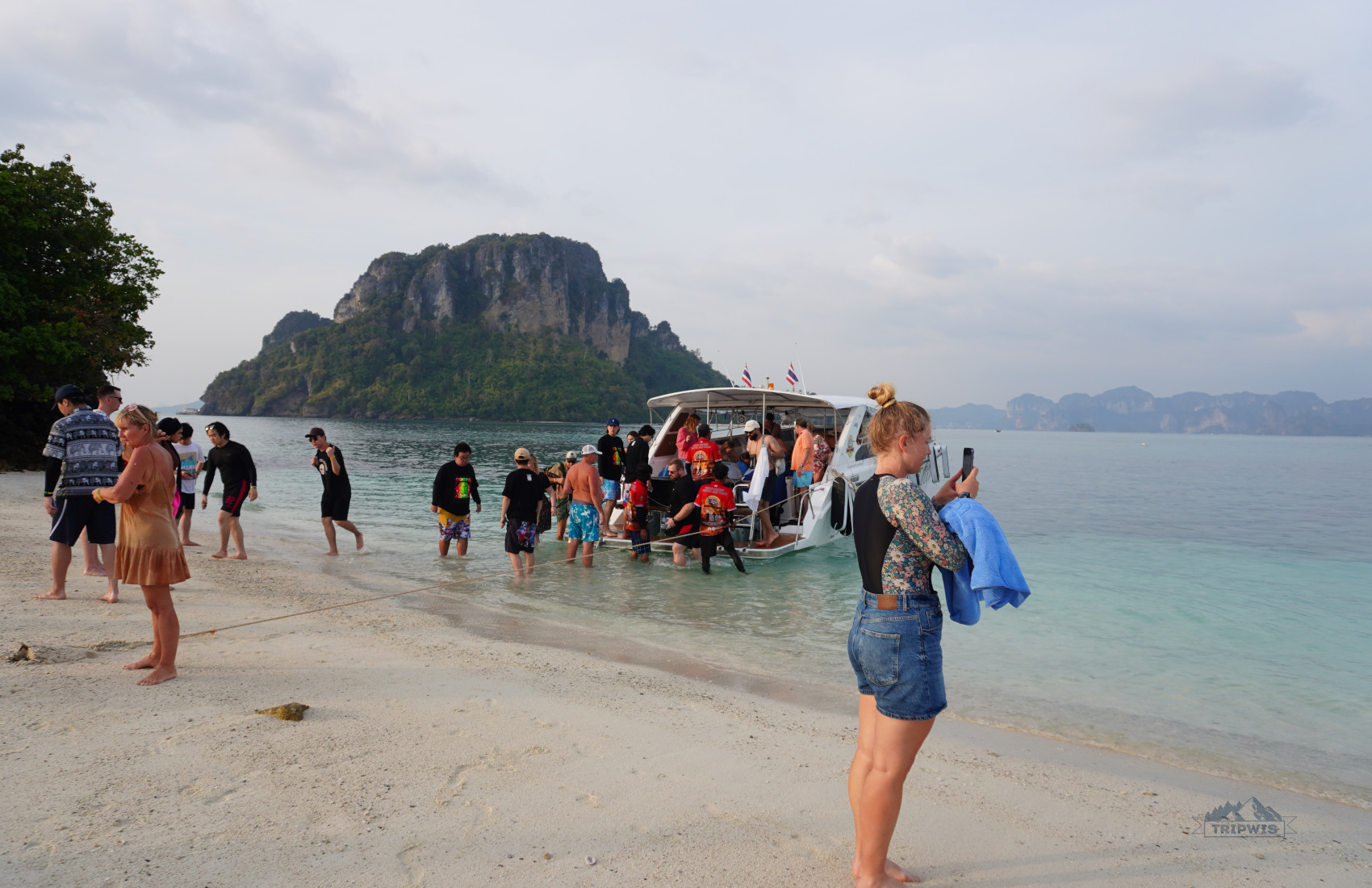
Other must-visit islands near Krabi are Poda Island, Tup Island (also saw some people refer to it as Tub Island) and Chicken Island (Kai Island). All of these islands, along with several smaller ones, are part of a compact archipelago located very close to each other, which is why they’re usually visited as part of a single tour — Four Islands Tour.
What’s included:
- Poda Island is a beautiful island with clear blue water, and thanks to its size, you can still find quieter corners away from the crowds. Swimming can be a bit tricky here because there are a lot of corals in the water. What’s especially unusual is that the island is completely uninhabited — no one lives here permanently.
Side note: Poda is also famous among climbers for deep water soloing. The idea is simple: You climb a rock face directly above the water with no ropes or safety gear, and if you fall, you fall straight into the sea.
- Tup Island is best known for its sandbar called Talay Waek (the Divided Sea). During low tide, you can walk along the sandy strip to the neighboring Chicken Island! We got to witness it during the sunset and it was truly magical. Water around the island is clear enough to easily spot fish, and the sand is soft and white. There are a few vendors selling drinks and food on the beach, but apart from that, there’s essentially no infrastructure.
- Koh Kai, also known as Chicken Island, is famous mainly for its oddly shaped rock formation that, from a certain angle, looks exactly like a chicken’s head. There’s also a nice beach here, with the same white sand as on the other islands mentioned above.
What’s the fourth island you may wonder? You’ve already met it above — it’s Railay Beach, the last stop of any of the tours. Squeezing all four locations in a single boat trip is convenient, but if you want to check just one of the islands, you’d better hop on a long-tail boat at Ao Nang Beach (300 baht / $10 round trip per person + 200 baht / $6,5 of the conservation fee).
Check out the beautiful Hong Island
 |
 |
📍 60-minute boat ride from Ao Nang
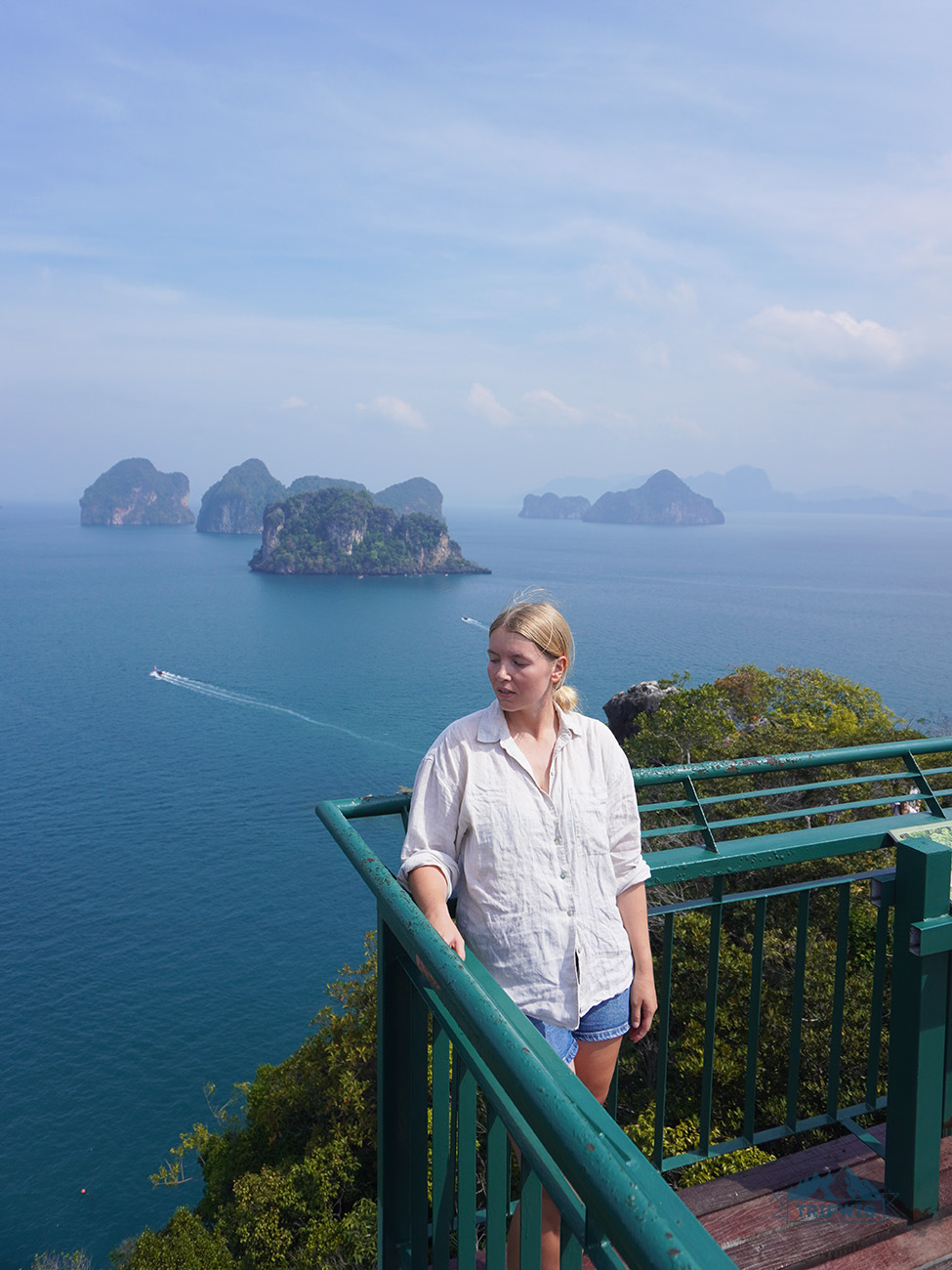
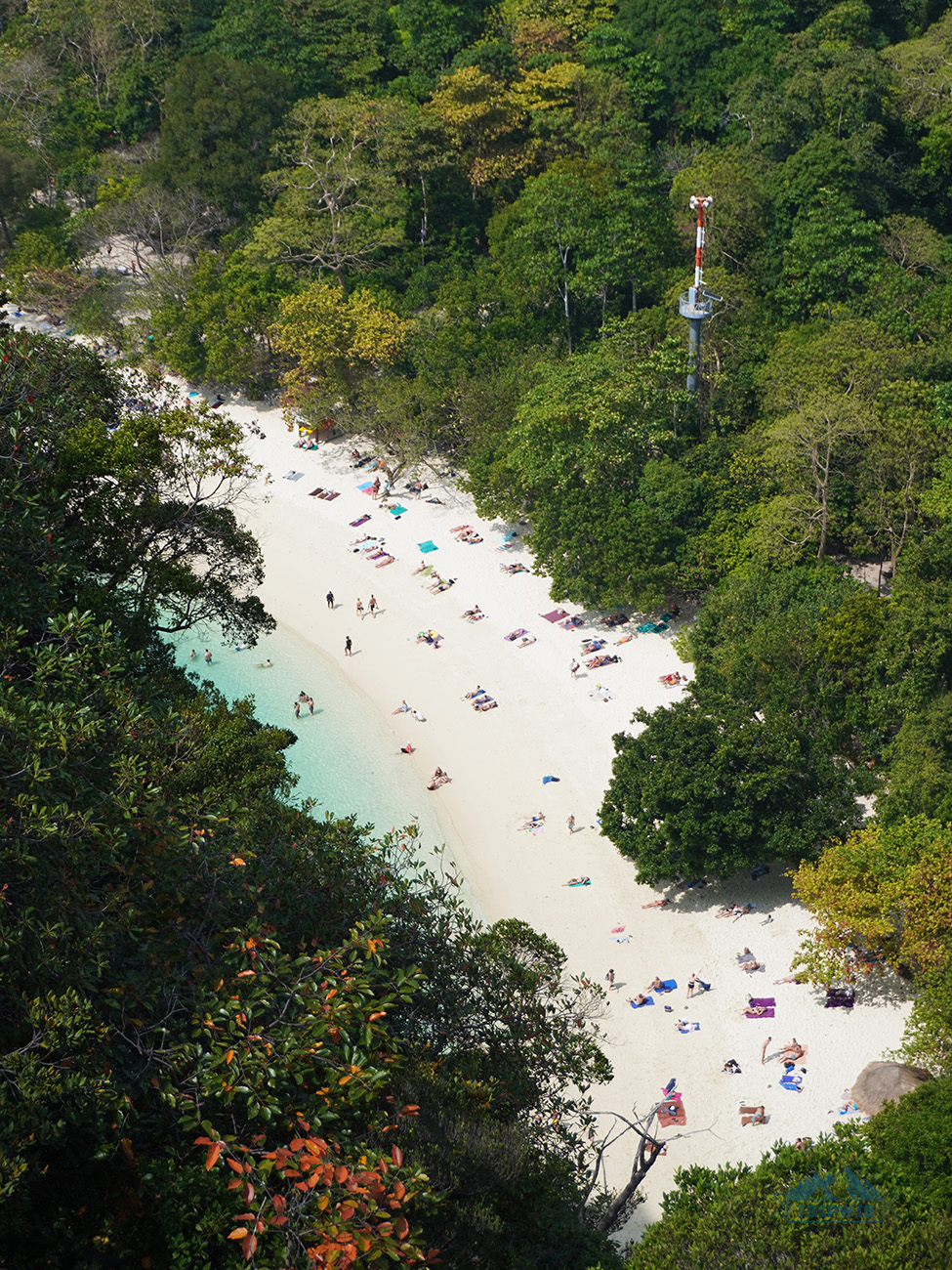
Hong Island is yet another dreamy destination off the coast of Krabi. What we loved about the island is the fact that there’s actually something to do here besides lying on the beach!
Here, you can:
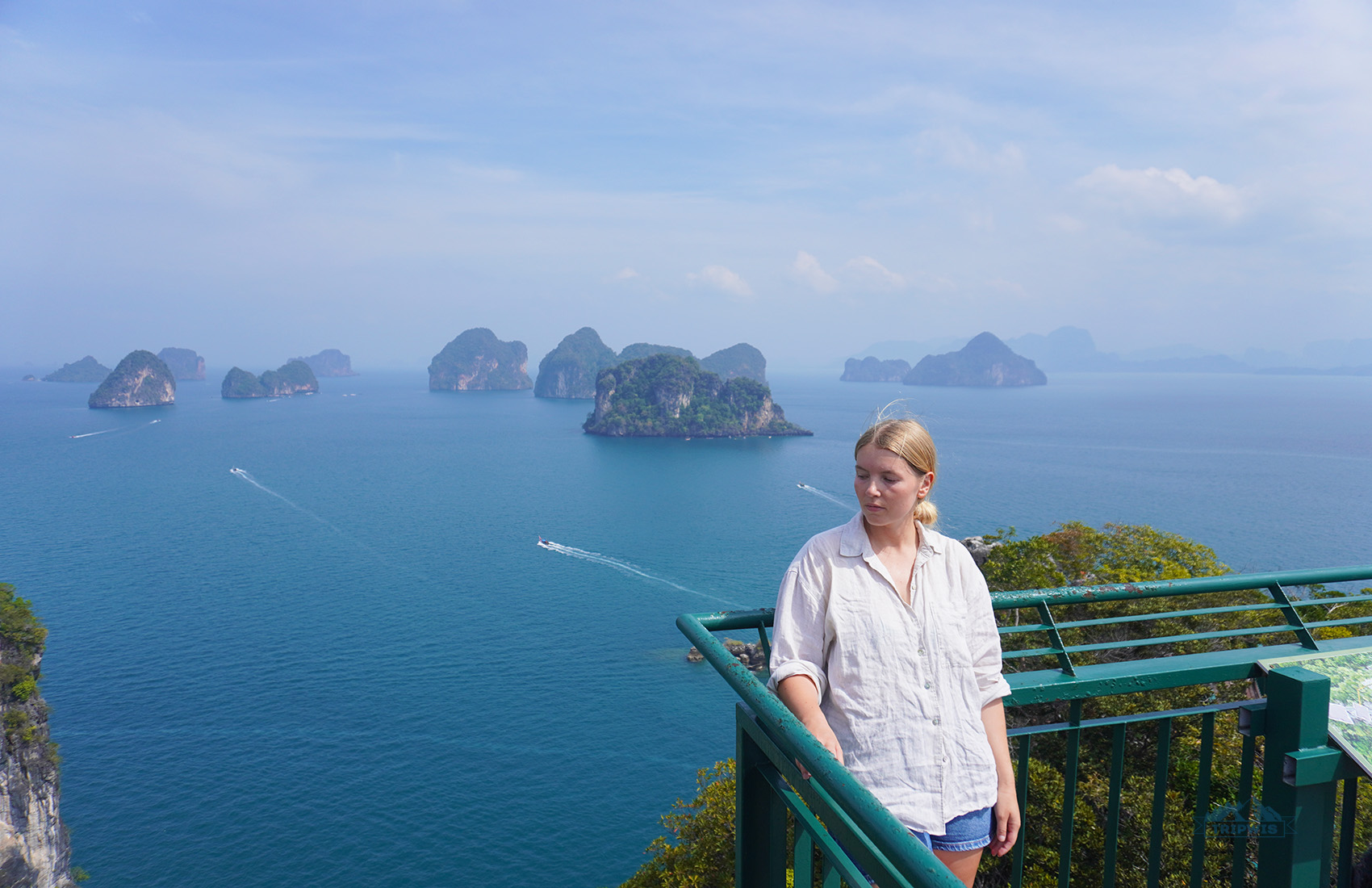
- Climb up to a viewpoint via a staircase with panoramic views of Krabi’s islands or walk a short nature trail through the jungle
- Swim in the waters of the only beach — Hong Beach — or do a bit of sunbathing
- Set off on a snorkeling adventure in the adjacent waters
There’s no real infrastructure here, only a very basic beach cafe selling shakes and smoothies. We’re not really into lying out in direct sun, so 4 hours on the island felt like enough for us, but we were literally stuck on the island!
More specifically, we learned the difference between an organized island tour and buying a boat ticket on your own. Hong Island is fairly far from Ao Nang, so first we had to wait for about an hour until the boat had enough people (six). And second, we were tied to the same boat that brought us there, and even though everyone agreed to head back to Ao Nang at 1 p.m., two people decided to stay until 2:30… and without them, we couldn’t leave. Ugh!
And the savings weren’t even that big: We paid 500 baht for the boat plus a 300 baht fee each ($26), while the tour costs $46. But with the tour, you’ll also have lunch and see a few other spots around the Hong archipelago. And you’ll get back at roughly the same time anyway!
Walk the Monkey Trail
📍 Located right in Ao Nang
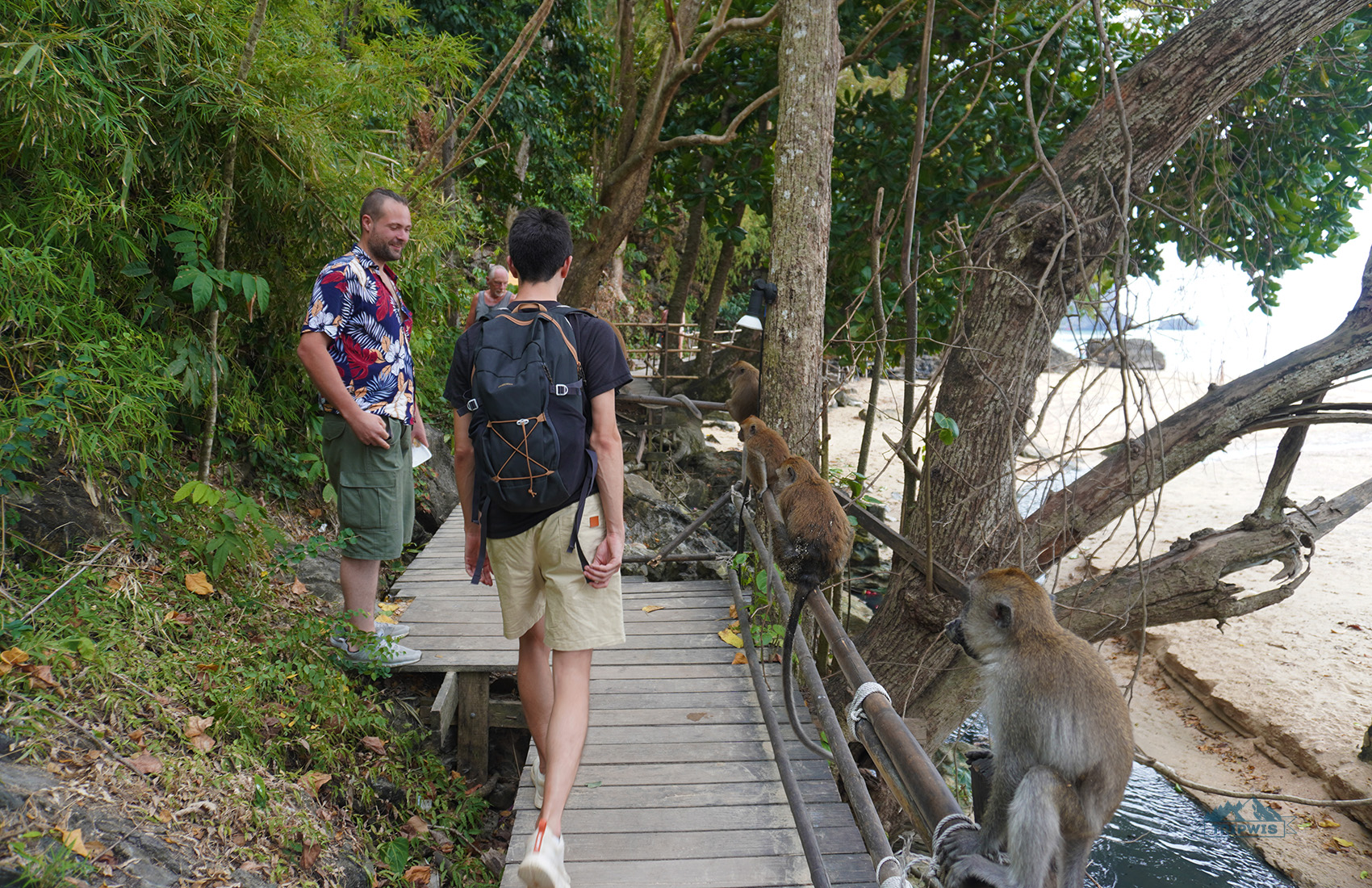
That’s the easiest mini-hike to Pai Plong Beach you can do from this list of things to do in Krabi. This path, also known as the Monkey Trail, is a wooden walkway along the cliff separating two Krabi beaches — Ao Nang and Pai Plong.
The walk starts from Ao Nang Beach (here it is on google maps) and takes about 10 minutes along a shaded wooden boardwalk and stairs (not in great condition), and the whole time you’re surrounded by countless monkeys! The majority of primates on the trail are opportunistic crab-eating macaques, but you can also meet the more shy and timid dusky leaf monkeys. Though very cute, the primates here do not inspire much trust — after being spoiled by some tourists feeding them, the monkeys now feel like they can take what’s yours without repercussions.
Side note: Keep your belongings to yourself, do not have food out, and make sure your bags and backpacks are closed all the way. The monkeys can (and will) try to snatch whatever it is you’re holding or even jump on you. It’s best to keep up a necessary level of alertness while still enjoying the experience (the trail is short, so it’s doable).
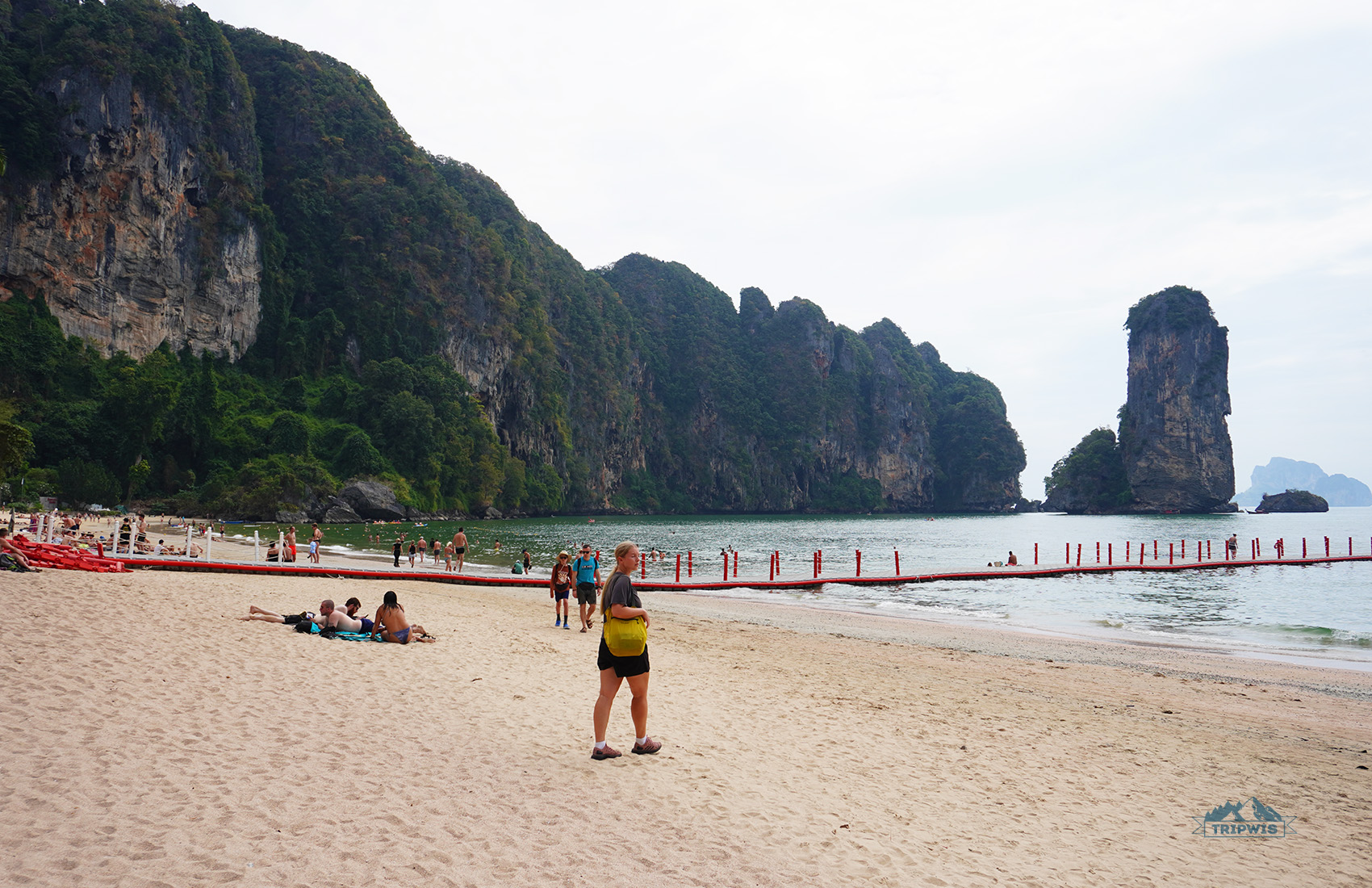
As you emerge to a quaint spot of respite that is Pai Plong Beach, you’re greeted by the sight of 5-star Centara hotel. We reached it during golden hour, and the beach looked quite peaceful and scenic. As you explore the beach, you can also walk out onto the pier that gently sways with the waves.
Important: As of February 2026, the hotel is closed for a major renovation, and the beach is neglected. You can still do the hike, though.
To be honest, the experience didn’t leave the best impression on me. The parking area for bikes and cars near the trailhead is filled with trash, and the route’s upkeep isn’t meeting the demands of such a high-trafficked area in Krabi. Plus, being this close to very unpredictable monkeys is an activity that is not for everybody!
Brave the stairs to Wat Tham Suea (Tiger Cave Temple)
 |
 |
📍 20 km from Ao Nang
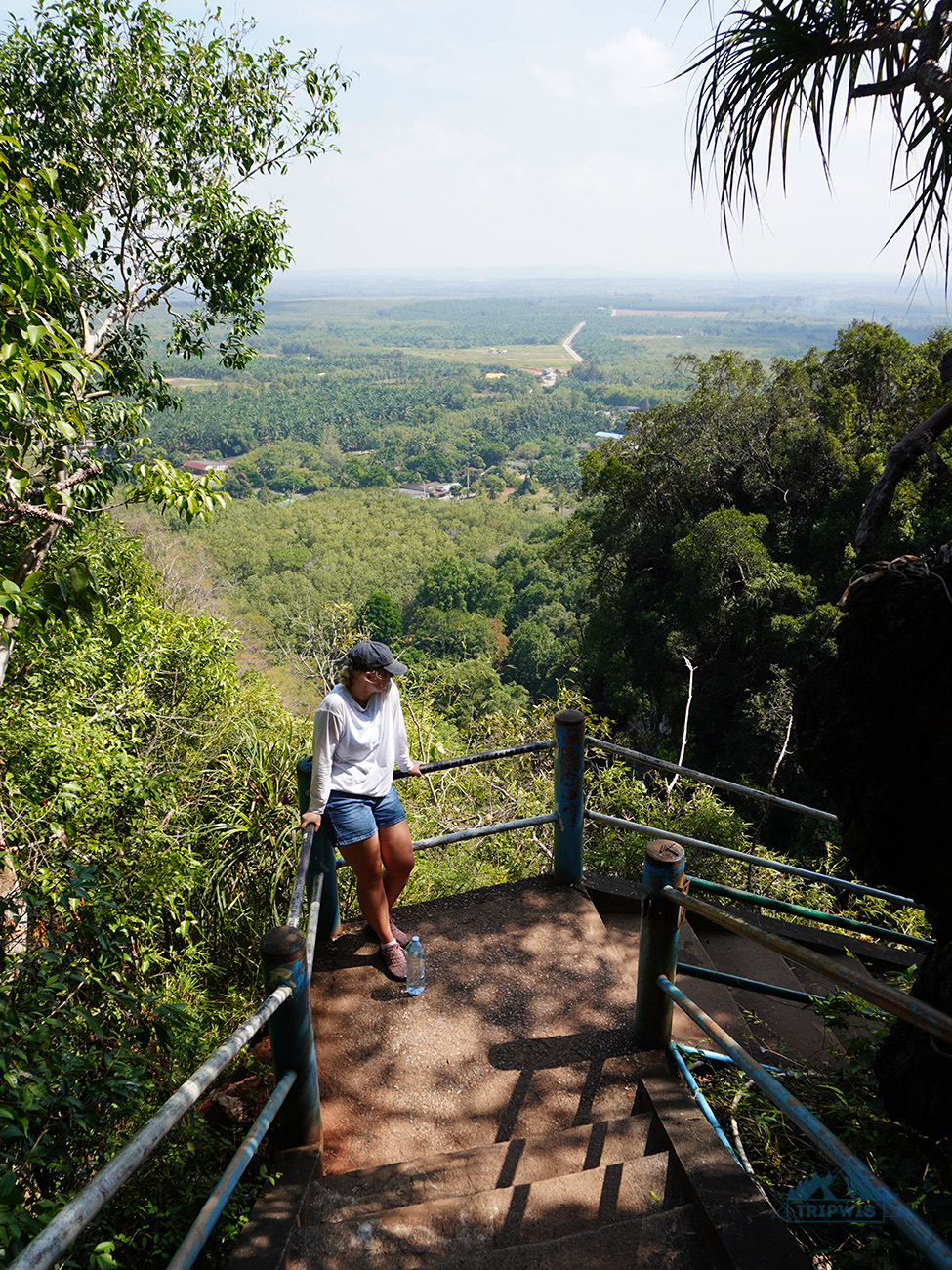
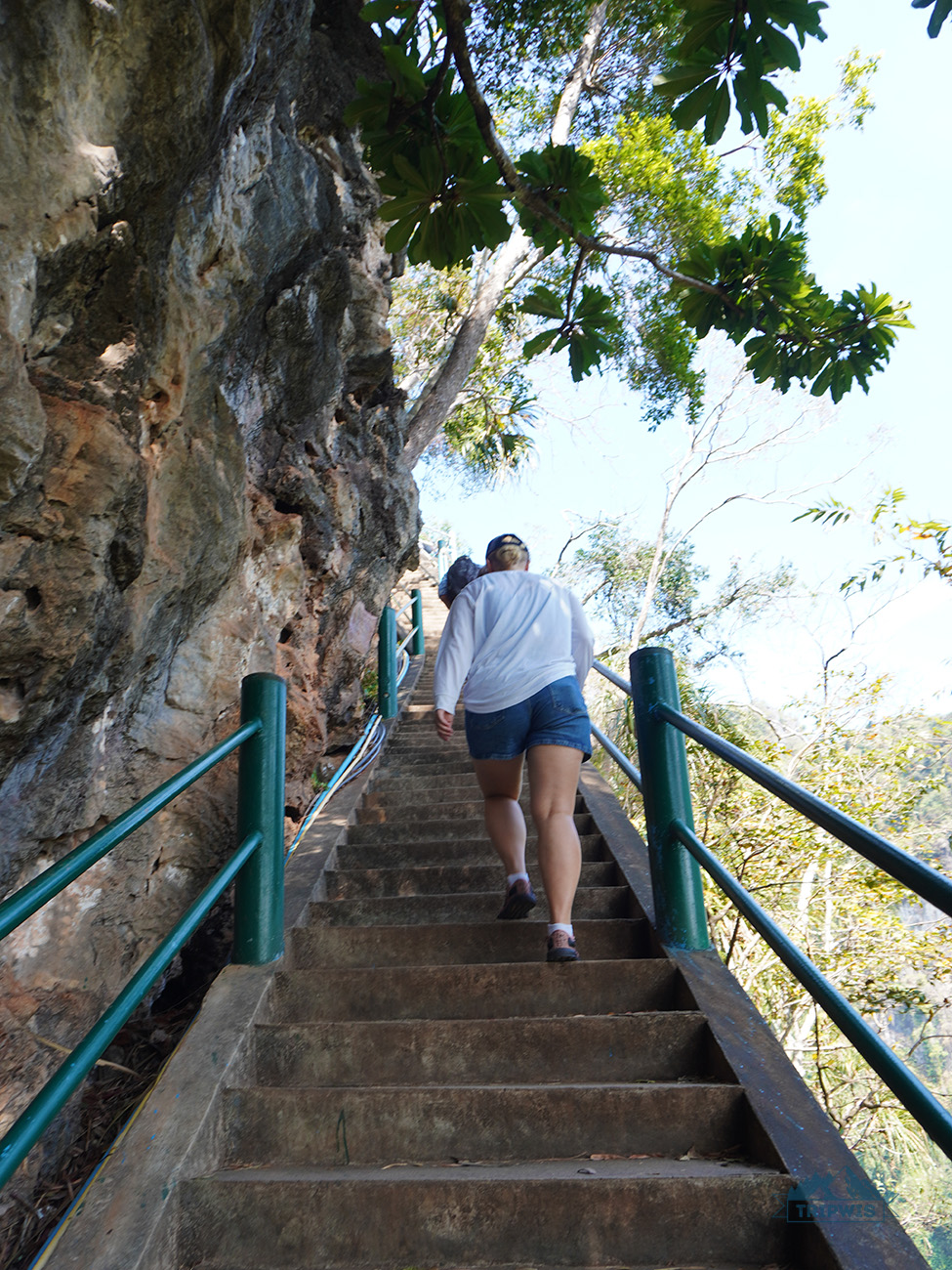
Tiger Cave Temple (or Wat Tham Sua in Thai) is one of the most famous landmarks in Krabi, and I totally recommend visiting it. This is one of the most impressive Buddhist complexes in the area — not because of the temple buildings themselves, but because of the location. The complex is built on a hill, with a summit nestling at 309 meters above sea level.
- You have to know that getting to the top means climbing a staircase of 1,260 steps, which drained every last bit of my energy!
Add to that steps’ almost vertical position, their incredible height (some reach 30 cm!), constant heat and humidity (though thankfully, most of the path is shaded by trees), narrow sections where you’re squeezing past people shoulder to shoulder, and you’ve got yourself a crazy workout.
The beautiful golden Buddha statue and mind-blowing panoramas await you at the top, which makes the strenuous climb worth it. We visited twice (humble brag), and while we wouldn’t go again just for the temple, the view from above is enough of a reward.
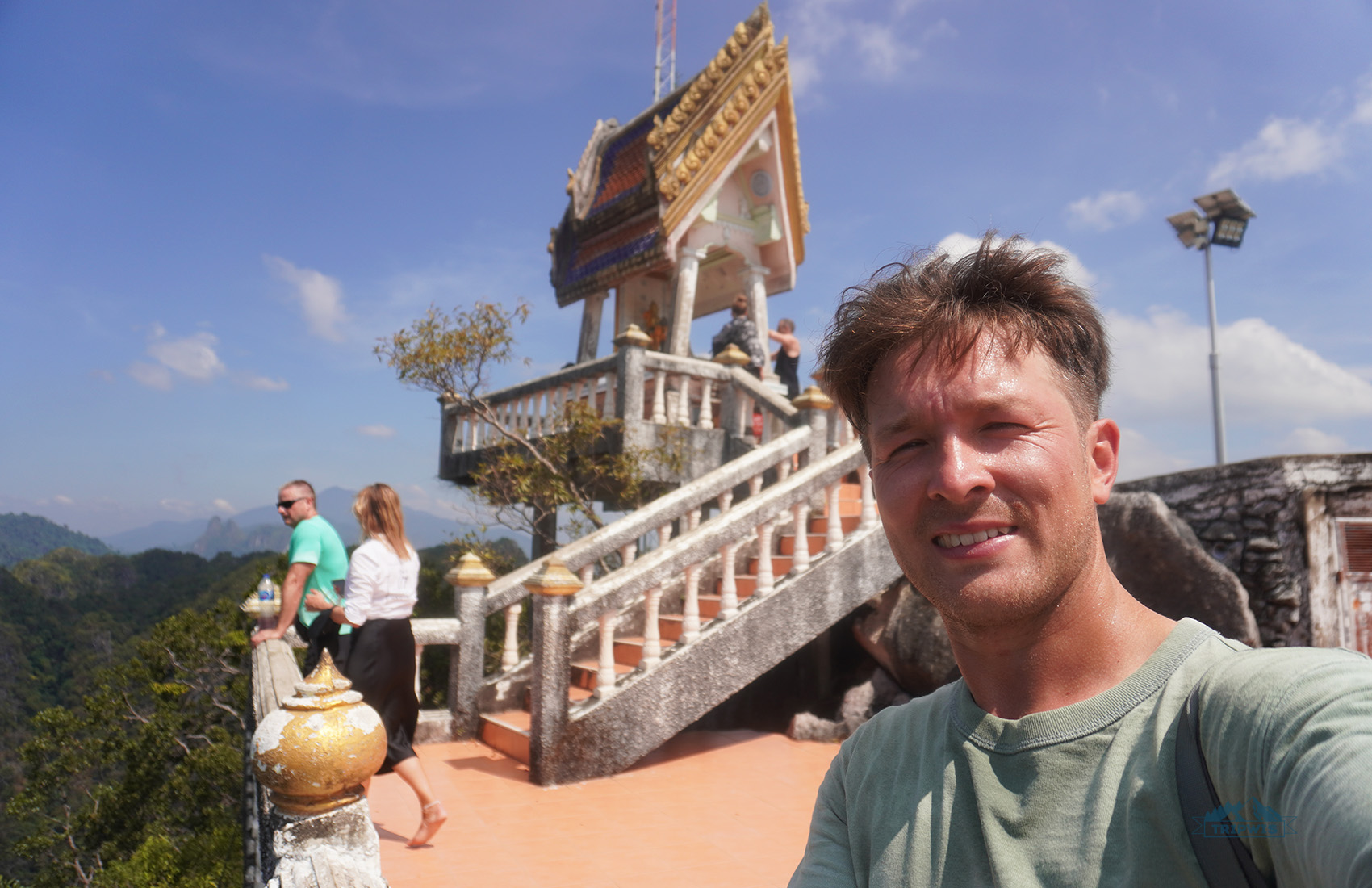
Established in 1975, the temple complex got its name from the legend of a tiger (or tigers) roaming the cave where a monk was meditating at one point. Tiger paw prints on the wall of the cave and a natural rock formation that resembles a tiger’s paw sealed the deal — it was a Tiger’s Cave through and through! You will not meet the dangerous felines living here now, but you will see tons of monkeys — remember the rules we gave you for traversing the Monkey Trail and you’ll be golden here as well!
✔️Be sure to bring plenty of water. There is a water fountain at the top (thank you, kind Thai people), but we drank way more on the way up than we expected.
✔️Plan for at least a 45-minute climb (longer if you need to make frequent stops).
✔️Please, do not embark on the journey around midday — the heat will make it that much harder to complete the climb. Shoot for sunrise or sunset — that way, at least one part of your journey will be devoid of the unforgiving sun.
Entrance fee: 50 baht / $1,6
Opening hours: 6 a.m. – 6 p.m.
How to get here besides taxi or rental scooter: There’s a songthaew from Ao Nang (150 baht per person).
Since Tiger Cave Temple is such a popular spot, of course organized tours come here (this one is one of the most bestselling on Getyourguide). But they won’t drive you all the way up on a bus — you’ll still have to hike up on your own two feet. These tours usually pair the temple with the hot springs and the Emerald Pool — those farther-out places we never managed to reach by scooter.
Focus on the details at “Into the forest”
📍 17 km from Ao Nang
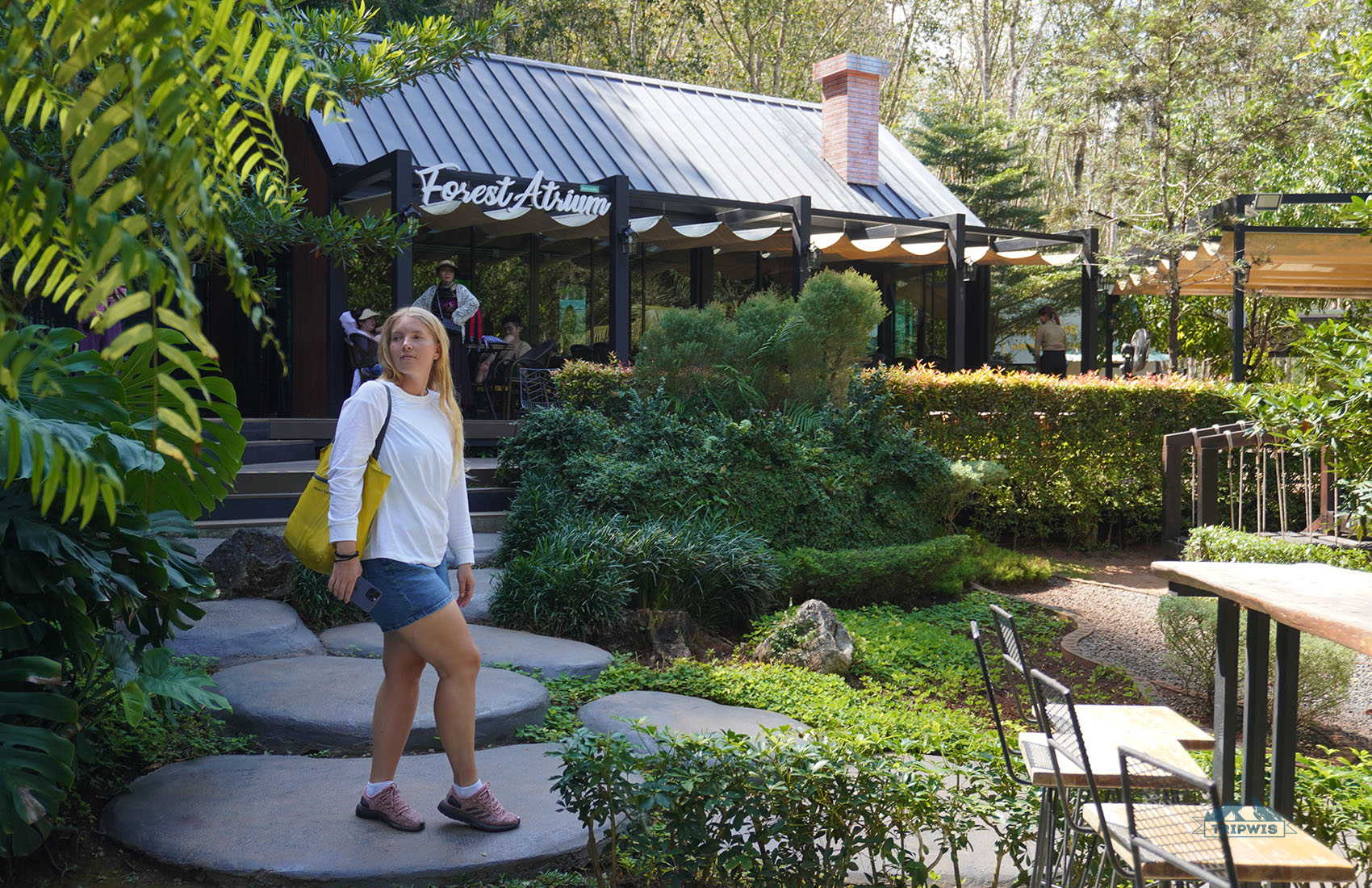
Into the forest café was our reward after a hike up to the Tiger Cave Temple. You hop on a scooter, the breeze cools you down, and the road snakes past endless fields — with Krabi’s dramatic limestone cliffs on the other side. Then you turn toward one of them, pull up close, and suddenly you’re in this incredible little spot: A pocket of jungle with a house of floor-to-ceiling windows right in the middle. That’s where Into the forest is.
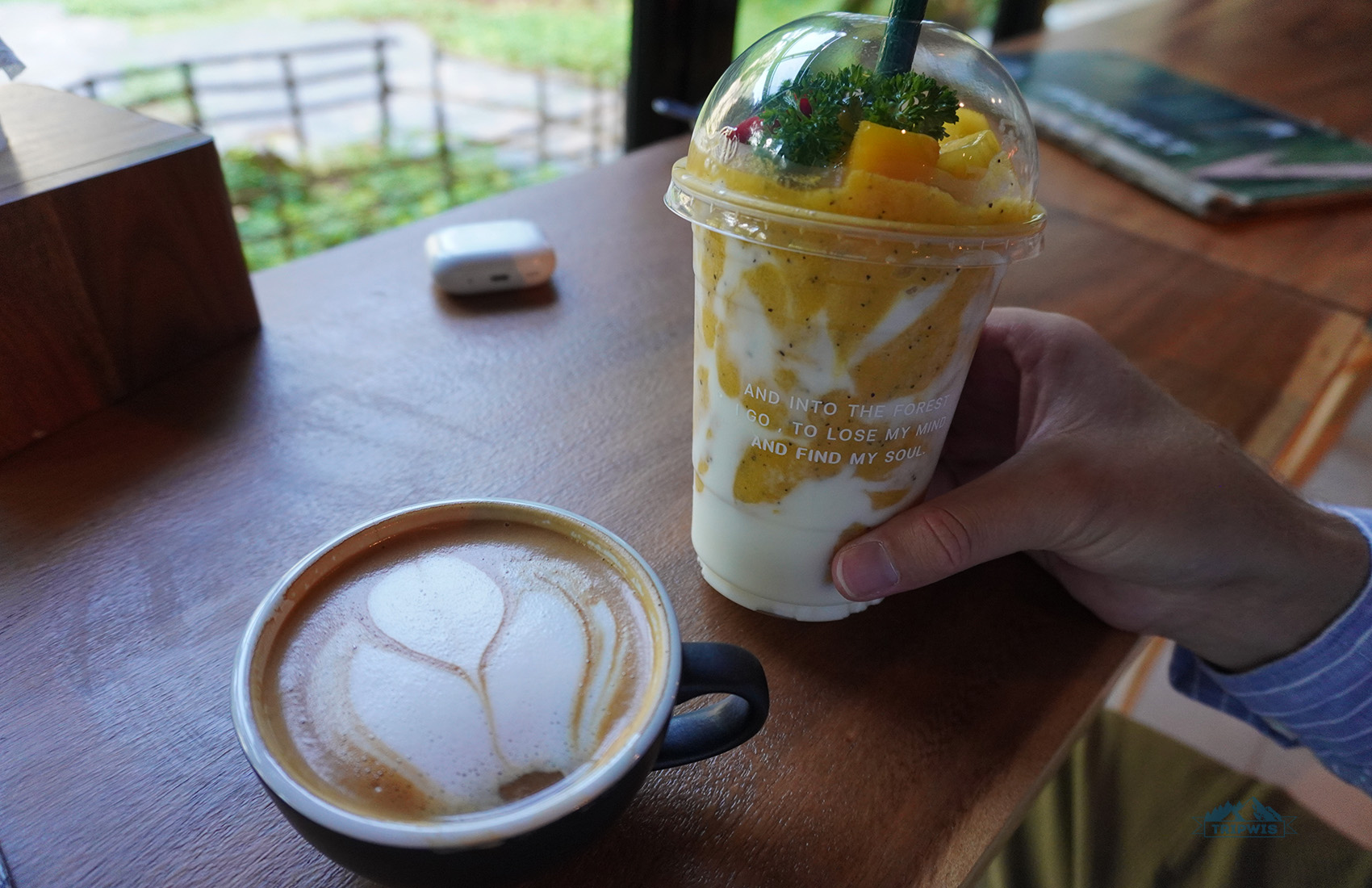
I loved how they serve their smoothies (100 baht / $3,2). The desserts, though, were a bit of a letdown. They also do proper food like Caesar salad or steaks.
You can take some great photos around the grounds, and it’s so shady and pleasantly humid, like the place has its own little microclimate. A perfect reset spot or a place to overload on natural beauty.
Opening hours: 9 a.m. – 6 p.m.
Hike the Thapom Klong Song Nam Nature Trail
 |
 |
📍 30 km from Ao Nang
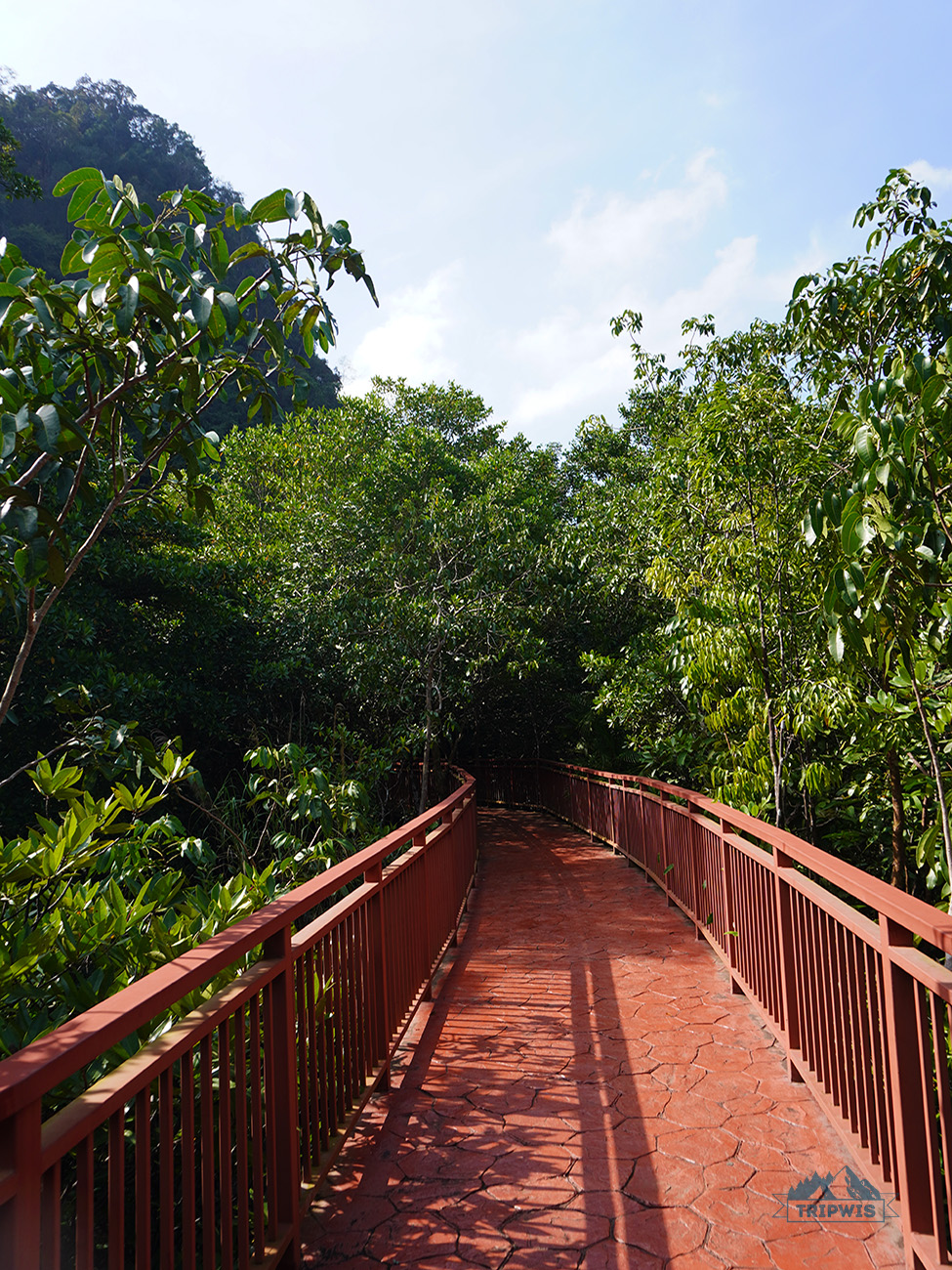
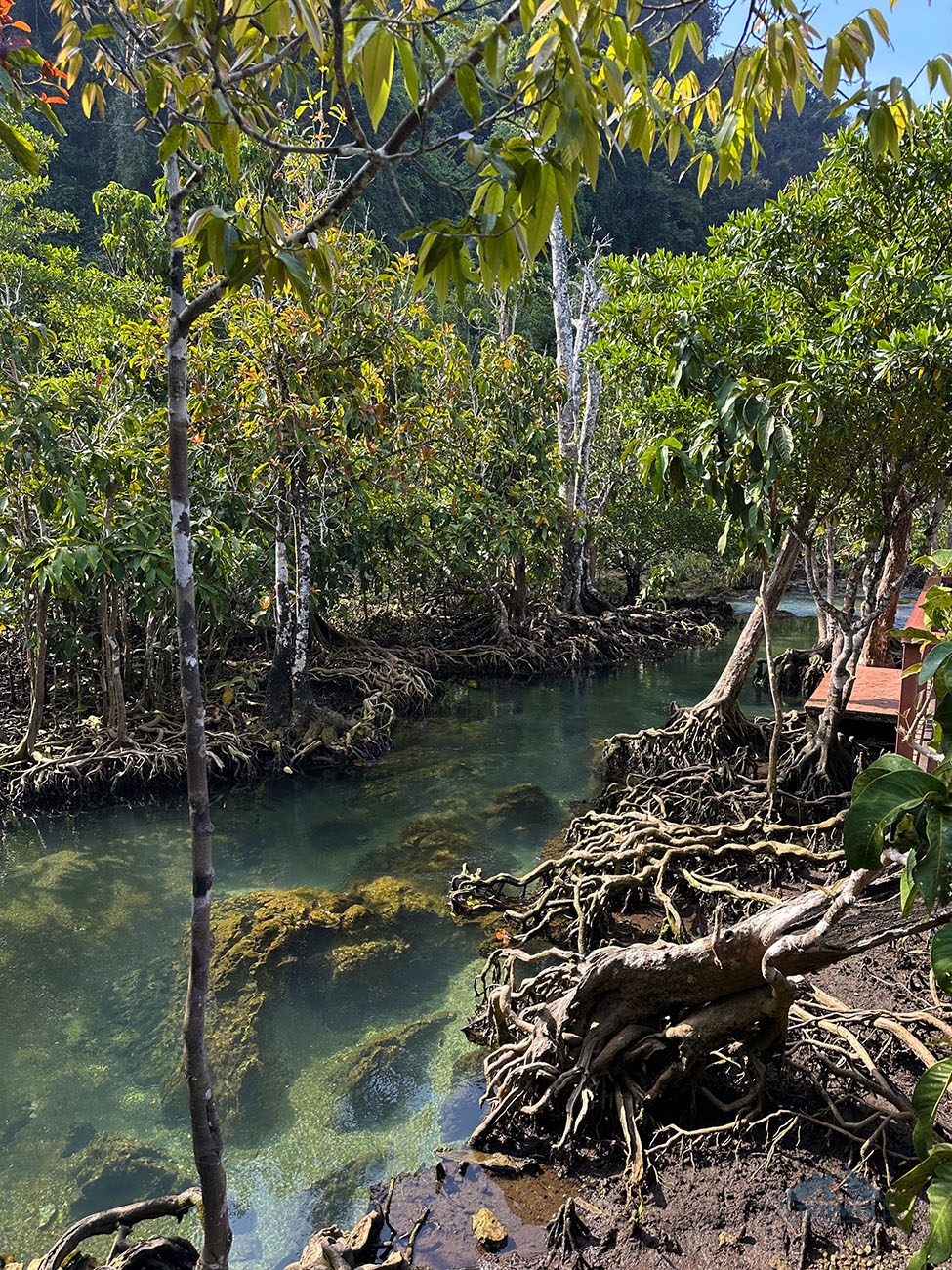
Literally translating to “Two-Colored Canal”, Thapom Klong Song Nam is a place for natural research and a unique spot of respite for Krabi visitors. The trail is a circular walk that takes about 30 minutes (less than 1 km) along a wooden walkway through mangroves, above the canal. Why the “two colors” part? It’s easy to explain, but harder to plan the timings to see — at low tide, the canal is filled with clear emerald-hued fresh water from the mountains; at high tide, the Andaman sea water rushes back, adding a murky turquoise finish and covering more of the mangrove roots.
Though very tempting, you cannot swim in the canal — its ecology is way too fragile for such a hands-on human connection. You might spot some wildlife — insects, birds, and other small creatures.
Pro tip: We arrived on the trail before the first tour buses (before 10 a.m.), and we were completely alone making the experience feel entirely different.
Entrance fee: 100 baht / $3,2 (includes a free bottle of water)
Opening hours: 9 a.m. – 6 p.m.
Challenge yourself with the Dragon’s Crest Trail (Ngon Nak Nature Trail)
📍 16 km from Ao Nang
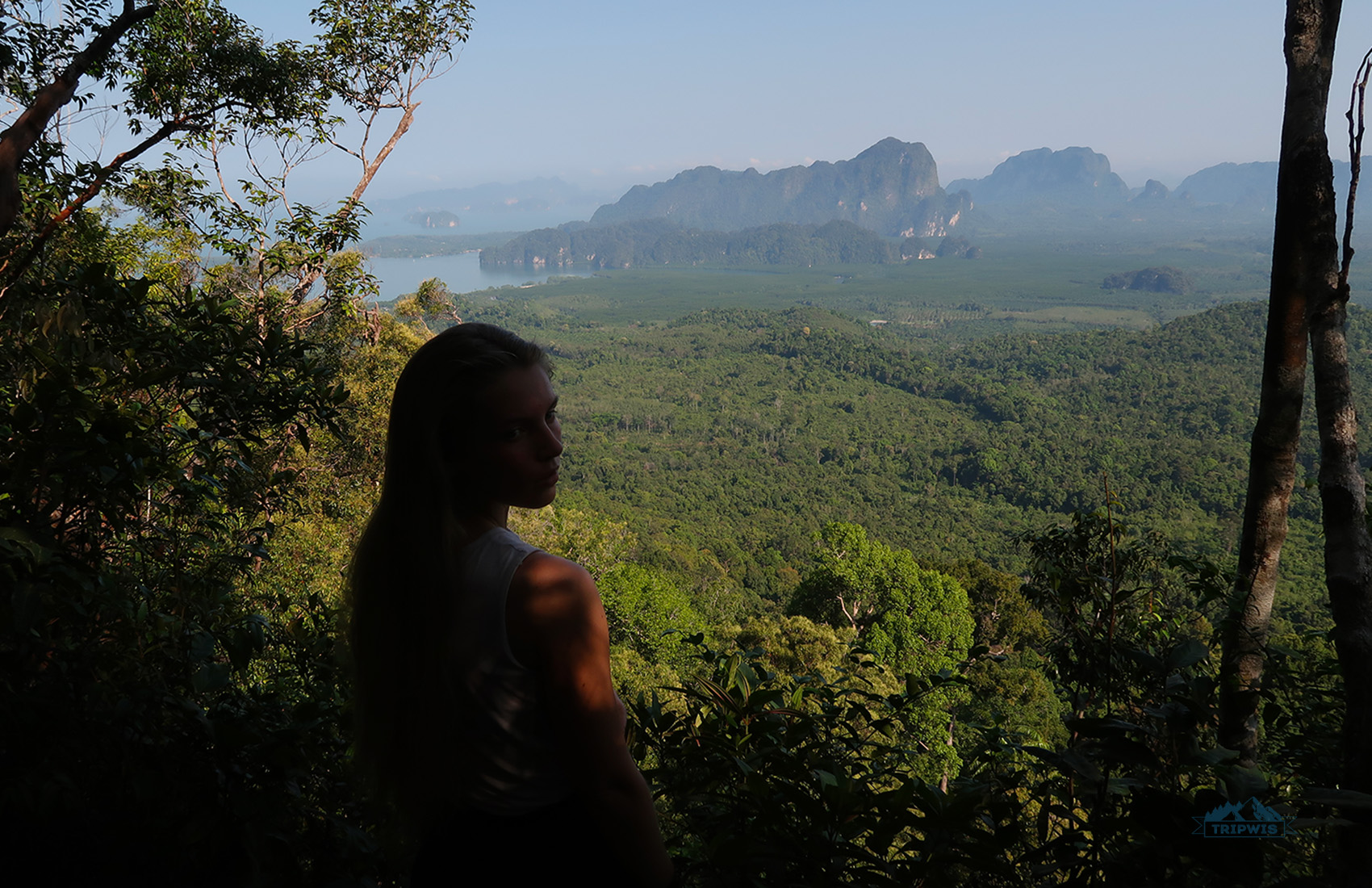
Dragon’s Crest Mountain, also known as Ngon Nak, is one of the most famous hiking trails in Krabi thanks to its magnificent views of limestone mountains and the Andaman Sea.
- This is a challenging hike — it’s under 8 km round trip with an elevation gain of about 600 meters. It takes about 4–5 hours to complete.
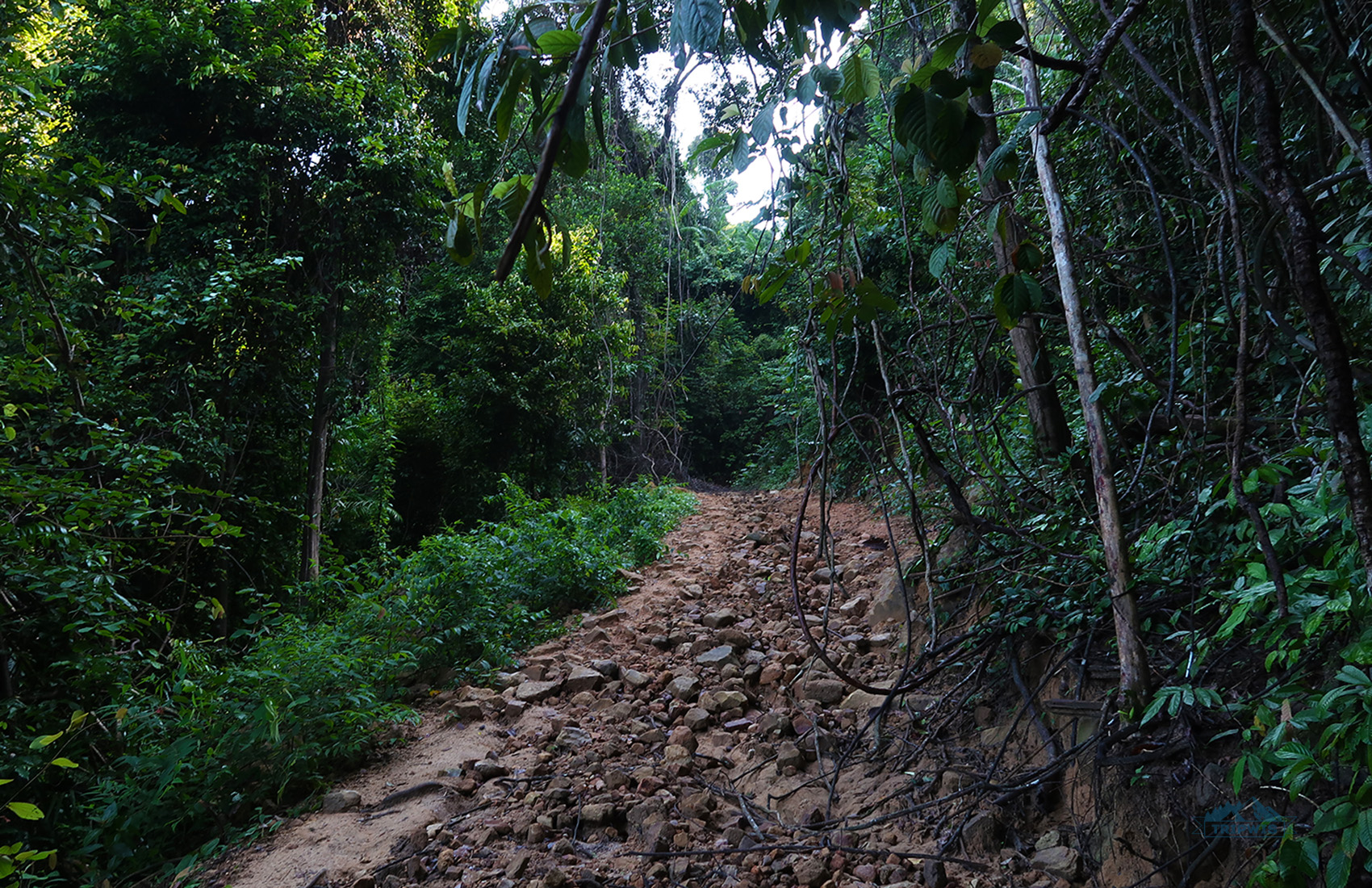
On our first visit to Krabi, we didn’t know much about the trail and just set off on the adventure without prepping for it! It was a big mistake, since it’s a pretty hard trail — mostly rocky,
almost constantly uphill, with some pretty sketchy parts where you have rope aids for stability. It also requires at the very least proper gear (sneakers, not sandals) and enough water and food.
Our hike on the Dragon’s Crest Trail was tough, wet, and involved climbing over rocks and roots. Thankfully, the path is mostly shaded, so at least we weren’t cooking in the sun while climbing. What awaited us at the viewpoint exceeded all expectations — a panoramic view of the jungle-covered valley, the sea with faint outlines of the nearest islands, and Krabi’s iconic limestone cliffs.
If you are brave enough to set off on the Dragon Crest hike, there are some things to keep in mind:
✔️You have to check in at the start of the trail and check out on your way back — that way, the park rangers know you’ve made it out safe and sound
✔️They will not let you start the hike after 2 p.m. — since the park closes at 6 p.m., it is not enough time to complete the hike
✔️Come in the morning — the park opens at 8 a.m., and the early hours make the journey much more bearable
Though we loved the panoramas from the viewpoint at the top, the process was so strenuous that we decided against climbing it again on our second visit to Krabi. Instead, we chose a much easier alternative — a cafe with a similar viewpoint (more on that next).
Entrance fee: 200 baht / $6,5 per person.
Opening hours: 8 a.m. – 6 p.m.
Take it easy at Din Daeng Doi
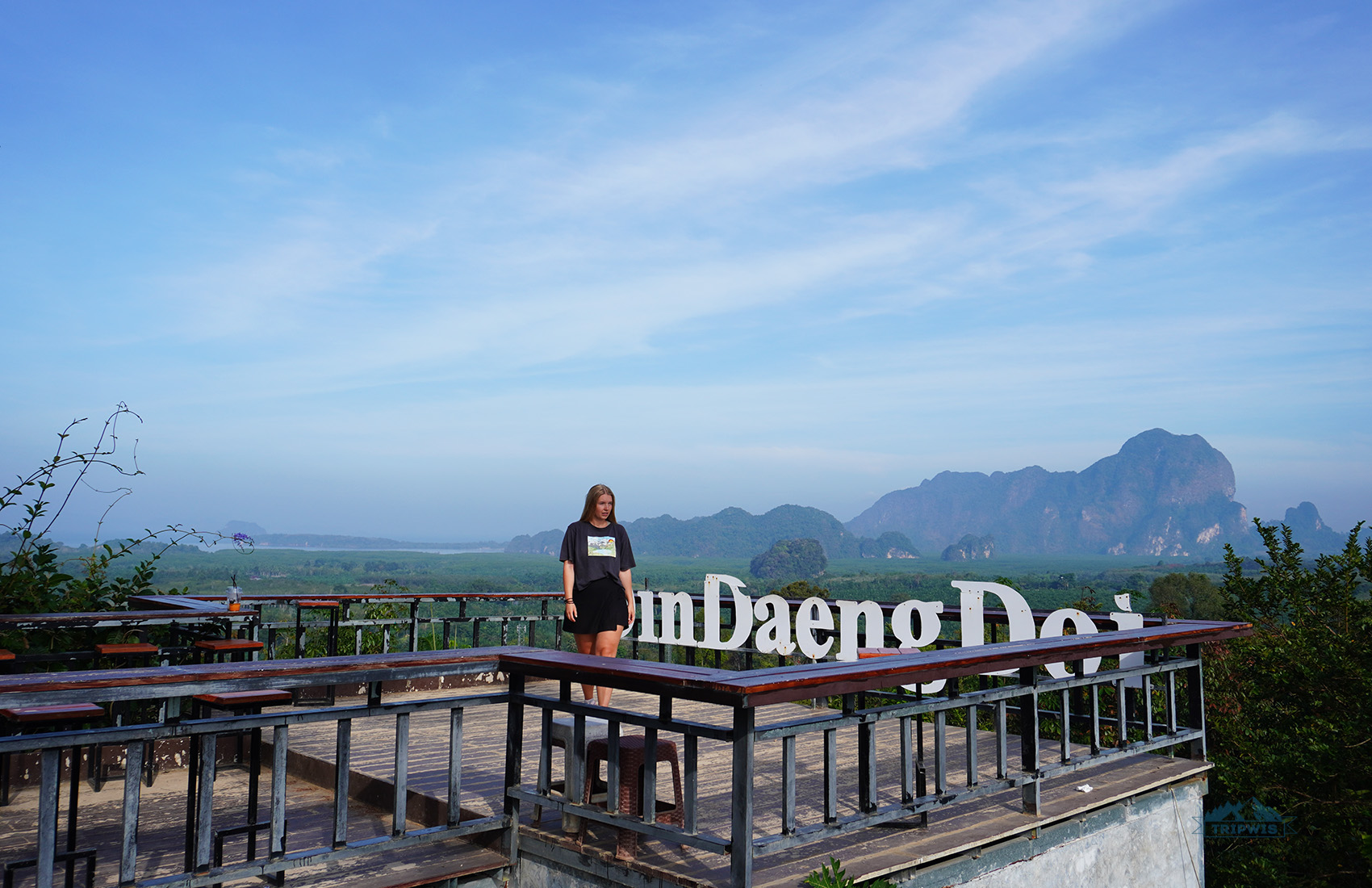
📍 15 km from Ao Nang
This is a solid alternative to the views from the hike above! You simply drive to the location on the map, park, pay 70 baht / $2,3 for entry, and then walk uphill for about 15 minutes (a truck ride is included in the price, but you have to wait until a group forms).
You’ll get a little out of breath — and then you’re already there, standing on a terrace with incredible views: Endless tropical forests, fields, and limestone cliffs topped with lush greenery. It’s especially beautiful at sunrise, when everything is wrapped in mist and the cliffs seem to float in a sea of fog.
There’s also a small cafe on-site where you can order a drink or something basic, nothing fancy. Din Daeng Doi is the ultimate location to watch the sunrise in Krabi — make sure you time your visit with the first rays peeking over the horizon!
Entrance fee: 70 baht / $2,3 per person.
Opening hours: 5:30 a.m. – 7 p.m.
Spend some time at the Elephant Sanctuary
 |
 |
📍 12 km from Ao Nang
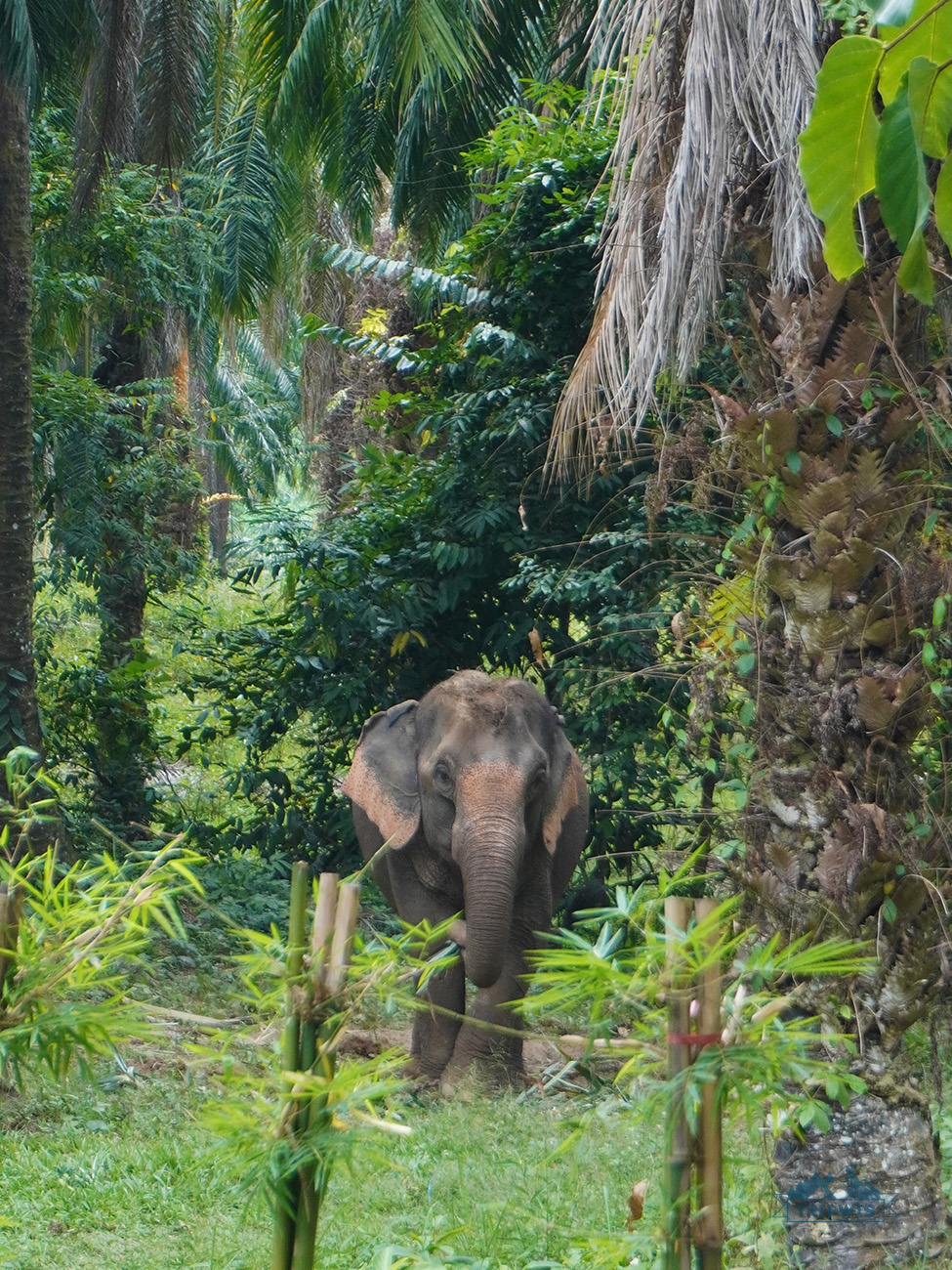
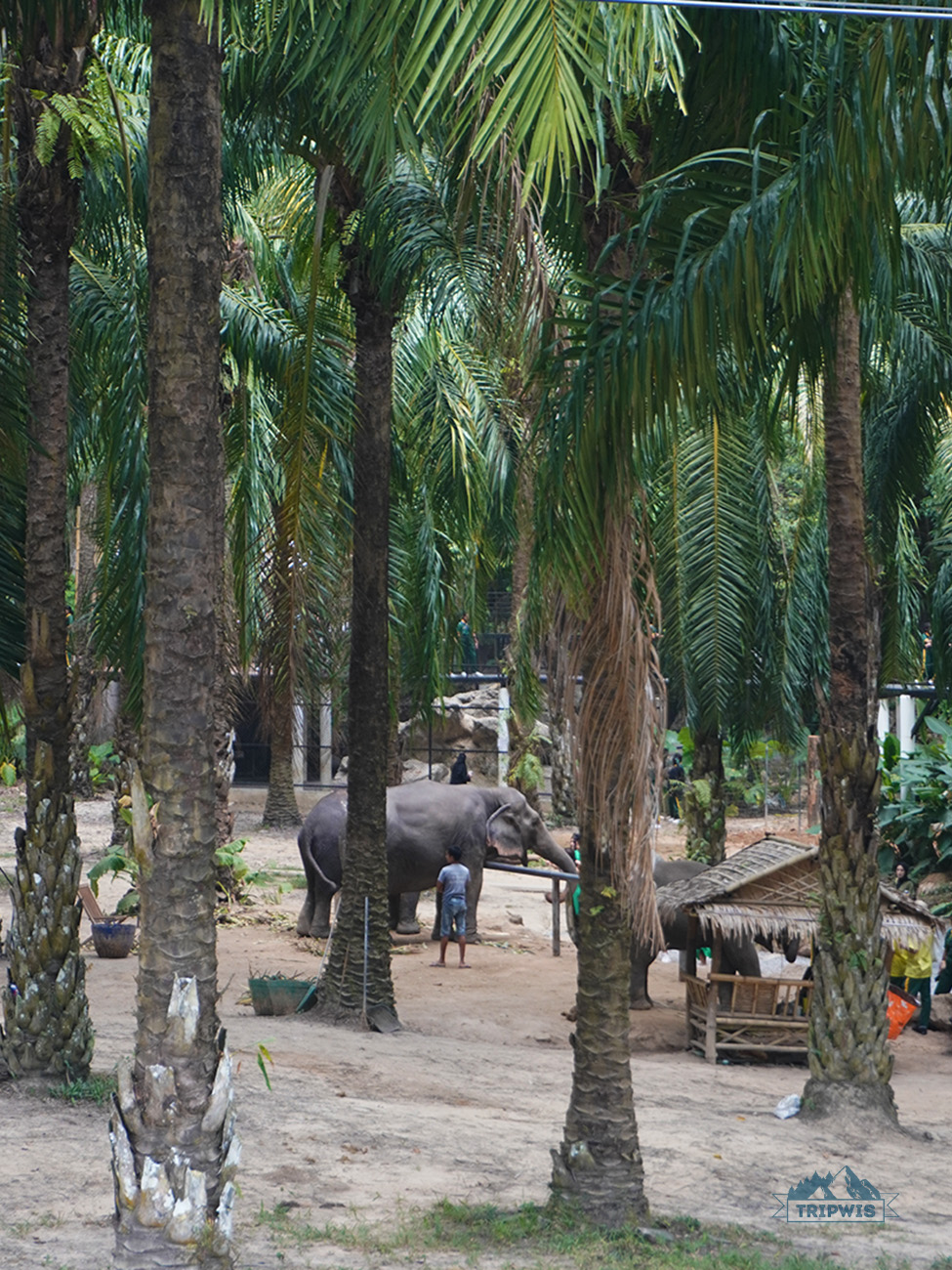
There are quite a few elephant sanctuaries in the province (and Thailand in general). However, up until recently it was hard to find one with more humane — no-riding! — practices. Thankfully, the rise of ethical tourism gave way to more places that concern themselves with elephant rehabilitation and not exploitation.
- The Elephant Sanctuary Krabi, Thailand is considered one of the most ethical places to interact with elephants in the region. A wonderful family runs the sanctuary, and you can genuinely tell they care about these gentle giants.
It’s probably the best place in Krabi to meet and spend time with elephants. The animals here are calm, clearly well cared for, and treated with deep respect. You can feed the elephants, wash them, and even bathe with them at the sanctuary. Riding elephants here is obviously not allowed. The most important part of the experience is learning to understand the animals — their habits, behaviors, and unique quirks. The staff at the sanctuary is clearly knowledgeable on all things elephants! You’re allowed to touch and pet the elephants — under the watchful gaze of instructors.
While you’re interacting with the elephants, staff members take photos, and later they send the pictures to your email for free. The sanctuary operates on a fixed schedule, with morning and afternoon programs. You can read more details here.
Half-day tour prices for the Elephant Sanctuary:
- 2,900 baht / $93 for adults
- 2,000 baht / $65 for children aged 4–10
Opening hours: 9 a.m. – 5 p.m.
Kayak in Krabi mangroves
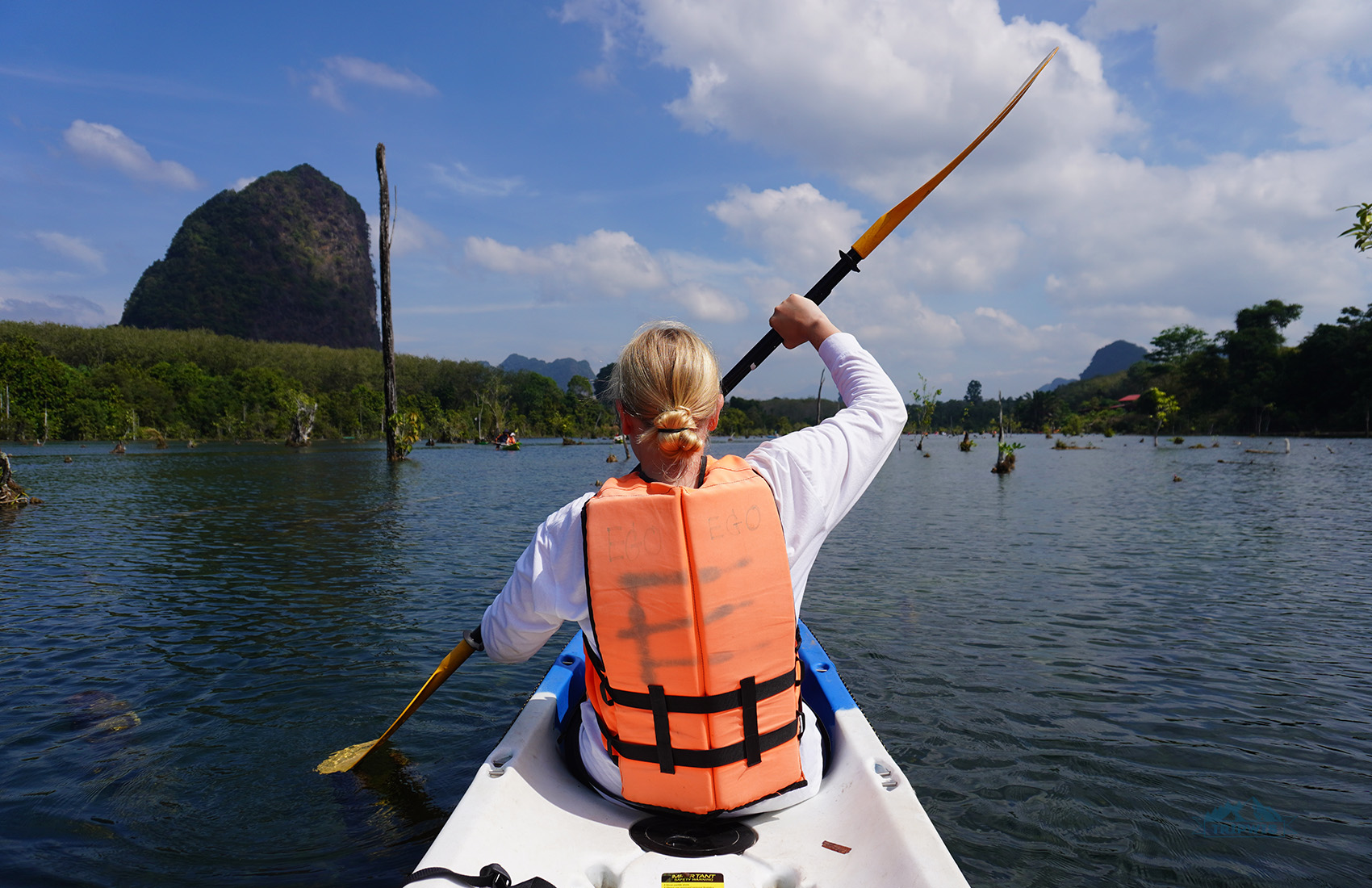
📍 12 km from Ao Nang
Another one of the top things to do in Krabi is kayaking though the mangroves. Mangroves are a unique ecosystem that forms where land meets water, and paddling there feels almost surreal. You’re gliding through narrow waterways, with dense mangrove forests on both sides and tangled roots rising straight out of water. A very cool change of scenery when compared to the more traditional Krabi sights of beaches and bays.
- We chose an option closer to Ao Nang — Klong Root (Clear Water Canal). You can combine this trip with a visit to the Elephant Sanctuary and Nong Thale Lake (more on it below), which are conveniently close.
The route isn’t very long, but it’s quite scenic. You start by paddling along a wide river channel, then you can turn into a narrower section closer to the mangroves.
The downside is that there are quite a few people here who are kayaking for the first time and don’t really know where (or how) to paddle without bumping into others. Mangrove roots also make the ride a bit less smooth and relaxed.
The price is 300 baht / $10 per kayak, and a life jacket and waterproof bag are provided on site.
For a more authentic experience, head to Ao Thalane Kayak Krabi — this route through the mangroves is closer to the seafront, which is synonymous with more striking sights (the cliffs bring out all their drama at Ao Thalane)! The route requires navigation using a map, takes longer (around 2 hours), but you’ll be paddling through truly wild nature. You can book a day trip to Ao Thalane Kayak Krabi with hotel pickup included via GetYourGuide.
Take plenty of pictures at Nong Thale Lake (Mirror Lake)
 |
 |
📍 10 km from Ao Nang
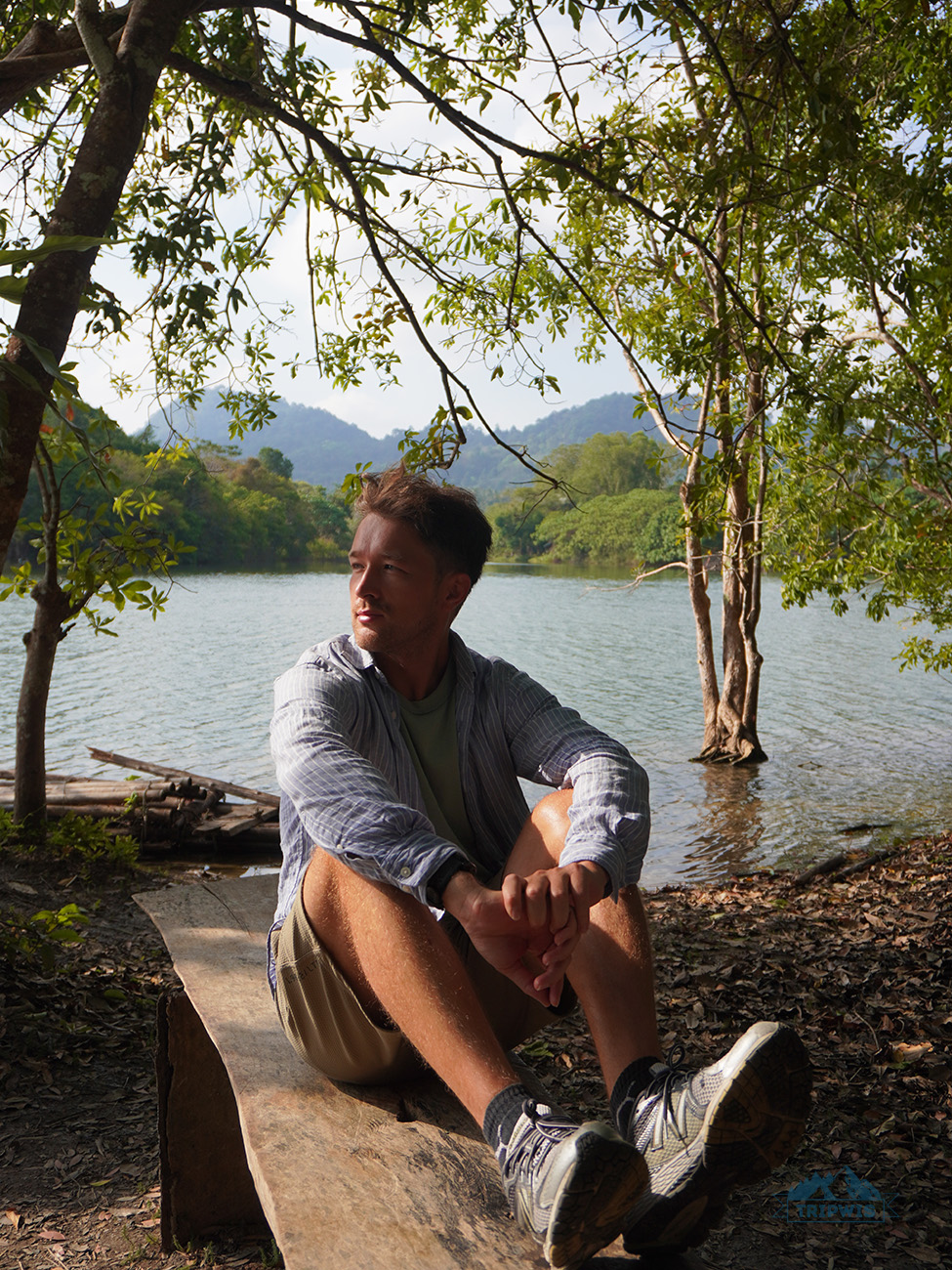
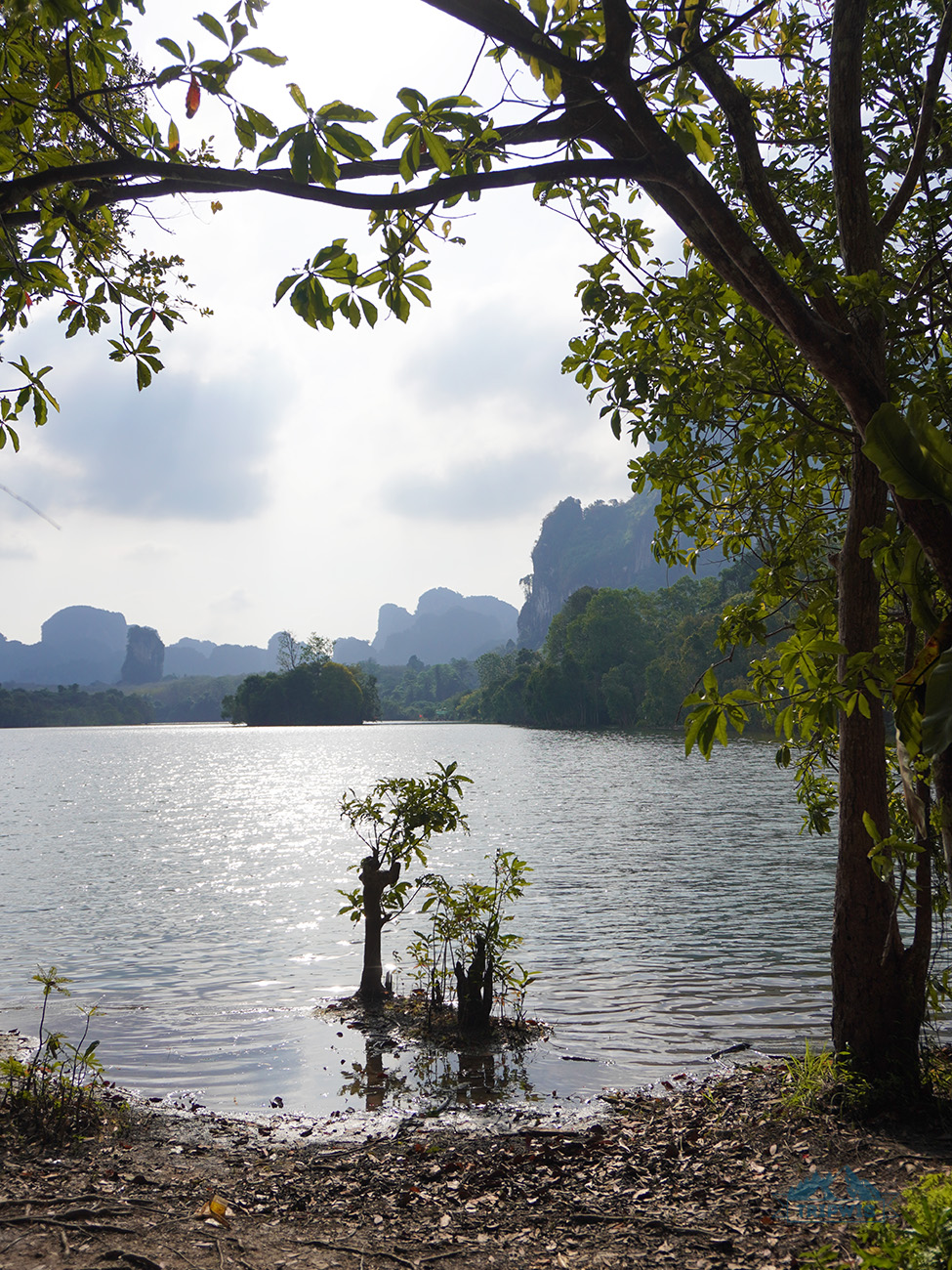
After watching the sunrise at Din Daeng Doi, or rushing to catch the sunset following a kayaking adventure at Klong Root, paying a visit to the Mirror Lake in Krabi is an essential experience for anybody who appreciates calming scenery. Nong Thale Lake is the place to go if you want to be somewhere with no one else around. It’s a little-known spot among tourists, located not far from Ao Nang (we drove to this point).
There’s not much to do here, the main purpose is simply to admire the surrounding panorama. The clear waters of the lake reflect the lush greenery and the blue sky, creating a mirror effect. The road to Nong Thale Lake is also very beautiful. It’s best to come at sunrise or closer to sunset, so the sun isn’t shining straight into your camera.
Discover Emerald Pool and Blue Pool
📍 70 km from Ao Nang
One of the top natural attractions in Krabi are the Emerald Pool and Blue Pool. They’re a bit further out, but still worth visiting.
When you arrive at the park entrance, there are two paths:
- A shorter one (less than 1 km) that leads directly to the Emerald Pool
- A longer one (about 1.5 km) that’s more scenic; it leads you through the verdant jungle on the elevated walkway
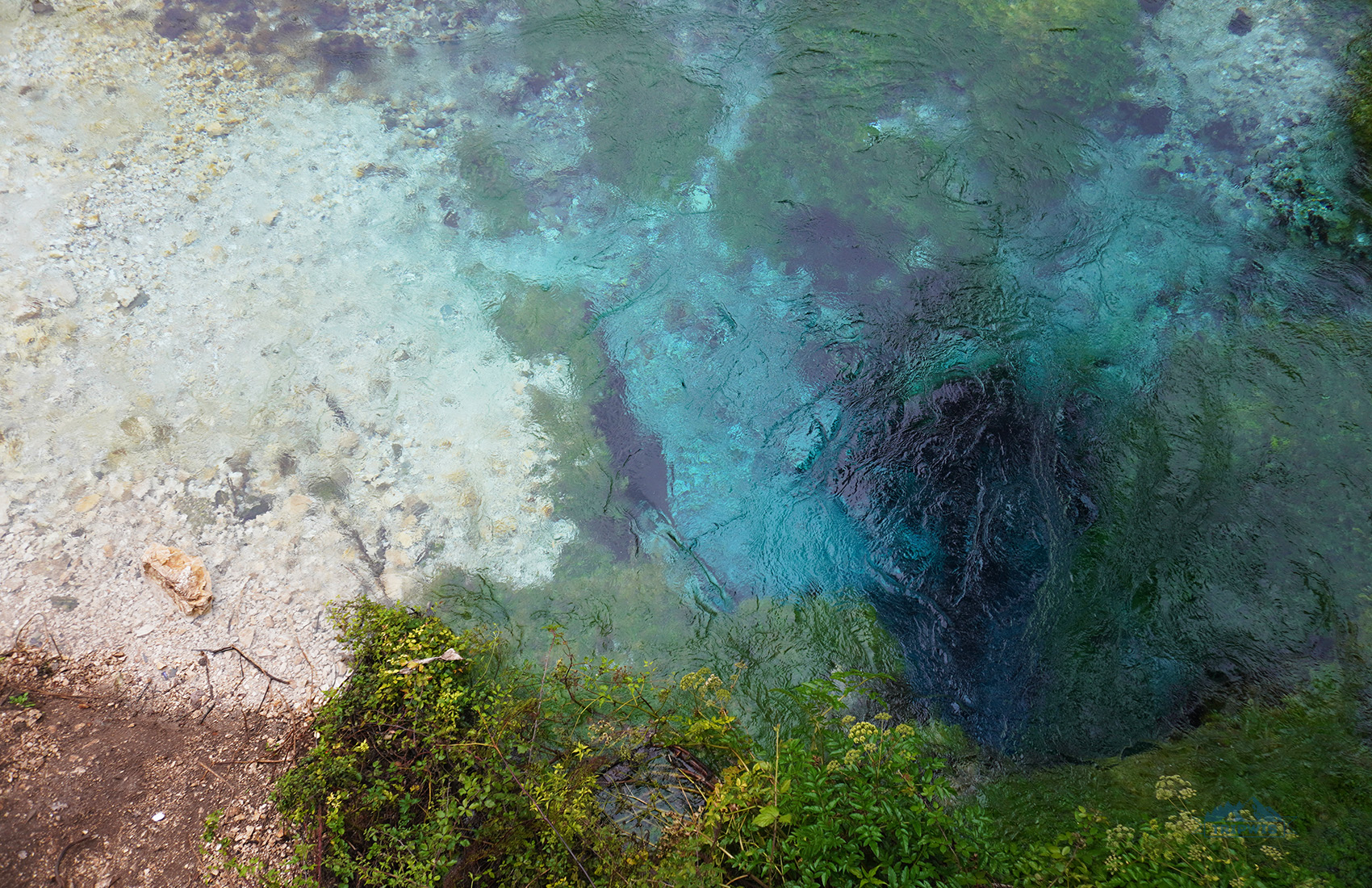
Depending on the light and time of day, the Emerald Pool changes color from pale blue to deep turquoise. The high mineral content of the water is the real reason behind its unusual color. The pool is roughly 20 meters wide and 2 meters deep. Swimming is allowed here. The water is comfortably warm and mineral-rich. Just be careful, as the stones at the entrance can be slippery.
After relaxing at the Emerald Pool, it’s worth continuing deeper into the forest to visit the Blue Pool, which is yet another stunning spot hidden in the middle of the rainforest. The walk through the tropical jungle is interesting in itself, with paths winding among tall trees. Swimming is strictly prohibited in the Blue Pool. The ecosystem is extremely fragile — you’re not allowed to even put your hands in the water.
If you plan on visiting the pools on your own accord, it’s best to arrive early in the morning, right when the pools open, before tour buses start bringing in large crowds.
Organized tours to the Emerald Pool are usually combined with other locations, like Tiger Cave Temple, or hot springs. This GetYourGuide option seems to be a huge hit with holidaymakers.
Side note: Bringing food and alcoholic beverages into the Emerald Pool area within the nature reserve is strictly prohibited.
Entrance fees: 400 baht / $13
Opening hours: 10 a.m. – 3:30 p.m.
Get a boat ride on Cheow Lan Lake
📍 150 km from Ao Nang
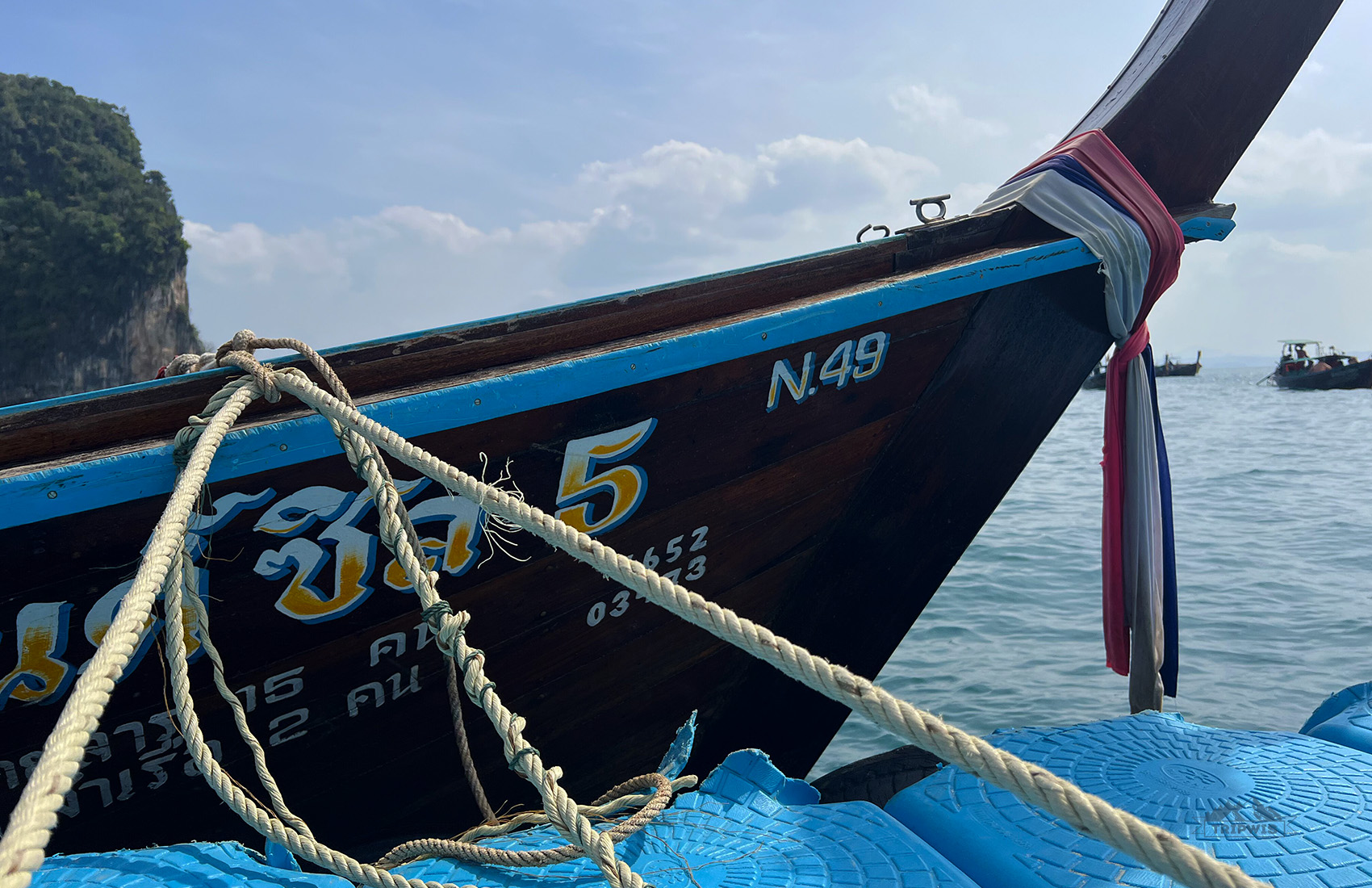
Cheow Lan Lake is a man-made, fully functioning reservoir — and easily one of the most stunning places in all of Thailand.
Cheow Lan Lake is located in Surat Thani Province. From Krabi, it’s roughly 2-hour ride by car. Before the dam was built, small settlements stood here. Later, they were relocated and the valley was flooded, creating the landscape you see today.
- You can rent a boat to cruise around the lake — expect to pay around 2,000 baht / $65. On top of that, there’s a national park entrance fee: 300 baht / $10.
I’d say this is not a place you want to rush as a day trip (even though it’s totally doable). The drive is long, and you’ll want to stop constantly for photos along the way. Plus, there are hiking opportunities around the lake and truly unique accommodation options: Cheow Lan Lake is famous for its floating bungalows (with Panvaree Resort being the most popular and cheapest one). The only way to reach them is by boat — locals meet you at the pier and take you straight to your room. Spending the night literally on the water is an experience of its own.
If you don’t drive a car or scooter, you can still visit Cheow Lan Lake on a guided tour. Just keep in mind that most tours last 12+ hours, so be ready for a very long day. Here’s a GetYourGuide tour from Krabi you can book.
Where to stay in Krabi?
The province of Krabi has plenty of hotels and guesthouses, yet few of them are canonically budget-friendly. What surprised me the most is how expensive hotels in Krabi are! Okay, I get it, it’s high season in full swing, but still!
I’d strongly recommend staying at accommodations in Ao Nang, since it has the biggest selection of hotels, all tours depart from here, and getting to nearby beaches and islands is easy. Another good option is the quaint Klong Muang. Krabi Town, on the other hand, doesn’t really make sense — it’s far from everything.
Staying on Phi Phi Don is a great choice if you want to be among the first visitors to the Phi Phi Islands’ locations (Maya Bay, Pi Leh Bay, etc.).
Here’re some great hotels in Ao Nang general area:
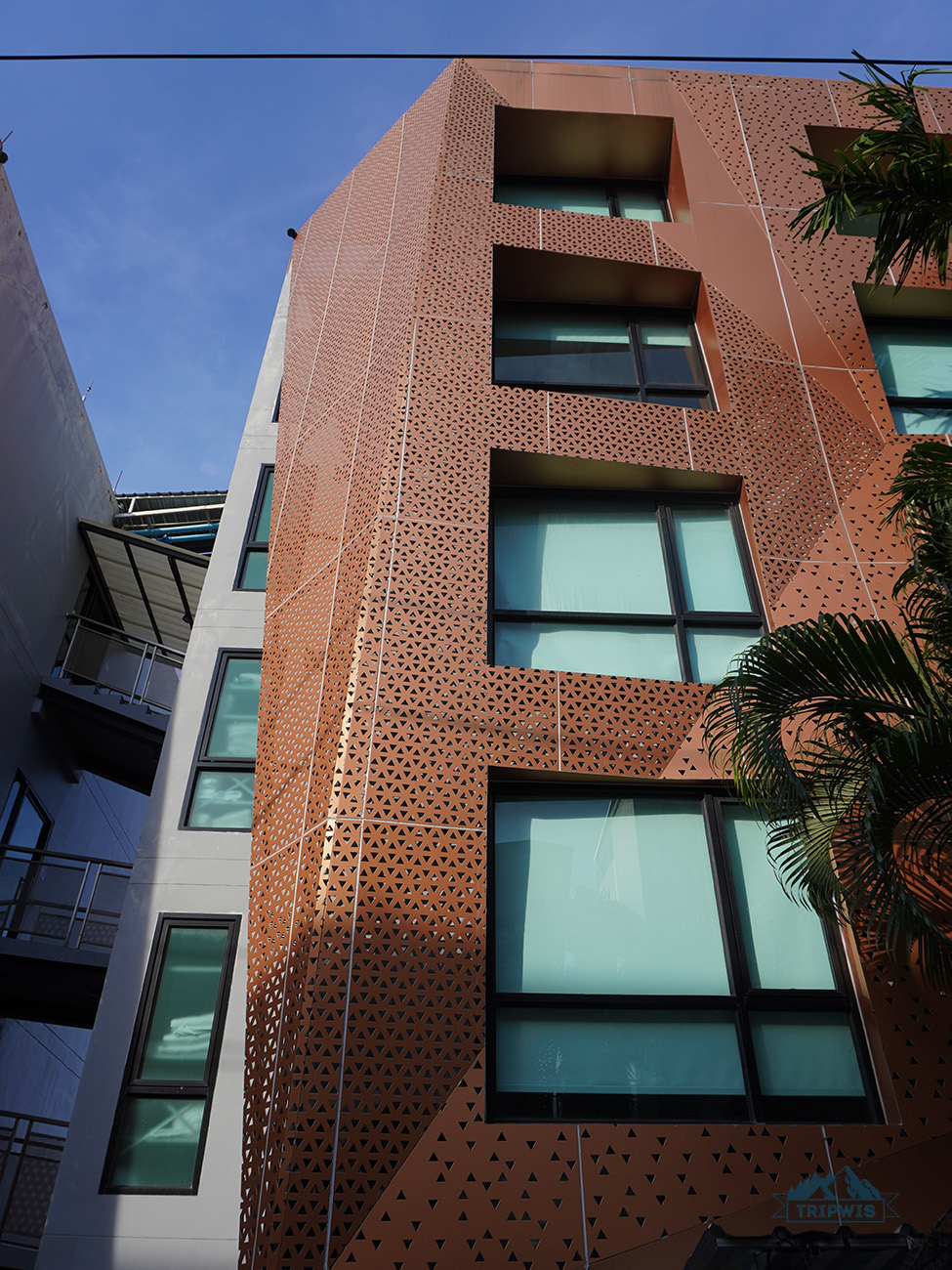
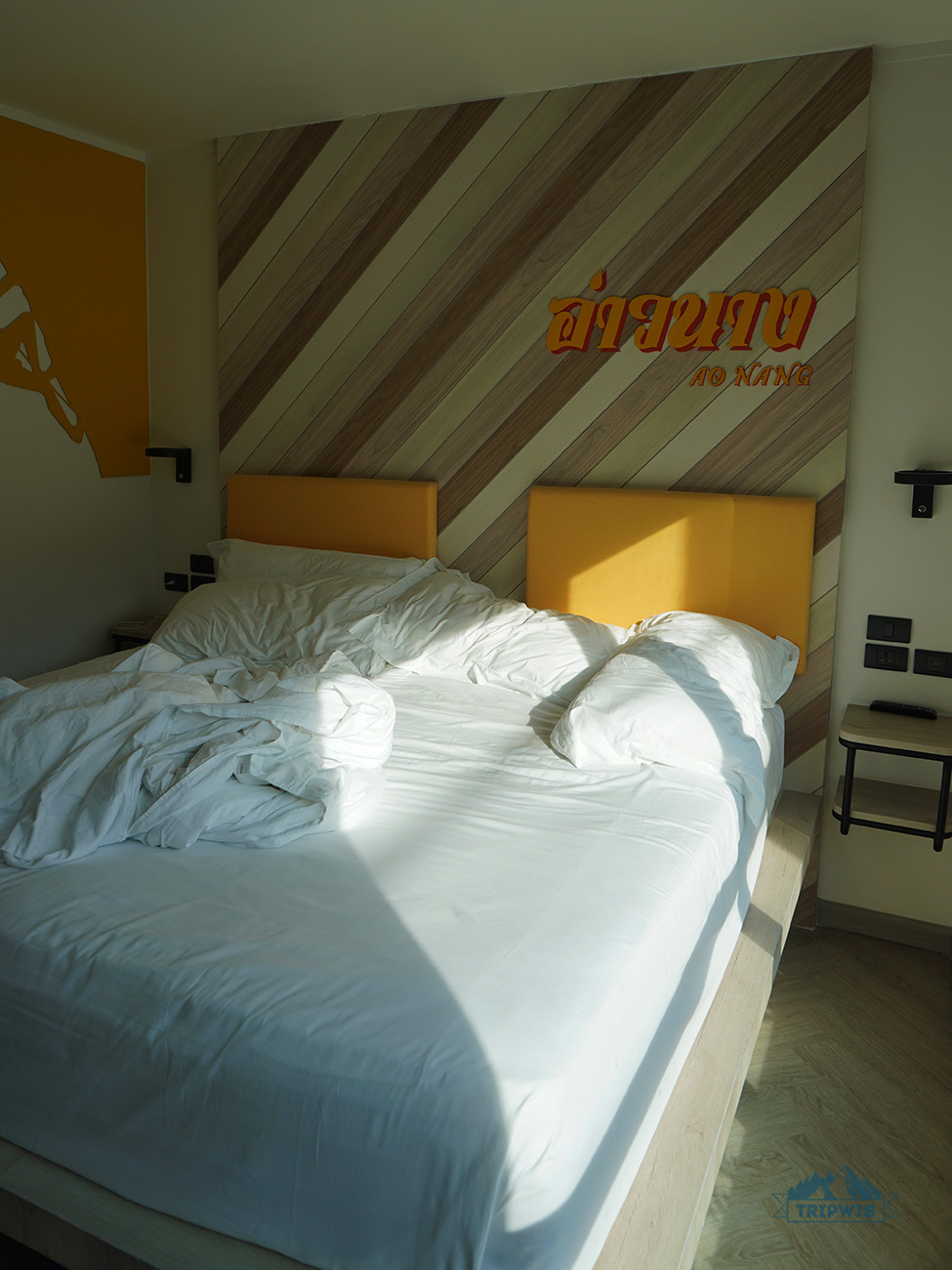
- Our choice: 3* COSI Krabi (from $120 a night) — the last time we were traipsing around the province, we stayed here and loved it. The hotel is set within a 10-minute walk from the pier and the beach, with everything nearby — good cafes, laundry services, and shops. Overall, it’s fun and youthful, supported by lots of coworking areas, a solid gym, free laundry services, and pool parties in the evenings. Most importantly, the room didn’t smell damp (a real win in Thailand), and the window faced a quiet street.
 |
 |
- 2* Ben’s House (from $70 a night) — I can confidently recommend this Ao Nang option as well. It’s a budget-friendly and really nice hotel with a great location — close to both the center and the beach, but still quiet. The rooms are large and clean with a pleasant balcony view in some of them, and there’s also a small swimming pool.
- 3* Whalecome Aonang Resort (from $90 a night) — a lovely hotel with an excellent location, about a 7-minute walk to the Ao Nang Beach. With so many shops and cafes nearby, the hotel still manages to feel private and peaceful. The territory is small but very well-maintained and beautiful. The rooms are comfortable and have everything you might need. The only con that I’ve managed to scrounge up when researching is some guests mentioning repetitive breakfasts (the horror!).
- 4* Sea Seeker Krabi Resort (from $200 a night) — another one of Krabi hotels with a perfect location — far enough from the main street to be quiet, but close enough to restaurants, pubs, and Ao Nang Beach Pier. The property features well-designed grounds with two swimming pools (for adults and kids). Rooms are spacious and cozy, some of them come with spectacular cliff views!
- 5* Anana Ecological Resort Krabi (from $520 a night) — a beautiful 7-story hotel in a green area near mountains and jungle. It’s not right in the center of Ao Nang, but there’s a shuttle every hour to the beach and downtown. There are two swimming pools and a spa too; the eco-friendly focus means nature-centric wellness efforts — this is exactly the luxury most of us need in 2026!
Staying overnight on the islands is another valid option when choosing your base in Krabi province. There’s less civilization, but way more nature, peace, and that precious feeling of being far away from everything.
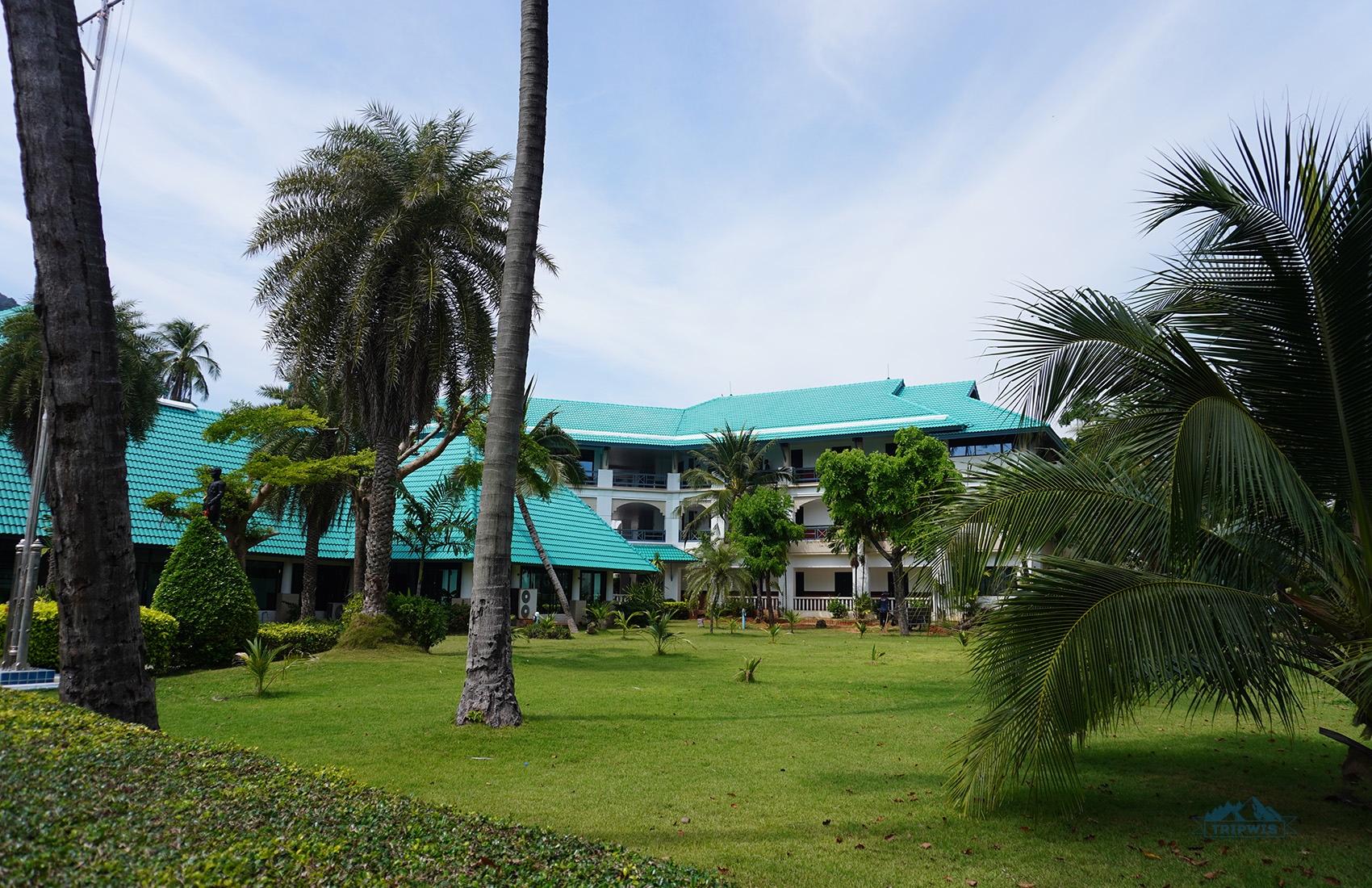
Phi Phi Don:
- Blue Flow Hostel (from $33 a night for a bed) — for budget travelers, this hostel is a great option: It has fantastic reviews and is located right in the center of the island, just five minutes from the pier, next to a restaurant. Very friendly staff, clean, comfortable, and well-organized rooms and communal spaces — what else can you possibly need?
- 3* Viking Nature Resort (from $200 a night) — this hotel offers super comfortable rooms in wooden, village-style bungalows (wood houses, as they’re referred to here). The view from the rooms is amazing, and the location is great too — right next to a beautiful beach where you’ll probably spend most of your time. It’s away from the noise and crowds, but still only a 10-minute walk to town.
- 4* Phi Phi Phu Chalet Resort (from $350 a night) — a wonderful hotel with an absolutely unreal view from the rooms, made better by huge panoramic windows in every bungalow. The staff does everything possible to make your stay comfortable: Transfers and excursions are organized smoothly and right on time. The hotel doesn’t have a beach, but during high tide you can safely go down the stairs to the water and snorkel — there’s a full coral reef with plenty of marine life right there. The sea entry is sandy and gentle, rocks and reefs start much further out. A proper beach is about a 10-minute walk away. Transfer to the hotel on their private long-tail boat is free, but you’ll need to pay for the return trip.
- 5* SAii Phi Phi Island Village (from $400 a night) — a luxurious five-star hotel. There’s a pool, and the property itself is huge — they even offer a 24/7 buggy service to get around comfortably. The private beach here is excellent: No coral, a gentle entry into the water, and no waves during low season (just be prepared for very noticeable tides). Reviews often mention that you should book a long-tail boat to the hotel in advance — otherwise you’ll have to arrange transport from the pier yourself.
- 5* OUTRIGGER Phi Phi Island Resort (from $500 a night) — a stunning hotel that truly exceeds expectations. Gorgeous nature, authentic villas, and white sandy paths you can walk barefoot on. The staff members here are genuinely kind, breakfasts are amazing with options for absolutely every taste, and the beach is beautiful. There’s also a fantastic, very romantic beachfront restaurant for dinners.
Where to eat in Krabi and my favorite coffee spots
 |
 |
It’s hard to go hungry in Thailand. I’ve noticed one thing about myself: The moment I get tired of the local staples — pad thai, fried rice, coconut-milk soups, 7-Eleven sandwiches — I can easily switch to something more familiar, like a healthy bowl, a simple steak-and-potatoes kind of meal, or any other expat food you’ll find pretty much anywhere in the country. And Krabi is no exception.
And I’m not even talking about the abundance of seafood (you always choose from shrimps/seafood mix/chicken for your protein part of Thai dish), tons of fruit, inventive drinks and shakes, and my absolute favorite — Thai milk tea with tapioca.
Here are my personal recommendations of places for you to check out when you’re feeling famished in Krabi:
- TAN Hostel x Cafe, Aonang Beach — a cafe attached to a hostel, and a very stylish one! By the way, the hostel itself has great reviews and costs around $15 for one bed per night. We came here for breakfast (there’s all day brunch, which is great if you’ve partied too hard the night before) a couple of times, and in our opinion, they have the best set-up in Ao Nang. Lots of options in the 215–275 baht / $7–$9 range for generous portions.
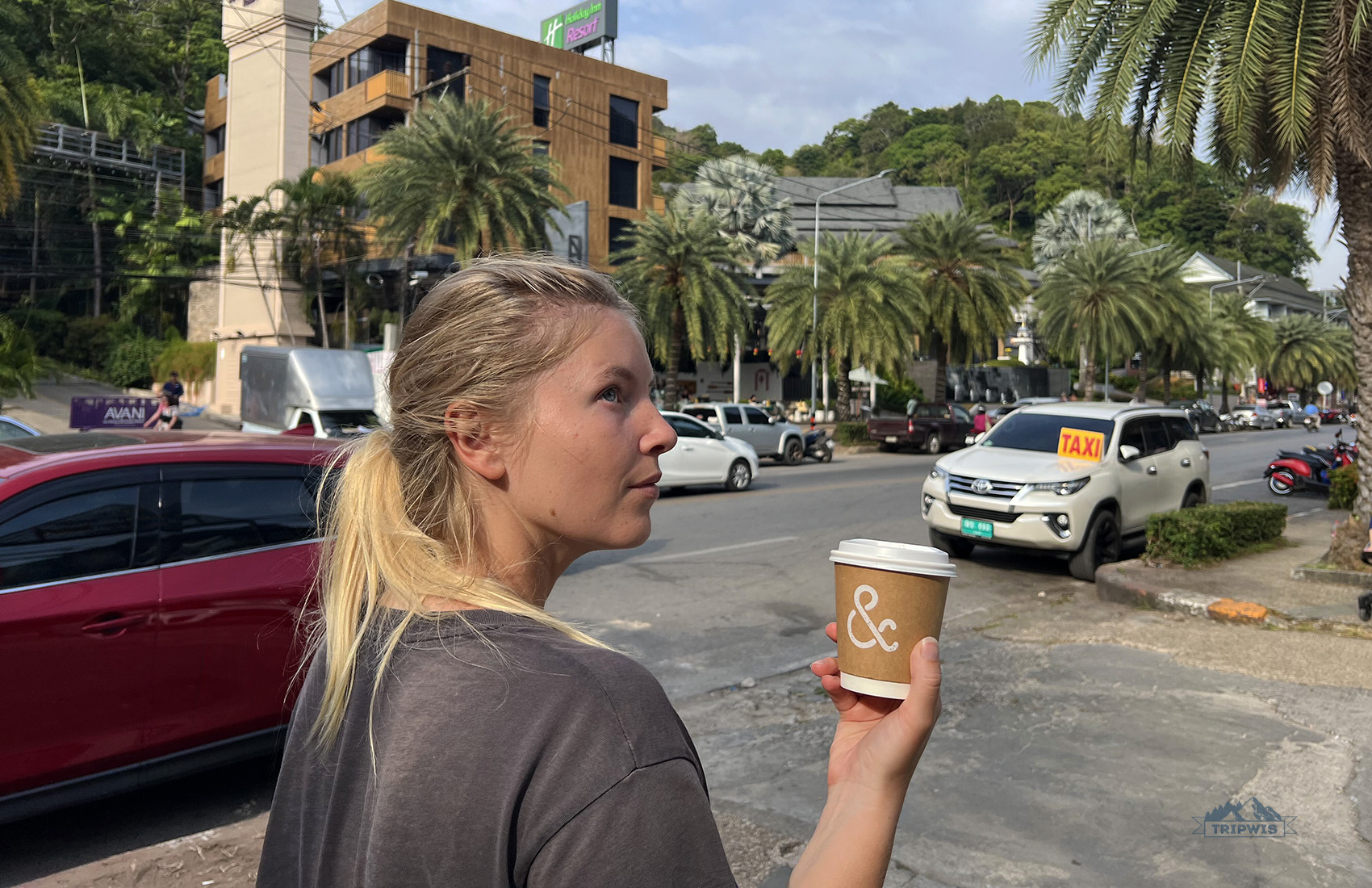
- Sunn Coffee Bar — a small coffee shop hidden in the backyard of the big and shiny The Coffee Club (their coffee sucks). It’s also very close to the spot where all the boats leave for the islands. Coffee at Sunn is good: A cup of latte here will set you back 100 baht / $3,2. But it’s uncomfortable to sit here for more than ten minutes, even though there are seats both inside and outside.
- The Verandah Cafe — a breakfast and lunch cafe with both an outdoor terrace and an air-conditioned indoor space. The menu includes Thai classics and European dishes. We tried it for breakfast, but the first café from this list won. Though now that I think about it, their blueberry and lemon curd pancakes for 240 baht / $7,8 were actually really good.
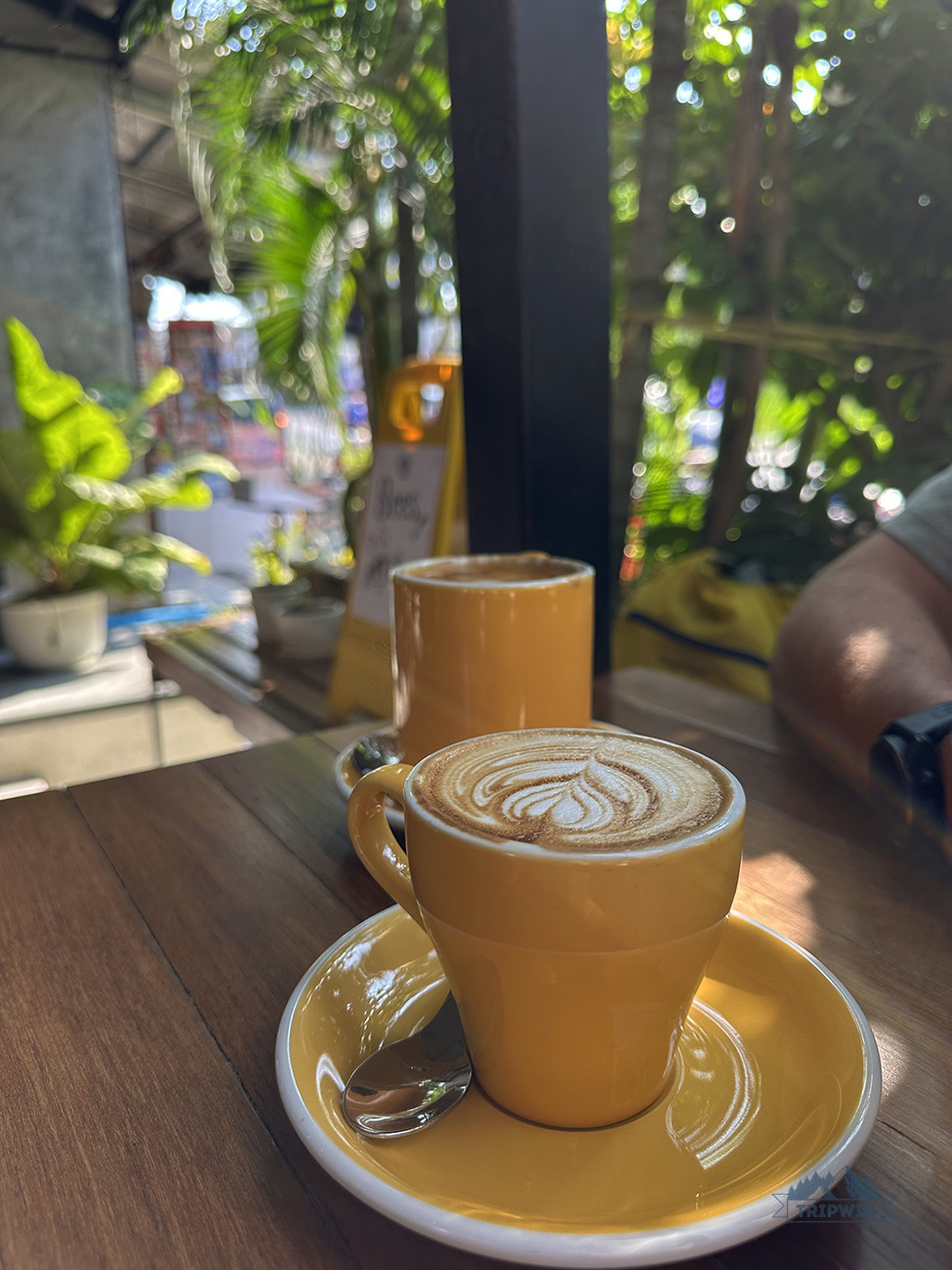
- Much & Mellow Bread & Brunch — a charming cafe with a great menu of filling healthy breakfasts. It’s a small chain around Krabi, not just in Ao Nang (we saw their spots in both Krabi Town and on Phi Phi Don). The menu here is large, but what really stood out for us was the coffee with specialty options.
- Taste Notes Coffee (Cupper on Earth) — in my humble opinion, this coffee shop serves the best coffee in Ao Nang. However, google maps says it’s temporarily closed now.
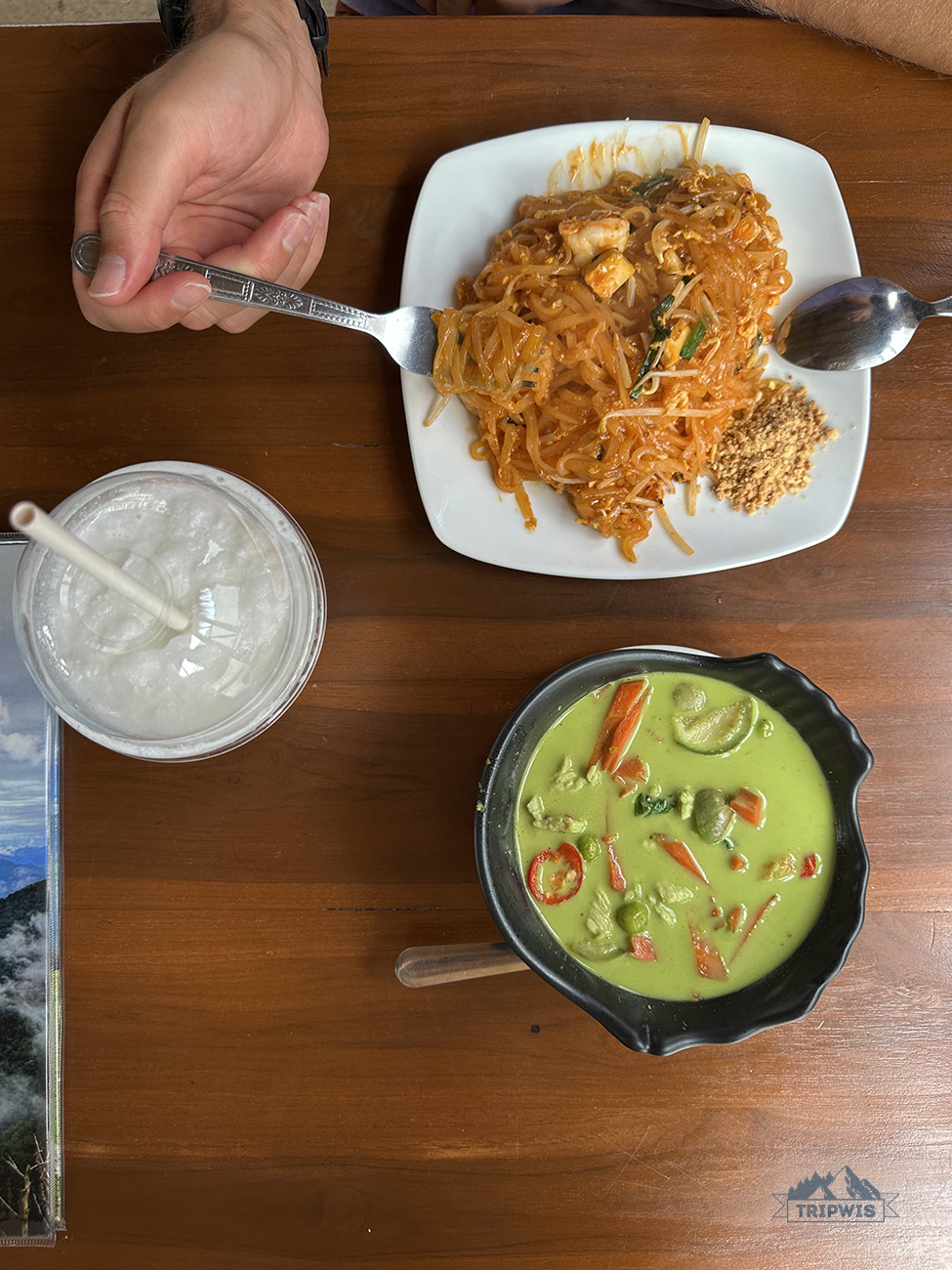
- PHUPHA Thai Food — this is the Thai food spot we ate at six times in five days. I have a mild obsession with khao pad gai — fried rice with chicken — and coconut shake, and this place makes these things so good I couldn’t help but come back again and again. The prices are very reasonable: Fried rice — 70 baht / $2,3, seafood pad thai — 120 baht / $4, fruit shakes — 60–80 baht / $2–$2,6.
Krabi FAQs
Well, now it’s time for the info you might find useful if you’re planning a trip to Krabi!
When is the best time to visit Krabi?
Though I have a detailed breakdown of Thailand weather in the article here, it’s a good idea to focus on Krabi in particular — its waterfront location and the tropical jungle surrounding the province add nuances to the climate.
The best season for Krabi is November to March. The weather is warm and dry, not too hot, and evenings can even feel a bit cool. From April to early June, it’s the hottest season in Thailand. No rain, but during the day you’ll probably want to live under the AC.
From June, the rainy season begins, lasting way into October. You can still travel — rains aren’t always heavy — but there’s a huge chance of daily showers, cloudy weather, and rough sea (limiting your island-hopping opportunities a good amount). In the worst case, there’s even a risk of flooding.
How to get around Krabi?
 |
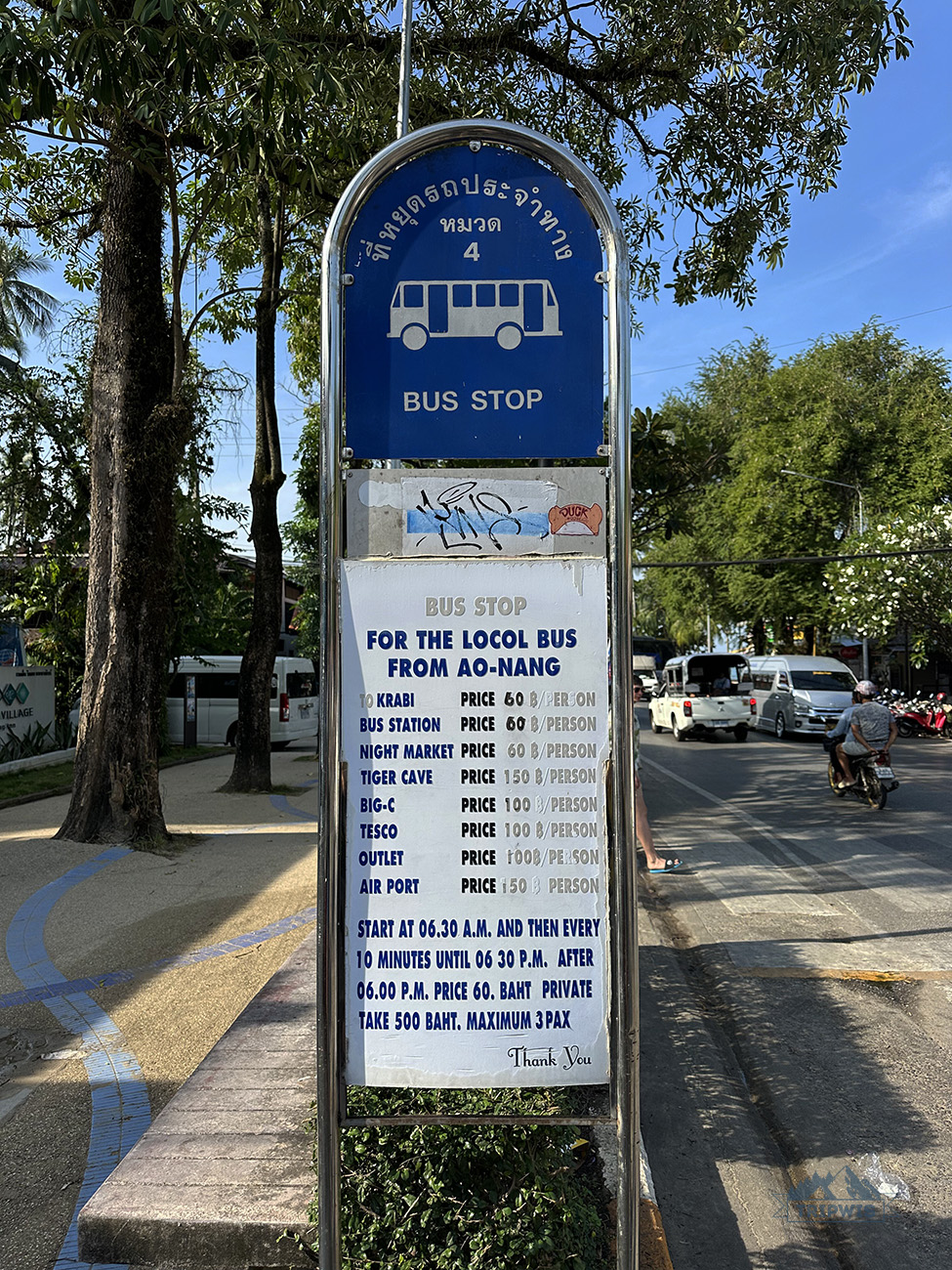 |
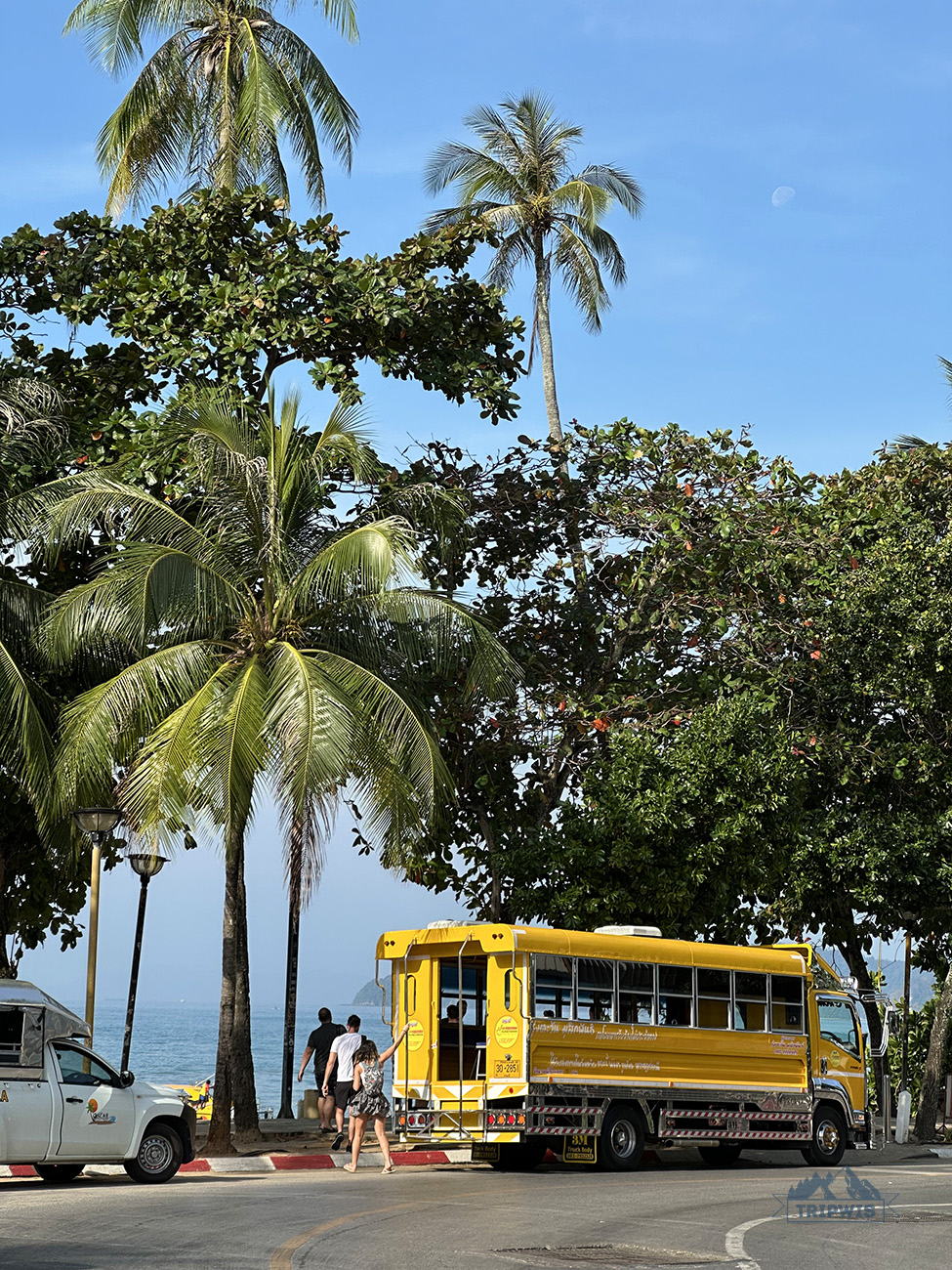
Ao Nang has a fairly well-developed public transport system. Songthaews (open pickup trucks with bench seating in the back) run back and forth from 6:30 a.m. to 6:30 p.m. They even follow fixed routes with designated stops, connecting beaches and towns within Krabi.
- Ao Nang to Krabi Town — 60 baht / $2
- Ao Nang to Tiger Cave — 150 baht / $5
That said, we didn’t really use them — we mostly got around by rented scooter or Grab (the local Uber).
We arrived in Krabi on a night bus from Bangkok, then took a songthaew from the bus station to Ao Nang for 60 baht per person. These depart once the vehicle fills up. From Krabi Airport to Ao Nang (and back), there’s also a shuttle bus running every hour for 150 baht.
To get between Krabi and nearby islands, use long-tail boats. They depart from the Ao Nang Beach every 20 minutes (there’s no strict schedule — they also leave when the boat fills up).
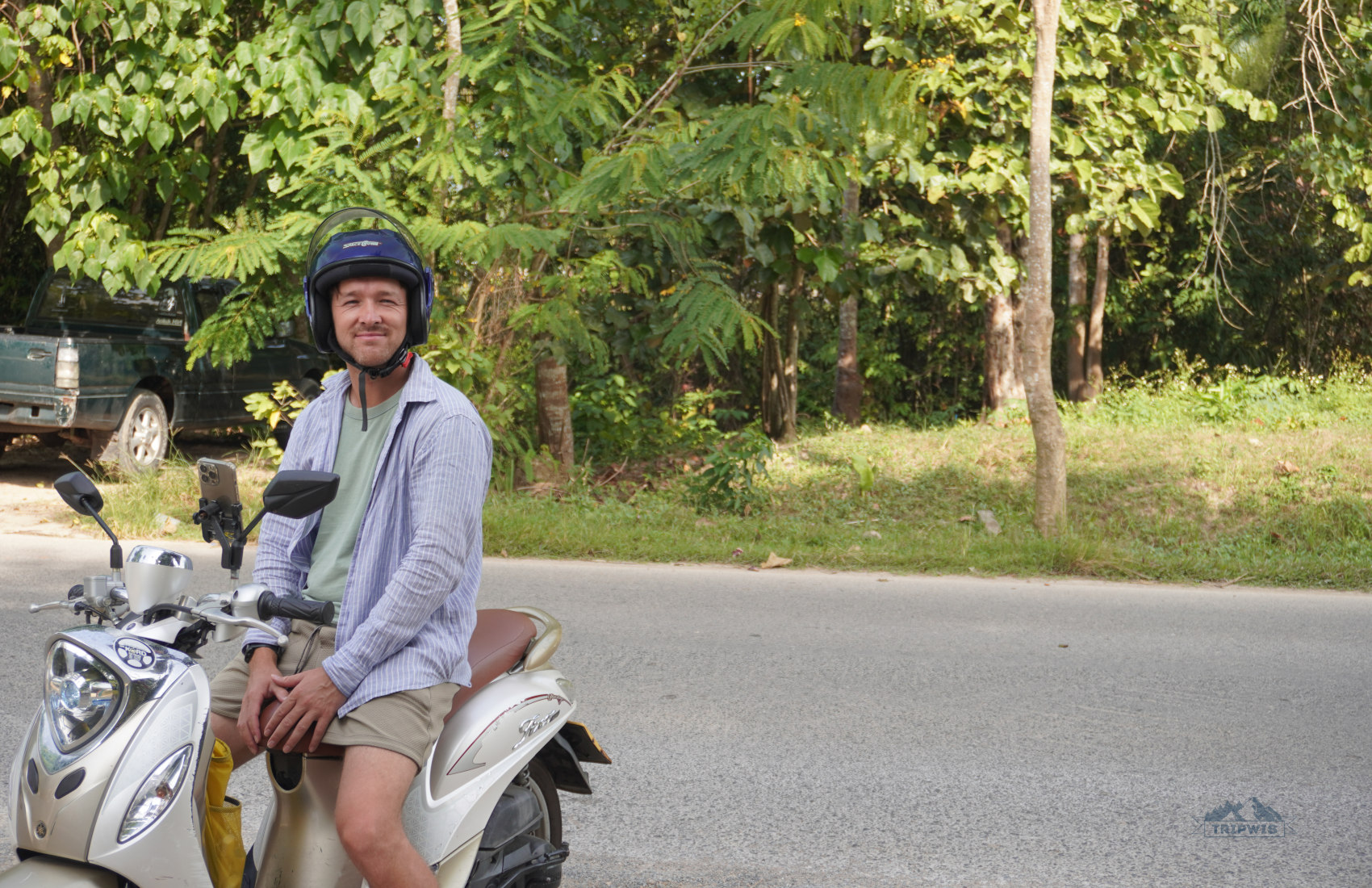
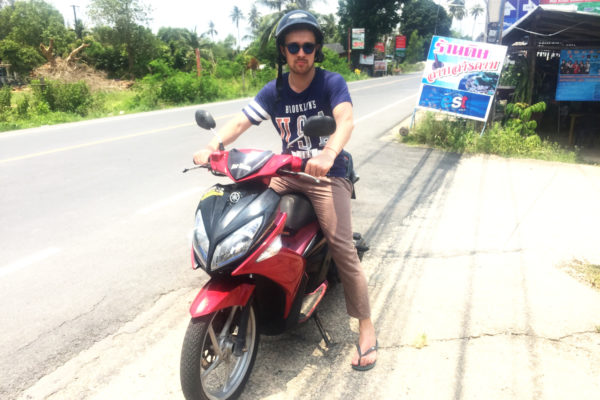
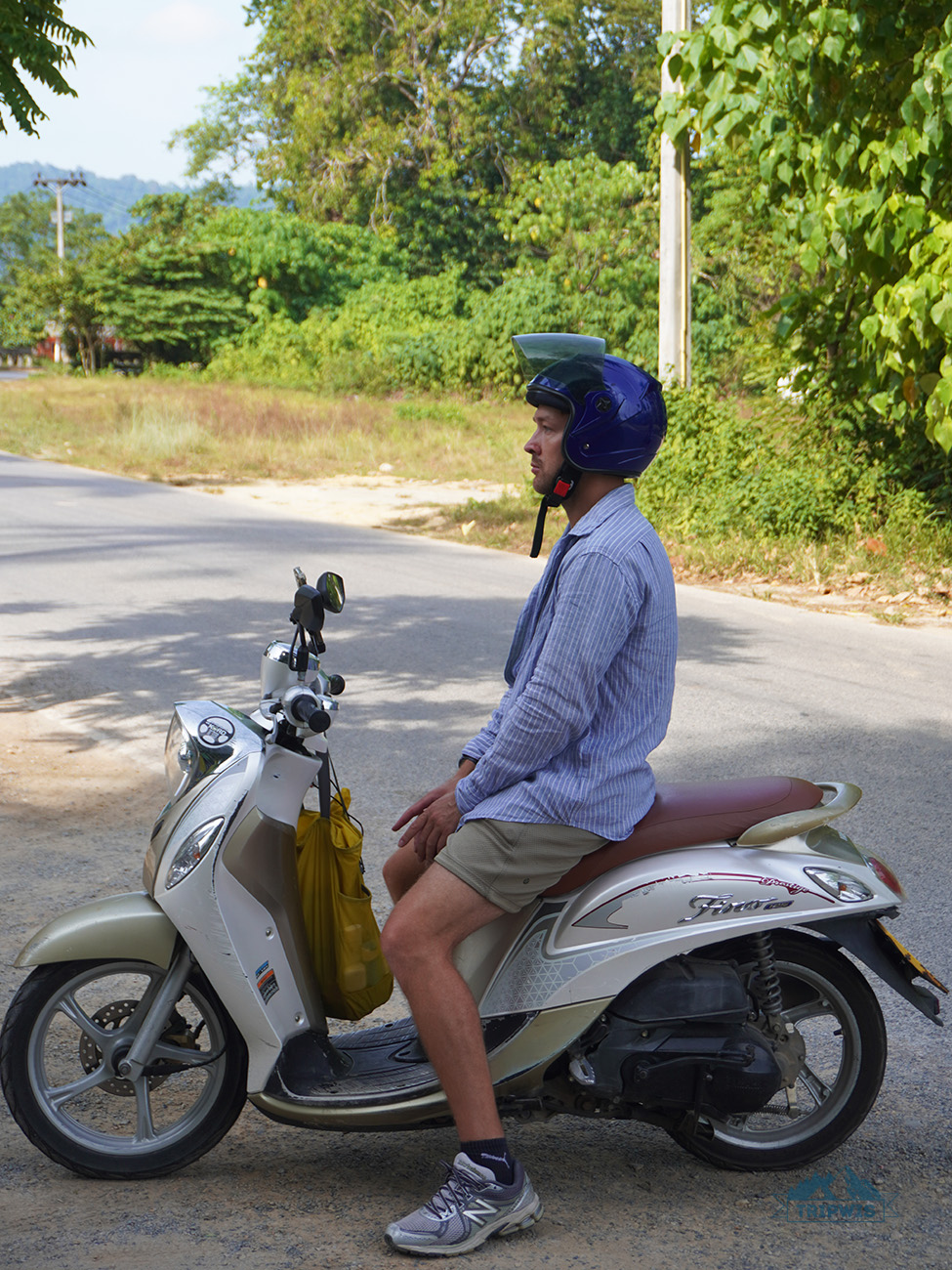
Still, I’d personally recommend getting around Krabi on your own, either by scooter or by car. The roads are in great condition, and traffic jams are only really an issue in Krabi Town. For around 200 baht / $6,5 per day, you get total freedom. You can rent a bike almost anywhere, especially near beaches and attractions (we rented directly from our hotel).
Side note: Rental shops in Krabi usually don’t ask tourists for a license, but police absolutely can fine you if you’re stopped without one — so having an A category license is important. Police checks do happen.
Traffic here isn’t too intense, which makes Krabi a good place for a first-ever bike experience. One thing that might trip you up at the beginning is the need to adjust to left-hand driving. Just don’t practice in Krabi Town — that’s where roads get busy.
You can also rent a car, which makes sense if you’re traveling with a child or in a group of 3+ people. I recommend DiscoverCars — it’s a reliable and user-friendly website with plenty of affordable options. Car rental costs start from $30 per day.
Just keep in mind that parking in Ao Nang is a pain — roadsides are packed with cars and scooters. You can usually squeeze in a bike, but finding a spot for a car, especially near the beach, can be difficult.
How to stay connected in Krabi?
There are no issues with mobile service or the internet in Krabi. You can buy SIM cards at mobile operator offices, phone shops, or 7-Eleven stores — or simply get one at the airport right away.
We got an e-SIM via Klook one day before our trip (50 gb of data for 10 days for $7).
How much does Krabi cost?
 |
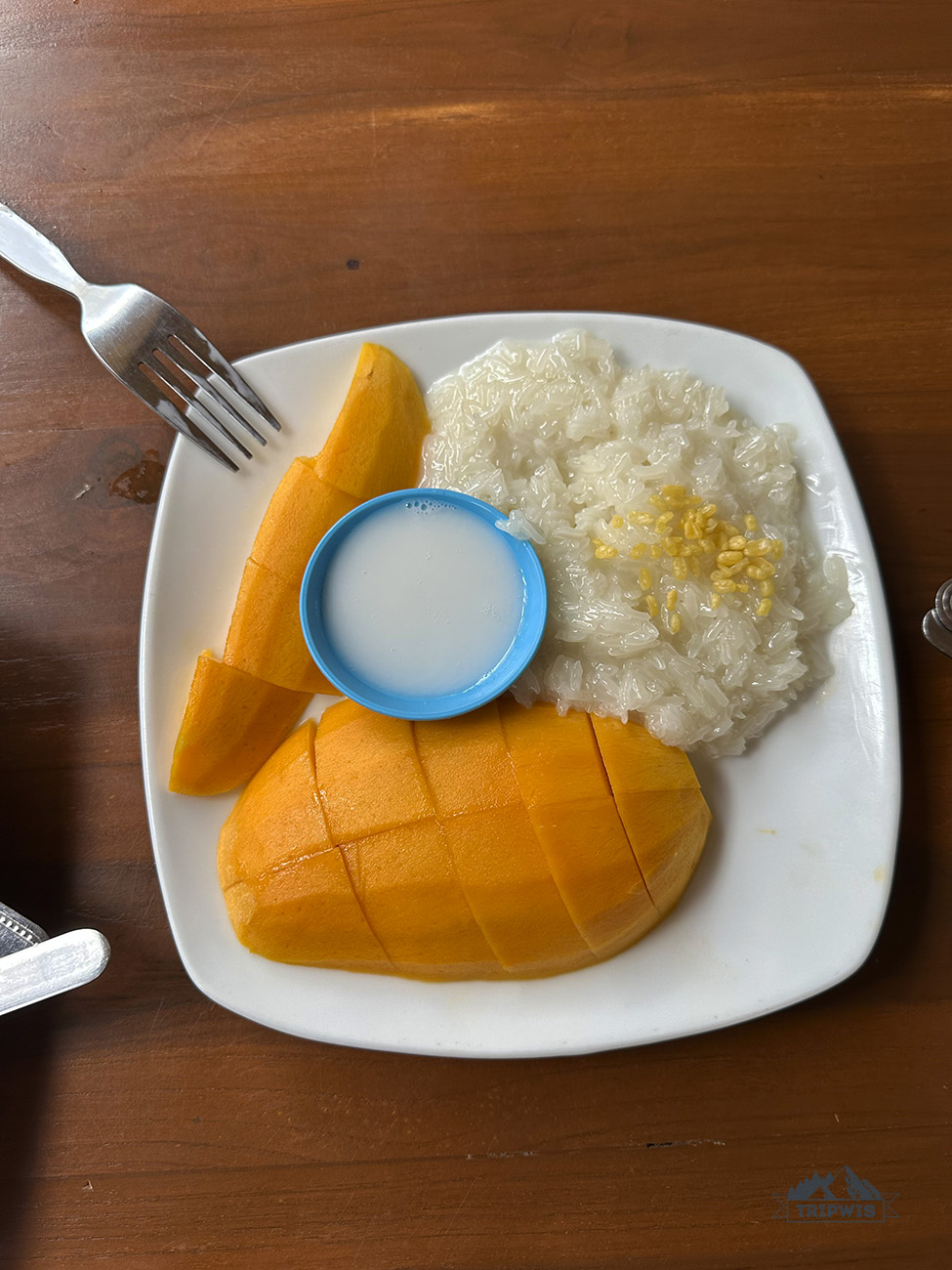 |
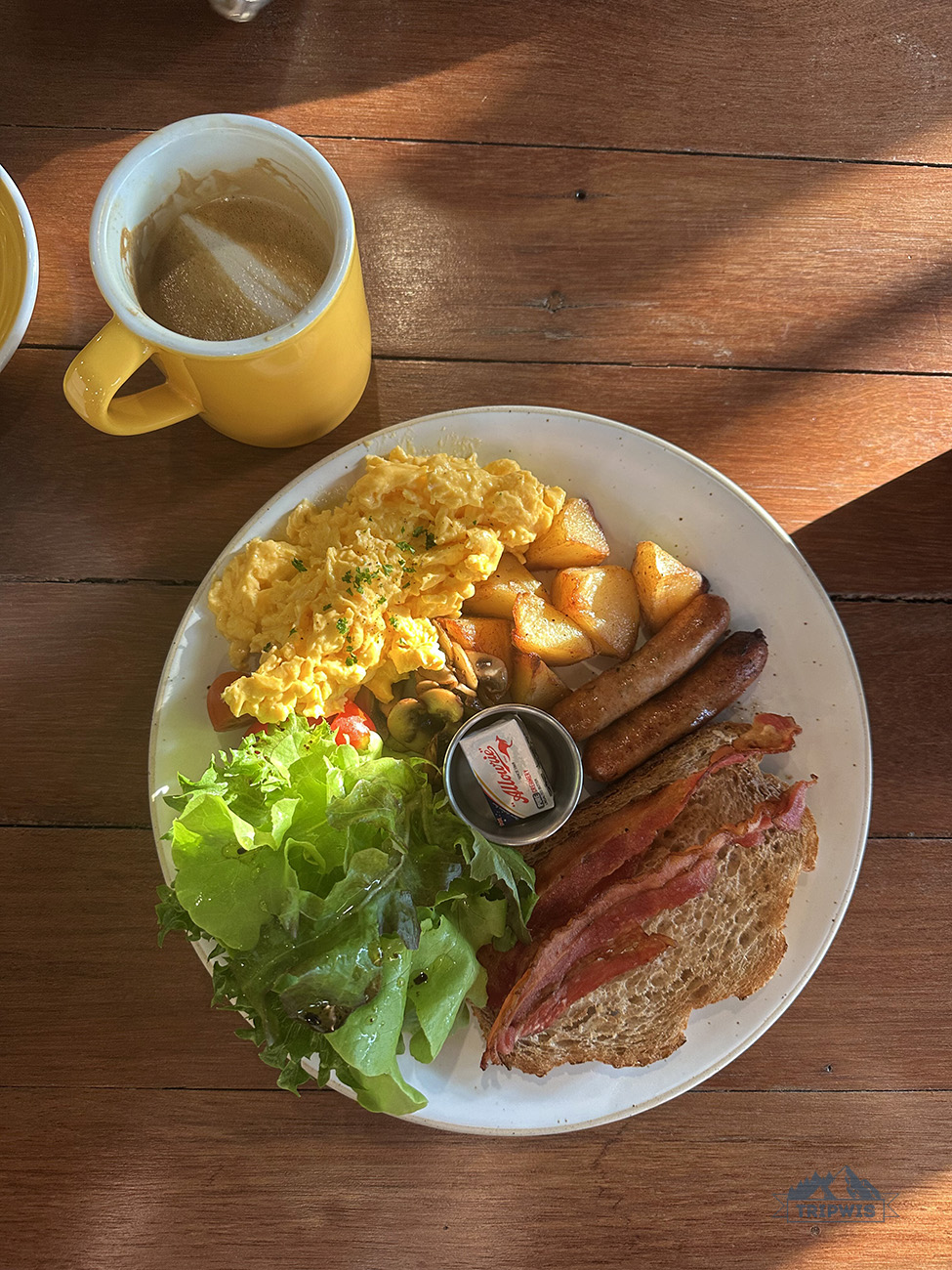
Krabi isn’t the cheapest resort in Thailand, but it’s far from the most expensive. Prices here are pretty average. You’ll find both budget eateries (from 60 baht / $2 per dish) and higher-end restaurants.
Here are some examples of prices in Krabi, just to give you a general idea:
- Breakfast for two with coffee — 700 baht / $22,6
- Lunch for two in a Thai cafe — 300 baht / $10
- Coconut — 60 baht / $2
- Scooter rental — 300 baht a day / $10
- Foot massage — 250 baht / $8
In total, we spent about 10,500 baht (approx. $340) for two people for 5 days, excluding accommodation and flights, but including all the excursions.
Which is better — Four Islands or Hong Island?
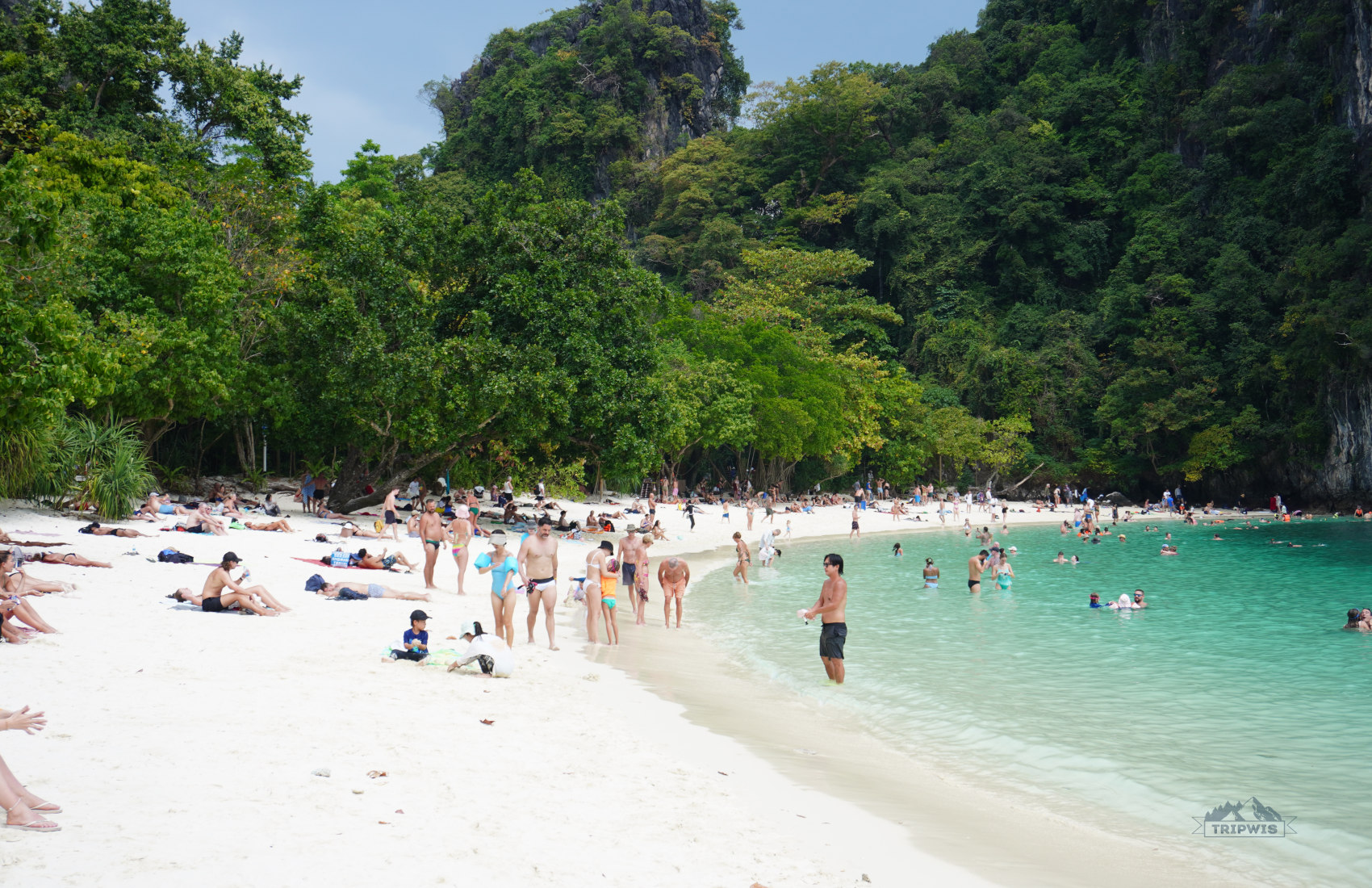
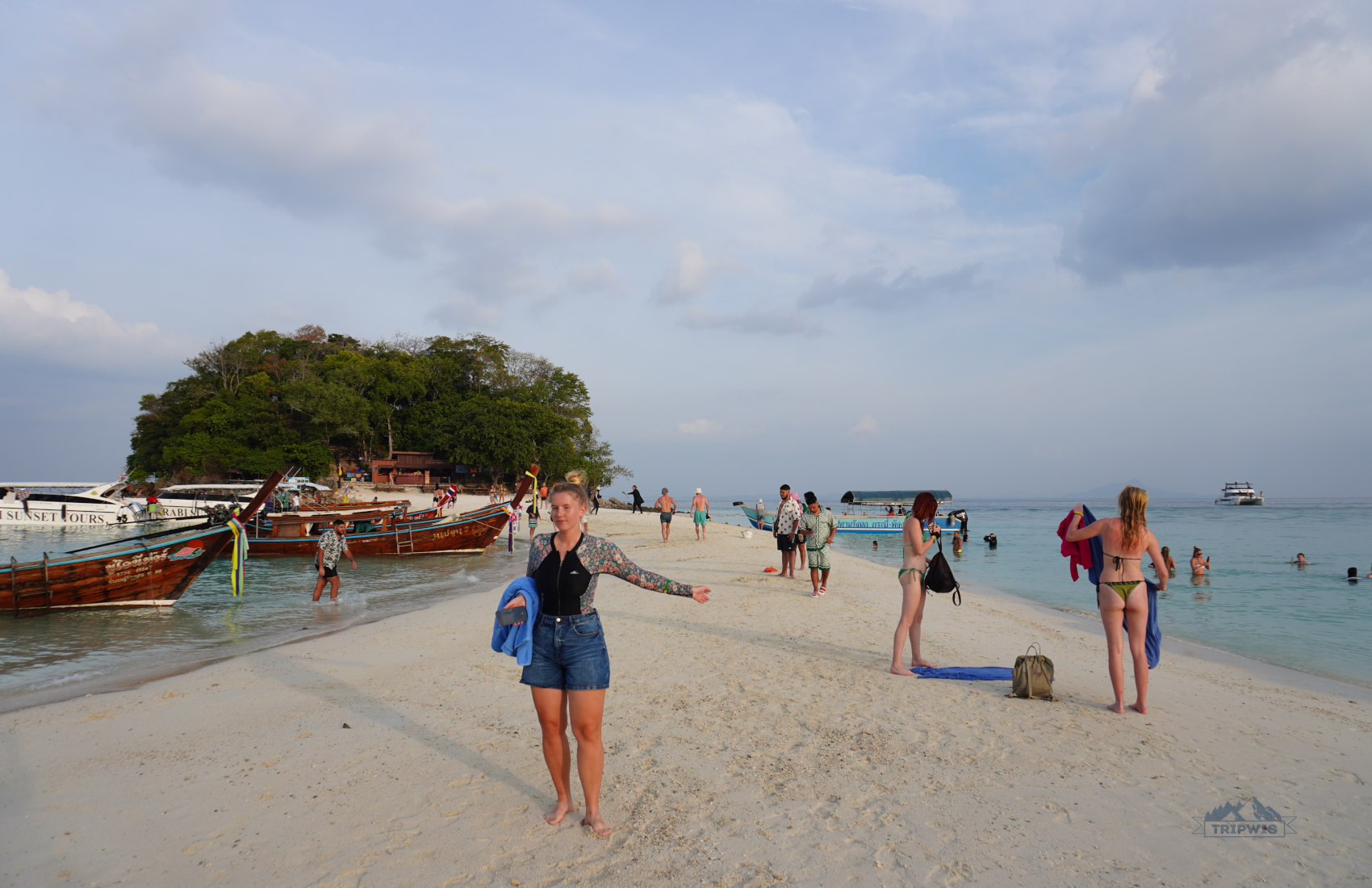
Hmm, here’s my take: Both tours are great, but they’re very different.
Four Islands tour is the classic, most popular day trip. It’s sold absolutely everywhere. It consists of picture-perfect tropical islands, with a focus on beach time, snorkeling, and taking great photos.
The Hong Island tour is more about scenery and discovery rather than just beaches. Snorkeling is included too, but you’ll also get other options — climbing to a stunning viewpoint or doing a short hike.
So which one is better? Honestly, it depends entirely on your travel style and priorities. We loved both.
And there you have it! I hope that my detailed Krabi guide helps you plan the greatest adventure of your lifetime. If you still have any questions you would like to ask me, leave them in the comments down below.