 |
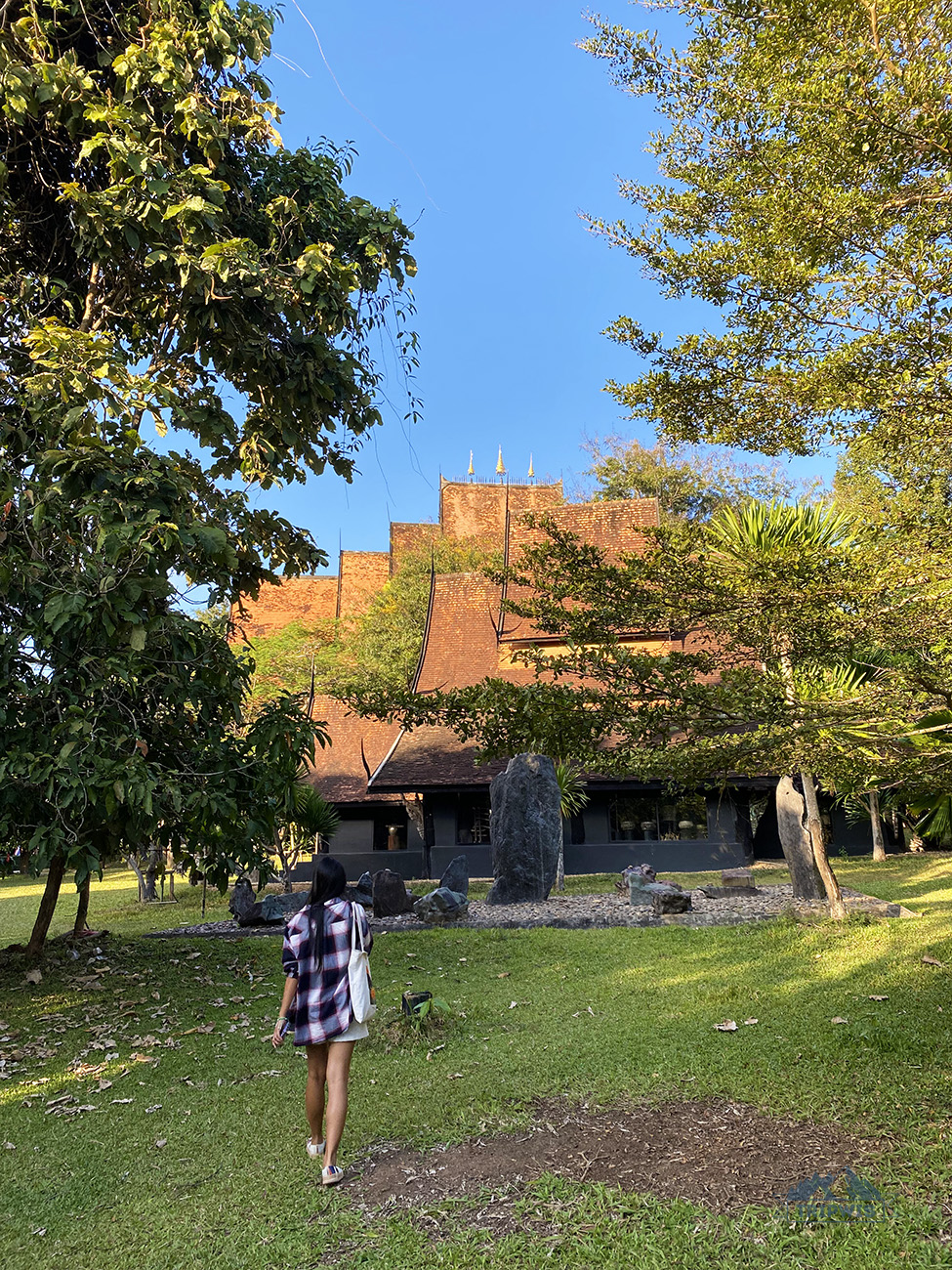 |
Chiang Rai in Thailand isn’t nearly as popular with travelers as the infamous urban-centric Bangkok and Phuket. Even the neighboring Chiang Mai — Thailand’s cultural hub — doesn’t see that much action when compared to the country’s lush waterfront locations, and it is way larger and more developed than Chiang Rai. Why the relative lack of demand? The answer is simple — there’s no sea in the north of the country. Instead, Chiang Rai and the area surrounding it is rich with misty mountains, tea and coffee plantations, and even contemporary art museums.
We spent almost two months here last winter, and now I’m ready to share a detailed Chiang Rai travel guide — when to come, what to see and do inside and outside Chiang Rai limits, where to eat and what local treats you shouldn’t miss, as well as some particularly valuable Chiang Rai tips!
Article contents
- How to get to Chiang Rai?
- The best time for a Northern Thailand trip
- Where to stay in Chiang Rai?
- Things to see and do here + day trips
- My favorites cafes in Chiang Rai
- How to get around the city?
- My thoughts about Chiang Rai
How to get to Chiang Rai from Bangkok or Chiang Mai?
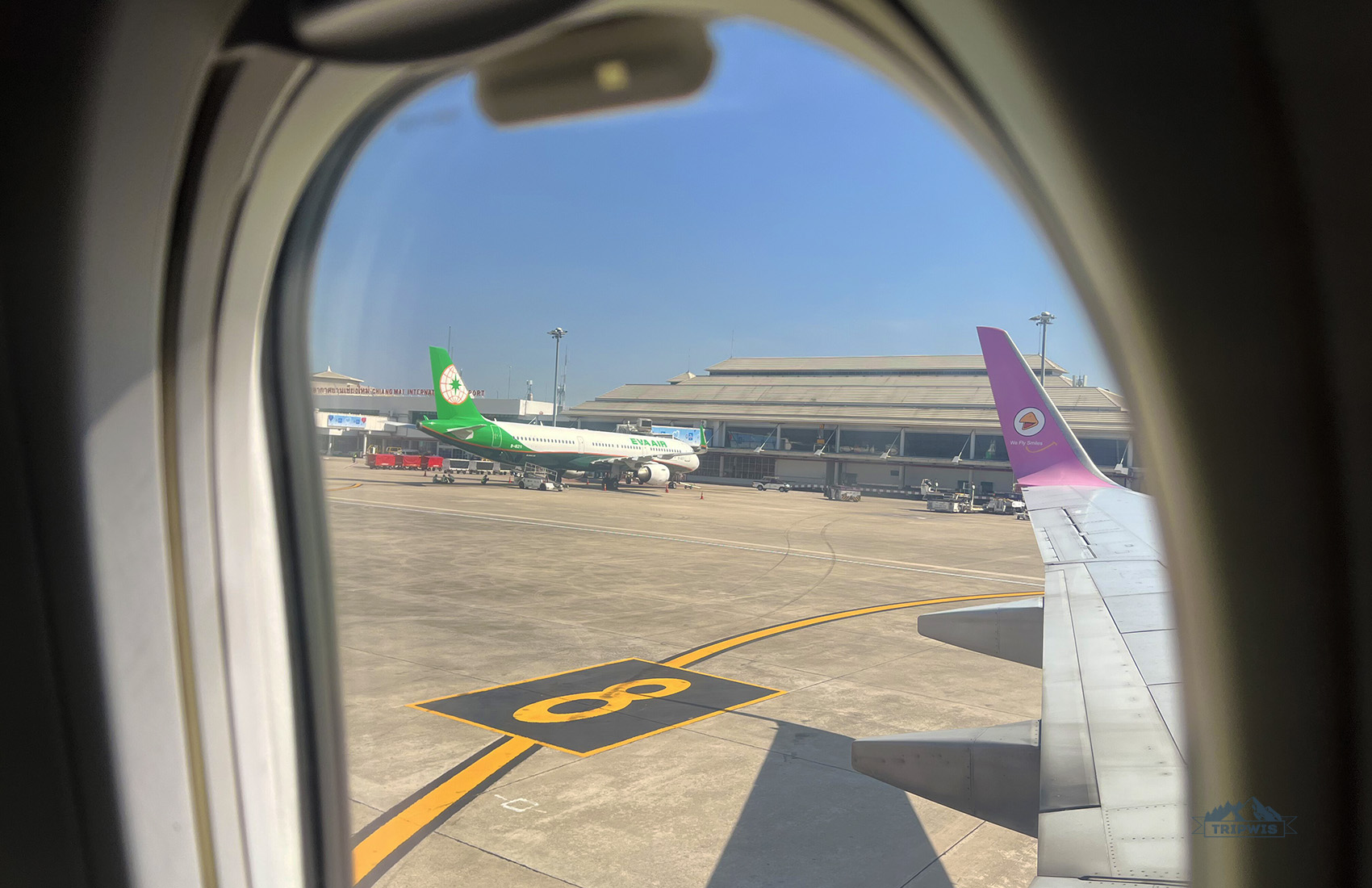
Chiang Rai sits in Thailand’s far north, close to the borders with Laos and Myanmar. It may sound remote, but getting here is actually pretty easy. You have two main options — flying or taking a bus.
By plane
The city’s airport — Mae Fah Luang Chiang Rai International Airport (CEI) — has direct flights from Bangkok and Phuket only.
- From Bangkok: The flight lasts 1,5 hours and prices start from $35. There are around 10–15 flights a day from Bangkok to Chiang Rai, so you can easily grab a ticket last minute. A friend of mine once bought his ticket right at the airport, 45 minutes (!) before take off!
- From Phuket: 2 hours, prices start from $45. Only one company, Thai Vietjet Air, has direct flights — on Monday, Wednesday, and Friday.
Once you land, you’ll need to get from the airport to downtown Chiang Rai. The easiest way to do it is by taxi. The most convenient app is Grab — Thailand’s Uber — where you can also order food or deliveries. The trip to the city center takes about 25 minutes and costs around 200 baht / $6,5.
Side note: You can also try Bolt or local taxi services, but Grab is usually cheaper and more reliable. There used to be a nifty shuttle bus connecting the airport and the city center, but it stopped operating a while ago.
By bus
You can also reach Chiang Rai by bus from Bangkok or Chiang Mai.
- From Bangkok: The journey takes 12 hours, tickets cost around $25.
That’s how we got to Chiang Rai (because when we finally made up our minds to visit the city, plane tickets tripled from their normal level). Our bus was small but half-empty and very comfortable. They gave out blankets, water, and snacks, plus stopped for dinner — all included in the ticket price. The only downside is that the air conditioning was set to the max.
- From Chiang Mai: Tickets cost $12 for a regular bus or around $20 for a minivan. The trip takes 4 hours.
Buses from Chiang Mai to Chiang Rai arrive at Terminal 1, right in the city center. From there, you can easily walk to most hotels in no more than 20 minutes. If your accommodation is farther away (or you just don’t feel like dragging your luggage in the tropical heat), order a Grab — it’s very cheap.
If you’re coming from anywhere else in Thailand — say, Pattaya — you’ll need to travel via Bangkok or Chiang Mai to reach Chiang Rai.
The most convenient way to book bus tickets in Thailand is through 12go.asia. You can also try buying tickets directly at the station, but for some mysterious reason, they’re not always available at the counter.
When is the best time to visit Chiang Rai?
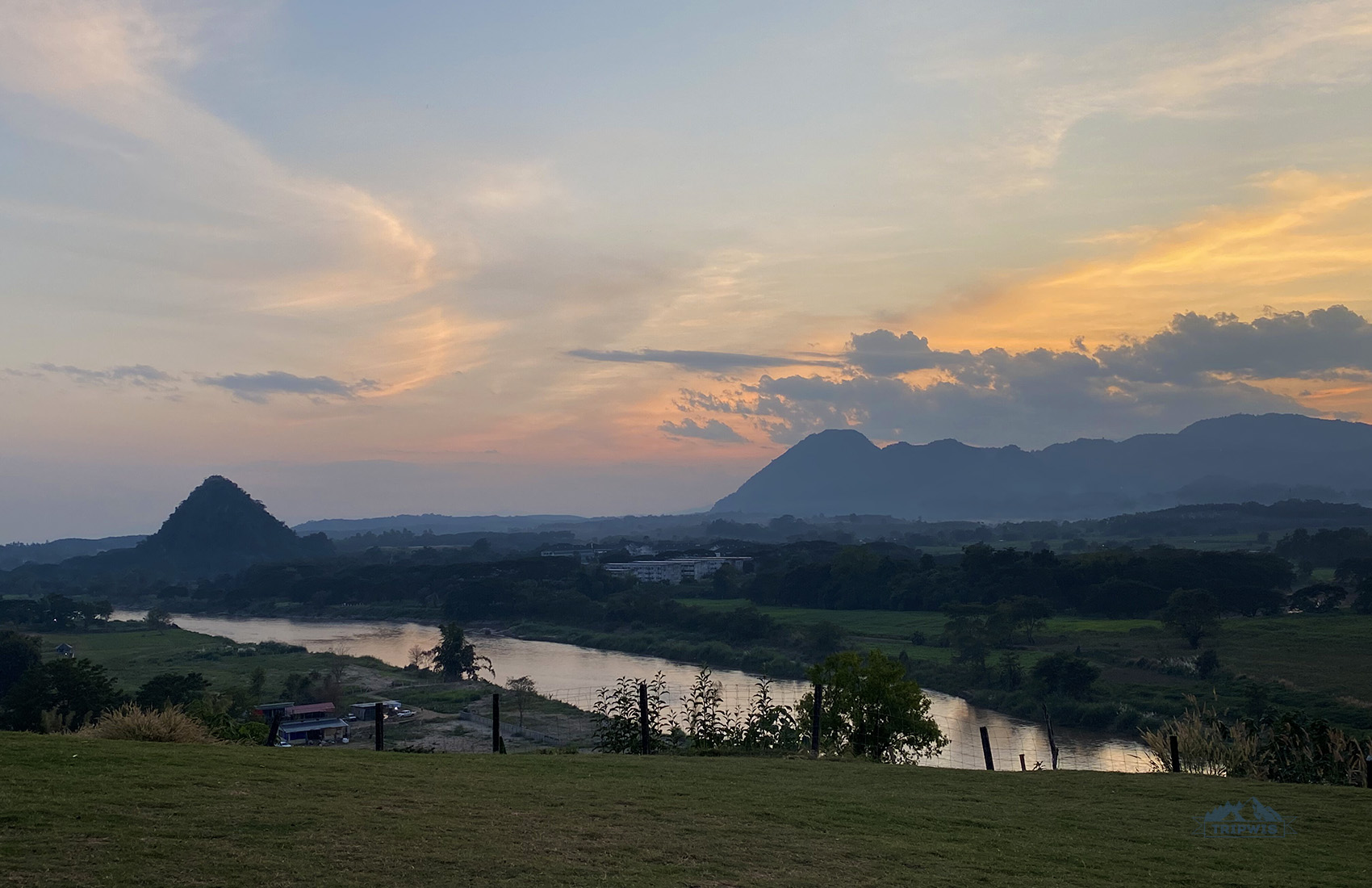
Thailand is a year-round tourist destination, but each region has its own peculiarities. After all, the same month in a landlocked area and a waterfront area would feel a little different. If you’re planning a Thailand sojourn that covers more than its northern part, then make sure to consult with my overview of the seasons and weather in Thailand.
For now, let’s focus our efforts closer on the immediate surroundings of Chiang Rai. Northern Thailand has three main seasons:
- Cool season (November–February) — though it is “cool” only for the locals. For Thailand visitors, this period feels like a full-on summer: The temps hover around +25°C…+30°C during the day and +20°C at night. I’d say the cool season is hands-down the best time to visit Chiang Rai and the region overall.
We spent December and January here, and the weather was perfect — warm and sunny almost every day. It got cloudy and windy sometimes, but only a little. In a month and a half, it rained only twice, and both times it was that warm, tropical kind of rain that feels refreshing, not overwhelmingly annoying. Definitely not like the gloomy late fall downpours back home.
- Hot season (March–May) — also known as the burning season. During these months, local farmers burn dry grass in the fields to prepare for new crops, and the air fills with smoke. On top of that, temperatures soar to +38°C, so it’s not exactly an ideal time for sightseeing.
- Rainy season (June–October) — the time of the year when the tropics are at their lushest and greenest. The temperature stays around +30°C, rivers and waterfalls are at their fullest, and everything is in bloom. Yet the sky is mostly cloudy and rain showers are very frequent.
I’ve made a small chart with Chiang Rai monthly temperatures and the number of rainy days for easier comparison:
| Jan | Feb | Mar | Apr | May | June | July | Aug | Sep | Oct | Nov | Dec | |
| Average daytime temperature | +28°С | +32°С | +36°С | +38°С | +35°С | +32°С | +30°С | +30°С | +31°С | +30°С | +29°С | +27°С |
| Average nighttime temperature | +15°С | +18°С | +22°С | +25°С | +24°С | +23°С | +23°С | +22°С | +22°С | +20°С | +18°С | +16°С |
| Number of rainy days | 1 day | 0 day | 1 day | 2 day | 7 day | 13 day | 19 day | 18 day | 12 day | 7 day | 3 day | 1 day |
Where to stay in Chiang Rai?
 |
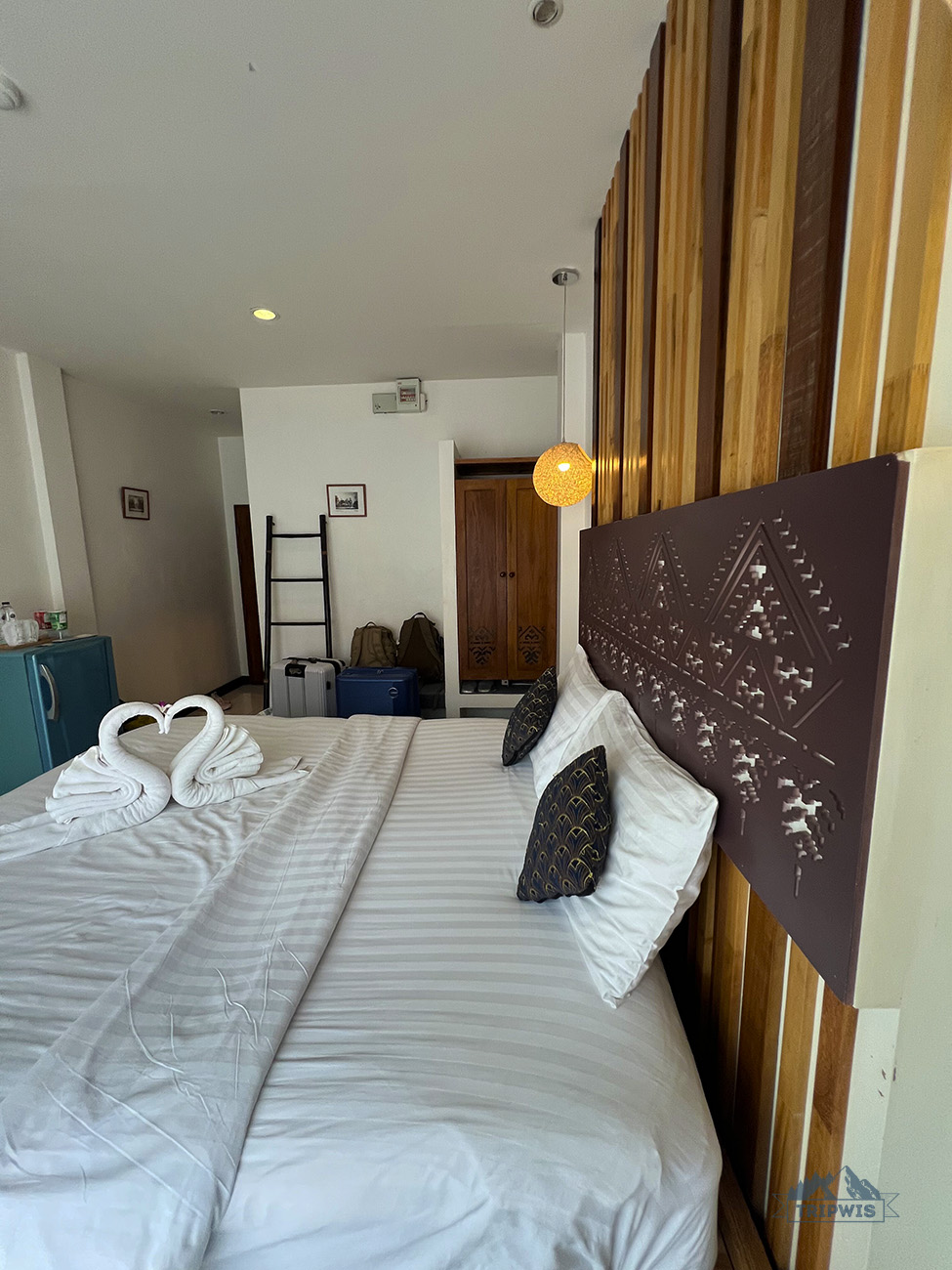 |
A question of where to stay in Chiang Rai and which hotel to choose out of the sea of options is a prominent one.
Note that Chiang Rai is a small city, and most of its famous attractions are located on the outskirts or outside the city altogether. No matter where you stay, you’ll need some form of transport to get around.
If you want to be close to restaurants, markets, and massage parlors, stay in the city center — anywhere within walking distance of the Chiang Rai Clock Tower or Night Bazaar. Here, you’ll find plenty of hostels, guesthouses and small urban B&Bs. The city is generally quiet: It only gets lively around the markets in the evenings, roughly between 6–10 p.m.
There are also resort-style hotels in the city’s outskirts. Getting downtown will require a taxi, scooter, or a good half-hour walk. They’re also noticeably pricier than central hotels, so I’d only recommend them if luxury (including swimming pools) and 5-star service are your top priorities.
In Northern Thailand, you’ll find plenty of small family-run guesthouses that aren’t listed online at all. They’re usually cheaper than anything you’ll see on booking platforms — just take a stroll around town, find the one you like, and negotiate the price in person. Even in high season, you can find a good hotel for $20 per night. Hostels start from $11 per night per person.
Here’s my short list of Chiang Rai stays for every budget and taste.
(I’ll leave links both to Booking.com and Trip.com as some hotels work with only one of the platforms)
- 2* Hop Inn Chiang Rai Clock Tower (from $25 a night) — located right in the heart of the city, close to the Clock Tower, local markets, restaurants, and bars. Rooms are clean and tidy, with all the basics — air conditioning, free Wi-FI, toiletries, etc.
- 3* Be One Boutique Resort (from $15 a night) — a very affordable and charming resort, though it is set quite far from the city center, so you’ll need to rely on taxis often. It has a pool and a lovely garden decorated with quirky sculptures.
- 3* B2 Chiang Rai Boutique & Budget Hotel (from $15 a night) — a cozy budget option with clean rooms and big windows. There are also lots of cafes and restaurants nearby, and you can walk to the Night Bazaar in about 15 minutes.
- 3* Hi Chiang Rai (from $40 a night) — a decent hotel in the center of Chiang Rai. Besides the convenient location, there is a complimentary guest parking.
- 4* Pimann Inn Hotel (from $17 a night) — a resort-style hotel with a pool, gym, and breakfast included. It’s about a 30-minute walk from the center, but the rates are very reasonable.
- 4* Wangcome Hotel (from $35 a night) — a pricier option, but located right in the heart of the city. There are great restaurants and bars quite close, yet the area stays quiet at night. Guests love the breakfast buffet here but note that the building feels a little outdated.
- Bed Friends Poshtel (from $20 a night for a double room, from $11 a night for a bed in the dormitory) — it’s a hostel with the option to book private rooms for 1–4 people. There’s a cafe, a coworking space, and a terrace. The hostel’s set within a short 5-minute walk from the main bus terminal and the Night Bazaar — super convenient!
Things to see and do in Chiang Rai
 |
 |
How many days in Chiang Rai is enough? Having spent nearly two months here, I can confidently say there’s no such thing as “too long” in Chiang Rai. It’s so calm and magically beautiful you can easily settle in for weeks — even months — without getting bored.
The number of tourist attractions here is not grand by any means, but the laid-back atmosphere will have you savor the few you visit thoroughly, without rushing.
But more realistic time frame is much lower: If you’re planning a Northern Thailand road trip, I’d say you should include at least 2–3 days in Chiang Rai.
I’ve met so many travelers who think there’s nothing to do in Chiang Rai. Most people skip it for Chiang Mai or Pai, or treat it as just a one-night stop before heading to Laos. Even a lot of Thailand travel guide articles barely give it more than a paragraph — which does the city no justice at all.
In reality, the city and its surroundings have more than enough to keep you busy for a few days or even longer. Let me share the most popular attractions in the area along with a few of my personal favorite spots that you won’t find in most Chiang Rai travel guides.
White Temple (Wat Rong Khun)
 |
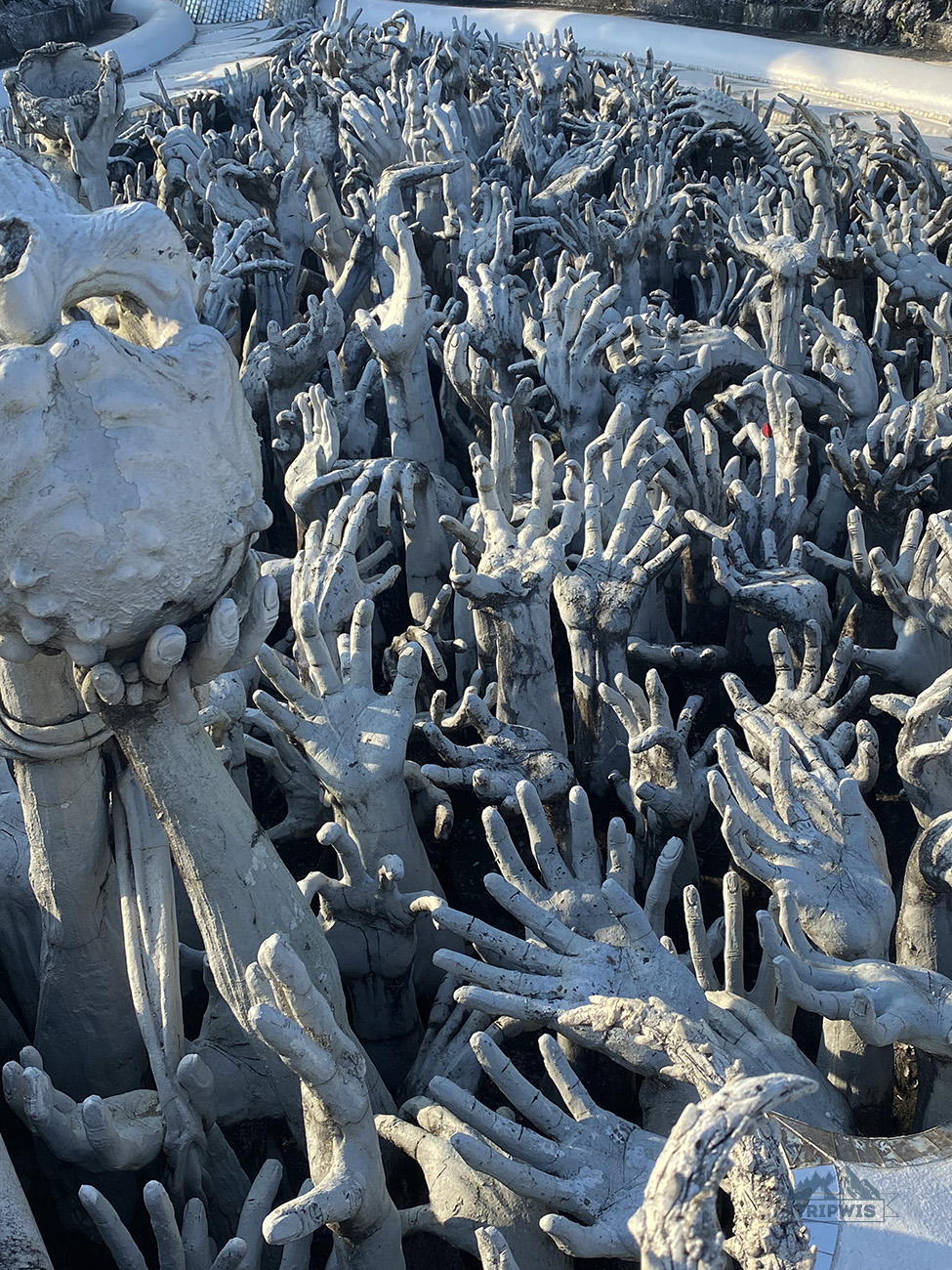 |
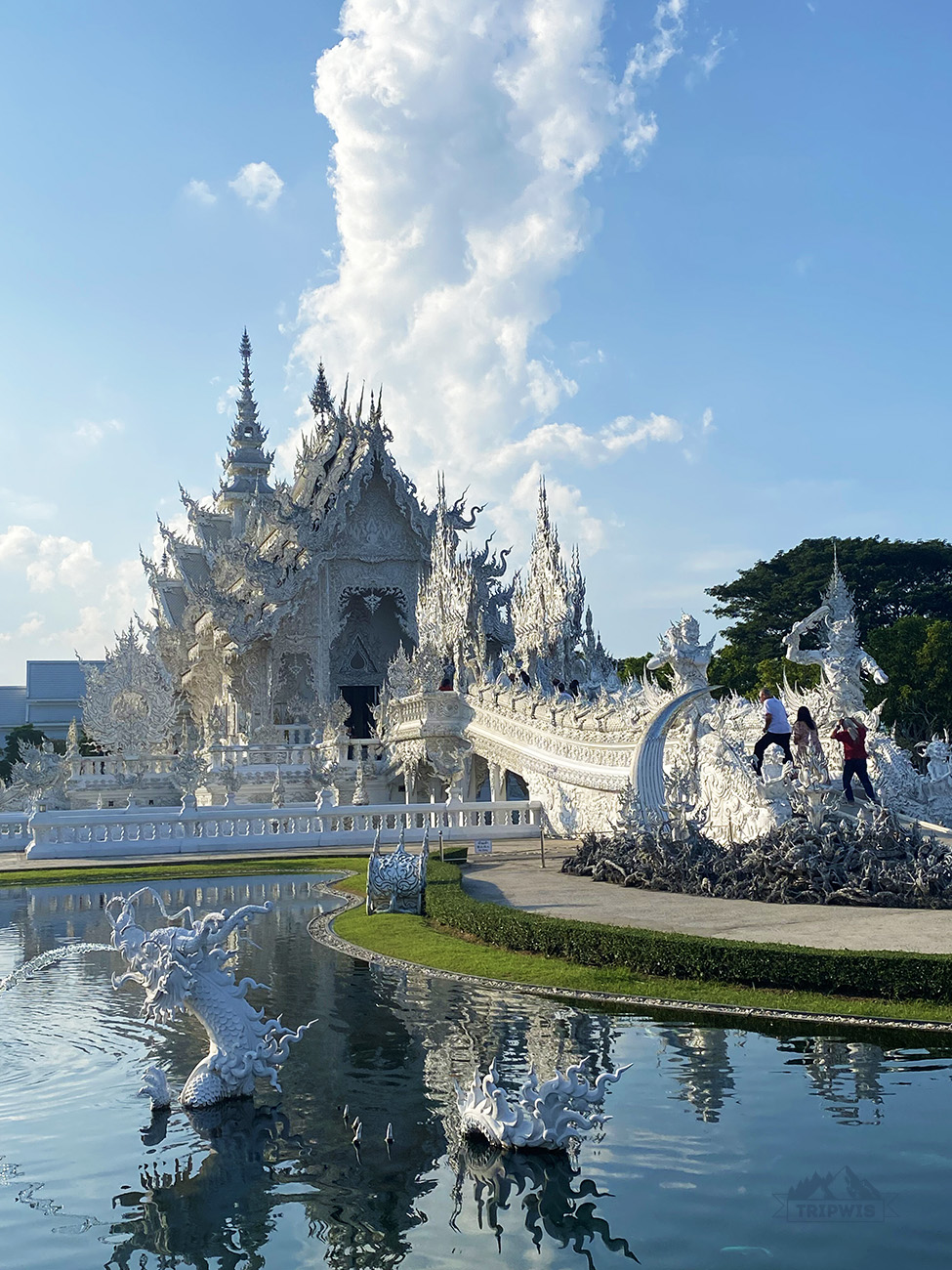
This carved white structure is the image you’ll see if you Google “Chiang Rai places to visit”. It’s a modern Buddhist temple built in 1997 by a local artist — that’s probably why it feels more like an art gallery than a temple.
Aside from the main building, the complex includes several small museums, a cave, and art installations. There’s also an art gallery featuring the artist’s works right by the main entrance. Oddly enough, all the beauty of the temple is on the outside.
It’s best to visit early in the morning (around 8 a.m.) or after lunch, since bus tours from Chiang Mai usually arrive between 9 a.m. and 1 p.m., and it gets really packed.
🔹 Entrance fee: 200 baht / $6,3. The art gallery is free (so is the entrance for those over 70 years old or under 120 cm tall)
🔹 Opening hours: 8 a.m. – 5 p.m.
Blue Temple (Wat Rong Suea Ten)
 |
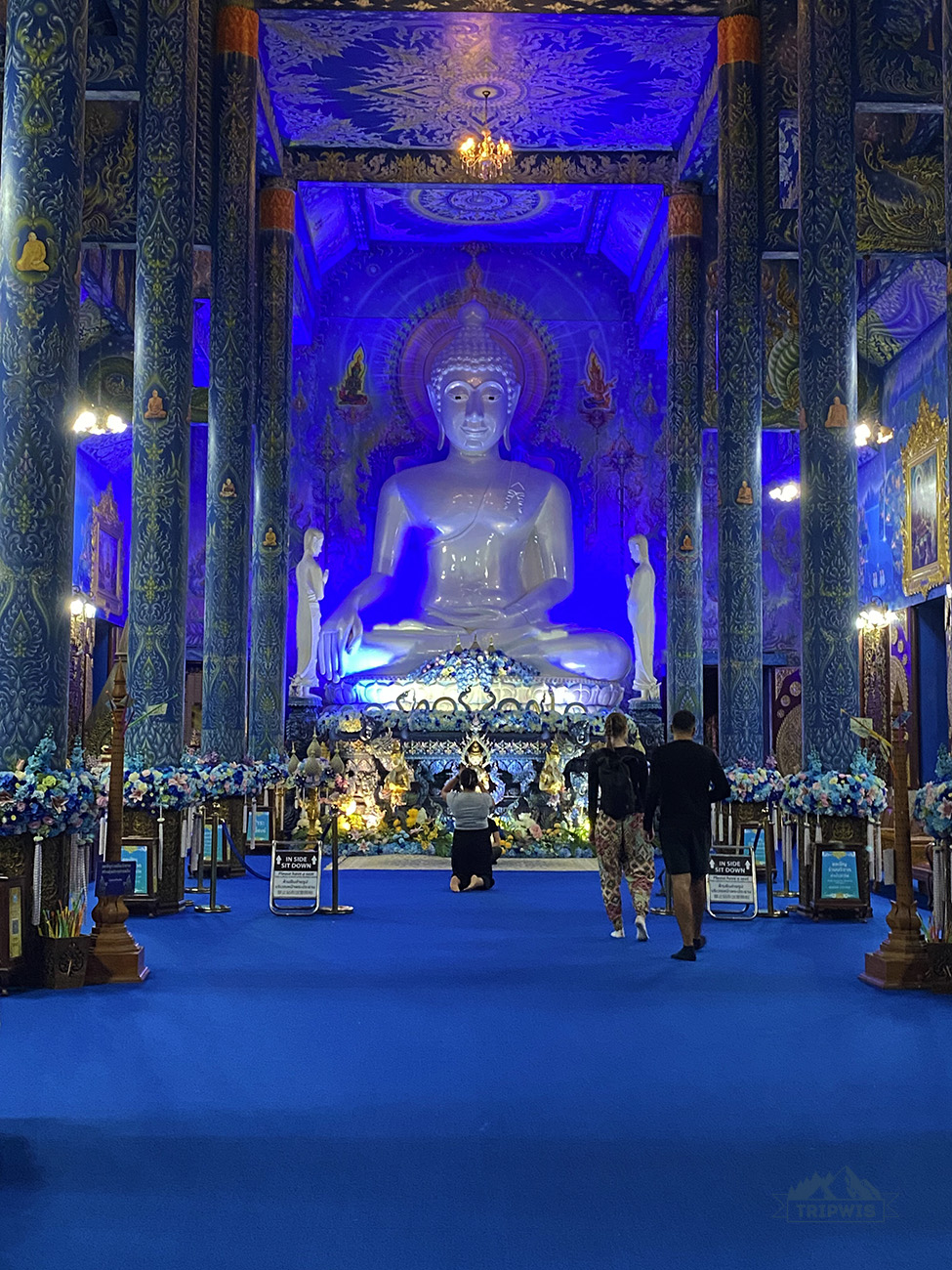 |
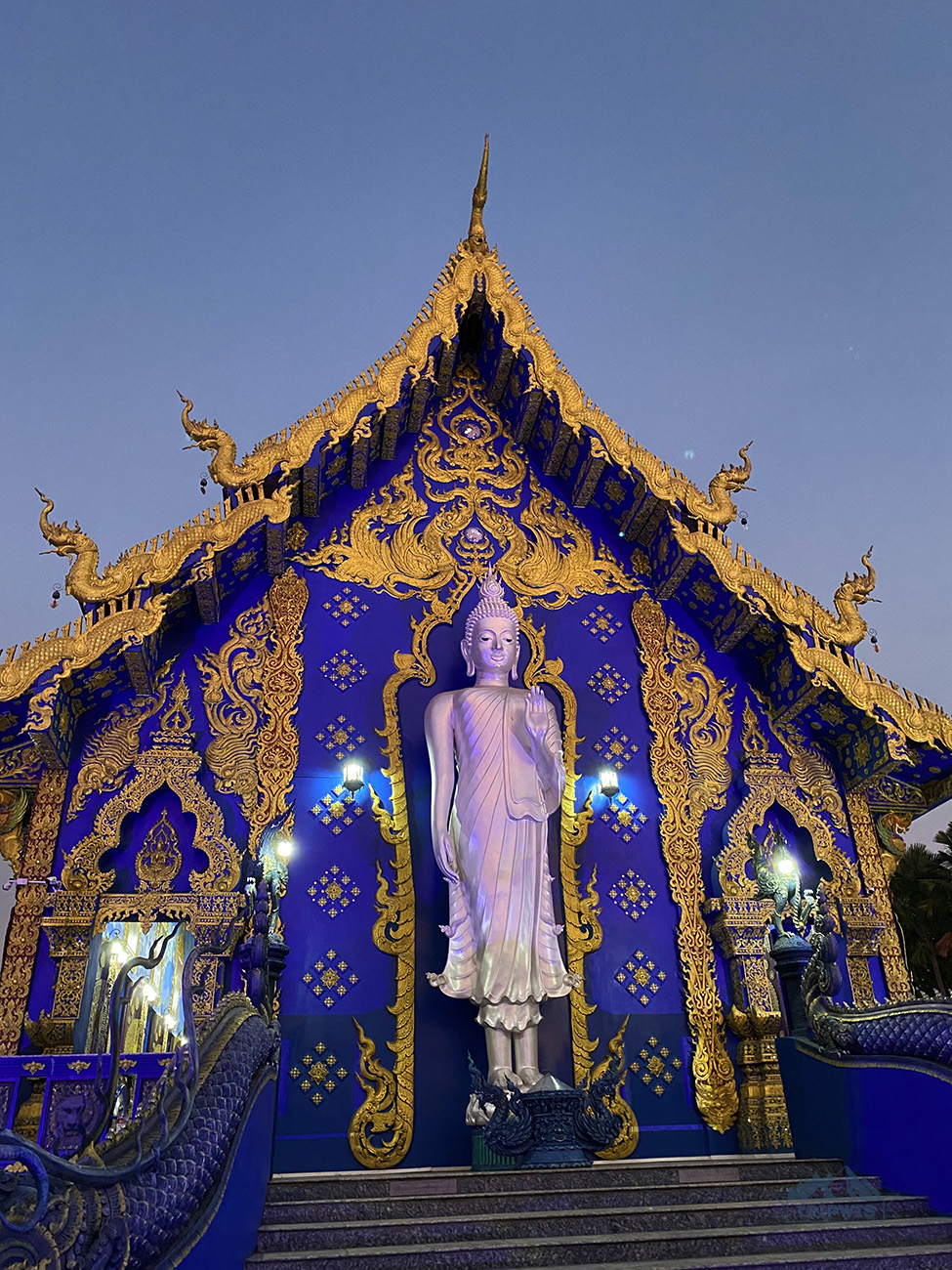
Another modern temple from 2016 — and as the name suggests, it’s strikingly blue both inside and out, decorated with gold accents, a giant white Buddha, and statues of dragons and mythical creatures. Visit in the evening if you can — the lights make it look even more magical, like it’s glowing from within.
Blue Temple feels more like a place of worship than a tourist attraction. What’s interesting is that it was built by a student of the artist who created the White Temple!
🔹 Entrance fee: Free
🔹 Opening hours: 7 a.m. – 8 p.m.
Black House (Baan Dam Museum)
 |
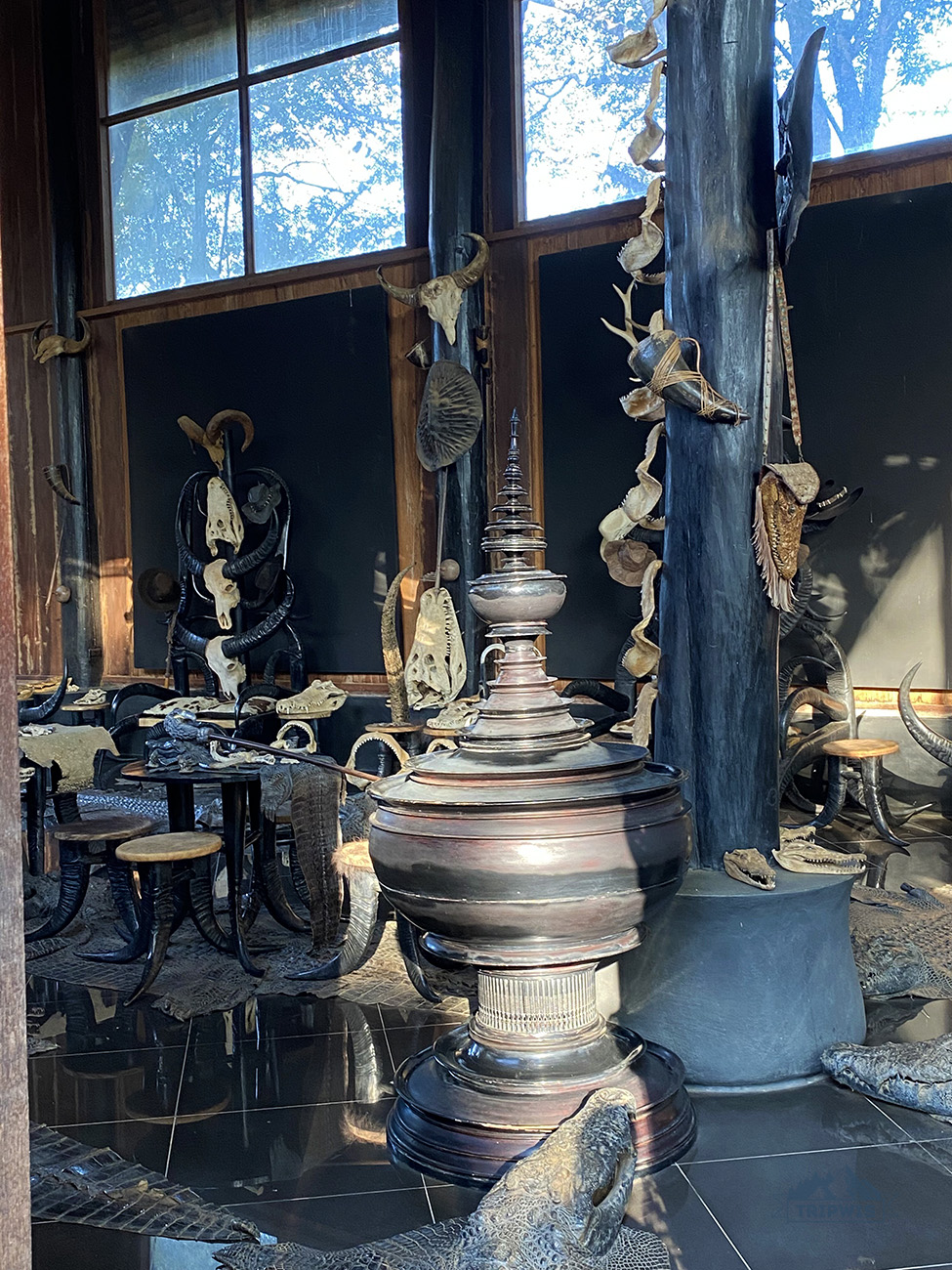 |
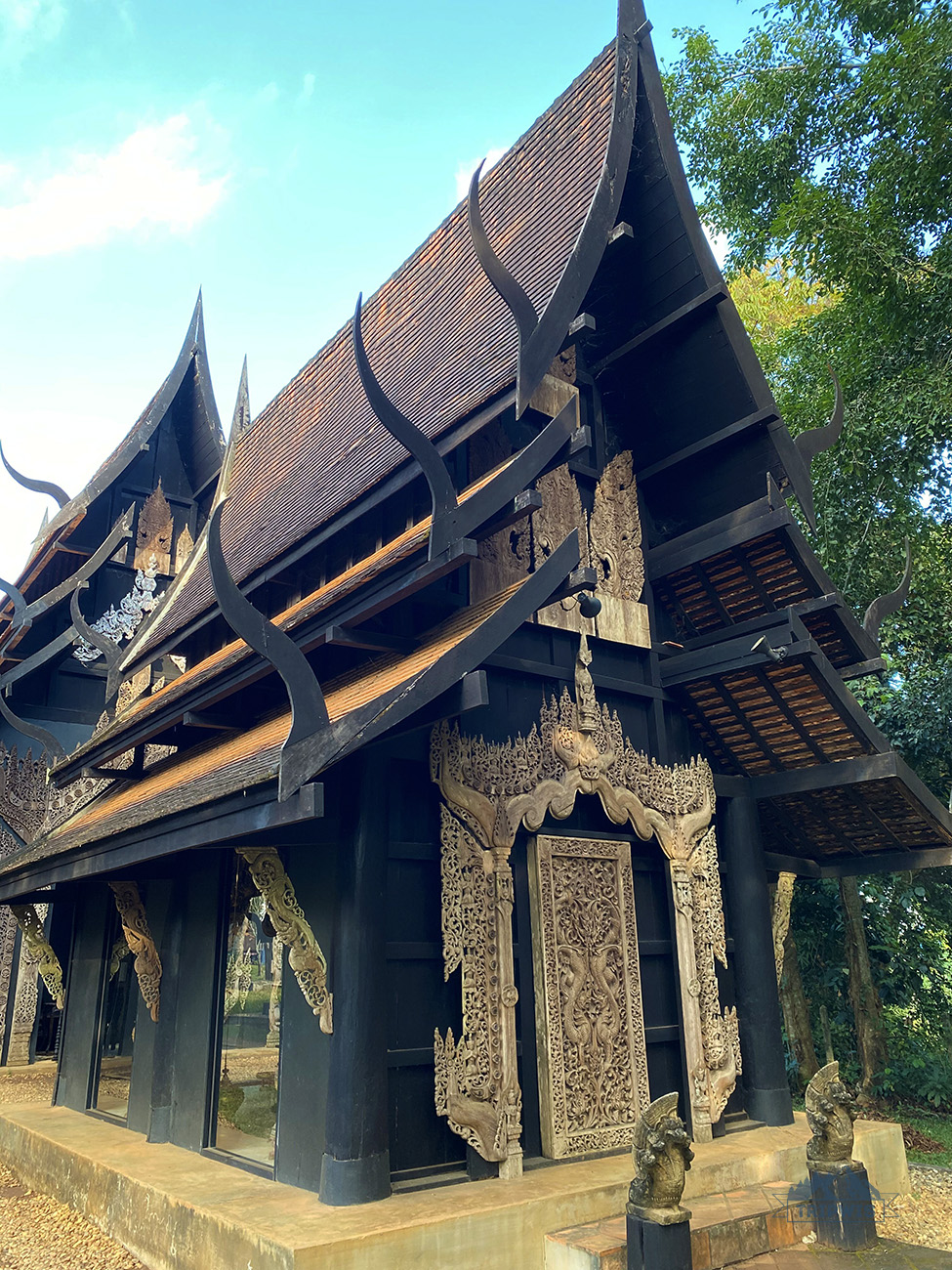
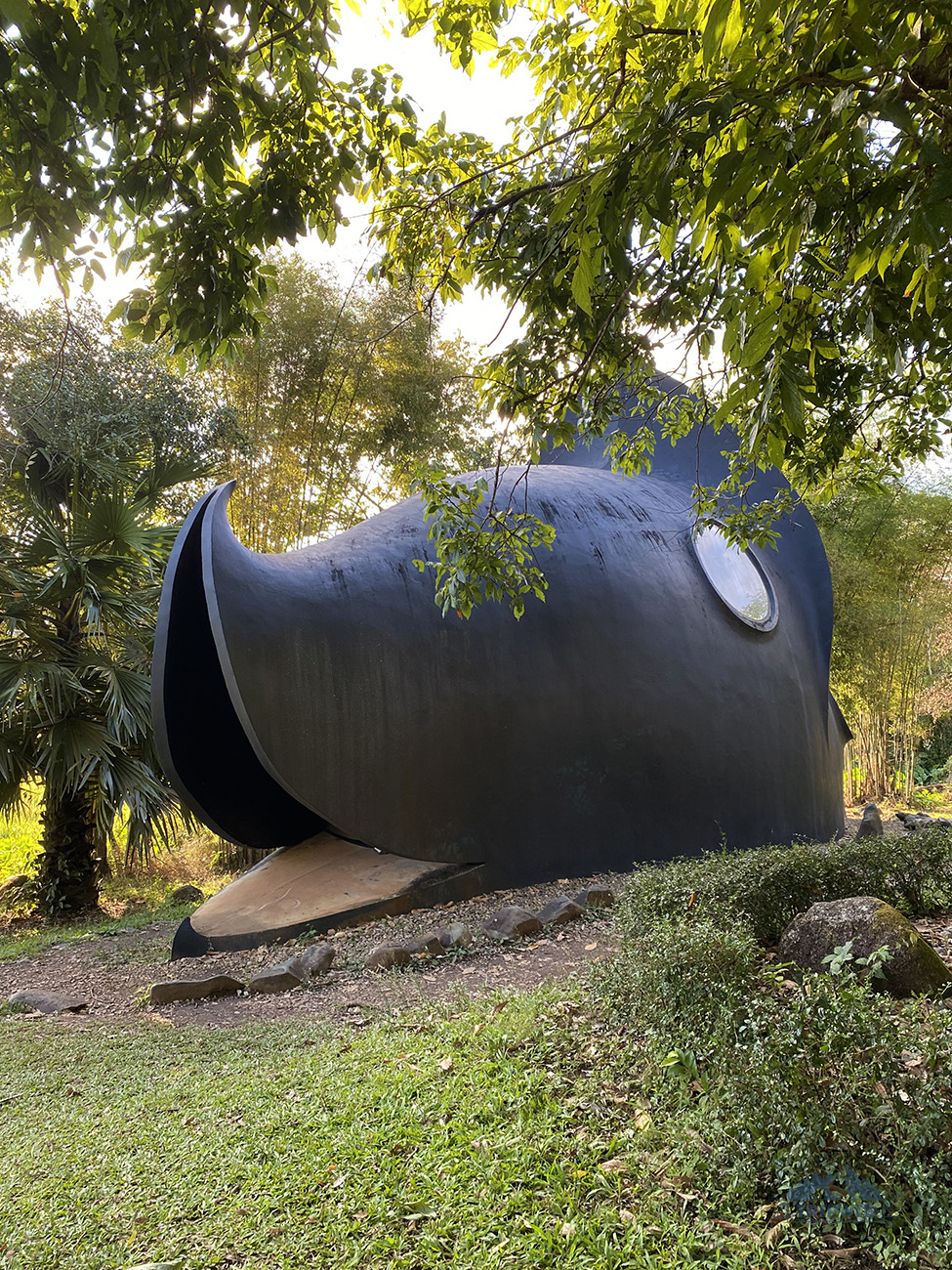
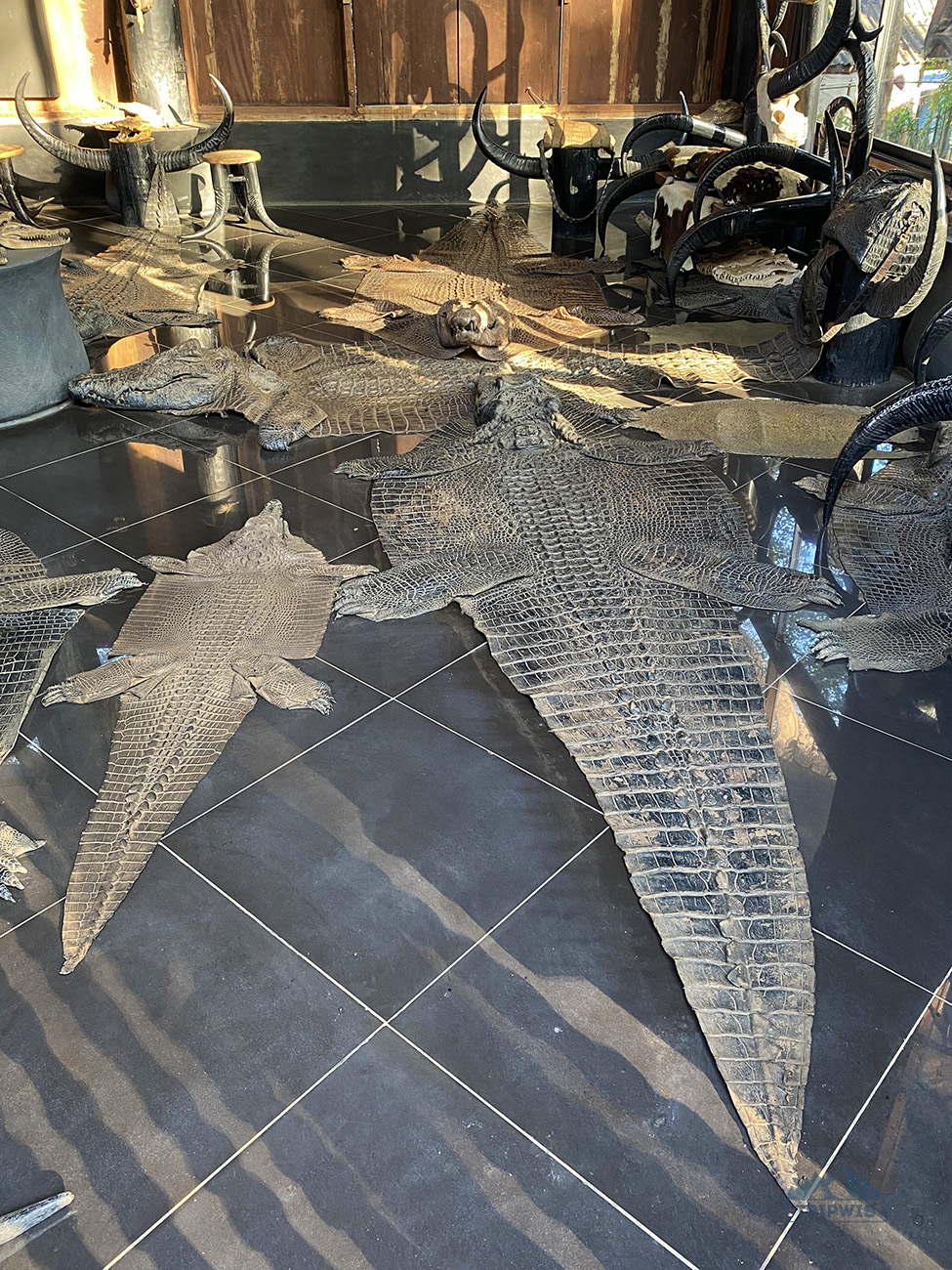
It’s not actually a temple as many people think, but a contemporary art museum created by artist who was — your guess?.. — the teacher of the man behind the White Temple! Compared to other attractions in Chiang Rai, this one is quite dark and eerie, but if you love unusual art and strange exhibits, you’ll love it here.
It’s an open-air museum that tells you the history of Siam through the wood carvings, handcrafted pieces, and other works left behind by the artist.
🔹 Entrance fee: 80 baht / $2,5
🔹 Opening hours: 9 a.m. – 5 p.m.
 |
 |
Side note: If you’d rather skip all the planning and just have everything arranged for you, I recommend joining an organized day trip around Chiang Rai — you just show up and enjoy a perfectly curated day full of wonders.
📍This one ($47 per person) is a popular all-in-one group tour that covers Chiang Rai’s most famous landmarks — from the temples to the Golden Triangle, which I’ll write about later. A Thai lunch buffet is included in the price. This tour is available in different formats — 📍a private tour (from $89 for a group up to three persons) or 📍a group tour with all entrance fees included ($69 per person).
Clock Tower
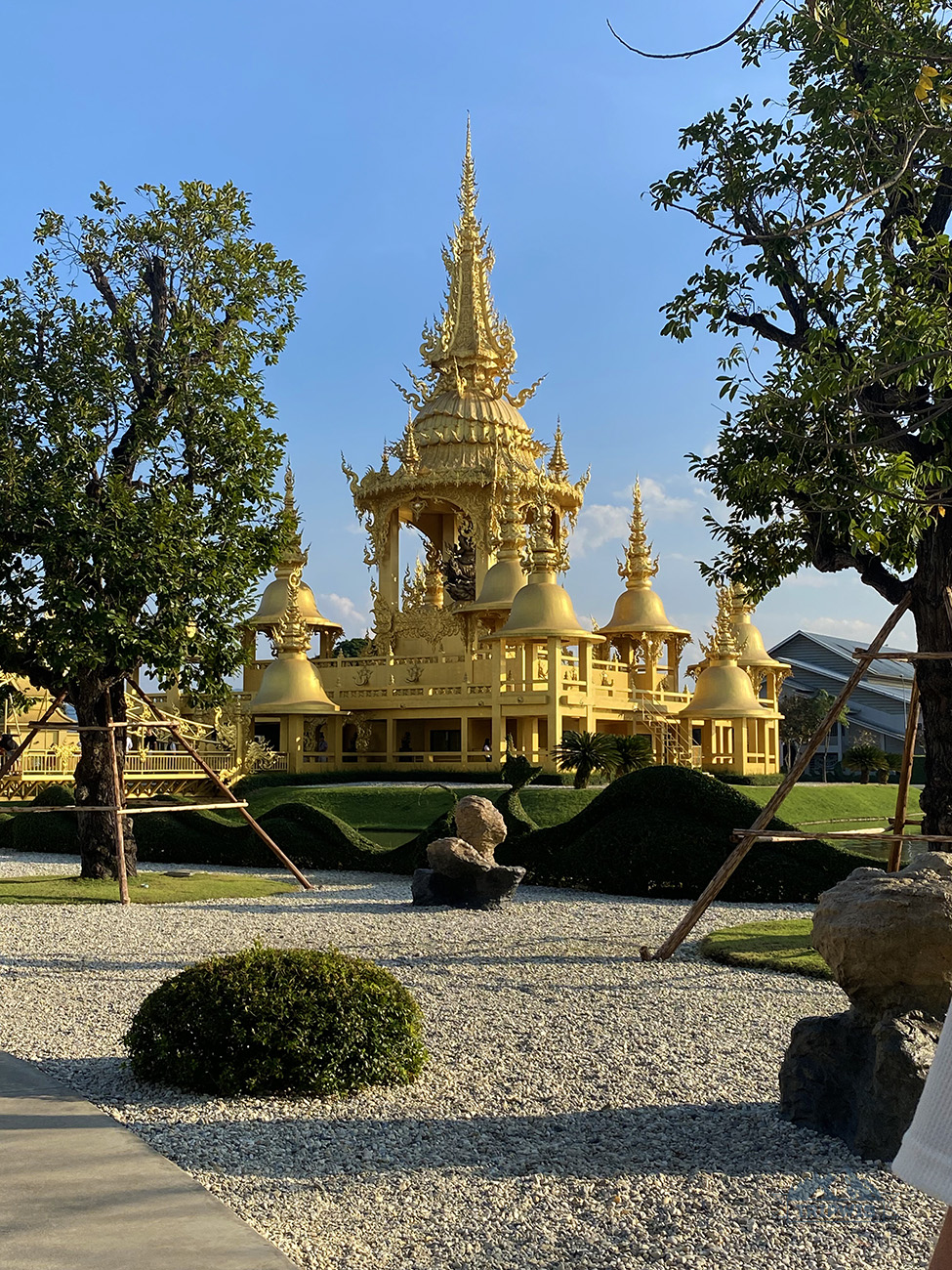
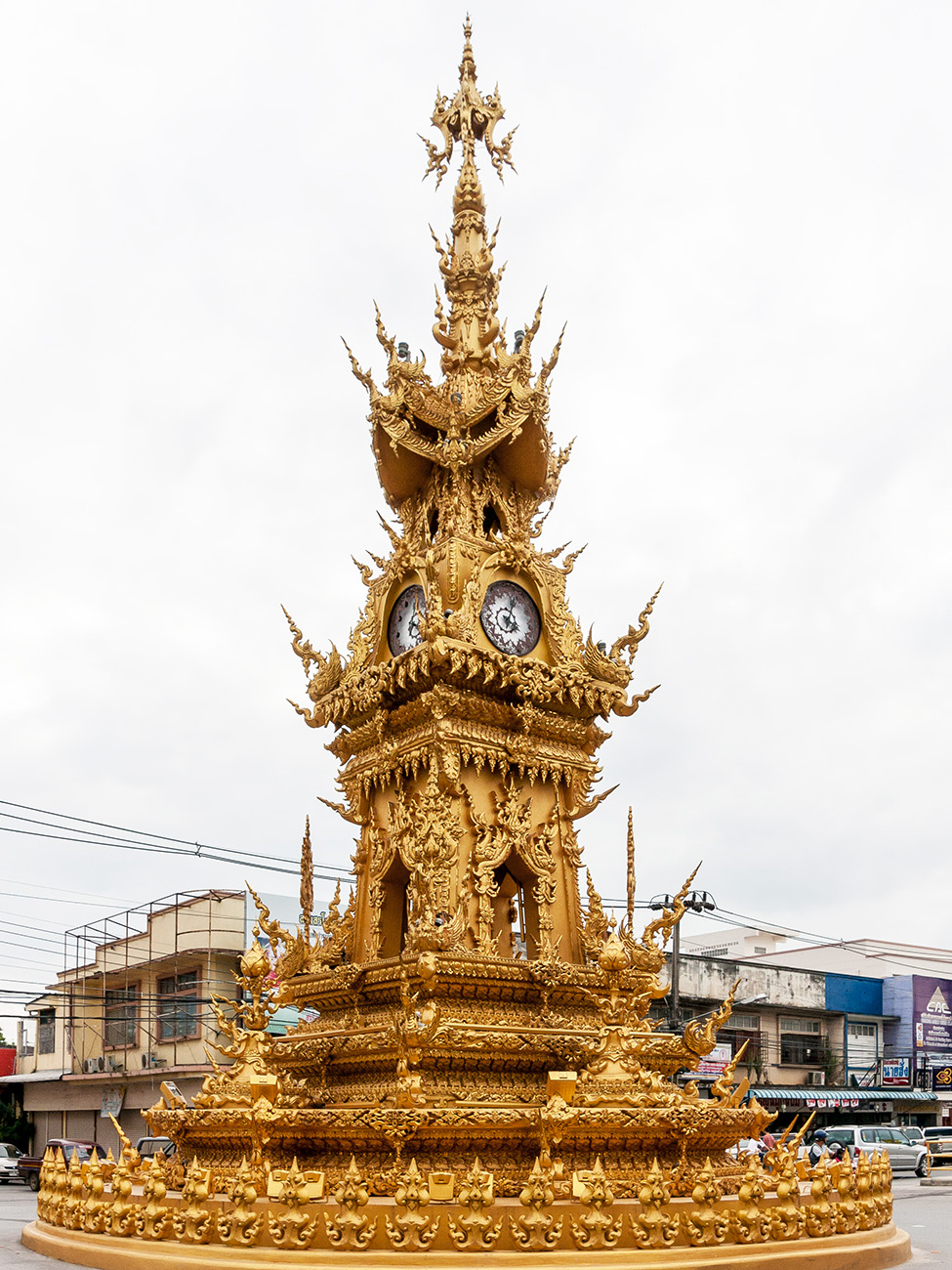
Right in the heart of Chiang Rai stands the city’s modern landmark — the golden Clock Tower. Built in a traditional Thai style, it was designed by the same famous artist who created the White Temple. Let’s finally mention their name — Chalermchai Kositpipat!
Honestly, it’s not the most impressive sight of the city. I think it’s only really worth seeing in the evening, when the tower lights up in a charming display of colors. At 7, 8 and 9 p.m. there’s a short light-and-music show.
Big Buddha (Wat Huay Pla Kang)
 |
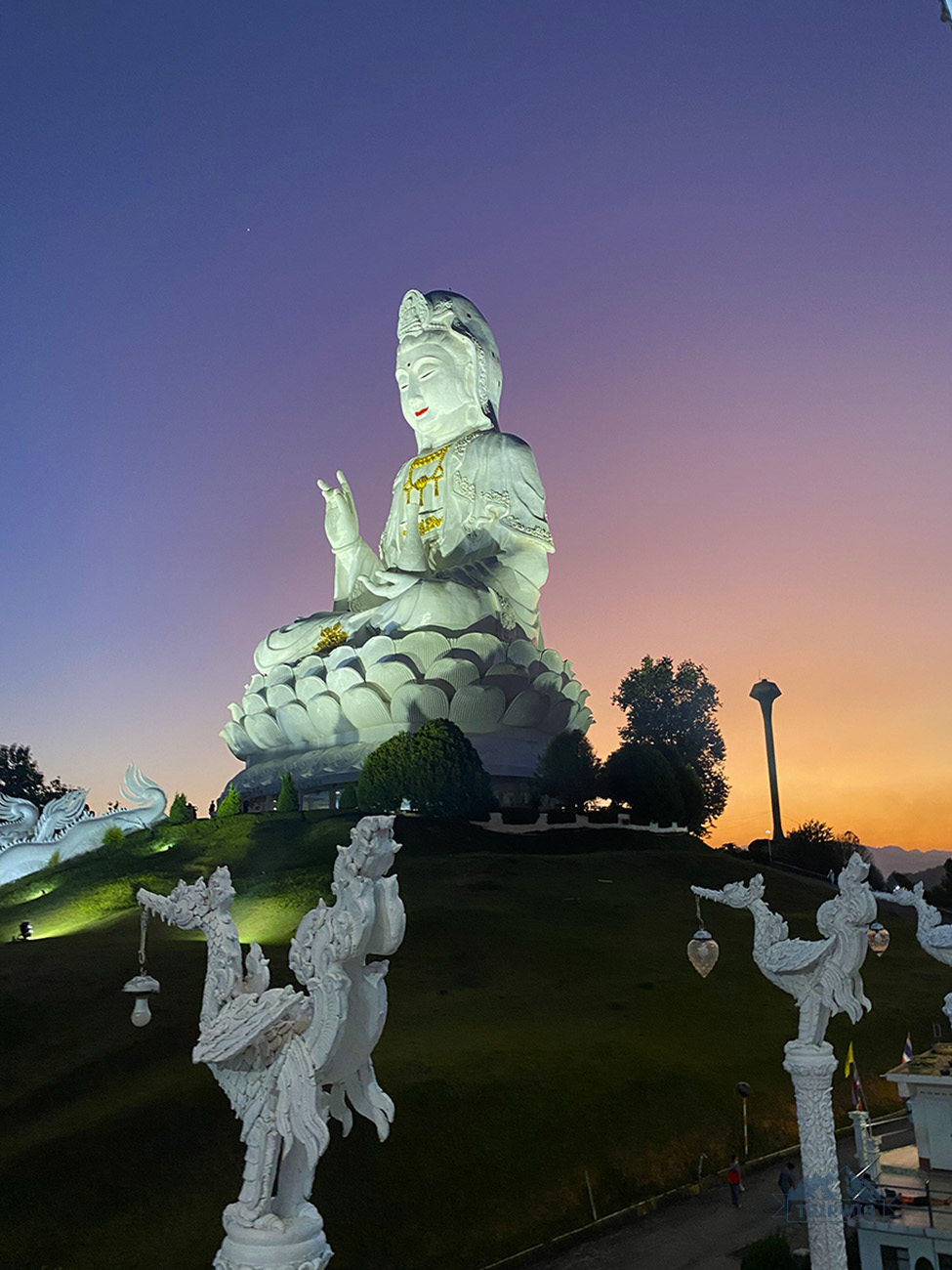 |
Photo from Wikimedia
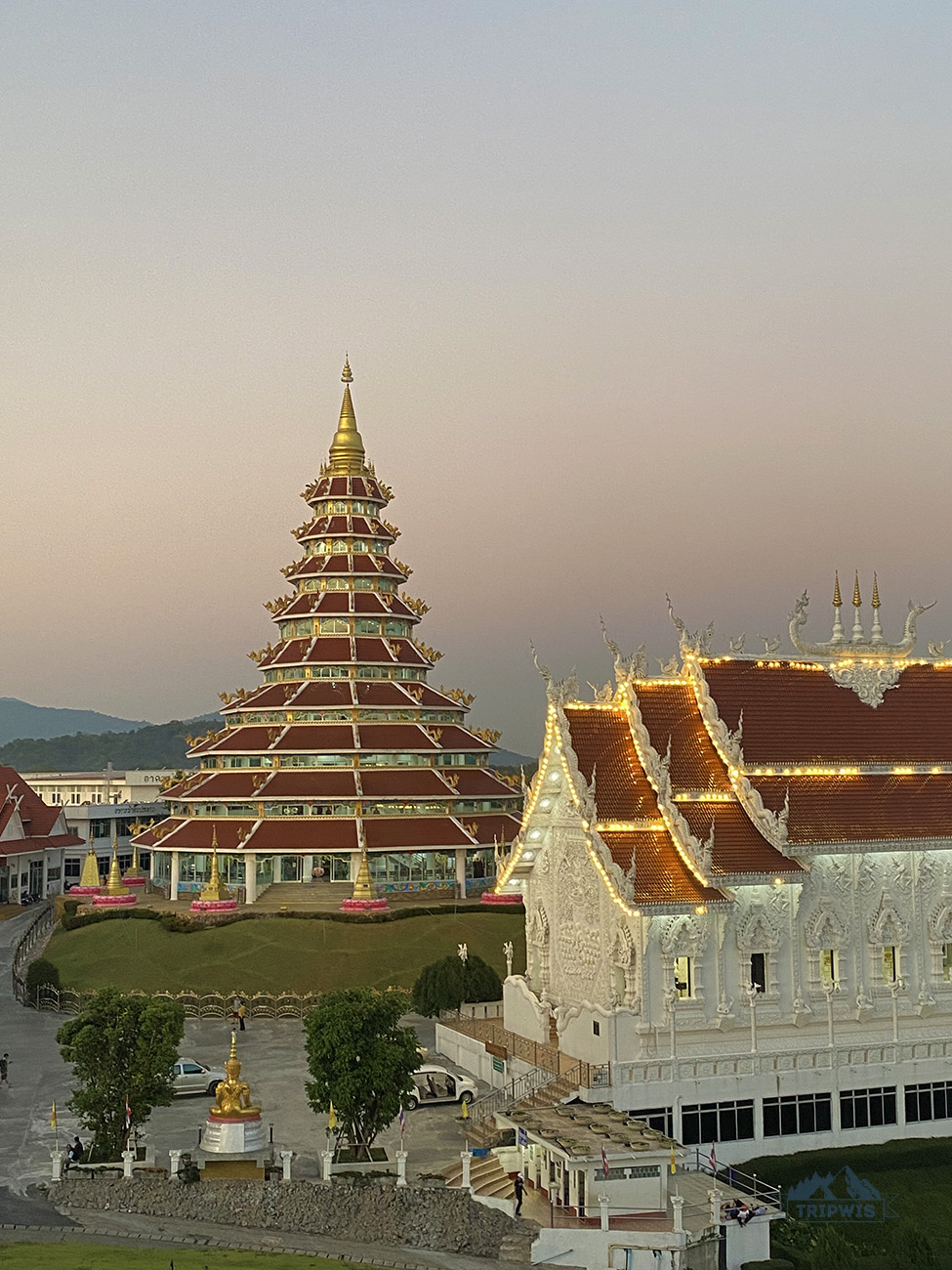
It’s a temple complex perched on a hill, featuring a massive white statue of Buddha surrounded by dragons. The view from the base is already stunning, but you can take an elevator to the statue’s head for an even better panoramic look at the mountains, countryside, and the city in the distance.
You can also climb to the top of the pagoda for another incredible view. The best time to visit is at sunset — trust me, it’s worth it.
🔹 Entrance fee: 40 baht / $1,3 for elevator to Buddha’s head
🔹 Opening hours: 7 a.m. – 9 p.m.
Lalitta Café
 |
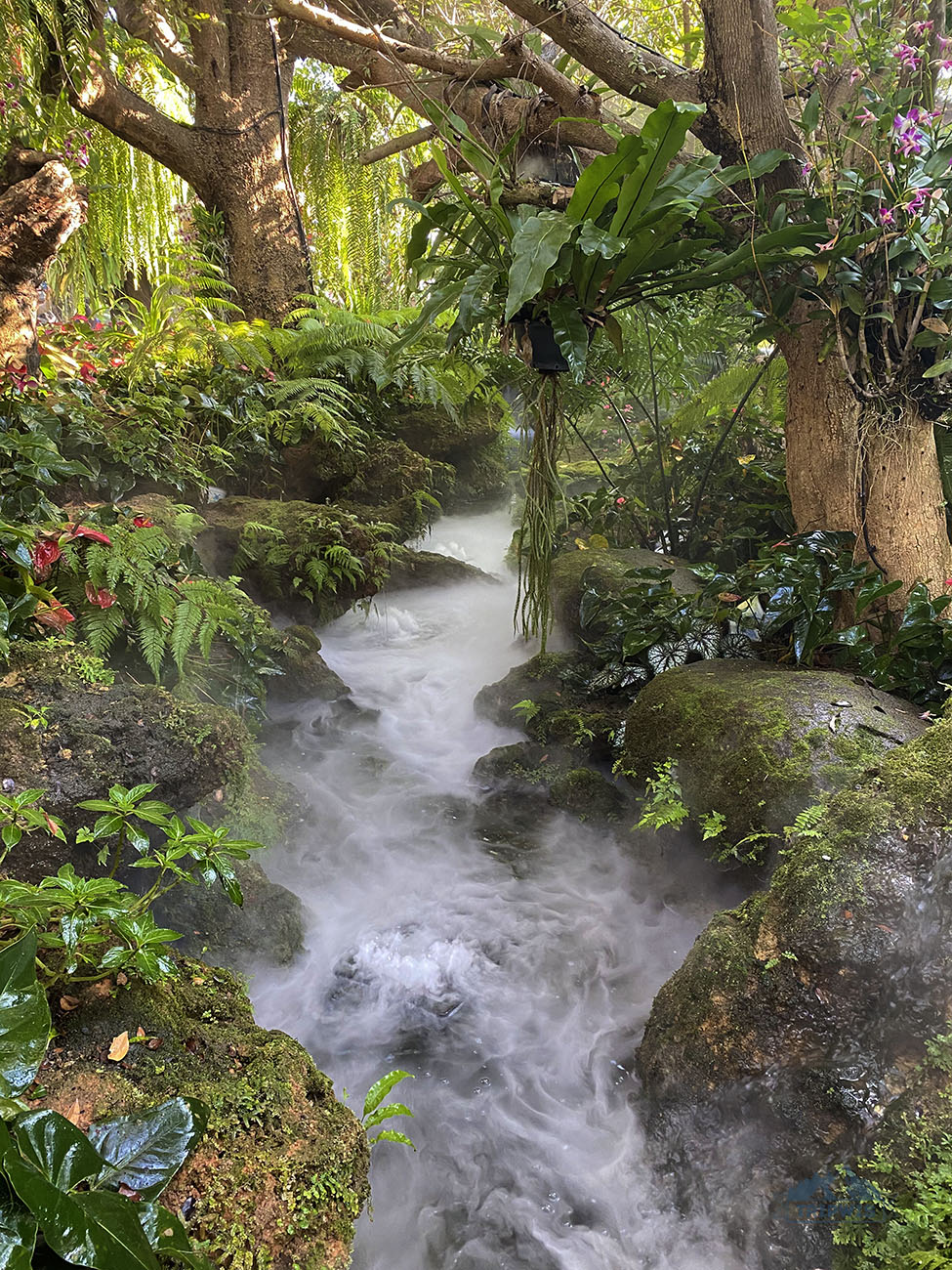 |
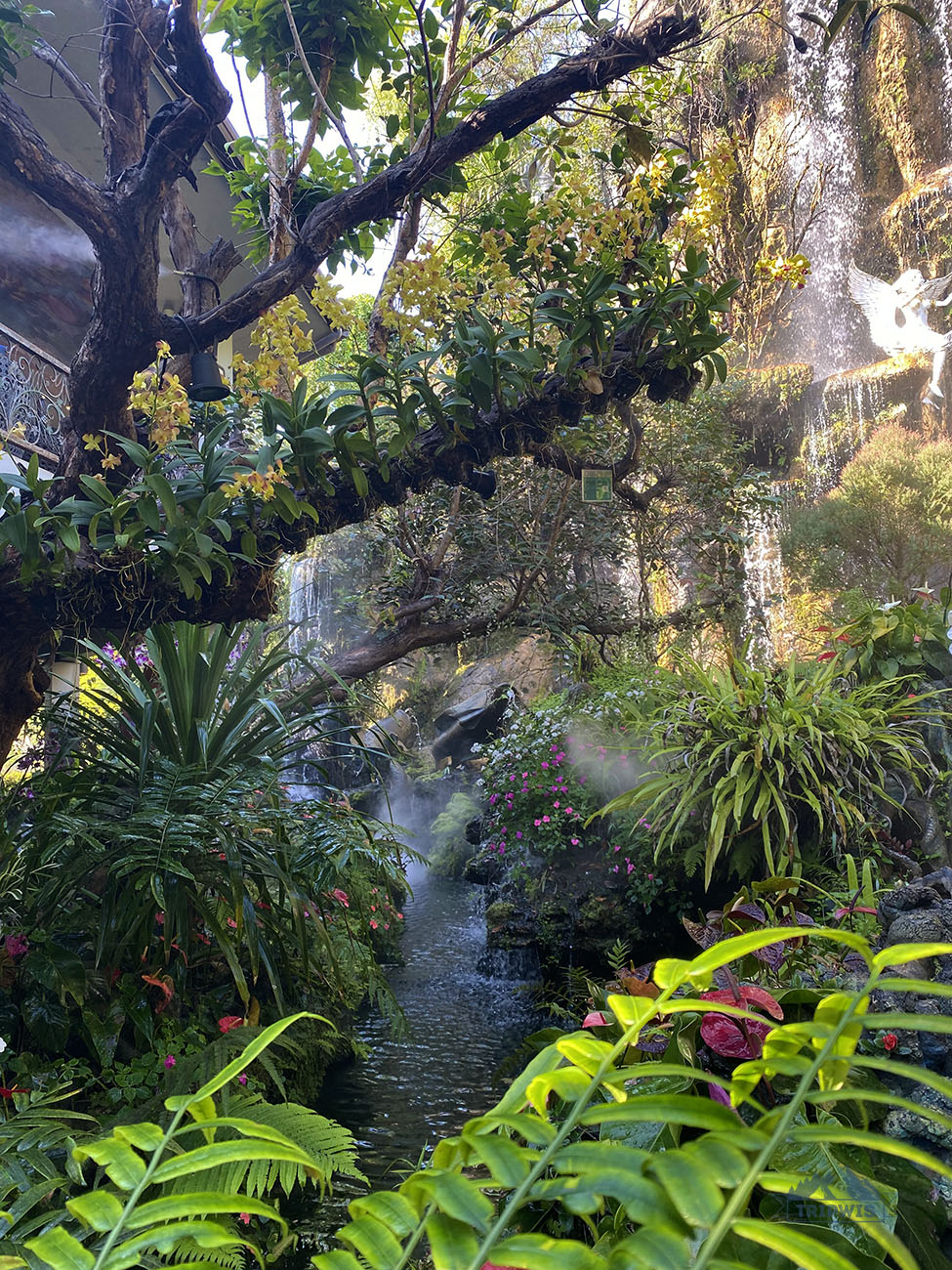
Located within a short 20-minute walk from the Big Buddha, this cafe feels like stepping into a fantasy forest — waterfalls, tropical flowers, colorful fish, and a light mist drifting over everything. People mostly come for the Instagram photos, but there’s food here too (though it’s pricey by Chiang Rai standards).
🔹 Entrance fee: 60 baht / $1,9 (you can redeem your ticket for a 30 baht discount at the cafe)
🔹 Opening hours: 8 a.m. – 8 p.m.
Temple of Sihuhata (Wat Phra That Doi Khao Kwai)
This temple is one of the lesser-known temples in Chiang Rai, but it’s incredibly scenic. It sits at the top of a 522-meter hill, offering sweeping panoramic views of Chiang Rai and the surrounding mountains.
The temple grounds are also home to Sihuhata, a mythical guardian creature whose massive statue gazes fiercely at the city from above. Despite its intimidating look, it’s said to be a benevolent protector. Monks live here year-round, and the abbot is known for being very kind and welcoming.
Temple of Sihuhata is five kilometers from the city center, and you can get to the base by taxi and walk up — it’s a manageable short hike.
🔹 Entrance fee: Free (small donations are appreciated)
🔹 Opening hours: 5:30 a.m. – 6:30 p.m.
Singha Park
 |
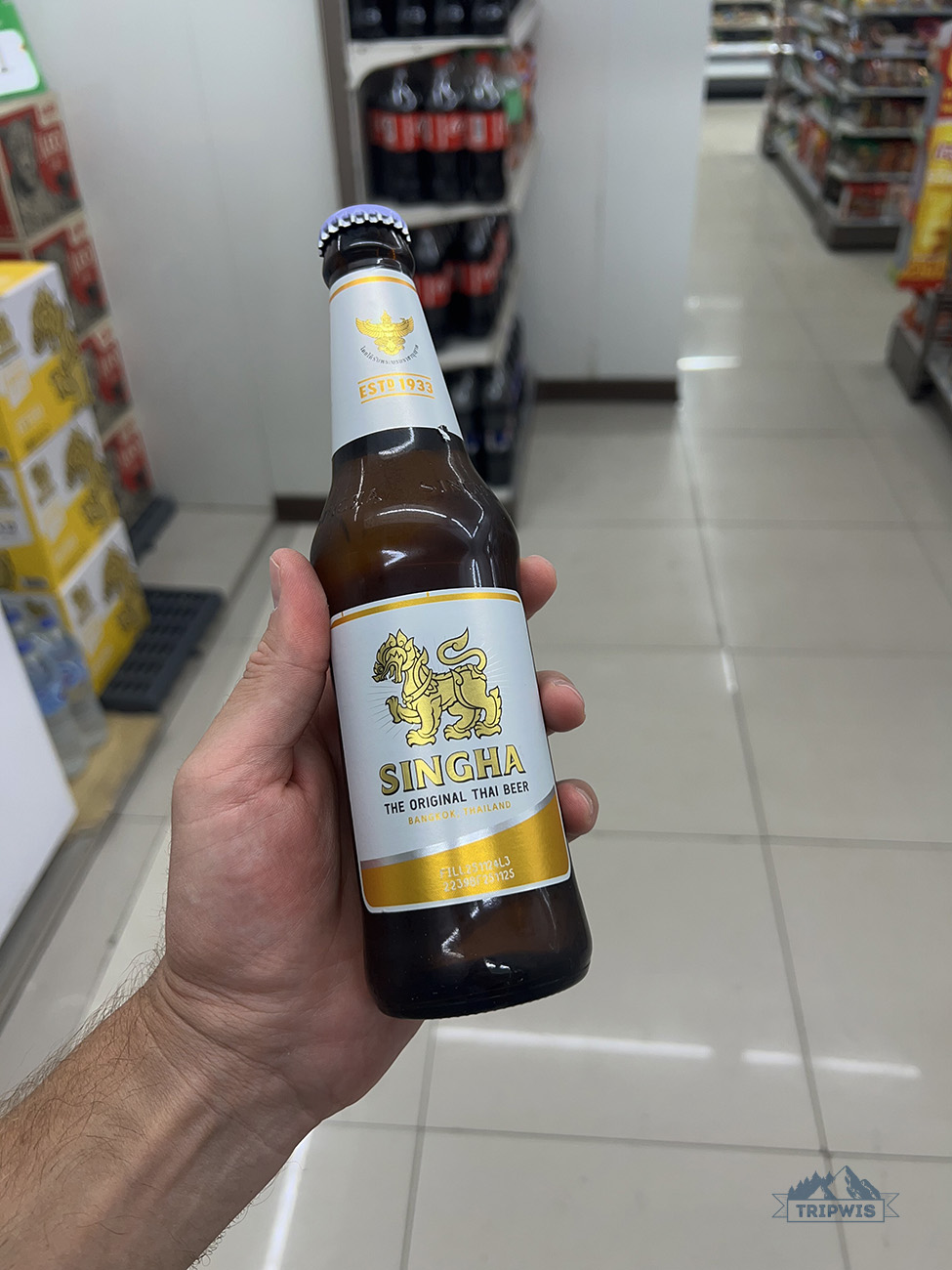 |
Photo from Wikimedia
Let me start with the fact that Singha Park is owned by none other than Singha Brewery — yes, that Singha, the one behind Thailand’s famous beer.
Located on the southern edge of town, this huge, beautifully landscaped park has lakes, flower fields, a small zoo, and even a zipline. You’ll see zebras, giraffes, swans, tea plantations, quirky sculptures, and get to ride an e-bike (250 baht) or drive a buggy (from 600 baht) — because those are the only options available for exploring the park independently. If you don’t drive, you can join a guided bus tour for 150 baht.
In my opinion, going to Singha Park is one of the best things to do in Chiang Rai if you’re traveling with kids. I caught my most beautiful sunset in Chiang Rai right here! They also host events from time to time — rock festivals, hot air balloon shows, and more. You can check the official schedule on their website.
🔹 Entrance fee: 50 baht / $1,6
🔹 Opening hours: 8:30 a.m. – 5 p.m.
Massage
Getting a massage in Thailand is an experience on its own. It’s quite different from the European-style massages we’re used to — some might even find it a bit rough. But don’t worry, most salons let you choose the intensity level and plenty of other options: Which areas you want the therapist to focus on, what to avoid, whether to use oils (and which kind), and so on.
Prices start at around 150 baht / $4,8 per hour at local markets and go up to about 1,000 baht / $31,8 for a premium oil massage in a nice salon.
If you’re visiting Chiang Rai, these are massage studios I liked — I walked out happy and relaxed:
✔️ The Thai Massage ChiangRai
✔️ Chiang Rai Nice Massage
✔️ Monmueng Lanna Massage
Day trips from Chiang Rai
At least once or twice, you’ll need to venture outside Chiang Rai to get the full picture of Northern Thailand. There are different sorts of things to check out, like…
Tea plantations
 |
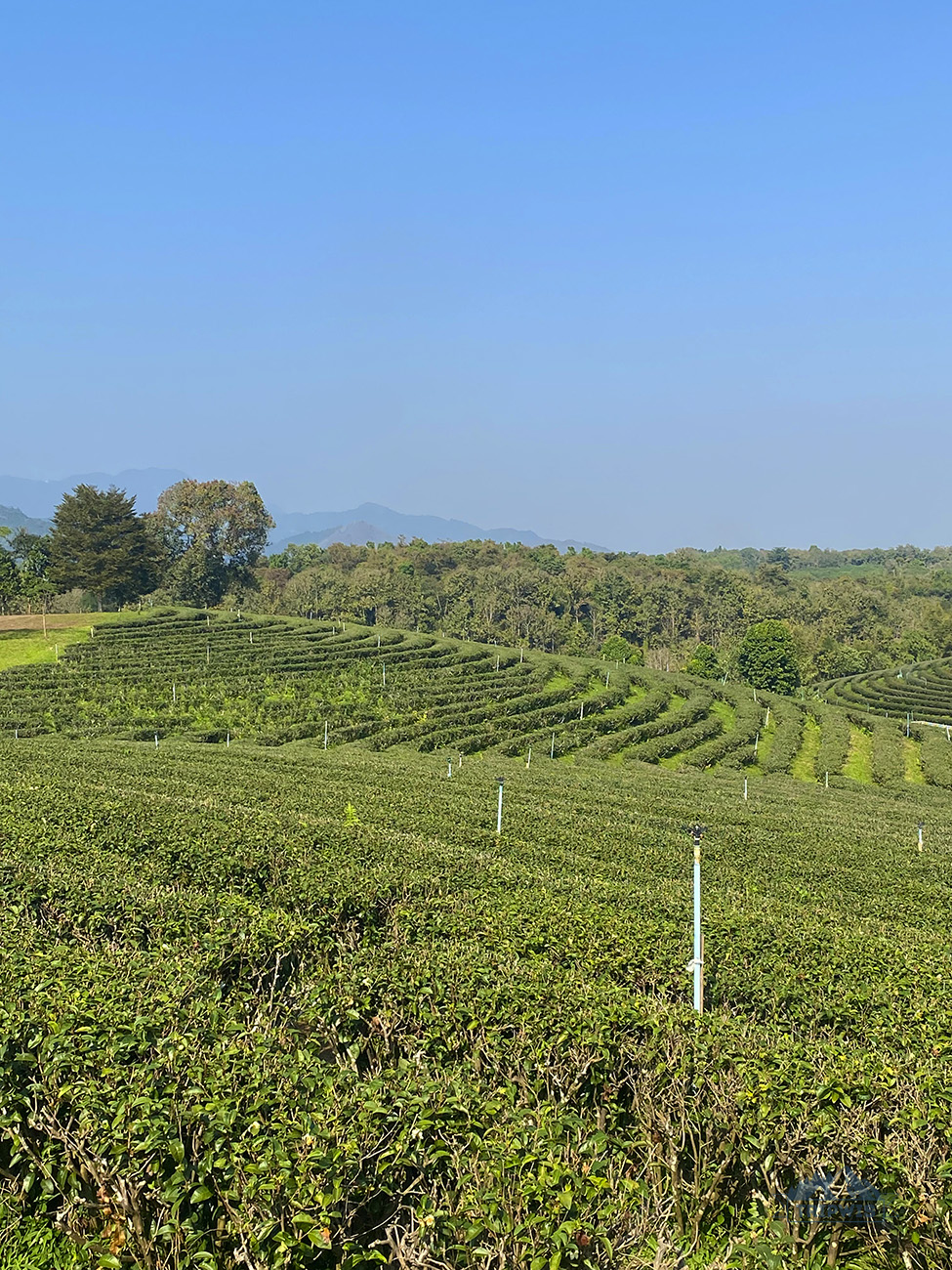 |
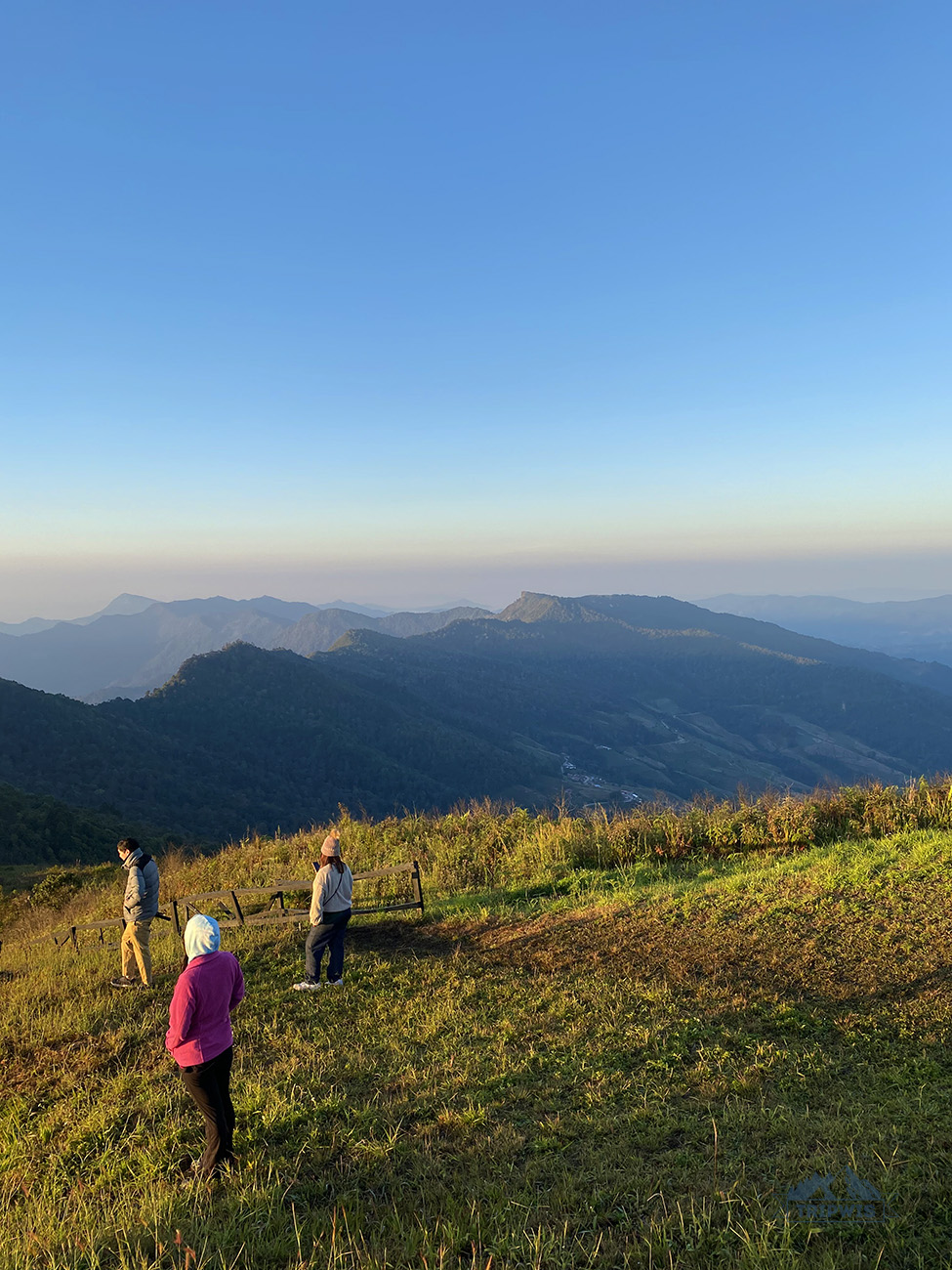
Most of them are about an hour north of the city, where you can stroll between tea bushes, take photos, chill at a scenic cafe, and sample local tea. I recommend visiting Choui Fong Tea Plantation because the views from the terrace of their cafe are incredible (as well as their sweets).
🔹 Entrance fee: Free
🔹 Opening hours: 8:30 a.m. – 5:30 p.m.
🔹 How to get here: No public transport options; it’s 40 kilometers from the city, so it’s better to rent a car
Waterfalls
 |
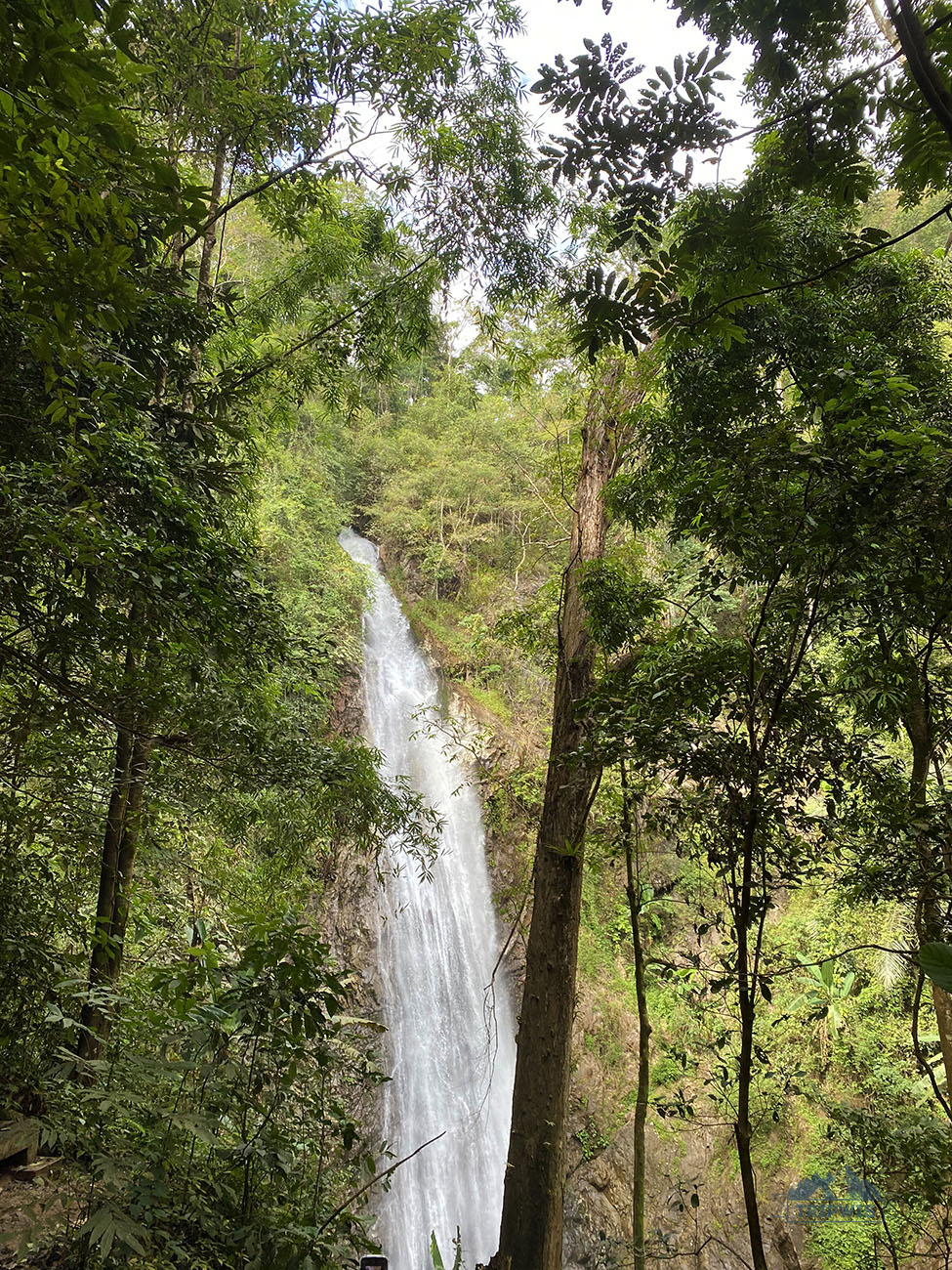 |
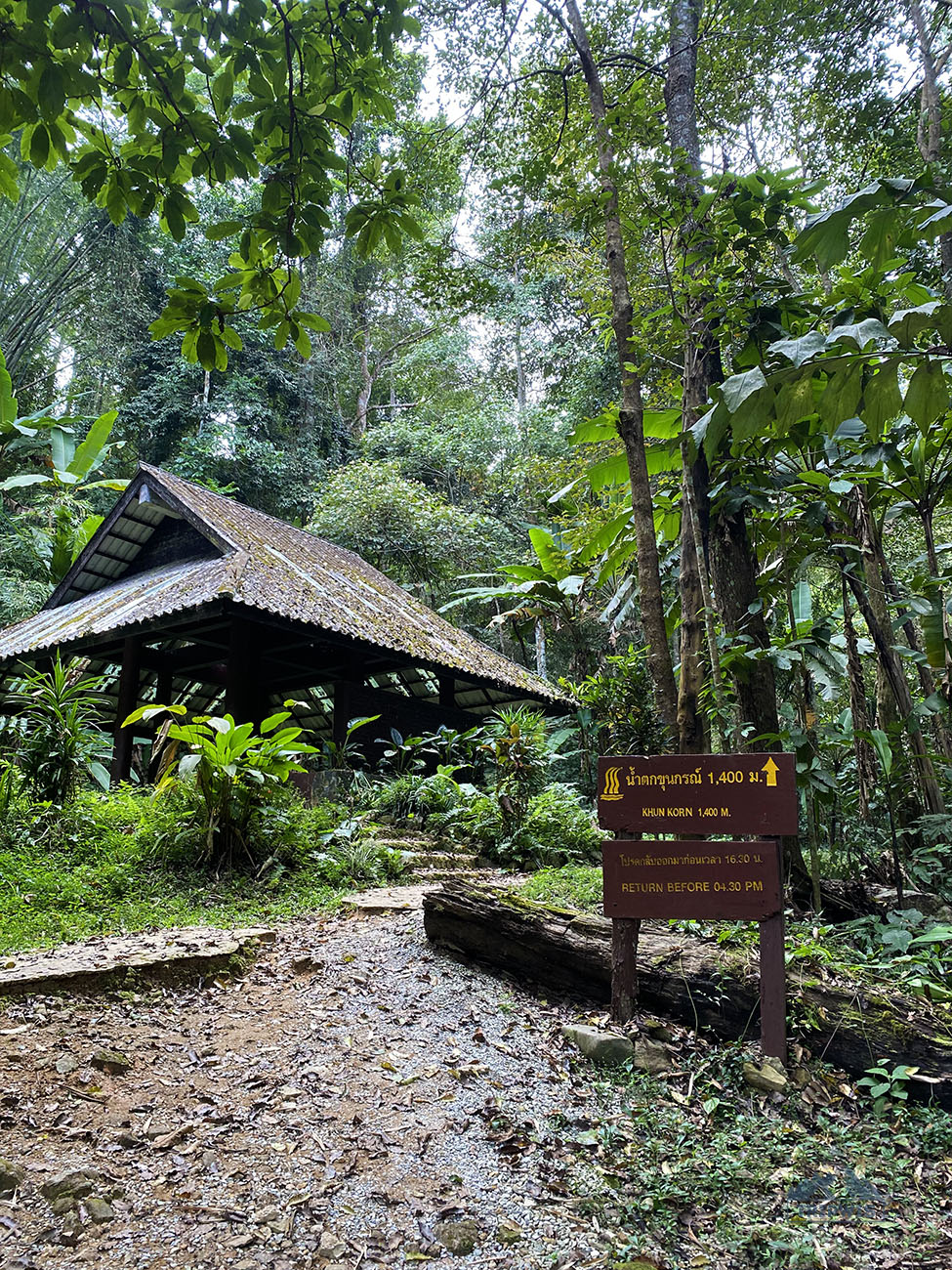
One of the best things to do in Chiang Rai, Thailand for nature lovers is visiting its waterfalls. There are several waterfalls in the area, but the most well-maintained are:
- Khun Korn Waterfall
- and Huai Mae Sai Waterfall
Both about a 40-minute drive from the city. You can swim, hike through the jungle, and relax in the shade. The trails aren’t hard, but skip the flip-flops — bring sneakers instead. And don’t forget water and snacks, because you won’t find any vendors out there.
🔹 Entrance fee: Free
🔹 How to get here: No public transport options, but this is what I’d suggest: In Chiang Mai, we took a hiking tour to a mountain summit and waterfalls. And Chiang Rai offers a similar activity — jungle group trekking and bamboo cooking class ($79 per person).
Golden Triangle Park
If you’re planning to visit the Golden Triangle, Chiang Rai is your best bet since it’s the closest — about an hour to an hour and a half drive from the city.
Nowadays, the Golden Triangle is about the spot where the Ruak River meets the Mekong, marking the border of Thailand, Laos, and Myanmar. The name comes from the region’s opium past, when gold was used as a form of trade. The road here is gorgeous. There’s not much to do right at the Golden Triangle itself, except for the pricey boar ride (from 1000 baht / $32) overlooking three countries, but just five minutes away you’ll find the Hall of Opium — an interactive museum covering the region’s history and the opium wars. It’s absolutely worth the detour.
🔹 Entrance fee: Viewpoint is free; Hall of Opium museum entry fee is 120 baht / $3,8
🔹 How to get here: Either on your own or as part of a guided tour just to the Golden Triangle ($74 per person) or of a Chiang Rai sightseeing tour ($47 per person)
Phu Chi Fa
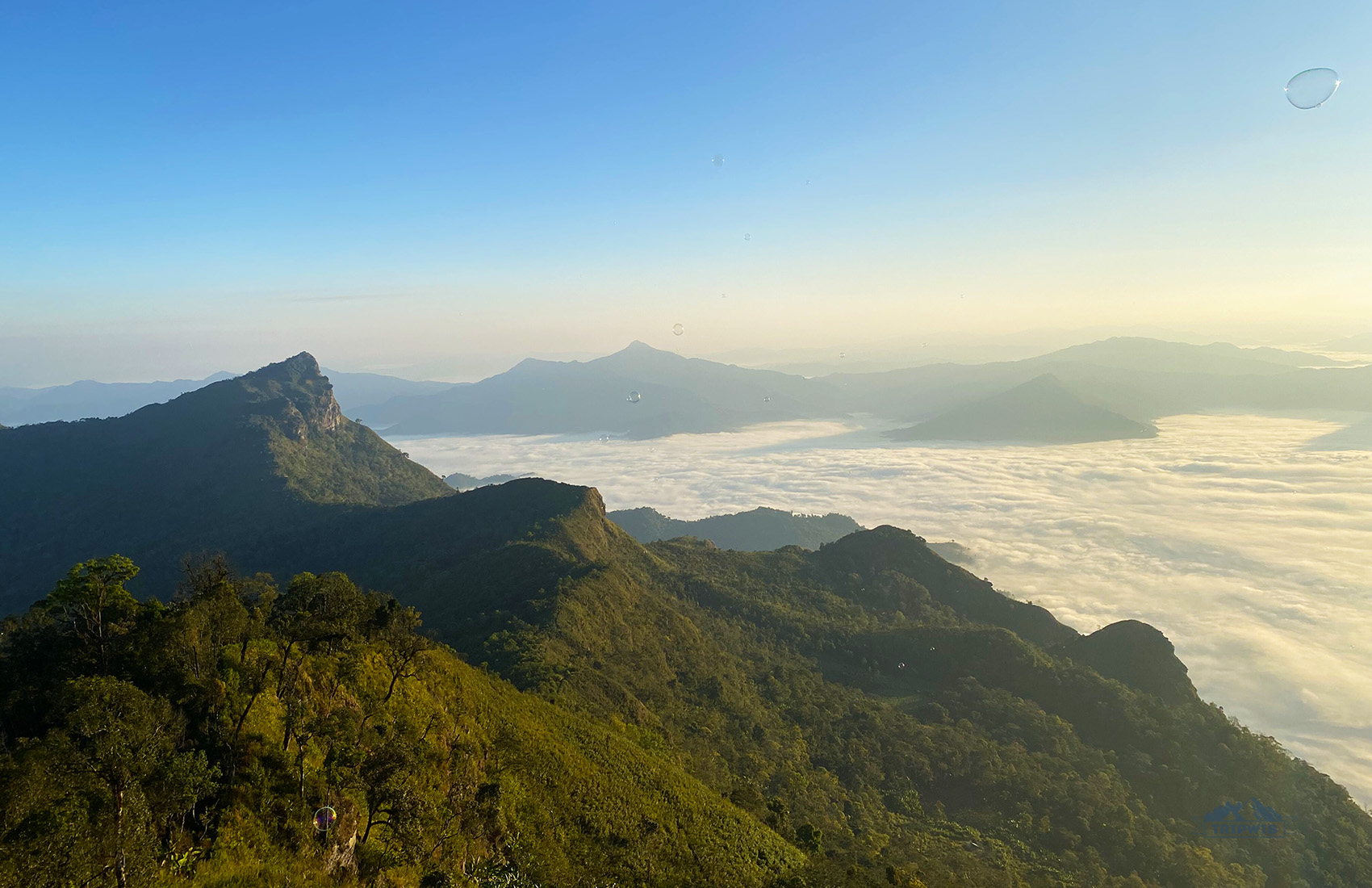
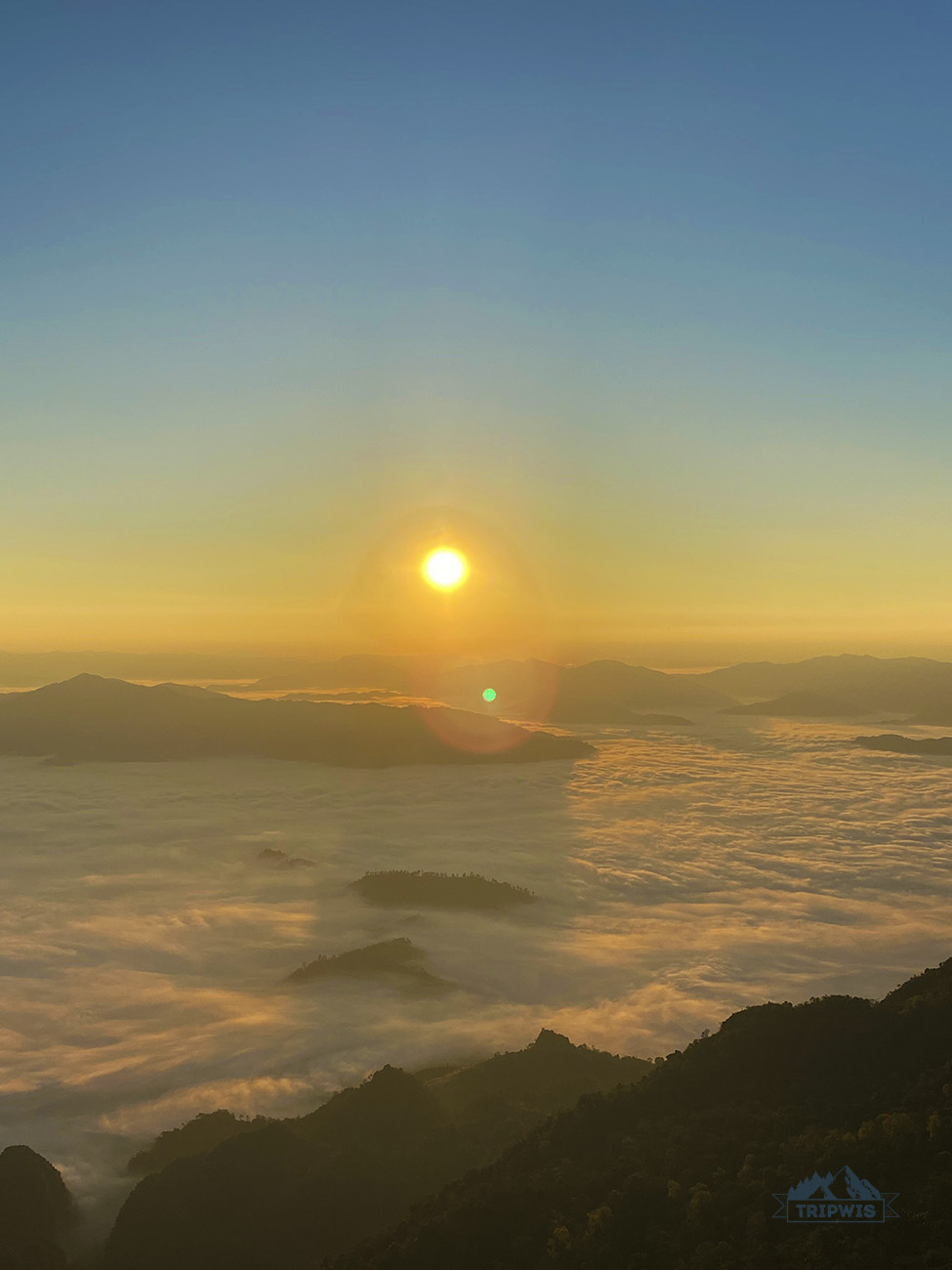
This destination takes a bit more effort, but it’s 100% worth it. Phu Chi Fa is a mountainous area right on the border with Laos, about a two-hour drive from the city, but in exchange you get the most breathtaking sunrise you’ll ever see. Two things to keep in mind: It’s going to be cold, and you have to climb 700 meters to the top (it’s absolutely doable as the path is easy to walk).
Most people head here in the afternoon, catch the sunset, stay overnight in a tent or a guesthouse, and then wake up early to watch the sunrise over a sea of clouds from 1,700 meters up.
🔹 Entrance fee: Free
🔹 How to get here: Car rental only (the road is too steep and winding!)
Where to eat in Chiang Rai?
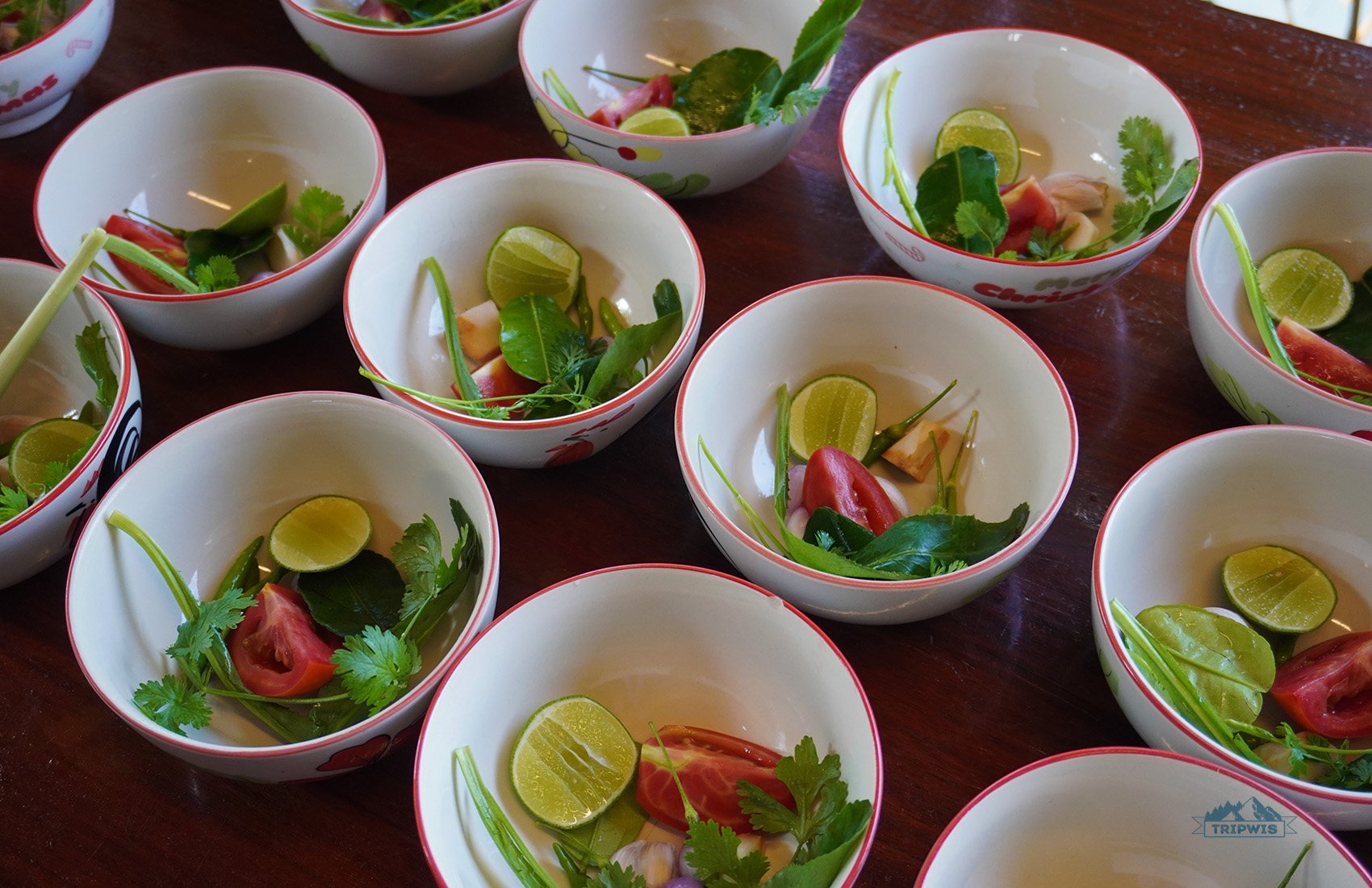
Trust me when I say that you will not dwell too much on the question of where to eat in Chiang Rai once you actually hit the city streets. Thailand is an absolute paradise for food lovers. Fruit carts, smoothie stands, sizzling street food stalls, night markets — you’ll find them in every city, and Chiang Rai is no exception.
If you’re only in town for a few days and staying somewhere without a kitchen, you probably won’t be cooking much. So let’s talk about how much it costs to eat out in Chiang Rai — from street food to cafes and bars.
At the time of writing, $1 equals 32 Thai baht.
| Pad Thai or fried rice at a street stall or night market | 40 baht |
| Khao Soi (Northern Thai chicken curry noodle soup) | 60–90 baht |
| Fried shrimp at the market (per serving) | 50 baht |
| Banana roti | 25 baht |
| Mango sticky rice | 50 baht |
| Large fries at McDonald’s | 85 baht |
| McFlurry at McDonald’s | 59 baht |
| Burger at a restaurant | 200 baht |
| Avocado toast | 130 baht |
| Venti cappuccino at Starbucks | 160 baht |
| Beer at a bar | 70–100 baht |
The biggest concentration of street food stalls in Chiang Rai is near the city center. Most open in the evening and serve the classics — noodles or rice with meat, seafood, or tofu, plus soups and an occasional salad. Such meal combos are fast, simple, and cheap — you’ll pay around 50 baht / $1,6 for a big, satisfying portion.
You’ll also see plenty of vendors grilling meat skewers right on the street — with pork, chicken sausages, or even crab sticks. Each one costs about 15 baht / $0,5 and if you add a portion of rice for 10 baht, you’ve got yourself a hearty budget meal.
Another local favorite is roti — thin pancakes with sweet (more common) or savory fillings. They go for 30 baht / $1 each. Not a full meal, but perfect as a dessert or a snack.
And my personal obsession — smoothie and drink stalls. You’ll find them everywhere. They blend up fresh seasonal fruit, as well as make bright lemonades and icy Thai teas. Try a mango or passion fruit smoothie, nom yen (Thai pink milk), or classic Thai iced tea. Prices run about 35–50 baht / $1,1–$1,6 and the drinks are pure bliss in the heat.
Night markets
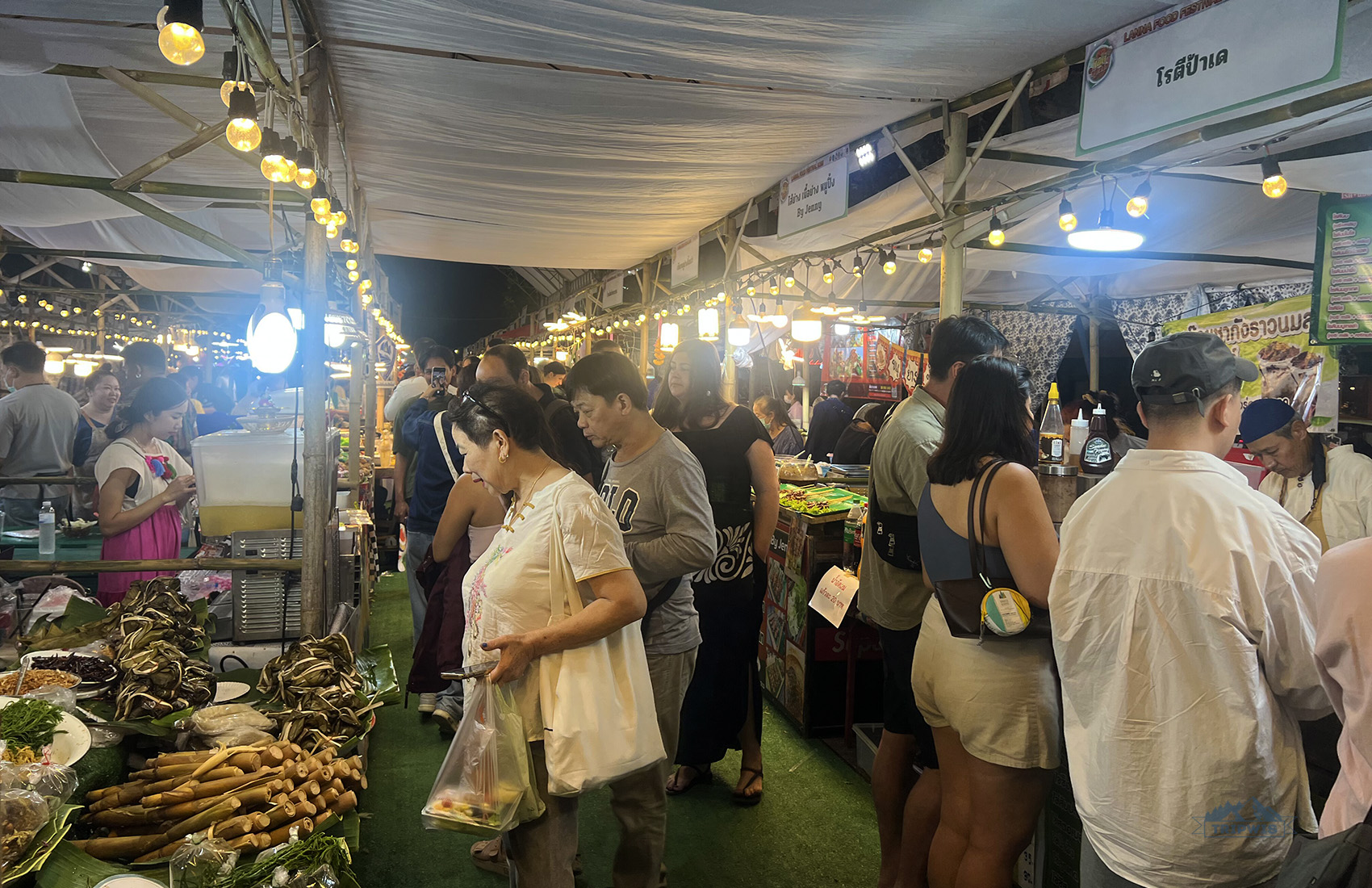
The crown jewel of Thai food culture is its night markets. Besides endless food options, you’ll find live music, souvenir stands, and the irresistible atmosphere of evening life.
Chiang Rai has three of them:
- Chiang Rai Night Bazaar — located right by the Bus Terminal 1, it is open daily from 6 p.m. to 11 p.m.; serves mostly Thai food and souvenirs.
- Saturday Night Market — open only on Saturdays from 3 p.m. to 11 p.m. — no surprise there! It’s a huge event that spreads across several streets and has a bit of everything: Food from around the world, open-air massage parlors, clothing, home decor, and crowds of locals dancing to traditional music. If you’re in town on a Saturday night, don’t miss it!
- Sunday Night Market — similar to the Saturday one but smaller and a bit more laid-back. Open from 4 p.m. to 10 p.m.
Thai and Asian food
 |
 |
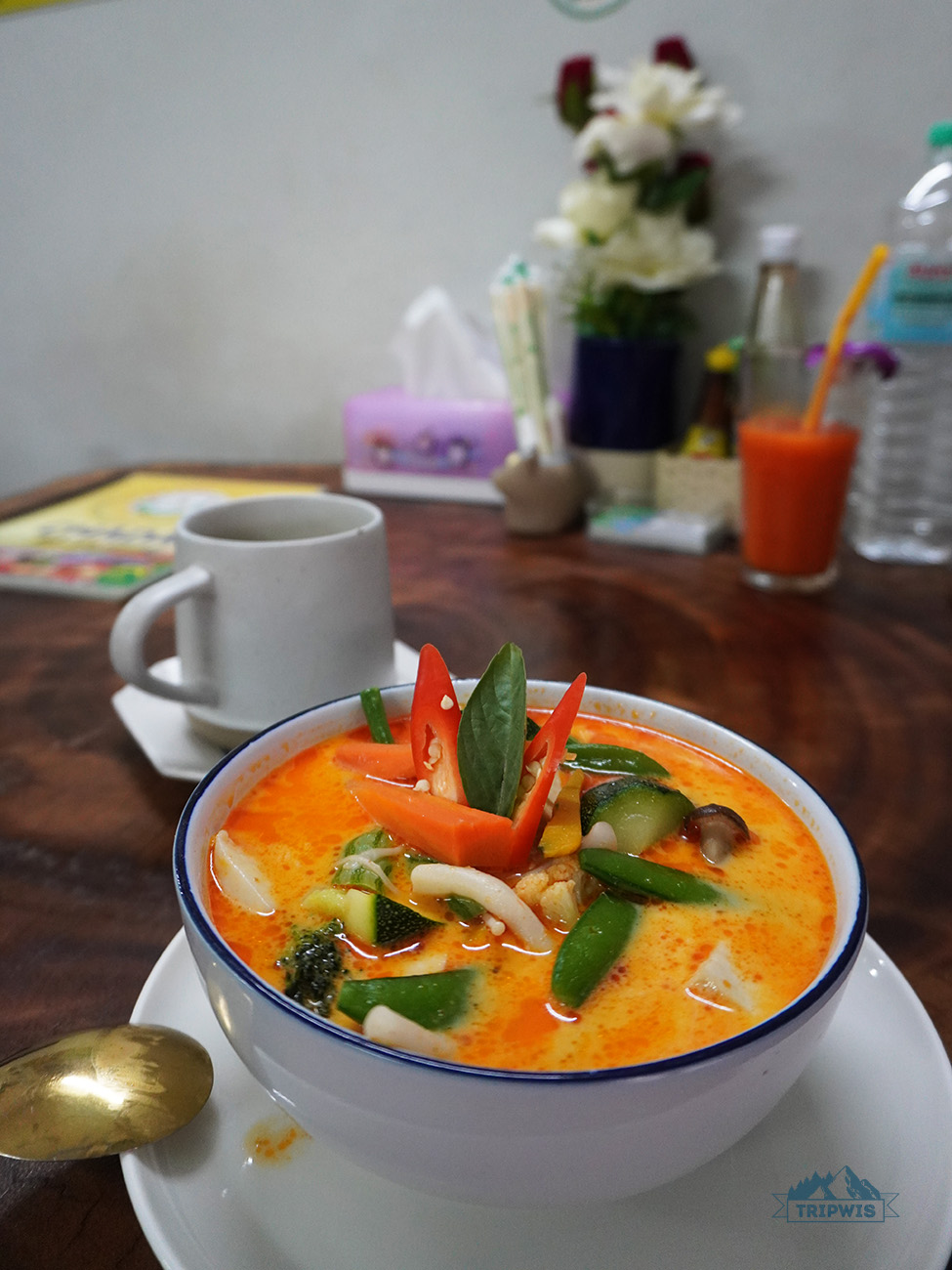
Here’s my personal list of the best cafes and restaurants in Chiang Rai:
📍 Khao Tom Jor Charoenchai — a huge variety of Thai-Chinese dishes. Seriously, they have everything: All kinds of meat, soups, stewed veggies, fish, porridge. We came here with a big group for a celebratory dinner and probably tried over 20 different dishes. It’s a local favorite, so expect a line on weekends.
📍 Barrab — a small but popular spot serving what might just be the best Northern Thai food in town. There’s a namesake salad on the menu, and I strongly recommend trying it if you’re okay with pork.
📍 The Winds — if Barrab is full, head to this place next door. It’s a more of a touristy cafe but with good Thai and Northern-style dishes. Try their khao soi — a creamy coconut curry noodle soup — with chicken or beef. Prices are higher than at markets or street stalls, but the service makes it worth it.
📍 Boonsita Vegetarian Restaurant — vegetarian food so good that even meat lovers will be happy. For just less than $2, you can get a huge bowl of khao soi or a plate of rice with three types of add-ons: Either veggies, mushrooms, or soy meat.
📍 Kha Lung Fried Chicken — if you crave crispy chicken, here’s my favorite: Technically a street stall, but it deserves a separate mention. They serve fried chicken with biryani rice (spiced rice), pickled cucumbers, and sauces. In my humble opinion, the combo tastes more like a pilaf (a rice dish with meat and vegetables) than Thai fried rice — either way, it’s very delicious! The stall is open 5–9 p.m., closed on Sundays.
European cuisine
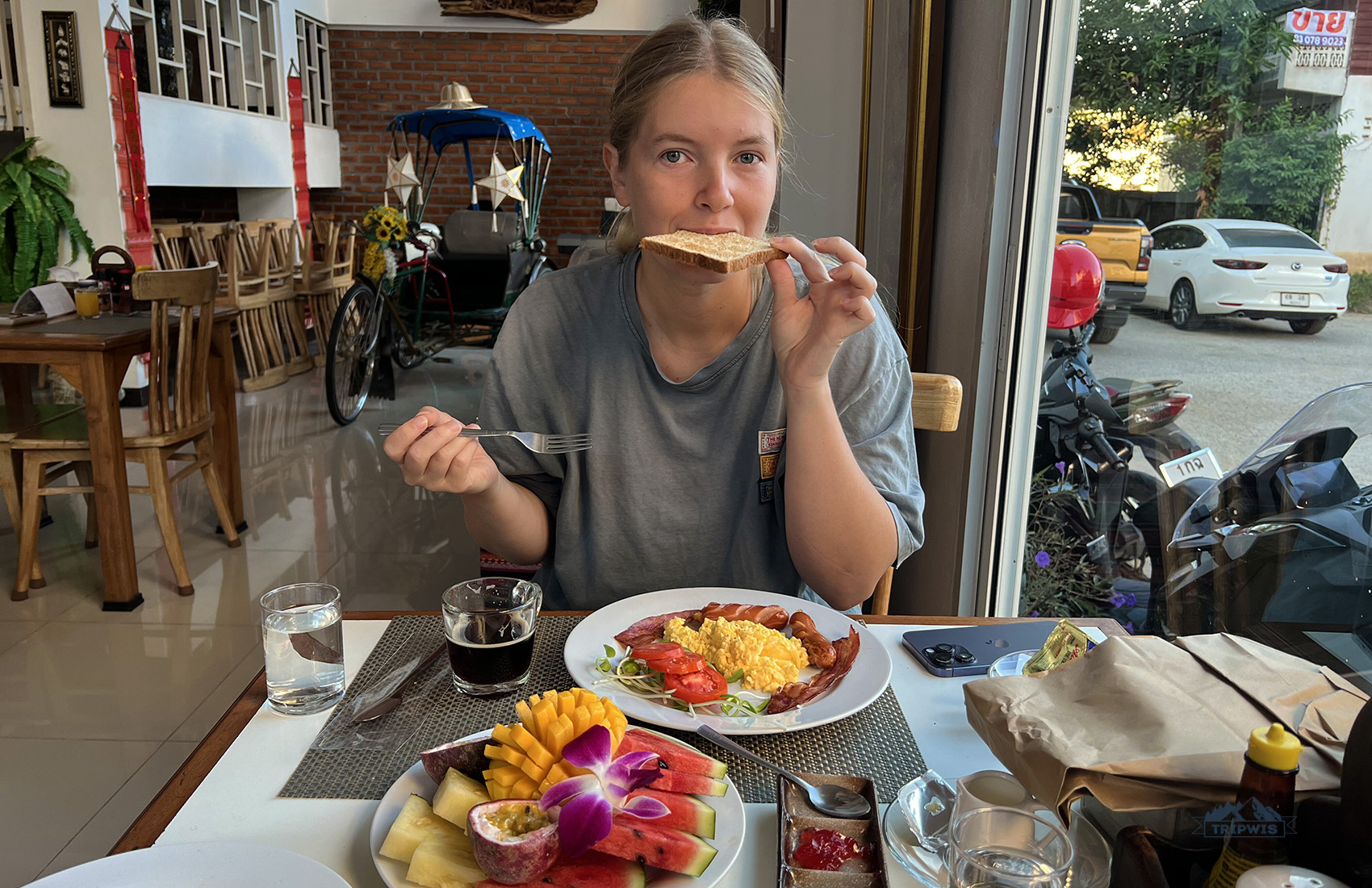
🥐 Chivit Thamma Da Coffee House, Bistro & Bar — this place is GORGEOUS. A white colonial-style house by the river that was turned into a restaurant, it’s a nice stop after visiting Rong Suea Ten temple. The menu has a bit of everything, but the highlight is definitely their desserts and coffee. Prices are on the higher side for Chiang Rai — 120 baht / $3,8 for a cappuccino, 150 baht / $4,8 for a basque cheese cake — but the vibe and the view are worth every baht.
🥐 Heaven Burger — a must for burger lovers. Expect to find a big menu with meat, tofu, and veggie options, plus sandwiches. The portions are massive — 250 baht / $8 will get you a meal that’ll keep you full all day.
🥐 The Hungry Nest — cozy European-style breakfasts and brunches with eggs Benedict, pancakes, avocado toast, and the like.
🥐 Crêpe Corner — a small creperie that serves thin French-style crepes with both sweet and savory fillings. Perfect if you’re craving something hearty for breakfast (as early as 8:30 a.m., though).
Chiang Rai coffee shops
 |
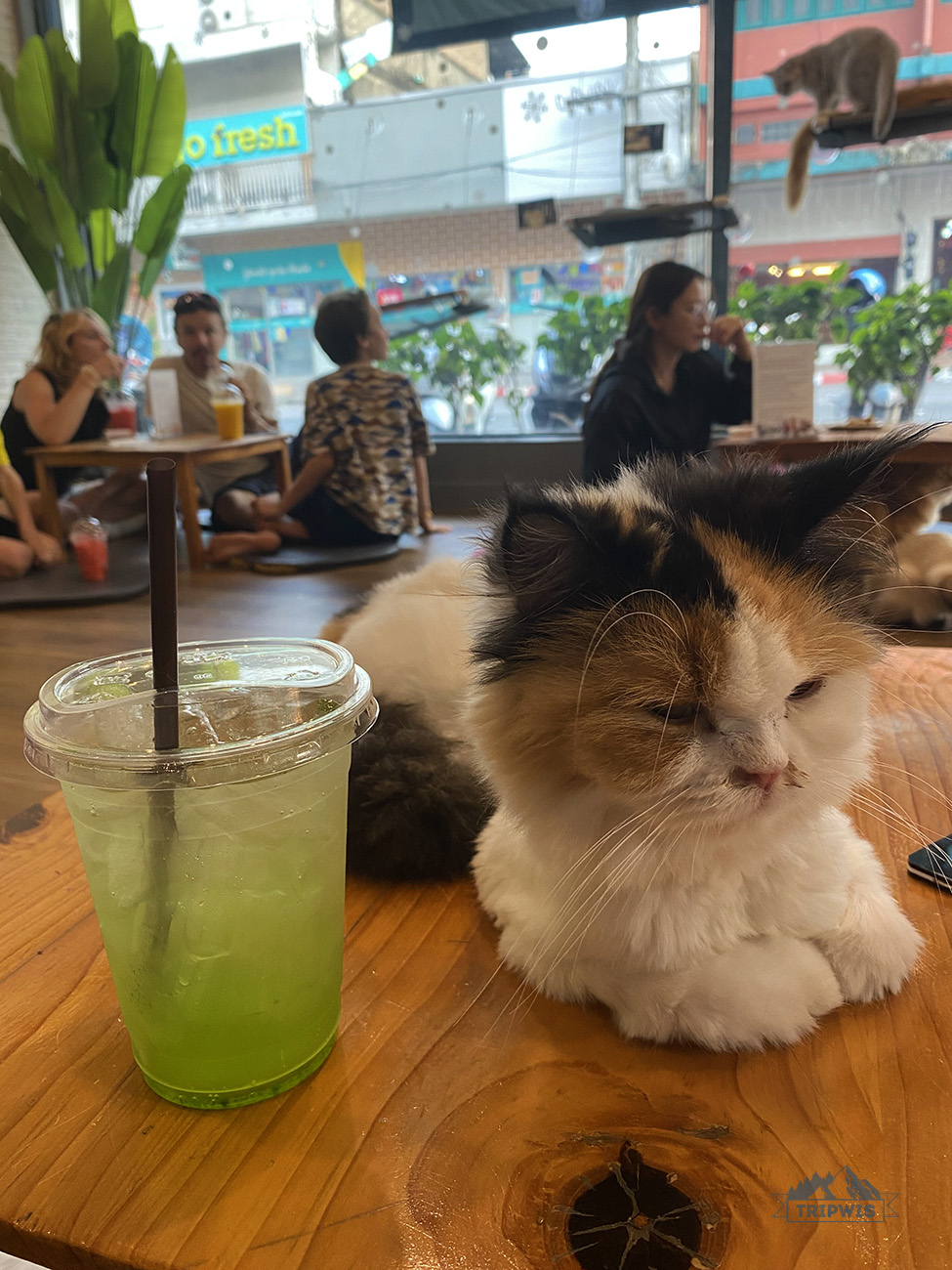 |
For a small city, Chiang Rai has a surprisingly large number of specialty coffee shops. You can just wander around and stumble upon lovely spots offering all sorts of coffee, tea, matcha, and lemonades. The only catch is that most of them close pretty early — around 5 or 6 p.m.
- Agape — a great spot for working on your laptop or simply hanging out with a drink and a sweet treat. The coffee here is great, but it might take a while before you get your order — the service tends to be slow.
- Akha Hill Coffee Roastery — I came here a couple of times to work. There’s Wi-Fi and plenty of outlets. The second floor is quiet, while the first one can get noisy with groups chatting. The coffee’s great, though slightly pricier than the city average.
- EnRoute Coffee — a small cozy cafe that serves classic coffee drinks and a couple of desserts. It’s peaceful and comfortable.
 |
 |
- 1:2 Chiangrai Brew — a famous Chiang Rai coffee shop chain; each location is a stylish cafe with an impressive coffee selection and hands down the best Thai milk tea I’ve had in town.
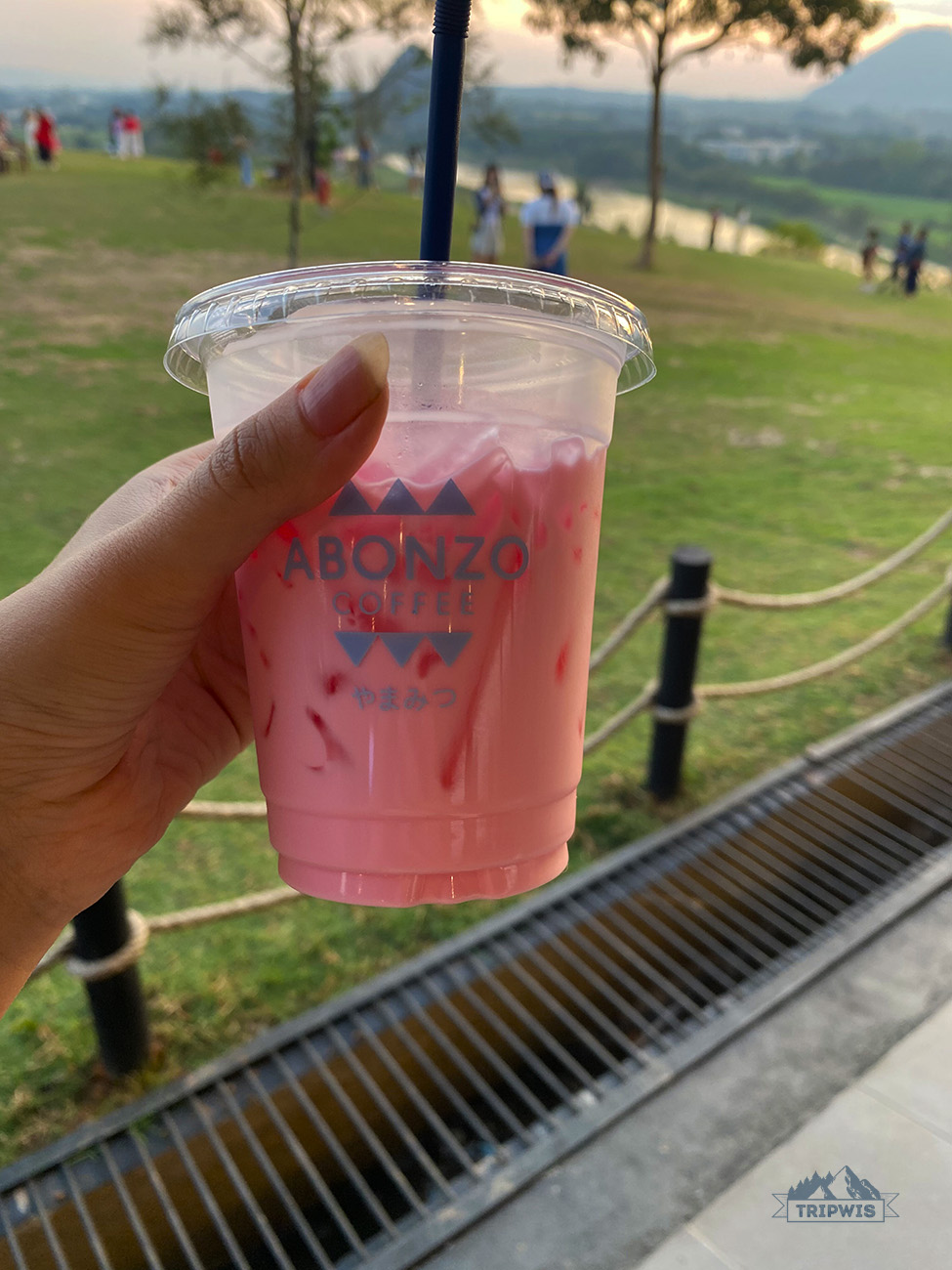
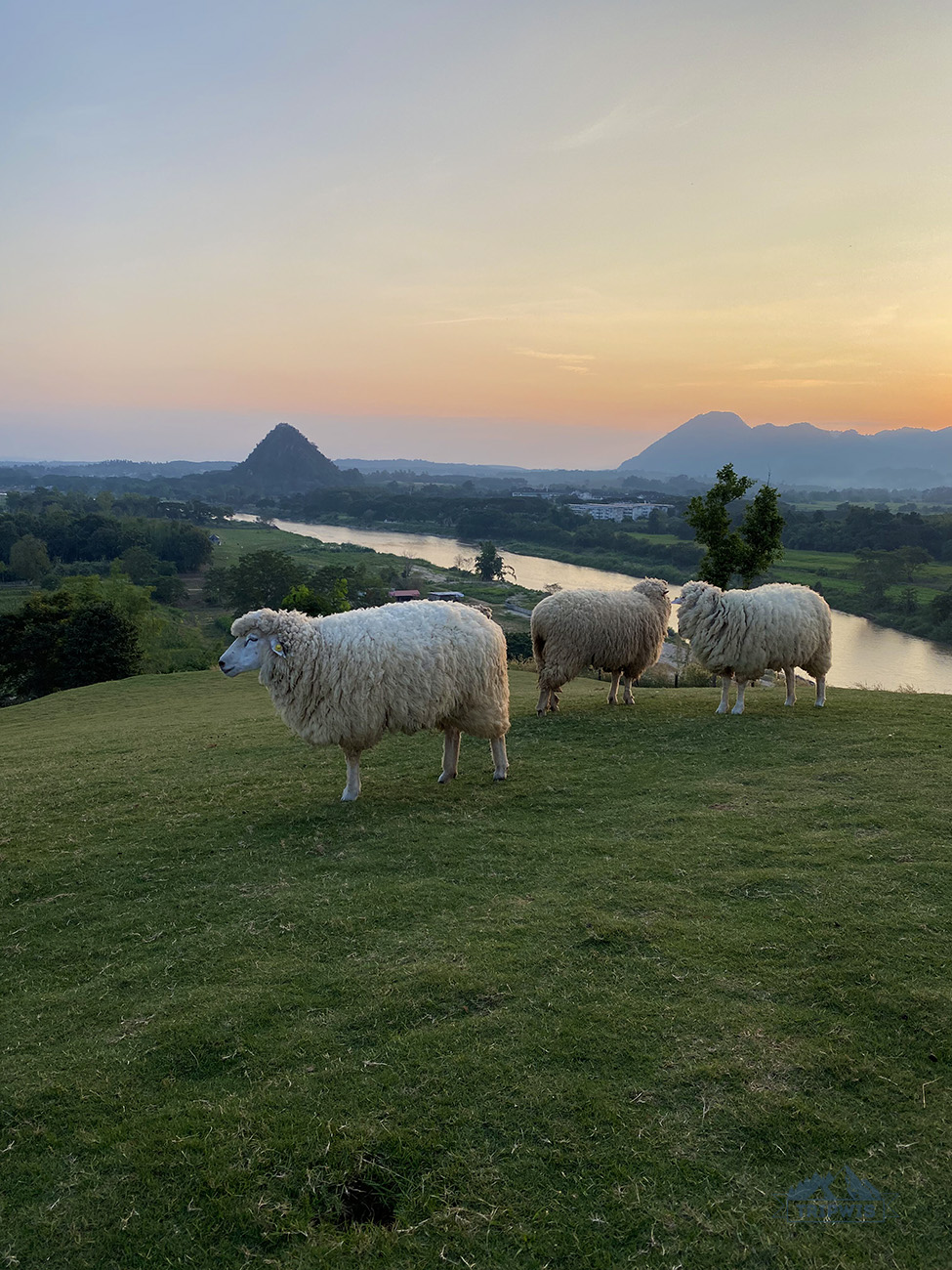
- ABONZO Yama Mitsu — one of my absolute favorite spots in all of Chiang Rai! It’s a cafe on top of a hill with a stunning view of the river and a few sheep wandering around. Another perfect place to catch the sunset with a drink in hand. You pay 100 baht / $3,1 for the ticket and it can be exchanged for a soft drink.
Food and groceries
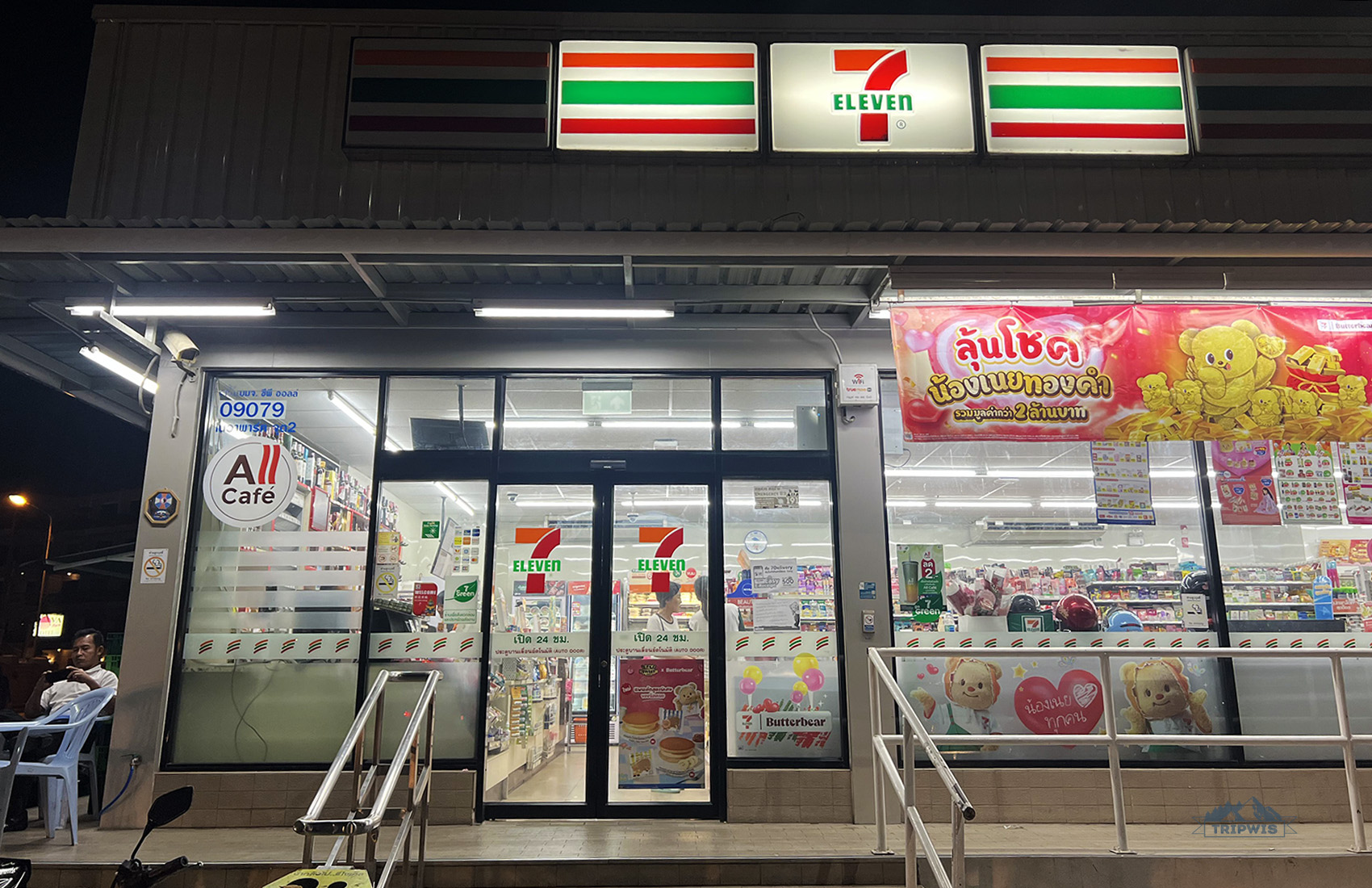
Local products in Thailand — fruits, veggies, meat, rice — are generally quite affordable. But dairy (like cheese) and imported goods can be surprisingly pricey.
Here’s where you can shop:
✔️ 7-Eleven — the famous 24/7 convenience store chain that sells absolutely everything. A local SIM card with internet can be bought right here — plans with 30 GB start from 200 baht. Although I prefer to sort out internet issues in advance with an e-sim.
✔️ Lotus’s Go Fresh and Big C — full-size supermarkets with a solid selection.
✔️ Big C Supercenter and Tops Central Chiang Rai — great for imported products and a wider variety overall.
Prices for some items at Big C:
- Chicken breast (1 kg) — 85 baht
- Cheese (200 g) — 260 baht
- Ice cream (Magnum) — 50 baht
- Pork (1 kg) — 120–170 baht
- Eggs (10 pcs) — 60 baht
- Water (1,5 l) — 20 baht
- Coke (1,5 l) — 30 baht
- Local beer (bottle) — from 50 baht
Getting around Chiang Rai
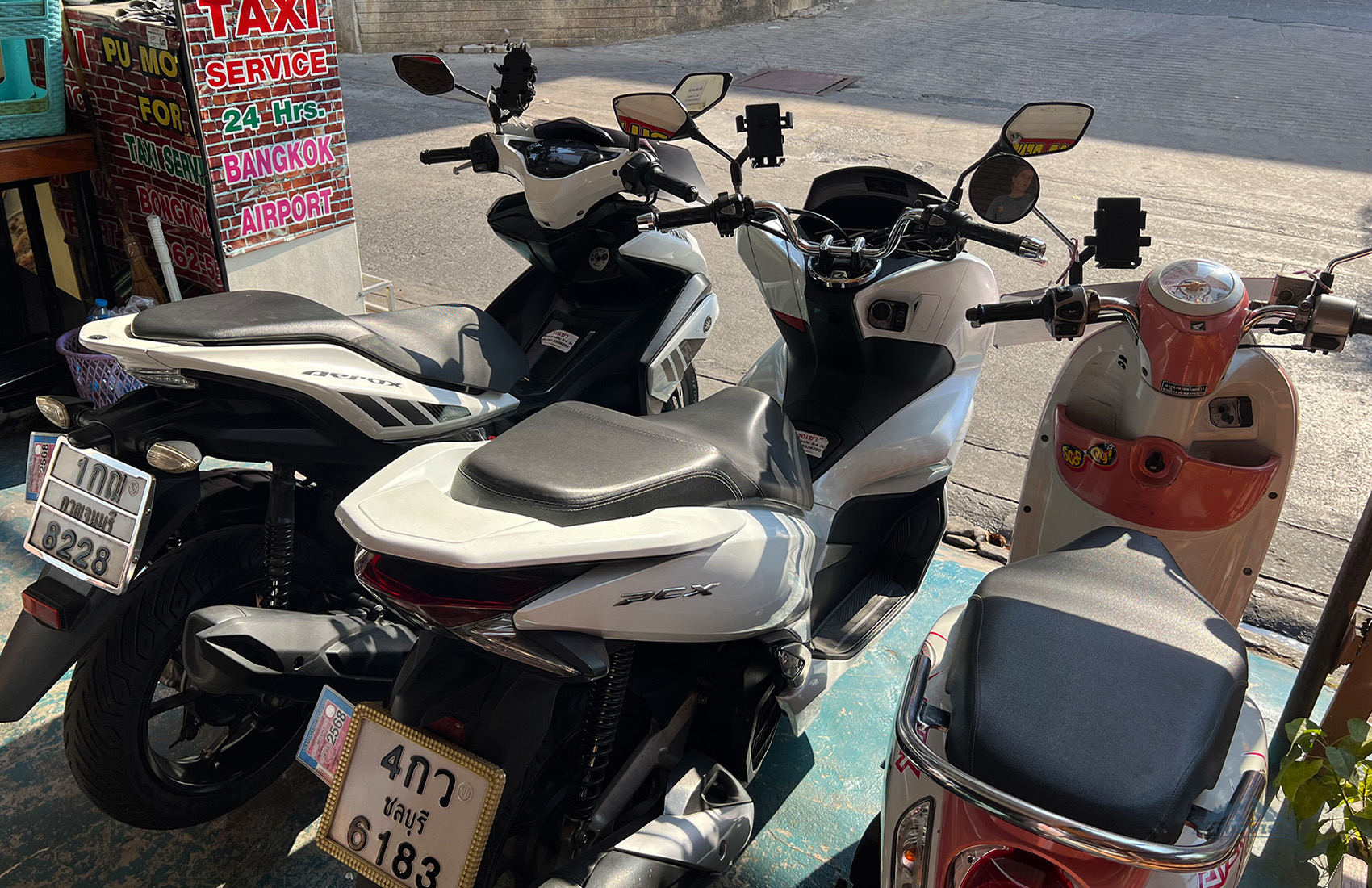
I already covered how to get into the city from the airport and bus terminals earlier. Now let’s talk about getting around the city itself and exploring nearby areas.
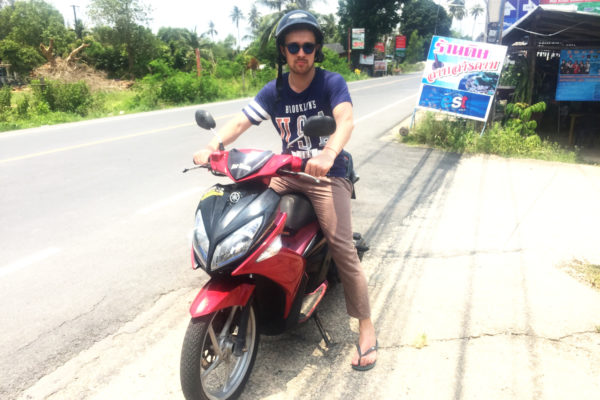
Riding a scooter or a motorbike is the main way to get around Chiang Rai and pretty much any other place in Thailand. You can rent a scooter on nearly every corner.
- Prices and conditions are about the same everywhere: Around 250–300 baht / $8–$9,5 per day. If you rent for several days at once, you can usually haggle for a discount. As a deposit, you’ll need to leave either your passport (no way!) or about $100 in cash.
Though it is legally required, no one in Chiang Rai checks your license when you rent a motorbike — and honestly, half the locals don’t have one either. Unlike Phuket, police here aren’t overly strict and don’t stop every foreigner they see. Still, you might get caught if you ride past a police station too often, and caught and fined anywhere else if they see you without a helmet. The fine is around 1,000 baht / $31,8 for riding with no license or helmet.
In Thailand, they drive on the left side of the road — a circumstance that will have any novice driver break out in hives. To make matters worse, locals here don’t always follow the rules, so keep your eyes open. That said, driving in Chiang Rai feels way calmer than in the south of the country or in bigger cities. The only tricky part is mountain roads — just stay cautious, especially during the rainy season, and you’ll be fine.
Renting a car isn’t as common here as renting scooters, but it’s possible. Usually, the same places that have motorbikes for rent also offer cars — just look for a “car rental” sign out front. Rates start at around 800 baht / $25 per day, which can actually be a great deal if you’re traveling as a group. If you prefer to book things in advance, look for the car on Discovercars.com.
Private tuk-tuks is an unusual, yet fun and convenient option. Some local companies rent out large tuk-tuks with a driver for private day trips. Prices depend on distance and time, but your best chance to get your money’s worth is to rent a tuk-tuk as a big group for a one day itinerary filled with many stops.
For example, we paid 250 baht per person for a full day visiting locations within a 40-minute radius of Chiang Rai, and about 400 baht for a trip to the Laos/Myanmar border (but there were six of us).
Buses run only to the airport, the White Temple, and the Black House from the Bus Terminal 1. Tickets cost around 40 baht / $1,3, and they operate roughly from 8 a.m. to 5 p.m.
Blue tuk-tuks — you’ll find them at the Bus Terminal 1 or near Kad Luang Chiang Rai Market — run to various city spots like the White Temple, the Black House, and Singha Park. Fares are around 25 baht / $0,8, but make sure to confirm the destination before hopping on — drivers adjust their routes based on passengers. Avoid red tuk-tuks! They head to a completely different district.
If you don’t want to drive yourself, taxis are your best bet. The most popular app here is Grab — you can choose between a car, a minivan, or even a motorbike taxi. Short rides within the city (about 10 minutes) start from 70 baht / $2 for a car. Bolt also operates in the city, and sometimes it’s even cheaper than Grab — though there are fewer vehicles available with Bolt.
Pro tip: It can be tricky to find a taxi to get back downtown from more remote spots. When we found ourselves in such a tricky position (there were more than a couple of instances), we asked locals for a lift to the city center — and thankfully, it worked every single time.
My review of Chiang Rai
 |
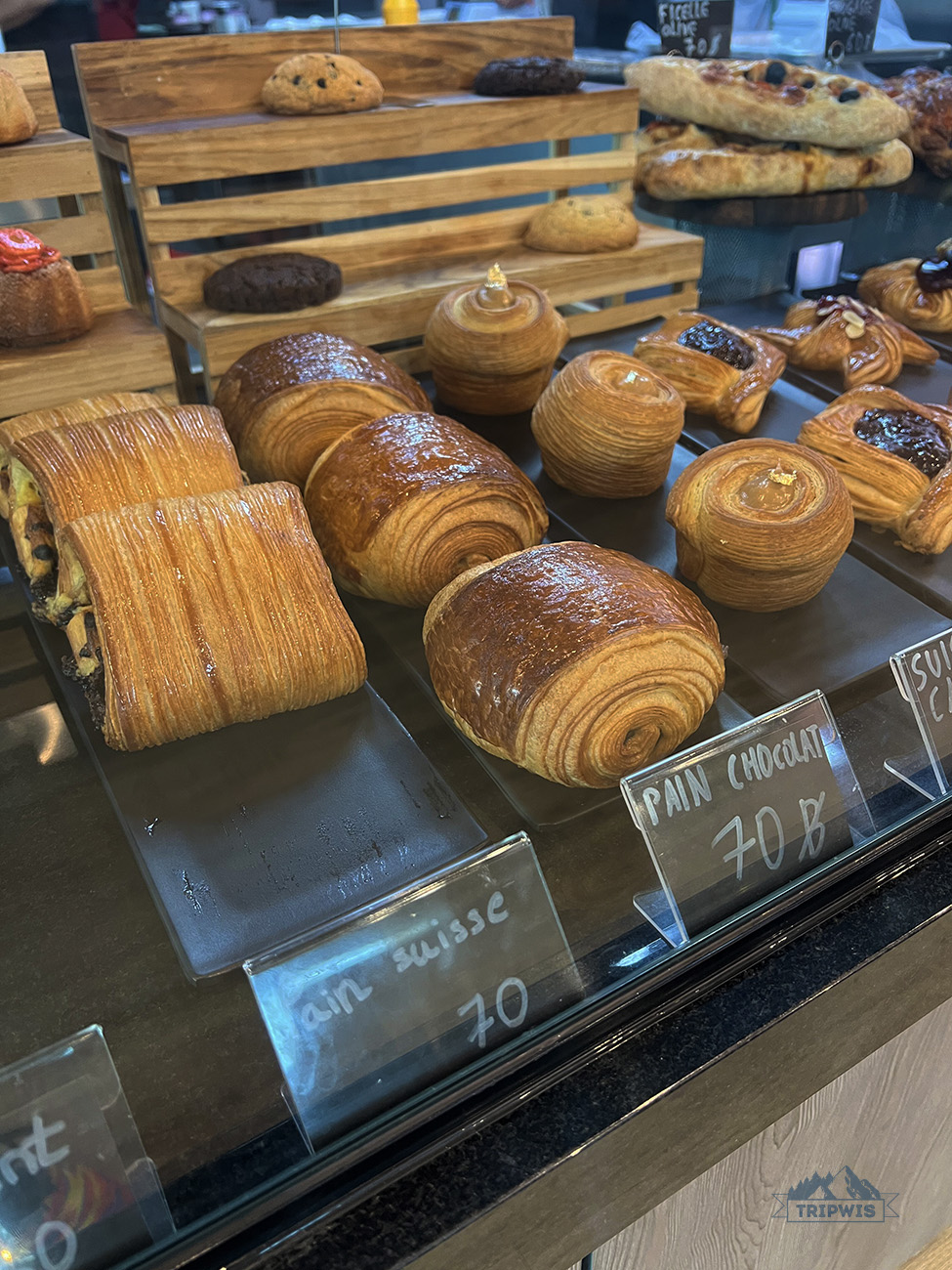 |
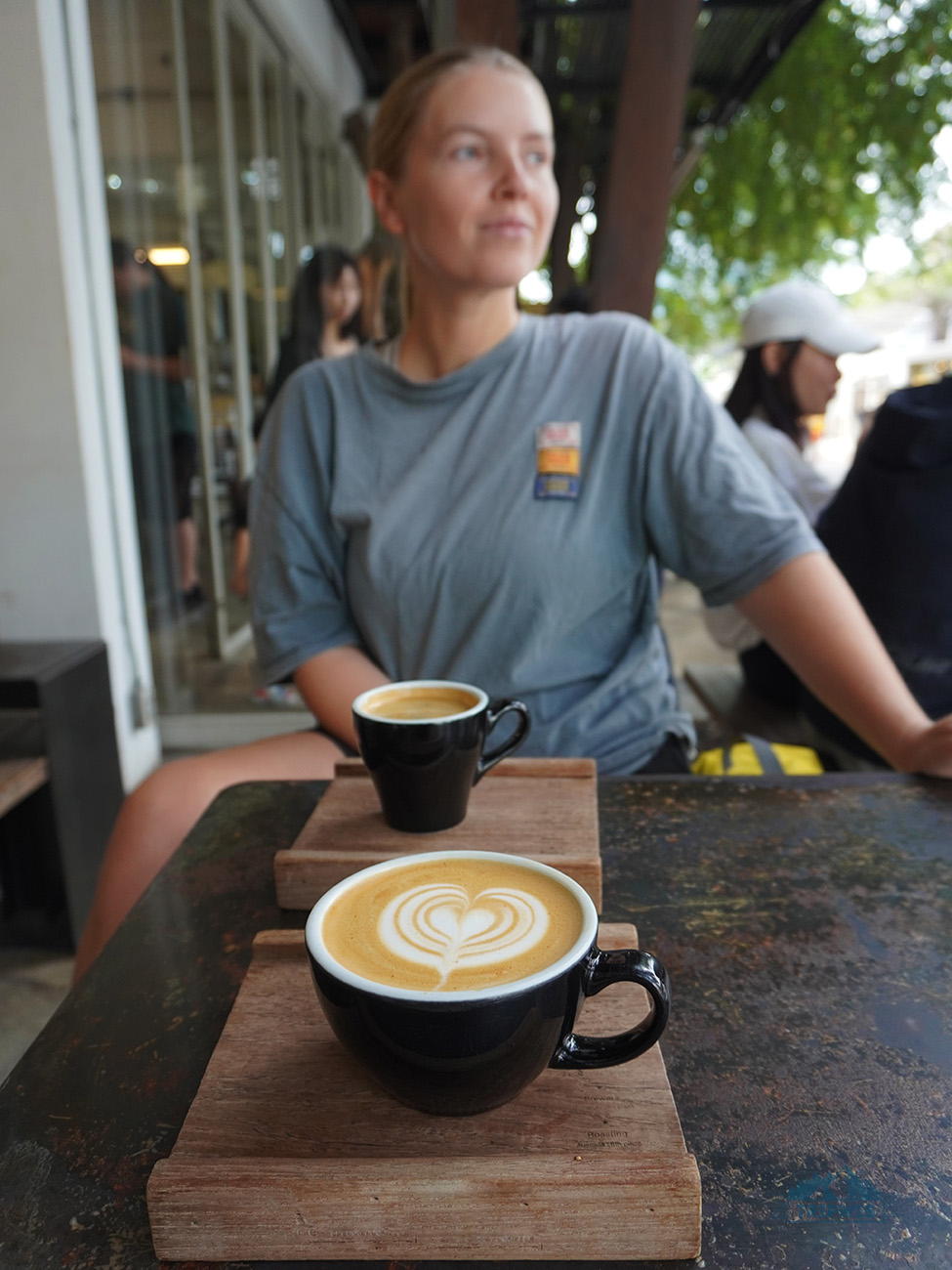
To wrap up my ultimate Chiang Rai travel guide: I honestly think this city doesn’t get nearly enough attention it deserves. It offers everything Northern Thailand is famous for, but at lower prices. If you ask me, which one is better, Ching Mai or Chinaf Rai? — I’ll say that to me, Chiang Rai feels cozier and calmer, with far fewer traffic and tourists.
To make it clearer, here are the pros and cons of Chiang Rai:
Pros:
+ Everything is cheaper! About half the price of southern Thailand, and still a bit lower than Chiang Mai or Pai
+ It’s not overly hyped — fewer tourists, more authentic
+ Perfect for those who enjoy unusual, modern art
+ You can rent a motorbike without a driver’s license (just make sure you actually know how to ride one!)
+ The atmosphere is more laid-back than in most Thai cities
+ The surrounding nature is stunning, and the weather from October to April is just perfect
+ Fresh fruit everywhere and delicious, affordable food
+ Convenient base for trips to Laos
Cons:
— The heartbreak of every beach lover: There’s no sea
— Public transport is almost non-existent — it’s hard to get around without a scooter or car
— It’s quite far from most other Thai destinations (only Chiang Mai is nearby)
— Western food (pizza, burgers, etc.) tends to be pricey
— Not everyone speaks English
And there you have it! I hope my list of things to do in Chiang Rai has led you to look into the area as your potential next travel destination — even a simple weekend in Chiang Rai will bring you memories to last a lifetime.