
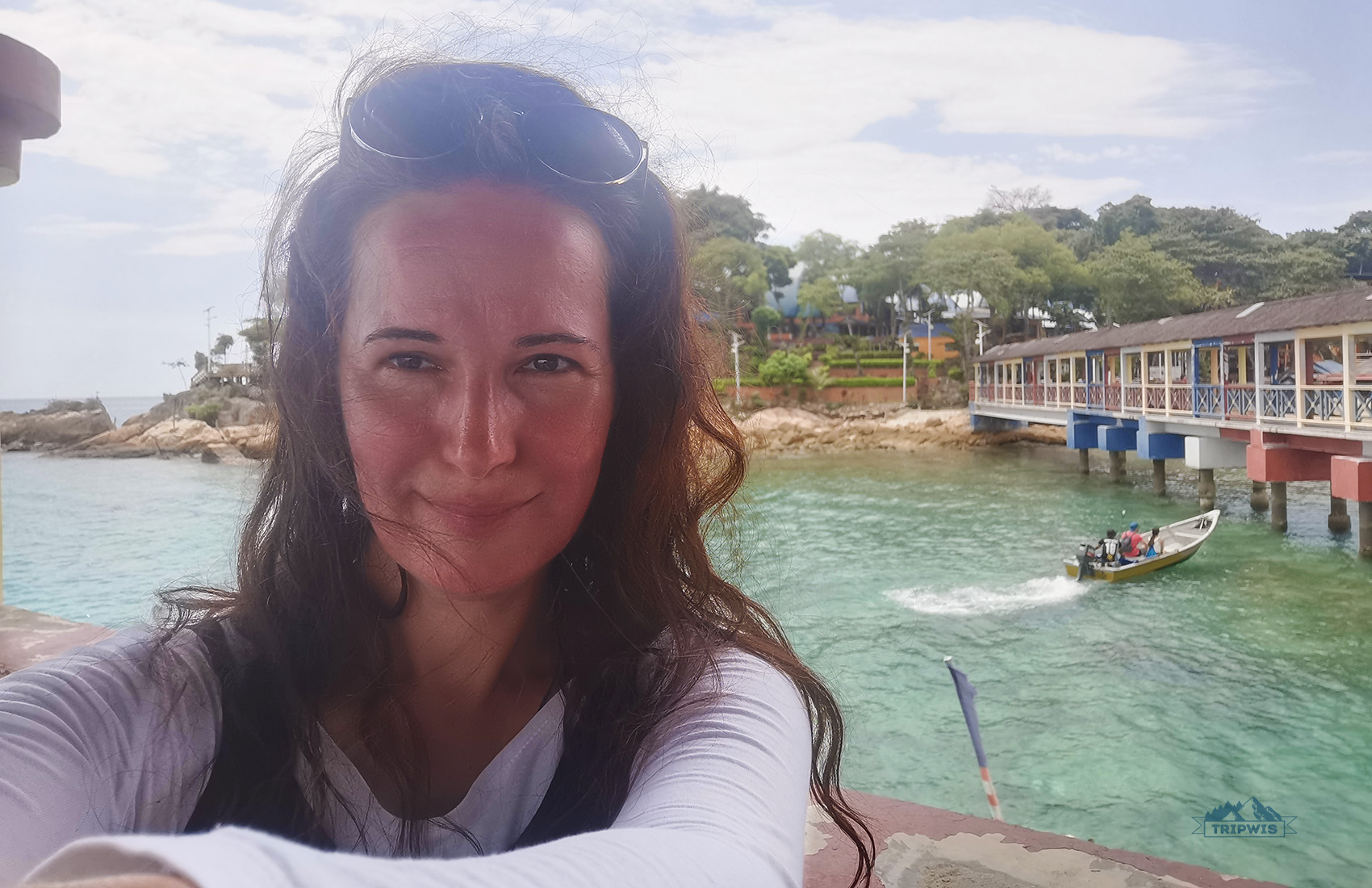
In this guide, I’ll walk you through my own independent trip to Malaysia’s Perhentian Islands — a place hardly anyone has heard of, let alone visited. I’ll cover everything from how to get there and the best time to go, best things to do in Perhentian Islands once you arrive, and what to expect from the beaches and accommodation.
I’ll also share my take on snorkeling, food prices, and a handful of insider tips that will make your trip smoother.
Article contents
- Why visit the Perhentian Islands?
- The best season for your trip
- How to get to the Perhentians?
- Where to stay on the islands?
- Things to do and see
- Beaches of the Perhentians
- Where to eat?
- My final tips
Why visit the Perhentian Islands?
My love for hidden, less touristy destinations led me to the Perhentian Islands in Malaysia — a tiny cluster of islands tucked away in the Gulf of Thailand, about 30 km off the coast of Malaysia.
The islands still have no paved roads and motorbike rentals — a rare thing in Southeast Asia! People get around either on foot or by boat which meant a chance to soak in untouched nature and the sounds of the jungle. But you’ll find hotels and just enough infrastructure for a comfortable stay on Perhentian Besar (the big island) and Perhentian Kecil (the small island).
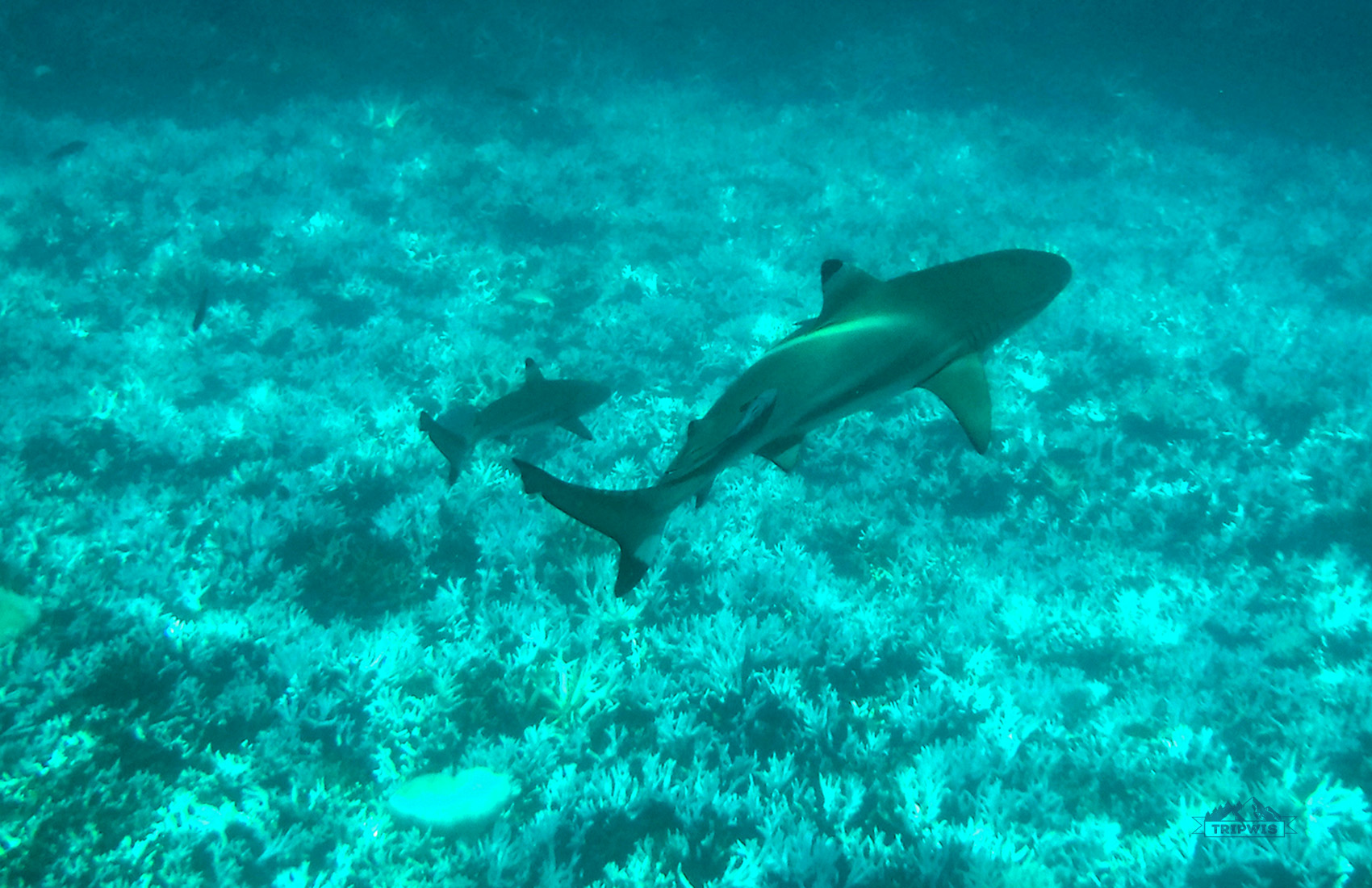
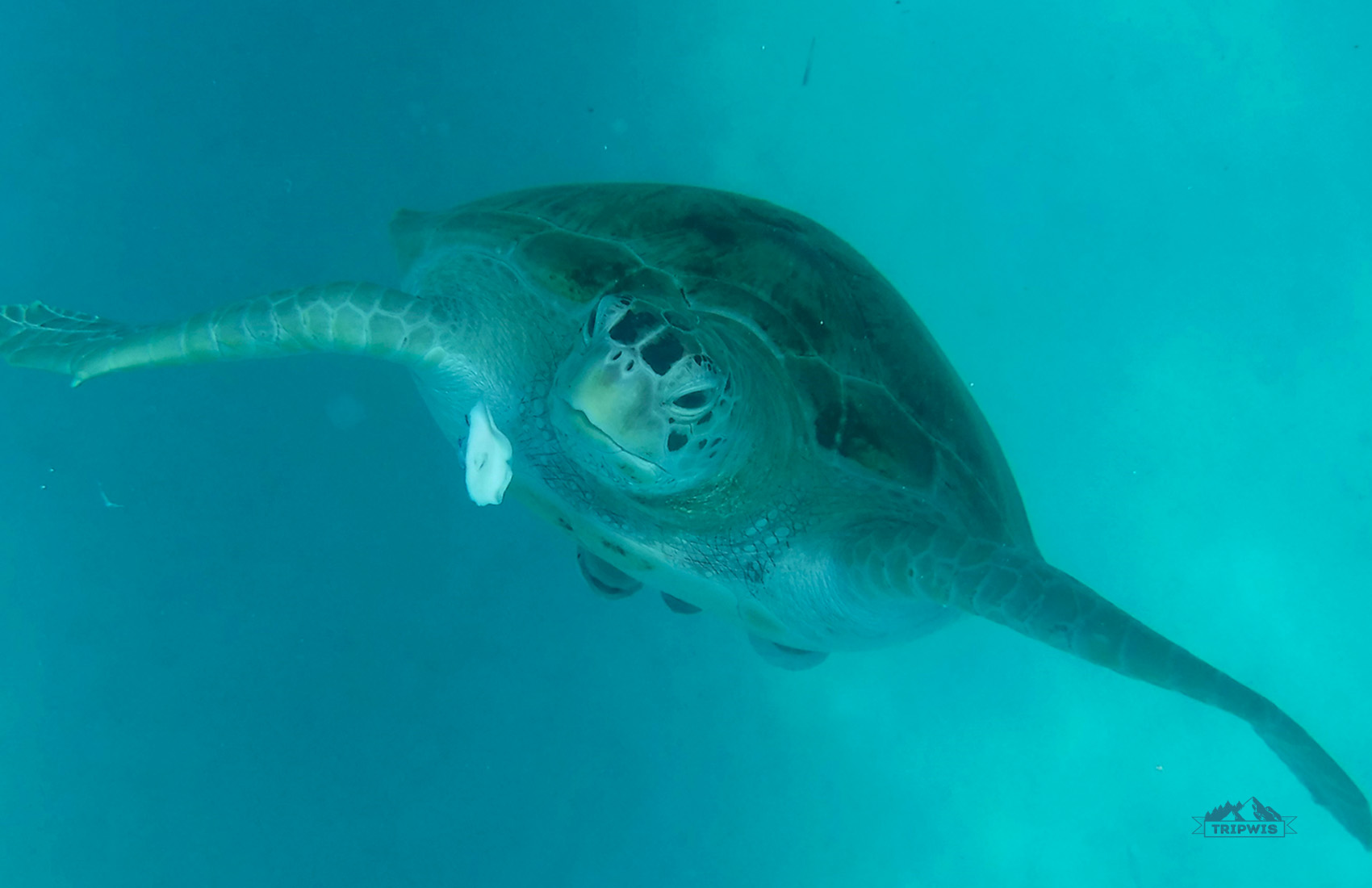
From what I’d learned online, I could expect amazing diving and snorkeling. Reviews promised encounters with geckos, sea turtles, stingrays, and plenty of other exotic marinelife and wildlife (they didn’t lie!).
The islands also drew me in with their postcard-perfect turquoise water and soft white sand beaches… So there was no doubt left — I was going to the Perhentians!
The Perhentians marked the final stop of our BIG trip around Malaysia. We’d visited (and covered on this blog):
📍 Kuala Lumpur — the capital
📍 Malacca — a small charming historic town near Kuala Lumpur
📍 Langkawi — a popular tropical island sprinkled with beaches, nature, and Instagram-worthy attractions
📍 Borneo — the Malaysian part of the third largest island in the world, where your days are spent observing wildlife in the sea and in nature. One of the most wonderful places we’ve been to!
…and now — the Perhentians.
When to visit the Perhentians and how many days you’ll need?
The official beach season on the Perhentians runs from March to October, but the driest months (and therefore the best time to visit Perhentian Islands in Malaysia) are typically April to September. Air temperatures hover around 90°F (+32°C) and the water stays warm at about 86°F (+30°C). It’s perfect for long swims and snorkeling — just don’t forget sunscreen, because the midday sun is brutal.
- July and August are the months when there are zero available rooms at the hotels. The peak season!
Still, even during the dry season, tropical downpours can happen. When I visited the islands in late June, I got caught in a couple of these — one of them lasted for hours. Still, that’s more the exception than the rule.
How many days should you stay on the Perhentian Islands? It really depends on what you’re looking for. If your plan is to relax on the beaches, explore a bit of the islands, and maybe join a snorkeling trip or two, then 3 to 5 days is plenty. A week will give you time to fully unwind without feeling rushed.
But if you’re interested in learning scuba diving and getting your PADI certification, you’ll want to stay at least 1.5 weeks. Most courses take several days, and there are plenty of beginner-friendly options.
Many resorts, boat services, and dive operations shut down during the northeast monsoon, so November to February is not just rainier — it can significantly change what is actually open on the islands.
How to get to the Perhentians?
Since there’s no airport on the Perhentians, the only way to get there is by boat from Kuala Besut, a small town on the mainland. The ride takes around 45 minutes.
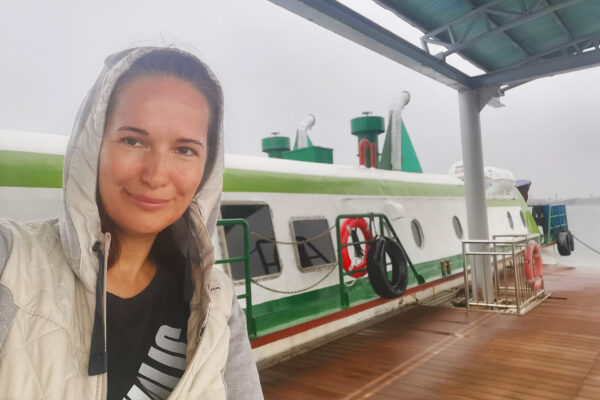
🔹Ferries run daily once an hour from 8:00 a.m. to 5:00 p.m. (no ferry at 12:00 p.m., though). But return ferries leave only at 8:00 a.m., 10:00 a.m., 12:00 p.m., and 4:00 p.m. Ticket costs 40 MYR / $9 one way.
🔹There are also speedboats that cost the same. The difference is that a ferry is a proper sea vessel, while a speedboat is just a regular boat for diving without a hardtop.
If you don’t feel like waiting for the ferry, speedboat operators will happily get you to the Perhentians in about 35 minutes. They’re easy to spot: Operators wait right where the buses drop you off and usually include a free ride from the bus station to the pier.
One more thing: Before boarding any boat, you’ll have to pay a marine park conservation fee of 30 MYR / $7.5 and a port fee of 20 MYR / $5.
At first, I’d planned to take the ferry (they’re covered, supposedly more stable which means less chance of getting soaked), but since my bus arrived before 7 a.m., I didn’t want to waste the cooler morning hours waiting around. A persuasive boat promoter managed to talk me into a speedboat, and I didn’t regret it. Thanks to the early arrival, I even managed to join a morning snorkeling trip around Perhentian Besar, visiting several beaches from the water and picking the ones I wanted to come back to later.
But how to get to Kuala Besut from Kuala Lumpur? You have a few options, depending on your budget and comfort level:
✔️ By bus
✔️ By plane to Kota Bharu + taxi/bus from Kota Bharu to the pier
The most budget-friendly option is definitely the bus from Kuala Lumpur to Kuala Besut.
- Travel time averages around 8 hours
- A one-way ticket costs 48 MYR / $12 (and about 38 MYR / $9.3 for a 9.5-hour long journey)
If you’re not planning to stay overnight in Kuala Besut, the night bus is ideal. It drops you at the port early in the morning, just in time for the first speedboats to the islands. In case your bus arrives to Kuala Besut bus terminal, a taxi to the port costs 10 MYR / $2.5.
Direct buses from several companies leave from Kuala Lumpur’s main terminal, TBS (Terminal Bersepadu Selatan). There are morning, afternoon, and evening/night departures. You can buy tickets at the station counters (there’s a small service fee) or online through sites like 12GoAsia — though you’ll still need to pick up a printed ticket at the station.
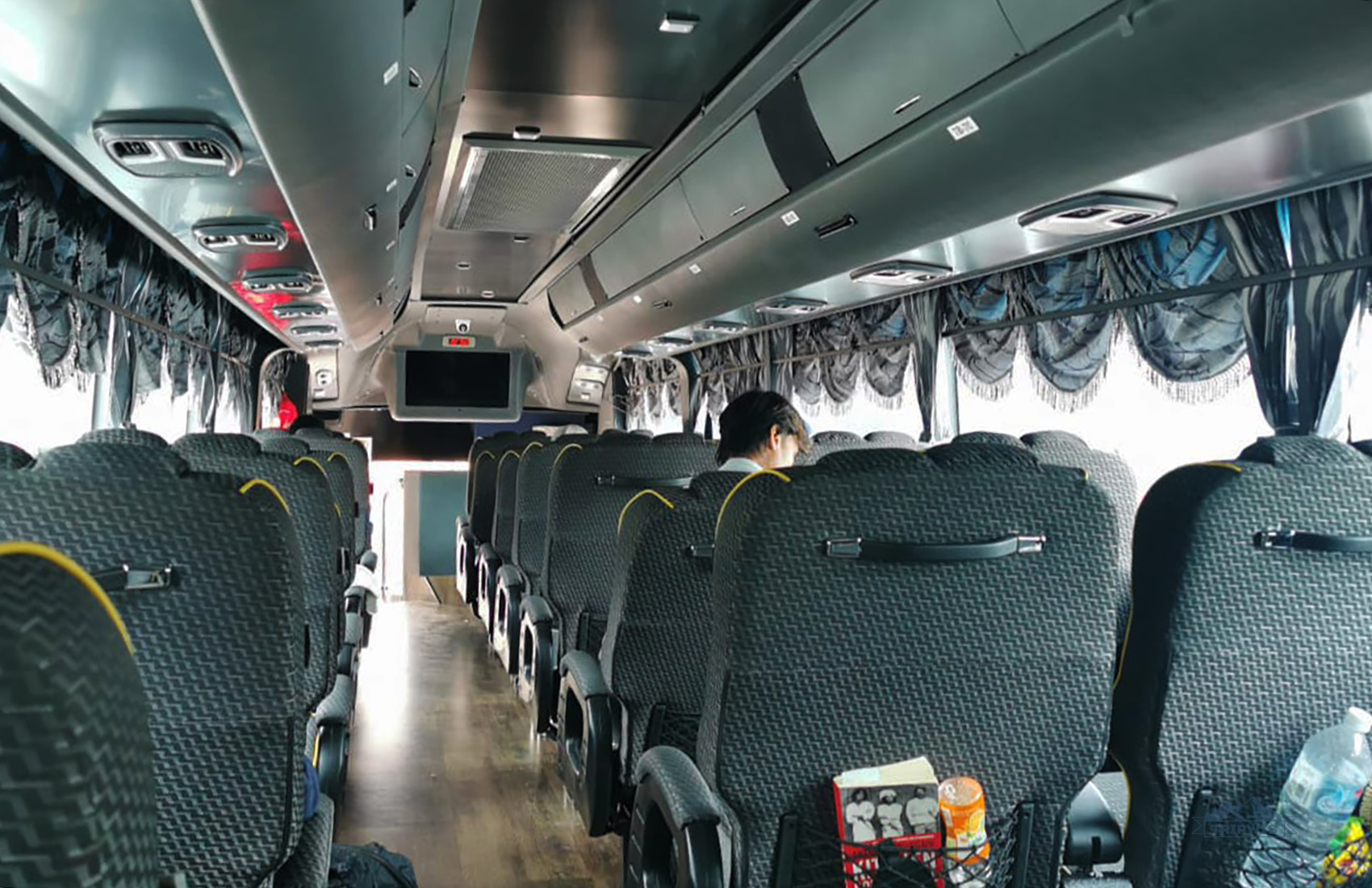
Personal experience: This is exactly what I chose while traveling to the Perhentian Islands on a tight budget. I ended up on a double-decker night bus, and my seat on the upper level had a great view. The seat reclined almost flat, there was a phone charging port, and a personal reading light. There were a lot of Europeans on board too, mostly with backpacks instead of suitcases. We made a 25-minute rest stop at a gas station to grab coffee, and arrived at the jetty around 6:30 AM.
Some travelers prefer to skip the arduous bus ride altogether and choose to fly instead. In that case, you fly from Kuala Lumpur to Kota Bharu.
- The flight takes about an hour
- The prices start around $18 one-way without checked luggage (Trip.com will help you find the best deals)
- There are also flights to Kota Bharu from Kuching, Penang, and Kota Kinabalu (Borneo Island)
- Sultan Ismail Petra Airport in Kota Bharu has already completed its major expansion, and the upgraded terminal has been fully operational since March, 2026
What next? You either take a 40-minute Grab taxi ride to Kuala Besut port for 80–100 MYR / $20–$25 or a public bus: First #9 to the bus station (3 MYR / $0.8), then bus #639 to Kuala Besut (6.2 MYR / $1.5) — it takes about two hours total. But the bus to Kuala Besut has a strict schedule: It departs only at 7 a.m., 10 a.m., 2 p.m., and 5:30 p.m.
Where to stay on the Perhentians?
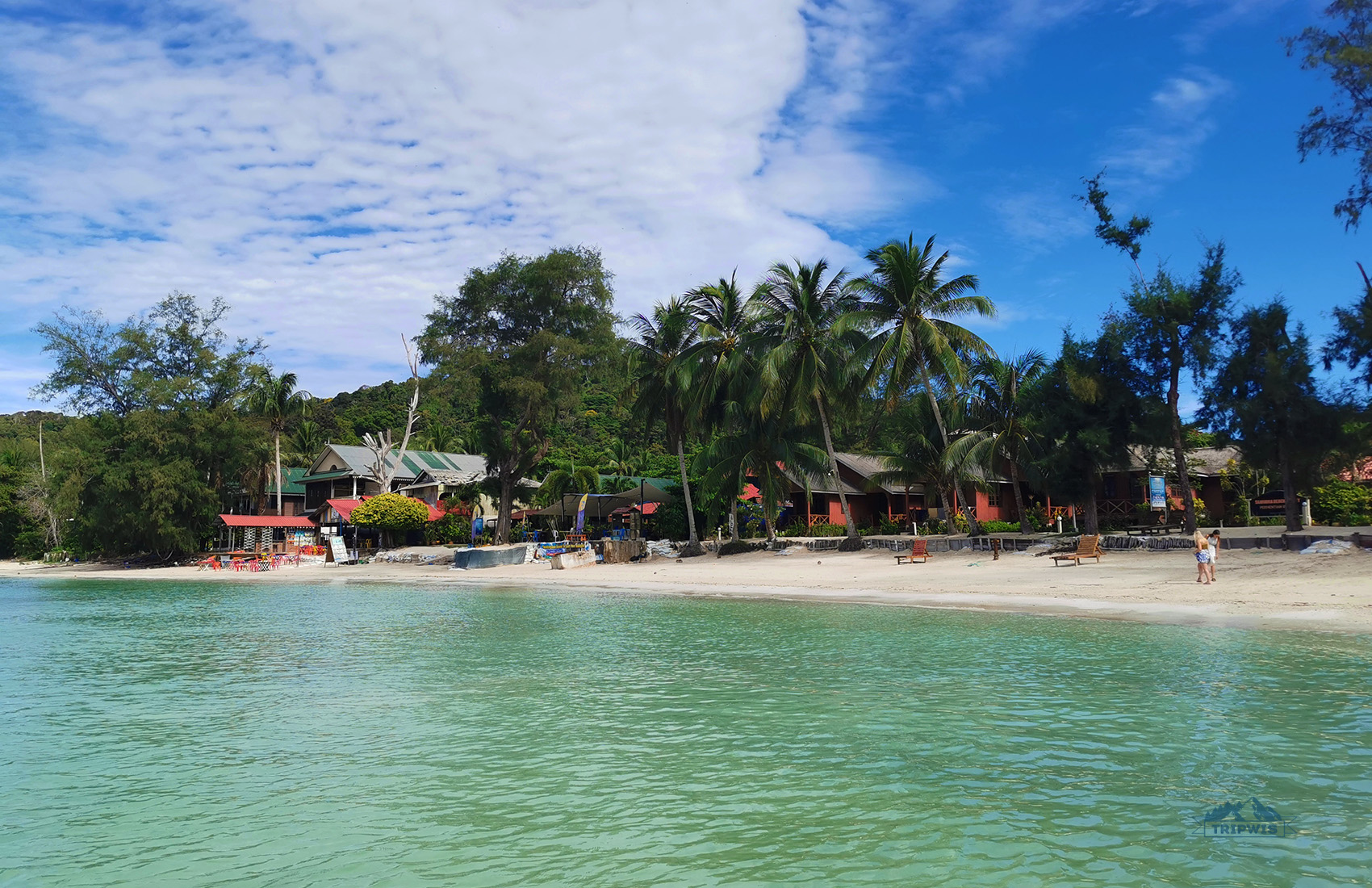
When choosing between the islands — Perhentian Kecil or Perhentian Besar — keep this in mind:
✔️Perhentian Besar (bigger island) is perfect if you want to enjoy peace and relax in solitude.
There are fewer hotels on the island, and most of it is nothing but jungle and untouched beaches.
✔️Perhentian Kecil (smaller island), on the other hand, is livelier. It’s home to the crème de la crème of 4- and 5-star hotels, and better suited for families with children and, as contradictory as it may sound, for those who enjoy a more social, party-friendly vibe.
But here’s what ties them together. There aren’t really towns on the islands — just a single fishing village on the south side of Perhentian Kecil. The infrastructure is very limited — don’t expect to see water parks, hip cafes, or shopping centers. Pharmacies, supermarkets, and banks are nowhere to be found, too! There are no ATMs on the islands either. I made sure to withdraw enough cash in Kuala Besut before heading over. While some larger resorts and dive shops do accept credit cards, you’ll need cash for most everyday expenses.
 |
 |
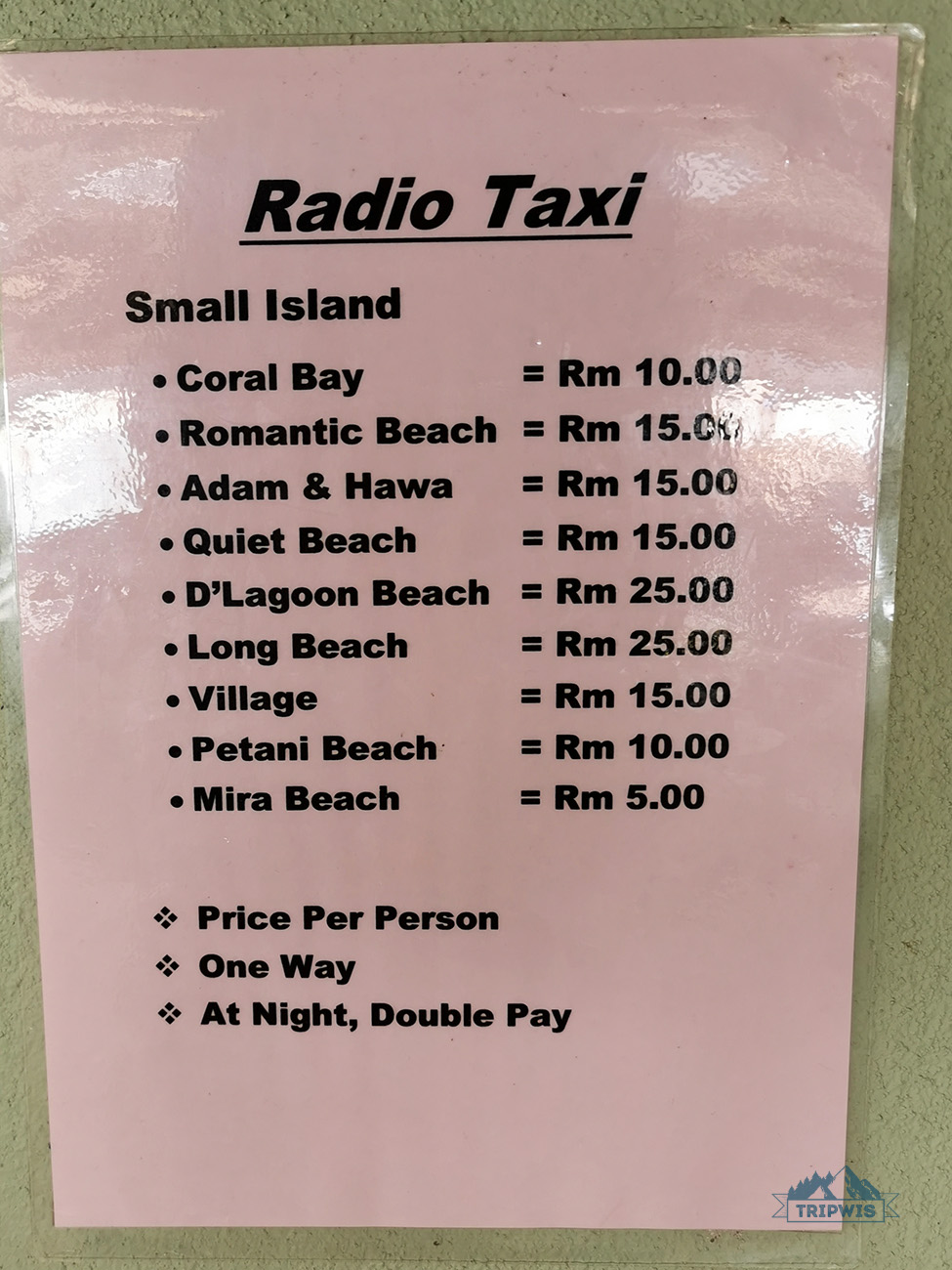
Side note: Getting around Perhentian Besar and Perhentian Kecil is simple, even without traditional transport. The islands are small, and water taxis (boats) make island hopping easy. Usually the rides are priced between 10 and 30 MYR one way / $2.5–$7.5.
But honestly, since the most popular activities here are snorkeling, diving, and simply soaking up the beach vibes, you don’t really need much more than those: Cafes, dive centers, and local tour operators are all at your disposal. And hotels on Perhentian Islands cater to all tastes.
WiFi is available in all sorts of accommodation and cafes. At the budget places I stayed, the connection was good enough to send photos, videos, and voice messages from the reception or even some points on the beach. In the evenings, when everyone returned from excursions and dinner, it slowed a bit. If you need to work remotely, the islands aren’t exactly the best place for reliable internet.
Now I’m moving on to hotel recommendations.
Here’s what you should keep in mind: There are not that many hotels on the Perhentians, but you might be surprised by the price range from $30 a night to $400 a night. And it’s best to book any of these hotels well in advance — two to three months, or even six months before your trip.
It’s also worth noting that some hotels are only on Booking, while others are only on Trip.com.
Where to stay on Perhentian Kecil?
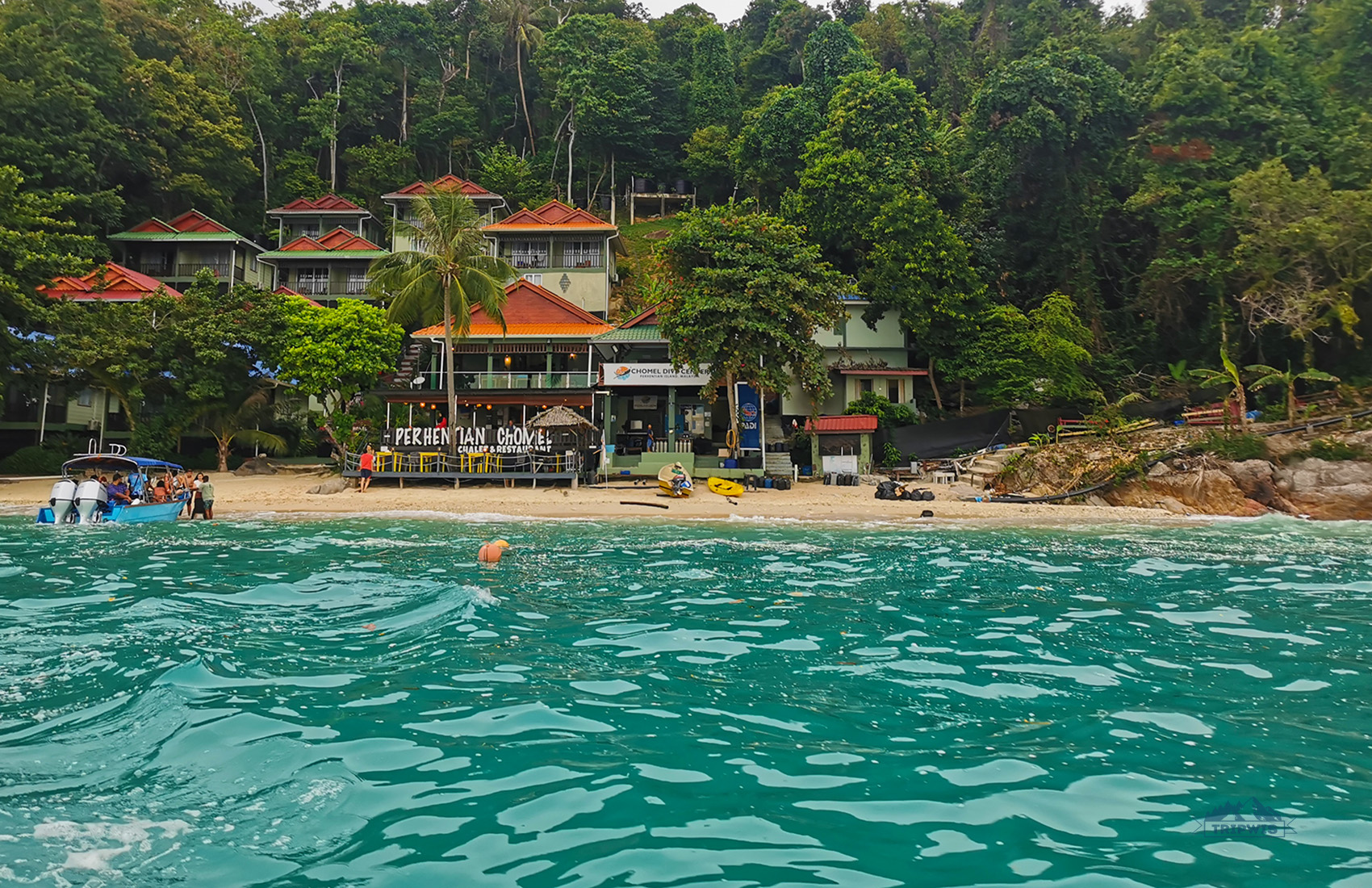
- My choice: Perhentian Chomel Chalet — this is a secluded hotel in a quiet bay with its own well-maintained beach. The sand is soft with a yellowish tint, and there’s a nice coral reef on either side. I stayed at the simplest female dormitory room (for 6 people) and it had strong AC and good WiFi. There’s minimal infrastructure besides the on-site restaurant, which closes at 10 p.m. For other dining or shopping options, the lively Coral Bay is a 25-minute walk along a forest trail. And if you want to move to the bigger island, there’s a water taxi service for 20–30 MYR. Snorkeling off the home reef was a highlight — plenty of fish, including sharks and stingrays, all accompanied by smaller species. No matter which direction I swam, I was fascinated by the variety of marine life.
- 4* BuBu Resort (from $340 a night) — located close to the busiest beach, this hotel is said to be one of the best resorts on Kecil. It’s highly praised for its attentive service and overall quality, and people from nearby hotels often drop by the local restaurant for dinner, though a few rooms show their age. Most rooms have sea views and are equipped with AC, a safe, bathrobes, and a hairdryer — basically everything you’d expect for a comfortable stay. On the beach, umbrellas, loungers, and towels are free for hotel guests.
- 4* Alunan Resort (from $250 a night) — a boutique resort offering modern bungalows with large rooftop balconies and a cliffside infinity pool with amazing views. The resort has its own beach with loungers and umbrellas. It’s also one of the few hotels on the island with a full board option.
- 5* Perhentian Marriott Resort & Spa (from $150 a night) — I still can’t understand why it costs less than other four-star hotels but that’s the (pleasant) reality. Marriott is set on hilly terrain, so there are a lot of stairs, which might be a challenge for some guests. Facilities include three restaurants, an infinity pool, a spa, and a yoga-friendly outdoor gym. Airport transfers, with its own jetty, are provided. The resort has access to two wild beaches, though both require navigating long, steep stairs.
Where to stay on Perhentian Besar?
- 3* Perhentian Island Resort (from $130 a night) — PIR is arguably the most famous hotel in the Perhentians, largely because of its incredible beach. The resort is comfortable, though some guests mention it’s a bit outdated and could use a renovation. The grounds are extensive and meticulously maintained, featuring a pool, souvenir shop, cafe, and a lotus pond. Squirrels, geckos, and monkeys roam freely. It’s not that pricey and very popular: Rooms need to be booked well in advance!
- 3* Coral View Island Resort (from $150 a night) — this resort sits on a cape, spanning two bays. Some bungalows are uphill, with plenty of stairs to climb. By Perhentian standards, the property is huge. It offers a range of rooms, some with private pools. The lush greenery blends the bungalows into the jungle. Amenities include loungers, hammocks, a small shop, restaurants, and water taxis. The on-site restaurant is pricey and not exceptional, so many guests prefer dining at the nearby hotel. A major perk is that the resort is just a three-minute walk via a small bridge to PIR Beach.
- 3* Tuna Bay Island Resort (from $90 a night) — this hotel is loved for its quality/price ratio, scenic location, and natural surroundings. Its home reef lies right offshore, and lots of people come here for snorkeling. The resort offers several restaurants and cafes nearby. Water and boiled water are free, and the bar on the second floor serves alcohol. The private beach is small, with easy water entry, though low tide makes swimming uncomfortable after noon. Loungers and umbrellas are plentiful, in both sun and shade.
Things to do on the Perhentian Islands
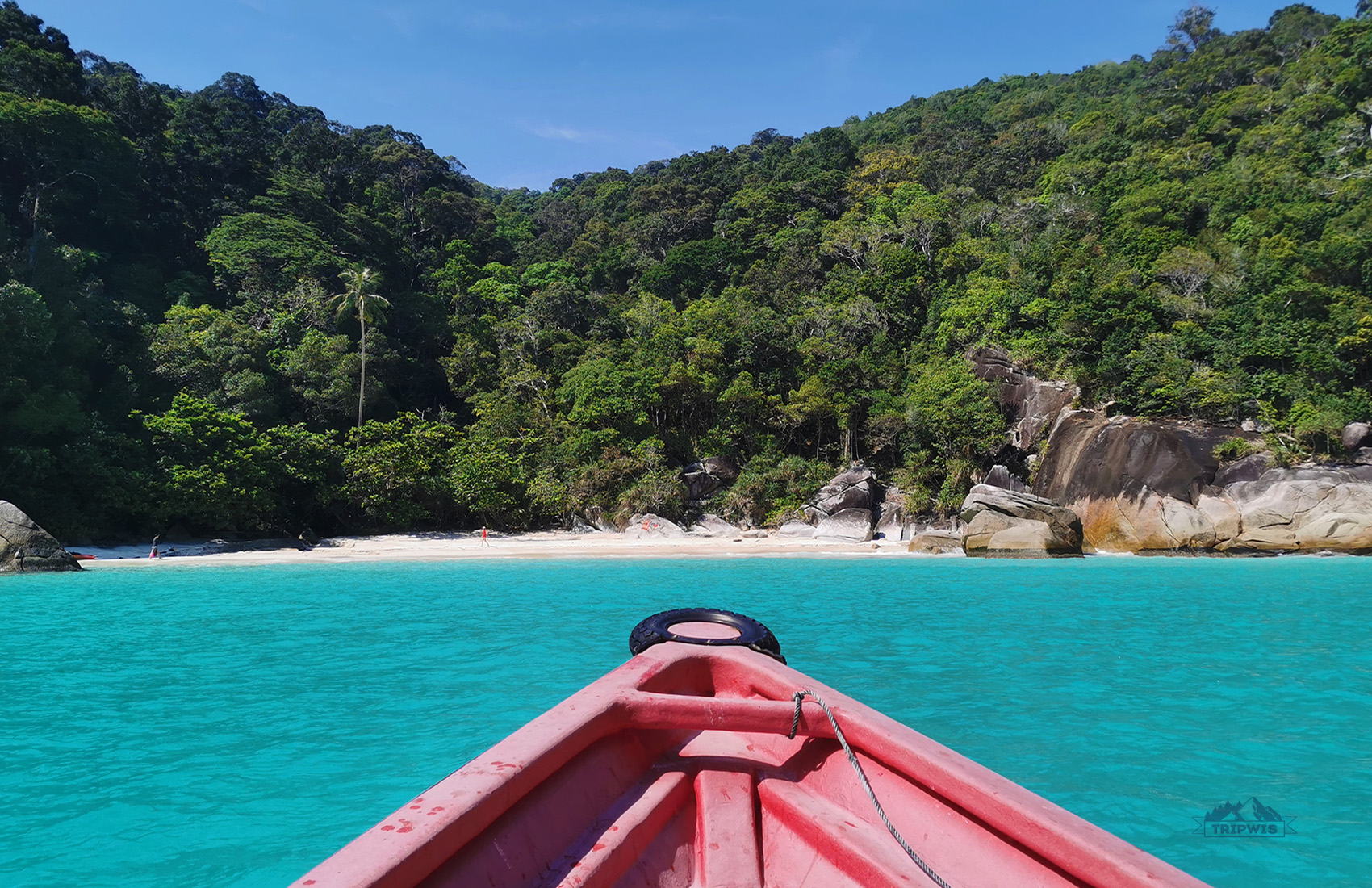
Here’s a taste of the best things to do on the Perhentian Islands:
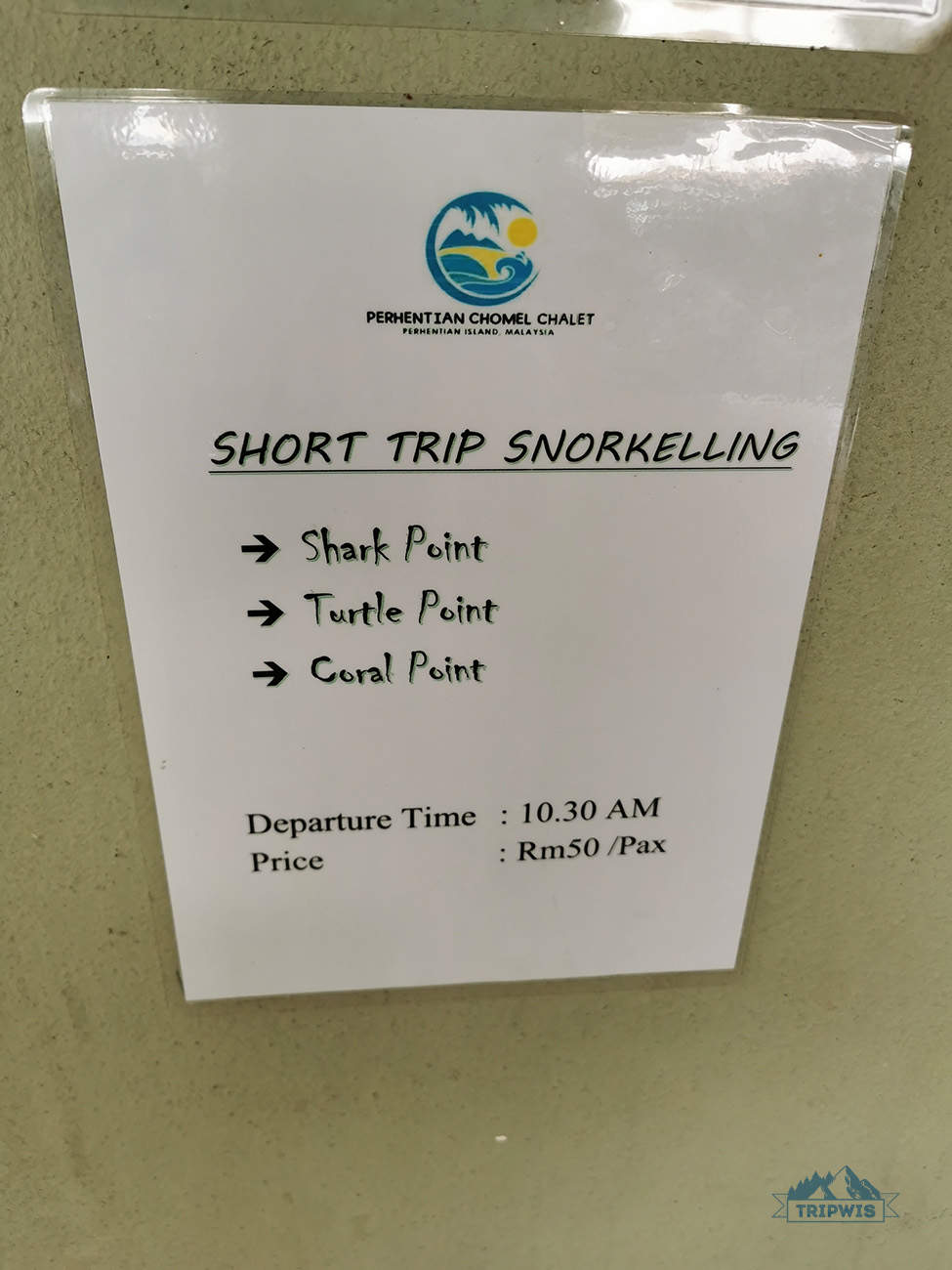
✔️ Snorkeling and diving — either on your own or on an organized tour (from 40 MYR per person / $10)
✔️ Kayaking
✔️ Beach lounging and sunbathing (more on this later)
✔️ Wildlife spotting in the island jungles
✔️ Beach photography on Turtle Beach (bigger island), which looks eerily similar to the Seychelles
✔️ Jungle Trekking Cross-Island Trail on the Perhentian Besar (an easy loop path from Abdul Chalet hotel to Cozy Chalet hotel through the jungle) and the trail from the Long Beach to the Turtle Beach on Perhentian Kecil with detours to a few beaches along the way
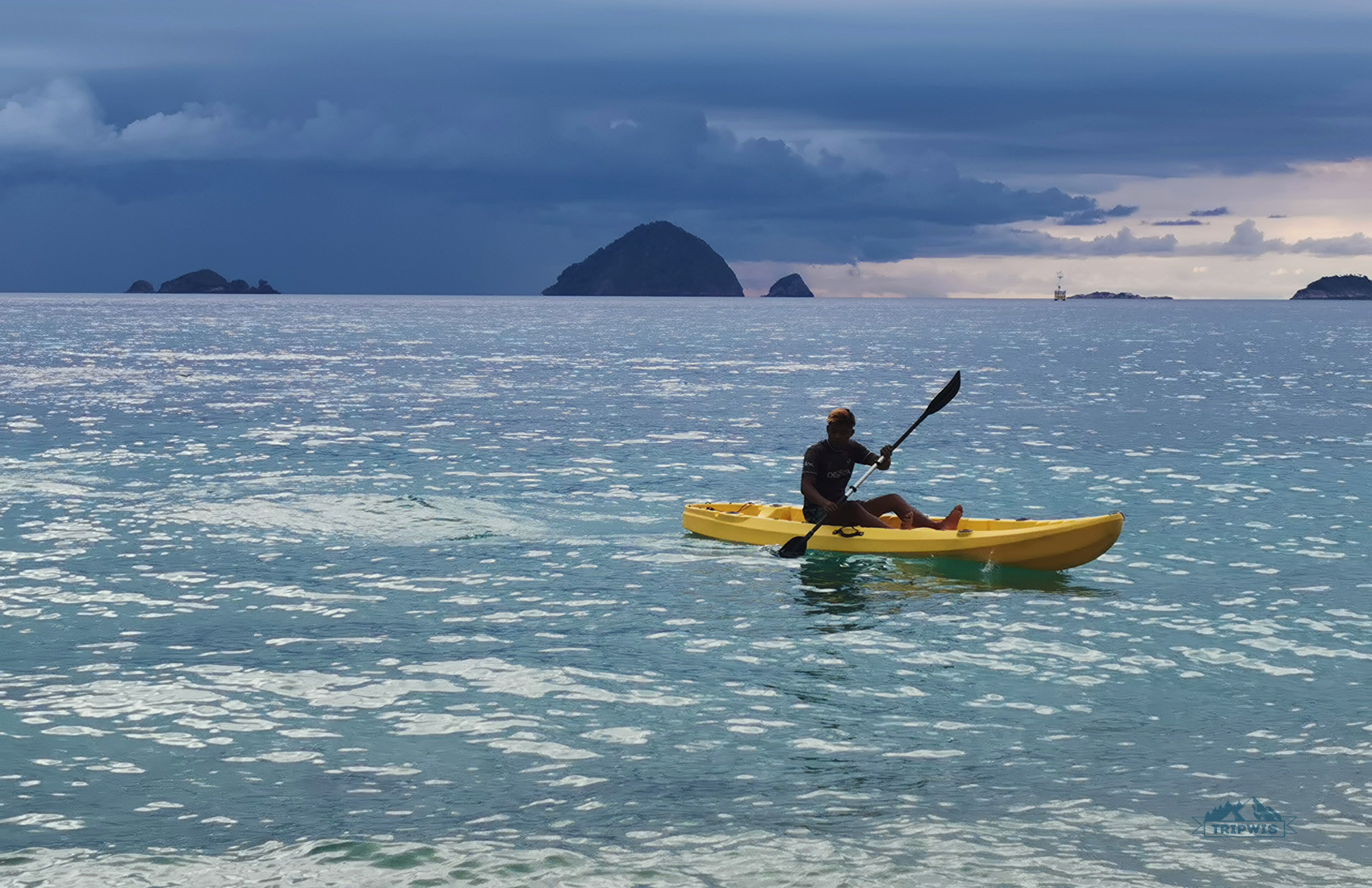
Almost every major beach and hotel has local operators offering snorkeling and diving trips. Pickups are usually right from your hotel beach, and you get dropped back afterward. While there are plenty of companies, prices are pretty similar, and most tours are booked through hotel reception.
On the main beaches, little shops sell everything you need for a day in the sun, including snorkeling gear. Renting a mask for the whole day on Kecil costs about 5 MYR / $1.2, while beachside shops charge three to four times as much. Personally, I always bring my own mask and snorkel — hygiene first!
I want to share two snorkeling trips I tried that I absolutely loved.
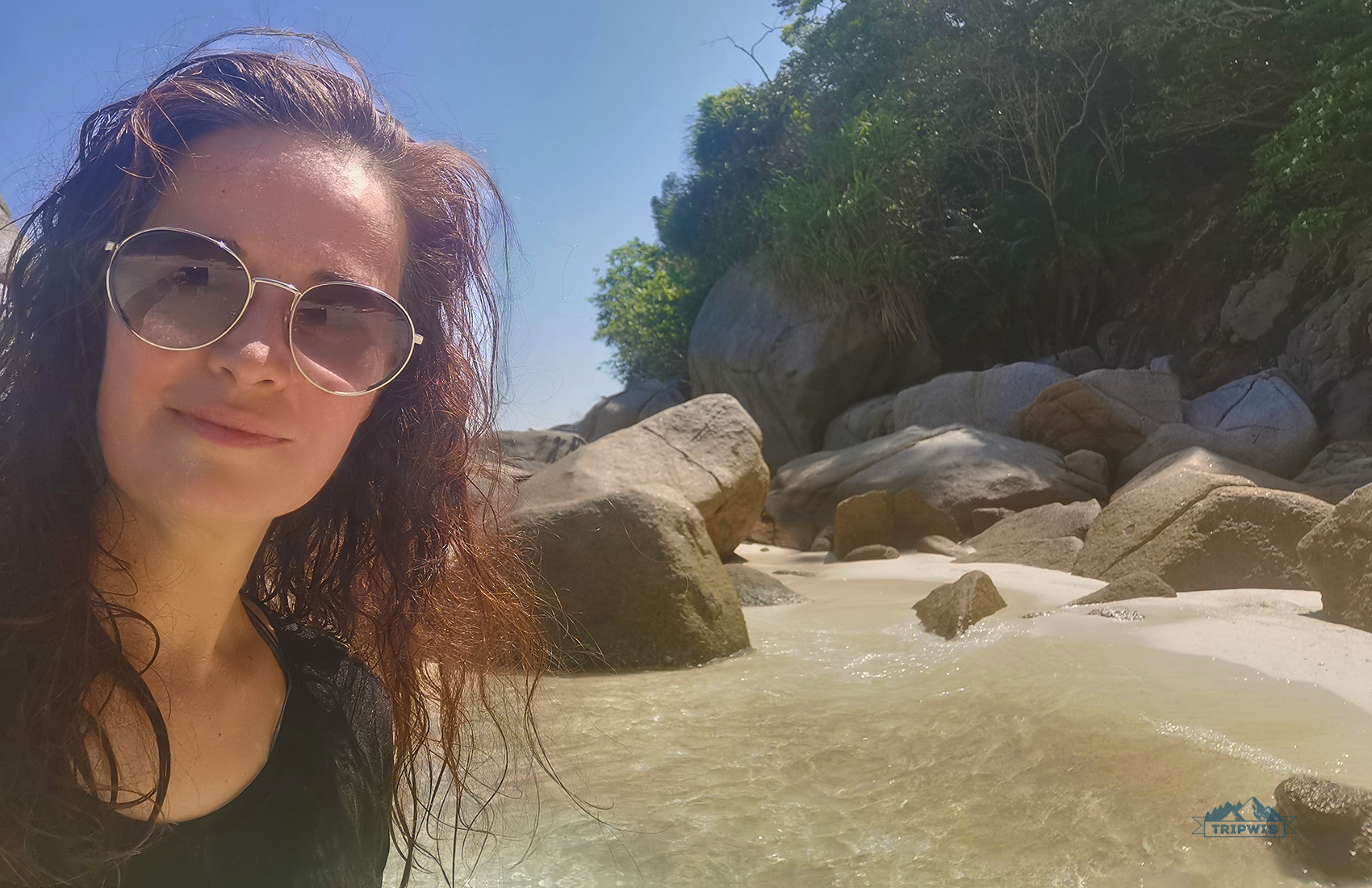
On my first day, since hotel check-in wasn’t until 2 p.m., I jumped on a 3-hour Big Island snorkeling tour (10 a.m.—1 p.m.) for just 40 MYR. It turned out to be the perfect way to spend the morning while waiting for my room.
We visited four spots: Teluk Keke, Shark Point (home to lots of little nurse sharks), Turtle Point (where you can swim with real turtles), and Turtle Beach — a stretch of beach with smooth stones sticking out of the water. It was an excellent introduction: A mini boat tour around the big island, a chance to step on the Turtle Beach — the most beautiful beach of the Perhentians in my opinion — and my first up-close encounter with coral reefs in the Perhentian Islands and their marine life.
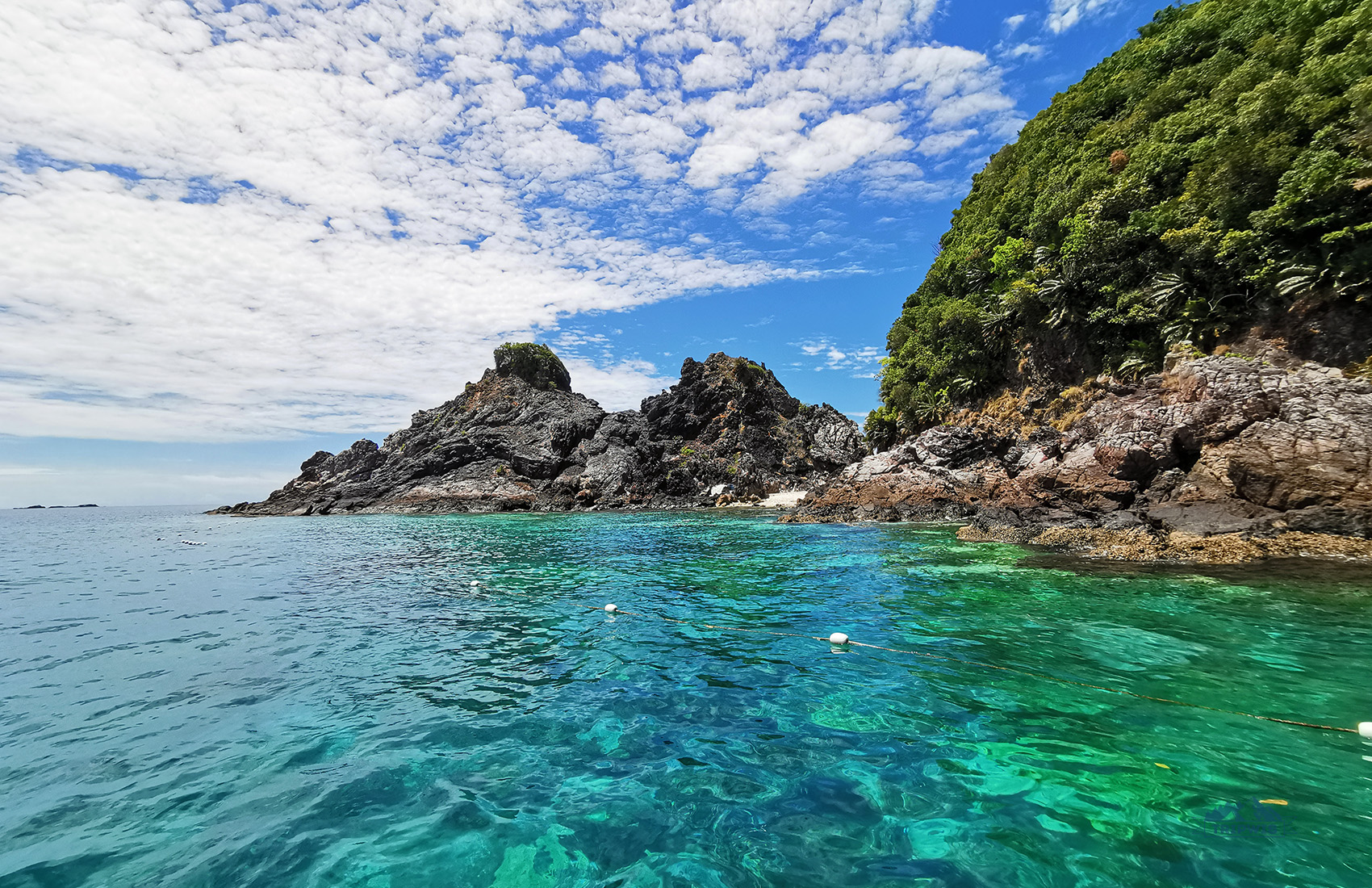
The second trip took me to Rawa and Seringgi islands for 60 MYR / $14.5. This tour was unforgettable. At Seringgi, I swam through gardens of living coral that looked like giant mushrooms from a colorful fairy tale: Pink, yellow, blue, purple. I watched bright blue tridacnas and countless tiny reef fish swirling all around me. We even stopped to check out a “Nemo” garden — though you have to dive down a bit to really see the clownfish clearly, since the water was deeper there. We also paused to watch a school of massive fish gliding along the seabed near the island, plus another one or two stops that were less memorable. On the way back, I was dropped at Mira Beach, where I stayed, while the rest of the group returned to the big island.
Hands down, this route is one I recommend. The coral reef near Seringgi was the highlight of my trip — absolutely breathtaking.
Beaches of the Perhentians
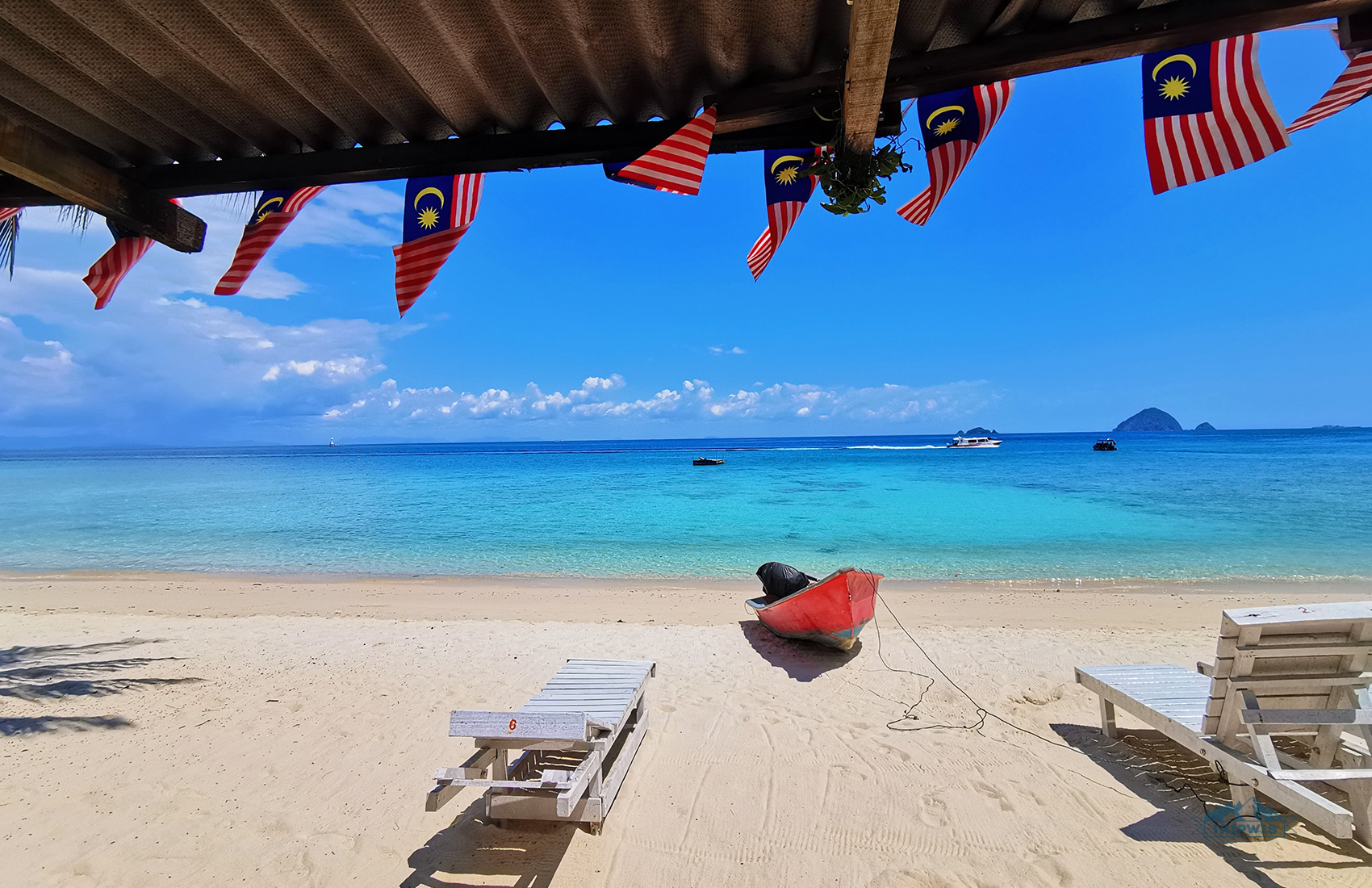
Let’s start with Perhentian Kecil (the small island).
The small island’s most popular beaches are Coral Bay on the west side and Long Beach on the east. These beaches have the most infrastructure comforts but they’re also busier than the more secluded beaches you can only reach by boat or the private beaches of small hotels.
The island is so tiny that you could technically walk from Coral Bay to Long Beach — a short 700-meter trail through the jungle. I didn’t try it myself: A fellow traveler warned me that the day before, they had been practically eaten alive by mosquitoes along the path. I chose to stick with a water taxi instead.
Coral Bay is lively and very tourist-friendly, with more developed infrastructure by Perhentian standards. The shoreline is dotted with bungalows, dive centers, cafes, restaurants, and small shops. Hotel sun loungers and umbrellas are available, and there are stands advertising snorkeling tours and water taxi fares. A long covered jetty serves ferries and speedboats, which run frequently, and a few smaller water taxis moor right along the beach — sometimes you have to step over or around their ropes.
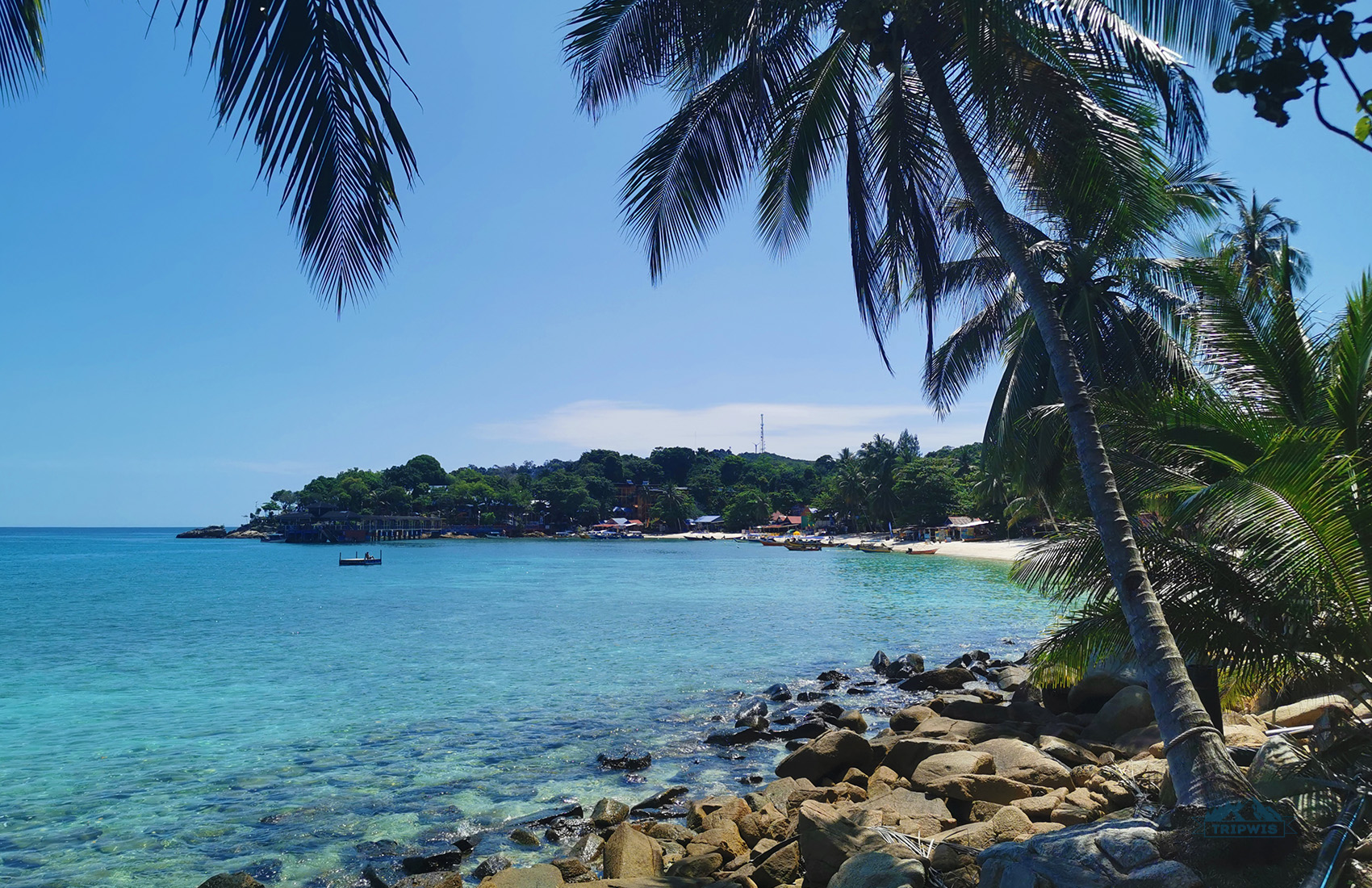
The sand here is yellow and coarse, with the occasional piece of coral or trash. The water entry is comfortable, shallow, and perfect for snorkeling — there’s a live coral reef nearby, teeming with colorful marine life. In the evenings, Coral Bay has a bit of nightlife: Restaurants place tables on the sand, light candles and string lights, and create a romantic vibe for night owls.
This beach is more social and party-friendly, with better infrastructure than other beaches, but if you’re looking for seclusion, it might not be your cup of tea. Personally, I loved chilling in the shade of the pier’s large tent on a hot day, sipping a cool cocktail while watching schools of fish dart in for bread crumbs tossed into the water.
🔹 Some good hotels on this beach: 1* Senya Bay Resort and 2* Ombak Dive Resort Perhentian Island
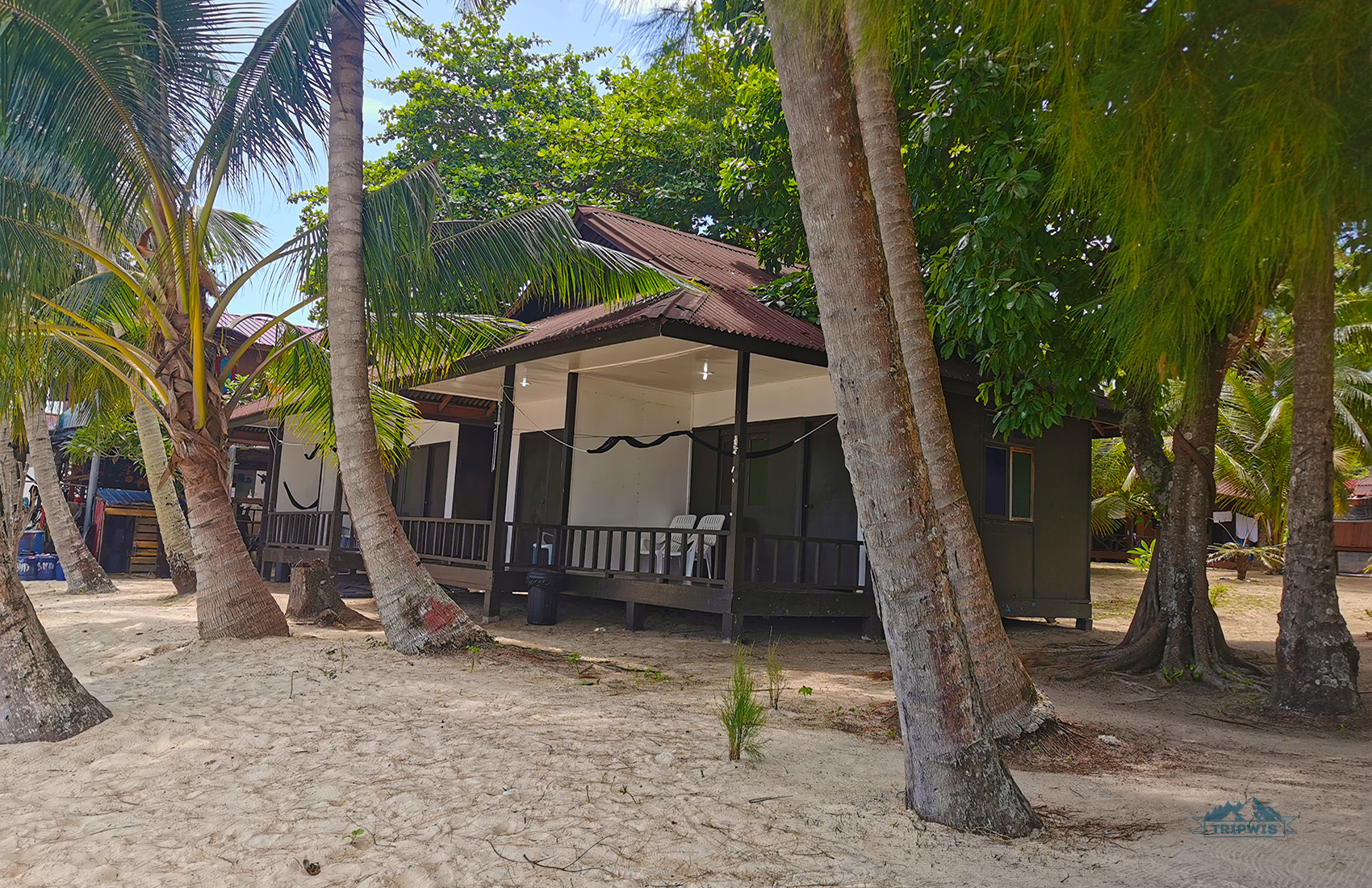
Long Beach stretches impressively along the east coast. It’s home to several hotels that vary in price and level of service, plus shops where you can pick up beach essentials. Despite Malaysia being a Muslim country, some spots even sell beer. Local operators run a wide range of snorkeling and diving tours, kayak rentals, and other water activities. Many boats line the shore.
The sand is soft, fine, and white, though the beach isn’t always perfectly clean. Shade is scarce, but loungers and umbrellas are available — for example, an umbrella goes for 14 MYR / $3.5 a day. Water entry is quite shallow, but waves can be strong at times. Most of Long Beach is lined with cafe and restaurant tables, which adds charm in the evenings, but during the day it can feel crowded. Many travelers stay in hotels near Long Beach for its lively atmosphere, evening fire shows, variety of dining options, and developed infrastructure while choosing quieter beaches for their daytime beach and snorkeling adventures.
🔹 Some good hotels on this beach: 4* Bubu Resort and Oceanboys Inn
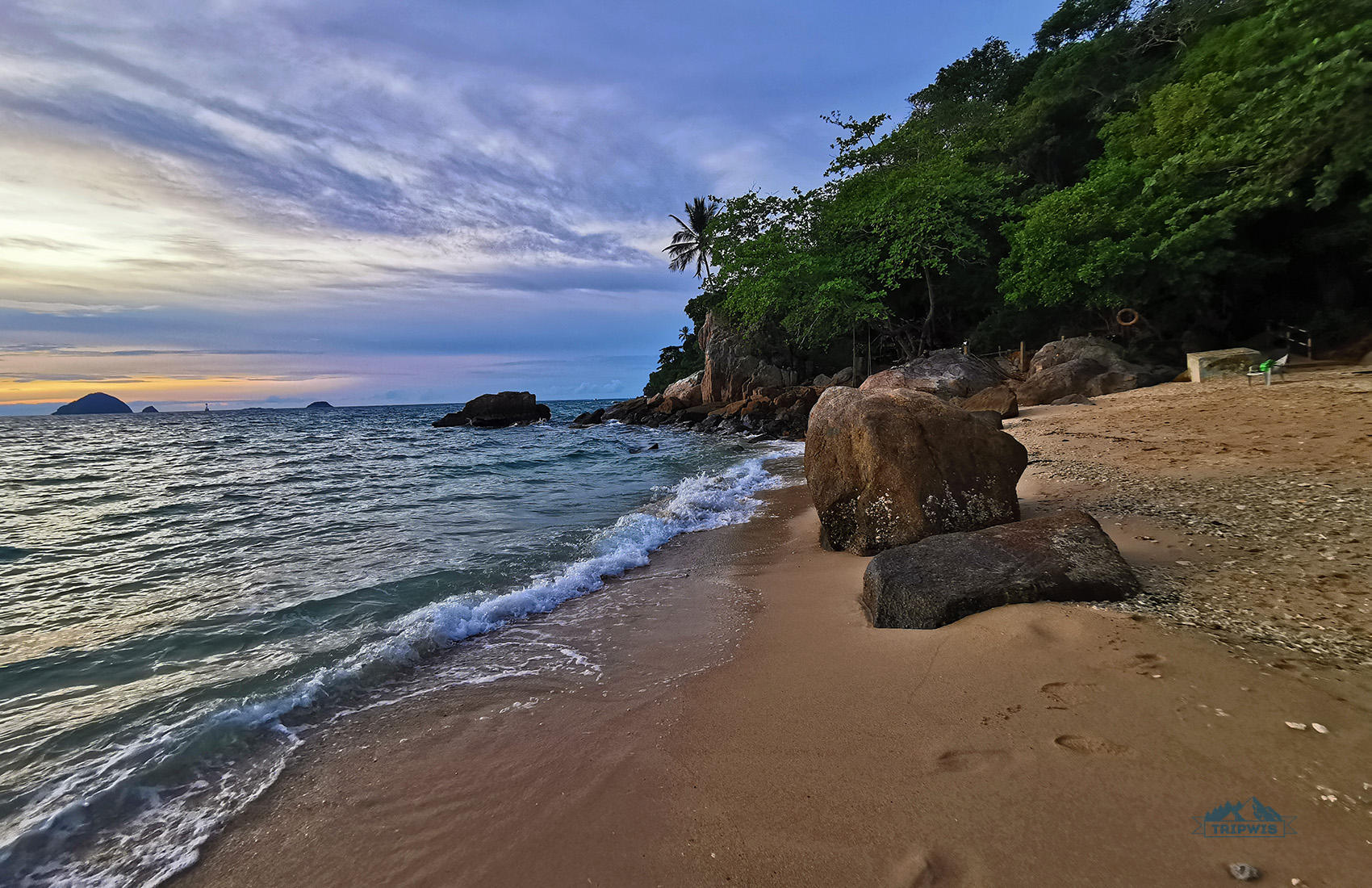
Tucked under the trees, Mira Beach is a clean, quiet, and well-maintained with very few boats (usually only picking up or dropping off hotel guests). The sand is soft and yellowish, not perfectly white, and the water entry is comfortable. Until about 10 a.m., the beach stays shaded or half-shaded — a huge plus for me since I got badly sunburned during my first two days of nonstop snorkeling tours around Big and Rawa Islands. Smooth stones frame the edges of the beach, adding a cozy, sheltered feel. Coral reefs start right past the rocks, home to colorful fish. A couple of times, I even came across a blacktip reef shark while swimming toward Coral Beach which was a little too much adrenaline for me, so I quickly turned back. But I loved watching the smaller stingrays and massive triggerfish gliding around the reefs — those encounters I happily repeated more than once. A hotel cafe nearby serves affordable meals and drinks.
You’ll hardly see any tourists here — most hotel guests head out on snorkeling or diving tours in the morning, so the beach stays peaceful. It’s ideal for a day or two of independent snorkeling and relaxing without crowds, though after that you might start craving a bit more variety. Evenings offer beautiful sunsets, but it’s not a party place: Once the hotel restaurant, the only spot to sit around at night, closes at 10 p.m., everyone retreats to their rooms.
🔹 Some good hotels on this beach: Perhentian Chomel Chalet
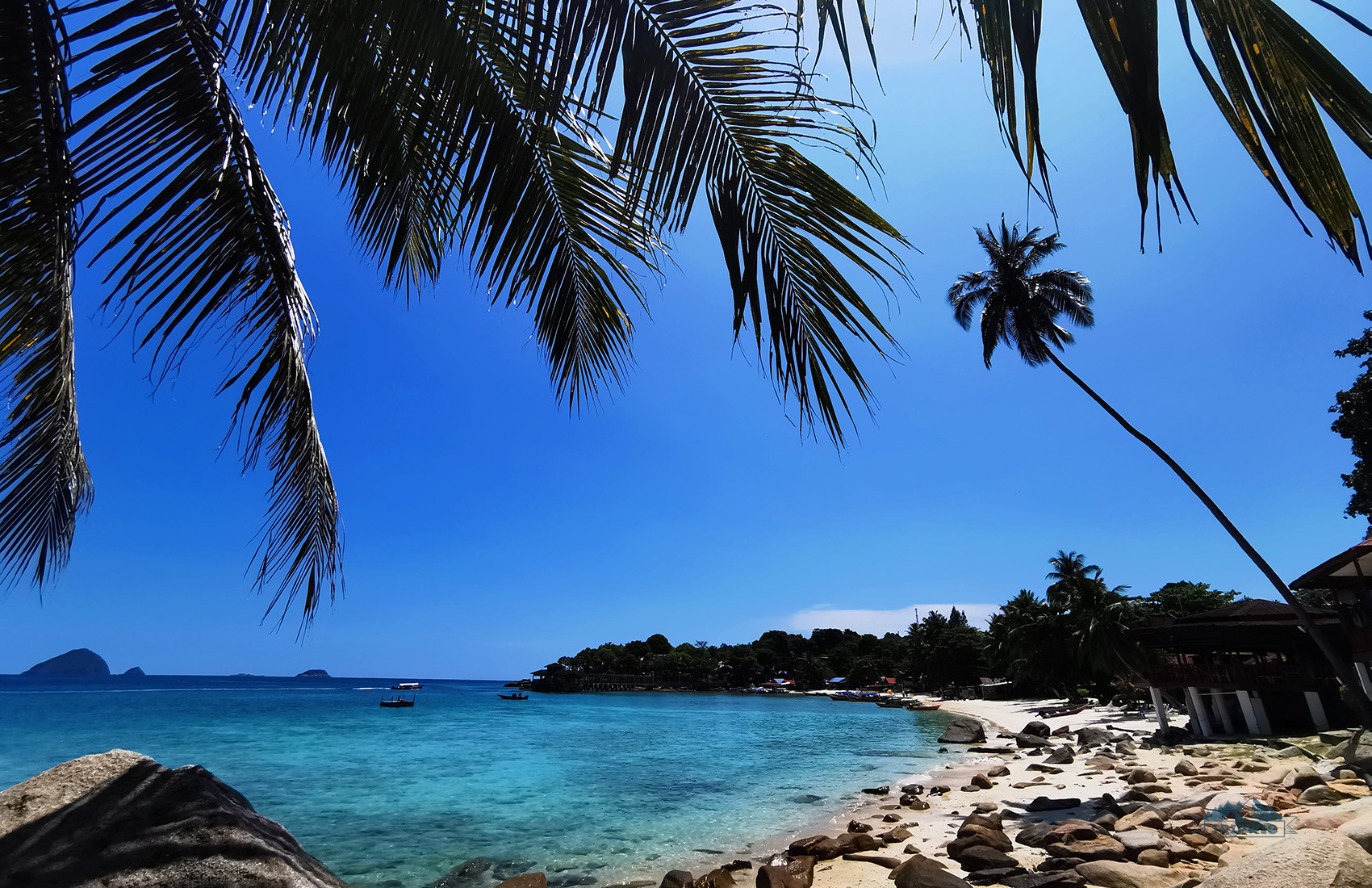
Romantic Beach exists on both Perhentian Besar and Kecil. On the small island, it’s a secluded northwest beach with soft white coral sand that stays cool even in the heat. Walking barefoot is a pleasure, and the sea floor deepens immediately, making it perfect for swimming. Shade is minimal — just one tree at the far end, where visitors huddle when the sun gets too strong. When the beach gets crowded, the “romantic” vibe quickly disappears.
🔹 Some good hotels on this beach: None
Beaches of Perhentian Besar (the big island).
Turtle Beach is widely considered the gem of this area, and you’ll find it in every single guide to the Perhentian Islands in Malaysia. Nestled in the northwest of the island, it’s usually quiet since most visitors arrive by speedboat as part of snorkeling tours or via private water taxi. You can’t get there by land.
The beach is framed by enormous, smooth boulders that practically beg to be photographed. The sand is pristine, the shoreline is clean, and there’s no infrastructure — no sun loungers, umbrellas, or anything commercial. Sea turtles even come here to nest. I absolutely fell in love with Turtle Beach; it instantly reminded me of a paradise like the Seychelles. I didn’t snorkel here because of the waves that day, but I couldn’t resist a few photos and a quick swim. For me, it’s a solid A+.
🔹 Some good hotels on this beach: None
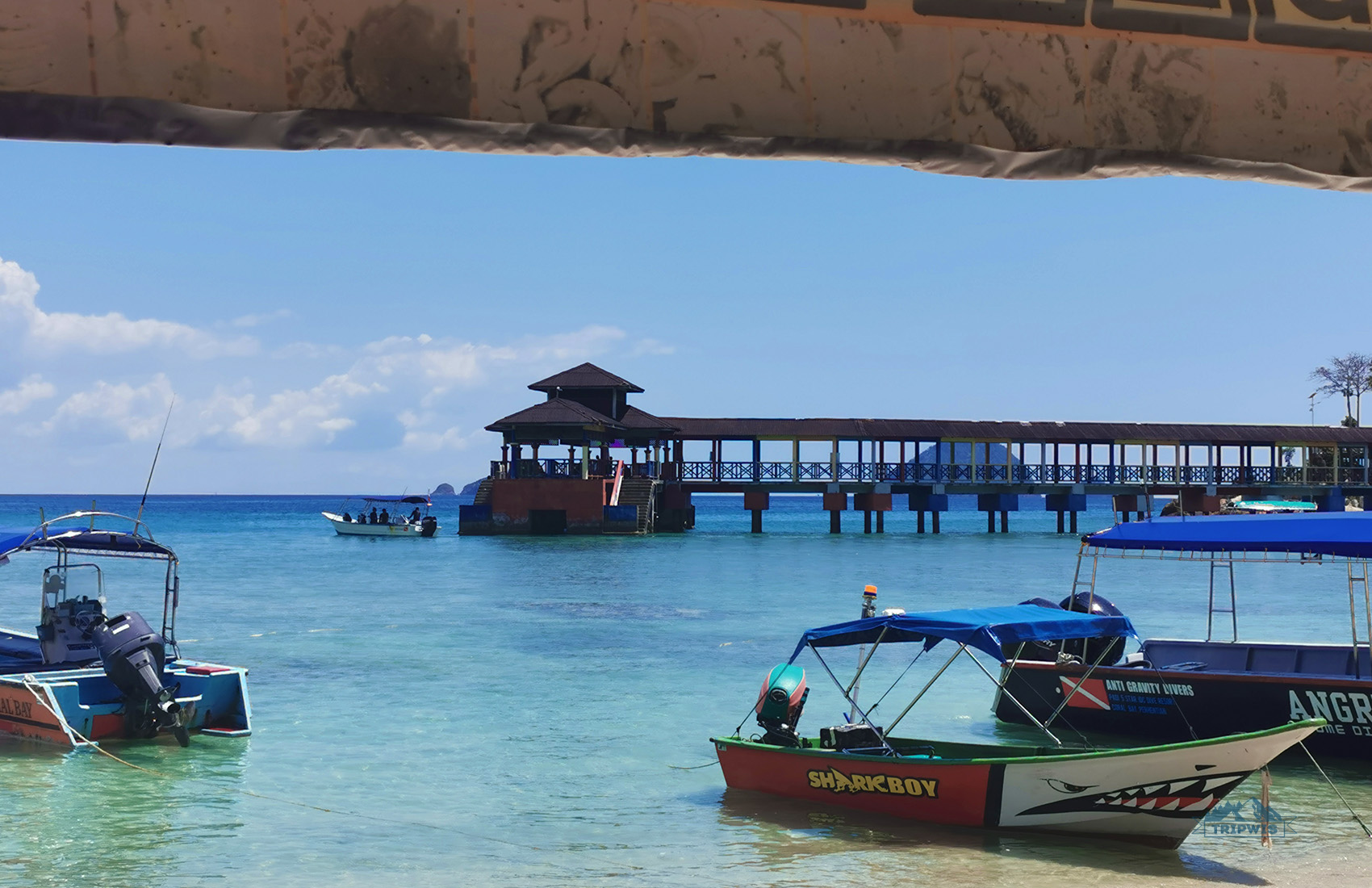
Perhentian Island Resort (PIR) Beach is the beach of the resort with the same name. Small bungalows are tucked under palms, and the area has restaurants, cafes, and a dive center. The water entry is gradual and easy, and the swimming zone is marked by buoys. Nearby, coral reefs host giant turtles, small reef sharks, and stingrays. Loungers and umbrellas can be rented even by non-guests, and there’s a large pier for boats. Smooth rocks along the shoreline make perfect photo spots, and you can enjoy views of the neighboring island. Many travelers pick this beach.
Located just nearby, Coral View Island Resort Beach is smaller and better suited for snorkeling than swimming, due to its rocky seabed. Swimming is recommended on the right-hand side of the beach.
🔹 Some good hotels on this beach: 3* Perhentian Island Resort and 3* Mama’s Chalet Pulau Perhentian Besar
Romantic Beach on Perhentian Besar, unlike its namesake on the small island, offers some shade to escape the midday sun. There’s no infrastructure here, just stunning veiws. Some visitors note that boats tend to drop off groups, which can reduce the sense of seclusion.
🔹 Some good hotels on this beach: None
Where to eat on the Perhentians?
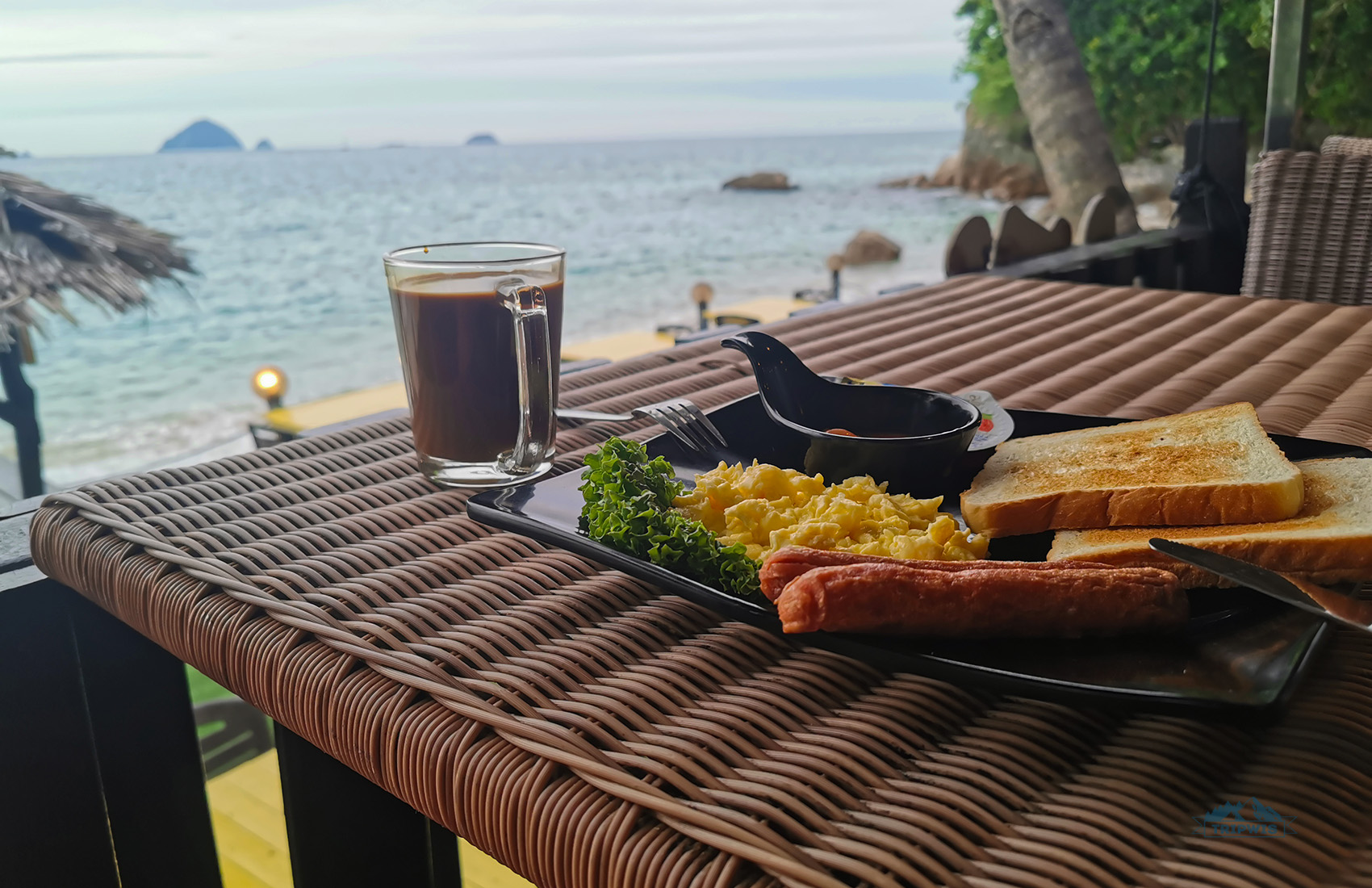
As for shops, don’t count on finding a 7-Eleven here (this was a surprise for me — I thought those were everywhere). Still, there are quite a few tiny hotel-owned stores where you can grab the absolute basics — bottled water, snacks, maybe a few odds and ends.
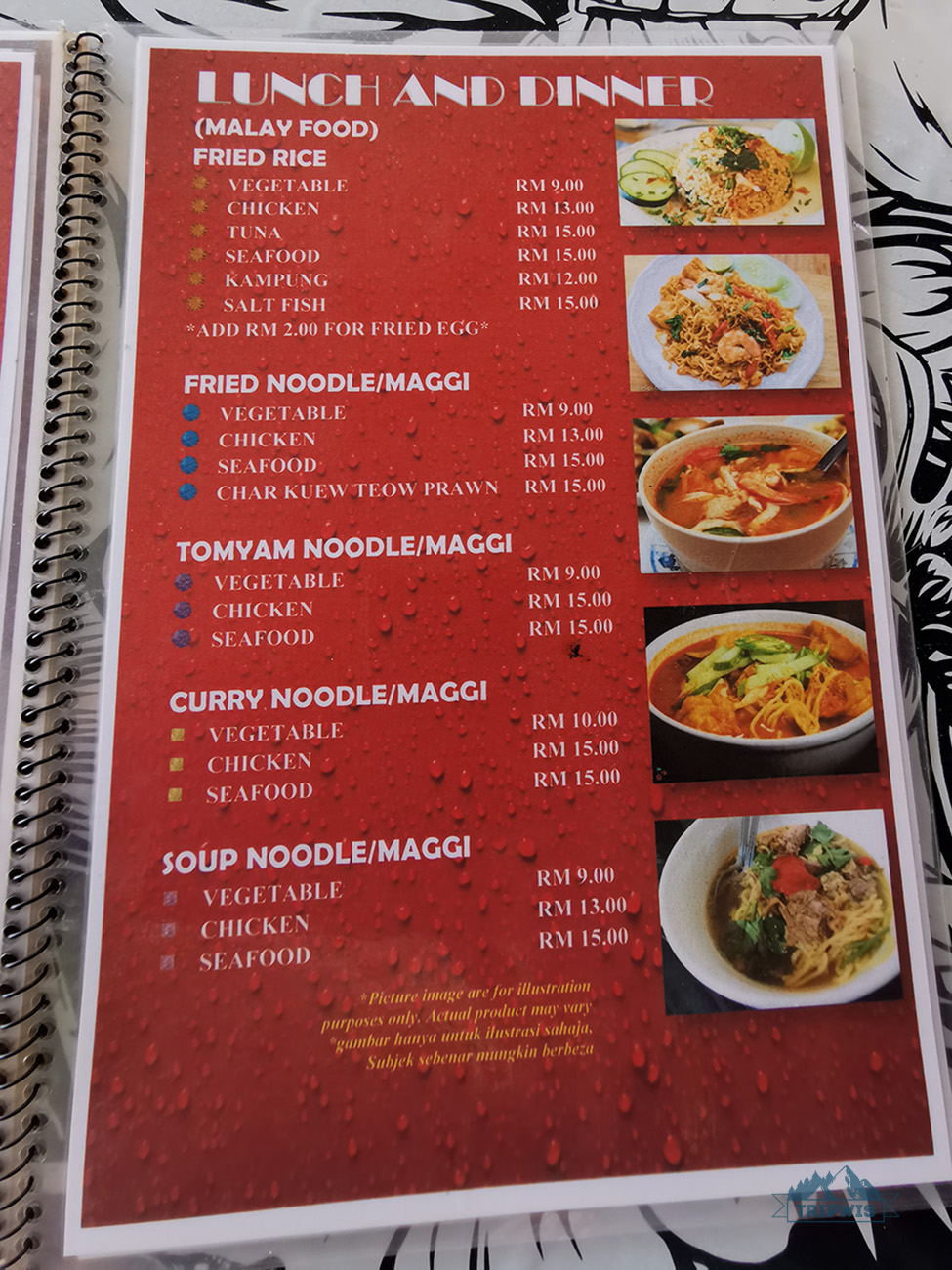
Food on the Perhentians is mostly traditional Malay — nasi lemak (rice cooked in coconut milk), roti (flatbread with various fillings), fried rice and noodles with all kinds of fillings, and laksa. If you’re into seafood, you’ll be in heaven: Most beachside cafes grill up fresh fish, squid, and prawns brought in daily.
For reference, at the time of writing, $1 = 4 MYR.
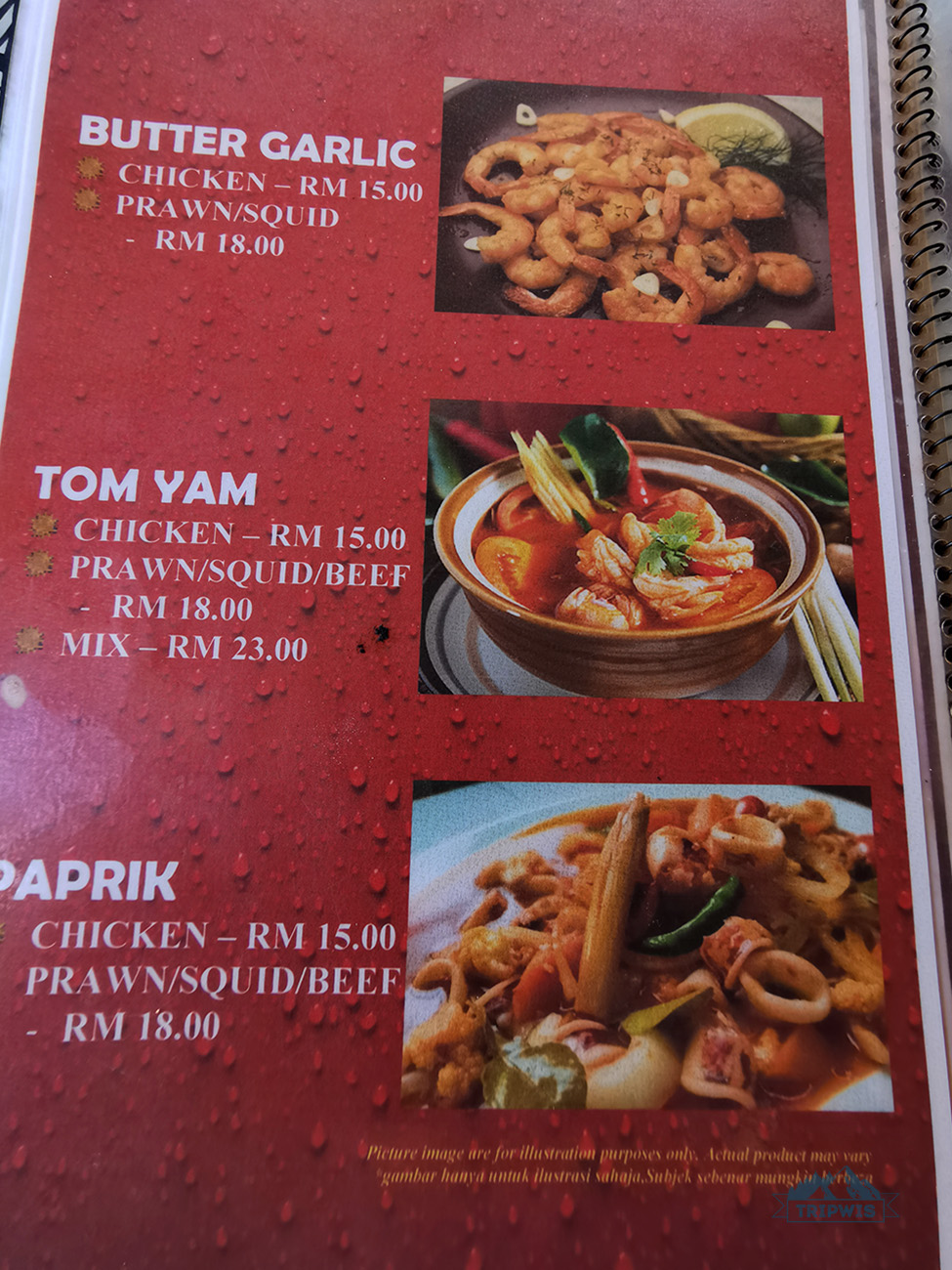
Here are some typical prices at local cafes and restaurants:
- Four vegetable spring rolls — 7 MYR
- Fried rice with prawns — from 14 MYR
- Plain roti — 4 MYR
- Vegetable salad — 10 MYR
- Sandwich and fries — from 17 MYR
- Chicken curry — 18 MYR
- Nescafe coffee — 4 MYR
- A can of Coke — 5 MYR
- Lassi or fruit shake — 12 MYR
On Perhentian Kecil, the cheapest meals are at the village jetty, where breakfast can cost 6 MYR per person (for example, a banana roti and coffee), while pancakes on Coral Beach might cost 15 MYR.
 |
 |
Here are some of the best spots I visited on the islands:
📍 Nia Cafe (Perhentian Besar) — super affordable spot right on the beach. The roti here is a must — about 15 varieties (from onion and tuna to banana-chocolate), priced between 4 and 10 MYR. Their fresh juices were excellent too. The only downside is that service can be a bit slow.
📍 Ocean Blue Café (Perhentian Kecil) — I stumbled across this little beachfront place by accident and stopped in for lunch with zero expectations. The interior was super plain but I came back for dinner because the food was that good. Their grilled fish is big enough for two and perfectly cooked — juicy, tender, and bursting with flavor thanks to the marinade and dipping sauce. Highly, highly recommend. The family running it is another highlight: They couldn’t have been friendlier.
📍 Crocodile Rock Bistro (Perhentian Kecil) — this place is incredible. It has spacious, super comfy balconies with an awesome veiw. The food was excellent, and breakfasts were hearty and satisfying. Don’t miss their mango and lime sorbet — a heavenly balance of sweet and tangy (18 MYR). The mango lassi (a yogurt-based mango drink, also 18 MYR) was also fantastic.
My review and tips on the Perhentians
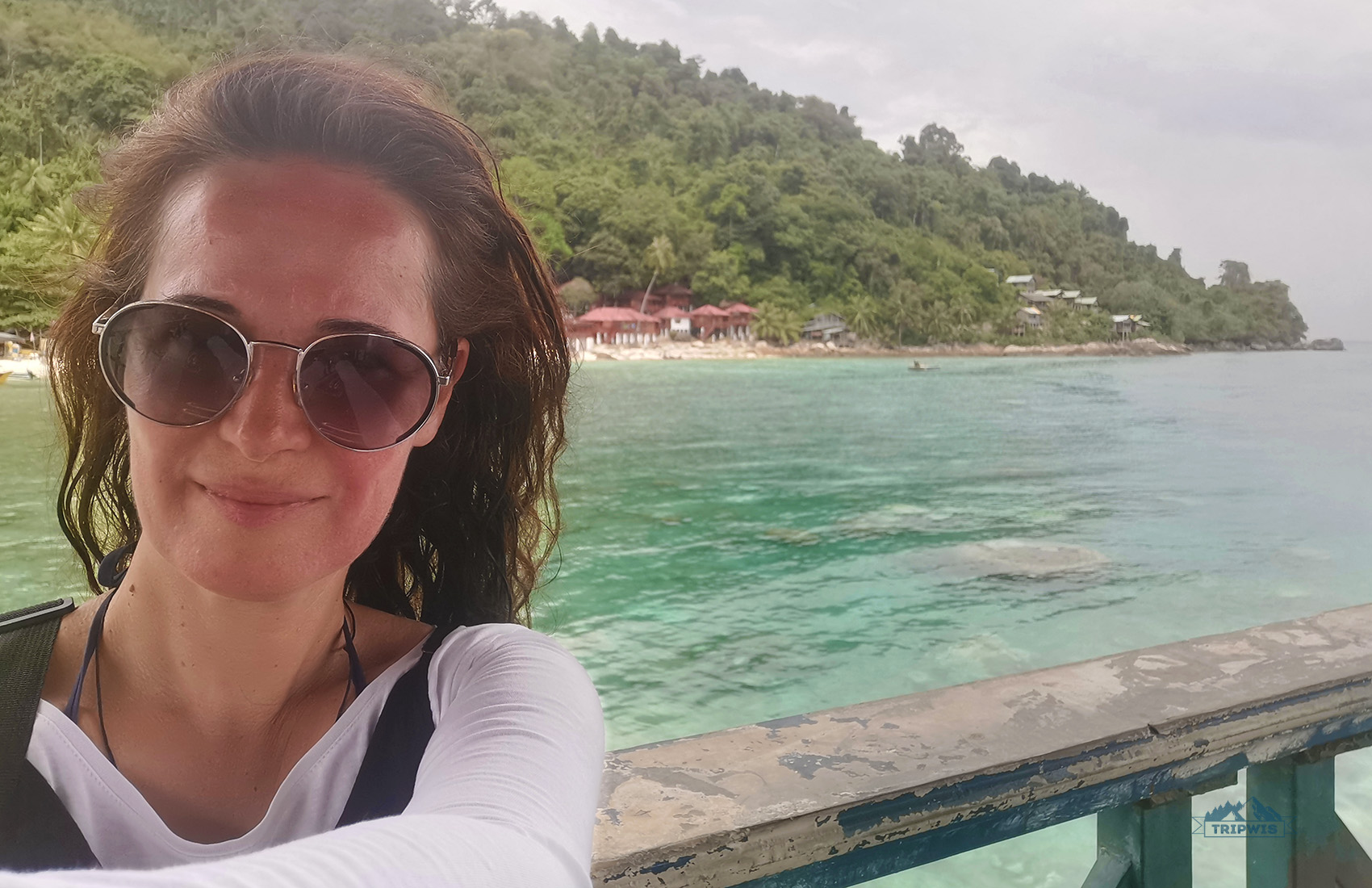
Wrapping up my guide to the Perhentian Islands in Malaysia, I’d say that the very fact that getting from Kuala Lumpur to Perhentian Islands still takes time and effort is exactly what keeps these islands so special. They’ve managed to hold on to their raw beauty, untouched coastlines, and lush forests, instead of turning into yet another overdeveloped tourist hotspot.
This beach destination in Malaysia won me over with turquoise waters, often empty white-sand beaches shaded by palms, colorful coral reefs, and the absence of stinging jellyfish or plankton. My worries about swarms of mosquitoes — even on the beach — turned out to be completely unfounded.
My final tips would be these:
- Pack light. Bring a backpack or a bag instead of a suitcase — dragging a wheeled suitcase across sandy beaches is a nightmare. Speedboats drop tourists directly on the sand, and most hotels don’t have a proper path from the beach. This doesn’t apply if you’re staying at the 5* Perhentian Marriott Resort & Spa.
- Book bus tickets early. If you’re traveling to Kuala Besut from Kuala Lumpur during high season, make sure to get your bus tickets at least a day in advance, otherwise you might find yourself stuck with no available buses for the entire day (in that case, you might as well enjoy your unplanned stay with our one day in KL itinerary). I didn’t and had to spend an unplanned extra night in Kuala Lumpur instead of spending it on the islands. The same advice applies for the return trip from the port.
- Give yourself extra time at TBS. Kuala Lumpur’s Terminal Bersepadu Selatan (TBS) is a massive multi-story station with dozens of departure gates. If it’s your first time, arrive early to find your bus without stress. And bring warm clothing. Like in many parts of Asia, buses in Malaysia blast air conditioning at full power, making it freezing inside. A hoodie or light sweater is a lifesaver.
- Currency exchange can be tricky. In Kota Bharu, there’s only one exchange office, so it’s best to exchange money in advance, for example in Kuala Lumpur.
- Limited WiFi. In many budget stays, WiFi can be spotty or missing altogether in the rooms. Some cafes, on the other hand, have excellent internet. It wasn’t a big deal for me, but if you’re planning to work remotely, you’ll want a backup plan. For example, a Malaysian e-sim with enough data.
- Bring tropical fruit with you. If you’re craving fruit and want to save some cash, buy it on the mainland before heading to the Perhentians. On the islands, you’ll only find fruit in cafes and restaurants at a much higher price. Plus, having your own stash means you can enjoy it anytime, anywhere. I remember arriving on Perhentian Besut and, while waiting to check in, I had a little picnic with a papaya I’d brought. A fellow traveler nearby couldn’t hide her envy — her joy was priceless when I shared some with her!
- Choose boats with shade. Whether for snorkeling, diving, or water taxis, make sure your boat has a canopy. The sun is fierce. After just two snorkeling days, I got badly sunburned on my legs and lower back — my long-sleeved top saved my upper body, but the legs were exposed. Even my SPF 50 sunscreen wasn’t able to save my skin.
- Alcohol is expensive. Drinks are only sold in restaurants, and prices are high — bottles of wine go for 120–250 MYR / $30–$37, a can of beer for 15 MYR / $3.7. If you want to save money, bring a little tipple from the mainland.
- Which is better, Langkawi or the Perhentians? The first one is more developed and easier to reach, but it doesn’t have great snorkeling. If what you really crave is nature and solitude, then choose the Perhentians without hesitation.

Thank you for this article! What tour did you book for the Rawa and Seringgi islands snorkeling excursion? Would love the details!
This is a fixed itinerary tour and you can book it at most hotels or right on the beach! It’s literally called the Rawa Trip. First, they take you snorkeling at Serengghi, then you head to the beach of Rawa Island itself. After that, there’s more snorkeling at Tukung Burung and Nemo Garden.
Have a great trip!